Dead whale towed off Los Angeles beach ahead of holiday

By JOHN ANTCZAK

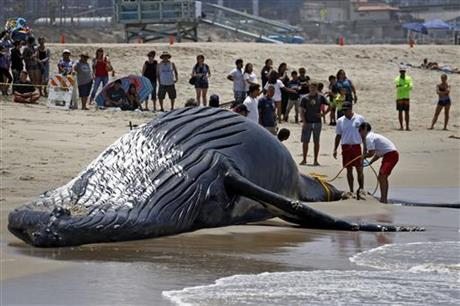
The reeking carcass of a dead humpback whale was towed back out to sea some 24 hours after washing up at a popular Los Angeles County beach Friday.

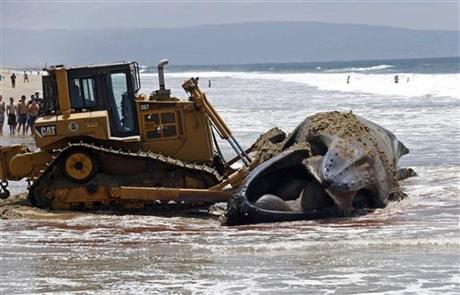
Authorities used boats pulling ropes attached to the tail to pull it off the sand during the evening high tide, taking the whale far out to sea and avoiding a foul stench and grim scene on the beach as Fourth of July weekend crowds began arriving.

Authorities had earlier attempted the procedure at midday, with a bulldozer pushing, but it was unsuccessful because of the low tide.

The huge whale washed onto Dockweiler Beach, a long stretch of sand near the west end of Los Angeles International Airport, just before 8 p.m. Thursday and holiday beachgoers began arriving in the morning.

Lifeguards posted yellow caution tape to keep people away and biologists took samples to determine what caused the death of the humpback, an endangered species. Beachgoers watching from a distance covered their noses.

Tail markings were compared with a photo database and found that the same whale had been spotted three times previously off Southern California between June and August of last year by whale watchers who gave it the nickname Wally, said Alisa Schulman-Janiger, a whale research associate with the Natural History Museum of Los Angeles County.

At the time of the prior sightings the humpback was covered with whale lice, which usually means a whale is in poor physical condition, but it was also actively feeding and breaching, she said.

Schulman-Janiger said she noticed healed entanglement scars on its tail indicating that in the past it been snarled in some sort of fishing line. The carcass was in relatively good condition which meant the whale could have died as recently as Thursday morning, she said.

The whale was about 46 feet long and at least 15 years old, meaning it had reached maturity, said Justin Greenman, stranding coordinator for the National Marine Fisheries Service.

Skin and blubber samples were taken for DNA testing along with fecal matter to be tested for biotoxins.

The experts had hoped to more extensively open up the whale but due to the holiday weekend authorities decided to get it off the beach as soon as possible, Greenman said.

North Pacific humpbacks feed along the West Coast from California to Alaska during summer, according to the Marine Mammal Center, a Sausalito-based ocean conservation organization. Although the species’ numbers are extensively depleted, humpbacks have been seen with increasing frequency off California in recent years, the center’s website said.

Humpbacks, familiar to whale watchers for their habits of breaching and slapping the water, are filter feeders that consume up to 3,000 pounds of krill, plankton and tiny fish per day, according to the National Oceanic and Atmospheric Administration.

The whale that washed up is not the same one spotted earlier in the week off Southern California tangled in crab pot lines. That animal was identified as a blue whale. Efforts by a rescue crew in a small boat to cut away the line failed, and it disappeared.

California has seen a number of whales on beaches this year. A humpback carcass that appeared off Santa Cruz in May had to be towed out to sea, while a massive gray whale that ended up on San Onofre State Beach in April had to be chopped up and hauled to a landfill.

The same month, a distressed humpback was freed from crabbing gear in Monterey Bay. In March, a dead gray was removed from Torrey Pines State Beach.

http://bigstory.ap.org/1c05823a4b8445e8802662e2b9b52c67

Fungi in outer space

By Jennifer Frazer

In addition to irritatingly lodging themselves everywhere from shower grout to the Russian space station Mir, fungi that live inside rocks in Antarctica have managed to survive a year and half in low-Earth orbit under punishing Mars-like conditions, scientists recently reported in the journal Astrobiology. A few of them even managed to cap their year in Mars-like space by reproducing.

Why were they subjected to such an ordeal? Scientists have concluded over the past decade that Mars (which like Earth is about four and a half billion years old) supported water for long periods during its first billion years, and they wonder if life that may have evolved during that time may remain on the planet in fossilized or even fresh condition. The climate back then was more temperate than today, featuring a thicker atmosphere and a more forgiving and moist climate.

But how do you search for that life? Using life that exists in what they believe is this planet’s closest analogue, a team of scientists from Europe and the United States hoped to identify the kind of biosignatures that might prove useful in such a search, while also seeing if the Earthly life forms might be capable of withstanding current Mars-like conditions.

Which is to say, not nice.

The temperature on Mars fluctuates wildly on a daily basis. The Mars Science Laboratory rover has measured daily swings of up to 80°C (that’s 144°F), veering from -70°C(-94°F) at night to 10°C(50°F) at Martian high noon. If you can survive that, you also have to get past the super-intense ultraviolet radiation, an atmosphere of 95% carbon dioxide (the effect of which on humans was vividly illustrated at the end of Total Recall), a pressure of 600 to 900 Pascals (Earth: 101,325 Pascals), and cosmic radiation at a dose of about .2mGy/day (Earth: .001 mGy/day). I don’t know about you, but Mars is not my first vacation choice.

And it’s probably not Cryomyces antarcticus’s either, in spite of the extreme place it calls home. Cryomyces antarcticus and its relative Cryomyces minteri – the two fungi tested independently in this study — are members of a group called black fungi or black yeast for their heavily pigmented hulls that allow them to withstand a wide variety environmental stresses. Members of the group somewhat notoriously turned up a few years ago in a study that found two species of the group commonly live inside dishwashers in people’s homes (they were opportunistic human pathogns, but most humans are immune to them). But most of these fungi live quietly in the most extreme environments on earth.

The particular black fungi used in this experiment, generally considered the toughest on the planet, live in tiny tunnels of their own creation inside Antarctic rocks. This is apparently the only place they can grow without being annihilated by the crushing climate and blistering ultraviolet radiation of Antarctica. Antarctica also happens to be the place on Earth most similar – although still not particularly similar, as you have seen — to our friendly neighborhood Red Planet. This endurance has made both black fungi and their neighbors the lichens popular test pilots for Mars-like conditions on the international space station.

For example, lichen-forming fungi that create the common and beautiful orange Xanthoria elegans and also Acarospora made the same trip to the ISS previously, in a European module of the International Space Station called EXPOSE-E. Both survived the experience, and Acarospora even managed to reproduce.

But this seems to be the first time a non-lichen forming fungus has received the ISS treatment.

These particular two fungi – Cryomyces antarcticus and Cryomyces minteri – were collected from the McMurdo Dry Valleys of Antarctica in Southern Victoria Land, supposedly the most Mars-like place on Earth. They were isolated from dry sandstone onto a plate of fungus food called malt extract agar. This gelatinous disc was then dried along with the fungus living on it inside a dessicator, and sent into space like that.

Each colony was about 1mm in diameter, and each yeast cell in it was 10 micrometers in size. Like most black yeast/fungi, they have a dark outer wall.

The scientists also tested an entire community of “cryptoendolithic” organisms – those that live secretly inside rocks, including not just fungi but also rock-dwelling blue-green algae – by testing whole fragments of rocks collected on Battleship Promontory in Southern Victoria Land, Antarctica. The various organisms live in bands of varying color and depth within 1 centimeter of the rock surface.

The fungi were launched into space in February 2008 and returned to Earth on September 12, 2009. During that time they were placed in a bath of gasses as similar as possible to the atmosphere of Mars and exposed to simulated full Martian UV radiation, one-thousandth Martian UV, or kept in the dark. They also endured the cosmic background radiation of space and temperature swings between -21.7°C and 42.9°C – much warmer than Mars, but the best that could be done. Control samples remained in the dark on Earth.

Once back on Earth, the colonies and rock samples were rehydrated. Their appearance had not changed during their voyage. They were then tested for viability by diluting them in water and plating the resulting solution to see how many new colonies formed. They also estimated the percentage of cells with undamaged cell membranes by using a chemical that can only penetrate damaged cell membranes.

The scientists found that the black yeast’s ability to form new colonies was severely impaired by its time on “Mars”, but it was not zero. When kept in the dark on the ISS, about 1.5% of C. antarcticus was able to form colonies post-exposure, while only .08% of C. minteri could. Surprisingly, those exposed to .1% of Mars UV did better, with 4-5 times more surviving: just over 8% for C. antarcticus and 2% for C. minteri. Perhaps the weak radiation stimulated mutations or stress-response proteins that might have helped the fungi somehow.

With the full force of Martian radiation, the survival rates were about the same as for those samples kept in the dark, which is to say, nearly nil. By comparison, about 46% of control C. antarcticus samples kept in the dark back on Earth yielded colony forming units, while only about 17% of C. minteri did. Not super high rates, but still much higher than their space-faring comrades.

On the other hand, the percentage of cells with intact cell membranes was apparently much higher than the number that could reproduce. 65% of C. antarcticus cells remained intact regardless of UV exposure, while C. minteri’s survival rates fluctuated between 18 and 50%, again doing better with UV exposure than in the dark. Colonized rock communities yielded the highest percentage of intact cells of any samples when kept in the dark – around 75%, but some of the lowest when exposed to solar UV, with just 10-18 % surviving intact.

What explains this apparent survival discrepancy between being alive and being able to reproduce? It may be that the reproductive apparati of the fungi are more sensitive to cosmic radiation than their cell membranes and walls, the authors suggest.

The authors’ results also suggest to them that DNA is the biomolecule of choice to use to search for life on Mars, as it, like the cell membranes, survived largely intact even in cells that could no longer reproduce.

Although Mars-based life may not use DNA genetic material, then again, it just might. It certainly seems to have worked well for us here on Earth.

Even though few of the fungi exposed to Mars-like conditions survived well enough to reproduce, in all cases, at least a fraction did. Perhaps that is the material thing. A similar previous experiment showed one green alga, Stichococcus, and one fungus, Acarospora were able to reproduce after a very similar trip on the space station. Another experiment with the bacterium Bacillus subtilis found that up to 20% of their spores were able to germinate and grow after Mars-like exposure. Theoretically, it only takes one or two to hang on and adapt to these conditions to found a whole lineage of Mars-tolerant life (the major reason, by the way, for NASA’s Planetary Protection Program).

On the other hand, some have suggested that long-term survival of Earthly life is impossible on Mars. Given the extremely low reproductive ability after just 1.5 years, this study did nothing to undermine that idea either.

But all of our studies have tested life that evolved on Earth. What about life that evolved on Mars? There’s just no telling how similar or dissimilar such creatures — supposing they exist or ever existed – might be.

http://blogs.scientificamerican.com/artful-amoeba/fungi-in-space/

First-Ever In-Home Toilets Spotted for Ants

ants

Other than dung beetles, most animals try their best to avoid poop. Humans typically build entire rooms designed to flush the stuff away. The ick factor evolved for good reason: fecal matter is a great place for microorganisms to live and grow, some of which can lead to serious infection and illness.
Like us, many insects that live in colonies have evolved ways of keeping their nests and hives sanitary. Honeybees perform so-called defecation flights, in which they leave the nest to do their business. Some ants, like leaf-cutters, use their feces as manure for gardens that grow fungal food, but only certain “sanitation workers” are permitted to handle it. Ants in general are well known for their cleanliness—disposing of the dead outside the nest and leaving food scraps and other waste in special refuse chambers.

Thus, University of Regensburg biologist Tomer J. Czaczkes was surprised when he noticed dark patches accumulating in the corners of the white plaster nests in which his black garden ants, Lasius niger, lived. Over seven years of observations, he became convinced the dark patches were made of feces.
To confirm his suspicion, Czaczkes added artificial coloring to the ants’ food for 21 colonies. Sure enough, the dark patches started showing up in brilliant shades of red and blue. Because the piles of ant poo never contained food scraps, corpses or other debris, Czaczkes and his colleagues conclude that referring to these spots as “toilets” is apt. The results were detailed in the February issue of PLOS ONE.

No one is sure why black garden ants keep their feces inside the nest, especially given that Formicidae are otherwise fastidious housekeepers. Perhaps it is used for defense, for territory demarcation or as a building material. Or it could serve as a source of salt or other nutrients. Another possibility, according to Czaczkes, is that the waste is stored precisely because it is stinky. “Ants tell friend from foe apart by their smell,” he explains. “Perhaps newly emerged ants go to the toilet and sort of ‘bathe’ in it, to pick up the colony smell quickly.” Each explanation is plausible, so more research will be necessary to determine the best one.

“The next obvious step is a lot of boring observation, where I hope to catch the ants using the toilets,” he says. To covertly watch them do their business, Czaczkes will have to make nests with see-through lids and work under red light, which the ants cannot see. Onward, entomology.

http://www.scientificamerican.com/article/first-ever-in-home-toilets-spotted-for-ants/

Fish can recognize human faces, study shows

by Jamie K. White

Can your pet fish recognize your face? A new study says, Yes, it probably can.

Researchers studying archerfish found the fish can tell a familiar human face from dozens of new faces with surprising accuracy.

This is a big, big deal. It’s the first time fish have demonstrated this ability.

Think about it: All faces have two eyes sitting above a nose and a mouth. And for us to be able to tell them apart, we need to be able to pick up the subtle differences in features.

We’re good at this because we are smart, i.e. we have large and complex brains. Other primates can do this too. Some birds as well.

But a fish? A fish has a tiny brain. And it would have no reason in its evolution to learn how to recognize humans.

So this study, published Tuesday in the journal “Scientific Reports,” throws on its head all our conventional thinking. It was done by scientists at University of Oxford in the U.K. and the University of Queensland in Australia.

And, for us, it raises many, many questions:

Does this mean my pet goldfish knows me? Do fish recognize each other? CAN DORY REALLY FIND NEMO?

To find out more, we talked to Dr. Cait Newport, a research fellow in Oxford University’s zoology department and co-author of the study.

What were the scientists trying to figure out?

The scientists wanted to know how well animals with simple brains do with facial recognition. A fish was a good choice. Their brains lack the section that we use for facial recognition. That made them perfect as subjects for an experiment to see if simple brains can perform complex tasks.

What’s an archerfish?

It’s a species of tropical fish. They spit jets of water from their mouth to knock down insects from branches. They’re the sharpshooters of the animal kingdom.

Why did scientists use archerfish?

Archerfish can indicate a choice clearly (the spitting) whereas other fish cannot. “There is no ambiguity in where they are shooting,” Newport said.

How did the experiment work?

Scientists presented the fish with two images of human faces and trained them to choose one by spitting their jets at that picture.

Wait, hold up. How do you ‘train’ an archerfish?

The old, time-tested way. Bribe them. When they spit at the image the scientists wanted them to spit at, they were rewarded with a pellet of food, Newport said.

How long did that take?

In some cases, only a few days. In others, up to two weeks. “Something like 60 to 90 trials,” Newport said.

How many people did it take?

A total of four (really smart) people: Newport and her co-authors Guy Wallis, Yarema Reshitnyk and Ulrike E Siebeck.

What did they do?

They presented the fish with the picture of the face they wanted the fish to learn and a bunch of new faces. Up to 44 new ones. The fish were able to pick the familiar face correctly 81% of the time.

Impressive. And then?

The researchers decided to make things a little harder. They took the pictures and made them black and white and evened out the head shapes. You’d think that would throw the fish for a loop. But no, they were able to pick the familiar face even then — and with more accuracy: 86%!

What will they test next?

They plan to test for other recognitions beyond just faces, Newport said.

Do fish only recognize human faces?

Humans use lots of devices to recognize people, including social cues. “Fish are not doing this,” Newport said. “For them, they are just looking for patterns.” That would answer the question whether Dory could find Nemo.

Finally, for the big one: Does my pet fish know me?

Possibly.

“There’s something like 30,000 species of fish. A blind fish is not going to be able to do this, sharks are fish and they can see color — so maybe,” Newport said.

Then she shared this observation.

When strangers walk into her lab, the fish “act skittish,” she said.

“When I walk in, they start spitting at me — many cases right in the eye.”

How’s that for accuracy?

http://www.cnn.com/2016/06/07/health/fish-human-face-recognition-study-trnd/

Sharks Have Distinct Personalities, New Study Finds

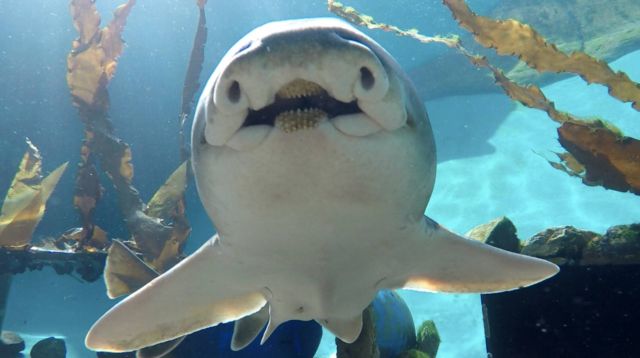
Sharks of the same species can have different personalities, indicates a new study published in the Journal of Fish Biology.

The study, led by Dr. Evan Byrnes of Macquarie University in North Ryde, Australia, examined interindividual personality differences between Port Jackson sharks (Heterodontus portusjacksoni).

Trials were designed to test the sharks’ boldness, which is a measure of their propensity to take risks, but also an influencer of individual health through its correlation with stress hormones and associated physiological profiles.

Port Jackson sharks were first introduced to a tank where they were provided with shelter, and timed to see how long it took for each shark to emerge from their refuge box into a new environment.

The second behavior test exposed each shark to handling stress, similar to handling by a fisherman, before releasing them again and observing how quickly they recovered.

The results demonstrated that each shark’s behavior was consistent over repeated trials, indicating ingrained behaviors rather than chance reactions.

That is, some sharks were consistently bolder than others, and the sharks that were the most reactive to handling stress in the first trial were also the most reactive in a second trial.

“This work shows that we cannot think of all sharks as the same,” Dr. Byrnes said.

“Each has its own preferences and behaviors, and it is likely that these differences influence how individuals interact with their habitat and other species.”

“We are excited about these results because they demonstrate that sharks are not just mindless machines. Just like humans, each shark is an individual with its unique preferences and behaviors,” said co-author Dr. Culum Brown, also from Macquarie University.

“Our results raise a number of questions about individual variation in the behavior of top predators and the ecological and management implications this may have. If each shark is an individual and doing its own thing, then clearly managing shark populations is much more complicated than we previously thought.”

“Understanding how personality influences variation in shark behavior – such as prey choice, habitat use and activity levels – is critical to better managing these top predators that play important ecological roles in marine ecosystems.”

_____

E.E. Byrnes & C. Brown. Individual personality differences in Port Jackson sharks Heterodontus portusjacksoni. Journal of Fish Biology, published online May 26, 2016; doi: 10.1111/jfb.12993

Bumblebees Use Vibrating Hairs to Detect Floral Electric Fields

Bumblebees use information from surrounding electric fields to make foraging decisions.

However, how they detect these fields has been a mystery – until now.

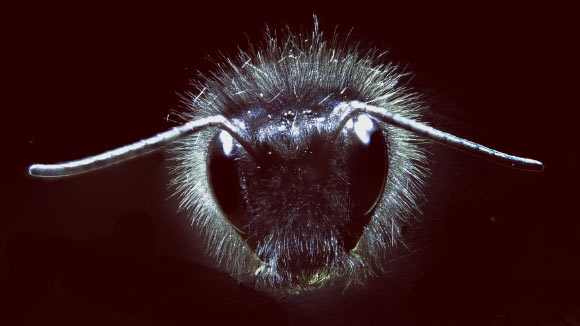
Mechanosensory hairs may explain how bumblebees sense electric signals transmitted by flowers, says a team of scientists at the University of Bristol, UK.

Focusing on the buff-tailed bumblebee (Bombus terrestris), Bristol scientists tested two potential mechanisms that would allow the insects to detect electric fields through the insulating medium of dry air: deflections of either the antenna or hairs.

Using a laser to measure vibrations, they found that both the antenna and mechanosensory hairs deflect in response to an electric field, but the hairs move more rapidly and with overall greater displacements.

They then looked at the bumblebees’ nervous system, finding that only the hairs alerted their nervous system to this signal.

“This ability may arise from the low mass and high stiffness of bumblebee hairs, the rigid, lever-like motion of which resembles acoustically sensitive spider hairs and mosquito antennae,” the researchers said.

Noting that mechanosensory hairs are common in arthropods, they suggest that electroreception could be a widespread phenomenon that provides insects with a variety of currently unrecognized abilities.

“We were excited to discover that bumblebees’ tiny hairs dance in response to electric fields, like when humans hold a balloon to their hair,” said lead author Dr. Gregory Sutton from the University of Bristol’s School of Biological Sciences.

“A lot of insects have similar body hairs, which leads to the possibility that many members the insect world may be equally sensitive to small electric fields.”

“Scientists are particularly interested in understanding how floral signals are perceived, received and acted upon by bees as they are critical pollinators of our crops,” he added.

“Research into these relationships has revealed the co-evolution of flowers and their pollinators, and has led to the unraveling of this important network which keeps our planet green.”

The team’s findings have been accepted for publication in the Proceedings of the National Academy of Sciences.

http://www.sci-news.com/biology/bumblebees-hairs-detect-floral-electric-fields-03909.html?utm_source=feedburner&utm_medium=feed&utm_campaign=Feed%3A+BreakingScienceNews+%28Breaking+Science+News%29

The Tardigrade – an indestructible life form

American Typewr... Aldo the Apache
American Typewr…
Aldo the Apache

After being locked in a deep freeze for more than 30 years, two microscopic creatures called tardigrades have been resuscitated, with one of the adults getting busy with reproduction “immediately” and “repeatedly,” scientists reported. Scientists were even able to revive a tardigrade egg after it spent the past three decades cooling its jets alongside the mature duo in a researcher’s freezer.

Their findings shattered the previous preservation and revival record for tardigrades and their eggs, which had been eight years for frozen tardigrades and nine years for dried eggs stored at room temperature.

Scientists retrieved the two microscopic Acutuncus antarcticus hitchhikers and one egg from a piece of frozen moss that had been collected in Antarctica in 1983. For years, the moss was kept frozen at minus 4 degrees Fahrenheit (minus 20 degrees Celsius.) During that time, the tardigrades maintained a state known as “cryptobiosis,” showing no visible signs of life and with their metabolic processes at a standstill. But after more than 30 years in this suspended state, they were brought back to life. Scientists rehydrated them and video-recorded the results, observing that after just one day, a revived tardigrade was tentatively stretching a pair of its stubby legs. Six days after rehydration, the tardigrade was moving its body, as though it were trying to lift itself, the researchers noted. After 13 days had passed, the animal was eating algae, its first meal in decades, And after 22 days, eggs were visible inside the tardigrade’s chubby body. It eventually laid 19 eggs. A. antarcticus reproduce through parthenogenesis, which means that their embryos grow and develop without fertilization, and in this instance, a total of 14 hatchlings emerged. The other tardigrade survived for just 20 days after rehydration, and died without reproducing. But the frozen egg hatched and produced a larva that went on to lay 15 eggs, of which seven hatched successfully.

Tardigrades, which also go by the endearing names “water bears” and “moss piglets,” measure about 0.02 inches (0.5 mm) long. They have eight limbs tipped with clawlike structures that propel their plump, segmented bodies through a variety of watery, algae-rich environments all over the world. But they have a hidden superpower — surviving adverse conditions such as extreme heat or cold that would kill just about any other form of life. Tardigrades were even sent into low-Earth orbit in 2007, where they weathered exposure to space’s vacuum, cosmic rays and solar ultraviolet radiation. Their secret lies in an ability to expel all the water in their cells and generate a protective coating, suspending them in a deathlike but still-living state that they can maintain until conditions improve. Other tiny creatures are known for similar long-term preservation capabilities. The researchers described prior studies that revived refrigerated adult and larval nematodes, microscopic worms, after as long as 39 years. But reviving a tardigrade after 30 years is unprecedented, and their ability to reproduce after a brief recovery period is a testament to their durability. It also raises questions about their preservation mechanisms, and how they and other organisms can survive a deep-freeze recover, and how they repair cellular and DNA damage when they’re restored to life, Megumu Tsujimto, the lead researcher at National Institute of Polar Research, said in a statement. Looks like the cold never bothered them anyway. The study was published online Feb. 16 in the journal Cryobiology

See more at: http://www.livescience.com/53781-tardigrade-revived-after-30-years.html#sthash.cF8xM2Fn.dpuf

Movile Cave: 5.5-million-year-old sealed world that was discovered under Romania

by Michael d’Estries

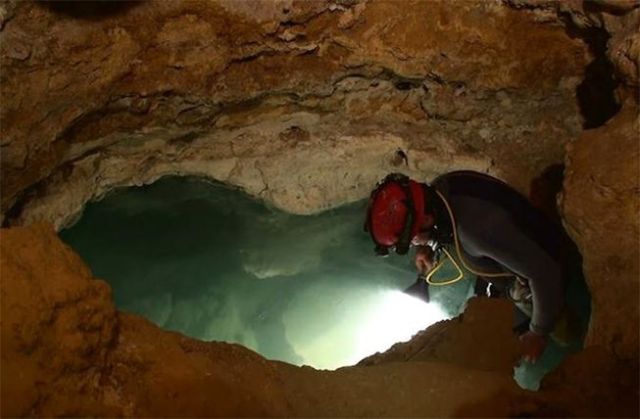
Back in 1986, during surveys for the location of a power plant near the Black Sea in Romania, construction workers digging more than 60 feet underground broke into a bizarre, previously untouched ecosystem.

Called the Movile Cave, this subterranean wonder has been sealed for an estimated 5.5 million years. The air is warm and deadly, with noxious gases and little oxygen, the tunnels narrow, the pure and utter darkness the stuff of nightmares. But what has shocked the few scientists who’ve entered this underground Middle Earth of Horrors is that the place is absolutely teeming with life.

More specifically, creepy-crawly life.

Water scorpions, worms, spiders, predatory leeches and previously unknown microbes are just a few of the creatures in Movile. In fact, of the 48 species that have been identified, a remarkable 33 are new to science.

“All the creatures we saw are completely white,” Microbiologist Rich Boden, one of only 30 people to have entered Movile, said in an interview. “None of them has any pigmentation in their body as there is no sunlight — you can see right through them.”

Most of the species also have no eyes, evolution having done away with that sense long ago in favor of longer antennae and arms.

“I thought it was odd that the spiders still spin webs down there because there are no flies, but then you see there are these little insects called spring-tails, which bounce into the air and are caught by the webs,” added Boden. “It really is the stuff of science-fiction.”

Because no organic matter from the surface makes its way into Movile, scientists were at first puzzled as to how an entire world could possibly flourish under such harsh conditions. The answer lies in vast “mats” on the surface of the cave’s waters and walls. These mats contain millions upon millions of tiny bacteria called autotrophs. Instead of photosynthesis, these autotrophs use a process called chemosynthesis, which obtains chemical energy from the oxidation of sulfur compounds and ammonia in the cave waters, explains the Murrell Lab, part of the University of East Anglia’s School of Environmental Sciences. The resulting milky film of microorganisms serves as the foundation for the rest Movile’s ecosystem.

“It’s very likely that the bacteria have been there a lot longer than 5 million years, but that the insects became trapped there around that time,” microbiologist J. Colin Murrell of University of East Anglia told the BBC. “They could have simply fallen in and become trapped when the limestone cast dropped, sealing the cave until it was discovered again in 1986.”

Movile’s unique conditions for life are so alien that the Romanian press quoted one scientist as saying that “if a nuclear war swept out life on Earth, that ecosystem would be a survivor.”

http://www.mnn.com/earth-matters/animals/blogs/55-million-year-old-alien-world-hiding-under-romania

Obama Signs Legislation Designating Bison National Mammal

The bison has become the official national mammal of the United States under legislation signed into law by President Barack Obama on Monday.

Lawmakers spearheading the effort say the once nearly extinct icon deserves the elevated stature because of its economic and cultural significance in the nation’s history.

Millions of bison once roamed the Great Plains. About 500,000 now live in the U.S. but most of those have been cross-bred with cattle, and are semi-domesticated. About 30,000 wild bison roam the country, with the largest population in Yellowstone National Park.

Supporters of the legislation say they believe the recognition will elevate the stature of the bison to that of the bald eagle, long the national emblem, and bring greater attention to ongoing recovery efforts of the species.

“I hope that in my lifetime, thanks to a broad coalition of ranchers, wildlife advocates and tribal nations, we will see bison return to the prominent place they once occupied in our nation’s shortgrass prairies,” said Democratic Sen. Martin Heinrich of New Mexico, who worked with Republican Sen. John Hoeven of North Dakota to pass the Senate version of the legislation.

http://www.nbcnews.com/news/us-news/obama-signs-legislation-designating-bison-national-mammal-n570801

Plastic-eating bacteria discovered in recycling plant

By Eva Botkin-Kowacki

Plastic is everywhere around us. We drink out of plastic cups, buy disposable water bottles, unwrap new electronics from plastic packaging, take home plastic shopping bags, and even wear plastic in polyester fabrics.

Some 311 million tons of plastic is produced across the globe annually, and just 10 percent makes it back to a recycling plant. The rest ends up in landfills, or as litter on land or in the ocean, where it remains for decades and longer.

As for the plastic that has been recycled, it has given rise to an unintended side effect: A team of scientists searching through sediments at a plastic bottle recycling plant in Osaka, Japan have found a strain of bacteria that has evolved to consume the most common type of plastic.

Ideonella sakaiensis 201-F6 can degrade poly (ethylene terephthalate), commonly called PET or PETE, in as little as six weeks, they report in a new paper published Thursday in the journal Science.

Common uses of PET include polyester fibers, disposable bottles, and food containers. The last two are typically labelled with a No. 1 inside a recycling symbol.

But this new paper doesn’t mean you should ditch your reusable water bottles in favor of a tray of disposable ones, or that we’re going to inject this bacteria into landfills tomorrow. This study simply evaluated if the bacteria in question could degrade PET and was conducted under laboratory conditions.

“We hope this bacterium could be applied to solve the severe problems by the wasted PET materials in nature,” Kohei Oda, one of the study authors, tells The Christian Science Monitor in an email. But “this is just the initiation for application.” More research has to be done in order to make this a practical solution to plastic pollution.

But could this sort of fix work in theory?

“[Plastics] have been engineered for cost and for durability, or longevity,” says Giora Proskurowski, an oceanographer at the University of Washington who studies plastic debris in the ocean but was not part of this study, in a phone interview with the Monitor. But he’s hopeful that this research could yield further studies and technologies to mitigate the problem.

The durability of plastic isn’t the only challenge this potential fix faces. Microbes are like teenagers, Christopher Reddy, a senior scientist at Woods Hole Oceanographic Institution who studies environmental pollution and was not part of this study, explains in an interview with the Monitor.

“You can tell them to clean the garage over the weekend but they’re going to do it on their own timescale, they’re going to do it when they want, they’re going to pick the easiest thing to do and they’re likely going to leave you more frustrated than you think,” he explains the metaphor. Similarly, you can’t rely on microbes to break down compounds. “Don’t rely on microbes to clean the environment.”

Dr. Reddy says that has a lot to do with the environment outside the lab. In the experiment, he says, the researchers controlled the situation so the bacteria ate the plastic, but in nature, they would have many options for food.

Also, if I. sakaiensis 201-F6 were to be applied, it would likely only help plastic pollution on land. PET particles are denser than water, so they tend to sink down into the sediment. The trillions of tons of plastic particles amassing in the oceans are other types of plastics, types for which this bacteria probably lacks an appetite. Also, Dr. Proskurowski says, marine organisms have evolved to withstand the saltwater and sunlight that sediment-dwelling organisms might not.

Still, perhaps this bacteria could be harnessed to accelerate degradation of plastics that make it to a landfill, he says.

But this study does show that “the environment is evolving and you get the microbes evolving along with that as well,” Proskurowski says. “These are evolving systems.”

Neither Proskurowski nor Reddy were surprised that the researchers found an organism that can consume PET.

“I’m surprised it’s taken this long. I’ve been waiting for results like this,” Proskurowski says.

“Nature is incredibly wily, microbes are incredibly wily,” Reddy says. “Microbes are very good eaters.”

This is not the first time researchers have found an organism that will eat trashed plastic. Last year engineers at Stanford University found a mealworm that can eat styrofoam. And in that case, it was not the animal’s digestion that broke down the styrofoam, but bacteria it its gut.

http://www.csmonitor.com/Science/2016/0310/Researchers-discover-plastic-eating-bacteria-in-recycling-plant