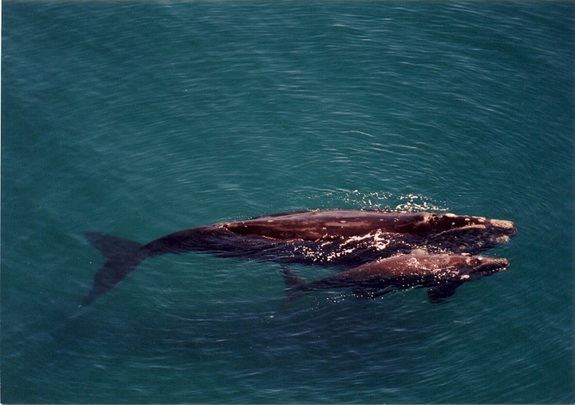
Kelp gulls may be responsible for the worst-ever Right Whale die-off

southern-right-whale

Scientists still don’t know why hundreds of baby southern right whales are turning up dead around Patagonia, a decade after observers first saw signs of the worst die-off on record for the species, according to the Wildlife Conservation Society (WCS).

With no evidence of infectious diseases or deadly toxins in whale tissue samples, scientists are scrambling to determine a cause of death. Some are even pointing a finger at blubber-eating birds.

The whales come to the peaceful Atlantic bays around Peninsula Valdes along Argentina’s Patagonian Coast to give birth and raise their young. At least 605 dead right whales have been counted in the region since 2003, WCS officials say. Of those, 538 were newborn calves. Last year, the mortality event was especially severe, with a record-breaking 116 whale deaths, 113 of them calves.

“In 2012 we lost nearly one-third of all calves born at the Peninsula,” said Mariano Sironi, scientific director of the Instituto de Conservacion de Ballenas in Argentina. “Southern right whales have their first calf when they are nine years old on average. This means that it won’t be until a decade from now that we will see a significant reduction in the number of calves born, as all of the female calves that died will not be contributing any new offspring to the population,” Sironi, who is also an advisor to the Southern Right Whale Health Monitoring Program, added in a statement.

Sironi and colleague Vicky Rowntree, who is co-director of the monitoring program, have studied a strange phenomena that could be stressing southern right whales. They say kelp gulls at Peninsula Valdes land on the backs of the cetaceans to eat their skin and blubber.

“The attacks are very painful and cause large, deep lesions, particularly on the backs of young 2-6 week-old calves,” the researchers said in a statement from WCS. “This harassment can last for hours at a time. As a result, right whale mothers and their calves are expending much precious energy during a time of year when mothers are fasting and at a site where little to no food is available to replenish fat reserves.”

The situation is discouraging for a species that had made a significant comeback since its population was depleted by the whaling industry.

“The southern right whale population is still only a small fraction of its original size, and now we have reason to worry about its recovery,” Rowntree said.

Though the southern right whale is not listed as endangered, conservationists warn that the species’ sister populations could go extinct if hit with a mysterious die-off on this scale. For instance, there are thought to be just about 500 North Atlantic right whales remaining.

Thanks to Dr. Lutter for bringing this to the attention of the It’s Interesting community.

http://news.yahoo.com/worst-ever-whale-die-off-continues-puzzle-110222538.html
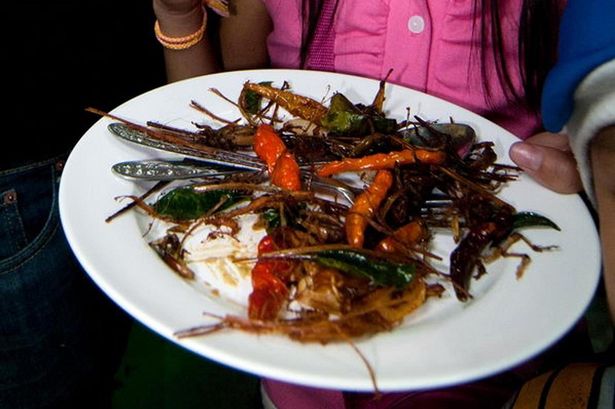
United Nations encourages more world-wide consumption of insects as important food source

eat-bugs
Insects are high in protein and minerals, need far less feed per kilo of mass than cattle do and produce far less greenhouse gas per kilo than pigs.

A United Nations food agency is pushing a new kind of diet for a hungry world.

It ranks high in nutritional value and gets good grades for protecting the environment: edible insects.

The Rome-based Food and Agriculture Organization hailed the likes of grasshoppers, ants and other members of the insect world as an underutilised food for people, livestock and pets. A new report says two billion people worldwide already supplement their diets with insects. Insects are high in protein and minerals, need far less feed per kilo of mass than cattle do and produce far less greenhouse gas per kilo than pigs. While most edible insects are gathered in forests, the UN says mechanisation can boost insect-farming production. Currently most insect farming serves niche markets.

http://www.mirror.co.uk/news/world-news/united-nations-wants-eat-more-1887995

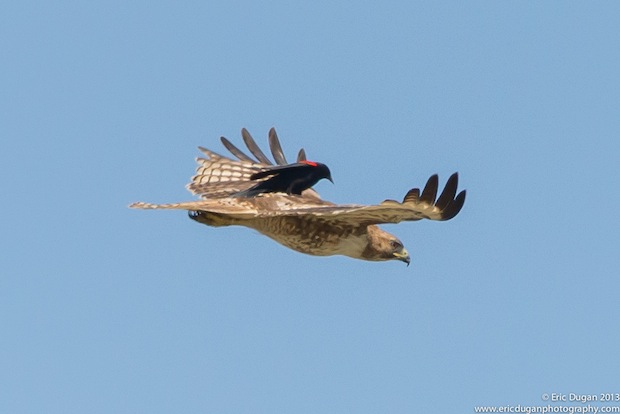
Blackbird hitches a ride atop a red-tailed hawk

Landing On A Raptor

Brave Little Balckbird

These images show a red-winged blackbird standing on the back of a red-tailed hawk, looking as if it’s catching a ride to another destination. The series of images were captured recently by photographer Eric Dugan at Napa-Sonoma Marshes Wildlife Area in Northern California. They first appeared in a San Francisco Chronicle story written by outdoors columnist Tom Stienstra.

Dugan described the event:

“I was exploring the wildlife refuge and heard the screech of a red-tailed hawk, loud and repeated. I scanned the sky but didn’t see anything at first. Then, in the distance, I saw a young red-tailed hawk sitting on a telephone pole and the red-winged blackbirds were jumping on and off its back and head, apparently to drive it away from a nesting area.

“I immediately stopped, changed to my long lens, and set up my camera in anticipation for the show. As I walked closer, I anticipated that the hawk would take flight and the blackbirds would pursue it, to drive it out of their territory. I raised the camera and the blackbird actually landed on the hawk multiple times.

“The small bird was so far more maneuverable in flight that all the hawk could do was tolerate it and fly away.”

Dugan stated via email that the photos “are 100 percent legit” and that his only edits were exposure- and shadow-related since lighting was harsh at certain points because of the bright sunshine.

“I went back to the same spot a few days later hoping lightning would strike twice,” Dugan said. “But the red-tailed hawks were hunting way off in the distance.”

His final remark: “Red-winged blackbirds are fearless.”

http://www.grindtv.com/outdoor/nature/post/blackbird-hitches-a-ride-atop-a-red-tailed-hawk/

Thanks to Ray Gaudette for bringing this to the attention of the It’s Interesting community.

Congregation of stray dogs in Poland reveals that amputated limbs were dumped in warehouse

dogs

A Polish businessman who tried to save money by stashing amputated body parts in warehouses instead of incinerating them was exposed by the nose of man’s best friend, prosecutors said.

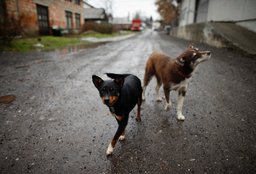
Stray dogs, attracted by the smell, started gathering outside the warehouses, Polish television quoted prosecutors as saying on Friday.

Police were alerted and made the grisly discovery when they searched the compound, broadcaster TVN CNBC reported.

The owner of the company, in the southern city of Katowice, could be sentenced to up to 12 years in prison for endangering public health, the station quoted prosecutors as saying.

Prosecutors could not immediately be reached for comment.

According to the report, the company had contracts with around 300 medical hospitals and clinics to dispose of medical waste, which included amputated body parts.

The broadcaster reported that the company initially buried the waste underground at a private plot, and when space ran out, started using the warehouses. Prosecutors found 100 tonnes of medical waste that the firm had failed to dispose of properly, it said.

http://cnews.canoe.ca/CNEWS/WeirdNews/2013/05/10/20812016.html

Marine, dog reunited in surprise ceremony

dog

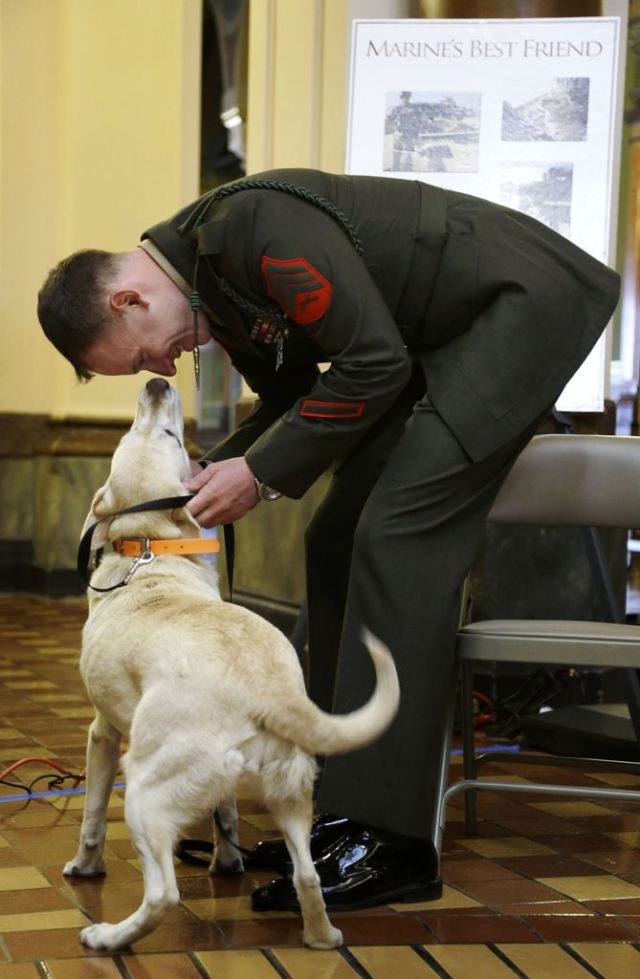
When Marine Sgt. Ross Gundlach served as a dog handler in Afghanistan, he told the yellow lab who was his constant companion that he’d look her up when he returned home. “I promised her if we made it out of alive, I’d do whatever it took to find her,” Gundlach said.

On Friday, he made good on that vow with help from some sentimental state officials in Iowa who know how to pull off a surprise. Since leaving active duty to take classes at the University of Wisconsin this summer, Gundlach, of Madison, Wis., had been seeking to adopt 4-year-old Casey.

The 25-year-old learned Casey had finished her military service and had been sent to the Iowa State Fire Marshal’s Office, where she was used to detect explosives. Gundlach wrote to State Fire Marshal Director Ray Reynolds, explaining the connection he felt with the dog. He even has a tattoo on his right forearm depicting Casey with angel wings and a halo, sitting at the foot of a Marine.

“He’s been putting a case together for the last two months, sending me pictures … it just tugged on your heart,” Reynolds said.

Reynolds decided to arrange a surprise. First, he got in touch with the Iowa Elk’s Association, which agreed to donate $8,500 to buy another dog for the agency.

“We have a motto in our association that as long as there are veterans, the Elks will strive to help them,” Iowa Elks Association president Tom Maher said. Then, Reynolds came up with a ruse to get Gundlach to Des Moines, telling Gundlach he needed to come to the state Capitol to plead his case in front of a “bureaucratic oversight committee.”

When Gundlach arrived with his parents, Reynolds told them the meeting had been delayed and invited them to join an Armed Services Day celebration in the rotunda. There, hundreds of law enforcement officers, military personnel and civilians were seated, keeping the secret — until they brought out Casey. When Gundlach saw Casey, he put his head in his hands and cried. She licked his face, wagging her tail furiously.

“It was a total surprise,” he said. “I owe her. I’ll just try to give her the best life I can.”

His father, Glen Gundlach, seemed just as surprised. “It’s unbelievable … the state of Iowa, I love ’em,” he said.

Gov. Terry Branstad officially retired Casey from active duty during Friday’s ceremony, thanking the dog for a “job well done.”

During the 150 missions they performed together, Gundlach said Casey never missed an explosive — she caught three before they could be detonated. He credits her for making it back home safely.

“I wouldn’t be here … any kids I ever had wouldn’t exist if Casey hadn’t been here,” he said.

http://news.yahoo.com/marine-dog-reunited-surprise-ceremony-205112134.html;_ylt=Ar.ysfGFUOy8ZQpyv.IgyQMavMB_;_ylu=X3oDMTIzNzg2dm04BG1pdANIQ01PTCBvbiBhcnRpY2xlIHJpZ2h0IHJhaWwEcGtnA2lkLTMyNzU4MjUEcG9zAzUEc2VjA2hjbQR2ZXIDMTI-;_ylg=X3oDMTBhYWM1a2sxBGxhbmcDZW4tVVM-;_ylv=3

Thank to Kebmnodee for bringing this to the attention of the It’s Intereresting community.

Depression and some antidepressant medications may raise risk of gut infection

Clostridium%20difficile%20C

Two studies have found that depression and the use of certain antidepressants are both associated with increased risk for Clostridium difficile infection, an increasingly common cause of diarrhea that in the worst cases can be fatal.

Researchers studied 16,781 men and women, average age 68, using hospital records and interviews to record cases of the infection, often called C. diff, and diagnoses of depression. The interviews were conducted biennially from 1991 to 2007 to gather self-reports of feelings of sadness and other emotional problems. There were 404 cases of C. difficile infection. After adjusting for other variables, the researchers found that the risk of C. diff infection among people with a history of depression or depressive symptoms was 36 to 47 percent greater than among people without depression.

A second study, involving 4,047 hospitalized patients, average age 58, found a similar association of infection with depression. In addition, it found an association of some antidepressants — Remeron, Prozac and trazodone — with C. diff infection. There was no association with other antidepressants. “We have known for a long time that depression is associated with changes in the gastrointestinal system,” said the lead author, Mary A.M. Rogers, a research assistant professor at the University of Michigan, “and this interaction between the brain and the gut deserves more study.”

Both reports appeared in the journal BMC Medicine.

Big Brains May Help Baby Seals Survive Under Ice

sn-seals

Weddell seals (Leptonychotes weddellii) are the only mammal that dares to swim long distances under sea ice, traveling up to 20 kilometers in hour-long bursts as they scan for air holes and an eventual exit somewhere in the midst of vast Antarctic sheets. There, mothers give birth so that their pups will be safe from leopard seals and killer whales. But how do those pups learn to navigate the risky underwater terrain so quickly? They’re born with big brains, according to a study published online and in an upcoming issue of Marine Mammal Science. Researchers measured 12 carcasses and found that the brains of newborn pups are 70% the size of adult brains—the largest percentage of any mammal. In comparison, the brains of human babies are only 25% the size of adults.

http://news.sciencemag.org/sciencenow/2013/05/scienceshot-big-brains-may-help-.html

Bear eats monkey when forced to ride bike at Shanghai Wild Animal Park

A monkey was mauled by a bear after a disturbing circus stunt went wrong.

A video has emerged online of two monkeys and a black bear being forced to ride bicycles around a track in front of a large crowd.

After two laps of the track, one of the monkeys crash and the bear then attacks it as it lies stuck under the bicycle.

The video is believed to have been shot at the Shanghai Wild Animal Park, in China, which has hit the headlines in the past for its ‘Wild Animal Olympics’.

In the video, the audience can be heard cheering and laughing as the animals are sent riding around the small arena.

Circus workers holding sticks push the small bikes off but after a few seconds one monkey and the bear crash.

Staff can be seen desperately trying to force the bear off as it grabs the small monkey in its mouth.

At one stage three workers, dressed in brightly coloured costumes, try to wrestle the bear away, while another leads the second monkey away.

Campaign group Animals Asia said it has previously documented cheetahs, lions, tigers, bears, chimpanzees and an elephant being forced to perform in the ‘Wild Animal Olympics’.

It is not clear when the latest video was taken but Shanghai Wild Animal Park said in 2006 that the Olympic event had been scrapped following complaints and ‘out of consideration for the safety of our visitors.’

Stunts in the show had included making bears box one another and ride bicycles, kangaroos boxing humans and monkeys lifting weights.

Visitors to the park can also pay to have their picture taken with the big cats and other animals.

Animals Asia said some of the creatures had also been declawed.

China Tour Online’s website said the park ‘offers animal performances, showing the charm and skill of the animals and their gift in performing.’

Thanks to Kebmodee for bringing this to the attention of the It’s Interesting community.

Read more: http://www.dailymail.co.uk/news/article-2320745/Bear-forced-ride-bike-sick-circus-stunt-crashes-mauls-monkey-large-crowd.html#ixzz2T1OBSdWz
Follow us: @MailOnline on Twitter | DailyMail on Facebook

Carnivorous Plant Ejects Junk DNA

sn-carnivorous

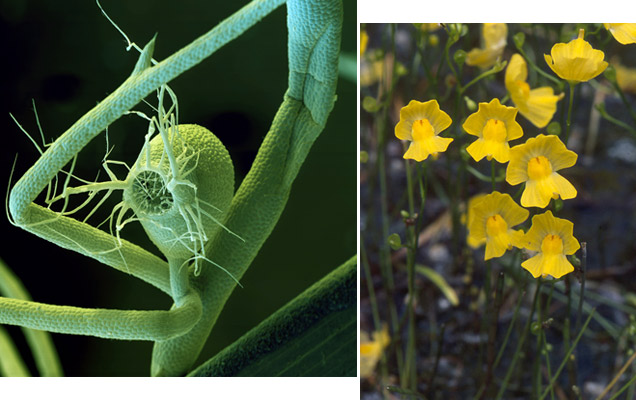
The carnivorous humped bladderwort (Utricularia gibba), found on all continents except Antarctica, is a model of ruthless genetic efficiency. Only 3% of this aquatic plant’s DNA is not part of a known gene, new research shows. In contrast, only 2% of human DNA is part of a gene. The bladderwort, named for its water-filled bladders (shown left) that suck in unsuspecting prey, is a relative of the tomato. Since their evolutionary split 87,000 years ago, both plants have experienced episodes of genetic duplication where the plants’ DNA doubled in size. But while the tomato has held onto a lot of those duplicates, the bladderwort has thrown out anything it doesn’t need, and now has a genome only a tenth as long as the tomato’s. The finding, published recently in Nature, overturns the notion that this repetitive, non-coding DNA, popularly called “junk” DNA, is necessary for life.

http://news.sciencemag.org/sciencenow/2013/05/scienceshot-carnivorous-plant-ej.html