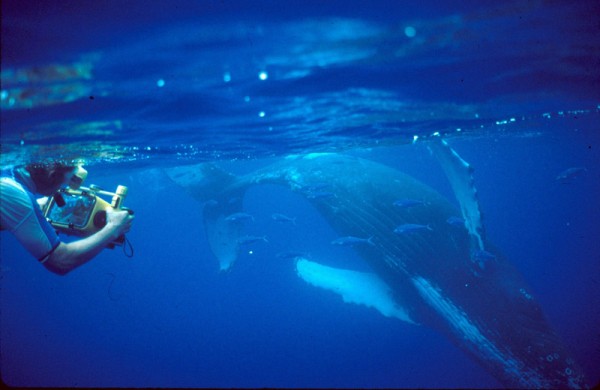
Man becomes drunk when stomach turns into brewery

beer_1016300_fullwidth_620x350

When a 61-year-old Texas man came into an emergency room claiming he was dizzy and was found to have a blood alcohol concentration of 0.37 percent, doctors assumed he was drunk. Despite the fact the man claimed he hadn’t consumed alcohol that day, most doctors still thought he was a “closet drinker,” NPR reported.

It turned out that those medical professionals were wrong: the man had “auto-brewery syndrome.” His stomach contained so much yeast that he was making his own in-house brew, literally. Before he was diagnosed with the syndrome, the patient’s wife — who was a nurse — was so concerned with her husband’s constantly drunk condition that she had him regularly tested with a Breathalyzer. He would record numbers as high as 0.33 to 0.4 percent, considerably higher than the U.S. legal driving limit of 0.08 percent.

Barbara Cordell, the dean of nursing at Panola College in Carthage, Texas, and Dr. Justin McCarthy, a gastroenterologist in Lubbock, Texas, decided to figure out what was really going on.

“He would get drunk out of the blue — on a Sunday morning after being at church, or really, just anytime,” Cordell told NPR.

After isolating the patient for 24 hours and making sure there was no alcohol or sugar available, the team continued to check his blood alcohol level. The levels were as high as 0.12 percent without any alcohol consumption. The doctors then realized that he must have been infected with high levels Saccharomyces cerevisiae, a kind of yeast that is used in alcohol fermentation and baking. They suspected that because the patient had been put on antibiotics following surgery for a broken foot in 2004, the medications might have killed all his gut bacteria. This allowed the yeast to thrive in his body.

The Environmental Protection Agency said the organism is not considered to be a pathogen, and some people take large quantities of the yeast daily as part of a “health food” diet.”No one takes potential danger from Saccharomyces cerevesiae seriously,” Dr. Michael D. Gershon, a professor in the department of pathology and cell biology at Columbia University in New York, told CBSNews.com.

Gershon added that the yeast is so non-threatening that it is often used by researchers in studies without any additional precautions.

Interviews revealed the man ate a lot of carbohydrates. That meant each time the patient ate something with starch, the high amounts of yeast in his body turned the sugars into ethanol or ethyl alcohol, which made him drunk from the inside. To cure his illness, the patient was placed on a low-carbohydrate diet and prescribed antifungal medication to get rid of the excess yeast.

His case study was published in the International Journal of Clinical Medicine earlier this summer.

The researchers acknowledge that this condition is extremely rare. Only a handful of cases have been reported in the last three decades, including a 13-year-old girl with short gut syndrome who would get drunk if she ate carbohydrates. Another 3-year-old with the same condition became drunk when she had a fruit drink high in carbohydrates.

“This is a rare syndrome but should be recognized because of the social implications such as loss of job, relationship difficulties, stigma, and even possible arrest and incarceration,” the authors noted. “It would behoove health care providers to listen more carefully to the intoxicated patient who denies ingesting alcohol.”

Thanks to Mike Moore for bringing this to the attention of the It’s Interesting community.

Scientists create never-before-seen form of matter

matter

Harvard and MIT scientists are challenging the conventional wisdom about light, and they didn’t need to go to a galaxy far, far away to do it.

Working with colleagues at the Harvard-MIT Center for Ultracold Atoms, a group led by Harvard Professor of Physics Mikhail Lukin and MIT Professor of Physics Vladan Vuletic have managed to coax photons into binding together to form molecules – a state of matter that, until recently, had been purely theoretical. The work is described in a September 25 paper in Nature.

The discovery, Lukin said, runs contrary to decades of accepted wisdom about the nature of light. Photons have long been described as massless particles which don’t interact with each other – shine two laser beams at each other, he said, and they simply pass through one another.

“Photonic molecules,” however, behave less like traditional lasers and more like something you might find in science fiction – the light saber.

“Most of the properties of light we know about originate from the fact that photons are massless, and that they do not interact with each other,” Lukin said. “What we have done is create a special type of medium in which photons interact with each other so strongly that they begin to act as though they have mass, and they bind together to form molecules. This type of photonic bound state has been discussed theoretically for quite a while, but until now it hadn’t been observed.

“It’s not an in-apt analogy to compare this to light sabers,” Lukin added. “When these photons interact with each other, they’re pushing against and deflect each other. The physics of what’s happening in these molecules is similar to what we see in the movies.”

To get the normally-massless photons to bind to each other, Lukin and colleagues, including Harvard post-doctoral fellow Ofer Fisterberg, former Harvard doctoral student Alexey Gorshkov and MIT graduate students Thibault Peyronel and Qiu Liang couldn’t rely on something like the Force – they instead turned to a set of more extreme conditions.

Researchers began by pumped rubidium atoms into a vacuum chamber, then used lasers to cool the cloud of atoms to just a few degrees above absolute zero. Using extremely weak laser pulses, they then fired single photons into the cloud of atoms.

As the photons enter the cloud of cold atoms, Lukin said, its energy excites atoms along its path, causing the photon to slow dramatically. As the photon moves through the cloud, that energy is handed off from atom to atom, and eventually exits the cloud with the photon.

“When the photon exits the medium, its identity is preserved,” Lukin said. “It’s the same effect we see with refraction of light in a water glass. The light enters the water, it hands off part of its energy to the medium, and inside it exists as light and matter coupled together, but when it exits, it’s still light. The process that takes place is the same it’s just a bit more extreme – the light is slowed considerably, and a lot more energy is given away than during refraction.”

When Lukin and colleagues fired two photons into the cloud, they were surprised to see them exit together, as a single molecule.

The reason they form the never-before-seen molecules?

An effect called a Rydberg blockade, Lukin said, which states that when an atom is excited, nearby atoms cannot be excited to the same degree. In practice, the effect means that as two photons enter the atomic cloud, the first excites an atom, but must move forward before the second photon can excite nearby atoms.

The result, he said, is that the two photons push and pull each other through the cloud as their energy is handed off from one atom to the next.

“It’s a photonic interaction that’s mediated by the atomic interaction,” Lukin said. “That makes these two photons behave like a molecule, and when they exit the medium they’re much more likely to do so together than as single photons.”

While the effect is unusual, it does have some practical applications as well.

“We do this for fun, and because we’re pushing the frontiers of science,” Lukin said. “But it feeds into the bigger picture of what we’re doing because photons remain the best possible means to carry quantum information. The handicap, though, has been that photons don’t interact with each other.”

To build a quantum computer, he explained, researchers need to build a system that can preserve quantum information, and process it using quantum logic operations. The challenge, however, is that quantum logic requires interactions between individual quanta so that quantum systems can be switched to perform information processing.

“What we demonstrate with this process allows us to do that,” Lukin said. “Before we make a useful, practical quantum switch or photonic logic gate we have to improve the performance, so it’s still at the proof-of-concept level, but this is an important step. The physical principles we’ve established here are important.”

The system could even be useful in classical computing, Lukin said, considering the power-dissipation challenges chip-makers now face. A number of companies – including IBM – have worked to develop systems that rely on optical routers that convert light signals into electrical signals, but those systems face their own hurdles.

Lukin also suggested that the system might one day even be used to create complex three-dimensional structures – such as crystals – wholly out of light.

“What it will be useful for we don’t know yet, but it’s a new state of matter, so we are hopeful that new applications may emerge as we continue to investigate these photonic molecules’ properties,” he said.

http://phys.org/news/2013-09-scientists-never-before-seen.html

Thanks to Kebmodee for bringing this to the attention of the It’s Interesting community.

First mechanical gear discovered in a living creature

mechanical gear 2

mechanical gear 1

With two diminutive legs locked into a leap-ready position, the tiny jumper bends its body taut like an archer drawing a bow. At the top of its legs, a minuscule pair of gears engage—their strange, shark-fin teeth interlocking cleanly like a zipper. And then, faster than you can blink, think, or see with the naked eye, the entire thing is gone. In 2 milliseconds it has bulleted skyward, accelerating at nearly 400 g’s—a rate more than 20 times what a human body can withstand. At top speed the jumper breaks 8 mph—quite a feat considering its body is less than one-tenth of an inch long.

This miniature marvel is an adolescent issus, a kind of planthopper insect and one of the fastest accelerators in the animal kingdom. As a duo of researchers in the U.K. reported recently in the journal Science, the issus also the first living creature ever discovered to sport a functioning gear. “Jumping is one of the most rapid and powerful things an animal can do,” says Malcolm Burrows, a zoologist at the University of Cambridge and the lead author of the paper, “and that leads to all sorts of crazy specializations.”

The researchers believe that the issus—which lives chiefly on European climbing ivy—evolved its acrobatic prowess because it needs to flee dangerous situations. Although they’re not exactly sure if the rapid jump evolved to escape hungry birds, parasitizing wasps, or the careless mouths of large grazing animals, “there’s been enormous evolutionary pressure to become faster and faster, and jump further and further away,” Burrows says. But gaining this high acceleration has put incredible demands on the reaction time of insect’s body parts, and that’s where the gears—which “you can imagine being at the top of the thigh bone in a human,” Burrows says—come in.

“As the legs unfurl to power the jump,” Burrows says, “both have to move at exactly the same time. If they didn’t, the animal would start to spiral out of control.” Larger animals, whether kangaroos or NBA players, rely on their nervous system to keep their legs in sync when pushing off to jump—using a constant loop of adjustment and feedback. But for the issus, their legs outpace their nervous system. By the time the insect has sent a signal from its legs to its brain and back again, roughly 5 or 6 milliseconds, the launch has long since happened. Instead, the gears, which engage before the jump, let the issus lock its legs together—synchronizing their movements to a precision of 1/300,000 of a second.

The gears themselves are an oddity. With gear teeth shaped like cresting waves, they look nothing like what you’d find in your car or in a fancy watch. (The style that you’re most likely familiar with is called an involute gear, and it was designed by the Swiss mathematician Leonhard Euler in the 18th century.) There could be two reasons for this. Through a mathematical oddity, there is a limitless number of ways to design intermeshing gears. So, either nature evolved one solution at random, or, as Gregory Sutton, coauthor of the paper and insect researcher at the University of Bristol, suspects, the shape of the issus’s gear is particularly apt for the job it does. It’s built for “high precision and speed in one direction,” he says. “It’s a prototype for a new type of gear.”

Another odd thing about this discovery is that although there are many jumping insects like the issus—including ones that are even faster and better jumpers—the issus is apparently the only one with natural gears. Most other bugs synchronize the quick jolt of their leaping legs through friction, using bumpy or grippy surfaces to press the top of their legs together, says Duke University biomechanics expert Steve Vogel, who was not involved in this study. Like gears, this ensures the legs move at the same rate, but without requiring a complicated interlocking mechanism. “There are a lot of friction pads around, and they accomplish pretty much of the same thing,” he says. “So I wonder what extra capacity these gears confer. They’re rather specialized, and there are lots of other jumpers that don’t have them, so there must be some kind of advantage.”

Even stranger is that the issus doesn’t keep these gears throughout its life cycle. As the adolescent insect grows, it molts half a dozen times, upgrading its exoskeleton (gears included) for larger and larger versions. But after its final molt into adulthood—poof, the gears are gone. The adult syncs its legs by friction like all the other planthoppers. “I’m gobsmacked,” says Sutton. “We have a hypothesis as to why this is the case, but we can’t tell you for sure.”

Their idea: If one of the gear teeth were to slip and break in an adult (the researchers observed this in adolescent bugs), its jumping ability would be hindered forever. With no more molts, it would have no chance to grow more gears. And with every bound, “the whole system might slip, accelerating damage to the rest of the gear teeth,” Sutton says. “Just like if your car has a gear train missing a tooth. Every time you get to that missing tooth, the gear train jerks.”

Read more: http://www.popularmechanics.com/science/environment/the-first-gear-discovered-in-nature-15916433?click=pm_latest

Thanks to Jody Troupe for bringing this to the attention of the It’s Interesting community.

Largest volcano on Earth discovered lurking beneath Pacific Ocean and named after Texas A&M University

volcano

The world’s largest volcano lurks beneath the Pacific Ocean, researchers announced Thursday in the journal Nature Geoscience.

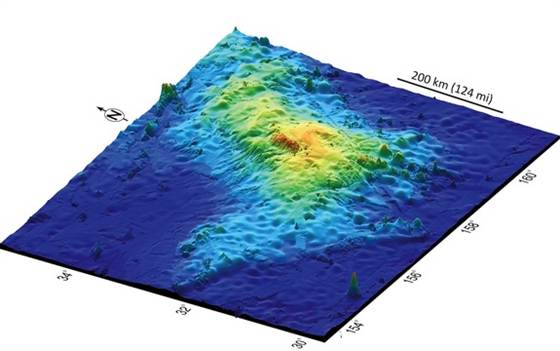
Called the Tamu Massif, the enormous mound dwarfs the previous record holder, Hawaii’s Mauna Loa, and is only 25 percent smaller than Olympus Mons on Mars, the biggest volcano in Earth’s solar system, said William Sager, lead study author and a geologist at the University of Houston.

“We think this is a class of volcano that hasn’t been recognized before,” Sager said. “The slopes are very shallow. If you were standing on this thing, you would have a difficult time telling which way was downhill.”

Tamu is 400 miles (650 kilometers) wide but only about 2.5 miles (4 km) tall. It erupted for a few million years during the early Cretaceous period, about 144 million years ago, and has been extinct since then, the researchers report.

Like other massive volcanoes, Tamu Massif seems to have a central cone that spewed lava down its broad, gentle slopes. The evidence comes from seismic surveys and lava samples painstakingly collected over several years of surveys by research ships. The seismic waves show lava flows dipping away from the summit of the volcano. There appears to be a series of calderas at the summit, similar in shape to the elongated and merged craters atop Mauna Loa, Sager said.

Until now, geologists thought Tamu Massif was simply part of an oceanic plateau called Shatsky Rise in the northwest Pacific Ocean. Oceanic plateaus are massive piles of lava whose origins are still a matter of active scientific debate. Some researchers think plumes of magma from deep in the mantle punch through the crust, flooding the surface with lava. Others suggest pre-existing weaknesses in the crust, such as tectonic-plate boundaries, provide passageways for magma from the mantle, the layer beneath the crust. Shatsky Rise formed atop a triple junction, where three plates pulled apart.

Tamu Massif’s new status as a single volcano could help constrain models of how oceanic plateaus form, Sager said. “For anyone who wants to explain oceanic plateaus, we have new constraints,” he told LiveScience. “They have to be able to explain this volcano forming in one spot and deliver this kind of magma supply in a short time.”

Geochemist David Peate of the University of Iowa, who was not involved in the study, said he looks forward to new models explaining the pulses of magma that built Shatsky Rise. Tamu Massif is the biggest and oldest volcano, and the cones grow smaller and younger to the northeast of Tamu. Sager and his colleagues suggest that pulses of magma created the volcanic trail.

“It seems that in many oceanic plateaus the melting is continuous, but here you have a big shield volcano,” Peate told LiveScience. “Understanding the source of the volume of that magma, the rate of production of the magma and the time interval between those pulses will help give better constraints to feed into those models,” he said.

Sager said other, bigger volcanoes could be awaiting discovery at other oceanic plateaus, such as Ontong Java Plateau, located north of the Solomon Islands in the southwest Pacific Ocean. “Structures that are under the ocean are really hard to study,” he said.

Oceanic plateaus are the biggest piles of lava on Earth. The outpourings have been linked to mass extinctions and climate change. The volume of Tamu Massif alone is about 600,000 cubic miles (2.5 million cubic km). The entire volcano is bigger than the British Isles or New Mexico.

Despite Tamu’s huge size, the ship surveys showed little evidence the volcano’s top ever poked above the sea. The world’s biggest volcano has been hidden because it sits on thin oceanic crust (or lithosphere), which can’t support its weight. Its top is about 6,500 feet (1,980 meters) below the ocean surface today.

“In the case of Shatsky Rise, it formed on virtually zero thickness lithosphere, so it’s in isostatic balance,” Sager said. “It’s basically floating all the time, so the bulk of Tamu Massif is down in the mantle. The Hawaiian volcanoes erupted onto thick lithosphere, so it’s like they have a raft to hold on to. They get up on top and push it down. And with Olympus Mons, it’s like it formed on a two-by-four.”

Sager and his colleagues have studied Shatsky Rise for decades, seeking to solve the puzzle of oceanic plateaus. About 20 years ago, they named Tamu Massif after Texas A&M University, Sager’s former employer, he said.

http://www.nbcnews.com/science/its-largest-volcano-earth-it-lurks-beneath-pacific-ocean-8C11085698

Die-off of bottlenose dolphins, linked to virus, is worst in 25 years

dying dolphins

A widespread die-off of bottlenose dolphins off the Mid-Atlantic Coast — the worst of its kind in more than a quarter-century — almost certainly is the work of a virus that killed more than 740 dolphins in the same region in 1987 and 1988, marine scientists said Tuesday.

Since the beginning of July, 357 dead or dying dolphins have washed ashore from New York to North Carolina — 186 of them in Virginia. Authorities have received numerous additional reports of carcasses floating in the ocean, said Teri Rowles, director of the marine mammal health and stranding response program for the National Oceanic and Atmospheric Administration’s fisheries service. The actual number of deaths is certainly greater, she said.

The cause is thought to be cetacean morbillivirus, which has been confirmed or is suspected in 32 of 33 dolphins tested, she said. Marine officials are looking at the possibility of other factors, including high levels of polychlorinated biphenyls and other chemicals in the water, but have not linked the die-off to anything else.

From 2007 to 2012, the average number of yearly strandings — when dead or dying dolphins wash ashore — in the same states was 36, Rowles said.

“If, indeed, this plays out the way that die-off occurred, we’re looking at the die-off being higher and the morbillivirus spreading southward,” Rowles said. The 1987-88 episode affected 50 percent of the coastal migratory bottlenose dolphins, according to NOAA’s Web site, leading them to be classified as “depleted.”

The virus poses no threat to people, although it is related to the virus that causes measles in humans and distemper in canines. So far, there is no evidence of the virus jumping to other species, but other animals that have washed ashore are being tested, the scientists said in a telephone news conference Tuesday afternoon.

Secondary infections could be dangerous. Authorities urged people to stay away from stranded dolphins.

“For people not trained in working with these animals and who don’t understand the risk, it’s much better . . . to stay away from them, particularly if you have open wounds,” Rowles said.

It is not clear what started the most recent problem, but Jerry Saliki, a virologist at the University of Georgia, said enough time had probably passed since the last mass die-off that herds of dolphins now lack natural immunity to morbillivirus. The virus is spread by direct contact between the animals or inhalation of droplets exhaled by infected dolphins above the water’s surface.

“When the collective immunity drops below a certain, critical point, which we don’t really know for marine mammals, then the whole population becomes susceptible,” Saliki said. Generally, the virus causes death by suppressing the immune system, leaving the dolphin vulnerable to pneumonia and other lethal infections.

The large number of deaths in Virginia “is really not surprising if you understand how the population of dolphins works,” said W. Mark Swingle, director of research and conservation for the Virginia Aquarium and Marine Science Center, which is part of a network of agencies that responds to marine animal strandings along the East Coast.

http://www.washingtonpost.com/national/health-science/die-off-of-bottlenose-dolphins-caused-by-virus-is-worst-in-25-years/2013/08/27/69c135cc-0f48-11e3-bdf6-e4fc677d94a1_story.html

New research shows that male humpback whales sing in unison to attract females

sn-whalesong_0

The mournful, curiously repetitious yet ever-changing songs of male humpback whales have long puzzled scientists. The tunes are part of the males’ mating displays, but researchers don’t know their exact function, or which males in a population are doing the singing. Now, scientists who’ve been studying the giant marine mammals in Hawaii for almost 40 years report that even sexually immature males join older males in singing, apparently as a way to learn the music and to amplify the song. The beefed-up, all-male choruses may attract more females to the areas where the songsters hang out.

Scientists generally thought that only adult male humpbacks (Megaptera novaeangliae) sing, says Louis Herman, a marine mammal biologist emeritus at the University of Hawaii, Manoa, and the lead author of the new study. “But that’s just because you can’t easily tell which ones are mature and which ones are immature,” he says. “We know that mature males are larger than immature ones, so we had to figure out an unobtrusive way to measure them in the open ocean.”

Herman and his team hit on a technique by looking at 20th century whaling records. Biologists with whaling operations in the Southern Ocean had the opportunity to measure many humpbacks killed during the commercial hunts. They determined, based on the weight of males’ testes, that the whales reached sexual maturity at a body length of 11.2 meters. Working independently, whaling biologists in Japan, who also measured killed whales, reached a similar conclusion; they described 11.3 meters as the break point between adolescents and adults.

To determine the lengths of living male humpbacks, Herman’s group analyzed digital videos that they made between 1998 and 2008 of 87 of the whale singers. The males were recorded as they sang in the waters off the Hawaiian islands of Maui, Lanai, Molokai, and Kahoolawe during their winter mating season. A swimmer carried the camera in one hand and in the other hand carried a sonar device, which measured the distance from the camera to the whale. The swimmer began filming when the whale assumed a horizontal position (singing whales are typically canted with their heads downward), so that he or she could capture the full body length of the whale while keeping the camera’s axis perpendicular to the whale and close to its midline. The researchers calculated the whales’ body lengths from these images and the distance measurements.

The scientists found that the whales varied in length from 10.7 meters to 13.6 meters. Using 11.3 meters as the boundary for sexually mature adults, the researchers counted 74 humpback singers as mature and 13 as immature. The team has been following individual humpbacks (which are identified by the unique markings on their tail flukes) for decades, and its analysis also showed that some individual males have been singing for 17 to 20 years. “It is a lifelong occupation for them,” says Herman, who notes that male calves and probably 1-year-old males don’t join in.

During the winter months in Hawaii, the male humpbacks assemble in areas that the researchers call arenas, where the males sing and compete for females. Typically, the singers are widely dispersed around their arenas, which may help amp up the reach of the chorus. Males also sing in other social situations, such as while escorting a female humpback and her calf.

When chorusing at the arenas, immature and mature whales are engaged in an unintentional mutual benefits game, Herman and his colleagues argue. By singing with the big boys, the youngsters indirectly learn the songs and the social rules of the mating grounds. The older males, in turn, gain an extra voice in their asynchronous chorus, his team reports in an upcoming issue of Behavioral Ecology and Sociobiology. “We know that the females don’t respond to an individual male’s song,” Herman says. “It’s not like a songbird’s song, designed to attract a female and repel other males. The humpbacks’ songs are meant to attract females to the arena.” That is, they tell the gals where the boys are. And another voice, even one of a young, inexperienced male, may help carry the message, he says.

The findings strengthen the still controversial idea that gatherings of male humpback whales may be similar to some birds’ lek mating systems, such as those of the sage grouse, which also feature male assemblages. If proved, humpbacks would be the first whale known to have this type of system.

“This is great stuff,” says Phillip Clapham, a cetacean biologist at the National Marine Mammal Laboratory in Seattle, Washington. He applauds the idea of the males’ chorus serving to “collectively ‘call in’ the females.” He adds that “we’ve known for many years that only male humpbacks sing, but no one had ever managed to figure out a way to determine the maturational class of the singers, so this is a significant advance.”

Now all Herman and his team have to do is determine which of the male singers in the chorus a female actually mates with—an event the researchers have yet to see.

http://news.sciencemag.org/plants-animals/2013/08/mens-chorus%E2%80%94-whales

Thanks to Dr. Rajadhyaksha for bringing this to the attention of the It’s Interesting community.
New mammalian species discovered: olinguito

oliguito

A small mammal with fluffy red-orange fur, a short bushy tail, and an adorable rounded face has leapt onto the raccoon family tree.

Scientists at the Smithsonian in Washington announced Thursday the discovery of a new species of mammal called the olinguito (pronounced oh-lin-GHEE-toe). If you’re a fan of long technical names, this one is Bassaricyon neblina.

Such a discovery is rare. The olinguito is the first mammalian carnivore species to be newly identified in the Americas in 35 years, according to Kristofer Helgen, curator of mammals at the Smithsonian’s National Museum of Natural History. His research group’s study on the creature is being published in the journal ZooKeys.

Researchers argue that the olinguito should be considered the smallest living member of the raccoon family, which includes other animals that make us go “awww” such as coatis and kinkajous. The Smithsonian describes the olinguito’s appearance as a cross between a house cat and a teddy bear.

This animal had been seen before by humans, Helgen said, but it had been “a case of mistaken identity.”

“It was in museums, it’s been in zoos, and its DNA had even been sequenced, but no one had connected the pieces and looked close enough to realize, basically, the significance of this remarkable and this beautiful animal,” Helgen said.

Previously, scientists had assumed that olinguitos were members of their sister species, the olingos, Helgen said. Olingos are larger, less furry and have longer faces than the newly discovered species.

Helgen began his detective work in pursuit of the new species when he set out about a decade ago to comprehensive study of olingos.

Behind the scenes at the Chicago Field Museum in 2003, he remembers pulling out a drawer of skins and skulls that didn’t look like any animal he had ever seen before, or that had been reported by zoologists. The teeth and skull were smaller and shaped differently than olingos, and the coat was denser.

Records indicated to Helgen that such specimens came from the northern Andes about 5,000 to 9,000 feet above sea level, which is much higher than olingo habitats.

Helgen and colleagues worked with Miguel Pinto, a zoologist in Ecuador, who had shot a few seconds of video that appeared to depict the animal.

They teamed up in Ecuador in 2006, using Pinto’s knowledge of cloud forest habitats to pick the best spots to investigate. Cloud forests are “cloaked in fog,” Helgen said.

On their very first night on the pursuit, the team found a real, living olinguito.

Seeing the fluffy tree-dweller for the first time, Helgen felt “sheer elation, just incredible excitement but at the same time almost disbelief. This animal had been missed by everyone.”

Even people who live in the Andes had the same confusion about olinguitos being olingos, because humans don’t hunt them and the creatures stay in the trees, Helgen said.

The researchers found out that the olinguito primarily eats fruits, but also insects and nectar, and its activity is mostly at night. The animal lives in the trees and can jump from one to another. Mothers raise a single baby at a time.

At about 2.5 feet long from nose tip to tail tip, the olinguito weighs about 2 pounds and is a little smaller than a house cat.

DNA analysis confirmed that while olinguitos and olingos both belong to the raccoon family, they are “sister groups,” in the same way that humans are closely related to chimpanzees.

The olinguito’s misty high-elevation habitats in Colombia and Ecuador, and the tendency for the animal to stay in the trees, have helped keep the species relatively obscure to scientists until now, Helgen said.

It turns out, according to Helgen, there are four subspecies of olinguitos, differing in color — shades of reds, orange and browns — and size and living in various sections of the Andes.

New species of mice, bats and shrews are more commonly discovered, but these animals are tiny and hard to tell apart, Helgen said.

Prior to the olinguito, the most recent mammal to be discovered in the Americas was a small weasel from the Andes — the same area and habitat where the olinguitos live, he said.

“It shows us that there’s a long way to go to exploring the whole world, but especially maybe these cloud forests,” Helgen said. More olinguitos may be found in other South American countries with cloud forests in the future, according to the Smithsonian.

The olinguito is not yet considered an endangered species, but there are threats to its home environment, Helgen said. Many have such forests been chopped down.

“We also kind of hope that in telling this story to the world about the olinguito, that this beautiful new animal serves as something of an ambassador for those embattled cloud forest habitats.”

Helgen’s group has “discovered” the olinguito, but it been evolving as an independent species for about 3 to 4 million years, he said.

One olinguito whose history Helgen’s group studied was exhibited in the United States during its lifetime as if it were an olingo. The creature came from the mountains of Colombia to the Louisville Zoo in 1967, courtesy of a German couple with a love of raccoon family members, Helgen said. It was also in the Smithsonian National Zoo in Washington and the Bronx Zoo, where it passed away.

DNA from this olinguito shows that it is clearly not an olingo, Helgen said.

The wife of the animal’s keeper told Helgen, “We always thought there was something strange about that olingo,” he said.

She told Helgen this particular animal moved from zoo to zoo because she wouldn’t breed with the olingos around her.

“It wasn’t because she was fussy, it was because she was not at all even the same species,” Helgen said.

With the olinguito research announcement, the oddball animal’s aloofness has been vindicated.

http://www.cnn.com/2013/08/15/world/americas/new-mammal-smithsonian/index.html?hpt=hp_c2

Man tries to smuggle turtle onto plane by hiding it in a hamburger

turtle-burger-l

A man tried to smuggle his pet turtle through security in Guangzhou Baiyun International Airport by hiding it in a KFC hamburger.

The incident occurred on the morning of July 29, when a man, surnamed Li, was about to board China Southern Airlines flight 345 to Beijing, Guangzhou Daily reported. As Li passed through airport security, X-ray screening machines detected a few “odd protrusions” sticking out of a KFC burger that the man had packed in his bag.

Airport staff determined that the protrusions looked suspiciously like turtle limbs, and asked to inspect Li’s luggage.

“There’s no turtle in there, just a hamburger,” Li reportedly insisted. “There’s nothing special to see inside.”

Li finally acquiesced to an inspection after repeated requests from airport staff, who uncovered the pet turtle hidden inside the burger. When asked why he had devised this strange idea, Li said that he had only wanted to travel together with his “beloved” turtle.

After staff patiently explained that turtles could not be smuggled on board the plane, Li reluctantly agreed to allow a friend to care for his pet while he was away.

http://www.scmp.com/news/china-insider/article/1293310/man-tries-smuggle-turtle-plane-hiding-it-hamburger

Monogamy may have evolved to keep baby-killers away

monogamy

Social monogamy – when a male and female of the species stick together for the long term, although may mate with others – is rare in mammals generally. However, it occurs in over a quarter of primate species, including humans, gibbons and many New World monkeys, such as titis.

To investigate what originally drove us to establish such pair bonds, a team led by Kit Opie of University College London and Susanne Shultz from the University of Manchester, UK, gathered data on the mating behaviour of 230 primate species. They selected behavioural traits associated with several possible evolutionary drivers of monogamy, including the risk of infanticide, the need for paternal care and the potential for guarding female mates.

Using data on the genetic relationships between the species, the team ran millions of computer simulations of the evolution of these traits to work out which came first.

All three were linked to the evolution of monogamy but only behaviours associated with infanticide actually preceded it, suggesting that this was the driver. Suckling infants are most likely to be killed by unrelated males, in order to bring the mother back into ovulation.

With pair-bonding in place, not only would a mother have a male to help protect the infant from marauding males, but there would then be the opportunity for the male to help care for it by providing extra resources. This means the infant can be weaned earlier, again reducing the chance of it being killed.

“Until recently, reconstructing how behaviour evolves has been very tricky as there are few behavioural traces in the fossil record. The statistical approach we have used allows us to bring the fossils to life and to understand the factors that have led to the evolution of monogamy in humans and other primates,” says Shultz.

Carel van Schaik, a primatologist at the University of Zurich in Switzerland says the results are solid but questions whether they can be extrapolated to humans. He says evidence suggests that humans were never really monogamous and that the monogamy we see today in many cultures is socially imposed.

Shultz counters that there is fossil evidence pointing to monogamy in australopithecines, the hominin genus from which modern humans descended.

“Although we suggest that infanticide may help explain the evolution of monogamy in humans, we do not argue that it is the only factor nor that monogamy is universal,” Shultz says. “I would suggest that where infanticide risk is high, as it would be with our ancestors, having a father provide protection and care would facilitate the evolution of the modern human extended childhood.”

Journal reference: PNAS, DOI: 10.1073/pnas.1307903110