Miami 4th grader wins science fair with drug sniffing dogs and ounce of cocaine

dog

When fourth-grader Emma Bartelt wanted to wow the judges at her elementary school’s science fair, she knew she had to do something unexpected.

All she needed was a box, a jar, three dogs … and an ounce of cocaine.

These days, vinegar and baking soda is so passé.

In what Miami-Dade school district officials are calling a first, Emma tapped her connections with Miami-Dade police to show how a dog’s sense of smell helps it find narcotics.

“The student’s science project involved a very unusual set of circumstances, including having a parent who is a well-respected police detective with experience in training dogs that sniff for illegal substances,” school district spokesman John Schuster said in statement.

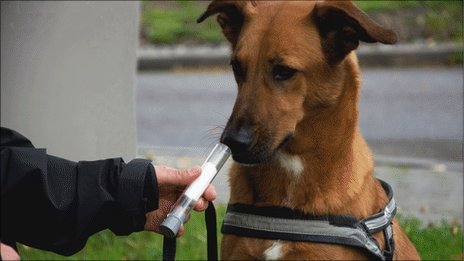
Earlier this month, Miami-Dade police Det. Douglas Bartelt and his colleagues let Emma sit in while they put three drug sniffing canines through a search exercise at their narcotics training facility. There was Roger, a springer spaniel; Levi, a golden retriever; and Franky, a retired chocolate Labrador.

The dogs were individually timed as they searched for 28 grams of cocaine — worth an estimated $1,300 on the street — locked in a metal canister, hidden in a box somewhere in a single room. The exercise was then repeated in a second room.

In the end, Franky came out first, sniffing out the cocaine in 43 seconds. At no time did Emma handle the drugs or the dogs, a Police Department spokeswoman said.

Cocaine is not specifically banned from use in district science fair rules, the Miami Herald reported.

The project earned Emma first prize at her school, Coral Gables Preparatory Academy, and a chance to participate in the county science fair at Miami Dade College on Jan. 26. She received an honorable mention there, district officials said.

Emma explained “the purpose of this scientific investigation was to find which dog would find the cocaine fastest using its sense of smell,” according to the Herald.
http://www.latimes.com/health/boostershots/la-sci-sn-student-cocaine-science-fair-20130131,0,1052960.story

Dog’s dinner was key to domestication

dog

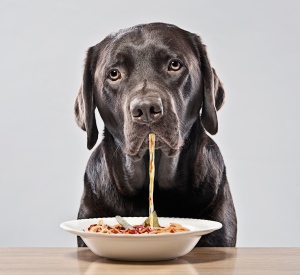
Dogs now have an excuse for waiting under the dinner table: domestication may have adapted them to thrive on the starch-filled foods that their owners eat.

A study published in Nature found that dogs possess genes for digesting starches, setting them apart from their carnivore cousins — wolves.

The authors say the results support the contentious idea that dogs became domesticated by lingering around human settlements. “While it’s possible that humans might have gone out to take wolf pups and domesticated them, it may have been more attractive for dogs to start eating from the scrap heaps as modern agriculture started,” says Kerstin Lindblad-Toh, a geneticist at Uppsala University in Sweden, who led the work.

Canine-domestication researchers agree that all dogs, from beagles to border collies, are the smaller, more sociable and less aggressive descendants of wolves. But neither the time nor the location of the first domestication is known: fossils place the earliest dogs anywhere from 33,000 years ago in Siberia to 11,000 years ago in Israel, whereas DNA studies of modern dogs put domestication at least 10,000 years ago, and in either Southeast Asia or the Middle East. Many researchers believe that dogs were domesticated more than once, and that even after domestication, they occasionally interbred with wild wolves.

Lindblad-Toh and her team catalogued the genetic changes involved in domestication by looking for differences between the genomes of 12 wolves and 60 dogs from 14 different breeds. Their search identified 36 regions of the genome that set dogs apart from wolves — but are not responsible for variation between dog breeds.

Nineteen of those regions contained genes with a role in brain development or function. These genes, says Lindblad-Toh, may explain why dogs are so much more friendly than wolves. Surprisingly, the team also found ten genes that help dogs to digest starches and break down fats. Lab work suggested that changes in three of those genes make dogs better than meat-eating wolves at splitting starches into sugars and then absorbing those sugars.

Most humans have also evolved to more easily digest starches. Lindblad-Toh suggests that the rise of farming, beginning around 10,000 years ago in the Middle East, led to the adaptations in both species. “This is a striking sign of parallel evolution,” she says. “It really shows how dogs and humans have evolved together to be able to eat starch.”

However, Greger Larson, an evolutionary archaeologist at Durham University, UK, very much doubts that genes involved in digesting starches catalysed domestication, pointing out that the earliest dog fossils predate the dawn of agriculture. His team plans to analyse DNA preserved in dog fossils, to discover when the genetic variations involved in domestication first emerged.

Robert Wayne, a geneticist at the University of California, Los Angeles, who is also studying ancient dog genomes, says that starch metabolism could have been an important adaptation for dogs. However, he thinks that such traits probably developed after behavioural changes that emerged when humans first took dogs in, back when most of our forebears still hunted large game.

Nevertheless, the study adds to evidence that dogs should not eat the same food as wolves, says Wayne, who points out that dog food is rich in carbohydrates and low in protein compared with plain meat. “Every day I get an email from a dog owner who asks, should they feed their dog like a wolf,” says Wayne. “I think this paper answers that question: no.”

http://www.nature.com/news/dog-s-dinner-was-key-to-domestication-1.12280

Thanks to Dr. Lutter for bringing this to the attention of the It’s Interesting community.

Potato the Dog claimed to be math genius

Proud dog owner Lu Zesheng says he has been able to train his two-year-old canine companion Potato to do arithmetic. Lu poses the questions, and Potato barks the answers.

For example, when asked: “How much is 3.44 plus 3.56?” Potato barks seven times which, according to Lu, means he knows the answer is seven.

As well as being able to solve mathematical puzzles, Lu also says Potato has an excellent memory and, when asked for the number on the side of China’s first aircraft carrier, the dog barks the correct answer of “sixteen”.

According to Chinese state television, Potato can also memorise mobile phone numbers and even people’s ages.

http://www.telegraph.co.uk/news/newsvideo/weirdnewsvideo/9731570/Chinese-dog-is-maths-genius-according-to-owner.html

Proposed Montreal law would require all dogs to be bilingual

Dogs-Banner

Earlier this week, Montreal city councilor Benoit LaDouce proposed a bylaw that would require all dogs in public parks to be bi-lingual. According to Mr. LaDouce, “Dogs parks in our city are chaotic and communication is at the heart of the conflict.” In his mind, K9/citizen relations would be more harmonious if dogs in public spaces understood commands in both English and French.

http://www.cbc.ca/thisisthat/blog/2012/12/12/montreal-bylaw-requires-dogs-to-understand-commands-in-both-official-languages/?_tmc=OP6250GfCpJe83-b1qy_jB7Gke4VtETpPTwqQnZRVXY

California woman breastfeeds her dog

A California mom who couldn’t breastfeed her children says she gets maternal satisfaction by breastfeeding her pet dog.

In an interview with the U.K. edition of Closer magazine, Terri Graham, 44, said nursing her pug, Spider, makes her feel like a better mom.

She told the magazine she was devastated when she couldn’t breastfeed daughter Leesa, now 9, and son Lucas, now 2.

She said Spider developed a taste for her breast milk in 2010, after he licked the nipple of a bottle she had pumped to feed baby Lucas.

“People might say I’m a freak, but having Spider suckle on my boob means I finally feel complete and a better mother,” Lucas is quoted as saying in the article, which appears in the Oct. 20 issue of the magazine, under the heading “Outrageous Mum.”

And Spider gets something out of it, too, she said — nutrition and love.

http://cnews.canoe.ca/CNEWS/WeirdNews/2012/10/19/20294376.html

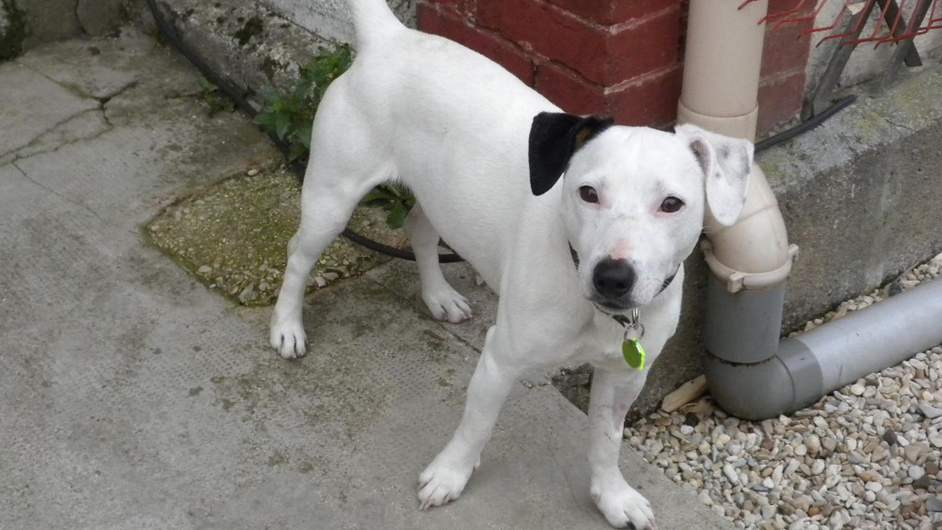
Jack Russell terrier survives after being poisoned and buried alive

A Jack Russell terrier has had a “miraculous” escape in France after being poisoned and buried alive on his third birthday.

Ethan was dug up by a man who saw the ground moving – an apparent result of convulsions from the dog’s poisoning.

Firefighters then rushed the trembling, dirt-covered terrier to a vet who managed to nurse the dog back to life.

“It’s extraordinary. We only see this in TV movies,” said veterinarian Philippe Michon.

“He came back to life and without a scratch. It’s rather miraculous.”

The vet said the dog was “completely cold” and “barely breathing” when he was brought in.

He used hot water bottles to warm up Ethan’s seemingly lifeless body.

The dog was so cold his veins had collapsed and it was hard to find one to hydrate him, but within 24 hours the terrier was back on his feet.

“(Ethan) had an unbelievable chain of luck. If the ground hadn’t trembled, no one would have taken a shovel to it,” the vet added.

His owner says he had given the dog away but police are investigating, said Sabrina Zamora, president of an animal association in Charleville-Mezieres, a town 125 miles northeast of Paris.

She described Ethan as being as “flat as a pancake” when he was discovered on Tuesday near a lakeside pedestrian path.

http://news.sky.com/story/1000126/dog-poisoned-and-buried-alive-back-from-dead


Pennsylvania couple charged with trying to sell neighbor’s lost puppy on Craig’s list

A couple in Pennsylvania is facing criminal charges for selling their neighbor’s lost puppy on Craigslist instead of returning it, according to police.

Police in Leechburg, Pa., said two dogs, a Rottweiler and a golden retriever mix, wandered onto the property of Scott Duff, 41, and Roxanne Duff, 38, on September 3.

After discovering the animals, police say, Roxanne Duff left a phone message for police saying she was unsure what to do with them.

Leechburg Police Officer Christopher Laird returned Roxanne Duff’s message, recommending that she contact either an animal shelter or a local dog kennel, according to a police report. He told her he would contact her if they find dogs’ owner. During that call, Roxanne Duff allegedly told Laird that the Rottweiler puppy had run away since her initial report.

Later in the evening, Laird received a call from the dogs’ owner, Shawn Lerch, who said Duff had returned his golden retriever but not the Rottweiler. Lerch said he believed his dog was still in the area and suspected the Duffs were keeping him, despite what he had been told.

When Laird knocked on his neighbor’s door, Scott Duff answered and allegedly denied having the puppy. The next day, Lerch called police again, saying he believed the dog was still at the Duffs’ house, according to the report.

This time, police chief Michael Diebold went to the Duffs’ home, where he found the couple’s five-year-old son and his babysitter. According to the police report, the child said, “his mommy had given the dog to a woman from the Internet.”

Diebold contacted Scott Duff again and told him what his child had said. Duff told him he had no knowledge of this and said he only knew that the puppy had escaped from his yard. A short time later, Duff called police back and allegedly admitted that his wife had placed an ad and sold the dog on Craigslist for $50.

After police located the woman who bought the Rottweiler, who said she was unaware of the theft. Roxanne Duff went to Pittsburgh, where the woman lived, to retrieve the dog, and it was returned to Lerch.

Police charged the Duffs last week with not making a reasonable effort to return lost property, two counts of conspiracy and false reporting.

The couple is due in court for a preliminary hearing on October 31.

http://usnews.nbcnews.com/_news/2012/09/21/13991541-pennsylvania-couple-charged-with-selling-neighbors-dog-on-craigslist

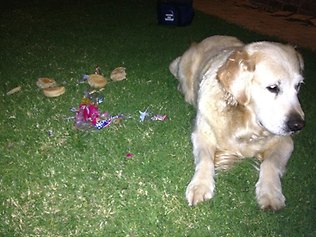
Mystery golden retriever brings owner 12 loaves of bread

Gillie the mischievous golden retriever has since Sunday been on a one-dog crime spree in a rural town near Camden, south-west of Sydney.

Owner Michael Shaw explained that his eight-year-old pooch mysteriously turned up with an unopened loaf of bread on Sunday morning, dropping it on the front step and lying down proudly next to her freshly baked trophy.

It didn’t stop there. Gillie has since returned with a total of 12 full loaves of sliced bread and two packets of muffins, despite the fact the closest shop is a 10-minute drive away.

“She brings back things quite often, but normally it’s an old gumboot or something like that,” Mr Shaw, 25, said today.

“She has a bit of an insecurity problem so she always has things in her mouth. She has a big stuffed toy and will bark at neighbours while still holding it in her mouth but she’s never brought back anything like this before.”

“The only thing she’s eaten is the first bag of muffins and there was a new fresh bag there this morning and it was untouched.”

Gillie’s modus operandi up to this point has been to deliver the loaves one-by-one at the front step, then lie amongst her baked booty proudly with a wag in her tail.

“It’s like she’s bringing us gifts – she just lies around all of them,” Mr Shaw said.

He is yet to hear from neighbours about any missing baked goods, so the mystery continues.

“The only thing we can think of is that a neighbour has bought some bread to give to some cows or something, but it’s completely bizarre,” he said.

http://www.perthnow.com.au/news/national/mystery-golden-retriever-dog-gillie-brings-owner-12-loaves-of-bread-as-owner-michael-shaw-is-puzzled/story-e6frg15u-1226402746788

Thanks to Kebmodee for bringing this to the attention of the It’s Interesting community.

Dogs Can Sniff Out Lung Cancer


Sniffer dogs can be used to reliably detect lung cancer, according to researchers in Germany.

Writing in the European Respiratory Journal, they found that trained dogs could detect a tumour in 71% of patients.

However, scientists do not know which chemical the dogs are detecting, which is what they say they need to know to develop a screening program.

It was first suggested that dogs could “sniff out” cancer in 1989 and further studies have shown that dogs can detect some cancers such as those of the skin, bladder, bowel and breast.

http://www.bbc.co.uk/news/health-14557224