Roman-Era Shipwreck Reveals Clues About Ancient Medicine

Pills found on board a 2nd century B.C. shipwreck were packed with crushed carrots, parsley, onions, alfalfa, and other vegetable matter, conforming to the recipes contained in ancient medical treatises.

While the texts themselves were discovered long ago, the cache of ancient pharmaceuticals found onboard the sunken ancient vessel is the first time the medicines themselves have been found.
 
The definite usefulness of the medicines is as yet unknown, but archeologists believe that these pills were likely stored on board as part of an ancient “first aid kit” for use by sailors suffering from a variety of ailments.
 
“Medicinal plants have been identified before, but not a compound medicine, so this is really something new,” says Alain Touwaide, director of the Institute for the Preservation of Medical Traditions, home to the most extensive database of medical manuscripts in the world.
 
The vegetable-packed pills were found in 136 tin-lined wooden containers on a 50-foot long trading ship that sank to a depth of about 60 feet sometime around 125 B.C. off the coast of Tuscany. The ruins were discovered in 1974 near the port city of Piombino, which lies on the border between the Ligurian Sea and the Tyrrhenian Sea, in front of Elba Island and at the northern side of Maremma.
 
The cache of medicine was found some 15 years later, but the technology required to accurately analyze the DNA sequence of the material was only recently developed.
 
Surprisingly, given the fact that the organic material packed in the pills has been underwater for over two millennia, Dr. Touwaide reports that the small tablets were so well sealed by the ancient chemists who prepared them that there remains sufficient sample to perform the battery of tests being carried out by various organizations, including the Smithsonian, Italy’s Superintendence for Cultural Heritage (based in Tuscany), and Pisa University.
 
Dr. Touwaide described the methods employed by the ancient apothecaries: “The plants and vegetables were probably crushed with a mortar and pestle — we could still see the fibers in the tablets. They also contained clay, which even today is used to treat gastrointestinal problems.”


Thanks to Kedmobee for brining this to the attention of the It’s Interesting community. 


Krokodil: The Drug That Eats Junkies

The new drug krokodil, or “crocodile,”  is desomorphine, a synthetic opiate many times more powerful than heroin.

Korkodil is created from a complex chain of mixing and chemical reactions with household ingredients, cooked from codeine-based headache pills.  Thus, it’s much cheaper than heroin.

However, its poisonous ingredients quickly cover the skin with scales and sores.

Read about it here:  http://www.independent.co.uk/news/world/europe/krokodil-the-drug-that-eats-junkies-2300787.html

Thanks to Kedmobee for bringing this to the attention of the It’s Interesting community.

Levamisole in the cocaine

Levamisole is an anthelminthic and immunomodulator discovered at Janssen Pharmaceutica in 1966.

Levamisole has been used in humans to treat parasitic worm infections, and has been studied in combination with other forms of chemotherapy for colon cancer, melanoma, and head and neck cancer.

The drug was withdrawn from the U.S. and Canadian markets in 2000 and 2003 respectively, due to the risk of serious side effects, including a significant weakening of the immune system called agramulocytosis.

Currently, levamisole remains in veterinary use as a dewormer for livestock.

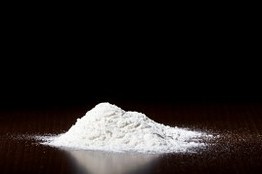
According to the Department of Justice, some 70 percent of cocaine (most of it distributed in and around New York and L.A.) is cut with levamisole.

Unlike most cuts — usually inert or relatively harmless substances like the B vitamin inositol, which are added by lower-level dealers looking to stretch supplies — levamisole appears to be added to cocaine from the outset, in the countries of origin. The substance has been found in various concentrations in cocaine analyzed in countries around the world, from Switzerland to Australia.

Levamisole is cheap, widely available and seems to have the right look, taste and melting point to go unnoticed by cocaine users, which may alone account for its popularity.
Learn about it here:
 

Thanks to P.C. for bringing this to the attention of the It’s Interesting community.
Being bilingual protects from Alzheimer’s disease

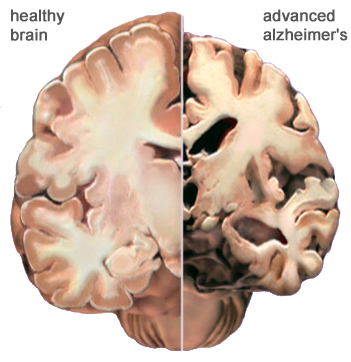
Speaking at least two languages may slow dementia in the aging brain, new research shows. Bilingual people do better in mental challenges and are more skilled at multi-tasking than those who have just one tongue. They also develop symptoms of dementia and Alzheimer’s disease an average of four or five years later.

http://news.nationalgeographic.com/news/2011/02/100218-bilingual-brains-alzheimers-dementia-science-aging/

http://www.dailymail.co.uk/sciencetech/article-1358234/People-speak-languages-better-multi-tasking-likely-develop-Alzheimers.html

Crossing your arms confuses the brain and relieves pain.

If your hand hurts, simply cross your arms to confuse your brain and reduce the perceived pain intensity. 

Researchers believe this happens because of conflicting information between two of the brain’s maps: the one for your body and the one for external space.

Since the left hand typically performs actions on the left side of space (and the right hand performs on the right side), these two maps work together to create powerful impulses in response to stimuli. When the arms are crossed, however, the two maps are mismatched and information processing becomes weaker — resulting in less pain.

http://psychcentral.com/news/2011/05/22/crossing-arms-confuses-brain-but-relieves-hand-pain/26390.html

Oxycodone

Abuse of oxycodone, a prescription opioid painkiller, is an epidemic responsible for millions of overdoses and at least 11,000 deaths annually.

 A pharmaceutical form of heroin, the drug is now a top seller, with 100 million prescriptions written over the past 15 years – the equivalent of 1 bottle of pills for every 3 Americans.

Read about it here:  http://www.alaskadispatch.com/article/why-its-so-hard-win-war-against-us-oxycodone-epidemic

A weekend hospital admission may increase the chance of dying.


In an analysis of nearly 30 million patients, the inhospital mortality rate was significantly higher for those admitted on the weekend across a range of diagnoses (2.7% versus 2.3%, P<0.001), according to Rocco Ricciardi, MD, MPH, of Tufts University Medical School in Burlington, Mass., and colleagues.

http://www.medpagetoday.com/PublicHealthPolicy/PublicHealth/26507

Hearing Voices With Caffeine

Scholars at Australia’s La Trobe University just released a study showing a correlation between caffeine intake and auditory hallucinations.

In layman’s terms: Lots of coffee might make you more likely to hear things that aren’t there.

read about it here:  http://www.salon.com/news/feature/2011/06/08/coffee_hallucinations

and here is the study:  http://www.sciencedirect.com/science/article/pii/S019188691000591X

Summing up the results from the experiment, Professor Simon Crowe concluded:

There is a link between high levels of stress and psychosis, and caffeine was found to correlate with hallucination proneness. The combination of caffeine and stress affect the likelihood of an individual experiencing a psychosis-like symptom.

It would be prudent to note that correlation isn’t the same as causation, and this study merely suggests the former.

This isn’t the first instance of scientists finding a link between caffeine intake and hallucinations. An even more alarming study was published in 2009, claiming that individuals who drink the equivalent of 315 milligrams of caffeine — that’s three cups of brewed coffee, or seven of the instant variety — are three times more likely to hear and see things that aren’t actually there.

http://www.livescience.com/3230-caffeine-hallucinations.html

Thanks to H.G.P. for bringing this to the attention of the It’s Interesting community.

Lasting affect of parental fighting on sleeping patterns of their kids

Infants’ sleep patterns can be disrupted if their parents are constantly arguing, a new study finds.

Infants who heard regular blow-ups between parents when they were 9 months old continued to have troubled sleep patterns — marked by problems getting to sleep and staying asleep — even when they were 18-month-old toddlers.

More than 300 U.S. children and parents were stuydies, and all of the children were adopted at birth in order to control for any influence of genetics.

http://health.usnews.com/health-news/family-health/sleep/articles/2011/05/11/parents-fighting-can-even-affect-infants-study

Altered patterns of gene expression offer new clues in autism.

Dr. Dan Geschwind, director of the Center for Autism Research and Treatment at the University of California, Los Angeles (UCLA), and his team recently measured levels of gene expression — which determine the synthesis of various proteins, each with a specific task in the cell — in the brain tissue of 19 autistic people and 17 healthy ones.
 
They discovered certain patterns of expression common to the autistic brain. 
 
Autistic brains showed very little difference in gene expression between the frontal and temporal lobes, two regions responsible for language, decision-making and emotional responses.
 
Normally, marked differences in patterns of gene expression between these two areas begins in utero during fetal development.