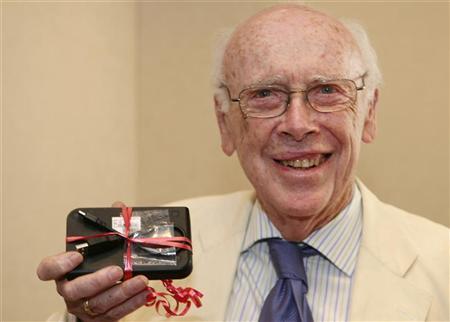
DNA pioneer James Watson takes aim at “cancer establishments”

File photo of Watson receiving data encompassing his personal genome sequence in Houston

James Watson, co-discoverer of the double helix structure of DNA, lit into targets large and small. On government officials who oversee cancer research, he wrote in a paper published on Tuesday in the journal Open Biology, “We now have no general of influence, much less power … leading our country’s War on Cancer.”

On the $100 million U.S. project to determine the DNA changes that drive nine forms of cancer: It is “not likely to produce the truly breakthrough drugs that we now so desperately need,” Watson argued. On the idea that antioxidants such as those in colorful berries fight cancer: “The time has come to seriously ask whether antioxidant use much more likely causes than prevents cancer.”

That Watson’s impassioned plea came on the heels of the annual cancer report was coincidental. He worked on the paper for months, and it represents the culmination of decades of thinking about the subject. Watson, 84, taught a course on cancer at Harvard University in 1959, three years before he shared the Nobel Prize in medicine for his role in discovering the double helix, which opened the door to understanding the role of genetics in disease.

Other cancer luminaries gave Watson’s paper mixed reviews.

“There are a lot of interesting ideas in it, some of them sustainable by existing evidence, others that simply conflict with well-documented findings,” said one eminent cancer biologist who asked not to be identified so as not to offend Watson. “As is often the case, he’s stirring the pot, most likely in a very productive way.”

There is wide agreement, however, that current approaches are not yielding the progress they promised. Much of the decline in cancer mortality in the United States, for instance, reflects the fact that fewer people are smoking, not the benefits of clever new therapies.

“The great hope of the modern targeted approach was that with DNA sequencing we would be able to find what specific genes, when mutated, caused each cancer,” said molecular biologist Mark Ptashne of Memorial Sloan-Kettering Cancer Center in New York. The next step was to design a drug to block the runaway proliferation the mutation caused.

But almost none of the resulting treatments cures cancer. “These new therapies work for just a few months,” Watson told Reuters in a rare interview. “And we have nothing for major cancers such as the lung, colon and breast that have become metastatic.”

The main reason drugs that target genetic glitches are not cures is that cancer cells have a work-around. If one biochemical pathway to growth and proliferation is blocked by a drug such as AstraZeneca’s Iressa or Genentech’s Tarceva for non-small-cell lung cancer, said cancer biologist Robert Weinberg of MIT, the cancer cells activate a different, equally effective pathway.

That is why Watson advocates a different approach: targeting features that all cancer cells, especially those in metastatic cancers, have in common.

One such commonality is oxygen radicals. Those forms of oxygen rip apart other components of cells, such as DNA. That is why antioxidants, which have become near-ubiquitous additives in grocery foods from snack bars to soda, are thought to be healthful: they mop up damaging oxygen radicals.

That simple picture becomes more complicated, however, once cancer is present. Radiation therapy and many chemotherapies kill cancer cells by generating oxygen radicals, which trigger cell suicide. If a cancer patient is binging on berries and other antioxidants, it can actually keep therapies from working, Watson proposed.

“Everyone thought antioxidants were great,” he said. “But I’m saying they can prevent us from killing cancer cells.”

Research backs him up. A number of studies have shown that taking antioxidants such as vitamin E do not reduce the risk of cancer but can actually increase it, and can even shorten life. But drugs that block antioxidants – “anti-antioxidants” – might make even existing cancer drugs more effective.

Anything that keeps cancer cells full of oxygen radicals “is likely an important component of any effective treatment,” said cancer biologist Robert Benezra of Sloan-Kettering.

Watson’s anti-antioxidant stance includes one historical irony. The first high-profile proponent of eating lots of antioxidants (specifically, vitamin C) was biochemist Linus Pauling, who died in 1994 at age 93. Watson and his lab mate, Francis Crick, famously beat Pauling to the discovery of the double helix in 1953.

One elusive but promising target, Watson said, is a protein in cells called Myc. It controls more than 1,000 other molecules inside cells, including many involved in cancer. Studies suggest that turning off Myc causes cancer cells to self-destruct in a process called apoptosis.

“The notion that targeting Myc will cure cancer has been around for a long time,” said cancer biologist Hans-Guido Wendel of Sloan-Kettering. “Blocking production of Myc is an interesting line of investigation. I think there’s promise in that.”

Targeting Myc, however, has been a backwater of drug development. “Personalized medicine” that targets a patient’s specific cancer-causing mutation attracts the lion’s share of research dollars.

“The biggest obstacle” to a true war against cancer, Watson wrote, may be “the inherently conservative nature of today’s cancer research establishments.” As long as that’s so, “curing cancer will always be 10 or 20 years away.”

http://www.reuters.com/article/2013/01/09/us-usa-cancer-watson-idUSBRE90805N20130109

Elyn R. Saks – Successful and Schizophrenic

27SCHIZOPHRENIA-popup-v2

THIRTY years ago, I was given a diagnosis of schizophrenia. My prognosis was “grave”: I would never live independently, hold a job, find a loving partner, get married. My home would be a board-and-care facility, my days spent watching TV in a day room with other people debilitated by mental illness. I would work at menial jobs when my symptoms were quiet. Following my last psychiatric hospitalization at the age of 28, I was encouraged by a doctor to work as a cashier making change. If I could handle that, I was told, we would reassess my ability to hold a more demanding position, perhaps even something full-time.

Then I made a decision. I would write the narrative of my life. Today I am a chaired professor at the University of Southern California Gould School of Law. I have an adjunct appointment in the department of psychiatry at the medical school of the University of California, San Diego, and am on the faculty of the New Center for Psychoanalysis. The MacArthur Foundation gave me a genius grant.

Although I fought my diagnosis for many years, I came to accept that I have schizophrenia and will be in treatment the rest of my life. Indeed, excellent psychoanalytic treatment and medication have been critical to my success. What I refused to accept was my prognosis.

Conventional psychiatric thinking and its diagnostic categories say that people like me don’t exist. Either I don’t have schizophrenia (please tell that to the delusions crowding my mind), or I couldn’t have accomplished what I have (please tell that to U.S.C.’s committee on faculty affairs). But I do, and I have. And I have undertaken research with colleagues at U.S.C. and U.C.L.A. to show that I am not alone. There are others with schizophrenia and such active symptoms as delusions and hallucinations who have significant academic and professional achievements.

Over the last few years, my colleagues, including Stephen Marder, Alison Hamilton and Amy Cohen, and I have gathered 20 research subjects with high-functioning schizophrenia in Los Angeles. They suffered from symptoms like mild delusions or hallucinatory behavior. Their average age was 40. Half were male, half female, and more than half were minorities. All had high school diplomas, and a majority either had or were working toward college or graduate degrees. They were graduate students, managers, technicians and professionals, including a doctor, lawyer, psychologist and chief executive of a nonprofit group.

At the same time, most were unmarried and childless, which is consistent with their diagnoses. (My colleagues and I intend to do another study on people with schizophrenia who are high-functioning in terms of their relationships. Marrying in my mid-40s — the best thing that ever happened to me — was against all odds, following almost 18 years of not dating.) More than three-quarters had been hospitalized between two and five times because of their illness, while three had never been admitted.

How had these people with schizophrenia managed to succeed in their studies and at such high-level jobs? We learned that, in addition to medication and therapy, all the participants had developed techniques to keep their schizophrenia at bay. For some, these techniques were cognitive. An educator with a master’s degree said he had learned to face his hallucinations and ask, “What’s the evidence for that? Or is it just a perception problem?” Another participant said, “I hear derogatory voices all the time. … You just gotta blow them off.”

Part of vigilance about symptoms was “identifying triggers” to “prevent a fuller blown experience of symptoms,” said a participant who works as a coordinator at a nonprofit group. For instance, if being with people in close quarters for too long can set off symptoms, build in some alone time when you travel with friends.

Other techniques that our participants cited included controlling sensory inputs. For some, this meant keeping their living space simple (bare walls, no TV, only quiet music), while for others, it meant distracting music. “I’ll listen to loud music if I don’t want to hear things,” said a participant who is a certified nurse’s assistant. Still others mentioned exercise, a healthy diet, avoiding alcohol and getting enough sleep. A belief in God and prayer also played a role for some.

One of the most frequently mentioned techniques that helped our research participants manage their symptoms was work. “Work has been an important part of who I am,” said an educator in our group. “When you become useful to an organization and feel respected in that organization, there’s a certain value in belonging there.” This person works on the weekends too because of “the distraction factor.” In other words, by engaging in work, the crazy stuff often recedes to the sidelines.

Personally, I reach out to my doctors, friends and family whenever I start slipping, and I get great support from them. I eat comfort food (for me, cereal) and listen to quiet music. I minimize all stimulation. Usually these techniques, combined with more medication and therapy, will make the symptoms pass. But the work piece — using my mind — is my best defense. It keeps me focused, it keeps the demons at bay. My mind, I have come to say, is both my worst enemy and my best friend.

THAT is why it is so distressing when doctors tell their patients not to expect or pursue fulfilling careers. Far too often, the conventional psychiatric approach to mental illness is to see clusters of symptoms that characterize people. Accordingly, many psychiatrists hold the view that treating symptoms with medication is treating mental illness. But this fails to take into account individuals’ strengths and capabilities, leading mental health professionals to underestimate what their patients can hope to achieve in the world.

It’s not just schizophrenia: earlier this month, The Journal of Child Psychology and Psychiatry posted a study showing that a small group of people who were given diagnoses of autism, a developmental disorder, later stopped exhibiting symptoms. They seemed to have recovered — though after years of behavioral therapy and treatment. A recent New York Times Magazine article described a new company that hires high-functioning adults with autism, taking advantage of their unusual memory skills and attention to detail.

I don’t want to sound like a Pollyanna about schizophrenia; mental illness imposes real limitations, and it’s important not to romanticize it. We can’t all be Nobel laureates like John Nash of the movie “A Beautiful Mind.” But the seeds of creative thinking may sometimes be found in mental illness, and people underestimate the power of the human brain to adapt and to create.

An approach that looks for individual strengths, in addition to considering symptoms, could help dispel the pessimism surrounding mental illness. Finding “the wellness within the illness,” as one person with schizophrenia said, should be a therapeutic goal. Doctors should urge their patients to develop relationships and engage in meaningful work. They should encourage patients to find their own repertory of techniques to manage their symptoms and aim for a quality of life as they define it. And they should provide patients with the resources — therapy, medication and support — to make these things happen.

“Every person has a unique gift or unique self to bring to the world,” said one of our study’s participants. She expressed the reality that those of us who have schizophrenia and other mental illnesses want what everyone wants: in the words of Sigmund Freud, to work and to love.

A law professor at the University of Southern California and the author of the memoir “The Center Cannot Hold: My Journey Through Madness.”

Marijuana And Cancer: Scientists Find that a Non-Psychoactive Cannabis Compound Stops Metastasis In Aggressive Cancers

pile-of-weed3

A pair of scientists at California Pacific Medical Center in San Francisco has found that a compound derived from marijuana could stop metastasis in many kinds of aggressive cancer, potentially altering the fatality of the disease forever.

“It took us about 20 years of research to figure this out, but we are very excited,” said Pierre Desprez, one of the scientists behind the discovery, to The Huffington Post. “We want to get started with trials as soon as possible.”

The Daily Beast first reported on the finding, which has already undergone both laboratory and animal testing, and is awaiting permission for clinical trials in humans.

Desprez, a molecular biologist, spent decades studying ID-1, the gene that causes cancer to spread. Meanwhile, fellow researcher Sean McAllister was studying the effects of Cannabidiol, or CBD, a non-toxic, non-psychoactive chemical compound found in the cannabis plant. Finally, the pair collaborated, combining CBD and cells containing high levels of ID-1 in a petri dish.

“What we found was that his Cannabidiol could essentially ‘turn off’ the ID-1,” Desprez told HuffPost. The cells stopped spreading and returned to normal.

“We likely would not have found this on our own,” he added. “That’s why collaboration is so essential to scientific discovery.”

Desprez and McAllister first published a paper about the finding in 2007. Since then, their team has found that CBD works both in the lab and in animals. And now, they’ve found even more good news.

“We started by researching breast cancer,” said Desprez. “But now we’ve found that Cannabidiol works with many kinds of aggressive cancers–brain, prostate–any kind in which these high levels of ID-1 are present.”

Desprez hopes that clinical trials will begin immediately.

“We’ve found no toxicity in the animals we’ve tested, and Cannabidiol is already used in humans for a variety of other ailments,” he said. Indeed, the compound is used to relieve anxiety and nausea, and, since it is non-psychoactive, does not cause the “high” associated with THC.

While marijuana advocates will surely praise the discovery, Desprez explained that it’s not so easy as just lighting up.

“We used injections in the animal testing and are also testing pills,” he said. “But you could never get enough Cannabidiol for it to be effective just from smoking.”

Furthermore, the team has started synthesizing the compound in the lab instead of using the plant in an effort to make it more potent.

“It’s a common practice,” explained Desprez. “But hopefully it will also keep us clear of any obstacles while seeking approval.”

http://www.huffingtonpost.com/2012/09/19/marijuana-and-cancer_n_1898208.html?ncid=edlinkusaolp00000003&ir=Weird%20News

Daily aspirin may increase risk for age-related blindness

ctm_0321_ASPIRIN_620x350

Many people take aspirin to prevent heart attacks, but new research suggests the added benefits may be coming at the expense of pill-takers’ eyesight.

A 15-year-study published Jan. 22 in JAMA Internal Medicine showed that people taking regular aspirin faced a higher risk for age-related macular degeneration (AMD), one of the leading causes of blindness in older adults. The research also suggests the risk may worsen over time.

AMD commonly affects adults 50 and older, gradually destroying their “macula,” which is a part of the eye that provides sharp, central vision that’s required to see objects clearly. There are two types of the disease: “Dry” AMD is most common and occurs when the light-sensitive cells in the macula slowly break down, gradually blurring central vision while “wet” or neovascular AMD occurs when blood vessels under the macula leak blood and fluid, causing damage. Wet AMD is often more severe but also more rare, affecting about 10 percent of patients with AMD.

People at a high risk for having a heart attack — such as those who have heart disease — are encouraged by the American Heart Association and other medical groups to take a daily low-dose of aspirin.

For the study, Australian researchers tracked nearly 2,400 adults who were given four exams during the 15 year study. More than 250 of these individuals took aspirin regularly because aspirin is thought to prevent clots from forming by “thinning” the blood.

The researchers found an increased risk for wet AMD among aspirin takers, with 1.9 percent of patients having the condition at five years, 7 percent at 10 years and 9.3 percent at 15 years. That compares with 0.8 percent of non-aspirin takers at five years, 1.6 percent at 10 years and 3.7 percent at 15 years.

“Regular aspirin use was significantly associated with an increased incidence of neovascular AMD,” concluded the authors, led by Dr. Gerald Liew of the University of Sydney in Australia.

In December, a study published in JAMA also found that people who used aspirin regularly for 10 years were more likely to have wet AMD, but the overall reported risk was still low.

Liew wrote that the decision to stop taking aspirin is a “complex” one and should be decided on an individual basis. For example, those at a higher risk for AMD such as people with a family history or smokers — who are two times more likely to develop AMD than non-smokers — may want to consider changing their aspirin regimen.

In an accompanying editorial published in the same issue, Dr. Sanjay Kaul and Dr. George A. Diamond, cardiologists at Cedars-Sinai Medical Center, Los Angeles, wrote that the study was observational, and could not prove cause and effect. Therefore, it may be too soon to recommend people curb their aspirin intake.

“In the absence of definitive evidence regarding whether limiting aspirin exposure mitigates AMD risk, one obvious course of action is to maintain the status quo,” they wrote.

Dr. Gregg Fonarow, a spokesman for the American Heart Association and professor of cardiology at the University of California, Los Angeles, added to HealthDay that more rigorous randomized controlled trials have yet to demonstrate any increased risk of blindness from people taking aspirin.

“Individuals prescribed aspirin for high-risk primary prevention or secondary cardiovascular prevention should not be concerned or discontinue this beneficial therapy,” he said.

To reduce your risk for AMD, the National Eye Institute recommends exercising, eating a healthy diet rich in leafy greens and fish, maintaining normal blood pressure and cholesterol, and avoiding smoking.

http://www.cbsnews.com/8301-204_162-57565181/daily-aspirin-may-increase-risk-for-age-related-blindness/

The myth of antioxidants and vitamins?

20081210_antioxidants

The hallowed notion that oxidative damage causes aging and that vitamins might preserve our youth is now in doubt.

•For decades researchers assumed that highly reactive molecules called free radicals caused aging by damaging cells and thus undermining the functioning of tissues and organs.
•Recent experiments, however, show that increases in certain free radicals in mice and worms correlate with longer life span. Indeed, in some circumstances, free radicals seem to signal cellular repair networks.
•If these results are confirmed, they may suggest that taking antioxidants in the form of vitamins or other supplements can do more harm than good in otherwise healthy individuals.

David Gems’s life was turned upside down in 2006 by a group of worms that kept on living when they were supposed to die. As assistant director of the Institute of Healthy Aging at University College London, Gems regularly runs experiments on Caenorhabditis elegans, a roundworm that is often used to study the biology of aging. In this case, he was testing the idea that a buildup of cellular damage caused by oxidation—technically, the chemical removal of electrons from a molecule by highly reactive compounds, such as free radicals—is the main mechanism behind aging. According to this theory, rampant oxidation mangles more and more lipids, proteins, snippets of DNA and other key components of cells over time, eventually compromising tissues and organs and thus the functioning of the body as a whole.

Gems genetically engineered the roundworms so they no longer produced certain enzymes that act as naturally occurring antioxidants by deactivating free radicals. Sure enough, in the absence of the antioxidants, levels of free radicals in the worms skyrocketed and triggered potentially damaging oxidative reactions throughout the worms’ bodies.

Contrary to Gems’s expectations, however, the mutant worms did not die prematurely. Instead they lived just as long as normal worms did. The researcher was mystified. “I said, ‘Come on, this can’t be right,’” he recalls. “‘Obviously something’s gone wrong here.’” He asked another investigator in his laboratory to check the results and do the experiment again. Nothing changed. The experimental worms did not produce these particular antioxidants; they accumulated free radicals as predicted, and yet they did not die young—despite suffering extreme oxidative damage.

Other scientists were finding similarly confounding results in different lab animals. In the U.S., Arlan Richardson, director of the Barshop Institute for Longevity and Aging Studies at the University of Texas Health Science Center in San Antonio, genetically engineered 18 different strains of mice, some of which produced more of certain antioxidant enzymes than normal and some of which produced fewer of them than normal. If the damage caused by free radical production and subsequent oxidation was responsible for aging, then the mice with extra antioxidants in their bodies should have lived longer than the mice missing their antioxidant enzymes. Yet “I watched those goddamn life span curves, and there was not an inch of difference between them,” Richardson says. He published his increasingly bewildering results in a series of papers between 2001 and 2009.

Meanwhile, a few doors down the hall from Richardson, physiologist Rochelle Buffenstein has spent the past 11 years trying to understand why the longest-living rodent, the naked mole rat, is able to survive up to 25 to 30 years—around eight times longer than a similarly sized mouse. Buffenstein’s experiments have shown that naked mole rats possess lower levels of natural antioxidants than mice and accumulate more oxidative damage to their tissues at an earlier age than other rodents. Yet paradoxically, they live virtually disease-free until they die at a very old age.

To proponents of the long-standing oxidative damage theory of aging, these findings are nothing short of heretical. They are, however, becoming less the exception and more the rule. Over the course of the past decade, many experiments designed to further support the idea that free radicals and other reactive molecules drive aging have instead directly challenged it. What is more, it seems that in certain amounts and situations, these high-energy molecules may not be dangerous but useful and healthy, igniting intrinsic defense mechanisms that keep our bodies in tip-top shape. These ideas not only have drastic implications for future antiaging interventions, but they also raise questions about the common wisdom of popping high doses of antioxidant vitamins. If the oxidative-damage theory is wrong, then aging is even more complicated than researchers thought—and they may ultimately need to revise their understanding of what healthy aging looks like on the molecular level.

“The field of aging has been gliding along on this set of paradigms, ideas about what aging is, that to some extent were kind of plucked out of the air,” Gems says. “We should probably be looking at other theories as well and considering, fundamentally, that we might have to look completely differently at biology.”

The Birth of a Radical Theory
The oxidative damage, or free radical, theory of aging can be traced back to Denham Harman, who found his true calling in December 1945, thanks to the Ladies’ Home Journal. His wife, Helen, brought a copy of the magazine home and pointed out an article on the potential causes of aging, which he read. It fascinated him.

Back then, the 29-year-old chemist was working at Shell Development, the research arm of Shell Oil, and he did not have much time to ponder the issue. Yet nine years later, after graduating from medical school and completing his training, he took a job as a research associate at the University of California, Berkeley, and began contemplating the science of aging more seriously. One morning while sitting in his office, he had an epiphany—“you know just ‘out the blue,’” he recalled in a 2003 interview: aging must be driven by free radicals.

Although free radicals had never before been linked to aging, it made sense to Harman that they might be the culprit. For one thing, he knew that ionizing radiation from x-rays and radioactive bombs, which can be deadly, sparks the production of free radicals in the body. Studies at the time suggested that diets rich in food-based antioxidants muted radiation’s ill effects, suggesting—correctly, as it turned out—that the radicals were a cause of those effects. Moreover, free radicals were normal by-products of breathing and metabolism and built up in the body over time. Because both cellular damage and free radical levels increased with age, free radicals probably caused the damage that was responsible for aging, Harman thought—and antioxidants probably slowed it.

Harman started testing his hypothesis. In one of his first experiments, he fed mice antioxidants and showed that they lived longer. (At high concentrations, however, the antioxidants had deleterious effects.) Other scientists soon began testing it, too. In 1969 researchers at Duke University discovered the first antioxidant enzyme produced inside the body—superoxide dismutase—and speculated that it evolved to counter the deleterious effects of free radical accumulation. With these new data, most biologists began accepting the idea. “If you work in aging, it’s like the air you breathe is the free radical theory,” Gems says. “It’s ubiquitous, it’s in every textbook. Every paper seems to refer to it either indirectly or directly.”

Still, over time scientists had trouble replicating some of Harman’s experimental findings. By the 1970s “there wasn’t a robust demonstration that feeding animals antioxidants really had an effect on life span,” Richardson says. He assumed that the conflicting experiments—which had been done by other scientists—simply had not been controlled very well. Perhaps the animals could not absorb the antioxidants that they had been fed, and thus the overall level of free radicals in their blood had not changed. By the 1990s, however, genetic advances allowed scientists to test the effects of antioxidants in a more precise way—by directly manipulating genomes to change the amount of antioxidant enzymes animals were capable of producing. Time and again, Richardson’s experiments with genetically modified mice showed that the levels of free radical molecules circulating in the animals’ bodies—and subsequently the amount of oxidative damage they endured—had no bearing on how long they lived.

More recently, Siegfried Hekimi, a biologist at McGill University, has bred roundworms that overproduce a specific free radical known as superoxide. “I thought they were going to help us prove the theory that oxidative stress causes aging,” says Hekimi, who had predicted that the worms would die young. Instead he reported in a 2010 paper in PLOS Biology that the engineered worms did not develop high levels of oxidative damage and that they lived, on average, 32 percent longer than normal worms. Indeed, treating these genetically modified worms with the antioxidant vitamin C prevented this increase in life span. Hekimi speculates that superoxide acts not as a destructive molecule but as a protective signal in the worms’ bodies, turning up the expression of genes that help to repair cellular damage.

In a follow-up experiment, Hekimi exposed normal worms, from birth, to low levels of a common weed-controlling herbicide that initiates free radical production in animals as well as plants. In the same 2010 paper he reported the counterintuitive result: the toxin-bathed worms lived 58 percent longer than untreated worms. Again, feeding the worms antioxidants quenched the toxin’s beneficial effects. Finally, in April 2012, he and his colleagues showed that knocking out, or deactivating, all five of the genes that code for superoxide dismutase enzymes in worms has virtually no effect on worm life span.

Do these discoveries mean that the free radical theory is flat-out wrong? Simon Melov, a biochemist at the Buck Institute for Research on Aging in Novato, Calif., believes that the issue is unlikely to be so simple; free radicals may be beneficial in some contexts and dangerous in others. Large amounts of oxidative damage have indisputably been shown to cause cancer and organ damage, and plenty of evidence indicates that oxidative damage plays a role in the development of some chronic conditions, such as heart disease. In addition, researchers at the University of Washington have demonstrated that mice live longer when they are genetically engineered to produce high levels of an antioxidant known as catalase. Saying that something, like oxidative damage, contributes to aging in certain instances, however, is “a very different thing than saying that it drives the pathology,” Melov notes. Aging probably is not a monolithic entity with a single cause and a single cure, he argues, and it was wishful thinking to ever suppose it was one.

Shifting Perspective
Assuming free radicals accumulate during aging but do not necessarily cause it, what effects do they have? So far that question has led to more speculation than definitive data.

“They’re actually part of the defense mechanism,” Hekimi asserts. Free radicals might, in some cases, be produced in response to cellular damage—as a way to signal the body’s own repair mechanisms, for example. In this scenario, free radicals are a consequence of age-related damage, not a cause of it. In large amounts, however, Hekimi says, free radicals may create damage as well.

The general idea that minor insults might help the body withstand bigger ones is not new. Indeed, that is how muscles grow stronger in response to a steady increase in the amount of strain that is placed on them. Many occasional athletes, on the other hand, have learned from painful firsthand experience that an abrupt increase in the physical demands they place on their body after a long week of sitting at an office desk is instead almost guaranteed to lead to pulled calves and hamstrings, among other significant injuries.

In 2002 researchers at the University of Colorado at Boulder briefly exposed worms to heat or to chemicals that induced the production of free radicals, showing that the environmental stressors each boosted the worms’ ability to survive larger insults later. The interventions also increased the worms’ life expectancy by 20 percent. It is unclear how these interventions affected overall levels of oxidative damage, however, because the investigators did not assess these changes. In 2010 researchers at the University of California, San Francisco, and Pohang University of Science and Technology in South Korea reported in Current Biology that some free radicals turn on a gene called HIF-1 that is itself responsible for activating a number of genes involved in cellular repair, including one that helps to repair mutated DNA.

Free radicals may also explain in part why exercise is beneficial. For years researchers assumed that exercise was good in spite of the fact that it produces free radicals, not because of it. Yet in a 2009 study published in the Proceedings of the National Academy of Sciences USA, Michael Ristow, a nutrition professor at the Friedrich Schiller University of Jena in Germany, and his colleagues compared the physiological profiles of exercisers who took antioxidants with exercisers who did not. Echoing Richardson’s results in mice, Ristow found that the exercisers who did not pop vitamins were healthier than those who did; among other things, the unsupplemented athletes showed fewer signs that they might develop type 2 diabetes. Research by Beth Levine, a microbiologist at the University of Texas Southwestern Medical Center, has shown that exercise also ramps up a biological process called autophagy, in which cells recycle worn-out bits of proteins and other subcellular pieces. The tool used to digest and disassemble the old molecules: free radicals. Just to complicate matters a bit, however, Levine’s research indicates that autophagy also reduces the overall level of free radicals, suggesting that the types and amounts of free radicals in different parts of the cell may play various roles, depending on the circumstances.

The Antioxidant Myth
If free radicals are not always bad, then their antidotes, antioxidants, may not always be good—a worrisome possibility given that 52 percent of Americans take considerable doses of antioxidants daily, such as vitamin E and beta-carotene, in the form of multivitamin supplements. In 2007 the Journal of the American Medical Association published a systematic review of 68 clinical trials, which concluded that antioxidant supplements do not reduce risk of death. When the authors limited their review to the trials that were least likely to be affected by bias—those in which assignment of participants to their research arms was clearly random and neither investigators nor participants knew who was getting what pill, for instance—they found that certain antioxidants were linked to an increased risk of death, in some cases by up to 16 percent.

Several U.S. organizations, including the American Heart Association and the American Diabetes Association, now advise that people should not take antioxidant supplements except to treat a diagnosed vitamin deficiency. “The literature is providing growing evidence that these supplements—in particular, at high doses—do not necessarily have the beneficial effects that they have been thought to,” says Demetrius Albanes, a senior investigator at the Nutritional Epidemiology Branch of the National Cancer Institute. Instead, he says, “we’ve become acutely aware of potential downsides.”

It is hard to imagine, however, that antioxidants will ever fall out of favor completely—or that most researchers who study aging will become truly comfortable with the idea of beneficial free radicals without a lot more proof. Yet slowly, it seems, the evidence is beginning to suggest that aging is far more intricate and complex than Harman imagined it to be nearly 60 years ago. Gems, for one, believes the evidence points to a new theory in which aging stems from the overactivity of certain biological processes involved in growth and reproduction. But no matter what idea (or ideas) scientists settle on, moving forward, “the constant drilling away of scientists at the facts is shifting the field into a slightly stranger, but a bit more real, place,” Gems says. “It’s an amazing breath of fresh air.”

http://www.nature.com/scientificamerican/journal/v308/n2/full/scientificamerican0213-62.html

Researchers look down a different path for new antidepressants

hippneuron-640x447

As a teenager growing up in New Mexico, Zach Weinberg had the same thing for breakfast every day of high school. Next to his tortilla and cream cheese, which he insists is delicious, was a small, round, yellow pill – an antidepressant called Lexapro. By his senior year, the only thing different was the color of his pill, now a shiny white. This one was Wellbutrin. He’d traded one antidepressant for another. If the pills work, they certainly don’t work for long. Now, at age 23, he’s frustrated at still having to play around with different drug combinations and doses.

The odds are that you know someone in the same situation. According to the National Institutes of Health, approximately one in 10 men and one in four women in the U.S. will suffer from depression at some point in their lives. Clinical depression can come at any time, lasting anywhere from months to years, and is characterized by low self-esteem and a loss of interest in things that were once enjoyable.

Along with various forms of therapy, antidepressant drugs are the most effective treatment. But even when they work, they come with side effects – such as weight gain and trouble sleeping – that can make the symptoms of depression worse. So for people like Weinberg, choosing between one kind of antidepressant and another isn’t really much of a choice.

But that may be changing. New insights into how traditional antidepressants – including the wildly popular SSRIs, or selective serotonin reuptake inhibitor, drugs like Prozac, Paxil and Lexapro – work inside the brain are stimulating the development of a new generation of medications that may work faster and more effectively.

Contrary to what their developers originally thought, many antidepressants have a surprising, indirect way of altering brain chemistry: by stimulating the growth of new neurons and protecting those neurons from dying. “The SSRI hypothesis is really falling apart,” says Paul Currie, a neuroscientist at Reed College in Portland, Ore. He explains that these new ideas have researchers trying something a little different to treat depression.

SSRIs work by manipulating serotonin, one of the most important chemical messengers in the brain. Serotonin is at least partly responsible for everything from eating disorders to the pretty colors and patterns people see while on psychedelic drugs.

When serotonin is released from one neuron and picked up by another in the course of transmitting a message between them, some is taken back up into the original neuron. By blocking this mechanism, SSRIs force more serotonin to circulate in the system, supposedly reducing feelings of depression.

Similar drugs use the same reuptake-blocking technique with other neurotransmitters, usually dopamine and norepinephrine. The success of drugs that target this system provides the basis of the monoamine hypothesis of depression – the idea that depression is a result of a chemical imbalance. That’s why decades of research have been aimed at balancing out our monoamine neurotransmitters, including serotonin.

But it takes a week or two for antidepressants to have any noticeable effect, suggesting that it’s not that immediate boost in serotonin that’s making people feel better. Recently, studies have suggested a different explanation: using antidepressants seems to correlate with having more new neurons in the hippocampus, an area of the brain responsible for many memory processes. Those suffering from depression tend to lose neurons in their hippocampi, so researchers have started to think that the effectiveness of monoamine drugs actually comes from their repairing of damaged brain areas.

Rene Hen is one of those curious researchers. A neuroscientist at Columbia University, Hen used radiation to block neurogenesis – the process of growing, repairing, and protecting new neurons – in mice. Later, when given antidepressants, these mice still showed signs of anxiety and depression, unlike the mice that were generating new neurons. This suggested that neurogenesis is actually essential for antidepressants to have any effect. Instead of waiting for the slower, indirect effect on neurogenesis patients get from SSRIs, researchers are now experimenting with drugs that take more direct routes to stimulate neuron growth.

“If you don’t have to do it through the back door, then absolutely that’s the way to go,” says Reed’s Currie. The aim now is to nail down the indirect effect that Hen identified and make it as direct as possible.

And the first drugs specifically targeting neurogenesis for all sorts of disorders, including depression, are starting to appear. In 2010, Andrew Pieper, a psychiatrist at the University of Iowa, ran a massive screening test on 1,000 small molecules. He discovered eight that had positive effects on neurogenesis in the hippocampus. He picked one, called P7C3, and ran with it. When given to mice that lacked a gene necessary for neurogenesis, P7C3 helped them create new neurons and keep them alive.

“There’s a huge unmet need for treatments that block cell death,” Pieper says. And the hope is that treatments for depression derived from P7C3 will work faster, better, and with fewer side effects than SSRIs. Although Peiper and his team have only tested P7C3 on mice, he’s optimistic about its effects in humans and is on the hunt for a commercial partner to develop it.

Neuralstem Inc., a Maryland-based pharmaceutical company, has just announced that their first round of human clinical testing on a similar drug was successful. Their drug, NSI-189, targets neurogenesis in the hippocampus by actually creating new neurons and has been successful in animal models, but these are the first tests in humans.

Despite the early success of these treatments, other scientists are concerned that a drug targeting neurogenesis might be meddling with that system prematurely. “I’m a little worried that, again, we have an oversimplified model,” Currie says. It’s like stirring up a bowl of soup, he continues, “without any thought as to what makes it taste good.”

Brian Luikart at Dartmouth College’s Geisel School of Medicine agrees. “One possibility,” he says, “is that there are global changes in the brain that enhance neurogenesis in the hippocampus.” If that’s true, then more neurogenesis could just be one of many effects of SSRIs without being the key to their success. Although the links between neurogenesis and antidepressants are well established, there is still no evidence to suggest that solely enhancing neurogenesis can help fight depression in humans. “Increasing neurogenesis does not increase happiness,” he says.

Luikart also worries that, while a neurogenesis drug may have fewer side effects, the ones it does have could be even more damaging – especially for cancer patients. A drug that keeps neurons alive could potentially do the same to tumor cells.

But Pieper says he hasn’t seen any negative effects. Neuralstem also says there haven’t been any health concerns in their trials. And even if there are side effects like those Luikart is worried about, it might be worth the risk for those with severe depression.

Neurogenesis drugs are still years from being commercially available, however. Pieper’s is still in pre-clinical testing, and Neuralstem’s, while farther along, is still years away from patients. Until then, Zach Weinberg and the rest of us are just going to have to stick with our reuptake inhibitors and cream cheese tortillas.

Shiny happy neurons

Many researchers taking a different view of pedophilia

13xmIBc_1_www_large_thumb

Despite a stable home life in suburban Chicago, Paul Christiano was tortured by urges he knew could land him in prison. In 1999, he was caught buying child pornography. Now 36, he said he has never molested a child, but after five years of state-ordered therapy, the attraction remains. (Alex Garcia, Chicago Tribune / December 14, 2012)

As a young boy, Paul Christiano loved the world of girls — the way they danced, how their spindly bodies tumbled in gymnastics.

In adolescence, as other boys ogled classmates, he was troubled to find himself fantasizing about 7- to 11-year-olds.

His desires remained stuck in time as he neared adulthood. Despite a stable home life in suburban Chicago, he was tortured by urges he knew could land him in prison.

“For having these feelings, I was destined to become a monster,” he said. “I was terrified.”

In 1999, Christiano was caught buying child pornography. Now 36, he said he has never molested a child, but after five years of state-ordered therapy, the attraction remains.

“These people felt they could snuff out the desire, or shame me into denying it existed,” he said. “But it’s as intrinsic as the next person’s heterosexuality.”

In the laboratory, researchers are coming to the same conclusion.

Like many forms of sexual deviance, pedophilia once was thought to stem from psychological influences early in life. Now, many experts view it as a sexual orientation as immutable as heterosexuality or homosexuality. It is a deep-rooted predisposition — limited almost entirely to men — that becomes clear during puberty and does not change.

The best estimates are that between 1% and 5% of men are pedophiles, meaning that they have a dominant attraction to prepubescent children.

Not all pedophiles molest children. Nor are all child molesters pedophiles. Studies show that about half of all molesters are not sexually attracted to their victims. They often have personality disorders or violent streaks, and their victims are typically family members.

By contrast, pedophiles tend to think of children as romantic partners and look beyond immediate relatives. They include chronic abusers familiar from the headlines — Catholic priests, coaches and generations of Boy Scout leaders.

Other pedophiles are “good people who are struggling,” said Dr. Fred Berlin, a psychiatrist who heads the Johns Hopkins Sexual Behaviors Consultation Unit. “They’re tortured souls fighting like heck not to do this. We do virtually nothing in terms of reaching out to these folks. We drive it underground.”

Some of the new understanding of pedophilia comes from studies done on convicted sex criminals at the Center for Mental Health and Addiction in Toronto, where researchers use a procedure known as phallometry to identify men whose peak attraction is to children.

A man sits alone in a room viewing a series of images and listening to descriptions of various sexual acts with adults and children, male and female, while wearing a device that monitors blood flow to his penis.

Like men attracted to adults, nearly all pedophiles respond most strongly to one gender or the other — females far more often than males.

In searching for causes of pedophilia, researchers have largely dismissed the popular belief that abuse in childhood plays an important role. Studies show that few victims grow up to be abusers, and only about a third of offenders say they were molested.

Scientists at the Toronto center have uncovered a series of associations that suggest pedophilia has biological roots.

Among the most compelling findings is that 30% of pedophiles are left-handed or ambidextrous, triple the general rate. Because hand dominance is established through some combination of genetics and the environment of the womb, scientists see that association as a powerful indicator that something is different about pedophiles at birth.

“The only explanation is a physiological one,” said James Cantor, a leader of the research.

Researchers have also determined that pedophiles are nearly an inch shorter on average than non-pedophiles and lag behind the average IQ by 10 points — discoveries that are consistent with developmental problems, whether before birth or in childhood.

In a 2008 study, Cantor’s team conducted MRI brain scans on 65 pedophiles. Compared with men with criminal histories but no sex offenses, they had less white matter, the connective circuitry of the brain.

The evidence also points to what Cantor explained as “cross wiring”: Seeing a child sets off the same neural response that men typically experience around an attractive woman.

More evidence of brain involvement comes from scattered examples of men with brain tumors or neurological diseases affecting inhibition.

In one case, a 40-year-old teacher in Virginia with no history of sexual deviance suddenly became interested in child pornography and was arrested for molesting his prepubescent stepdaughter.

The night before his sentencing, he showed up at an emergency room with a bad headache. An MRI revealed a tumor compressing his brain’s right frontal lobe.

When the tumor was removed, his obsession faded, according to Dr. Russell Swerdlow, a neurologist on the case. A year later he again became sexually fixated on children. The tumor was growing back.

Swerdlow and others said the case suggests that the man’s attraction to children may have always been present — the tumor simply took away the man’s ability to control it.

Strong impulse control may help explain why some pedophiles never break the law.

Most clinicians have given up on changing the sexual orientation of pedophiles in favor of teaching the how to resist their unacceptable desires.

Experts believe that pedophiles who also have a significant attraction to adults stand the best chance of staying out of trouble, because of their capacity for some sexual fulfillment that is legal. For others, injections of hormones to reduce sex drive are often recommended.

Most pedophiles, however, don’t receive any attention until they’ve been arrested.

In an attempt to change that, sex researchers in Germany launched an unusual media campaign in 2005.

“You are not guilty because of your sexual desire, but you are responsible for your sexual behavior,” said billboards urging them to contact the Institute of Sexology and Sexual Medicine in Berlin. “There is help! Don’t become an offender!”

More than 1,700 men have responded to the print, television and online ads for Project Dunkelfeld — literally “dark field.” As of August, 80 had completed a one-year program aimed at teaching them to control their impulses. Some received hormone shots. Compared to men still on the waiting list, those who received treatment were deemed less likely to molest children, according to an analysis of risk factors.

The German researchers promise patients confidentiality. About half of those assessed admitted to having already molested a child.

Though extolled by many researchers, the same program could not be conducted in the United States or many other countries, where clinicians and others are required by law to notify authorities if they suspect a child has been or could be harmed.

There have been some grass-roots efforts to bring pedophilia out of the shadows. Anton Schweighofer, a psychologist in British Columbia, said he recently referred one of his patients to Virtuous Pedophiles, an online support group for men who have never acted on their desires and want to keep it that way.

“I just don’t want to get myself in trouble,” said the man, a factory worker who spoke on the condition that he not be identified. “I really don’t want to harm anybody.”

For many pedophiles, a fundamental part of life will always be a shameful secret.

In his late teens, Christiano taught gymnastics and supervised hundreds of young girls. He fasted at work to distract himself from his erotic feelings.

“My hand never slipped,” he said. “There were students I loved and adored. In a perfect world, I could sweep them off their feet and live happily ever after.”

In this world, however, he has tried to commit suicide three times, he said.

In 1999, he stepped into a federal sting operation when he ordered pornography. He avoided prison but was permanently added to the Illinois sex offender registry.

Once lauded in the Chicago press for his promise as a dance choreographer, Christiano now lives off unemployment, help from his parents and low-paying jobs. He has lost apartments and jobs because of his felony.

“PEDO PIECE OF GARBAGE,” read one of many emails he received after an activist group posted a notice about his case online.

His mother, Jennifer Christiano, said that as far back as she could remember, he had always been different from other boys — an odd and creative soul who loved to perform and seemed to worship his female classmates.

“I can’t tell you how hard it is,” she said. “He’s my only child. He’ll never truly be happy. He’ll never have someone he can truly love and who can love him back.”

http://www.latimes.com/news/local/la-me-pedophiles-20130115,0,197689.story?page=1&track=lat-pick

Thanks to Dr. Lutter for bringing this to the attention of the It’s Interesting community.

Our failed approach to treating schizophrenia

1226OPEDdorfman-popup

By PAUL STEINBERG
Published: December 25, 2012
New York Times

TOO many pendulums have swung in the wrong directions in the United States. I am not referring only to the bizarre all-or-nothing rhetoric around gun control, but to the swing in mental health care over the past 50 years: too little institutionalizing of teenagers and young adults (particularly men, generally more prone to violence) who have had a recent onset of schizophrenia; too little education about the public health impact of untreated mental illness; too few psychiatrists to talk about and treat severe mental disorders — even though the medications available in the past 15 to 20 years can be remarkably effective.

Instead we have too much concern about privacy, labeling and stereotyping, about the civil liberties of people who have horrifically distorted thinking. In our concern for the rights of people with mental illness, we have come to neglect the rights of ordinary Americans to be safe from the fear of being shot — at home and at schools, in movie theaters, houses of worship and shopping malls.
“Psychosis” — a loss of touch with reality — is an umbrella term, not unlike “fever.” As with fevers, there are many causes, from drugs and alcohol to head injuries and dementias. The most common source of severe psychosis in young adults is schizophrenia, a badly named disorder that, in the original Greek, means “split mind.” In fact, schizophrenia has nothing to do with multiple personality, a disorder that is usually caused by major repeated traumas in childhood. Schizophrenia is a physiological disorder caused by changes in the prefrontal cortex, an area of the brain that is essential for language, abstract thinking and appropriate social behavior. This highly evolved brain area is weakened by stress, as often occurs in adolescence.

Psychiatrists and neurobiologists have observed biochemical changes and alterations in brain connections in patients with schizophrenia. For example, miscommunications between the prefrontal cortex and the language area in the temporal cortex may result in auditory hallucinations, as well as disorganized thoughts. When the voices become commands, all bets are off. The commands might insist, for example, that a person jump out of a window, even if he has no intention of dying, or grab a set of guns and kill people, without any sense that he is wreaking havoc. Additional symptoms include other distorted thinking, like the notion that something — even a spaceship, or a comic book character — is controlling one’s thoughts and actions.

Schizophrenia generally rears its head between the ages of 15 and 24, with a slightly later age for females. Early signs may include being a quirky loner — often mistaken for Asperger’s syndrome — but acute signs and symptoms do not appear until adolescence or young adulthood.

People with schizophrenia are unaware of how strange their thinking is and do not seek out treatment. At Virginia Tech, where Seung-Hui Cho killed 32 people in a rampage shooting in 2007, professors knew something was terribly wrong, but he was not hospitalized for long enough to get well. The parents and community-college classmates of Jared L. Loughner, who killed 6 people and shot and injured 13 others (including a member of Congress) in 2011, did not know where to turn. We may never know with certainty what demons tormented Adam Lanza, who slaughtered 26 people at an elementary school in Newtown, Conn., on Dec. 14, though his acts strongly suggest undiagnosed schizophrenia.

I write this despite the so-called Goldwater Rule, an ethical standard the American Psychiatric Association adopted in the 1970s that directs psychiatrists not to comment on someone’s mental state if they have not examined him and gotten permission to discuss his case. It has had a chilling effect. After mass murders, our airwaves are filled with unfounded speculations about video games, our culture of hedonism and our loss of religious faith, while psychiatrists, the ones who know the most about severe mental illness, are largely marginalized.

Severely ill people like Mr. Lanza fall through the cracks, in part because school counselors are more familiar with anxiety and depression than with psychosis. Hospitalizations for acute onset of schizophrenia have been shortened to the point of absurdity. Insurance companies and families try to get patients out of hospitals as quickly as possible because of the prohibitively high cost of care.

As documented by writers like the law professor Elyn R. Saks, author of the memoir “The Center Cannot Hold: My Journey Through Madness,” medication and treatment work. The vast majority of people with schizophrenia, treated or untreated, are not violent, though they are more likely than others to commit violent crimes. When treated with medication after a rampage, many perpetrators who have shown signs of schizophrenia — including John Lennon’s killer and Ronald Reagan’s would-be assassin — have recognized the heinousness of their actions and expressed deep remorse.

It takes a village to stop a rampage. We need reasonable controls on semiautomatic weapons; criminal penalties for those who sell weapons to people with clear signs of psychosis; greater insurance coverage and capacity at private and public hospitals for lengthier care for patients with schizophrenia; intense public education about how to deal with schizophrenia; greater willingness to seek involuntary commitment of those who pose a threat to themselves or others; and greater incentives for psychiatrists (and other mental health professionals) to treat the disorder, rather than less dangerous conditions.

Too many people with acute schizophrenia have gone untreated. There have been too many Glocks, too many kids and adults cut down in their prime. Enough already.

Paul Steinberg is a psychiatrist in private practice.

Thanks to David Frey for bringing this to the attention of the It’s Interesting community.

Towards a possible pill to let patients with celiac disease eat gluten

121219133558-large

Scientists are reporting an advance toward development of a pill that could become celiac disease’s counterpart to the lactase pills that people with lactose intolerance can take to eat dairy products without risking digestive upsets.

They describe the approach, which involves an enzyme that breaks down the gluten that causes celiac symptoms, in the Journal of the American Chemical Society.

Justin Siegel, Ingrid Swanson Pultz and colleagues explain that celiac disease is an autoimmune disorder in which the gluten in wheat, rye or barley products causes inflammation in the digestive tract. Enzymes in the stomach break down gluten into smaller pieces, called peptides. For most people, these peptides are harmless. But for the 2 million-3 million Americans with celiac disease, the peptides trigger an autoimmune response and painful symptoms. Currently, the only treatment is a gluten-free diet. However, the scientists reasoned that if an enzyme could further break down the offending peptides in the stomach, celiac patients might be able to eat gluten-containing foods.

They describe discovery of a naturally occurring enzyme that has some of the ideal properties for doing so. The scientists modified the enzyme in the laboratory so that it would meet all the necessary criteria. The new enzyme (called KumaMax) broke down more than 95 percent of a gluten peptide implicated in celiac disease in acidic conditions like those in the stomach. “These combined properties make the engineered [enzyme] a promising candidate as an oral therapeutic for celiac disease,” say the researchers.

The authors acknowledge funding from the Howard Hughes Medical Institute and the Defense Advanced Research Projects Agency.

Journal Reference:

1.Sydney R. Gordon, Elizabeth J. Stanley, Sarah Wolf, Angus Toland, Sean J. Wu, Daniel Hadidi, Jeremy H. Mills, David Baker, Ingrid Swanson Pultz, Justin B. Siegel. Computational Design of an α-Gliadin Peptidase. Journal of the American Chemical Society, 2012; 134 (50): 20513 DOI: 10.1021/ja3094795

http://www.sciencedaily.com/releases/2012/12/121219133558.htm

In the Flesh: The Embedded Dangers of Untested Stem Cell Cosmetics

original

When cosmetic surgeon Allan Wu first heard the woman’s complaint, he wondered if she was imagining things or making it up. A resident of Los Angeles in her late sixties, she explained that she could not open her right eye without considerable pain and that every time she forced it open, she heard a strange click—a sharp sound, like a tiny castanet snapping shut. After examining her in person at The Morrow Institute in Rancho Mirage, Calif., Wu could see that something was wrong: Her eyelid drooped stubbornly, and the area around her eye was somewhat swollen. Six and a half hours of surgery later, he and his colleagues had dug out small chunks of bone from the woman’s eyelid and tissue surrounding her eye, which was scratched but largely intact. The clicks she heard were the bone fragments grinding against one another.

About three months earlier the woman had opted for a relatively new kind of cosmetic procedure at a different clinic in Beverly Hills—a face-lift that made use of her own adult stem cells. First, cosmetic surgeons had removed some the woman’s abdominal fat with liposuction and isolated the adult stem cells within—a family of cells that can make many copies of themselves in an immature state and can develop into several different kinds of mature tissue. In this case the doctors extracted mesenchymal stem cells—which can turn into bone, cartilage or fat, among other tissues—and injected those cells back into her face, especially around her eyes. The procedure cost her more than $20,000, Wu recollects. Such face-lifts supposedly rejuvenate the skin because stem cells turn into brand-new tissue and release chemicals that help heal aging cells and stimulate nearby cells to proliferate.

During the face-lift her clinicians had also injected some dermal filler, which plastic surgeons have safely used for more than 20 years to reduce the appearance of wrinkles. The principal component of such fillers is calcium hydroxylapatite, a mineral with which cell biologists encourage mesenchymal stem cells to turn into bone—a fact that escaped the woman’s clinicians. Wu thinks this unanticipated interaction explains her predicament. He successfully removed the pieces of bone from her eyelid in 2009 and says she is doing well today, but some living stem cells may linger in her face. These cells could turn into bone or other out-of-place tissues once again.

Dozens, perhaps hundreds, of clinics across the country offer a variety of similar, untested stem cell treatments for both cosmetic and medical purposes. Costing between $3,000 and $30,000, the treatments promise to alleviate everything from wrinkles to joint pain to autism. The U.S. Food and Drug Administration (FDA) has not approved any of these treatments and, with a limited budget, is struggling to keep track of all the unapproved therapies on the market. At the same time, pills, oils, creams and moisturizers that allegedly contain the right combination of ingredients to mobilize the body’s resident stem cells, or contain chemicals extracted from the stem cells in plants and animals, are popping up in pharmacies and online. There’s Stem Cell 100, for example, MEGA STEM and Apple Stem Cell Cloud Cream. Few of these cosmetics have been properly tested in published experiments, yet the companies that manufacture them say they may heal damaged organs, slow or reverse natural aging, restore youthful energy and revitalize the skin. Whether such cosmetics may also produce unintended and potentially harmful effects remains largely unexamined. The increasing number of untested and unauthorized stem cell treatments threaten both people who buy them and researchers hoping to conduct clinical trials for promising stem cell medicine.

So far, the FDA has only approved one stem cell treatment: a transplant of bone marrow stem cells for people with the blood cancer leukemia. Among the increasing number of unapproved stem cell treatments, some clearly violate the FDA’s regulations whereas others may technically be legal without its approval. In July 2012, for example, the U.S. District Court upheld an injunction brought by the FDA against Colorado-based Regenerative Sciences to regulate just one of the company’s several stem cell treatments for various joint injuries as an “unapproved biological drug product.” The decision hinged on what constitutes “minimal manipulation” of cells in the lab before they are injected into patients. In the treatment that the FDA won the right to regulate, stem cells are grown and modified in the lab for several weeks before they are returned to patients; in Regenerative Sciences’s other treatments, patients’ stem cells are extracted and injected within a day or two. Regenerative Sciences now offers the legally problematic treatment at a Cayman Island facility.

Many stem cell cosmetics reside in a legal gray area. Unlike drugs and “biologics” made from living cells and tissues, cosmetics do not require premarket approval from the FDA. But stem cell cosmetics often satisfy the FDA’s definitions for both cosmetics and drugs. In September 2012 the FDA posted a letter on its Web site warning Lancôme, a division of L’Oréal, that the way it describes its Genifique skin care products qualify the creams and serums as unapproved drugs: they are supposed to “boost the activity of genes,” for example, and “improve the condition of stem cells.” Other times the difference between needing or not needing FDA approval comes down to linguistic nuance—the difference between claiming that a product does something or appears to do something.

Personal Cell Sciences, in Eatontown, N.J., sells some of the more sophisticated stem cell–based cosmetics: an eye cream, moisturizer and serum infused with chemicals derived from a consumer’s own stem cells. According to its website and marketing materials, these products help “make skin more supple and radiant,” “reduce the appearance of fine lines and wrinkles around the eyes and lips,” “improve cellular renewal” and “stimulate cell turnover for renewed texture and tone.” In exchange for $3,000, Personal Cell Sciences will arrange for a participating physician to vacuum about 60 cubic centimeters (one quarter cup) of a customer’s fat from beneath his or her skin and ship it on ice to American CryoStem Corp. in Red Bank, N.J., where laboratory technicians isolate and grow the customer’s mesenchymal stem cells to around 30 million strong. Half these cells are frozen for storage; from the other half, technicians harvest hundreds of different kinds of exuded growth factors and cytokines—molecules that help heal damaged cells and encourage cells to divide, among other functions. These molecules are mixed with many other ingredients—including green tea extract, caffeine and vitamins—to create the company’s various “U Autologous” skin care products, which are then sold back to the consumer for between $400 and $800. When the customer wants a refill, technicians thaw some of the frozen cells, collect more cytokines and produce new bottles of cream.

In an unpublished safety trial sponsored by Personal Cell Sciences, Frederic Stern of the Stern Center for Aesthetic Surgery in Bellevue, Wash., and his colleagues monitored 19 patients for eight weeks as they used the U Autologous products on the left sides of their faces. A computer program meant to objectively analyze photos of the volunteers’ faces measured an average of 25.6 percent reduction in the volume of wrinkles on the treated side of the face. Analysis of tissue biopsies revealed increased levels of the protein elastin, which helps keep skin taut, and no signs of unusual or cancerous cell growth.

Supposedly, the primary active ingredients in the U Autologous skin care products are the hundreds of different kinds of cytokines they contain. Cytokines are a large and diverse family of proteins that cells release to communicate with and influence one another. Cytokines can stimulate cell division or halt it; they can suppress the immune system or provoke it; they can also change a cell’s shape, modulate its metabolism and force it to migrate from one location to another like a cowboy corralling cattle. Researchers have only named and characterized some of the many cytokines that stem cells secrete. Some of these molecules certainly help repair damaged cells and promote cell survival. Others seem to be involved in the development of tumors. In fact, some recent evidence suggests that the cytokines released by mesenchymal stem cells can trigger tumors by accelerating the growth of dormant cancer cells. Personal Cell Sciences does not pick and choose among the cytokines exuded by its customers’ stem cells—instead, it dumps them all into its skin care products.

Based on the available evidence so far, topical creams containing cytokines from stem cells pose far less risk of cancer than living stem cells injected beneath the skin. But scientists do not yet know enough about stem cell cytokines to reliably predict everything they will do when rubbed into the skin; they could interact with healthy skin cells in a completely unexpected way, just as the unintended interplay between calcium hydroxylapatite and stem cells produced bones in the Los Angeles woman’s eye. Stern acknowledges that unusual tissue growth is a concern for any treatment based on stem cells and the chemicals they release. “Down the line, we want to continue watching that,” he says. Unlike many other clinics, he and his colleagues have been keeping tabs on their patients through regular follow-ups. John Arnone, CEO of American CryoStem and founder of Personal Cell Sciences, says the fact that U Autologous skin care products contain such a diversity of cytokines does not bother him: “I’ve seen worse things out there. I’ve been putting this formulation for almost a year on myself prior to the study. I’m the best guinea pig here.”

Beyond the considerable risks to consumers, unapproved stem cell treatments also threaten the progress of basic research and clinical trials needed to establish safe stem cell therapies for serious illnesses. By harvesting stem cells, subsequently nourishing them in the lab and transplanting them back inside the human body, scientists hope to improve treatment for a variety of medical conditions, including heart failure, neurodegenerative disorders like Parkinson’s, and spinal cord injuries—essentially any condition in which the body needs new cells and tissues. Researchers are investigating many stem cell therapies in ongoing, carefully controlled clinical trials. Some of the principal questions entail which of the many kinds of stem cells to use; how to safely deliver stem cells to patients without stimulating tumors or the growth of unwanted tissues; and how to prevent the immune system from attacking stem cells provided by a donor. Securing funding for such research becomes all the more difficult if shortcuts taken by private clinics and cosmetic manufacturers—and the subsequent botched procedures and unanticipated consequences—imprint a stigma on stem cells.

“Many of us are super excited about stem cells, but at same time we have to be really careful,” says Paul Knoepfler, a cell biologist at the University of California, Davis, who regularly blogs about the regulation of stem cell treatments. “These aren’t your typical drugs. You can stop taking a pill and the chemicals go away. But if you get stem cells, most likely you will have some of those cells or their effects for the rest of your life. And we simply don’t know everything they are going to do.”

.
https://www.scientificamerican.com/article.cfm?id=stem-cell-cosmetics&WT.mc_id=SA_emailfriend

Thanks to Dr. Nakamura for bringing this to the attention of the It’s Interesting community.