
Houston’s health crisis: by 2040, one in five residents will be diabetic

houston

Diabetes is so common in Patricia Graham’s neighbourhood that it has its own slang term. “At churches you run into people you ain’t seen in years, and they say, ‘I’ve got sugar,’” she says.

Graham does not quite have “sugar”, but when foot surgery in 2014 reduced her activity level, her blood sugar level soared. And there is a history of diabetes in her family: three of four brothers and her mother, who lost a leg to it.

So three times a week she comes to the smart, modern Diabetes Awareness and Wellness Network (Dawn) centre in Houston’s third ward, a historically African American district near downtown. Used by about 520 people a month, Dawn is in effect a free, city-run gym and support group for diabetics and pre-diabetics: a one-stop shop for inspiration, information and perspiration. Last Friday Graham, 68, was there for a walking session.

Not that she or the half-dozen other participants went anywhere. This was walking on the spot to pulsating music. Had the class stepped outside they would have enjoyed perfect conditions for a stroll: a blue sky and a temperature of 21C. If they had worked up an appetite, a soul food restaurant was only a 15-minute walk away, serving celebrated (if not exactly sugar-free) food that belies its unpromising location in a standard shopping mall on a busy road next to a dialysis centre.

But most of Houston is not built for walking, even on a sunny January day. There’s the constant traffic belching fumes that linger in the humid air; the uneven sidewalks that have a pesky habit of vanishing halfway along the street; the sheer distances to cover in this elongated, ever-expanding metropolis. Walking can feel like a transgressive act against Houston’s car-centric culture of convenience – and its status as the capital of the north American oil and gas industry.

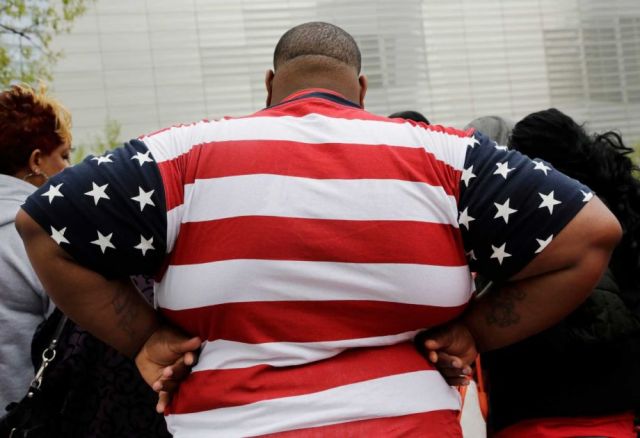
It’s one reason why Houston regularly finishes top, or close, in surveys that crown “America’s fattest city”. Unsurprisingly, it has a diabetes problem as outsized as its residents’ waistlines. By 2040, one in five Houstonians is predicted to have the disease.

According to data from pharmaceutical company Novo Nordisk, the prevalence of type 2 diabetes in the city is 9.1% – with an estimated one in four of these being undiagnosed. Almost a third of adult Houstonians self-describe as obese, according to a 2010-11 survey. Without action, the number of people with diabetes is projected to nearly treble by 2040 to 1.1 million people, with diabetes-related costs soaring from $4.1bn in 2015 to $11.4bn by 2040.

Graham is alarmed by the damage diabetes is wreaking on her community. “I was talking to my friends and saying, so many of the people we grew up with got diabetes and lost limbs,” she says. “It’s not even so much the seniors any more, it’s the young people. But it doesn’t scare them. They act like they’re not afraid.”

Another Dawn member, Verne Jenkins, was diagnosed three years ago. “I had picked up a bit of weight that I shouldn’t have,” says the 63-year-old. “I knew what to eat, I knew what I was doing, I just got out of control.”

Jenkins loves to bake but has cut back on carbs, red meat, salt and sugar, abstaining from one of her guilty pleasures, German chocolate cake. Not that it’s easy in a city with so much choice: “All these wonderful restaurants, all these different kinds of cuisines, of course you’re going to try some. I imagine it leads to our delinquency,” she says.

Graham has watched her diet since she was in her 20s. “I eat pretty good,” she said. “‘She eats like white folks’ – that’s what they tell me!”

Time poverty

Diabetes is a major cause of death, blindness, kidney disease and amputations in the US. While federal researchers announced last year that the rate of new diabetes cases dropped from 1.7 million in 2009 to 1.4 million in 2014, in Texas the percentage of diagnosed adults rose from 9.8% in 2009 to 11% in 2014.

Houston, America’s fourth-largest city, is one of five participating in the Cities Changing Diabetes programme, along with Mexico City, Copenhagen, Tianjin and Shanghai. Vancouver and Johannesburg are soon to join the project, which attempts to understand, publicise and combat the threat through cultural analysis.

“The majority of people with diabetes live in cities,” says Jakob Riis, an executive vice-president at Novo Nordisk, one of the lead partners in the programme alongside the Steno Diabetes Center and University College London. “We need to rethink cities so that they are healthier to live in … otherwise we’re not really addressing the root cause of the problem.”

One of the programme’s key – and perhaps surprising – findings, however, is that assessing the risk of developing diabetes is not as simple as dividing the population according to income and race. The problem is broad – much like Houston itself.

The view stretches for miles from Faith Foreman’s eighth-floor office next to the Astrodome, the famous old indoor baseball stadium. It’s an impressive sight, but for someone tasked with tackling the city’s diabetes epidemic, also a worrying one: the sheer scale of the urban sprawl is part of the problem. The threat of the disease has expanded along with the city.

A low cost of living and a strong jobs market helped Houston become one of the fastest growing urban areas in the US. In response, the city loosened its beltways. Its third major ring road is under construction, with a northwestern segment set to open soon that is some 35 miles from downtown.

Once completed, the Grand Parkway – whose northwestern segment has just opened – will boast a circumference of about 180 miles. That is far in excess of the 117 miles of the M25, although about 14 million people live inside the boundary of London’s orbital motorway, more than twice as many as reside in the Houston area.

Large homes sprout in the shadow of recently opened sections, promising cheap middle-class living with a heavy cost: a commute to central Houston of up to 90 minutes each way during rush hour, with minimal public transport options.
“A lot of time in Houston is spent in a car,” says Foreman, assistant director of Houston’s Department of Health and Human Services. This informs one of the Cities Changing Diabetes study’s most notable findings: that “time poverty” is among the risk factors in Houston for developing type 2 diabetes.

This means that young, relatively well-off people can also be considered a vulnerable population segment, even though they might not fit the traditional profile of people who may develop type 2 diabetes – that is, aged over 45, with high blood pressure and a high BMI, and perhaps disadvantaged through poverty or a lack of health insurance.

“You generally think of marginalised, lower income communities in poverty as your keys to health disparities but I think what we learned from our data in Houston is that we now have to expand the definition of what vulnerable is and what at-risk means. Just because we live in an urban environment, we may all indeed be vulnerable,” says Foreman.

In other words, not only its residents’ dietary choices but the way Houston is constructed as a city appears to be contributing to its diabetes problem, so tackling the issue requires architects as well as doctors; more sidewalks as well as fewer steaks.

Urban isolation is a key challenge, says David Napier of UCL, the lead academic for Cities Changing Diabetes. “Houston is growing so quickly and also expanding geographically at such a rapid rate. When you look at how difficult it is for people just to get out and walk, or walk to work; the fact that so many people commute long distances, spend a lot of time eating out – they have a number of obstacles to overcome,” he says.

A city with notoriously lax planning regulations is now making a conscious effort to put more care into its built environment, with more public transport, expanded bike trails, better parks and denser, more walkable neighbourhoods all evident in recent years, even as the suburbs continue to swell.

Foreman’s agency has more input when officials gather to map out the future city. “That is something that has been a big change over the last two or three years in Houston,” she says. “We are at the table and we are working with city planning to make those decisions.”

But prevention is a vital focus as well as treatment. Along with his team, Stephen Linder of the University of Texas’ school of public health – the local academic lead for Houston’s Cities Changing Diabetes research – gathered data on 5,000 households in Harris County, which includes much of the Houston area.

“One way to approach this project wasn’t to focus on diabetes itself but rather to look at some of the preconditioned social factors that seemed to generate the patterns of living that then led to the clinical signs that would designate people as being prediabetic,” he says from his office at the Texas Medical Center near downtown Houston – the world’s largest medical complex.

“These were people who had neither disadvantage nor biological risk factors. They tended to be the youngest group and would normally escape any kind of assessment – we called them the ‘time-pressured-young’. They’re the ones who did the long commutes; they’re the ones whose perception was they could not manage their day’s worth of stuff, that they have no time for anything.”

For this group, obesity is so prevalent in Houston that it distorts an understanding of what a healthy weight is, Linder found. “Their perception of their health was affected by their peers as opposed to other sorts of references. If all of their peers were overweight then in a relative sense they were fine. The judgments were about one’s peers and not relative to any sort of expert standard,” he says.

Three neighbourhoods were identified as having the highest concentration of people vulnerable to developing diabetes, and a Dallas-area research company, 2M, conducted detailed interviews with 125 residents. One place was particularly surprising: Atascocita, a desirable middle-class area near a large lake and golf courses, about 30 miles north of downtown.

Houston has become, according to a 2012 Rice University study, the most ethnically diverse large metropolitan area in the US. But this cosmopolitan air – one of the qualities sought by any place seeking to become a globally renowned city – may also unwittingly be contributing to the diabetes crisis, the study found.

Some in Atascocita, Linder said, “emphasised this sense of change and transition in their neighbourhoods, that that was a source of stress for them and that they were resistant to making changes in their own lives given the flux that was around them. Because that group happened to be older, even though they were economically secure they did have some other chronic diseases and they satisfied our biorisk characteristics.

“We call them concerned seniors. They weren’t making changes because there was too much else going on for them. And so if we were to say to them ‘you’ve got to change your diet’, they’d say ‘no, I can’t handle any more changes’.”

This matters since food portions are no exception to the “everything’s bigger in Texas” cliche, while Houston’s location near Mexico and the deep south, its embrace of the Lone Star state’s love of barbecued red meat and its enormous variety of restaurants serving international cuisine combine to unhealthy effect.

“The food that had a traditional aspect to it tended not to be the healthiest food – southern food that’s fried and lots of butter and lots of starch, then there’s African American soul food and then there’s Hispanic heavy fat, prepared tamales and the like, and so we found people kind of gravitated to what the UCL people called nourishing traditions,” Linder said.

“People used food as not only a reinforcement of tradition and ritual but also as a way of connecting socially. You’ve moved here from somewhere else, it’s a way to reinforce your identity, it’s a real cultural asset to have, but in a biological sense it’s not the best thing.”

For Linder, one lesson is that generalised advice about healthy eating that has long been part of diabetes awareness efforts may not be effective locally, given the complexity and variety of Houston’s neighbourhoods and the social factors that make populations vulnerable to diabetes.

“It does make the task of dietary change a much more complex one than the simple messages about changing your diet, eat more fruit and vegetables, get more colour on your plate would suggest. Those things bounce off, it’s not a useful set of interventions then for that particular group who rely on these nourishing traditions and find some solace in the change around them,” he said.

Foreman agrees that a targeted approach is vital. “How do you change diabetes in Houston? One neighbourhood at a time, in a sense, but at the same time you have bigger things that you can change systemwide in policies and how you work together collaboratively,” she said. “But then as you narrow it and get more granular it is neighbourhood, and what works in one neighbourhood may or may not work in another.”

Patricia Graham is hoping that the Dawn programme expands to other parts of the city to combat the dangerous union of unhealthy traditional food with a modern convenience culture. “Everything is food, and I mean lots of it and all the time,” she said. “Some people don’t know how to cook without grease or butter. That’s just the way we learn.”

http://www.theguardian.com/cities/2016/feb/11/houston-health-crisis-diabetes-sugar-cars-diabetic?CMP=oth_b-aplnews_d-1

Thanks to Kebmodee for bringing this to the It’s Interesting community.

New research suggests that the Moon may control rainfall


Two scientists from the University of Washington studied 15 years of climate data to confirm their suspicions about how the moon influences rainfall on Earth.

By Story Hinckley

When the moon is directly overhead, less rain falls, scientists from the University of Washington (UW) recently discovered.

UW doctoral student in atmospheric sciences Tsubasa Kohyama suspected there might be a correlation between atmospheric waves and oscillating air pressure. To confirm his suspicions, Kohyama and his atmospheric sciences professor John Wallace began studying years of data.

And 15 years of data from 1998 to 2012 collected by NASA and the Japan Aerospace Exploration Agency’s Tropical Rainfall Measuring Mission (TRMM) confirmed the scientists’ assumption: Earth’s rainfall is connected to the moon.

“When the moon is overhead or underfoot, the air pressure is higher,” Kohyama explained in a statement, allowing for more moisture. “It’s like the container becomes larger at higher pressure.”

In other words, when the moon is high overhead – or at its peak – its gravitational pull causes the Earth’s atmosphere to bulge towards it, simultaneously increasing atmospheric pressure. Higher pressure increases air temperature, and warmer air can hold more moisture, making it less likely to dump its moisture contents.

An earlier study by Kohyama and Wallace published in 2014 confirmed that air pressure on the Earth surface rose higher during certain phases of the moon, specifically when it was directly overhead or underfoot.

But the recent study published Saturday in Geophysical Research Letters is the first of its kind.

“As far as I know, this is the first study to convincingly connect the tidal force of the moon with rainfall,” Kohyama, a UM doctoral student in atmospheric sciences, said in a statement.

But the recent discovery may only be relevant to academics in the field because the average person will not notice a difference. The change in rainfall from lunar influence is roughly one percent of total rainfall variation, hardly enough to warrant attention.

“No one should carry an umbrella just because the moon is rising,” Kohyama tells Tech Times.

But atmospheric scientists can use the data to test climate models, says Wallace.

The study also proves the importance of the TRMM collaboration, because without its 15 years of data Kohyama and Wallace’s discovery would have been impossible. Launched in November 1997 and expected to last only three years, the TRMM satellite continues to produce valuable atmospheric data each year.

And while the change may be small, the authors say the moon’s position directly correlates with precipitation levels.

“The analysis of the relationship between relative humidity and [changes in precipitation rate] serves as a concrete illustration of how the quantitative documentation of the observed structure of atmospheric tides can be used to make inferences about atmospheric processes,” the authors explain in their paper.

Wallace says he plans to continue studying the relationship between rainfall and the moon. Next, he wants to see if there is specifically a lunar connection between certain categories of rain like torrential downpours.

http://www.csmonitor.com/Science/2016/0201/Does-the-moon-influence-rainfall-Scientists-reveal-odd-link

Thanks to Kebmodee for bringing this to the It’s Interesting community.
Signs of Modern Astronomy Seen in Ancient Babylon

28TABLET-COMBO-master1050

By Kenneth Chang

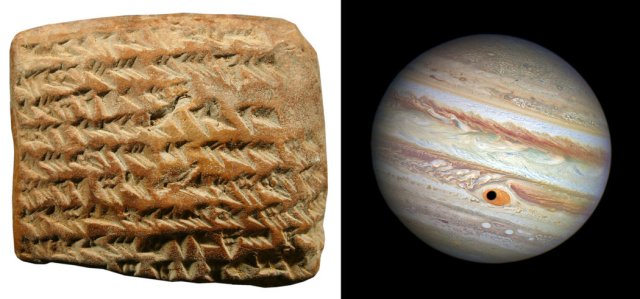
Clay tablets, including one at the left, revealed that Babylonian astronomers employed a sort of precalculus to describe Jupiter’s motion across the night sky relative to distant background stars. They did this 15 centuries earlier than Europeans were first credited with making such measurements.

For people living in the ancient city of Babylon, Marduk was their patron god, and thus it is not a surprise that Babylonian astronomers took an interest in tracking the comings and goings of the planet Jupiter, which they regarded as a celestial manifestation of Marduk.

What is perhaps more surprising is the sophistication with which they tracked the planet, judging from inscriptions on a small clay tablet dating to between 350 B.C. and 50 B.C. The tablet, a couple of inches wide and a couple of inches tall, reveals that the Babylonian astronomers employed a sort of precalculus in describing Jupiter’s motion across the night sky relative to the distant background stars. Until now, credit for this kind of mathematical technique had gone to Europeans who lived some 15 centuries later.

Additional tablets, including this one, show that the Babylonians realized that the area under the curve of a graph of velocity against time represented distance traveled.

“It’s a figure that describes a graph of velocity against time,” he said. “That is a highly modern concept.”

Mathematical calculations on four other tablets show that the Babylonians realized that the area under the curve on such a graph represented the distance traveled.

“I think it’s quite a remarkable discovery,” said Alexander Jones, a professor at the Institute for the Study of the Ancient World at New York University, who was not involved with the research. “It’s really quite clear from the text.”

Ancient Babylon, situated in what is now Iraq, south of Baghdad, was a thriving metropolis, a center of trade and science. Early Babylonian mathematicians who lived between 1800 B.C. and 1600 B.C. had figured out, for example, how to calculate the area of a trapezoid, and even how to divide a trapezoid into two smaller trapezoids of equal area.

For the most part, Babylonians used their mathematical skills for mundane calculations, like figuring out the size of a plot of land. But on some tablets from the later Babylonian period, there appear to be some trapezoid calculations related to astronomical observations.

In the 1950s, an Austrian-American mathematician and science historian, Otto E. Neugebauer, described two of them. Dr. Ossendrijver, in his recent research, turned up two more.

But it was not clear what the Babylonian astronomers were calculating.

A year ago, a visitor showed Dr. Ossendrijver a stack of photographs of Babylonian tablets that are now held by the British Museum in London. He saw a tablet he had not seen before. This tablet, with impressions of cuneiform script pressed into clay, did not mention trapezoids, but it recorded the motion of Jupiter, and the numbers matched those on the tablets with the trapezoid calculations.

“I was certain now it was Jupiter,” Dr. Ossendrijver said.

When Jupiter first appears in the night sky, it moves at a certain velocity relative to the background stars. Because Jupiter and Earth both constantly move in their orbits, to observers on Earth, Jupiter appears to slow down, and 120 days after it becomes visible, it comes to a standstill and reverses course.

In September, Dr. Ossendrijver went to the British Museum, where the tablets were taken in the late 19th century after being excavated. A close-up look of the new tablet confirmed it: The Babylonians were calculating the distance Jupiter traveled in the sky from its appearance to its position 60 days later. Using the technique of splitting a trapezoid into two smaller ones of equal area, they then figured out how long it took Jupiter to travel half that distance.

Dr. Ossendrijver said he did not know the astronomical or astrological motivation for these calculations.

It was an abstract concept not known elsewhere at the time. “Ancient Greek astronomers and mathematicians didn’t make plots of something against time,” Dr. Ossendrijver said. He said that until now, such calculations were not known until the 14th century by scholars in England and France. These mathematicians of the Middle Ages perhaps had seen some as yet unknown texts dating to Babylonian times, or they developed the same techniques independently.

“It anticipates integral calculus,” Dr. Ossendrijver said. “This is utterly familiar to any modern physicist or mathematician.”

Thanks to Kebmodee for bringing this to the It’s Interesting community.

DARPA program aims to develop an implantable neural interface capable of connecting with one million neurons

A new DARPA program aims to develop an implantable neural interface able to provide unprecedented signal resolution and data-transfer bandwidth between the human brain and the digital world. The interface would serve as a translator, converting between the electrochemical language used by neurons in the brain and the ones and zeros that constitute the language of information technology. The goal is to achieve this communications link in a biocompatible device no larger than one cubic centimeter in size, roughly the volume of two nickels stacked back to back.

The program, Neural Engineering System Design (NESD), stands to dramatically enhance research capabilities in neurotechnology and provide a foundation for new therapies.

“Today’s best brain-computer interface systems are like two supercomputers trying to talk to each other using an old 300-baud modem,” said Phillip Alvelda, the NESD program manager. “Imagine what will become possible when we upgrade our tools to really open the channel between the human brain and modern electronics.”

Among the program’s potential applications are devices that could compensate for deficits in sight or hearing by feeding digital auditory or visual information into the brain at a resolution and experiential quality far higher than is possible with current technology.

Neural interfaces currently approved for human use squeeze a tremendous amount of information through just 100 channels, with each channel aggregating signals from tens of thousands of neurons at a time. The result is noisy and imprecise. In contrast, the NESD program aims to develop systems that can communicate clearly and individually with any of up to one million neurons in a given region of the brain.

Achieving the program’s ambitious goals and ensuring that the envisioned devices will have the potential to be practical outside of a research setting will require integrated breakthroughs across numerous disciplines including neuroscience, synthetic biology, low-power electronics, photonics, medical device packaging and manufacturing, systems engineering, and clinical testing. In addition to the program’s hardware challenges, NESD researchers will be required to develop advanced mathematical and neuro-computation techniques to first transcode high-definition sensory information between electronic and cortical neuron representations and then compress and represent those data with minimal loss of fidelity and functionality.

To accelerate that integrative process, the NESD program aims to recruit a diverse roster of leading industry stakeholders willing to offer state-of-the-art prototyping and manufacturing services and intellectual property to NESD researchers on a pre-competitive basis. In later phases of the program, these partners could help transition the resulting technologies into research and commercial application spaces.

To familiarize potential participants with the technical objectives of NESD, DARPA will host a Proposers Day meeting that runs Tuesday and Wednesday, February 2-3, 2016, in Arlington, Va. The Special Notice announcing the Proposers Day meeting is available at https://www.fbo.gov/spg/ODA/DARPA/CMO/DARPA-SN-16-16/listing.html. More details about the Industry Group that will support NESD is available at https://www.fbo.gov/spg/ODA/DARPA/CMO/DARPA-SN-16-17/listing.html. A Broad Agency Announcement describing the specific capabilities sought will be forthcoming on http://www.fbo.gov.

NESD is part of a broader portfolio of programs within DARPA that support President Obama’s brain initiative. For more information about DARPA’s work in that domain, please visit: http://www.darpa.mil/program/our-research/darpa-and-the-brain-initiative.

http://www.darpa.mil/news-events/2015-01-19

Thanks to Kebmodee for bringing this to the It’s Interesting community.

Head transplant has been successfully done on a monkey, neurosurgeon Sergio Canavero claims

by Andrew Griffin

The scientist who claims to be about to carry out the first human head transplant says that he has successfully done the procedure on a monkey.

Maverick neurosurgeon Sergio Canavero has tested the procedure in experiments on monkeys and human cadavers, he told New Scientist.

Dr Canavero says that the success shows that his plan to transplant a human’s head onto a donor body is in place. He says that the procedure will be ready before the end of 2017 and could eventually become a way of treating complete paralysis.

“I would say we have plenty of data to go on,” Canavero told New Scientist. “It’s important that people stop thinking this is impossible. This is absolutely possible and we’re working towards it.”

The team behind the work has published videos and images showing a monkey with a transplanted head, as well as mice that are able to move their legs after having their spinal cords severed and then stuck back together.

Fusing the spinal cord of a person is going to be key to successfully transplanting a human head onto a donor body. The scientists claim that they have been able to do so by cleanly cutting the cord and using polyethylene glycol (PEG), which can be used to preserve cell membranes and helps the connection recover.

The monkey head transplant was carried out at Harbin Medical University in China, according to Dr Canavero. The monkey survived the procedure “without any neurological injury of whatever kind,” the surgeon said, but that it was killed 20 hours after the procedure for ethical reasons.

It isn’t the first time that a successful transplant has been carried out on a monkey. Head transplant pioneer Robert J White successfully carried out the procedure in 1970, on a monkey that initially responded well but died after nine days when the body rejected the head.

https://en.wikipedia.org/wiki/Robert_J._White

The newly-revealed success is likely to be an attempt to help generate funds for the ultimate aim of giving a head transplant to Valery Spriridonov, the Russian patient who has been chosen to be the first to undergo the procedure. Dr Canavero has said that he will need a huge amount of money to fund the team of surgeons and scientists involved, and that he intends to ask Mark Zuckerberg to help fund it.

While the scientists behind the procedure have published the pictures and the videos, they haven’t yet made any of their work available for critique from fellow scientists. That has led some to criticise the claims, arguing that it is instead “science through PR”, and an attempt to drum up publicity and distract people from “good science”.

Peers have criticised the maverick scientist for making the claims without allowing them to be reviewed or checked out. But Dr Canavero claims that he will be publishing details from the study in journals in the coming months.

http://www.independent.co.uk/news/science/head-transplant-has-been-successfully-done-on-a-monkey-maverick-neurosurgeon-sergio-canavero-claims-a6822361.html

Thanks to Kebmodee for bringing this to the It’s Interesting community.

New progress in understanding what may give animals a magnetic sense: a protein that acts as a compass

Quick – can you tell where north is? Animals as diverse as sea turtles, birds, worms, butterflies and wolves can, thanks to sensing Earth’s magnetic field.

But the magnet-sensing structures inside their cells that allow them to do this have evaded scientists – until now.

A team led by Can Xie’s at Peking University in China has now found a protein in fruit flies, butterflies and pigeons that they believe to be responsible for this magnetic sense.

“It’s provocative and potentially groundbreaking,” says neurobiologist Steven Reppert of the University of Massachusetts who was not involved in the work. “It took my breath away.”

There used to be two competing theories about magnetic sense: some thought it came from iron-binding molecules, others thought it came from a protein called cryptochrome, which senses light and has been linked to magnetic sense in birds.

Xie’s group was the first to guess these two were part of the same system, and has now figured out how they fit together.

“This was a very creative approach,” says Reppert. “Everyone thought they were two separate systems.”

Xie’s team first screened the fruit fly genome for a protein that would fit a very specific bill.

The molecule had to bind iron, it had to be expressed inside a cell instead of on the cell membrane and do so in the animal’s head – where animals tend to sense magnetic fields – and it also had to interact with cryptochrome.

“We found one [gene] fit all of our predictions,” says Xie. They called it MagR and then used techniques including electron microscopy and computer modelling to figure out the protein’s structure.

They found that MagR and cryptochrome proteins formed a cylinder, with an inside filling of 20 MagR molecules surrounded by 10 cryptochromes.

The researchers then identified and isolated this protein complex from pigeons and monarch butterflies.

In the lab, the proteins snapped into alignment in response to a magnetic field. They were so strongly magnetic that they flew up and stuck to the researchers’ tools, which contained iron. So the team had to use custom tools made of plastic.

The team hasn’t yet tried to remove the MagR protein from an animal like a fruit fly to see if it loses its magnetic sense, but Xie believes the proteins work the same way in a living animal.

Although this protein complex seems to form the basis of magnetic sense, the exact mechanism is still to be figured out.

One idea is that when an animal changes direction, the proteins may swing around to point north, “just like a compass needle,” says Xie. Perhaps the proteins’ movement could trigger a connected molecule, which would send a signal to the nervous system.

Journal reference: Nature Materials, DOI: 10.1038/nmat4484

https://www.newscientist.com/article/dn28494-animal-magnetic-sense-comes-from-protein-that-acts-as-a-compass

Thanks to Kebmodee for bringing this to the It’s Interesting community.

Astronomers may have found giant alien ‘megastructures’ orbiting star near the Milky Way

A large cluster of objects in space look like something you would “expect an alien civilization to build”, astronomers have said.

Jason Wright, an astronomer from Penn State University, is set to publish a report on the “bizarre” star system – suggesting the objects could be a “swarm of megastructures”.

He told The Independent: “I can’t figure this thing out and that’s why it’s so interesting, so cool – it just doesn’t seem to make sense.”

Speaking to The Atlantic, Mr Wright said: “Aliens should always be the very last hypothesis you consider, but this looked like something you would expect an alien civilisation to build. I was fascinated by how crazy it looked.”

The snappily named KIC 8462852 star lies just above the Milky Way, between the constellations Cygnus and Lyra. It first attracted the attention of astronomers in 2009, when the Kepler Space Telescope identified it as a candidate for having orbiting Earth-like planets.

But KIC 8462852 was emitting a stranger light pattern than any of the other stars in Kepler’s search for habitable planets.

Kepler works by analysing light from distant places in the universe — looking for changes that take place when planets move in front of their stars. But the dip in starlight from KIC 8462852 does not seem to be the normal pattern for a planet.

Tabetha Boyajian, a postdoc at Yale, told The Atlantic: “We’d never seen anything like this star. It was really weird. We thought it might be bad data or movement on the spacecraft, but everything checked out.”

In 2011 the star was flagged up again by several members of Kepler’s “Planet Hunters” team – a group of ‘citizen scientists’ tasked with analysing the data from the 150,000 stars Kepler was watching.

The analysts tagged the star as “interesting “ and “bizarre” because it was surrounded by a mass of matter in tight formation.

This was consistent with the mass of debris that surrounds a young star just as it did with our sun before the planets formed. However this star was not young and the debris must have been deposited around it fairly recently or it would have been clumped together by gravity – or swallowed by the star itself.

Boyajian, who oversees the Planet Hunters project, recently published a paper looking at all the possible natural explanations for the objects and found all of them wanting except one – that another star had pulled a string of comets close to KIC 8462852. But he said even this would involve an incredibly improbable coincidence.

A this stage Mr Wright, the astronomer from Penn State University, and his colleague Andrew Siemion, the Director of SETI (Search for Extra-Terrestrial Intelligence), got involved. Now the possibility the objects were created by intelligent creatures is being taken very seriously by the team.

As civilisations become more technologically advanced, they create new and better ways of collecting energy — with the end result being the harnessing of energy directly from their star. If the speculation about a megastructure being placed around the star system is correct, scientists say it could be a huge set of solar panels placed around the star.

The three astronomers want to point a radio dish at the star to look for wavelengths associated with technological civilisations. And the first observations could be ready to take place as early as January, with follow-up observations potentially coming even quicker.

“If things go really well, the follow-up could happen sooner,” Wright told The Atlantic. “If we saw something exciting… we’d be asking to go on right away.”

http://www.independent.co.uk/news/world/forget-water-on-mars-astronomers-may-have-just-found-giant-alien-megastructures-orbiting-a-star-near-a6693886.html

Thanks to Kebmodee and David Frey for bringing this to the It’s Interesting community.
In 72 hours deep learning machine teaches itself to play chess at International Grand Master level by evaluating the board rather than using brute force to work out every possible move – a computer first.

t’s been almost 20 years since IBM’s Deep Blue supercomputer beat the reigning world chess champion, Gary Kasparov, for the first time under standard tournament rules. Since then, chess-playing computers have become significantly stronger, leaving the best humans little chance even against a modern chess engine running on a smartphone.

But while computers have become faster, the way chess engines work has not changed. Their power relies on brute force, the process of searching through all possible future moves to find the best next one.

Of course, no human can match that or come anywhere close. While Deep Blue was searching some 200 million positions per second, Kasparov was probably searching no more than five a second. And yet he played at essentially the same level. Clearly, humans have a trick up their sleeve that computers have yet to master.

This trick is in evaluating chess positions and narrowing down the most profitable avenues of search. That dramatically simplifies the computational task because it prunes the tree of all possible moves to just a few branches.

Computers have never been good at this, but today that changes thanks to the work of Matthew Lai at Imperial College London. Lai has created an artificial intelligence machine called Giraffe that has taught itself to play chess by evaluating positions much more like humans and in an entirely different way to conventional chess engines.

Straight out of the box, the new machine plays at the same level as the best conventional chess engines, many of which have been fine-tuned over many years. On a human level, it is equivalent to FIDE International Master status, placing it within the top 2.2 percent of tournament chess players.

The technology behind Lai’s new machine is a neural network. This is a way of processing information inspired by the human brain. It consists of several layers of nodes that are connected in a way that change as the system is trained. This training process uses lots of examples to fine-tune the connections so that the network produces a specific output given a certain input, to recognize the presence of face in a picture, for example.

In the last few years, neural networks have become hugely powerful thanks to two advances. The first is a better understanding of how to fine-tune these networks as they learn, thanks in part to much faster computers. The second is the availability of massive annotated datasets to train the networks.

That has allowed computer scientists to train much bigger networks organized into many layers. These so-called deep neural networks have become hugely powerful and now routinely outperform humans in pattern recognition tasks such as face recognition and handwriting recognition.

So it’s no surprise that deep neural networks ought to be able to spot patterns in chess and that’s exactly the approach Lai has taken. His network consists of four layers that together examine each position on the board in three different ways.

The first looks at the global state of the game, such as the number and type of pieces on each side, which side is to move, castling rights and so on. The second looks at piece-centric features such as the location of each piece on each side, while the final aspect is to map the squares that each piece attacks and defends.

Lai trains his network with a carefully generated set of data taken from real chess games. This data set must have the correct distribution of positions. “For example, it doesn’t make sense to train the system on positions with three queens per side, because those positions virtually never come up in actual games,” he says.

It must also have plenty of variety of unequal positions beyond those that usually occur in top level chess games. That’s because although unequal positions rarely arise in real chess games, they crop up all the time in the searches that the computer performs internally.

And this data set must be huge. The massive number of connections inside a neural network have to be fine-tuned during training and this can only be done with a vast dataset. Use a dataset that is too small and the network can settle into a state that fails to recognize the wide variety of patterns that occur in the real world.

Lai generated his dataset by randomly choosing five million positions from a database of computer chess games. He then created greater variety by adding a random legal move to each position before using it for training. In total he generated 175 million positions in this way.

The usual way of training these machines is to manually evaluate every position and use this information to teach the machine to recognize those that are strong and those that are weak.

But this is a huge task for 175 million positions. It could be done by another chess engine but Lai’s goal was more ambitious. He wanted the machine to learn itself.

Instead, he used a bootstrapping technique in which Giraffe played against itself with the goal of improving its prediction of its own evaluation of a future position. That works because there are fixed reference points that ultimately determine the value of a position—whether the game is later won, lost or drawn.

In this way, the computer learns which positions are strong and which are weak.

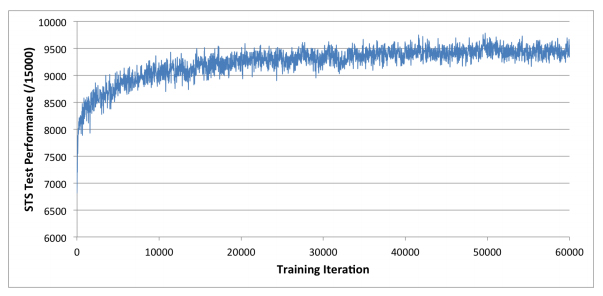
Having trained Giraffe, the final step is to test it and here the results make for interesting reading. Lai tested his machine on a standard database called the Strategic Test Suite, which consists of 1,500 positions that are chosen to test an engine’s ability to recognize different strategic ideas. “For example, one theme tests the understanding of control of open files, another tests the understanding of how bishop and knight’s values change relative to each other in different situations, and yet another tests the understanding of center control,” he says.

The results of this test are scored out of 15,000.

Lai uses this to test the machine at various stages during its training. As the bootstrapping process begins, Giraffe quickly reaches a score of 6,000 and eventually peaks at 9,700 after only 72 hours. Lai says that matches the best chess engines in the world.

“[That] is remarkable because their evaluation functions are all carefully hand-designed behemoths with hundreds of parameters that have been tuned both manually and automatically over several years, and many of them have been worked on by human grandmasters,” he adds.

Lai goes on to use the same kind of machine learning approach to determine the probability that a given move is likely to be worth pursuing. That’s important because it prevents unnecessary searches down unprofitable branches of the tree and dramatically improves computational efficiency.

Lai says this probabilistic approach predicts the best move 46 percent of the time and places the best move in its top three ranking, 70 percent of the time. So the computer doesn’t have to bother with the other moves.

That’s interesting work that represents a major change in the way chess engines work. It is not perfect, of course. One disadvantage of Giraffe is that neural networks are much slower than other types of data processing. Lai says Giraffe takes about 10 times longer than a conventional chess engine to search the same number of positions.

But even with this disadvantage, it is competitive. “Giraffe is able to play at the level of an FIDE International Master on a modern mainstream PC,” says Lai. By comparison, the top engines play at super-Grandmaster level.

That’s still impressive. “Unlike most chess engines in existence today, Giraffe derives its playing strength not from being able to see very far ahead, but from being able to evaluate tricky positions accurately, and understanding complicated positional concepts that are intuitive to humans, but have been elusive to chess engines for a long time,” says Lai. “This is especially important in the opening and end game phases, where it plays exceptionally well.”

And this is only the start. Lai says it should be straightforward to apply the same approach to other games. One that stands out is the traditional Chinese game of Go, where humans still hold an impressive advantage over their silicon competitors. Perhaps Lai could have a crack at that next.

http://www.technologyreview.com/view/541276/deep-learning-machine-teaches-itself-chess-in-72-hours-plays-at-international-master/

Thanks to Kebmodee for bringing this to the It’s Interesting community.

Head transplant team selected for operation in 2017

The likely date and location for the first-ever human head transplant have been set, after the controversial Italian doctor that will lead the surgery said that he has selected his team of surgeons.

Radical Italian surgeon Sergio Canavero has drawn fascination and criticism after he announced plans to cut off a man’s head and put it onto another body. Many had expected that the planned operation would probably never happen – but a team has now been appointed to lead the operation.

Canavero is hoping to complete the procedure – which will take 36-hours, and cost $11 million – by December 2017, according to Russia Today.

The transplant is likely to happen in China, with a team made up largely of doctors from the country, according to AFP. That is likely to raise worries about the already highly-controversial operation, since China has been criticised for using the organs of executed prisoners without their consent.

The procedure has already drawn widespread condemnation, from doctors who say that it is likely to kill the person undergoing it, and that if he does survive he will undergo something a “lot worse than death”.

Russian Valery Spiridonov has already been selected as the recipient of the new body. He suffers from the rare, genetic Werdnig-Hoffmann disease, which gradually wastes away his muscles.

During the procedure, the donor and patient will each have their head sliced off their body in a super-fast procedure. The transplanted parts will then be stuck together with glue and stitches.

Spiridinov will then be placed in a month-long coma and injected with drugs intended to stop the body and head from rejecting each other.

Since the procedure is unprecedented, apart from mixed results in dogs and monkeys, doctors are not sure what could happen during the surgery – or how Spiridinov is likely to be if and when he wakes up.

Ren Xiaoping, who will work with Canavero to try and attempt the procedure in the next two years, said that the team will only attempt it if research and tests show that it is likely to be successful.

The operation will probably happen in China, at the Harbin Medical University, according to reports.

Since Ren refused to say where the donated body might be found, some have worried that the donated body might be taken from an executed prisoner.

In China – where the huge population and a low number of donations have led to a high demand for organs – an industry of forced donations and a black market for the sale of organs have flourished.

Canavero has said that China is keen to be involved in the procedure as a way of demonstrating its keenness for scientific research to the world, likening the race to complete the transplant to the space race. The Italian doctor has recognised that he could go to jail for performing the procedure in an unfriendly country and said that he has “been studying Chinese for a few years”.

The doctor has said that the procedure is just a first step towards his ultimate aim of immortality.

http://www.independent.co.uk/life-style/gadgets-and-tech/news/head-transplant-team-selected-for-controversial-operation-that-will-go-ahead-in-2017-10498627.html

Thanks to Kebmodee for bringing this to the It’s Interesting community.

Mystery surrounds hallucinatory chaos at German homeopathy conference


2C-E was one of the hundreds of drugs synthesised by Alexander Shulgin, who was known as the ‘godfather of ecstasy’. Photograph: Scott Houston/Corbis

Police investigating a mass intoxication of a homeopathy conference in Germany with psychedelic drugs have said they still do not know nearly a week later whether it was an accident or an experiment gone wrong.

Emergency services called to the meeting in Handeloh, south of Hamburg, found a group of 29 alternative healers hallucinating, staggering around, groaning and rolling on the grass.

Police spokesman Lars Nicklesen said on Thursday that investigators believe a psychedelic drug was to blame but remain unsure of how or why it was taken. The delegates are now all out out of physical danger, he said, but there may yet be legal consequences for the healers in the course of the ongoing criminal investigation.

“We’re now questioning the delegates and awaiting the results of blood and urine tests,” he said. “We still don’t know if they took the drugs on purpose. The question is whether they want to talk about it; they have the right to remain silent.”

Nicklesen added that police suspect the group took 2C-E, known in Germany as Aquarust, a drug which heightens perceptions of colours and sounds and in higher doses triggers hallucinations, psychosis and severe cramps.

Germany’s health ministry banned the drug last year due to its highly addictive nature and unknown side effects.

The homeopaths’ meeting – billed as a “further education seminar” – was suspended shortly after it started when delegates began experiencing psychotic hallucinations, cramps, racing heartbeats and shortage of breath. One of them alerted the emergency services.

Alarmed by the sight of so many grown men and women rolling around on the floor, the first fire crews on the scene called for backup, triggering a major incident response. A total of 160 police, fire crews, and ambulance staff and a helicopter were involved in the four hour operation to treat the group.

“It was great that none of the people were in mortal danger in the end”, said fire service spokesman Matthias Köhlbrandt. “The leading emergency doctor at the scene believed they would all recover without lasting damage.”

Unsure of what they had taken, medical staff gave the homeopaths oxygen on site before transferring them to seven different nearby hospitals.

The Hamburger Abendblatt newspaper reported that in one clinic, the Asklepios in Harburg, hallucinating patients had to be strapped down to a bed to prevent them causing danger to others. “They were completely off their heads,” a spokesman for the clinic said.

Staff at the conference centre were unable to shed light on the mystery as they had all gone home at the time of the incident. “We’re absolutely shocked, we’ve only had good experiences in the past with the group,” a spokeswoman for the Tanzheimat Inzmühlen conference centre told the Hamburger Abendblatt.

The Association of German Healing Practitioners was quick to distance itself from the incident and emphasised that hallucinogenic drugs had no place in the study of homeopathy. “If I find out that one of our members took part [in what happened in Handeloh] then they will be excluded from the association,” Heinz Kropmanns, the association president, told NDR.

The drug 2C-E was one of hundreds synthesised by the American chemist Alexander Shulgin. The scientist, who died in 2014, and had become known as the godfather of ecstasy after he introduced MDMA to psychotherapists on the US west coast in the late 1970s.

http://www.theguardian.com/science/2015/sep/10/homeopathy-conference-in-germany-goes-awry-as-delegates-take-lsd-like-drug

Thanks to Kebmodee for bringing this to the It’s Interesting community.