“Extinct” Pinocchio Lizard Found in Ecuador

lizard

Scientists have spotted a lizard with a nose like Pinocchio in an Ecuadorian cloud forest. What’s more, the long-nosed reptile was thought extinct, having been seen only a few times in the past 15 years.

“It’s hard to describe the feelings of finding this lizard. Finding the Pinocchio anole was like discovering a secret, a deeply held secret. We conceived it for years to be a mythological creature,” Alejandro Arteaga, a photographer and one of the lizard’s spotters, said in a statement.

Not surprisingly, the defining feature of the Pinocchio lizard—properly named Anolis proboscis, or the horned anole—is the male’s long protrusion on the end of its nose. Far from being a sturdy, rigid structure, researchers have found that the horn is actually quite flexible.

Despite its peculiar appearance, the reptile wasn’t formally described by scientists until 1953. They managed to save only six specimens, all of which were male. It was spotted several times in the next few years, all near the town of Mindo, Ecuador, and then the species seemed to vanish.

“For 40 years, no one saw it. At that point, we thought the species had gone extinct,” said Jonathan Losos, an evolutionary biologist and herpetologist at Harvard University who has studied the animal.

Then, in 2005, a group of bird-watchers near Mindo spotted a strange-looking lizard crossing the road. One of them shared a picture when they got back home, and herpetologists realized that the Pinocchio lizard was still alive and well.

Several teams journeyed to this area of Ecuador to get a closer look. One team, led by Steve Poe, a researcher at the University of New Mexico and an expert at finding hard-to-spot lizards, found that the anoles were actually quite easy to find—if you knew where to look.

Because horned anoles sleep at the end of branches, turning a pale white color as they snooze, Poe’s team discovered that they were easily spotted at night with headlamps or flashlights. The researchers identified several females, none of which had a horn. What the anoles did during the day, however, remained a mystery.

Losos—also a member of the National Geographic Committee for Research and Exploration—arrived in Ecuador in 2010 to solve this mystery and study the natural history of the Pinocchio lizard. Unable to find the lizard by searching its known hideouts, Losos did what any good detective would: He set up a stakeout.

His team found the pale lizards at night and simply followed them into the day. This sleuthing revealed why the anoles were very rarely spotted during the day.

For one, Pinocchio lizards are extremely well camouflaged and live high in the canopy. They also move very, almost ridiculously, slowly—hardly faster than a crawl.

The latest team to discover the lizard also made some new discoveries about where the Pinocchio lizard lives.

“We discovered this lizard occurs in habitats very different to what has been suggested in the literature. No one had ever found the lizard in deep cloud forest away from open areas. The other sightings were in [the] forest border,” Arteaga said in a statement.

“It’s nice that this group spotted these anoles again,” Losos said. “What we really need are people to just go out into nature and study these creatures for a few months. It’s not that hard to do.”

Scientists have discovered similar horned anoles in Brazil, but a closer analysis revealed that these two species had evolved their horns independently.

And as for what the nose is used for, no one knows. Losos once suspected the males might use the horns in swordfighting-like duels, but the horns are far too flimsy and flexible to be used in such a way.

http://newswatch.nationalgeographic.com/2013/10/08/pinocchio-lizard-spotted/

Thanks to Kebmodee for bringing this to the It’s Interesting community.

Inside the world of ‘Men and Dolls’

lars

Imagine “Guys and Dolls” with a more literal interpretation.

Benita Marcussen photographed men who use life-size dolls as partners in her fittingly titled series, “Men & Dolls.”

It took Marcussen six months to gain the trust of the men she would later photograph. She initially made contact with them via an online forum for the so-called “love dolls.”

Each day, the men would gather in their private corner of the Internet to discuss anything from if they could get an STD from a used doll to chatting as the girls themselves.

At first, the men were hesitant when Marcussen approached them, because they felt their subculture had been misquoted and shown “as freaks” in previous media reports.

Then, a breakthrough happened; she was invited to a meeting with a group of the men and their dolls in Wales.

Marcussen, who is based in Copenhagen, Denmark, says her friends were concerned about her safety when she told them about the meeting. But she wasn’t worried.

“They were really gentlemen,” she says. “They weren’t interested in me at all! They wanted to show me how the dolls worked.”

Some of the men were married with children, others had never had a relationship with a woman; the men’s situations varied, but she says one thing united them – the dolls eased their loneliness.

After the initial meeting, it took another year for her to be able to photograph physical relationships the men have with the dolls.

Marcussen says the friends and family of the men had a hard time accepting the dolls at first, but eventually learned to tolerate the relationship.

“One mom was very specific,” she says. “She told me: ‘I would have preferred that my son had met a real woman.’ ”

Marcussen first learned about men who live with dolls through the documentary “Guys and Dolls.” The community also had a star turn in the 2007 film “Lars and the Real Girl,” starring Ryan Gosling.

One of the men Marcussen photographed now owns the doll, Bianca, that appeared as Gosling’s romantic interest.

“Her whole identity now is that she’s a movie star,” she says. “She’s the Bianca.”

Marcussen says she pursued the project to not only show others that this subculture exists, but also to fight prejudice against it.

“Everybody has stuff they don’t share,” she says.

If the dolls are helping them, she asks, who are we to judge?

Inside the world of men and dolls

Thanks to Kebmodee for bringing this to the attention of the It’s Interesting community.

FBI Captures Alleged Silk Road Boss Using His Own Methods

silk road

From an Internet café in San Francisco, a 29-year-old free-market evangelist who called himself “Dread Pirate Roberts” used untraceable web services, an international network of servers and anonymous digital currency to run a global online exchange of cocaine and heroin beyond the reach of the law.

For two years, cybercrime experts from the FBI pored over the secretive online drug bazaar known as Silk Road — an underground operation that had become, by the time the FBI shut it down this week, the venue for $1 billion worth of illegal transactions, according to prosecutors. Seeking the mastermind behind it, investigators began picking up clues: an anonymous posting to a website devoted to hallucinogenic mushrooms, recurring references to an Austrian school of economics, and early clues left on public sites including Google and LinkedIn.

A big break came in July, when a routine inspection of inbound mail from Canada turned up a parcel containing nine counterfeit IDs — each with a different name, but all featuring the photograph of the same man.

According to a 33-page criminal complaint unsealed yesterday in Manhattan federal court, the man in the ID photos was Ross Ulbricht, Silk Road’s alleged overseer. FBI agents arrested Ulbricht in San Francisco the same day at the Glen Park library in San Francisco, where he had gone to log onto a computer, according to a person briefed on the matter.

The criminal complaint against Ulbricht depicts the dark side of Internet commerce. In it, special agent Christopher Tarbell of the FBI’s New York office described Silk Road as “the most sophisticated and extensive criminal marketplace on the Internet today” — a virtual bazaar where buyers could find everything from heroin and hacking software to contact information for hit men in more than 10 different countries.

Meanwhile, on July 10 of this year, customs officials intercepted the package from Canada as part of what the complaint characterized as a routine inspection. The package, addressed to an apartment on 15th Street in San Francisco, contained nine counterfeit IDs, each in a different name, but all featuring a photo of the same person.

Agents from Homeland Security Investigations arrived on July 26 at the 15th Street address. There, according to the complaint, they encountered Ross Ulbricht, whose photo matched those on all nine fake IDs.

Confronted with a fake California driver’s license bearing his photo and birthdate but a different name, Ulbricht avoided answering questions about the purchase of false IDs, according to the complaint. Instead, he volunteered that “hypothetically” anyone could go onto a website named Silk Road and purchase any drugs or counterfeit IDs they wanted. Ulbricht then produced his real ID, a Texas driver’s license, according to the complaint, and explained that he was subletting a room in the apartment for $1,000 a month. According to the complaint, he also said the roommates knew him as “Josh.”

Ulbricht stands accused of narcotics trafficking, money laundering, computer-hacking conspiracy and, in an indictment unsealed yesterday in Maryland, of attempted murder.

Bitcoin Bets Feed Twitter Dreams as Regulators CircleCyber Drug Bazaar’s Alleged Boss Paired EBay Style, Crime
The genius of Silk Road’s design and the reason it eluded the FBI’s grasp for so long, according to the complaint, was its impenetrability. The site was accessible only on a so-called tor network, which is designed to conceal the true Internet addresses of computers using it. Its exclusive reliance on Bitcoin, an anonymous digital currency, added another layer of protection for its buyers and sellers.

Since November 2011, Tarbell’s team made more than 100 purchases of drugs from Silk Road vendors, accepting shipments of ecstasy, cocaine, heroin, LSD and other drugs posted from 10 different countries, including the U.S., according to the complaint.

In the FBI’s bid to identify the individual behind Silk Road, an agent on Tarbell’s team combed through Internet postings and discovered the earliest mention of the site on shroomery.org, an informational website for consumers of “magic mushrooms,” in January 2011.

The posting, from someone with the username altoid, alerted the site’s visitors to Silk Road and asked if anyone had tried it. Two days later, someone using the same username posted a similar message on “bitcointalk.org,” a discussion forum for the virtual currency.

“The two postings created by ’altoid’ on Shroomery and Bitcoin Talk appear to be attempts to generate interest in the site,” Tarbell wrote. “The fact that ’altoid’ posted similar messages about the site on two very different discussion forums, two days apart, indicates that ’altoid’ was visiting various discussion forums…and seeking to publicize the site among the forum users — which, based on my training and experience, is a common online marketing tactic for new websites.”

In October 2011, altoid surfaced again on the Bitcoin forum, seeking an “IT pro” to help build a Bitcoin startup company and directing potential job candidates to the Gmail account of someone named Ross Ulbricht. From a Google profile associated with the account, the FBI learned that Ulbricht had an interest in the Austrian school of economics and the Auburn, Alabama-based Ludwig von Mises Institute. According to the group’s website, it functions as a center of Libertarian political and social theory.

Similar sentiments are voiced on a page of professional networking site LinkedIn that is also attributed to Ulbricht, according to the complaint. In a LinkedIn profile accessed yesterday, a user identified as Ross Ulbricht describes himself as an “investment adviser and entrepreneur” and lists his interests as “trading, economics, physics, virtual worlds, liberty.”

Agents made a connection between Ulbricht and Silk Road: The site’s webmaster, who identified himself as Dread Pirate Roberts, made regular references to Austrian economic theory and the teachings of Mises to justify Silk Road’s existence.

The New York FBI agents weren’t the only lawmen gunning for Silk Road. In April 2012, a federal agent in Maryland began communicating with Dread Pirate Roberts in an undercover capacity, posing as a drug dealer.

In January, the undercover agent completed the sale of a small quantity of cocaine to a Silk Road employee and was paid the equivalent of $27,000 in Bitcoin currency. According to the Maryland indictment, Dread Pirate Roberts subsequently asked the undercover agent to murder an employee the site overseer believed to have stolen money from Silk Road.

During this time, Tarbell’s team in New York tracked the Silk Road webmaster’s online logins to an Internet café on Laguna Street in San Francisco, near an apartment where Ulbricht had moved.

Following the confrontation, Tarbell and his team learned that in the weeks leading up to the discovery of the counterfeit identity papers, Dread Pirate Roberts had sent a series of private e-mails suggesting that he “needed a fake ID,” according to the complaint.

All the while, word of Silk Road and its bazaar of illicit goods and services spread around the Internet. In August, Forbes.com posted an interview with Dread Pirate Roberts that it said was conducted via messages sent through the site. “The highest levels of government are hunting me,” the cyber entrepreneur said, adding: “I can’t take any chances.”

Yesterday afternoon, Ulbricht surfaced at San Francisco’s Glen Park library, a small branch facility where public computers are located in front of the check-out desk. There, according to the person familiar with the matter, he was arrested by the FBI.

The criminal case is U.S. v. Ulbricht, 13-mg-023287; the civil forfeiture case is U.S. v. Ulbricht, 13-cv-06919, U.S. District Court, Southern District of New York (Manhattan).

To contact the reporters on this story: Greg Farrell in New York at gregfarrell@bloomberg.net

To contact the editor responsible for this story: Michael Hytha at mhytha@bloomberg.net

http://www.businessweek.com/news/2013-10-03/fbi-captures-alleged-silk-road-pirate-boss-using-his-own-methods#p2

Thanks to Kebmodee for bringing this to the attention of the It’s Interesting community.

World record solar cell with 44.7% efficiency

solar cell

German Fraunhofer Institute for Solar Energy Systems, Soitec, CEA-Leti and the Helmholtz Center Berlin announced today that they have achieved a new world record for the conversion of sunlight into electricity using a new solar cell structure with four solar subcells. Surpassing competition after only over three years of research, and entering the roadmap at world class level, a new record efficiency of 44.7% was measured at a concentration of 297 suns. This indicates that 44.7% of the solar spectrum’s energy, from ultraviolet through to the infrared, is converted into electrical energy. This is a major step towards reducing further the costs of solar electricity and continues to pave the way to the 50% efficiency roadmap.

Back in May 2013, the German-French team of Fraunhofer ISE, Soitec, CEA-Leti and the Helmholtz Center Berlin had already announced a solar cell with 43.6% efficiency. Building on this result, further intensive research work and optimization steps led to the present efficiency of 44.7%.

These solar cells are used in concentrator photovoltaics (CPV), a technology which achieves more than twice the efficiency of conventional PV power plants in sun-rich locations. The terrestrial use of so-called III-V multi-junction solar cells, which originally came from space technology, has prevailed to realize highest efficiencies for the conversion of sunlight to electricity. In this multi-junction solar cell, several cells made out of different III-V semiconductor materials are stacked on top of each other. The single subcells absorb different wavelength ranges of the solar spectrum.

“We are incredibly proud of our team which has been working now for three years on this four-junction solar cell,” says Frank Dimroth, Department Head and Project Leader in charge of this development work at Fraunhofer ISE. “This four-junction solar cell contains our collected expertise in this area over many years. Besides improved materials and optimization of the structure, a new procedure called wafer bonding plays a central role. With this technology, we are able to connect two semiconductor crystals, which otherwise cannot be grown on top of each other with high crystal quality. In this way we can produce the optimal semiconductor combination to create the highest efficiency solar cells.”

“This world record increasing our efficiency level by more than 1 point in less than 4 months demonstrates the extreme potential of our four-junction solar cell design which relies on Soitec bonding techniques and expertise,” says André-Jacques Auberton-Hervé, Soitec’s Chairman and CEO. “It confirms the acceleration of the roadmap towards higher efficiencies which represents a key contributor to competitiveness of our own CPV systems. We are very proud of this achievement, a demonstration of a very successful collaboration.”

“This new record value reinforces the credibility of the direct semiconductor bonding approaches that is developed in the frame of our collaboration with Soitec and Fraunhofer ISE. We are very proud of this new result, confirming the broad path that exists in solar technologies for advanced III-V semiconductor processing,” said Leti CEO Laurent Malier.

Concentrator modules are produced by Soitec (started in 2005 under the name Concentrix Solar, a spin-off of Fraunhofer ISE). This particularly efficient technology is employed in solar power plants located in sun-rich regions with a high percentage of direct radiation. Presently Soitec has CPV installations in 18 different countries including Italy, France, South Africa and California.

http://phys.org/news/2013-09-world-solar-cell-efficiency.html

Thanks to Kebmodee for bringing this to the attention of the It’s Interesting community.

Boeing has retrofitted retired F-16 fighter jets to turn them into drones

f16b

f16

It said that one of the Lockheed Martin F-16 made a first flight with an empty cockpit last week.

Two US Air Force pilots controlled the plane from the ground as it flew from a Florida base to the Gulf of Mexico.

Boeing suggested that the innovation could ultimately be used to help train pilots, providing an adversary they could practise firing on.

The jet – which had previously sat mothballed at an Arizona site for 15 years – flew at an altitude of 40,000ft (12.2km) and a speed of Mach 1.47 (1,119mph/1,800km/h).

It carried out a series of manoeuvres including a barrel roll and a “split S” – a move in which the aircraft turns upside down before making a half loop so that it flies the right-way-up in the opposite direction. This can be used in combat to evade attack.

Boeing said the unmanned F16 was followed by two chase planes to ensure it stayed in sight, and also contained equipment that would have allowed it to self-destruct if necessary.

The firm added that the flight attained 7Gs of acceleration but was capable of carrying out manoeuvres at 9Gs – something that might cause physical problems for a pilot.

“It flew great, everything worked great, [it] made a beautiful landing – probably one of the best landings I’ve ever seen,” said Paul Cejas, the project’s chief engineer.

Lt Col Ryan Inman, Commander of the US Air Force’s 82nd Aerial Targets Squadron, also had praise for how the test had gone.

“It was a little different to see it without anyone in it, but it was a great flight all the way around,” he said.

Boeing said that it had a total of six modified F-16s, which have been renamed QF-16s, and that the US military now planned to use some of them in live fire tests.

However, a spokesman for the Campaign to Stop Killer Robots warned of the temptation to use them in warfare.

“I’m very concerned these could be used to target people on the ground,” said Prof Noel Sharkey.

“I’m particularly worried about the high speed at which they can travel because they might not be able to distinguish their targets very clearly.

“There is every reason to believe that these so-called ‘targets’ could become a test bed for drone warfare, moving us closer and closer to automated killing.”

This is not the first time a jet has been retrofitted to fly without a pilot inside. The US Air Force has previously used adapted F4- Phantoms for target practice.

http://www.bbc.co.uk/news/technology-24231077

Thanks to Kebmodee for bringing this to the attention of the It’s Interesting community.

Chinese doctor builds new nose on forehead

nose

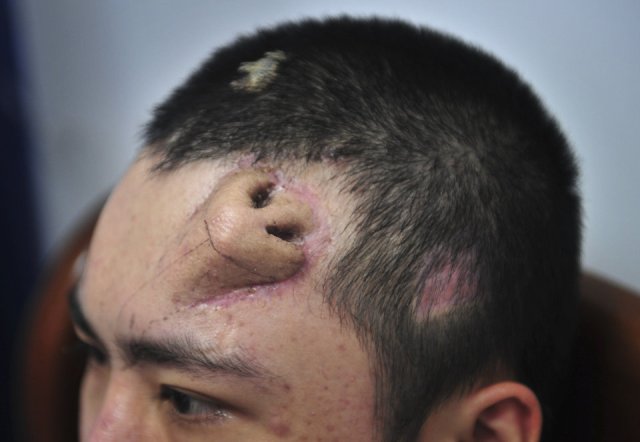
A surgeon in China says he has constructed an extra nose out of a man’s rib cartilage and implanted it under the skin of his forehead to prepare for a transplant in probably the first operation of its kind.

Surgeon Guo Zhihui at Fujian Medical University Union Hospital in China’s southeastern province of Fujian spent nine months cultivating the graft for a 22-year-old man whose nose was damaged.

The striking images of the implant — with the nostril section facing diagonally upward on the left side of the man’s forehead — drew widespread publicity after they began to circulate in Chinese media this week. Guo plans to cut the nose from the forehead while leaving a section of skin still connected, and then rotate and graft it into position in a later operation.

“We were just interested in helping the man and did not expect it would stir up this much attention,” Guo said in an interview Friday with The Associated Press.

Surgeons previously have used cartilage to help rebuild noses in their proper position and are experimenting with growing new ones from stem cells on other parts of the body, such as a forearm. But this was the first known case of building a nose on a forehead.

Alexander Seifalian, a professor of nanotechnology and regenerative medicine at University College London who has worked on transplants using stem cells, said implanting the nose graft in the forehead makes sense because the skin there has the same “structure and texture” as that of a nose.

However, he said it was unclear why the Chinese team built the nose on the forehead rather than in its proper position. A nose graft grown from stem cells would be prepared on another body part first, but this operation is using existing cartilage, Seifalian said.

“They could have made the nose and just put it on the nose, not in the forehead,” Seifalian said. “I don’t know why they put it there.”

However, Seifalian noted that he had not seen any scientific information on the Chinese operation and was just going by media reports.

The patient lost part of his nose in an accident in August 2012 and did not immediately have any reconstruction surgery because he couldn’t afford it, Guo said. An infection later ate away much of his nose cartilage, he said.

Guo said his team examined what remained of the nose and concluded there would be little chance of viably grafting cartilage there, instead building the nose on the forehead. When the new nose is rotated into position and grafted, it will at first have its own blood supply from links to the forehead, before developing new blood vessels. Later surgery will smooth out all of the skin.

The team first expanded skin on the man’s forehead for more than three months before using rib cartilage to build the nose bridge. Lastly, Guo’s team built the nostrils.

“We sculpted the nose three-dimensionally, like carpenters,” he said.

http://news.yahoo.com/chinese-doctor-builds-nose-mans-forehead-023520476.html

Thanks to Mr. Cuomo and Kebmodee for bringing this to the attention of the It’s Interesting community.
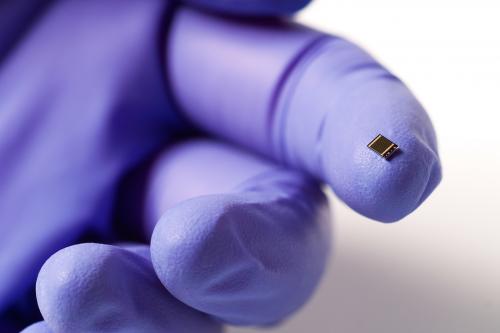
Scientists create never-before-seen form of matter

matter

Harvard and MIT scientists are challenging the conventional wisdom about light, and they didn’t need to go to a galaxy far, far away to do it.

Working with colleagues at the Harvard-MIT Center for Ultracold Atoms, a group led by Harvard Professor of Physics Mikhail Lukin and MIT Professor of Physics Vladan Vuletic have managed to coax photons into binding together to form molecules – a state of matter that, until recently, had been purely theoretical. The work is described in a September 25 paper in Nature.

The discovery, Lukin said, runs contrary to decades of accepted wisdom about the nature of light. Photons have long been described as massless particles which don’t interact with each other – shine two laser beams at each other, he said, and they simply pass through one another.

“Photonic molecules,” however, behave less like traditional lasers and more like something you might find in science fiction – the light saber.

“Most of the properties of light we know about originate from the fact that photons are massless, and that they do not interact with each other,” Lukin said. “What we have done is create a special type of medium in which photons interact with each other so strongly that they begin to act as though they have mass, and they bind together to form molecules. This type of photonic bound state has been discussed theoretically for quite a while, but until now it hadn’t been observed.

“It’s not an in-apt analogy to compare this to light sabers,” Lukin added. “When these photons interact with each other, they’re pushing against and deflect each other. The physics of what’s happening in these molecules is similar to what we see in the movies.”

To get the normally-massless photons to bind to each other, Lukin and colleagues, including Harvard post-doctoral fellow Ofer Fisterberg, former Harvard doctoral student Alexey Gorshkov and MIT graduate students Thibault Peyronel and Qiu Liang couldn’t rely on something like the Force – they instead turned to a set of more extreme conditions.

Researchers began by pumped rubidium atoms into a vacuum chamber, then used lasers to cool the cloud of atoms to just a few degrees above absolute zero. Using extremely weak laser pulses, they then fired single photons into the cloud of atoms.

As the photons enter the cloud of cold atoms, Lukin said, its energy excites atoms along its path, causing the photon to slow dramatically. As the photon moves through the cloud, that energy is handed off from atom to atom, and eventually exits the cloud with the photon.

“When the photon exits the medium, its identity is preserved,” Lukin said. “It’s the same effect we see with refraction of light in a water glass. The light enters the water, it hands off part of its energy to the medium, and inside it exists as light and matter coupled together, but when it exits, it’s still light. The process that takes place is the same it’s just a bit more extreme – the light is slowed considerably, and a lot more energy is given away than during refraction.”

When Lukin and colleagues fired two photons into the cloud, they were surprised to see them exit together, as a single molecule.

The reason they form the never-before-seen molecules?

An effect called a Rydberg blockade, Lukin said, which states that when an atom is excited, nearby atoms cannot be excited to the same degree. In practice, the effect means that as two photons enter the atomic cloud, the first excites an atom, but must move forward before the second photon can excite nearby atoms.

The result, he said, is that the two photons push and pull each other through the cloud as their energy is handed off from one atom to the next.

“It’s a photonic interaction that’s mediated by the atomic interaction,” Lukin said. “That makes these two photons behave like a molecule, and when they exit the medium they’re much more likely to do so together than as single photons.”

While the effect is unusual, it does have some practical applications as well.

“We do this for fun, and because we’re pushing the frontiers of science,” Lukin said. “But it feeds into the bigger picture of what we’re doing because photons remain the best possible means to carry quantum information. The handicap, though, has been that photons don’t interact with each other.”

To build a quantum computer, he explained, researchers need to build a system that can preserve quantum information, and process it using quantum logic operations. The challenge, however, is that quantum logic requires interactions between individual quanta so that quantum systems can be switched to perform information processing.

“What we demonstrate with this process allows us to do that,” Lukin said. “Before we make a useful, practical quantum switch or photonic logic gate we have to improve the performance, so it’s still at the proof-of-concept level, but this is an important step. The physical principles we’ve established here are important.”

The system could even be useful in classical computing, Lukin said, considering the power-dissipation challenges chip-makers now face. A number of companies – including IBM – have worked to develop systems that rely on optical routers that convert light signals into electrical signals, but those systems face their own hurdles.

Lukin also suggested that the system might one day even be used to create complex three-dimensional structures – such as crystals – wholly out of light.

“What it will be useful for we don’t know yet, but it’s a new state of matter, so we are hopeful that new applications may emerge as we continue to investigate these photonic molecules’ properties,” he said.

http://phys.org/news/2013-09-scientists-never-before-seen.html

Thanks to Kebmodee for bringing this to the attention of the It’s Interesting community.

US nearly detonated atomic bomb over North Carolina in 1961 – secret document revealed

mushroom

A secret document, published in declassified form for the first time by the Guardian today, reveals that the US Air Force came dramatically close to detonating an atom bomb over North Carolina that would have been 260 times more powerful than the device that devastated Hiroshima.

The document, obtained by the investigative journalist Eric Schlosser under the Freedom of Information Act, gives the first conclusive evidence that the US was narrowly spared a disaster of monumental proportions when two Mark 39 hydrogen bombs were accidentally dropped over Goldsboro, North Carolina on 23 January 1961. The bombs fell to earth after a B-52 bomber broke up in mid-air, and one of the devices behaved precisely as a nuclear weapon was designed to behave in warfare: its parachute opened, its trigger mechanisms engaged, and only one low-voltage switch prevented untold carnage.

Each bomb carried a payload of 4 megatons – the equivalent of 4 million tons of TNT explosive. Had the device detonated, lethal fallout could have been deposited over Washington, Baltimore, Philadelphia and as far north as New York city – putting millions of lives at risk.

Though there has been persistent speculation about how narrow the Goldsboro escape was, the US government has repeatedly publicly denied that its nuclear arsenal has ever put Americans’ lives in jeopardy through safety flaws. But in the newly-published document, a senior engineer in the Sandia national laboratories responsible for the mechanical safety of nuclear weapons concludes that “one simple, dynamo-technology, low voltage switch stood between the United States and a major catastrophe”.

Writing eight years after the accident, Parker F Jones found that the bombs that dropped over North Carolina, just three days after John F Kennedy made his inaugural address as president, were inadequate in their safety controls and that the final switch that prevented disaster could easily have been shorted by an electrical jolt, leading to a nuclear burst. “It would have been bad news – in spades,” he wrote.

Jones dryly entitled his secret report “Goldsboro Revisited or: How I learned to Mistrust the H-Bomb” – a quip on Stanley Kubrick’s 1964 satirical film about nuclear holocaust, Dr Strangelove or: How I Learned to Stop Worrying and Love the Bomb.

The accident happened when a B-52 bomber got into trouble, having embarked from Seymour Johnson Air Force base in Goldsboro for a routine flight along the East Coast. As it went into a tailspin, the hydrogen bombs it was carrying became separated. One fell into a field near Faro, North Carolina, its parachute draped in the branches of a tree; the other plummeted into a meadow off Big Daddy’s Road.

Jones found that of the four safety mechanisms in the Faro bomb, designed to prevent unintended detonation, three failed to operate properly. When the bomb hit the ground, a firing signal was sent to the nuclear core of the device, and it was only that final, highly vulnerable switch that averted calamity. “The MK 39 Mod 2 bomb did not possess adequate safety for the airborne alert role in the B-52,” Jones concludes.

The document was uncovered by Schlosser as part of his research into his new book on the nuclear arms race, Command and Control. Using freedom of information, he discovered that at least 700 “significant” accidents and incidents involving 1,250 nuclear weapons were recorded between 1950 and 1968 alone.

“The US government has consistently tried to withhold information from the American people in order to prevent questions being asked about our nuclear weapons policy,” he said. “We were told there was no possibility of these weapons accidentally detonating, yet here’s one that very nearly did.”

http://www.theguardian.com/world/2013/sep/20/usaf-atomic-bomb-north-carolina-1961

Thanks to Kebmodee for bringing this to the attention of the It’s Interesting community.

New study links testicle size to father role

testivcle

A link between the size of a father’s testicles and how active he is in bringing up his children has been suggested by scientists.

Researchers at Emory University, US, said those with smaller testicles were more likely to be involved with nappy changing, feeding and bath time.

They also found differences in brain scans of fathers looking at images of their child, linked to testicle size.

But other factors, such as cultural expectations, also played a role.

Levels of promiscuity and testicle size are strongly linked in animals, those with the largest pair tending to mate with more partners.

The researchers were investigating an evolutionary theory about trade-offs between investing time and effort in mating or putting that energy into raising children. The idea being that larger testicles would suggest greater commitment to creating more children over raising them.

The study, in Proceedings of the National Academy of Science, looked at the relationship between testicle size and fatherhood in 70 men who had children between the ages of one and two.

The team at Emory University in Atlanta performed brain scans while the men were shown pictures of their children.

It showed those with smaller testicles tended to have a greater response in the reward area of the brain than those with a larger size.

MRI scans showed a three-fold difference between the volumes of the smallest and largest testicles in the group.

Those at the smaller end of the spectrum were also more likely, according to interviews with the man and the mother, to be more active in parenting duties.

One of the researchers, Dr James Rilling, told the BBC: “It tells us some men are more naturally inclined to care-giving than others, but I don’t think that excuses other men. It just might require more effort for some than others.”

The exact nature of any link is not clear.

The researchers believe the size of the testicles, probably through the hormone testosterone, is affecting behaviour. But it is not clear if the process of having a baby may have some effect on the father.

“We know, for instance, that testosterone levels go down when men become involved fathers,” said Dr Rilling.

Further studies, involving analysing the size before and after becoming a father, are still needed.

Cultural and societal expectations on the role of the father are also not accounted for in the study.

All of the men were from the Atlanta area so the relative impact of society and biology has not been measured.

http://www.bbc.co.uk/news/health-24016988

Thanks to Dr. D and Kebmodee for bringing this to the attention of the It’s Interesting community.
After cardiac arrest, a final surge of brain activity could contain vivid experience, new research in rodents suggests.

sn-brain

What people experience as death creeps in—after the heart stops and the brain becomes starved of oxygen—seems to lie beyond the reach of science. But the authors of a new study on dying rats make a bold claim: After cardiac arrest, the rodents’ brains enter a state similar to heightened consciousness in humans. The researchers suggest that if the same is true for people, such brain activity could be the source of the visions and other sensations that make up so-called near-death experiences.

Estimated to occur in about 20% of patients who survive cardiac arrest, near-death experiences are frequently described as hypervivid or “realer-than-real,” and often include leaving the body and observing oneself from outside, or seeing a bright light. The similarities between these reports are hard to ignore, but the conversation about near-death experiences often bleeds into metaphysics: Are these visions produced solely by the brain, or are they a glimpse at an afterlife outside the body?

Neurologist Jimo Borjigin of the University of Michigan, Ann Arbor, got interested in near-death experiences during a different project—measuring the hormone levels in the brains of rodents after a stroke. Some of the animals in her lab died unexpectedly, and her measurements captured a surge in neurochemicals at the moment of their death. Previous research in rodents and humans has shown that electrical activity surges in the brain right after the heart stops, then goes flat after a few seconds. Without any evidence that this final blip contains meaningful brain activity, Borjigin says “it’s perhaps natural for people to assume that [near-death] experiences came from elsewhere, from more supernatural sources.” But after seeing those neurochemical surges in her animals, she wondered about those last few seconds, hypothesizing that even experiences seeming to stretch for days in a person’s memory could originate from a brief “knee-jerk reaction” of the dying brain.

To observe brains on the brink of death, Borjigin and her colleagues implanted electrodes into the brains of nine rats to measure electrical activity at six different locations. The team anesthetized the rats for about an hour, for ethical reasons, and then injected potassium chloride into each unconscious animal’s heart to cause cardiac arrest. In the approximately 30 seconds between a rat’s last heartbeat and the point when its brain stopped producing signals, the team carefully recorded its neuronal oscillations, or the frequency with which brain cells were firing their electrical signals.

The data produced by electroencephalograms (EEGs) of the nine rats revealed a highly organized brain response in the seconds after cardiac arrest, Borjigin and colleagues report online today in the Proceedings of the National Academy of Sciences. While overall electrical activity in the brain sharply declined after the last heartbeat, oscillations in the low gamma frequency (between 25 and 55 Hz) increased in power. Previous human research has linked gamma waves to waking consciousness, meditative states, and REM sleep. These oscillations in the dying rats were synchronized across different parts of the brain, even more so than in the rat’s normal waking state. The team also noticed that firing patterns in the front of the brain would be echoed in the back and sides. This so-called top-down signaling, which is associated with conscious perception and information processing, increased eightfold compared with the waking state, the team reports. When you put these features together, Borjigin says, they suggest that the dying brain is hyperactive in its final seconds, producing meaningful, conscious activity.

The team proposed that such research offers a “scientific framework” for approaching the highly lucid experiences that some people report after their brushes with death. But relating signs of consciousness in rat brains to human near-death experiences is controversial. “It opens more questions than it answers,” says Christof Koch, a neuroscientist at the Allen Institute for Brain Science in Seattle, Washington, of the research. Evidence of a highly organized and connected brain state during the animal’s death throes is surprising and fascinating, he says. But Koch, who worked with Francis Crick in the early 1980s to hypothesize that gamma waves are a hallmark of consciousness, says the increase in their frequency doesn’t necessarily mean that the rats were in a hyperconscious state. Not only is it impossible to project any mental experience onto these animals, but their response was also “still overlaid by the anesthesiology,” he says; this sedation likely influenced their brain response in unpredictable ways.

Others share Koch’s concerns. “There is no animal model of a near-death experience,” says critical care physician Sam Parnia of Stony Brook University School of Medicine in New York. We can never confirm what animals think or feel in their final moments, making it all but impossible to use them to study our own near-death experiences, he believes. Nonetheless, Parnia sees value in this new study from a clinical perspective, as a step toward understanding how the brain behaves right before death. He says that doctors might use a similar approach to learn how to improve blood flow or prolong electrical activity in the brain, preventing damage while resuscitating a patient.

Borjigin argues that the rat data are compelling enough to drive further study of near-death experiences in humans. She suggests monitoring EEG activity in people undergoing brain surgery that involves cooling the brain and reducing its blood supply. This procedure has prompted near-death experiences in the past, she says, and could offer a systematic way to explore the phenomenon.

read more here: http://news.sciencemag.org/brain-behavior/2013/08/probing-brain%E2%80%99s-final-moments

Thanks to Kebmodee for bringing this to the attention of the It’s Interesting community.