Rare Frog Sports Thumb-Spikes for Sex and Combat

A rare Japanese frog sports spikes protruding from a set of pseudo-thumbs, a scientist has discovered. The built-in weaponry helps the males grab onto females during sex and duel with competitors over mates, the researcher said.

Unlike most four-toed frogs, the endangered Otton frog (Babina subaspera) has a “fifth finger.” In both males and females, this extra digit encases a sharp spine, but in males, this spike is more prominent, researcher Noriko Iwai from the University of Tokyo found.

Iwai believes the thumb-dagger evolved to allow males to anchor to the female during mating. And field observations in southern Japan’s Amami islands, the frog’s only home, showed that the males indeed jab their spikes into the sides of the females to hold on duringamplexus — a form of pseudocopulation in which the males mount the female and fertilize her eggs as, or soon after, she lays them.


A rare Japanese frog sports spikes protruding from a set of pseudo-thumbs, a scientist has discovered. The built-in weaponry helps the males grab onto females during sex and duel with competitors over mates, the researcher said.

Unlike most four-toed frogs, the endangered Otton frog (Babina subaspera) has a “fifth finger.” In both males and females, this extra digit encases a sharp spine, but in males, this spike is more prominent, researcher Noriko Iwai from the University of Tokyo found.

Iwai believes the thumb-dagger evolved to allow males to anchor to the female during mating. And field observations in southern Japan’s Amami islands, the frog’s only home, showed that the males indeed jab their spikes into the sides of the females to hold on duringamplexus — a form of pseudocopulation in which the males mount the female and fertilize her eggs as, or soon after, she lays them. 

But it appears the frogs also use the spikes for male-to-male combat over females and breeding nests. The researcher found they wrestle with each other in an embrace while stabbing at each other with the spines.

“While the pseudo-thumb may have evolved for mating, it is clear that they’re now used for combat,” Iwai explained in a statement. “The males demonstrated a jabbing response with the thumb when they were picked up, and the many scars on the male spines provided evidence of fighting.”

The spike, however, does not appear to cause lethal injuries during duels. Iwai noted a previous study of another frog with pseudo-thumb spikes, Hypsiboas rosenbergi, found that many males died after being stabbed in the eyes and ear drums by an opponent. Otton frogs don’t appear to jab their rivals in these critical areas, and they have a raised patch on their sides that seems to guard against serious injury, according to the study.

“It seems that the intensity of combat in Otton frogs is finely balanced so as not to result in critical or mortal injuries, yet it remains aggressive enough to establish a clear victor,” Iwai wrote in a paper published Oct. 18 in the Journal of Zoology.

http://www.livescience.com/24078-rare-frog-sports-thumb-spikes-for-sex-and-combat.html
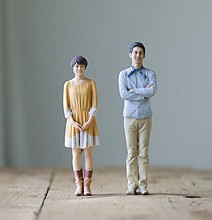
World’s First 3D Printing Photo Booth Dispenses A 3D Figure Of You


Imagine this…What if you went to a photo booth in a mall or a movie theater and you put in a dollar, pulled the curtain, and sat down to get your photo taken by the machine. What if instead of spitting out the usual black and white strip of four or five photos, it dispensed a small mini-me figure of you.   This actually exists (except it costs more than a dollar right now). The world’s first 3D printing photo booth is taking reservations. People will soon be making history by having their photo taken this way in Japan from now until mid-January. You can read World’s First 3D Printing Photo Booth To Open In Japan to get more details. If more than one person gets in the photo booth, it will create more than one figure. The cost right now is between $260 – $530 for each figure depending on what size you want it to create.

http://www.bitrebels.com/technology/worlds-first-3d-printing-photo-booth/

Brazilian woman sells virginity for $780,000

A 20-year-old Brazilian woman has sold her virginity for $780,000 in an online auction to a Japanese man known simply as Natsu.

Catarina Migliorini’s virginity auction was organized by Virgins Wanted, the project of Australian filmmaker Justin Sisely.

Both Migliorini and a young male virgin, Alexander Stepanov, hocked their virginity online. Stepanov’s first time went to a buy identified as Nene B. from Brazil for a mere $3,000 US.

The auction had been live since Sept. 17, but until Wednesday – the last day of bidding – the highest bid for Migliorini had been $150,000. Natsu beat out five other high rollers who all bid in excess of $600,000 for the chance to bed the virgin.

Under the rules of the auction, Migliorini will be examined by a gynecologist and will “provide the winning bidder with medical evidence of her virginity.” Stepanov’s virginity cannot be medically proven, so he and two of his family members will give “statutory declarations to support his claim.”

Speaking last month with the Folha de S. Paulo newspaper, Migliorini said she got involved with the project two years ago when she saw a story about an Australian filmmaker who was looking for a virgin. She claims she wants to open an NGO with her winnings and invest in a public-housing project for poor families in Santa Catarina, where she was born. But speaking with the Huffington Post recently, Sisely said he was skeptical of Migliorini’s purported good intentions.

“I was surprised she said that because in all my dealings with her, she made it clear that it was a business decision for her,” he said. “Now, given how big this story is in Brazil, she’s trapped. If she doesn’t give any money to charity, she’s going to look bad.”

The winning bidders must submit to a medical examination and a police check, and cannot be intoxicated during their time with the virgins. No kissing or fellatio is allowed, and although the virgins and the winners are to agree about the length and duration of the sex, “the minimum consummation time is one hour,” the rules state.

Migliorini, who said she doesn’t think of it as prostitution, said the sex will happen in a private airplane.

The Virgins Wanted website said only that “the sexual act will take place where it is not illegal.”

http://cnews.canoe.ca/CNEWS/WeirdNews/2012/10/25/20307921.html


Japanese Shippo: cat tail that moves with your mood

When facial cues aren’t enough, there’s Shippo.

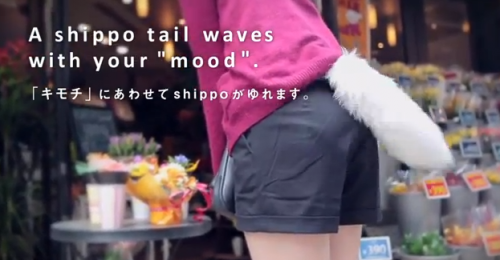
A Japanese company called Neurowear, which makes brain-wave interpreting products like the Necomimi cat ear set, is now developing a toy tail that wags in sync with a user’s mood.

By utilizing an electroencephalography (EEG) apparatus similar to that of the company’s popular cat ears, the Shippo tail reads electrical patterns emitted by the brain and manifests them as wagging.

A concentrating person emits brain waves in the range of 12 to 30 hertz, while a relaxed person’s waves measure in the 8- to 12-hertz range, NeuroSky, the San Jose-based company that developed the Necomimi, told CNET.

With Shippo, relaxed users’ tails will demonstrate “soft and slow” wagging, while concentrated users’ tails will display “hard and fast” wagging. The gadget is also social media enabled; a neural application reads the user’s mood and shares it to a map.

But does the Shippo tail work? This entertaining video promo certainly makes it seem so. Unfortunately, since the project is only in its prototype phase, there aren’t any models available to test outside of the company’s Tokyo office, a Neurowear spokesperson told The Huffington Post in an email.

As HuffPost Tech’s review of the Necomimi explains, getting “in the zone” for the product to respond appropriately can prove difficult for some users (although not with our reviewer). It’s conceivable that the Shippo may present similar issues.

Neurowear names the “augmented human body” as a design concept on its Web site. If preliminary media reports are to be believed, the wacky gizmo might be a hard sell to North American audiences.

Gorburger

Even if T.J. Miller‘s name doesn’t ring a bell, there’s a good chance you’ve seen him on the big or small screen: In the last couple years, he has surfaced on The League, Happy Endings, and Our Idiot Brother, not to mention several commercials and podcasts.

This week Funny or Die launched a new web series featuring Miller … though he appears as a large blue space monster who takes over a Japanese talk show.

On each episode of Gorburger, Miller’s furry character interviews bands. The result is pretty funny and definitely weird; in the first ep, he quizzes talented twins Tegan and Sara.

“What advice do you have for elderly people?” Gorburger asks. “What’s the weirdest face you can make?”

Mutant butterflies resulting from Fukushima nuclear disaster


No matter how you cut it, finding mutant butterflies is hard to spin as a positive result. But the knowledge gained from the pale grass blue butterfly, a.k.a. Zizeeria maha, could potentially help down the road as the country recovers from one of the world’s worst nuclear power disasters.

According to a study published by Scientific Reports, researchers started looking at butterflies near the Fukushima Daiichi nuclear plant two months after the March 2011 tsunami damaged the reactors, causing a potential radiation leak. Of the initial 100 butterflies studied, 12% had mutations. But as the butterflies mated, the rate of mutation in successive generations increased to 34%, showing that the mutating genes were easily passed along to offspring.

The problems were widespread, with abnormalities found including broken or wrinkled wings, changes in wing size, problems with legs, antennae, abdomen and eyes and even shifts in color pattern. Intrigued by the initial findings, researchers took a look at 200 butterflies in September and found that the mutation rate was increasing in the latest generation of butterflies — the ones that were likely larvae around the time of the disaster — with more than half of new butterflies showing some kind of mutation.

The news is obviously troublesome for the entire region, raising concerns about the harmful long-term effects of the Fukushima disaster — the largest since Chernobyl in 1986 — but it also underscores the important role of early-warning signs stemming from radiation leaks.

But butterflies can be particularly susceptible to radiation; not all animals will suffer a similar fate, which is exactly why researchers want more tests done on different species. “Sensitivity [to irradiation] varies between species, so research should be conducted on other animals,” Joji Otaki, an associate professor at the University of the Ryukyus in Okinawa, told the Japan Times.

Read more: http://newsfeed.time.com/2012/08/14/mutant-butterflies-found-near-fukushima/?iid=nf-article-mostpop1#ixzz23f2uFLbp

Mao Sugiyama Cooks, Serves Own Genitals At Banquet In Tokyo

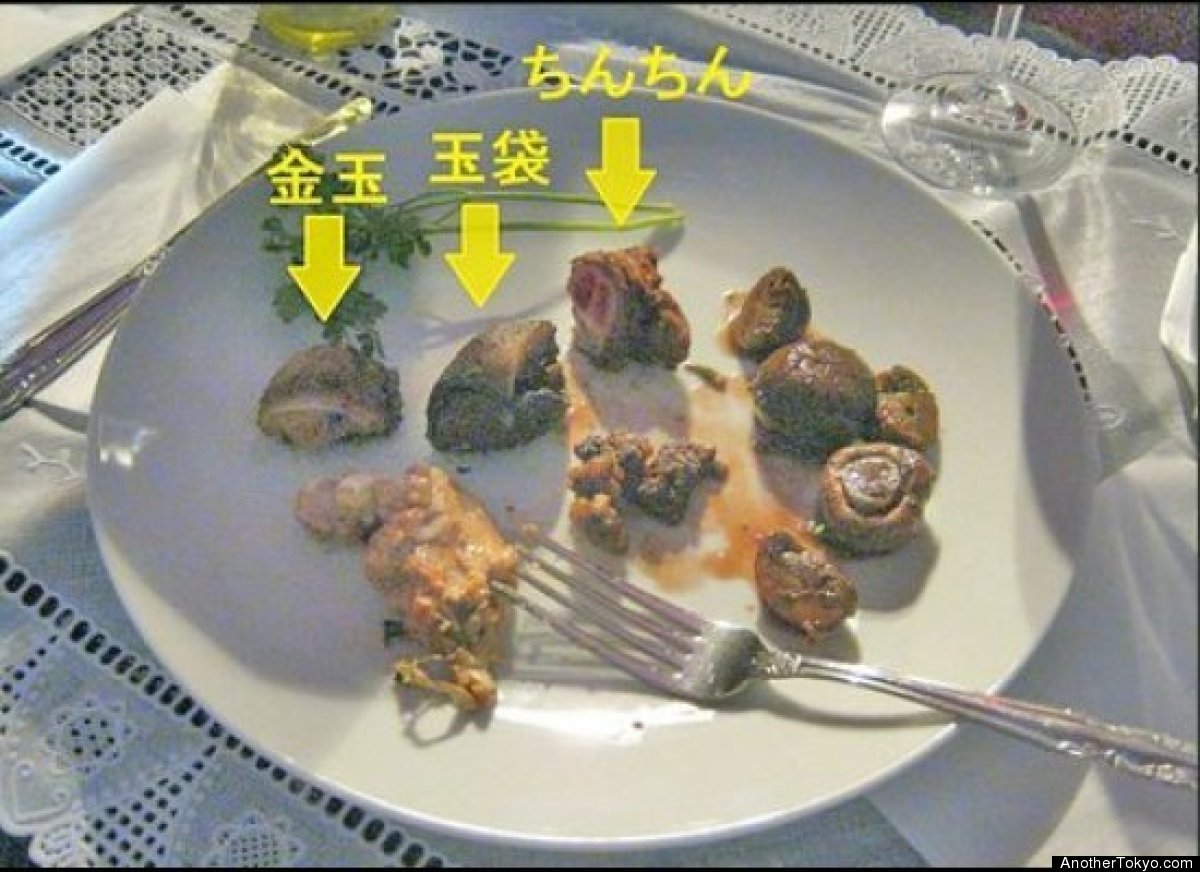
Mao Sugiyama, a self-described “asexual” from Tokyo, cooked up, seasoned and served his own genitalia to five diners at a swanky banquet in Japan last month, Calorie Lab reported.

In most cases, “asexual” is a word used to describe a person who is non-sexual. Sugiyama, however, embraces it as a way to show that he does not affiliate with either gender.

Sugiyama sparked a firestorm of interest on April 8 with one tweet:

“[Please retweet] I am offering my male genitals (full penis, testes, scrotum) as a meal for 100,000 yen …Will prepare and cook as the buyer requests, at his chosen location.”

Just days after Sugiyama’s 22nd birthday, the artist underwent elective genital-removal surgery, divvied up the severed penis shaft, testicles, and scrotal skin between five people, and garnished it with button mushrooms and Italian parsley.

On April 13, five of six diners who signed up for the $250-a-plate feast, sat down to dinner. The sixth person was a no-show.

The next day, an organizer posted a blog — subsequently deleted — containing pictures of the event. Images showed dozens of people who attended the event just to catch a glimpse of the rare treat.

The extra diners were served crocodile-based dishes while Sugiyama cooked up the exclusive meal.

The story went viral in Japan. Some showed even more interest, while others complained. But Calorie Lab called Japanese authorities, who deemed the banquet legal because there is no law against cannibalism in the country.

http://www.huffingtonpost.com/2012/05/24/asexual-mao-sugiyama-cooks-serves-own-genitals_n_1543307.html#s=1018957

Thanks Ellen, for bringing this to the attention of the It’s Interesting community.

Japanese Remote Hand Shaking

Japanese scientists at Osaka University have created a robot hand so people can shake hands with someone remotely. The robot hand communicates grip force, body temperature and touch. The creators are considering building telepresence robots with the robot hand so they can shake hands with people.
The creators of the robot hand say, “People have the preconceived notion that a robot hand will feel cold, so we give it a temperature slightly higher than skin temperature.”

http://www.sciencespacerobots.com/blog/32820121

Thanks to Kebmodee for bringing this to the attention of the It’s Interesting community.

Food’s Biggest Scam: The Great Kobe Beef Lie

You cannot buy Japanese Kobe beef in this country. Not in stores, not by mail, and certainly not in restaurants. No matter how much you have spent, how fancy a steakhouse you went to, or which of the many celebrity chefs who regularly feature “Kobe beef” on their menus you believed, you were duped. If it wasn’t in Asia you almost certainly have never had Japan’s famous Kobe beef.

You may have had an imitation from the Midwest, Great Plains, South America or Australia, where they produce a lot of “Faux-be” beef. You may have even had a Kobe imposter from Japan before 2010. It is now illegal to import (or even hand carry for personal consumption) any Japanese beef. Before 2010 you could import only boneless fresh Japanese beef, but none was real Kobe. Under Japanese law, Kobe beef can only came from Hyogo prefecture (of which Kobe is the capital city), where no slaughterhouses were approved for export by the USDA. According to its own trade group, the Kobe Beef Marketing & Distribution Promotion Association in Japan, where Kobe Beef is a registered trademark, Macao is the only place it is exported to – and only since last year. If you had real Kobe beef in this country in recent years, someone probably smuggled it in their luggage.

“How is this possible?” you ask, when you see the virtues of Kobe being touted on television food shows, by famous chefs, and on menus all over the country? A dozen burger joints in Las Vegas alone offer Kobe burgers. Google it and you will find dozens of online vendors happy to take your money and ship you very pricey steaks. Restaurant reviews in the New York Times have repeatedly praised the “Kobe beef” served at high-end Manhattan restaurants. Not an issue of any major food magazine goes by without reinforcing the great fat Kobe beef lie.

Despite the fact that Kobe Beef, as well as Kobe Meat and Kobe Cattle, are patented terms and/or trademarks in Japan, these are neither recognized nor protected by U.S. law. As far as regulators here are concerned, Kobe beef, unlike say Florida Orange Juice, means almost nothing (the “beef” part should still come from cows). Like the recent surge in the use of the unregulated label term “natural,” it is an adjective used mainly to confuse consumers and profit from that confusion.

This matters because the reason food lovers and expense account diners want Kobe beef, and are willing to pay a huge premium for it, is because of the real Kobe’s longstanding reputation for excellence. The con the US food industry is running is leading you to believe that what you are paying huge dollars for – like the $40 NYC “Kobe” burger – is somehow linked to this heritage of excellence. It’s not.

Real Kobe beef is produced under some of the world’s strictest legal food standards, whereas “domestic Kobe” beef production, along with that in Australia and South America, is as regulated as the Wild West. In Japan, to be Kobe requires a pure lineage of Tajima-gyu breed cattle (not any old Japanese breed crossbred with American cattle as is the norm here). The animal must also have been born in Hyogo prefecture and thus raised on the local grasses and water and terroir its entire life. It must be a bull or virgin cow, and it takes considerably longer to raise a Tajima-gyu for consumption than most other breeds, adding to the cost. It must be processed in a Hyogo slaughterhouse – none of which export to the US – and then pass a strict government grading exam. There are only 3000 head of certified Kobe Beef cattle in the world, and none are outside Japan. The process is so strict that when the beef is sold, either in stores or restaurants, it must carry the 10-digit identification number so customers know what particular Tajima-gyu cow it came from.

In contrast, when you order “Kobe beef” here, you usually can’t even tell what kind of cow it came from – or where. Or what makes it “Kobe.”

The bottom line is that the only reason there is beef called Kobe beef sold in this country is because our government lets vendors call a lot of things Kobe beef. But the reason consumers buy it is because the cattle industry in Kobe spent lifetimes building a reputation for excellence, a reputation that has essentially been stolen.

There are two different parts to the broad misuse of the Kobe name. Historically in the US, restaurants and distributors have generically termed virtually any beef from anywhere in Japan Kobe, and many high-end restaurants did once get beef from Japan, and put it on the menus as Kobe, though it was not true Kobe beef. But in the past two years there has been no Japanese beef here. So the term Kobe today has even less meaning, and the meat can come from many different countries and have nothing in common with actual Kobe beef except that it comes from cows.  The argument often broached by the food industry that this non-Japanese Kobe is some sort of recreation of the real thing from the same breed of cows is also largely a myth.

Read about it in the USDA’s own words, about how as of early 2010 all beef from Japan including that “normally referred to as Kobe beef,” will “be refused entry,” “including in passenger luggage.” This is still the case, as you can see in the most recent Animal Product Manual, produced by the USDA’s Animal and Plant Health Inspection Service (APHIS), dated March 1, 2012 which specifically states that beef from Japan, fresh or frozen, whole or cut, bone-in or boneless, will be “Refused Entry.”

It is impossible to say exactly what you are getting in your Faux-be slider, or $100 Faux-be strip, but one thing is certain – it is not Japanese Kobe beef.  For the past two years, it has not been any kind of Japanese beef at all.

http://www.forbes.com/sites/larryolmsted/2012/04/12/foods-biggest-scam-the-great-kobe-beef-lie/

Tupac Hologram Performance at Coachella


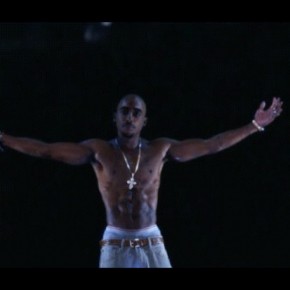
Snoop Dogg and Dr. Dre brought Tupac Shakur back from the dead for a showstopping finale to the first Coachella weekend on Sunday night.

Shakur appeared as a hologram on the festival stage after a tribute performance of his hit California Love and the late star ‘teamed up’ with Snoop on Ain’t Nothin’ Like A Gangsta Party after an eerie solo rendition of Hail Mary from beyond the grave.

The ghostly apparition drew mixed reactions from those watching the set online, with one fan calling it “wrong on so many levels” and others stunned by the Tupac trick, tweeting, “WTF!”

But most rap fans were thrilled, including the stars in attendance. Katy Perry tweeted, “I think I might have cried when I saw Tupac,” while her pal Rihanna boasted: “Tupac back unbelievable.”

It was somewhat of a who’s who of rap, with Eminem, 50 Cent, Wiz Khalifa and Kendrick Lamar joining them onstage, while Warren G teamed up with the hip-hop icons for a tribute to the late Nate Dogg and rap trio 213.