‘No More Woof’ claims to translate dog thoughts into English language

Just because you can pre-order something doesn’t mean it’ll be awesome when it’s finally ready. The folks behind the No More Woof dog translator seem to be looking to tamper everyone’s expectations as such, with phrases like “to be completely honest, the first version will be quite rudimentary” and “the more money we raise, the better the chances of creating something truly amazing!”

The No More Woof Indiegogo campaign is looking to raise $10,000; at the time of this writing, the project’s at just over $7,000 with almost two months left to go, so it looks like this is happening.

The technology itself involves a dog-worn headset that senses EEG activity in the dog’s brain, runs the data through a tiny computer, and renders the thought out as words through a speaker. We’re talking simple stuff here like “I’m hungry, I’m tired, I want to go out, SQUIRREL!”

From the looks of it, it’s probably not too much more advanced than what you’re able to glean from your dog already – the dog barks at the door when he wants to go out, barks at his bowl when he wants food, and goes to sleep when he’s tired.

You’ll need to pony up at least $65 to get the lowest-level hardware – “one sensor equipped NMW able to distinguish 2-3 thought patterns, most likely Tiredness, Hunger and Curiosity,” according to the Indiegogo listing. Pay more and you can get versions with better and better features. Fork over a cool $5,000 and you can get the first No More Woof to ship.

Read more: BEHOLD THE FUTURE: Dog Translator Available for Pre-order | TIME.com http://techland.time.com/2013/12/19/behold-the-future-dog-translator-available-for-pre-order/#ixzz2pGGJwmc6

Austria media reports on speculated robot suicide

o-ROBOT-SUICIDE-570

Firemen were called to a house fire that broke out after a mechanical cleaning gadget somehow switched itself on and destroyed itself by moving onto a kitchen hotplate.
Local media in Austria have referred to the incident as ‘robot suicide’ and even suggested it was fed up with the constant cleaning it had to do.

Fireman Helmut Kniewasser was one of those called to tackle the blaze at Hinterstoder in Kirchdorf, Austria.

He said: ‘The home-owner had put the small robot on the work surface to clean up some spilled cereal. Once the robot had done its job it was switched off but left on the kitchen sideboard.

‘The 44-year-old house owner, together with his wife and son, then left the house and were not home when the robot set off.

‘Somehow it seems to have reactivated itself and made its way along the work surface where it pushed a cooking pot out of the way and basically that was the end of it.
‘It pretty quickly started to melt underneath and then stuck to the kitchen hotplate. It then caught fire. By the time we arrived, it was just a pile of ash.

‘The entire building had to be evacuated and there was severe smoke damage particularly in the flat where the robot had been in use.

‘I don’t know about the allegations of a robot suicide but the homeowner is insistent that the device was switched off – it’s a mystery how it came to be activated and ended up making its way to the hotplate.’

It took an hour to clean and make the building safe. But the family at least for the moment is homeless as their apartment is no longer habitable thanks to the smoke damage.

The homeowner said: ‘The company that makes the robots is selling dangerous devices, I intend to sue to get compensation. It has ruined my home as everything is smoke damaged.’

Read more: http://www.dailymail.co.uk/news/article-2503733/Paranoid-android-Cleaning-gadget-switches-moves-kitchen-hotplate-suicide-bid.html#ixzz2nSvEZAqf
F

Six things Nelson Mandela believed most people won’t want to talk about

nelson-mandela-headshot-500px

In the desire to celebrate Nelson Mandela’s life — an iconic figure who triumphed over South Africa’s brutal apartheid regime — it’s tempting to homogenize his views into something everyone can support. This is not, however, an accurate representation of the man.

Mandela was a political activist and agitator. He did not shy away from controversy and he did not seek — or obtain — universal approval. Before and after his release from prison, he embraced an unabashedly progressive and provocative platform. As one commentator put it shortly after the announcement of the freedom fighter’s death, “Mandela will never, ever be your minstrel. Over the next few days you will try so, so hard to make him something he was not, and you will fail. You will try to smooth him, to sandblast him, to take away his Malcolm X. You will try to hide his anger from view.”

As the world remembers Mandela, here are some of the things he believed that many will gloss over.

1. Mandela blasted the Iraq War and American imperialism. Mandela called Bush “a president who has no foresight, who cannot think properly,” and accused him of “wanting to plunge the world into a holocaust” by going to war in Iraq. “All that (Mr. Bush) wants is Iraqi oil,” he said. Mandela even speculated that then-Secretary-General Kofi Annan was being undermined in the process because he was black. “They never did that when secretary-generals were white,” he said. He saw the Iraq War as a greater problem of American imperialism around the world. “If there is a country that has committed unspeakable atrocities in the world, it is the United States of America. They don’t care,” he said.

2. Mandela called freedom from poverty a “fundamental human right.” Mandela considered poverty one of the greatest evils in the world, and spoke out against inequality everywhere. “Massive poverty and obscene inequality are such terrible scourges of our times — times in which the world boasts breathtaking advances in science, technology, industry and wealth accumulation — that they have to rank alongside slavery and apartheid as social evils,” he said. He considered ending poverty a basic human duty: “Overcoming poverty is not a gesture of charity. It is an act of justice. It is the protection of a fundamental human right, the right to dignity and a decent life,” he said. “While poverty persists, there is no true freedom.”

3. Mandela criticized the “War on Terror” and the labeling of individuals as terrorists without due process. On the U.S. terrorist watch list until 2008 himself, Mandela was an outspoken critic of President George W. Bush’s war on terror. He warned against rushing to label terrorists without due process. While forcefully calling for Osama bin Laden to be brought to justice, Mandela remarked, “The labeling of Osama bin Laden as the terrorist responsible for those acts before he had been tried and convicted could also be seen as undermining some of the basic tenets of the rule of law.”

4. Mandela called out racism in America. On a trip to New York City in 1990, Mandela made a point of visiting Harlem and praising African Americans’ struggles against “the injustices of racist discrimination and economic equality.” He reminded a larger crowd at Yankee Stadium that racism was not exclusively a South African phenomenon. “As we enter the last decade of the 20th century, it is intolerable, unacceptable, that the cancer of racism is still eating away at the fabric of societies in different parts of our planet,” he said. “All of us, black and white, should spare no effort in our struggle against all forms and manifestations of racism, wherever and whenever it rears its ugly head.”

5. Mandela embraced some of America’s biggest political enemies. Mandela incited shock and anger in many American communities for refusing to denounce Cuban dictator Fidel Castro or Libyan Colonel Muammar Gaddafi, who had lent their support to Mandela against South African apartheid. “One of the mistakes the Western world makes is to think that their enemies should be our enemies,” he explained to an American TV audience. “We have our own struggle.” He added that those leaders “are placing resources at our disposal to win the struggle.” He also called the controversial Palestinian Liberation Organization leader Yasser Arafat “a comrade in arms.”

6. Mandela was a die-hard supporter of labor unions. Mandela visited the Detroit auto workers union when touring the U.S., immediately claiming kinship with them. “Sisters and brothers, friends and comrades, the man who is speaking is not a stranger here,” he said. “The man who is speaking is a member of the UAW. I am your flesh and blood.”

http://thinkprogress.org/home/2013/12/06/3030781/nelson-mandela-believed-people-wont-talk/

Thanks to Dr. D for bringing this to the attention of the It’s Interesting community.

Electric brain stimulation in a specific area discovered to induce a sense of determination

Doctors in the US have induced feelings of intense determination in two men by stimulating a part of their brains with gentle electric currents.

The men were having a routine procedure to locate regions in their brains that caused epileptic seizures when they felt their heart rates rise, a sense of foreboding, and an overwhelming desire to persevere against a looming hardship.

The remarkable findings could help researchers develop treatments for depression and other disorders where people are debilitated by a lack of motivation.

One patient said the feeling was like driving a car into a raging storm. When his brain was stimulated, he sensed a shaking in his chest and a surge in his pulse. In six trials, he felt the same sensations time and again.

Comparing the feelings to a frantic drive towards a storm, the patient said: “You’re only halfway there and you have no other way to turn around and go back, you have to keep going forward.”

When asked by doctors to elaborate on whether the feeling was good or bad, he said: “It was more of a positive thing, like push harder, push harder, push harder to try and get through this.”

A second patient had similar feelings when his brain was stimulated in the same region, called the anterior midcingulate cortex (aMCC). He felt worried that something terrible was about to happen, but knew he had to fight and not give up, according to a case study in the journal Neuron.

Both men were having an exploratory procedure to find the focal point in their brains that caused them to suffer epileptic fits. In the procedure, doctors sink fine electrodes deep into different parts of the brain and stimulate them with tiny electrical currents until the patient senses the “aura” that precedes a seizure. Often, seizures can be treated by removing tissue from this part of the brain.

“In the very first patient this was something very unexpected, and we didn’t report it,” said Josef Parvizi at Stanford University in California. But then I was doing functional mapping on the second patient and he suddenly experienced a very similar thing.”

“Its extraordinary that two individuals with very different past experiences respond in a similar way to one or two seconds of very low intensity electricity delivered to the same area of their brain. These patients are normal individuals, they have their IQ, they have their jobs. We are not reporting these findings in sick brains,” Parvizi said.

The men were stimulated with between two and eight milliamps of electrical current, but in tests the doctors administered sham stimulation too. In the sham tests, they told the patients they were about to stimulate the brain, but had switched off the electical supply. In these cases, the men reported no changes to their feelings. The sensation was only induced in a small area of the brain, and vanished when doctors implanted electrodes just five millimetres away.

Parvizi said a crucial follow-up experiment will be to test whether stimulation of the brain region really makes people more determined, or simply creates the sensation of perseverance. If future studies replicate the findings, stimulation of the brain region – perhaps without the need for brain-penetrating electrodes – could be used to help people with severe depression.

The anterior midcingulate cortex seems to be important in helping us select responses and make decisions in light of the feedback we get. Brent Vogt, a neurobiologist at Boston University, said patients with chronic pain and obsessive-compulsive disorder have already been treated by destroying part of the aMCC. “Why not stimulate it? If this would enhance relieving depression, for example, let’s go,” he said.

http://www.theguardian.com/science/2013/dec/05/determination-electrical-brain-stimulation

Thanks to Kebmodee for bringing this to the attention of the It’s Interesting community.

Navajo Code Talker says Redskins name not derogatory

redskin

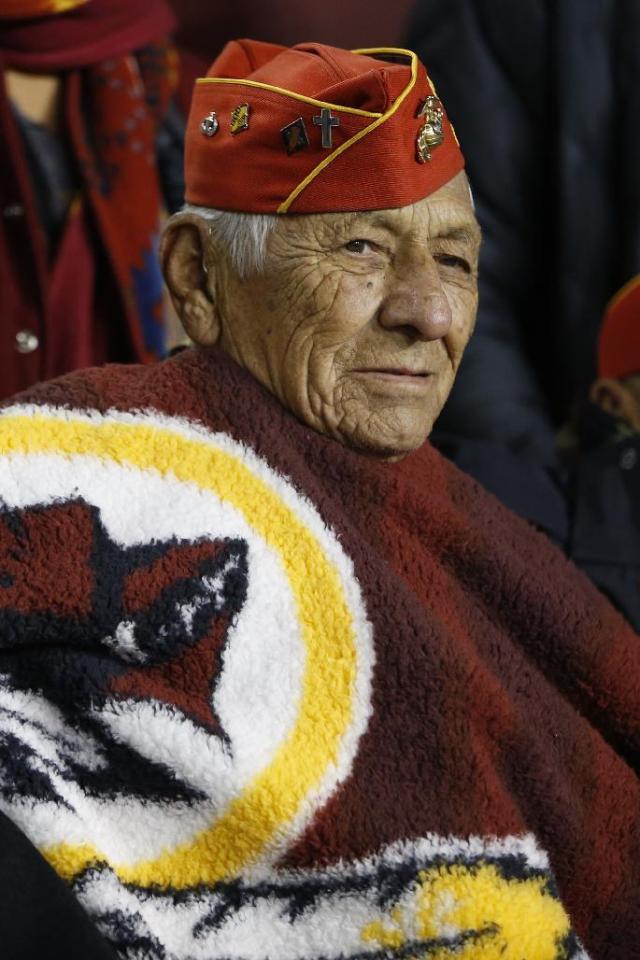
A leader of the Navajo Code Talkers who appeared at a Washington Redskins home football game said Wednesday the team name is a symbol of loyalty and courage — not a slur as asserted by critics who want it changed.

Roy Hawthorne, 87, of Lupton, Ariz., was one of four Code Talkers honored for their service in World War II during the Monday night game against the San Francisco 49ers.

Hawthorne, vice president of the Navajo Code Talkers Association, said the group’s trip was paid for by the Redskins. The four men met briefly with team owner Dan Snyder but did not discuss the name, Hawthorne said.

Still, he said he would endorse the name if asked, and the televised appearance in which three of the Indians wore Redskins jackets spoke for itself.

“We didn’t have that in mind but that is undoubtedly what we did do,” Hawthorne said when asked if he was intending to send a statement with the appearance. “My opinion is that’s a name that not only the team should keep, but that’s a name that’s American.”

Monday night’s brief, on-field ceremony came as some Indians and civil rights leaders wage a “Change the Mascot” campaign that targets the term redskins as a racial epithet.

The Navajos’ appearance drew heated comments from both sides on social media, including assertions that the Code Talkers were being used as props in a public relations stunt meant to deflect criticism over the name.

Jacqueline Pata, head of the National Congress of American Indians, called the appearance “a political play rather than a heartfelt recognition of the Code Talkers.”

Pata, a member of the Tlingit Tribe of Alaska, said she reveres the Code Talkers for the work they have done but added that people often fail to recognize that the origins of the term redskin date to a period when Indians faced efforts to annihilate their culture.

“We were outlawed during that same period the mascot was created from practicing our own religion and our own cultures,” she said. “That term is associated with getting rid of the Indians.”

Snyder has called the team name and mascot a “badge of honor.” The name dates to the team’s first years in Boston in the 1930s and has survived numerous outside efforts to change it. The team has been in the Washington, D.C., area since 1937.

Redskins Senior Vice President Tony Wyllie said there was no truth to suggestions that the Code Talkers were used to bolster the team’s resistance to a new name.

“They’re American heroes, and they deserved recognition,” he said.

Also attending Monday’s game were Code Talkers President Peter MacDonald Sr., George Willie Sr. and George James Sr.

The Navajo Code Talkers used codes derived from their native language to shield military communications from interception by Japanese troops. Hawthorne said there are now about 30 surviving Code Talkers.

The trip to Washington was the second this month for Hawthorne, who last week joined Code Talkers from other tribes who received Congressional Gold Medals for the role they played in World War I and World War II. Members of the Navajo were recognized in 2000.

The Navajo are perhaps the best known of the Code Talkers, but the Defense Department says the program began in 1918 and at its peak included more than 400 Indians who used 33 dialects to make their codes indecipherable.

http://news.yahoo.com/code-talker-says-redskins-name-not-derogatory-172147791–spt.html

Thanks to Pete Cuomo for bringing this to the attention of the It’s Interesting community.

Mom Lets Son Wear KKK Halloween Costume, Says It’s A Family Tradition

o-KKK-COSTUME-570

A Virginia mother let her 7-year-old son wear a Ku Klux Klan costume this Halloween because, she insisted, it’s a family tradition.

Jessica Black of Craigsville, Va., let her son, Jackson, dress as a Klansman with a floor-length white robe and full-faced white hood, according to local ABC affiliate WHSV. The outfit garnered media attention after a photo of the boy dressed in the KKK regalia was posted to the WHSV Facebook page. When Black was confronted by the news network, she defended her decision.

“My brother has [worn it] when he was in Kindergarten and when he was 13,” Black said. She went on to claim there is nothing wrong with the costume or with the White Supremacist group, which she says still exists in their Virginia town. “It’s supposed to be white with white, black with black, man with woman and all of that. That’s what the KKK stands for.”

Facebook users were not happy about the attire.

“A mini kkk costume??? In our area??? Sounds like something we should ALL be concerned about. #noroomforacistsonthisplanet,” one respondent wrote on the WHSV Facebook page. Another defended the child on the station’s “Daybreak” Facebook page, saying he probably thought it was a ghost costume.

Some users were angry that the town was being criticized for the act of one individual, but others criticized these people for missing the larger point.

“The fact of the matter is that this event could have happened anywhere in the US and you all being more outraged that your town has a bad name than the actual issue at hand is extremely disappointing,” wrote one woman. “A few of you have missed the point completely. Just because we are in a new century does not mean that racism is a thing of the past. Racism is alive and well and if you opened your eyes, you’d see it clearly.”

It’s been quite the Halloween season for offensive costumes. First there was actress Julianne’s Hough’s major mistake of going out in blackface to portray “Orange Is the New Black” character Crazy Eyes. Then, two men thought it would be funny to go out as Trayvon Martin (in blackface) and George Zimmerman. And the latest adult to face backlash on Twitter is the young woman who decided to dress up as a Boston bombing victim.

http://www.huffingtonpost.com/2013/11/04/mom-son-kkk-halloween-costume_n_4212461.html

Atlanta man shatters coast-to-coast ‘Cannonball Run’ speed record

cannonball run

Before the transcontinental race in “Cannonball Run,” the starter tells the gathered racers, “You all are certainly the most distinguished group of highway scofflaws and degenerates ever gathered together in one place.”

Ed Bolian prefers the term “fraternity of lunatics.”

Where the 1981 Burt Reynolds classic was a comedic twist on a race inspired by real-life rebellion over the mandated 55-mph speed limits of the 1970s, Bolian set out on a serious mission to beat the record for driving from New York to Los Angeles.

The mark? Alex Roy and David Maher’s cross-country record of 31 hours and 4 minutes, which they set in a modified BMW M5 in 2006.

Bolian, a 28-year-old Atlanta native, had long dreamed of racing from East Coast to West. A decade ago, for a high school assignment, Bolian interviewed Brock Yates, who conceived the Cannonball Baker Sea-To-Shining-Sea Memorial Trophy Dash, aka the Cannonball Run.

Yates, who played the previously quoted organizer in the film he wrote himself, won the first Cannonball in the early 1970s with a time of 35 hours and 53 minutes.

“I told him, ‘One day I’d like to beat your record,’ ” Bolian recalled.

It sounds like great outlaw fun — and certainly, Hollywood added its embellishments, like the supremely confident, infidel-cursing sheik with a Rolls Royce and Sammy Davis Jr. in a priest getup — but Bolian said it took considerable research and groundwork.

Beginning in 2009, about the time he started working for Lamborghini Atlanta, Bolian researched cars, routes, moon phases, traffic patterns, equipment, gas mileage and modifications.

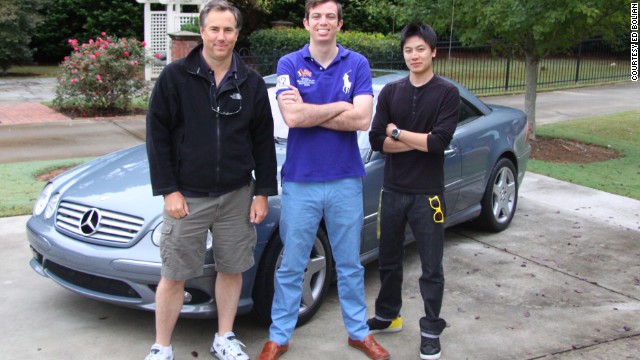
He went into preparation mode about 18 months ago and chose a Mercedes CL55 AMG with 115,000 miles for the journey. The Benz’s gas tank was only 23 gallons, so he added two 22-gallon tanks in the trunk, upping his range to about 800 miles. The spare tire had to go in the backseat with his spotter, Dan Huang, a student at Georgia Tech, Bolian’s alma mater.

To foil the police, he installed a switch to kill the rear lights and bought two laser jammers and three radar detectors. He commissioned a radar jammer, but it wasn’t finished in time for the trek. There was also a police scanner, two GPS units and various chargers for smartphones and tablets — not to mention snacks, iced coffee and a bedpan.

By the time he tricked out the Benz, which included a $9,000 tuneup, “it was a real space station of a thing,” he said, describing the lights and screens strewn through the car’s cockpit.

Yet he still wasn’t done.

“The hardest thing, quite honestly, was finding people crazy enough to do it with me,” he said.

Co-driver Dave Black, one of the Atlanta Lamborghini dealership’s customers, didn’t sign on until three days before they left, and “support passenger” Huang didn’t get involved until about 18 hours before the team left Atlanta for Manhattan.

If his difficulty finding a copilot wasn’t an omen, Manhattan would deliver one. While scouting routes out of the city, a GPS unit told Bolian to take a right on red, in the wrong direction down a one-way road. He was quickly pulled over.

Bolian got a warning — and a healthy dose of relief that the officer didn’t question the thick odor of fuel as he stood over the vents pumping fumes from the trunk.

The trio ignored what some might have considered a harbinger and the left the Red Ball Garage on East 31st Street, the starting point for Yates’ Cannonball, a few hours later. To be exact, they left October 19 at 9:55 p.m., according to a tracking company whose officials asked not be identified because they were unaware that Bolian would be driving so illegally when he hired them.

They hit a patch of traffic in New York that held them up for 15 minutes but soon had an average speed of about 90 mph. In Pennsylvania, they tapped the first of many scouts, one of Bolian’s acquaintances who drove the speed limit 150 to 200 miles ahead of the CL55 and warned them of any police, construction or other problems.

They blew through Ohio, Indiana and Illinois, hitting St. Louis before dawn.

“Everything possible went perfect,” Bolian said, explaining they never got lost and rarely encountered traffic or construction delays.

By the time they hit southern Missouri, near the Oklahoma border, they learned they were “on track to break the existing record if they averaged the speed limit for the rest of the trip,” he said.

Yeah, right. This wasn’t about doing speed limits.

They kept humming west, and as they neared the Texas-New Mexico border, they calculated they might beat the 30-hour mark, a sort of Holy Grail in transcontinental racing that Bolian likened to the 4-minute mile.

Not one to settle, “we decided to break 29,” Bolian said.

The unnamed tracking company says the Benz pulled into the Portofino Hotel and Marina in Redondo Beach, California, at 11:46 p.m. on October 20 after driving 2,803 miles. The total time: 28 hours, 50 minutes and about 30 seconds.

“Most of the time, we weren’t going insanely fast,” Bolian said, not realizing his definition of “insanely” is a little different from most folks’.

When they were moving, which, impressively, was all but 46 minutes of the trip, they were averaging around 100 mph. Their total average was 98 mph, and their top speed was 158 mph, according to an onboard tracking device.

“Apart from a FedEx truck not checking his mirrors before he tried to merge on top of me, we didn’t really have any issues,” Bolian said.

He concedes his endeavor was a dangerous one, especially when you consider Bolian slept only 40 minutes of the trip, and co-driver Black slept an hour. But Bolian went out of his way to make it as safe as possible, choosing a weekend day with clear weather and a full moon — and routes, when possible, with little traffic or construction.

“I had plenty of people at home praying I’d make it safely, and, more importantly, had my wife praying that I wouldn’t have to do it again,” he said, adding he has no children, which was also a factor. “That was one of the spurs to go ahead and get this over with. That’s probably the next adventure.”

Asked if the technological advances since the previous record holders made their run gave him an advantage, Bolian replied, “Absolutely.” Because two teams broke the 32-hour mark in 2006 and 2007, he had a detailed “guide book” on how to do it, where they had to rely on word-of-mouth tales from the 1980s.

“I thank Alex for that. We’re all adding chapters to the same story of American car culture,” Bolian said. Alex Roy did not respond to an e-mail seeking comment.

Bolian had hoped to revisit that high school interview and tell Yates he’d followed through on that promise to break his record, but Yates now suffers from Alzheimer’s.

“I’ll pay him a visit just for the sake of it,” Bolian said, “but I can’t tell him.”

Where the Cannonball scofflaws aimed to make a statement about personal freedom, Bolian said he has the utmost respect for law enforcement. His goal was merely to “add myself and pay tribute to this chapter of automotive history,” he said.

Bolian also hopes that he shattered Roy’s record by such a stark margin that it discourages would-be Cannonballers from attempting to break his record, and it’s not just a matter of his own legacy, he said.

“It really isn’t something we need a whole band of lunatics doing,” he said.

http://www.cnn.com/2013/10/31/us/new-york-los-angeles-cannonball-speed-record/index.html?hpt=hp_c2

Teenage girl escapes crucifixion in exorcisms in France

cross

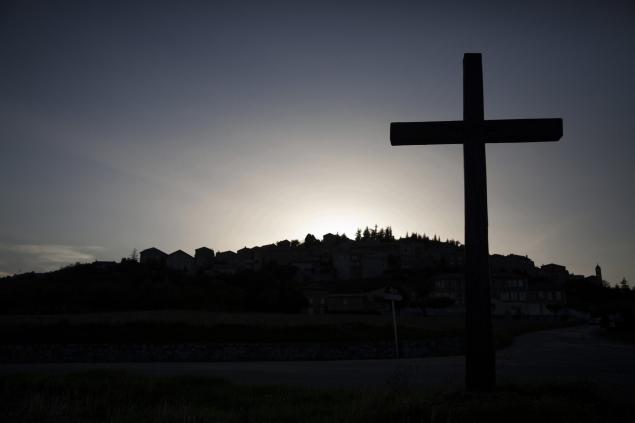
A quartet of former Seventh Day Adventist Church members went on trial in France this week for nearly killing a 19-year-old girl they tied up during a crucifixion-like exorcism.

Three men — including the teen’s boyfriend, Eric Deron — and a woman allegedly bound the girl to a mattress and hung her in the position of Christ on the cross when they believed she was possessed by the devil in 2011, the Agence France-Presse reported.

Police found the girl, identified only as Antoinette, in the Grigny housing estate just south of Paris after she had been tortured for seven days. Officials said the girl was emaciated, dehydrated and showed signs of being beaten, the AFP reported.

The teen told investigators that the four religious fanatics had kept her alive by feeding her small amounts of oil and water.

Prosecutors said Deron, who had delusions of being a prophet, had instigated the disturbing act as part of a divine mission.

But all four, who are of French Caribbean origin, claim the girl consented to the exorcism after she allegedly pounced on her former boyfriend while babbling incoherently.

“To them, she was possessed. That is why they did not call a doctor,” their lawyer, Jacque Bourdais, told the AFP. “You call a doctor when someone is sick. When someone is possessed, you exorcise them.”

Antoinette met Deron and the three others through the Seventh Day Adventist Church about three years before the alleged attack.

The Protestant church, based in the United States and boasts 17 million followers throughout the world on their website, said they expelled the people involved a year before the exorcism — which they claimed could not be justified by any of their teachings.

Deron and the three others face a litany of charges that include kidnapping, acts of torture and barbarism.

Read more: http://www.nydailynews.com/news/world/teenage-girl-allegedly-bound-mattress-crucifixion-like-exorcism-france-article-1.1480610#ixzz2iBfwDoXb

A language without numbers

no numbers

The Pirahã are an indigenous people, numbering around 700, living along the banks of the Maici River in the jungle of northwest Brazil. Their language, also called Pirahã, is so unusual in so many ways that it was profiled in 2007 in a 12,000-word piece in the New Yorker by John Colapinto, who wrote:

Unrelated to any other extant tongue, and based on just eight consonants and three vowels, Pirahã has one of the simplest sound systems known. Yet it possesses such a complex array of tones, stresses, and syllable lengths that its speakers can dispense with their vowels and consonants altogether and sing, hum, or whistle conversations.

Among Pirahã’s many peculiarities is an almost complete lack of numeracy, an extremely rare linguistic trait of which there are only a few documented cases. The language contains no words at all for discrete numbers and only three that approximate some notion of quantity—hói, a “small size or amount,” hoí, a “somewhat larger size or amount,” and baágiso, which can mean either to “cause to come together” or “a bunch.”

With no way to express exact integers, the obvious question is: How do the Pirahã count? More pragmatically, how do they ask for two of something instead of just one? The answer—according to some of the more recent research on anumeracy, published by anthropological linguist Caleb Everett in the journal Cognitive Science—suggests, almost inconceivably, that they don’t.

Everett, the son of Christian missionaries turned linguists, lived on and off with the Pirahã during his early childhood. His parents, he told me, speak Pirahã as fluently as any Westerners ever have, though for a non-native speaker to master the language is a near impossibility. A couple of years ago, Everett traveled back to the Pirahã villages to run a few very simple experiments.

For one test, he would lay down on a table a line of evenly spaced items, say batteries, and ask the Pirahã to make a second line just like the first. For another, he would show someone a line of items and then hide it from view. Again, he would ask for a second line just like the first. In both cases, no mistakes were made as long as the lines were just two or three items long. But, as Everett wrote in his paper, “The proportion of correct responses generally drops significantly for numbers exceeding 2 or 3.” This was true for all tasks, including a non-visual test that involved clapping. English speakers, on the other hand, make no errors at all, except when a relatively long line of items, say seven or more, is shown quickly and then hidden. We can only count so fast, after all, but the Pirahã appear not to be counting at all—because, well, how could they? Instead, they’re employing what Everett calls an “analog estimation strategy,” which works well for a few items but breaks down beyond that.

If necessity is the mother of invention, then perhaps the Pirahã never needed numbers, either because precise counting is not culturally valued or because that value has a sufficient, anumeric workaround. Nothing about the Pirahã’s self-contained way of life seems to require quantity recognition over three, says Everett, a fact that’s not lost on outsiders, who sometimes take advantage of them when trading goods. Attempts over the years to teach number words and basic arithmetic to the Pirahã have met with little success, in large part because they’re uninterested. In fact, the Pirahã have a term for all languages not their own; it translates as “crooked head,” which is intended as a “clear pejorative,” as Colapinto points out:

The Pirahã consider all forms of human discourse other than their own to be laughably inferior, and they are unique among Amazonian peoples in remaining monolingual.

In our increasingly data-driven culture, where we reincarnate ourselves more and more as spreadsheets, anumeracy is unthinkable. Many fear, amid the “advanced stats” revolution in all aspects of life, that what it means to be and feel human is forever changing, and not for the better. It’s perhaps comforting to know, then, that while we’re busy charting our heart rate and measuring our intake and poring over the wins above replacement values for our fantasy league, the Pirahã, immune to the relentless tyranny of numbers, will simply enjoy the game.

http://www.slate.com/blogs/lexicon_valley/2013/10/16/piraha_cognitive_anumeracy_in_a_language_without_numbers.html

Thanks to Kebmodee for bringing this to the attention of the It’s Interesting community.

Bob Costas in Sunday Night Football halftime slot on the need for Redskins to change their name

bob-costas

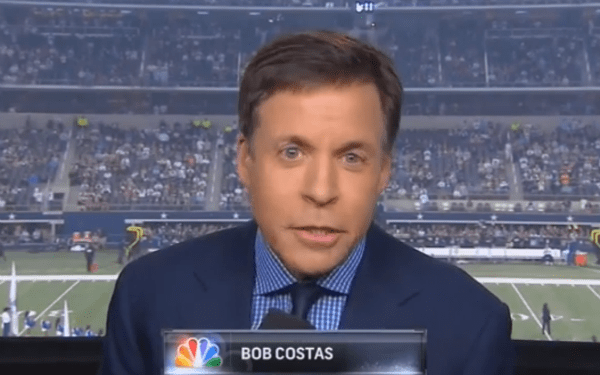
Bob Costas, in the powerful halftime slot of NBC’s “Sunday Night Football,” joined in the growing sentiment that the Washington Redskins’ nickname is offensive and the team should change it.

In an even-handed essay, Costas said that the name is demeaning, despite no ill will being intended by anyone involved with the Redskins, including owner Daniel Snyder, or their fans. President Barack Obama recently said he would consider changing the name if he was the owner of the team, and NFL commissioner Roger Goodell said the league needs to consider the issue.

During his halftime essay, Costas brought up complaints about other team names like Braves, Warriors or Chiefs, and how that seems like “political correctness run amok,” but said the Redskins nickname is different.

“These nicknames honor, rather than demean,” Costas said.

Costas said names like Blackhawks, Seminoles and Chippewas are trickier, but are OK if the “symbols are appropriately respectful,” something MLB’s Cleveland Indians and its Chief Wahoo mascot haven’t always lived up to.

Costas, whose halftime essays on end-zone celebrations in 2011 and gun control in 2012 became hot-button topics, closed his thoughts on the Redskins’ name by saying it can justifiably be seen as offensive.

Here’s the full transcript of Costas’ essay:

“With Washington playing Dallas here tonight, it seems like an appropriate time to acknowledge the ongoing controversy about the name “Redskins.”

“Let’s start here. There is no reason to believe that owner Daniel Snyder, or any official or player from his team, harbors animus toward Native Americans or wishes to disrespect them. This is undoubtedly also true of the vast majority of those who don’t think twice about the longstanding moniker. And in fact, as best can be determined, even a majority of Native Americans say they are not offended.

“But, having stipulated that, there’s still a distinction to be made. Objections to names like “Braves,” “Chiefs,” “Warriors,” and the like strike many of us as political correctness run amok. These nicknames honor, rather than demean. They are pretty much the same as “Vikings,” “Patriots,” or even “Cowboys.” And names like “Blackhawks,” “Seminoles,” and “Chippewas,” while potentially more problematic, can still be okay provided the symbols are appropriately respectful – which is where the Cleveland Indians with the combination of their name and “Chief Wahoo” logo have sometimes run into trouble.

“A number of teams, mostly in the college ranks, have changed their names in response to objections. The Stanford Cardinal and the Dartmouth Big Green were each once the Indians; the St. John’s Redmen have become the Red Storm, and the Miami of Ohio Redskins – that’s right, Redskins – are now the Red Hawks.

“Still, the NFL franchise that represents the nation’s capital has maintained its name. But think for a moment about the term “Redskins,” and how it truly differs from all the others. Ask yourself what the equivalent would be, if directed toward African-Americans, Hispanics, Asians, or members of any other ethnic group.

“When considered that way, “Redskins” can’t possibly honor a heritage, or noble character trait, nor can it possibly be considered a neutral term. It’s an insult, a slur, no matter how benign the present-day intent. It is fair to say that for a long time now, and certainly in 2013, no offense has been intended. But, if you take a step back, isn’t it clear to see how offense “might” legitimately be taken?”http://sports.yahoo.com/blogs/nfl-shutdown-corner/bob-costas-during-halftime-nbc-sunday-night-football-022727321–nfl.html?vp=1

Thanks to Ray Gaudette for bringing this to the attention of the It’s Interesting community.