Study: Early humans loved to eat brains

antelope1-4_3_rx404_c534x401

Early members of the human family enjoyed digging into the heads of antelope and wildebeests.

Sets of animal bones recently unearthed in Kenya, believed to be the earliest evidence of hominid hunting, show previous members of the human family enjoyed digging into the heads of antelope and wildebeests, as well as snacking on gazelle meat.

They knew a thing or two about butchery, too, cutting the animals into parts before selecting the meatiest bones.

Scientists also have found a disproportionate number of animal skulls in the area, suggesting our ancestors scavenged the untouched heads from carcasses left behind by big cats after their own meals.

Dents inside the skulls indicate they dug in with stones to get at the delicious, juicy brains inside. According to a study of the findings, this nutrient-rich brain tissue may have helped homo erectus support larger bodies, bigger brains, and travel longer distances.

http://www.usatoday.com/story/news/nation/2013/05/05/evolution-early-humans-ate-brains/2136493/

Topless protest disrupts opening of Barbie house in Berlin

barbie 1

barbie 2

Women’s rights protesters disrupted the opening of a giant pink doll’s house in Berlin on Thursday, saying the Barbie “Dreamhouse Experience” objectified women.

Promoting the doll made by Mattel Inc, the house allows paying visitors to try on Barbie’s clothes, play in her kitchen and have a go on her pink piano. The exhibition will be open until Aug. 25.

A handful of protesters gathered outside the shocking pink house that has been erected in one of central Berlin’s greyest areas.

A topless woman, a member of the Femen protest group, who had the slogan “Life in plastic is not fantastic” scrawled across her chest, set fire to a Barbie doll tied to a mini crucifix.

“There’s too much emphasis on becoming more beautiful and on being pretty and that puts an awful lot of pressure on girls as well as wasting capacities which they could use to simply be happy or for school,” said Stevie Meriel Schmiedel, a founding member of the “Pink Stinks” protest group.

“We’re protesting because Barbie would not be able to survive with her figure and yet she is an idol for many girls and that’s not healthy,” she said.

One placard read: “Dear Barbie – don’t just bake cupcakes, eat them too!”

A male protester in a wig, pink shirt and shimmering skirt held a poster reading: “Do you like me now?”

Christoph Rahofer, chief executive of Event Marketing Services, which organised the exhibition, similar to one that recently opened in Sunrise, Florida, said the Dreamhouse Experience was a positive thing.

“It’s basically about playing, being amazed and discovering – there’s lots of hidden things to be found and it’s an interactive exhibition.”

The Barbie doll made its debut in 1959, and is named after the daughter, Barbara, of its inventor Ruth Handler, according to Mattel’s website.

http://cnews.canoe.ca/CNEWS/WeirdNews/2013/05/16/20828031.html

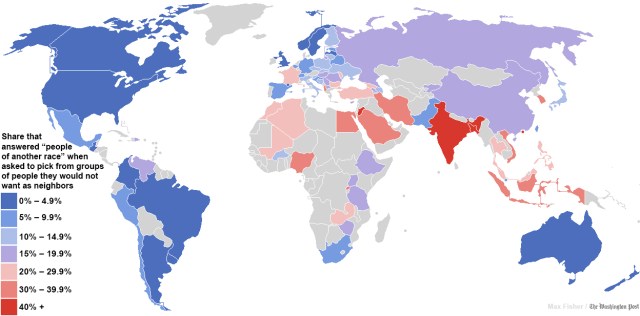
A fascinating map of the world’s most and least racially tolerant countries

racism-map3

By Max Fisher, Published: May 15, 2013 at 3:28 pm
The Washington Post

When two Swedish economists set out to examine whether economic freedom made people any more or less racist, they knew how they would gauge economic freedom, but they needed to find a way to measure a country’s level of racial tolerance. So they turned to something called the World Values Survey, which has been measuring global attitudes and opinions for decades.

Among the dozens of questions that World Values asks, the Swedish economists found one that, they believe, could be a pretty good indicator of tolerance for other races. The survey asked respondents in more than 80 different countries to identify kinds of people they would not want as neighbors. Some respondents, picking from a list, chose “people of a different race.” The more frequently that people in a given country say they don’t want neighbors from other races, the economists reasoned, the less racially tolerant you could call that society. (The study concluded that economic freedom had no correlation with racial tolerance, but it does appear to correlate with tolerance toward homosexuals.)

Unfortunately, the Swedish economists did not include all of the World Values Survey data in their final research paper. So I went back to the source, compiled the original data and mapped it out on the infographic above. In the bluer countries, fewer people said they would not want neighbors of a different race; in red countries, more people did.

If we treat this data as indicative of racial tolerance, then we might conclude that people in the bluer countries are the least likely to express racist attitudes, while the people in red countries are the most likely.

Compare the results to this map of the world’s most and least diverse countries.

Before we dive into the data, a couple of caveats. First, it’s entirely likely that some people lied when answering this question; it would be surprising if they hadn’t. But the operative question, unanswerable, is whether people in certain countries were more or less likely to answer the question honestly. For example, while the data suggest that Swedes are more racially tolerant than Finns, it’s possible that the two groups are equally tolerant but that Finns are just more honest. The willingness to state such a preference out loud, though, might be an indicator of racial attitudes in itself. Second, the survey is not conducted every year; some of the results are very recent and some are several years old, so we’re assuming the results are static, which might not be the case.

Here’s what the data show:

• Anglo and Latin countries most tolerant. People in the survey were most likely to embrace a racially diverse neighbor in the United Kingdom and its Anglo former colonies (the United States, Canada, Australia and New Zealand) and in Latin America. The only real exceptions were oil-rich Venezuela, where income inequality sometimes breaks along racial lines, and the Dominican Republic, perhaps because of its adjacency to troubled Haiti. Scandinavian countries also scored high.

• India and Jordan by far the least tolerant. In only two of 81 surveyed countries, more than 40 percent of respondents said they would not want a neighbor of a different race. This included 43.5 percent of Indians and 51.4 percent of Jordanian. (Note: World Values’ data for Bangladesh and Hong Kong appear to have been inverted, with in fact only 28.3 and 26.8 percent, respectively, having indicated they would not want a neighbor of a different race. Please see correction at the bottom of this post.)

• Wide, interesting variation across Europe. Immigration and national identity are big, touchy issues in much of Europe, where racial make-ups are changing. Though you might expect the richer, better-educated Western European nations to be more tolerant than those in Eastern Europe, that’s not exactly the case. France appeared to be one of the least racially tolerant countries on the continent, with 22.7 percent saying they didn’t want a neighbor of another race. Former Soviet states such as Belarus and Latvia scored as more tolerant than much of Europe. Many in the Balkans, perhaps after years of ethnicity-tinged wars, expressed lower racial tolerance.

• The Middle East not so tolerant. Immigration is also a big issue in this region, particularly in Egypt and Saudi Arabia, which often absorb economic migrants from poorer neighbors.

• Racial tolerance low in diverse Asian countries. Nations such as Indonesia and the Philippines, where many racial groups often jockey for influence and have complicated histories with one another, showed more skepticism of diversity. This was also true, to a lesser extent, in China and Kyrgyzstan. There were similar trends in parts of sub-Saharan Africa.

• South Korea, not very tolerant, is an outlier. Although the country is rich, well-educated, peaceful and ethnically homogenous – all trends that appear to coincide with racial tolerance – more than one in three South Koreans said they do not want a neighbor of a different race. This may have to do with Korea’s particular view of its own racial-national identity as unique – studied by scholars such as B.R. Myers – and with the influx of Southeast Asian neighbors and the nation’s long-held tensions with Japan.

• Pakistan, remarkably tolerant, also an outlier. Although the country has a number of factors that coincide with racial intolerance – sectarian violence, its location in the least-tolerant region of the world, low economic and human development indices – only 6.5 percent of Pakistanis objected to a neighbor of a different race. This would appear to suggest Pakistanis are more racially tolerant than even the Germans or the Dutch.

http://www.washingtonpost.com/blogs/worldviews/wp/2013/05/15/a-fascinating-map-of-the-worlds-most-and-least-racially-tolerant-countries/

Thanks to Dr. Mike Moore for bringing this to the attention of the It’s Interesting community.

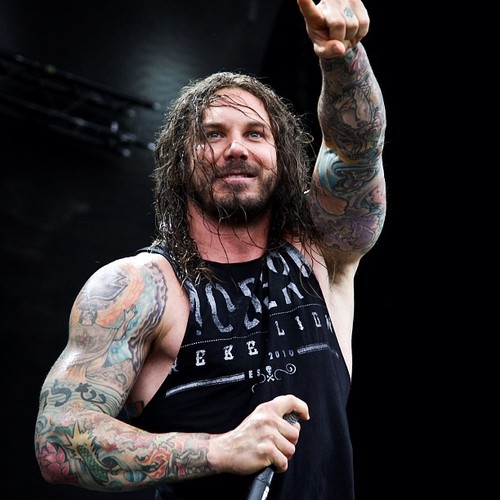
Christian metal singer Tim Lambesis charged with attempting to hire hit man to kill his wife

tim

The lead singer of the metal band As I Lay Dying has been arrested and charged with seeking to have his wife killed, the San Diego County Sheriff’s Department said.

Authorities said Tuesday that Tim Lambesis tried to contract an undercover detective posing as a killer for hire to murder his estranged wife, who lives in Encinitas, California.

Arraignment was set for Thursday afternoon at North Division Court in Vista.

The department said it learned on May 2 that Lambesis, 32, had asked someone to carry out the killing and an investigation was initiated.

The investigation culminated Tuesday afternoon, “when Lambesis solicited an undercover detective to kill his wife,” it said. He was arrested without incident at a business in Oceanside and taken to the Encinitas Station and booked into the Vista Detention Facility.

Last September, Meggan Lambesis filed with San Diego Superior Court to have the marriage dissolved.

Christian metal singer charged with attempting to hire hit man

Congregation of stray dogs in Poland reveals that amputated limbs were dumped in warehouse

dogs

A Polish businessman who tried to save money by stashing amputated body parts in warehouses instead of incinerating them was exposed by the nose of man’s best friend, prosecutors said.

Stray dogs, attracted by the smell, started gathering outside the warehouses, Polish television quoted prosecutors as saying on Friday.

Police were alerted and made the grisly discovery when they searched the compound, broadcaster TVN CNBC reported.

The owner of the company, in the southern city of Katowice, could be sentenced to up to 12 years in prison for endangering public health, the station quoted prosecutors as saying.

Prosecutors could not immediately be reached for comment.

According to the report, the company had contracts with around 300 medical hospitals and clinics to dispose of medical waste, which included amputated body parts.

The broadcaster reported that the company initially buried the waste underground at a private plot, and when space ran out, started using the warehouses. Prosecutors found 100 tonnes of medical waste that the firm had failed to dispose of properly, it said.

http://cnews.canoe.ca/CNEWS/WeirdNews/2013/05/10/20812016.html

How Mom Julie Deane used Google to build a global fashion brand

julie-deane-cambridge-satchel-image1

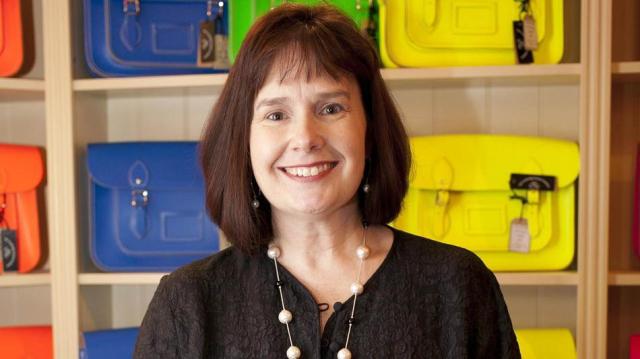
Julie Deane founded Cambridge Satchel Company in her kitchen in 2008, with her mom at her side. “It’s one of those business that was started out of necessity because I needed to make school fees for my daughter, who was being bullied at school,” says Deane. “I made a promise to her that I would move her to a place that she could be really safe and happy. Once you make a promise to your children, there’s no going back.”

So she developed a few ideas for companies she could start with a budget of £600, one of which was a satchel company. Now, people scoff at the idea of starting a company on such a shoestring budget, but Deane maintains, to this day, that “it seems a perfectly reasonable amount to give something a go with,” and that you can get a sense of whether something has legs or not without getting in too deep.

Once she decided on satchels, Deane sat down at her kitchen table and started Googling handbag manufacturers, leather goods manufacturers, leather suppliers, saddle makers and anyone who would cut leather and make things from scratch for her. She “hammered” the Internet to make sure nobody else was doing it — a process she now knows is actually called competitor analysis. When she determined that her venture was unique, she’d drive to the tanneries and manufacturers to get them on board.

She found a leather supplier and got to work on a prototype. With a product in the works, she then set out to build a website. “I didn’t know very much about websites at all,” says Deane. “I thought, ‘It can’t be that hard, there must be a course on the Internet.'” She found one, and she spent two nights taking a course and then made the website on the third night.

“At this point, most people have access to the Internet, and it’s all there,” says Deane, who now speaks to students about entrepreneurship and bootstrapping. “I tell them, ‘You don’t need to pay someone else to do your web design and SEO and AdWords campaign’ … it’s lazy.”

Deane put herself on every free online listing she could — from the Yellow Pages and mom blogs to Etsy and eBay. “I read this book called Guerilla Marketing, and it says you need to try multiple avenues of marketing, and if people see your name enough times, then they’ll get curious enough to look you up,” she says.

As she started selling chestnut, dark brown and black satchels online, Deane engaged her customers. She’d ask them to send a photo of them with their satchel and to write a testimonial for the site if they really loved the bag (and to send it back if they didn’t), thinking a solid review could lend her fledgling business credibility and encourage other people to buy. A few of Deane’s early customers mentioned their love for fashion blogs, which opened a world of opportunity to Deane.

“I couldn’t believe how frequently people would be checking these fashion blogs!” Deane says. Whenever a customer mentioned a go-to fashion blog, Deane sent the blogger an email, telling them about Cambridge Satchels and sending a photo, in hopes of a shout-out. She would tell them, “I can’t send you free samples — maybe in a year’s time if it goes well, you can have one, but in the meantime, here’s a photograph!”

When the leather supplier worked on a project with red and navy, Deane had some colored satchels made. She had refrained from bespoke colors before, since she minimum order would be six month’s worth of sales — “If I’d picked a dud of a color, that would not have been good news for the school fees!” Deane says the red and navy brought about a “lightbulb moment” for her. “The minute I had red and navy, those really took off, and it became very, very clear that the way forward would be through different colors.”

Over the years, Deane aggressively worked with fashion bloggers and prominent fashionistas, sponsoring giveaways and gifting satchels, which yielded organic buzz. Over the years, Cambridge Satchel built strong relationships with these bloggers — even asking them what color satchels the company should make next — and these relationships enabled the brand to skirt traditional advertising. Fully embraced as a fashion obsession, Cambridge Satchels grew thanks to social media and word of mouth, especially via blogs.

In September 2011, Elle UK reached out, inquiring whether Deane could produce a brighter satchel for inclusion in an upcoming fluorescent trend piece. Always one to capitalize on a new opportunity, Deane produced these satchels and sent them to bloggers who were attending New York Fashion Week. “When the lights at the shows went down and the people started taking flash photography, the satchels really popped,” says Deane. “So we got noticed, and the New York Times and the New York Post called us the ‘street style of New York Fashion Week.'” (And of course, the fashion bloggers gave Cambridge Satchel widespread press online, too.)

The success of Fashion Week in 2011 beckoned Bloomingdales and Saks to bring the satchels to Stateside, where they were put in the window and dubbed “The Brit It Bag” during Fashion Week in February 2012. “That was a big moment for us, when we really got noticed,” says Deane.

This new trend didn’t go unnoticed. Just a few months after Fashion Week, ad agency BBH contacted Deane. They asked for facts and figures about the business and the whole story of how she started it, because Cambridge Satchel was being pitched as part of a large media opportunity. “I had no idea what they were talking about, or who they were talking to, so it was making me feel really worried!” recalls Deane. After signing a large NDA, Deane found out the client was Google, and it was looking to do commercials for its “the web is what you make of it” campaign. Cambridge Satchel was a perfect fit, and after Deane went to London with meet with the client, she had herself a high-profile television spot.

“Julie saw the Internet as a key to her success,” says Rich Pleeth, Consumer Marketing Manager at Google. “That’s why we built Chrome — to provide people like her and businesses like this with the richest and best web experience across all devices, combining speed, simplicity and security.”

Deane had built great momentum for her burgeoning business through the web, and more specifically, Google. “Right from the moment of trying to source everything from my first suppliers — thread suppliers and rivet suppliers and property for the factory — up through the AdWords and the analytics and Google Translate (for foreign emails), we do use all of those things, so to be able to be part of something that’s a very honest version of exactly how Cambridge Satchel started, I was very comfortable with it, it wasn’t a stretch at all,” explains Deane.

The ad ran in the UK and Ireland in late September and early October, then again from December 17 through 31.

“I’ve gotten so many fantastic emails about it,” says Deane. But more than that, she’s seen traffic and sales increase exponentially thanks to the ad, which ran on TV but also has surpassed 5.3 million views by YouTube’s global audience.

While it’s hard to pin down exactly how much web traffic and sales are attributable to the Chrome ad, Deane — being a numbers junkie — has tried quantifying the ad’s effect. Total sales from September through December 2012 more than doubled over 2011. But in the UK alone, sales increased a whopping 400%, and the commercial has to be responsible for some of that lift. And if you look at the Google Analytics reports of Cambridge Satchel’s web traffic on an hourly basis, there’s a big spike every time a commercial airs.

As if Google hadn’t been generous enough, the company incorporated Cambridge Satchel into a live experiment during IAB Engage 2012, when Mark Howe, Managing Director of Agency Operations Europe at Google, did a Hangout with Deane, who had Google pros at her office boosting her SEO, improving analytics, setting up a branded YouTube page, optimizing her site for mobile and upping her social media strategy.

“It has been proven that companies which build their business online grow their business at four to eight times faster than those that don’t,” says Pleeth. “The Internet has given them a global reach they would never have otherwise.”

Today, Cambridge Satchels are sold in 190 outposts in 100 countries, and the company does more than £8 million in annual sales. And all Julie Deane set out to do with £600 was make enough money to cover her daughter’s tuition.

During London Fashion Week, Deane opened her first brick-and-mortar location in London’s Covent Garden. It’s a two-story space, and the entire lower level is devoted to the web-savvy cohort who made her famous — fashion bloggers.

“I really feel very strongly that the bloggers are the people who started my business,” says Deane. “They’re a group of people who don’t have offices, and you’ll see them at New York and London Fashion Week sitting in Starbucks writing their pieces.” But now, at least in London, these bloggers will have a home base where they can write stories, make a cup of tea, browse the web, socialize and, of course, charge their phone so they can tweet and Instagram the next big thing. “I’m really excited about the lounge because it feels like a tangible way to thank the community that has helped me so much,” says Deane.

Lessons Learned From the Julie Deane School of Entrepreneurship
•Take risks.

•Be resourceful — DIY as much as possible.

•Know your audience, how they behave and where they spend their time.

•Don’t give your product away or sell it short, but strategic gifting can go a long way.

•Seize opportunities.

•Engage your fans, offer them a stake in your company.

•Find valuable brand partners with whom to run competitions and giveaways.

•Be authentic — Julie tweets about her dog, Rupert, which humanizes the brand.

•Embrace the web and the platforms that live on it.

Thanks to SRW for bringing this to the attention of the It’s Interesting community.

http://mashable.com/2013/03/22/cambridge-satchel-company/

Stockbroker Shaun “English Shaun” Attwood: “I used my stock market millions to throw raves and sell drugs.”

stock market

Think of drug lords in America, and it’s likely that you’ll think of emotionally erratic men with harems of coked-up megababes on big yachts in Miami. Or, if you watch a lot of DVD box sets, terminally ill chemistry teachers or Idris Elba. One cliche that probably won’t spring to mind is a polite, educated ex-stockbroker from the UK’s industrial Cheshire.

Shaun “English Shaun” Attwood is an incredibly unlikely ecstasy kingpin. Growing up in Widnes, just outside of Liverpool, Shaun invested in the US stock market when he was young, made his millions, moved to Phoenix, Arizona, started throwing raves, and became a major drug supplier. While he wasn’t planning parties in the deserts of Arizona, he was working in direct competition with the Italian Mafia and alongside the New Mexican Mafia to supply millions of dollars’ worth of ecstasy to the ravers of mid-90s Phoenix.

His motivation for doing all this, besides the fact that partying for a living is a lot more fun than selling shares? He wanted to introduce Americans to the British rave culture he’d grown up with. Unfortunately, as is often the way when you’re handling millions of dollars of narcotics, Shaun was caught and ended up being sent to Maricopa County Jail, widely regarded as America’s toughest prison. Shaun’s been out of jail for a few years, so I called him to see if he’s still so keen to spread the love to the Yanks.

VICE: So you went from being a millionaire stockbroker to becoming a major drug dealer in Arizona. How did that happen?
Shaun Attwood: The Manchester rave scene made such a big impression on me that I decided to transfer that scene to Phoenix, Arizona, after moving over there. After becoming a millionaire as a young person, I had more money than common sense, so I didn’t see the law as an obstacle to my partying or a barrier to bringing tens of thousands of hits of ecstasy into America from Holland.

That was for the Mafia, right? Yeah, I was supplying ecstasy to the New Mexican Mafia. In the beginning, I didn’t know who they were, but it came about because I was a friend of a gang member’s brother. Years later, they were all arrested and the news headlines reported that they were the most powerful and violent Mafia in Arizona at that time, committing murder-for-hire and executing witnesses.

And you were in direct competition with the Italian Mafia member Sammy “The Bull” Gravano—what’s the story with that? Yeah. Years later in prison, his son, Gerard Gravano, told me that he’d been dispatched as the head of an armed crew to kidnap me from a nightclub and take me out to the desert. I’d avoided him that night because my best friend, Wild Man, had got in a fight, and we’d had to leave the club in a hurry.

Talking of clubs, how did the rave scene in America compare with the raves in England at the time? Oh, it was small at first. It took years to catch up. Ecstasy was very expensive—it was $30 a hit in the mid-90s.

Where did you put on your parties? The first one was in a warehouse in west Phoenix owned by the Mexican Mafia, but they were at various different locations after that.

Did selling drugs come after you started putting on raves? It seems like throwing raves is the perfect way of creating a solid customer base. Well, I was selling ecstasy before I started the raves, but they obviously provided more of a market.

How did you find it going from a high-pressure, high-income job to dealing and partying all the time? I enjoyed it at first. There was one rave where I booked Chris Liberator and Dave the Drummer. I remember hearing Chris Liberator’s beats and being mesmerized by the sight of thousands of people dancing to English DJs with the same blissful expressions that I had on my face when I first got into raving. I thought, This is it, I’ve realized my dream. But I started taking too many drugs and got incredibly paranoid because of all the risks I was taking.

That sounds like a familiar story. Did the police get on to you? It was inevitable. Dealing drugs leads to police trouble, prison, or death. I sowed the seeds of my downfall and take full responsibility for landing myself behind bars. Informant statements led to a wiretap, and 10,000 calls were recorded. I rarely spoke on the phone, but they caught me talking about personal use and many of my employees were referencing my name on the phone, which resulted in a conspiracy charge.

What did you make of the media dubbing your organization the “Evil Empire” when you were caught? Did you think it was a bit over the top? My heart went “badum, badum, badum” when I saw the cover of the Phoenix New Times with a portrait of me as Nosferatu on it, which was where they called it the “Evil Empire.” And the cover also had four of my co-defendants, including Wild Man and my head of security, Cody, in the foreground, with my arms encircling them like some evil puppeteer. I couldn’t believe it.

Was this when you were locked up already? It was before I’d been sentenced, and I was worried that there was going to be something in there that might damage my case. I read in there that the prosecutor had classified me as a serious drug offender likely to receive a life sentence, and I went into shock. I’d thought I was getting out, but I was now facing 25 years. If I’d got a life sentence I would have been 58 when I got out, basically at retirement age. But yeah, when I read the article, I felt like some arch-villain from the Marvel comics I collected as a child.

What was your time inside like? Early on, I was with lots of people who were arrested with me, including my large and fearless best friend and raving partner from my hometown of Widnes, Wild Man, who the gangs respected for his fighting skills. He looked out for me. I was split up from my co-defendants after the first year, so then I had to rely on my people skills, Englishness, education, etc., etc.

You wrote blogs inside as well, right? Yeah, that enabled me to make some powerful alliances with characters like T-Bone and Two Tonys, who was a Mafia mass murderer and was serving multiple life sentences. T-Bone was a deeply spiritual, massively built African American who towered over most inmates. He was a prison gladiator and covered in stab wounds. He was a good man to have on your side.

You’ve told me before about the trouble you had with the Aryan Brotherhood as well. Yeah, all the way through my incarceration, I was trying to dodge Aryan Brotherhood predators. They run the white race in the prison system. You have to do what they say or else you get smashed or murdered.

So I take it racism featured quite heavily in the prison that you were in? Yeah, it was completely racially segregated. The way it works there is that, as soon as you walk in, a soldier from your racial gang tells you the rules that are enforced by the head of each race. Disobedience means that you get smashed, shanked or murdered. The rules include stuff like not being able to sit with the other races at the dinner tables or exercise with the other races. But when it comes to drugs, the gangs all deal with each other regardless of race.

I bet there were some pretty nice characters in that environment. God, it was full of scary people. In super maximum security, I lived next door to a serial killer and my first cell mate was a satanic priest with a pentagram tattooed on his head. He was in for murder and was part of a cult that was drinking blood and eating human body parts. Fortunately, he was quite nice to me.

That’s good. So what are you doing with your life now? Are you a reformed character? Yeah, and I credit incarceration with sending my life in a whole new positive direction. I tell my story to schools across the UK and Europe to educate young people about the consequences of choosing the drugs lifestyle in the hope that they don’t make the same mistakes I did. The endless feedback that I get from students makes me feel that the talks are a better way of repaying my debt to society than the sentence I served.

Shaun has written two memoirs, Hard Time and Party Time.

http://www.vice.com/read/i-gave-up-stocks-to-throw-raves-and-sell-drugs

Thanks to SRW for bringing this to the attention of the It’s Interesting community.

US suicide rate has risen sharply among middle-aged white men and women

suicide

The suicide rate among middle-aged Americans climbed a startling 28 percent in a decade, a period that included the recession and the mortgage crisis, the government reported Thursday. The trend was most pronounced among white men and women in that age group. Their suicide rate jumped 40 percent between 1999 and 2010. But the rates in younger and older people held steady. And there was little change among middle-aged blacks, Hispanics and most other racial and ethnic groups, the report from the Centers for Disease Control and Prevention found.

Why did so many middle-aged whites — that is, those who are 35 to 64 years old — take their own lives?

One theory suggests the recession caused more emotional trauma in whites, who tend not to have the same kind of church support and extended families that blacks and Hispanics do.

The economy was in recession from the end of 2007 until mid-2009. Even well afterward, polls showed most Americans remained worried about weak hiring, a depressed housing market and other problems.

Pat Smith, violence-prevention program coordinator for the Michigan Department of Community Health, said the recession — which hit manufacturing-heavy states particularly hard — may have pushed already-troubled people over the brink. Being unable to find a job or settling for one with lower pay or prestige could add “that final weight to a whole chain of events,” she said.

Another theory notes that white baby boomers have always had higher rates of depression and suicide, and that has held true as they’ve hit middle age. During the 11-year period studied, suicide went from the eighth leading cause of death among middle-aged Americans to the fourth, behind cancer, heart disease and accidents.

“Some of us think we’re facing an upsurge as this generation moves into later life,” said Dr. Eric Caine, a suicide researcher at the University of Rochester.

One more possible contributor is the growing sale and abuse of prescription painkillers over the past decade. Some people commit suicide by overdose. In other cases, abuse of the drugs helps put people in a frame of mind to attempt suicide by other means, said Thomas Simon, one of the authors of the CDC report, which was based on death certificates.

People ages 35 to 64 account for about 57 percent of suicides in the U.S.

The report contained surprising information about how middle-aged people kill themselves: During the period studied, hangings overtook drug overdoses in that age group, becoming the No. 2 manner of suicide. But guns remained far in the lead and were the instrument of death in nearly half of all suicides among the middle-aged in 2010.

The CDC does not collect gun ownership statistics and did not look at the relationship between suicide rates and the prevalence of firearms.

For the entire U.S. population, there were 38,350 suicides in 2010, making it the nation’s 10th leading cause of death, the CDC said. The overall national suicide rate climbed from 12 suicides per 100,000 people in 1999 to 14 per 100,000 in 2010. That was a 15 percent increase.

For the middle-aged, the rate jumped from about 14 per 100,000 to nearly 18 — a 28 percent increase. Among whites in that age group, it spiked from about 16 to 22.

Suicide prevention efforts have tended to concentrate on teenagers and the elderly, but research over the past several years has begun to focus on the middle-aged. The new CDC report is being called the first to show how the trend is playing out nationally and to look in depth at the racial and geographic breakdown.

Thirty-nine out of 50 states registered a statistically significant increase in suicide rates among the middle-aged. The West and the South had the highest rates. It’s not clear why, but one factor may be cultural differences in willingness to seek help during tough times, Simon said.

Also, it may be more difficult to find counseling and mental health services in certain places, he added.

Suicides among middle-aged Native Americans and Alaska Natives climbed 65 percent, to 18.5 per 100,000. However, the overall numbers remain very small — 171 such deaths in 2010. And changes in small numbers can look unusually dramatic.

The CDC did not break out suicides of current and former military service members, a tragedy that has been getting increased attention. But a recent Department of Veterans Affairs report concluded that suicides among veterans have been relatively stable in the past decade and that veterans have been a shrinking percentage of suicides nationally.

Thanks to Kebmodee for bringing this to the attention of the It’s Interesting community.

http://bigstory.ap.org/article/us-suicide-rate-rose-sharply-among-middle-aged

U.S.Congres insisting on building tanks the the Army says they don’t need

tanks

Built to dominate the enemy in combat, the Army’s hulking Abrams tank is proving equally hard to beat in a budget battle.

Lawmakers from both parties have devoted nearly half a billion dollars in taxpayer money over the past two years to build improved versions of the 70-ton Abrams.

But senior Army officials have said repeatedly, “No thanks.”

It’s the inverse of the federal budget world these days, in which automatic spending cuts are leaving sought-after pet programs struggling or unpaid altogether. Republicans and Democrats for years have fought so bitterly that lawmaking in Washington ground to a near-halt.

Yet in the case of the Abrams tank, there’s a bipartisan push to spend an extra $436 million on a weapon the experts explicitly say is not needed.

“If we had our choice, we would use that money in a different way,” Gen. Ray Odierno, the Army’s chief of staff, told The Associated Press this past week.

Why are the tank dollars still flowing? Politics.

Keeping the Abrams production line rolling protects businesses and good paying jobs in congressional districts where the tank’s many suppliers are located.

If there’s a home of the Abrams, it’s politically important Ohio. The nation’s only tank plant is in Lima. So it’s no coincidence that the champions for more tanks are Rep. Jim Jordan and Sen. Rob Portman, two of Capitol’s Hill most prominent deficit hawks, as well as Democratic Sen. Sherrod Brown.

They said their support is rooted in protecting national security, not in pork-barrel politics.

“The one area where we are supposed to spend taxpayer money is in defense of the country,” said Jordan, whose district in the northwest part of the state includes the tank plant.

The Abrams dilemma underscores the challenge that Defense Secretary Chuck Hagel faces as he seeks to purge programs that the military considers unnecessary or too expensive in order to ensure there’s enough money for essential operations, training and equipment.

Hagel, a former Republican senator from Nebraska, faces a daunting task in persuading members of Congress to eliminate or scale back projects favored by constituents.

Federal budgets are always peppered with money for pet projects. What sets the Abrams example apart is the certainty of the Army’s position.

Sean Kennedy, director of research for the nonpartisan Citizens Against Government Waste, said Congress should listen when one of the military services says no to more equipment.

“When an institution as risk averse as the Defense Department says they have enough tanks, we can probably believe them,” Kennedy said.

Congressional backers of the Abrams upgrades view the vast network of companies, many of them small businesses, that manufacture the tanks’ materials and parts as a critical asset that has to be preserved. The money, they say, is a modest investment that will keep important tooling and manufacturing skills from being lost if the Abrams line were to be shut down.

The Lima plant is a study in how federal dollars affect local communities, which in turn hold tight to the federal dollars. The facility is owned by the federal government but operated by the land systems division of General Dynamics, a major defense contractor that spent close to $11 million last year on lobbying, according to the nonpartisan Center for Responsive Politics.

Jordan, a House conservative leader who has pushed for deep reductions in federal spending, supported the automatic cuts known as the sequester that require $42 billion to be shaved from the Pentagon’s budget by the end of September. The military also has to absorb a $487 billion reduction in defense spending over the next 10 years, as required by the Budget Control Act passed in 2011.

The plant is Lima’s fifth-largest employer with close to 700 employees, down from about 1,100 just a few years ago, according to Mayor David Berger. But the facility is still crucial to the local economy. “All of those jobs and their spending activity in the community and the company’s spending probably have about a $100 million impact annually,” Berger said.

Still, said Jordan, it would be a big mistake to stop producing tanks.

“Look, (the plant) is in the 4th Congressional District and my job is to represent the 4th Congressional District, so I understand that,” he said. “But the fact remains, if it was not in the best interests of the national defense for the United States of America, then you would not see me supporting it like we do.”

The tanks that Congress is requiring the Army to buy aren’t brand new. Earlier models are being outfitted with a sophisticated suite of electronics that gives the vehicles better microprocessors, color flat panel displays, a more capable communications system, and other improvements. The upgraded tanks cost about $7.5 million each, according to the Army.

Out of a fleet of nearly 2,400 tanks, roughly two-thirds are the improved versions, which the Army refers to with a moniker that befits their heft: the M1A2SEPv2, and service officials said they have plenty of them. “The Army is on record saying we do not require any additional M1A2s,” Davis Welch, deputy director of the Army budget office, said this month.

The tank fleet, on average, is less than 3 years old. The Abrams is named after Gen. Creighton Abrams, one of the top tank commanders during World War II and a former Army chief of staff.

The Army’s plan was to stop buying tanks until 2017, when production of a newly designed Abrams would begin. Orders for Abrams tanks from U.S. allies help fill the gap created by the loss of tanks for the Army, according to service officials, but congressional proponents of the program feared there would not be enough international business to keep the Abrams line going.

This pause in tank production for the U.S. would allow the Army to spend its money on research and development work for the new and improved model, said Ashley Givens, a spokeswoman for the Army’s Ground Combat Systems office.

The first editions of the Abrams tank were fielded in the early 1980s. Over the decades, the Abrams supply chain has become embedded in communities across the country.

General Dynamics estimated in 2011 that there were more than 560 subcontractors throughout the country involved in the Abrams program and that they employed as many as 18,000 people. More than 40 of the companies are in Pennsylvania, according to Sen. Robert Casey, D-Pa., also a staunch backer of continued tank production.

A letter signed by 173 Democratic and Republican members of the House last year and sent to then-Defense Secretary Leon Panetta demonstrated the depth of bipartisan support for the Abrams program on Capitol Hill. They chided the Obama administration for neglecting the industrial base and proposing to terminate tank production in the United States for the first time since World War II.

Portman, who served as President George W. Bush’s budget director before being elected to the Senate, said allowing the line to wither and close would create a financial mess.

“People can’t sit around for three years on unemployment insurance and wait for the government to come back,” Portman said. “That supply chain is going to be much more costly and much more inefficient to create if you mothball the plant.”

Pete Keating, a General Dynamics spokesman, said the money from Congress is allowing for a stable base of production for the Army, which receives about four tanks a month. With the line open, Lima also can fill international orders, bringing more work to Lima and preserving American jobs, he said.

Current foreign customers are Saudi Arabia, which is getting about five tanks a month, and Egypt, which is getting four. Each country pays all of their own costs. That’s a “success story during a period of economic pain,” Keating said.

Still, far fewer tanks are coming out of the Lima plant than in years past. The drop-off has affected companies such as Verhoff Machine and Welding in Continental, Ohio, which makes seats and other parts for the Abrams. Ed Verhoff, the company’s president, said his sales have dropped from $20 million to $7 million over the past two years. He’s also had to lay off about 25 skilled employees and he expects to be issuing more pink slips in the future.

“When we start to lose this base of people, what are we going to do? Buy our tanks from China?” Verhoff said.

Steven Grundman, a defense expert at the Atlantic Council in Washington, said the difficulty of reviving defense industrial capabilities tends to be overstated.

“From the fairly insular world in which the defense industry operates, these capabilities seem to be unique and in many cases extraordinarily high art,” said Grundman, a former deputy undersecretary of defense for industrial affairs and installations during the Clinton administration. “But in the greater scope of the economy, they tend not to be.”

http://news.yahoo.com/army-says-no-more-tanks-115434897.html

Fundawear

Fundawear – a prototype conception from Durex Australia – adds an extra dimension to long-distance lovemaking through the use of hi-tech vibrating underwear that can be wirelessly stimulated via a mobile app. The intensity and location of the vibrations can be controlled with a flick of a finger.

To demonstrate, Durex recruited chirpy Bondi couple Nick and Dani to be the first to test it out. They were separated before the trial, and, in their own words, by the time they came to use Fundawear they felt like they hadn’t seen each other for “like, 100 years”.

Tech director Ben Moir, who is featured in the video, remains confident: “Fundawear is a project about transferring touch across vast distances and that really is a first globally,” he says. “People are gonna want this.”

Thanks to Ray Gaudette for bringing this to the attention of the It’s Interesting community.