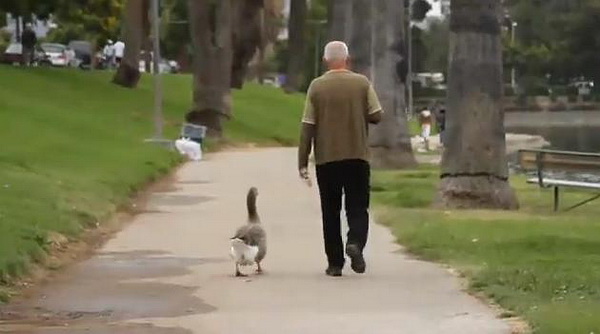
Dominic Ehrler, 65, a retired investor, befriended a goose that began following him around Echo Park ten months ago and she now meets him every day at 8 a.m.
He said: “When she first started following me around like a dog I got goose bumps,” Ehrler said. “David Foster, one of the parks people here, finally introduced me to her. He said, ‘You know you’re being stalked! Her name is Maria.’”
Maria greets Ehrler when he rides his bright red motor scooter down the hill from his Figueroa Terrace condo and then she leads him around the lake as Ehrler pulls out a bag of tortillas retrieved from a store trash bin and feeds the park’s other geese.
Ehrler said Maria is very protective and will peck and bite at strangers who come too close to him. He said their daily encounters end with him riding off on his scooter and her following closely in the air until he circles back to the park and delays her with a fence.
Ehrler said he will follow Maria if the city follows through on plans to relocate her and the park’s other geese while Echo Park is renovated.
“They’re supposed to collect the birds and truck them to another lake. I plan to follow her there, because when you have a friend like this you don’t want to lose her,” he said.
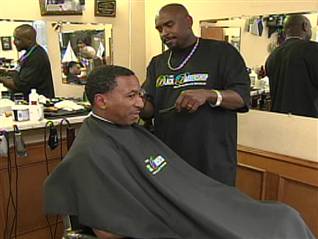
Researchers at UT Southwestern Medical Center in Dallas, Texas have found that neighborhood barbers can influence African-American men to seek blood pressure treatement.
The study participants were patrons of 17 black-owned barbershops throughout Dallas County between March 2006 and December 2008.
Eight shops gave customers traditional pamphlets about hypertension. In this group, the number of men who pursued medical care to control their hypertension increased from 40 percent at the start of the study to 51 percent at follow-up.
Nine shops put up posters with messages from other male clients about hypertension, checked patrons’ blood pressure and encouraged the men to see a physician if their numbers were elevated. In this group, the number of men who controlled their hypertension increased from 33.8 percent at the start of the study to 53.7 percent at follow-up. .
This fascinating one hour HBO documentary illustrates a typical day in the life of a successful community barbershop on Harlem’s 125th street, showing the vital role community barbershops play in facilitating dicussion on a wide variety of important issues, including health care: http://www.hbo.com/documentaries/cutting-edge/index.html
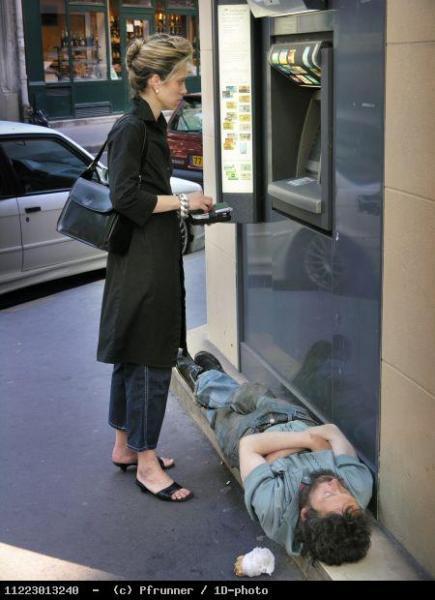
Long considered an innate cornerstone of human behavior, a recent study demonstrates that empathy levels in the U.S. have been declining over the past 3 decades.





 It's Interesting