A new craze is sweeping Japan that involves underwear, a promise to burn calories and a mesmerizing infomercial to back it all up.
Introducing MXP Calorie Shaper Pants, the shiny boxer briefs that hold claim to a revolutionary technology that purportedly enables users to burn extra calories by simply wearing them around.
The makers of these “Calorie Shapers” say their product is built with “honeycomb spring,” a special resin coating, that adds resistance while you walk, thus allegedly increasing the number of calories you burn.
Priced at $32 per pair and holding out the promise to lose weight with no effort, it seems the spandex biker short-like product would sell itself.
The “Calorie Shaper” is being pitched across Japan with an infomercial that looks like a 1980s flashback, complete with choreographed dance routines – in the park, on the street and in the office – and all.
In Japan, where the obesity rate is just 5 percent but alarm-raising headlines have spurred citizens’ concerns, the infomercial has worked and the product is a best-seller.
A 23-year-old British man died from what the coroner said was a dangerous dose of caffeine, according to British media reports.
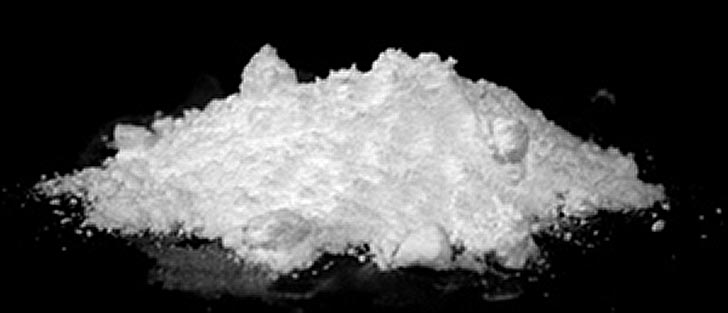
Information from the coroner’s inquest revealed that Michael Lee Bedford ingested two spoonfuls of pure caffeine powder that he washed down with an energy drink. Coroner Dr. Nigel Chapman said the dose Bedford consumed was equivalent to 70 cans of Red Bull.
“This should serve as a warning that caffeine is so freely available on the Internet but so lethal if the wrong dosage is taken,” Chapman said at the inquest.
A warning label on the product said only one-sixteenth of a teaspoon should be taken, but Bedford far exceeded that amount.
“He wasn’t doing anything wrong, it was just the danger of the dose he took,” said Chapman.
Though toxicologists in the U.S. say they’re not aware of any cases of people overdosing on caffeine powder, they say that caffeine overdoses are on the rise thanks in large part to the wide availability of caffeine-loaded energy drinks. They believe that increased consumption of these drinks can lead to caffeine abuse, which can lead to significant illness, injury and even death.
“It’s already a big problem,” said Bruce Goldberger, professor and director of toxicology at the University of Florida College of Medicine. “we’re a chemical-based society, because so many of us rely on psychotropic drugs to get by every day.”
“We’re seeing a lot more of it, and one of the reasons is, it’s difficult to figure out how much stimulant is in some of these products,” said Dr. Robert Hendrickson, medical toxicologist and emergency physician at Oregon Health and Science University in Portland.
Hendrickson explained that there may be other ingredients in many energy drinks and supplements, such as taurine and guarana, that also have caffeine in them, but there’s no indication of how much caffeine they contain.
Experts say there’s been a rise in the number of caffeine-related illnesses because more and more people are taking caffeine for a variety of reasons.
“Students are using it for studying, people are using it to try and stay awake and participate in late night social activities,” said Dr. Richard Clark, director of medical toxicology at UCSD Medical Center in San Diego, Calif.
Medical experts agree that the amount of caffeine that led to Bedford’s death is clearly fatal, and they can only speculate about why someone would choose to ingest that much caffeine.
“It’s a stimulant, so if you’re looking for a stimulant high, caffeine is perceived to be a lot safer,” said Hendrickson.
They aren’t sure how much caffeine is considered life-threatening, although they say there are ways to tell when you’ve reached the caffeine breaking point.
“Caffeine increases our heart rate and our blood pressure and in some people, their degree of anxiety,” said Goldberger.
“[You can also] develop a tremor and feel restless,” Clark added.
When people start to experience these symptoms, it’s a sure sign they’ve had too much caffeine. With extremely high doses, people may start to experience a rapid and irregular heart beat and may eventually have seizures. Death can occur within hours.
“In a life-threatening situation, it’s not unlike the effects of other well-known stimulants like cocaine and amphetamine,” said Goldberger.
Despite the dangers of very high doses of caffeine, studies have shown that caffeine can offer some benefits in small doses.
“We’re seeing a lot more of it, and one of the reasons is, it’s difficult to figure out how much stimulant is in some of these products,” said Dr. Robert Hendrickson, medical toxicologist and emergency physician at Oregon Health and Science University in Portland.
Hendrickson explained that there may be other ingredients in many energy drinks and supplements, such as taurine and guarana, that also have caffeine in them, but there’s no indication of how much caffeine they contain.
Experts say there’s been a rise in the number of caffeine-related illnesses because more and more people are taking caffeine for a variety of reasons.
“Students are using it for studying, people are using it to try and stay awake and participate in late night social activities,” said Dr. Richard Clark, director of medical toxicology at UCSD Medical Center in San Diego, Calif.
Medical experts agree that the amount of caffeine that led to Bedford’s death is clearly fatal, and they can only speculate about why someone would choose to ingest that much caffeine.
“It’s a stimulant, so if you’re looking for a stimulant high, caffeine is perceived to be a lot safer,” said Hendrickson.
They aren’t sure how much caffeine is considered life-threatening, although they say there are ways to tell when you’ve reached the caffeine breaking point.
“Caffeine increases our heart rate and our blood pressure and in some people, their degree of anxiety,” said Goldberger.
“[You can also] develop a tremor and feel restless,” Clark added.
When people start to experience these symptoms, it’s a sure sign they’ve had too much caffeine. With extremely high doses, people may start to experience a rapid and irregular heart beat and may eventually have seizures. Death can occur within hours.
“In a life-threatening situation, it’s not unlike the effects of other well-known stimulants like cocaine and amphetamine,” said Goldberger.
Despite the dangers of very high doses of caffeine, studies have shown that caffeine can offer some benefits in small doses.
Even if a person suffers no ill effects from consuming an energy drink, experts advise they should not be consumed regularly or over a long period of time because of all the unknowns.
They also urge people to consume any caffeinated foods and drinks in moderation.
“There is no recommended amount, so the key is to know your body and how caffeine affects it,” said Goldberger.
Experts also expressed concern over the growing trend of mixing alcohol and caffeine. This combination can be dangerous, as one recent incident showed.
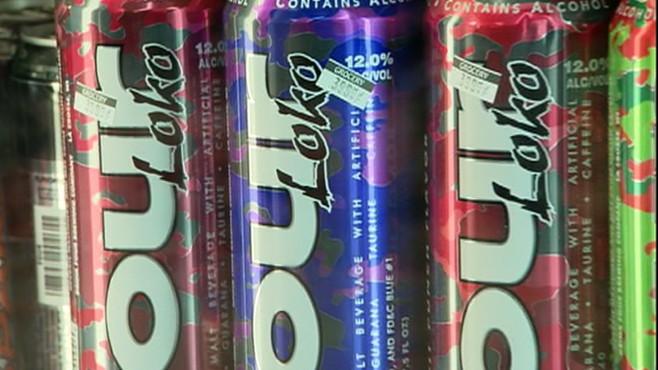
A group of Central Washington University students became extremely ill after drinking Four Loko, a legal beverage that’s a mix of alcohol and caffeine. Another popular drink is a mixture of Red Bull and vodka.
“Some folks think they can drive better by mixing caffeine with alcohol, but no study confirms that,” said Clark. “Believing you can go drive this way has all kinds of problems associated with it.”
The family of Michael Bedford also has a strong message about the dangers of products like the caffeine powder that led to his death.
“I feel like it should be banned,” his grandmother told British media outlets.
“I think there should be a warning on it saying it can kill,” his aunt said.
Most people being treated for heart disease can safely have sex, according to research that also suggests the risk of sudden cardiac death may rise for men when the amorous activity occurs during an extramarital affair.
Having sex is linked with less than 1 percent of all heart attacks and less than 5 percent of incidences of chest pain, the American Heart Association reported today. More than 27 million Americans have heart disease and it is the leading cause of death in the U.S., according to the Centers for Disease Control and Prevention.
The act of intercourse is generally comparable to climbing two flights of stairs, said Glenn Levine, a professor of medicine at Baylor College of Medicine in Houston and the paper’s lead author. The scientific statement, published in the Dallas-based heart organization’s journal, Circulation, may provide a road map for doctors to counsel patients, Levine said.
Levine’s research group reviewed more than 100 studies to determine the risks. In autopsy reports of 5,559 cases of sudden death, 0.6 percent occurred during sexual intercourse, they found. Of those who died, 82 percent to 93 percent were men and 75 percent were having extramarital sex, in most cases with a younger partner and after excessive food and alcohol consumption, the report said.
Armed with the prerequisite beards, presents and red bags, the Father Christmases demonstrate their martial arts skills at a shopping centre in South Korea.
Christmas may still be weeks away but security guards in Seoul, South Korea were happy to dress up and spread some festive cheer with their humourous display.
Christmas is a major holiday in the country, home to one of Asia’s largest Christian populations.
Kim Young-mok, director of the Safety and Security team, said the guards donned the Father Christmas outfits and handed out sweets around the shopping centre just to make their customers happy.
The floor of a Weight Watchers clinic in Sweden collapsed beneath a group of 20 members of the weight loss program who were gathered for a meeting.
The floor beneath them in the clinic in Växjö, in south-central Sweden, began to rumble, according to a report in The Local, Sweden’s English-language newspaper.
“We suddenly heard a huge thud; we almost thought it was an earthquake and everything flew up in the air.
“The floor collapsed in one corner of the room and along the walls,” one Weight Watchers participant told the Smålandsposten newspaper.
Soon, the fault lines spread around the room, and other sections of the floor gave way.
Luckily, all of the dieters escaped uninjured and managed to move the scales to the corridor, which was not damaged in the accident, and were able to complete their weekly weigh in.
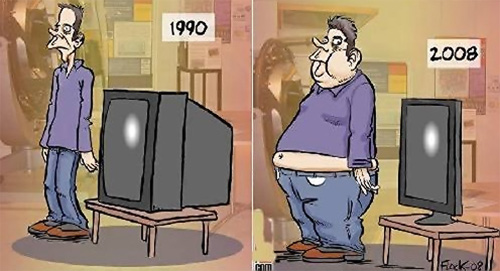
New research shows that there is a correlation between the amount of time you spend in front of the TV and how long you live.
A study by researchers at the University of Queensland has concluded that, for every hour of television watched after the age of 25, the average human lifespan drops by 22 minutes.
A study in the journal Archives of Neurology suggests that intranasal insulin may help with cognition and functioning in patients who have both mild and more severe dementia.
Recent research has suggested that insulin plays an important role in a number of brain functions, in addition to regulating blood sugar. Insulin promotes cell repair and cell genesis, so the thinking is that it could actually modify the course of Alzheimer’s disease.
It also appears to protect against the toxic effects of beta-amyloid, the protein involved in the brain plaques associated with dementia. Insulin also prevents the formation of the toxic form of tau, a biomarker found in the cerebrospinal fluid.
The goal of this study was to supplement and normalize the insulin levels in the brain without affecting levels in the rest of the body. This was done with a device that was designed to deliver insulin through the nose to the brain without getting too much into the blood.
Patients treated with insulin were able to remember information over a period of time better than those who got placebo; in fact, performance improved 20%. They also showed an enhancement in brain glucose metabolism in some areas; those who received placebo tended to show a decline.
The treatment had the mild side effects of occasional mild headache and runny nose.
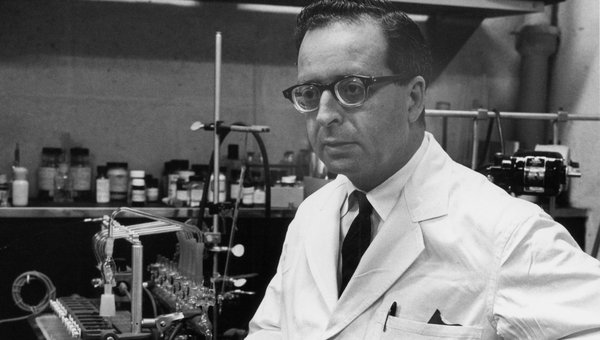
Maurice M. Rapport, a biochemist who helped isolate and name the neurotransmitter serotonin, which plays a role in regulating mood and mental states, and who first described its molecular structure, a development that led to the creation of a wide variety of psychiatric and other drugs, died on Aug. 18 in Durham, N.C. He was 91.
New research suggests that a modified form of MDMA — more commonly known as the illegal drug ecstasy — could kill some types of blood cancer cells. Prozac and similar antidepressants may also possess similar anti-cancer potential.
It has been known that ecstasy and other psychoactive drugs can attack cancer cells, but the problem with using a drug like MDMA to fight cancer is that the dose would have to be so large, it would kill the patient.
“That’s obviously not a very good treatment,” says John Gordon, a professor of cellular immunology at the University of Birmingham in the U.K., explaining that knowing the toxic dose gave his team a place to start when “redesigning the designer drug.”
Gordon and colleagues have developed analogues of MDMA — one that’s 100 times more powerful against lymphoma cells than MDMA and another that’s 1,000 times stronger. The experimental compounds are designed to reduce toxicity to brain cells — and possibly, therefore, the high — while increasing effectiveness against cancer cells.
The researchers say that in lab tests, the chemically engineered compounds were attracted to the fats in the cell walls of blood-cancer cells, including leukemia, lymphoma and myeloma. That made it easier for the compounds to get into cancer cells and kill them.
Reporting in an early online publication of the Journal of the American Medical Association and at the European Society of Cardiology Congress, Johan Arnlov and his colleagues say that a certain enzyme that is measured in the blood may be linked to both heart disease and cancer, and therefore could serve as an early predictor of who is mostly likely to die from these diseases.
In the study, which involved nearly 2,000 people enrolled in two separate long-term trials, Arnlov’s team measured the levels of cathepsin S, an enzyme involved in breaking up proteins. They then tracked these volunteers for up to 12.5 years, and found that those with the highest levels of cathepsin S were more likely to die than those with lower, or about half those levels.







 It's Interesting