Kids get ‘Smog-Day’ off from school in Chinese city

China Pollution

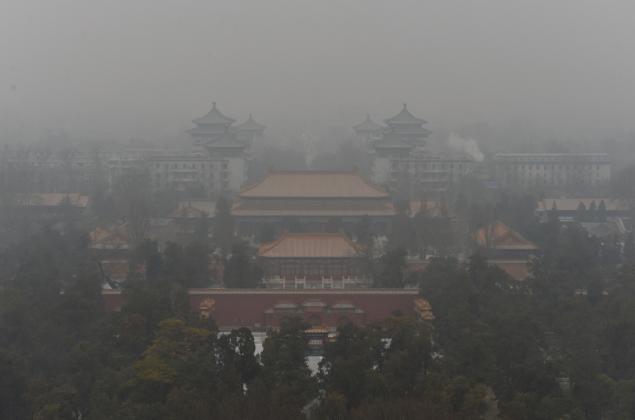
Winter is coming, that’s for sure. The northeastern city of Harbin today ushered in the season with smog so thick that visibility was reportedly limited to 10 meters in places. Classes were canceled, roads closed, and planes grounded.

State media said the PM 2.5 reading (which measures the level of harmful particulate matter in the air) “exceeded” 500. A Reuters report put the figure at 1000, or 40 times higher than what the World Health Organization deems safe. Photographs from the city show air so murky it would be easy to mistake Monday morning for deep, dark night.

The shutdown in Harbin is sure to worry residents of northern China as the region heads into what promises to be another long, dirty winter. China’s northeast is plagued year-round by air pollution, the result of factory emissions and massive growth in the number of vehicles on the road. Things get worse, however, when the heaters crank up, increasing the amount of coal that gets burned. Harbin’s current smog comes the day after the city turned on its heaters.

It’s not the first time bad air has brought a Chinese city to a halt. Last year, Beijing was gripped by a weeks-long airpocalypse that sent families scrambling for cover and bolstered sales of face masks and air-purifiers. By choking the nation’s capital in its embrace, that haze helped put pollution on the national agenda, with officials finally recognizing, and promising to address, the problem.

But there’s no easy fix. In September, Beijing unveiled a new blueprint for improving the air by 2017. China will need to spend nearly 5 trillion yuan, or $817 billion to fight pollution, said a spokesman for the Beijing Municipal Bureau of Environmental Protection, with $163 billion of that spent in the capital alone. Last week, as the air turned cold and the pollution spiked, officials announced a set of color-coded emergency measures for bad pollution days. A red alert for toxic air? Sure, that could work. If you can see it through the smog.

Read more: http://world.time.com/2013/10/21/kids-get-smog-day-as-pollution-shuts-down-chinese-city/#ixzz2iN9aRKo0

Li-Fi – A plan to turn every lightbulb into an ultra-fast alternative to Wi-Fi

lifi-thing2

Current wireless networks have a problem: The more popular they become, the slower they are. Researchers at Fudan University in Shanghai have just become the latest to demonstrate a technology that transmits data as light instead of radio waves, which gets around the congestion issue and could be ten times faster than traditional Wi-Fi.

In dense urban areas, the range within which Wi-Fi signals are transmitted is increasingly crowded with noise—mostly, other Wi-Fi signals. What’s more, the physics of electromagnetic waves sets an upper limit to the bandwidth of traditional Wi-Fi. The short version: you can only transmit so much data at a given frequency. The lower the frequency of the wave, the less it can transmit.

But what if you could transmit data using waves of much higher frequencies, and without needing a spectrum license from your country’s telecoms regulator? Light, like radio, is an electromagnetic wave, but it has about 100,000 times the frequency of a Wi-Fi signal, and nobody needs a license to make a light bulb. All you need is a way to make its brightness flicker very rapidly and accurately so it can carry a signal.

The idea sounds daft: Who would want to sit under a flickering bulb? But Li-Fi, a standard proposed just two years ago, is seeing rapid technological progress.
First, data are transmitted to an LED light bulb—it could be the one illuminating the room in which you’re sitting now. Then the lightbulb is flicked on and off very quickly, up to billions of times per second. That flicker is so fast that the human eye cannot perceive it. (For comparison, the average energy-saving compact fluorescent bulb already flickers between 10,000 and 40,000 times per second.) Then a receiver on a computer or mobile device—basically, a little camera that can see visible light—decodes that flickering into data. LED bulbs can be flicked on and off quickly enough to transmit data around ten times as fast the fastest Wi-Fi networks. (If they could be manipulated faster, the bandwidth would be even higher.)

Li-Fi has one big drawback compared to Wi-Fi: you, or rather your device, need to be within sight of the bulb. It wouldn’t necessarily need to be a special bulb; in principle, overhead lights at work or at home could be wired to the internet. But it would mean that, unlike with Wi-Fi, you couldn’t go into the next room unless there were wired bulbs there too.

However, a new generation of ultrafast Wi-Fi devices that we’re likely to start using soon face a similar limitation. They use a higher range of radio frequencies, which aren’t as crowded with other signals (at least for now), and have a higher bandwidth, but, like visible light, cannot penetrate walls.

Engineers and a handful of startups, like Oledcomm, have been experimenting with Li-Fi technology. The Fudan University team unveiled an experimental Li-Fi network in which four PCs were all connected to the same light bulb. Other researchers are working on transmitting data via different colors of LED lights—imagine, for example, transmitting different signals through each of the the red, green and blue LEDs inside a multi-colored LED light bulb.

Because of its limitations, Li-Fi won’t do away with other wireless networks. But it could supplement them in congested areas, and replace them in places where radio signals need to be kept to a minimum, like hospitals, or where they don’t work, such as underwater.

http://qz.com/137221/a-plan-to-turn-every-lightbulb-into-an-ultra-fast-alternative-to-wi-fi/#

Sprite Shortens Duration Of Alcohol’s Damaging Metabolic Process

sprite_620x350

Chinese researchers have found that Sprite may actually be one of the best options for getting over a hangover.

Rather than focusing on a cure, researchers at Sun Yat-Sen University in Guangzhou looked at how a hangover could be prevented before it even started. To do this, they looked at the metabolic processes that the body goes through when drinking alcohol. First, the ethanol in alcoholic drinks gets metabolized by an enzyme known as alcohol dehydrogenase (ADH) into acetaldehyde. Acetaldehyde is believed to be the real cause of alcohol-related effects, including hangovers. It’s then metabolized into acetate by the enzyme aldehyde dehydrogenase (ALDH). Contrary to acetaldehyde’s effects, acetate could be responsible for some of alcohol’s health benefits, the researchers said.

Knowing these processes, the researchers tested 57 different drinks, including herbal infusions, teas, and carbonated beverages, and gauged their effects on ADH and ALDH. They found that every drink had a different effect. For example, an herbal infusion with huo ma ren seeds, also known as hemp seeds, increased the ADH process and inhibited the ALDH process, meaning that the adverse effects of drinking would linger for a longer time. Conversely, Sprite, known as Xue bi, was among the drinks that increased the ALDH process, causing acetaldehyde to break down at a faster pace, and reducing the duration of alcohol-related effects on the body.

“These results are a reminder that herbal and other supplements can have pharmacological activities that both harm and benefit our health,” Edzard Ernst, an expert in medicinal science at the University of Exeter in the U.K., told Chemistry World about the study. But he also noted that the tests should be done over, in living organisms, before the tests are regarded as conclusive. The researchers plan to do this next.

Sprite is also a more reasonable “cure” for the hangover. One recent fad had people drinking Pedialyte, the baby formula, in hopes of replacing lost vitamins and minerals from drinking. Still, going even further, some Vietnamese millionaires felt that the keratin in rhinoceros horns, which costs as much as gold per ounce, was the answer to their morning-after woes.

Source: Li S, Gan L, Li S, et al. Effects of Herbal Infusion, Tea and Carbonated Beverage on Alcohol Dehydrogenase and Aldehyde Dehydrogenase Activities. Food & Function. 2013.

http://www.medicaldaily.com/sprite-could-cure-your-hangover-beverage-shortens-duration-alcohols-damaging-metabolic-process

Chinese doctor builds new nose on forehead

nose

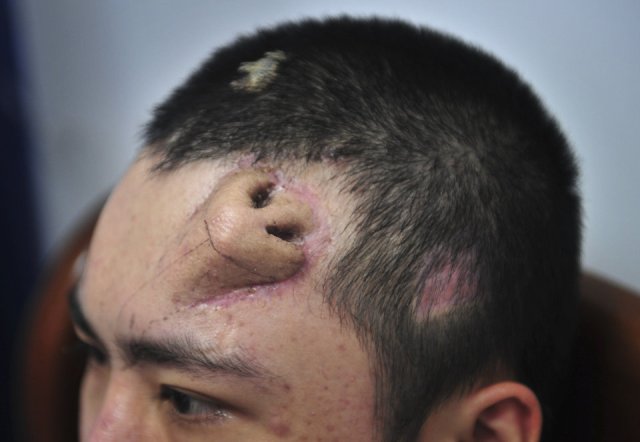
A surgeon in China says he has constructed an extra nose out of a man’s rib cartilage and implanted it under the skin of his forehead to prepare for a transplant in probably the first operation of its kind.

Surgeon Guo Zhihui at Fujian Medical University Union Hospital in China’s southeastern province of Fujian spent nine months cultivating the graft for a 22-year-old man whose nose was damaged.

The striking images of the implant — with the nostril section facing diagonally upward on the left side of the man’s forehead — drew widespread publicity after they began to circulate in Chinese media this week. Guo plans to cut the nose from the forehead while leaving a section of skin still connected, and then rotate and graft it into position in a later operation.

“We were just interested in helping the man and did not expect it would stir up this much attention,” Guo said in an interview Friday with The Associated Press.

Surgeons previously have used cartilage to help rebuild noses in their proper position and are experimenting with growing new ones from stem cells on other parts of the body, such as a forearm. But this was the first known case of building a nose on a forehead.

Alexander Seifalian, a professor of nanotechnology and regenerative medicine at University College London who has worked on transplants using stem cells, said implanting the nose graft in the forehead makes sense because the skin there has the same “structure and texture” as that of a nose.

However, he said it was unclear why the Chinese team built the nose on the forehead rather than in its proper position. A nose graft grown from stem cells would be prepared on another body part first, but this operation is using existing cartilage, Seifalian said.

“They could have made the nose and just put it on the nose, not in the forehead,” Seifalian said. “I don’t know why they put it there.”

However, Seifalian noted that he had not seen any scientific information on the Chinese operation and was just going by media reports.

The patient lost part of his nose in an accident in August 2012 and did not immediately have any reconstruction surgery because he couldn’t afford it, Guo said. An infection later ate away much of his nose cartilage, he said.

Guo said his team examined what remained of the nose and concluded there would be little chance of viably grafting cartilage there, instead building the nose on the forehead. When the new nose is rotated into position and grafted, it will at first have its own blood supply from links to the forehead, before developing new blood vessels. Later surgery will smooth out all of the skin.

The team first expanded skin on the man’s forehead for more than three months before using rib cartilage to build the nose bridge. Lastly, Guo’s team built the nostrils.

“We sculpted the nose three-dimensionally, like carpenters,” he said.

http://news.yahoo.com/chinese-doctor-builds-nose-mans-forehead-023520476.html

Thanks to Mr. Cuomo and Kebmodee for bringing this to the attention of the It’s Interesting community.

Man tries to smuggle turtle onto plane by hiding it in a hamburger

turtle-burger-l

A man tried to smuggle his pet turtle through security in Guangzhou Baiyun International Airport by hiding it in a KFC hamburger.

The incident occurred on the morning of July 29, when a man, surnamed Li, was about to board China Southern Airlines flight 345 to Beijing, Guangzhou Daily reported. As Li passed through airport security, X-ray screening machines detected a few “odd protrusions” sticking out of a KFC burger that the man had packed in his bag.

Airport staff determined that the protrusions looked suspiciously like turtle limbs, and asked to inspect Li’s luggage.

“There’s no turtle in there, just a hamburger,” Li reportedly insisted. “There’s nothing special to see inside.”

Li finally acquiesced to an inspection after repeated requests from airport staff, who uncovered the pet turtle hidden inside the burger. When asked why he had devised this strange idea, Li said that he had only wanted to travel together with his “beloved” turtle.

After staff patiently explained that turtles could not be smuggled on board the plane, Li reluctantly agreed to allow a friend to care for his pet while he was away.

http://www.scmp.com/news/china-insider/article/1293310/man-tries-smuggle-turtle-plane-hiding-it-hamburger

Scientists in China grow soft teeth from urine

teeth2

Scientists have grown rudimentary teeth out of the most unlikely of sources, human urine.

The results, published in Cell Regeneration Journal, showed that urine could be used as a source of stem cells that in turn could be grown into tiny tooth-like structures.

The team from China hopes the technique could be developed into a way of replacing lost teeth.

Other stem cell researchers caution that that goal faces many challenges.

Teams of researchers around the world are looking for ways of growing new teeth to replace those lost with age and poor dental hygiene.

Stem cells – the master cells which can grow into any type of tissue – are a popular area of research.

The group at the Guangzhou Institutes of Biomedicine and Health used urine as the starting point.

Cells which are normally passed from the body, such as those from the lining of the body’s waterworks, are harvested in the laboratory. These collected cells are then coaxed into becoming stem cells.

A mix of these cells and other material from a mouse was implanted into the animals.

The researchers said that after three weeks the bundle of cells started to resemble a tooth: “The tooth-like structure contained dental pulp, dentin, enamel space and enamel organ.”

However, the “teeth” were not as hard as natural teeth.

This piece of research is not immediately going to lead to new options for the dentist, but the researchers say it could lead to further studies towards “the final dream of total regeneration of human teeth for clinical therapy”.

Prof Chris Mason, a stem cell scientist at University College London, said urine was a poor starting point.

“It is probably one of the worst sources, there are very few cells in the first place and the efficiency of turning them into stem cells is very low.

“You just wouldn’t do it in this way.”

He also warned that the risk of contamination, such as through bacteria, was much higher than with other sources of cells.

Prof Mason added: “The big challenge here is the teeth have got a pulp with nerve and blood vessels which have to make sure they integrate to get permanent teeth.”

http://www.bbc.co.uk/news/health-23492425

Thanks to Kebmodee for bringing this to the attention of the It’s Interesting community.

China’s white dolphins on verge of extinction due to Hong Kong construction

Chinese-White-Dolphin

China’s unique white dolphins — famous for the actual pink hue of their skin — face going from endangered to extinct — with conservationists doubtful they can be saved.

“We’ve seen alarming decline in the last decade — 158 dolphins in 2003, just 61 dolphins in 2012,” says Samuel Hung, Chairman of the Hong Kong Dolphin Conservation Society.

“We are at a critical juncture on whether we can help the dolphins,” adds Hung. “I have no idea whether they will keep going down and down — but what I do know is we need to work urgently to come up with solutions to clean up the dolphin’s habitat.”

Land reclamation for massive engineering projects, resulting water pollution and boat strikes have exacted a heavy toll on the white dolphin population, which is mainly found in the waters of Hong Kong’s Pearl River Delta in southern China.

In 2016, the first automobiles are expected to roll across the 42-kilometer Hong Kong-Zhuhai-Macau bridge, respectively connecting the Asian financial hub with the Chinese mainland’s “special economic zone” and the world’s gambling capital. Now under construction, the world’s longest cross-sea bridge and tunnel link will go “right through the heart of the dolphin population,” says Hung. “There will be lots of piling activities to construct the bridge.”

By 2023, Hong Kong aims to complete a third runway for Chep Lap Kok international airport, already one of the world’s busiest. In the absence of soil on which to build, 650 hectares of land — an area more than 5,000 Olympic-sized swimming pools — will be reclaimed from the sea. The area is also prime habitat for the Chinese white dolphin.

The Hong Kong government has also proposed four additional land reclamation projects in dolphin-populated areas that aim to increase the amount of land on which to build in order to bring down the high cost of housing, adds Hung.

Yet, despite Hong Kong’s plans for numerous engineering projects that will impact the white dolphins’ habitats, the founder of the 10-year old Hong Kong Dolphin Conservation Society says he “actually applauds” the government’s conservation efforts.

“I don’t doubt their desire to conserve,” explains Hung, who adds that the Hong Kong government has provided more than $1 million Hong Kong dollars (US$125,000) each year for environmental research funds, set up a marine protection park for the white dolphins and helped monitor dolphin population numbers.

“But it’s the other bureaus who want to push economic projects” including Hong Kong’s Airport Authority and the Civil Engineering and Development Department, says Hung.

“The economic departments are more influential so our voice for conservation work is drowned out by the voice for construction.”

http://edition.cnn.com/2013/07/19/world/china-hong-kong-white-dolphin-extinction/?hpt=hp_c2

Breast milk drinking by rich adults provokes outrage in China

breast feeding

Rich adults in south China’s Shenzhen city hiring wet nurses to drink breast milk has provoked disgust and outrage over the Chinese internet with thousands of micro blog users lashing out at this “latest game” of people who came to wealth overnight. The wet nurses are provided by an agency, which scouts for poor women who have recently given birth and would be happy with some financial support. The new mothers offer their services for a few days to weeks in a month with prices varying from $2,000 to $4,000.

“Adults (clients) can drink it directly through breastfeeding, or they can always drink it from a breast pump if they feel embarrassed,” Lin Jun, owner of a wet nurse supplying agency, Xinxinyu, was quoted in the local media as saying.

Some Chinese believe that human breast milk has some special nutritional qualities that are good for health, particularly for those who have undergone surgeries. Many Chinese web users are saying it is not just unethical but also shows the arrogance and neglect of women by the country’s wealthy.

“This adds to China’s problem of treating women as consumer goods and the moral degradation of China’s rich,” wrote Cao Baoyin, a writer and regular commentator in Chinese media, on his blog.

Reports in the media had pushed the local government in Shenzhen to suspend the business license of Xinxinyu. But this is no solution as there may be many agencies operating in the field but have not been exposed in the media, web users said.

http://articles.timesofindia.indiatimes.com/2013-07-07/china/40420509_1_wet-nurses-chinese-media-breast

China Threatens Death Penalty for Serious Polluters

china3n-4-web

china3n-2-web

Chinese authorities have given courts the powers to hand down the death penalty in serious pollution cases, state media said, as the government tries to assuage growing public anger at environmental desecration.

Chinese authorities have given courts the powers to hand down the death penalty in serious pollution cases, state media said, as the government tries to assuage growing public anger at environmental desecration.

An increasingly affluent urban population has begun to object to China’s policy of growth at all costs, which has fuelled the economy for three decades, with the environment emerging as a focus of concern and protests.

A new judicial interpretation which took effect on Wednesday would impose “harsher punishments” and tighten “lax and superficial” enforcement of the country’s environmental protection laws, the official Xinhua news agency reported.

“In the most serious cases the death penalty could be handed down,” it said.

“With more precise criteria for convictions and sentencing, the judicial explanation provides a powerful legal weapon for law enforcement, which is expected to facilitate the work of judges and tighten punishments for polluters,” Xinhua said, citing a government statement.

“All force should be mobilized to uncover law-breaking clues of environmental pollution in a timely way,” it added.

Previous promises to tackle China’s pollution crisis have had mixed results, and enforcement has been a problem at the local level, where governments often heavily rely on tax receipts from polluting industries under their jurisdiction.

Protests over pollution have unnerved the stability-obsessed ruling Communist Party.

Thousands of people took to the streets in the southwestern city of Kunming last month to protest against the planned production of a chemical at a refinery.

Severe air pollution in Beijing and large parts of northern China this winter have added to the sense of unease among the population.

Human rights groups say China executes thousands of people a year, more than all other countries combined. The death penalty is often imposed for corruption and other economic crimes.

http://www.scientificamerican.com/article.cfm?id=china-threatens-death-penalty-for-s

‘Anti-pervert’ hairy stockings in China

hairy stocking
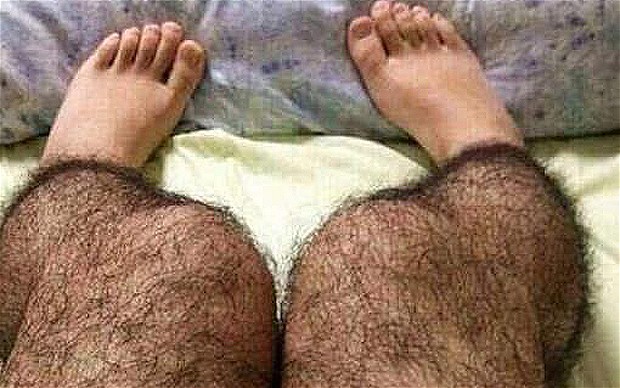
A hairy fashion accessory reportedly sold in China is said to be an unconventional tool to help ward off unwanted attention.

“Super sexy, summertime anti-pervert full-leg-of-hair stockings, essential for all young girls going out,” HappyZhangJiang posted on Sina Weibo, China’s Twitter-like microblogging site.

The picture of what appears to be a woman wearing said hairy stockings has since gone viral, but it is unclear where exactly one can purchase the leggings.

Shanghai-based blog ChinaSMACK offered a series of other Sina Weibo posts about the tights, and one user said that emulating Sasquatch could have its drawbacks.

“This will not only prevent against perverts, it’ll definitely also result in preventing handsome guys from approaching you,” the user wrote.

Read more: http://www.nydailynews.com/life-style/fashion/hairy-stocking-rage-girls-china-article-1.1375987#ixzz2WfVUGUxR