The smartphone app that can tell you’re depressed before you know it yourself

by Rachel Metz

There are about 45 million people in the US alone with a mental illness, and those illnesses and their courses of treatment can vary tremendously. But there is something most of those people have in common: a smartphone.

A startup founded in Palo Alto, California, by a trio of doctors, including the former director of the US National Institute of Mental Health, is trying to prove that our obsession with the technology in our pockets can help treat some of today’s most intractable medical problems: depression, schizophrenia, bipolar disorder, post-traumatic stress disorder, and substance abuse.

Mindstrong Health is using a smartphone app to collect measures of people’s cognition and emotional health as indicated by how they use their phones. Once a patient installs Mindstrong’s app, it monitors things like the way the person types, taps, and scrolls while using other apps. This data is encrypted and analyzed remotely using machine learning, and the results are shared with the patient and the patient’s medical provider.

The seemingly mundane minutiae of how you interact with your phone offers surprisingly important clues to your mental health, according to Mindstrong’s research—revealing, for example, a relapse of depression. With details gleaned from the app, Mindstrong says, a patient’s doctor or other care manager gets an alert when something may be amiss and can then check in with the patient by sending a message through the app (patients, too, can use it to message their care provider).

For years now, countless companies have offered everything from app-based therapy to games that help with mood and anxiety to efforts to track smartphone activities or voice and speech for signs of depression. But Mindstrong is different, because it’s considering how users’ physical interactions with the phones—not what they do, but how they do it—can point to signs of mental illness. That may lead to far more accurate ways to track these problems over time. If Mindstrong’s method works, it could be the first that manages to turn the technology in your pocket into the key to helping patients with a wide range of chronic brain disorders—and may even lead to ways to diagnose them before they start.

Digital fingerprints
Before starting Mindstrong, Paul Dagum, its founder and CEO, paid for two Bay Area–based studies to figure out whether there might be a systemic measure of cognitive ability—or disability—hidden in how we use our phones. One hundred and fifty research subjects came into a clinic and underwent a standardized neurocognitive assessment that tested things like episodic memory (how you remember events) and executive function (mental skills that include the ability to control impulses, manage time, and focus on a task)—the kinds of high-order brain functions that are weakened in people with mental illnesses.

The assessment included neuropsychological tests that have been used for decades, like a so-called timed trail-­tracing test, where you have to connect scattered letters and numbers in the proper order—a way to measure how well people can shift between tasks. People who have a brain disorder that weakens their attention may have a harder time with this.

Subjects went home with an app that measured the ways they touched their phone’s display (swipes, taps, and keyboard typing), which Dagum hoped would be an unobtrusive way to log these same kinds of behavior on a smartphone. For the next year, it ran in the background, gathering data and sending it to a remote server. Then the subjects came back for another round of neurocognitive tests.

As it turns out, the behaviors the researchers measured can tell you a lot. “There were signals in there that were measuring, correlating—predicting, in fact, not just correlating with—the neurocognitive function measures that the neuropsychologist had taken,” Dagum says.

For instance, memory problems, which are common hallmarks of brain disorders, can be spotted by looking at things including how rapidly you type and what errors you make (such as how frequently you delete characters), as well as by how fast you scroll down a list of contacts. (Mindstrong can first determine your baseline by looking at how you use your handset and combining those characteristics with general measures.) Even when you’re just using the smartphone’s keyboard, Dagum says, you’re switching your attention from one task to another all the time—for example, when you’re inserting punctuation into a sentence.

He became convinced the connections presented a new way to investigate human cognition and behavior over time, in a way that simply isn’t possible with typical treatment like regularly visiting a therapist or getting a new medication, taking it for a month, and then checking back in with a doctor. Brain-disorder treatment has stalled in part because doctors simply don’t know that someone’s having trouble until it’s well advanced; Dagum believes Mindstrong can figure it out much sooner and keep an eye on it 24 hours a day.

In 2016, Dagum visited Verily, Alphabet’s life sciences company, where he pitched his work to a group including Tom Insel, a psychiatrist who had spent 13 years as director of the National Institute of Mental Health before he joined Verily in 2015.

Verily was trying to figure out how to use phones to learn about depression or other mental health conditions. But Insel says that at first, what Dagum presented—more a concept than a show of actual data—didn’t seem like a big deal. “The bells didn’t go off about what he had done,” he says.

Over several meetings, however, Insel realized that Dagum could do something he believed nobody in the field of mental health had yet been able to accomplish. He had figured out smartphone signals that correlated strongly with a person’s cognitive performance—the kind of thing usually possible only through those lengthy lab tests. What’s more, he was collecting these signals for days, weeks, and months on end, making it possible, in essence, to look at a person’s brain function continuously and objectively. “It’s like having a continuous glucose monitor in the world of diabetes,” Insel says.

Why should anyone believe that what Mindstrong is doing can actually work? Dagum says that thousands of people are using the app, and the company now has five years of clinical study data to confirm its science and technology. It is continuing to perform numerous studies, and this past March it began working with patients and doctors in clinics.

In its current form, the Mindstrong app that patients see is fairly sparse. There’s a graph that updates daily with five different signals collected from your smartphone swipes and taps. Four of these signals are measures of cognition that are tightly tied to mood disorders (such as the ability to make goal-based decisions), and the other measures emotions. There’s also an option to chat with a clinician.

For now, Insel says, the company is working mainly with seriously ill people who are at risk of relapse for problems like depression, schizophrenia, and substance abuse. “This is meant for the most severely disabled people, who are really needing some innovation,” he says. “There are people who are high utilizers of health care and they’re not getting the benefits, so we’ve got to figure out some way to get them something that works better.” Actually predicting that a patient is headed toward a downward spiral is a harder task, but Dagum believes that having more people using the app over time will help cement patterns in the data.

There are thorny issues to consider, of course. Privacy, for one: while Mindstrong says it protects users’ data, collecting such data at all could be a scary prospect for many of the people it aims to help. Companies may be interested in, say, including it as part of an employee wellness plan, but most of us wouldn’t want our employers anywhere near our mental health data, no matter how well protected it may be.

Spotting problems before they start
A study in the works at the University of Michigan is looking at whether Mindstrong may be beneficial for people who do not have a mental illness but do have a high risk for depression and suicide. Led by Srijan Sen, a professor of psychiatry and neuroscience, the study tracks the moods of first-year doctors across the country—a group that is known to experience intense stress, frequent sleep deprivation, and very high rates of depression.

Participants log their mood each day and wear a Fitbit activity tracker to log sleep, activity, and heart-rate data. About 1,500 of the 2,000 participants also let a Mindstrong keyboard app run on their smartphones to collect data about the ways they type and figure out how their cognition changes throughout the year.

Sen hypothesizes that people’s memory patterns and thinking speed change in subtle ways before they realize they’re depressed. But he says he doesn’t know how long that lag will be, or what cognitive patterns will be predictive of depression.

Insel also believes Mindstrong may lead to more precise diagnoses than today’s often broadly defined mental health disorders. Right now, for instance, two people with a diagnosis of major depressive disorder might share just one of numerous symptoms: they could both feel depressed, but one might feel like sleeping all the time, while the other is hardly sleeping at all. We don’t know how many different illnesses are in the category of depression, Insel says. But over time Mindstrong may be able to use patient data to find out. The company is exploring how learning more about these distinctions might make it possible to tailor drug prescriptions for more effective treatment.

Insel says it’s not yet known if there are specific digital markers of, say, auditory hallucinations that someone with schizophrenia might experience, and the company is still working on how to predict future problems like post-traumatic stress disorder. But he is confident that the phone will be the key to figuring it out discreetly. “We want to be able to do this in a way that just fits into somebody’s regular life,” he says.


https://www.technologyreview.com/s/612266/the-smartphone-app-that-can-tell-youre-depressed-before-you-know-it-yourself/

New Hearing Aid Includes Fitness Tracking, Language Translation

new-hearing-aid-includes-fitness-tracking-language-translation-309458
Starkey Hearing Technologies recently unveiled their latest hearing aid, the Livio AI. The aid leverages artificially intelligent software to adapt to users’ listening environments. Starkey says the device does a lot more than just assist in hearing, and includes a range of additional technology, such as a physical activity tracker and integrated language translation.

Hearing loss has a disabling effect on 466 million people worldwide, including over 7 million children under 5 years old. Modern hearing aids already include some pretty sophisticated connectivity, including Bluetooth and internet functionality. The Livio device, however, goes quite a few steps further, and capitalizes on the current craze for fitness devices by including a host of health-minded integrations.

The Future is Hear
Launched August 27 at an event at Starkey’s Minnesota HQ, the Livio contains advances which the Starkey CTO Achin Bhowmik was keen to compare to those seen in the phone market over the last twenty years. The eponymous “artificial intelligence” aspect of the device includes the ability to detect the location and environment in which the user is wearing the aid and optimize the listening experience based on this information. This is, arguably, not the most eye-catching (ear-catching?) feature of the Livio – such capabilities have been advertised in other hearing aid technology.

Rather the Livio’s integration of inertial sensors is its main party trick – this enables it to count physical activity much like other fitness devices. It can count your steps and exercise, and cleverly integrates this with a “brain health” measurement to derive a mind and body health score. The brain health measurement is partly calculated from how much you wear the device, and while it’s arguable whether simply wearing a hearing aid represents training your brain, another component that increases its users’ score when they interact with different people in different environments sounds like a neat way to check on the social health of elderly users. Furthermore, the inertia sensor can detect whether a wearer has fallen, which Bhowmik was keen to point out is a major health hazard for older people.

The translation software is also a major draw, and the promise of sci-fi level language conversion, covering 27 languages, shows Starkey are aiming to bring the multi-billion-dollar hearing aid industry into the future.

As for whether the device can meet these lofty promises, you’ll simply have to keep an eye (and er, ear) out to see if the Livio performs as well as Starkey hope.

Vaitheki Maheswaran, Audiology Specialist for UK-based charity Action on Hearing Loss, said: “The innovation in technology is interesting, not only enabling users to hear better but to monitor their body and mental fitness with the use of an app. However, while this technology is not currently available in the UK, it is important to speak to an audiologist who can help you in choosing the most suitable type of hearing aid for your needs because one type of hearing aid is not suitable for everyone.”

https://www.technologynetworks.com/informatics/news/new-hearing-aid-includes-fitness-tracking-language-translation-309458?utm_campaign=Sanjay%20September%20Import&utm_source=hs_email&utm_medium=email&utm_content=65893142&_hsenc=p2ANqtz-_CC9W1Y_evlwrgOG0GdRhfYJ_mOHrGxnEpu1HE6y-7cm33CbRDTUVa6V0mxPwdOreS8vfPP4WXVAlEOoHebb4_S9KOxA&_hsmi=65893142

system_001_launch_4-8c0ffa987ec559156057b8fd87e8dbedae09acfe-s800-c85
A nearly 2,000-foot-long tube is towed offshore from San Francisco Bay on Saturday. It’s a giant garbage collector and the brainchild of 24-year-old Boyan Slat, who aims to remove 90 percent of ocean plastic by 2040.

by LAUREL WAMSLEY

We humans have deposited a huge amount of plastic in Earth’s waters. There are now five garbage-filled gyres in the world’s oceans — the largest and most notorious being the Great Pacific Garbage Patch, with its estimated 1.8 trillion pieces of plastic, spread across an area twice the size of Texas.

One of the people trying to figure out how to clean up the ocean is Boyan Slat, a 24-year-old Dutch social entrepreneur who has been working to invent a solution since he was 17. His idea — for a giant floating system that would corral the plastic so it can be scooped out — is on the verge of reality.

He founded a nonprofit called The Ocean Cleanup and picked up a major environmental award from the United Nations along the way. Tech investors including Peter Thiel and Marc Benioff got behind his go-big ethos; a reported $35 million total has been raised.

On Saturday, a vessel that usually tows oil rigs instead towed Slat’s giant garbage-catcher some 300 miles offshore from San Francisco Bay. For two weeks, engineers will monitor how the system handles the battering waves in the Pacific before towing it 1,100 more miles to the patch.

The system’s centerpiece is a nearly 2,000-foot-long plastic tube with a 10-foot skirt attached beneath, forming a U-shaped barrier designed to be propelled by wind and waves. Its aim is to collect plastic as it floats — and then every few months, a support vessel would come by to retrieve the plastic, like an oceanic garbage truck. The plastic would then be transported back to land for recycling.

If it works, The Ocean Cleanup plans to deploy a fleet of 60 such devices, which the group projects can remove half the plastic in the Great Pacific Garbage Patch in five years’ time.

But will it actually work? Slat doesn’t know.

His team has changed its concept over time, switching from a moored system to a drifting one, in order to act more like the plastic it’s trying to catch. They tested a prototype on the North Sea but say the Pacific will be the real challenge.

“We believe that every risk that we can eliminate in advance we have been able to eliminate,” he said in a video prior to Saturday’s launch. “But that doesn’t mean that all risks have been eliminated. Truly, the only way to prove that we can rid the oceans of plastic is to actually go out there and deploy the world’s first ocean-cleaning system.”

The Ocean Cleanup hopes to reduce the amount of plastics in the world’s oceans by at least 90 percent by 2040. But many experts on plastic pollution have expressed concerns about whether the project will be effective.

For one thing, most of the plastic that ends up in the ocean doesn’t end up in these garbage gyres.

“Based on the latest math, we think that about 8 million metric tons of plastic is flowing in to the ocean from land around the world,” says George Leonard, chief scientist at Ocean Conservancy. And he says that only around 3 percent to 5 percent of that total amount of plastic actually winds up in the gyres.

“So if you want to clean up the ocean,” Leonard says, “it may in fact be that the open ocean is not the place to look.”

Part of the issue is that not all plastic is buoyant. A lot of it sinks immediately — and thus won’t be captured by this floating boom, said Eben Schwartz, marine debris program manager for the California Coastal Commission.

“It would be wonderful if we can clean up the surface of the gyre, but since so much more of the trash in the ocean actually doesn’t end up on the surface of the gyre, it’s even more critical that we address where it’s coming from and try to stop it at its source,” Schwartz recently told NPR’s Here and Now.

Then there’s the question of whether the project might cause unintended environmental consequences. Specifically: Can you capture plastics without ensnaring marine life?

“We know from the fishing industry that if you put any kind of structure in the open ocean, it will attract a whole community of animals, both large and small, to that particular piece of structure,” Leonard says.

Fishermen sometimes create fish aggregating devices (FADs) that intentionally create little floating ecosystems to attract fish. “There’s a worry that this could become a very large FAD and attract a whole number of larger fish and marine mammals and seabirds that might be impacted by it,” he says.

Plus, The Ocean Cleanup’s system is made of high-density polyethylene, a kind of plastic. So, what if it becomes part of the problem it’s trying to solve?

“I sort of wonder what kinds of microplastics this thing is going to be generating on its own, assuming that it’s even functioning exactly as designed,” oceanographer Kara Lavender Law of the Sea Education Association told Wired. And if the boom gets busted in a big storm, well: “If it’s shedding nano-size particles and then gets smashed into 200-meter-long pieces, you’re really covering the whole size range there.”

And then there’s the worry that a big, expensive project like The Ocean Cleanup diverts money and attention away from other efforts that are known to be effective — such as waste management policies to keep the garbage from getting into the ocean in the first place.

A 2015 study found that China, Indonesia, the Philippines, Vietnam, Sri Lanka and Thailand were the leading sources of plastic waste in the world’s oceans.

“The science points to about a half a dozen countries in Southeast Asia which are rapidly developing economies that are heavily reliant on plastic, and lack the kind of waste management infrastructure that I think many of us in the U.S. take for granted,” Leonard says.

He points to one low-tech way to help fight plastics in the ocean: Pick up trash in your own local waterways. His organization’s annual International Coastal Cleanup takes place Sept. 15, when he says nearly a million people are expected to work to remove some 20 million pounds of trash from beaches and waterways around the world.

Leonard says the Ocean Conservancy is skeptical that the giant trash collector will work, “but we’re being enthusiastic, and we hope it does.”

“The ocean really needs all the help it can get.”

https://www.npr.org/2018/09/11/646724291/a-massive-floating-boom-is-supposed-to-clean-up-the-pacific-can-it-work

New ‘Floating Backpack’ Tech Promises to Reduce Fatigue on Humps

lightning-pack-1200

Lightning Packs, LLC has created what could be a ground-breaking new pack-frame design that appears to float while being carried, reducing fatigue. It may even generate power, the makers say.

“Our ergonomic backpacks use an innovative pulley system to reduce impact forces on the user by 80 to 90 [percent], which reduces exertion and injury,” according to the Lightning Packs website.

Lightning Packs founder and pack inventor Lawrence Rome is a muscle physiology expert, according to the company’s website. He also teached at the University of Pennsylvania.

“We first designed, built under contract, and delivered a series of ergonomic and electricity-generating backpacks for personnel of the United States Army and Marine Corps. The ergonomic benefits of our design have been field-tested and approved by soldiers themselves,” the website states.

The Army’s Communications-Electronics Research Development and Engineering Center put out a brief video in 2015 to showcase the new pack frame technology.

Yakira Howarth, of CERDEC’S Command, Power and Integration Directorate, said in the video that the frame “generates electricity through rotary motion that we can capture and use to trickle-charge any batteries or electronics that they have on them.”

“Our aim is for a net-zero soldier which means that whatever he is powering that is on him will be powered by what he is carrying on him at the same time,” she continued. “We are supporting tactical power for the small unit so we are continually gathering data and feedback from soldiers so that we can continue to improve the wearability of this working prototype.”

It’s unclear if the Army is still looking at the technology.

Lightning Packs now plans to market its new ergonomic backpack, the “Hoverglide,” on the commercial market, using Kickstarter.com to raise funding.

Using Suspended Load Technology, or SLT, the frame slides up and down as the weared walks to reduce “the accelerative forces that cause injuries and reduce mobility,” according to the website.

“The pack reduces the metabolic energy requirement by 40-80 watts, allowing a wearer to carry 8-12 extra pounds ‘for free,'” the website states.

The Hoverglide will be offered in several models for backpacking, commuting and light hiking. There will also be a tactical model which is about the size of a standard daypack or assault pack, according to the review website Hot-Newtech.

“Our company is ready to produce a pack that enables quicker, easier travel while reducing back pain and injury, [and] with your help, we can make that happen,” the Lighting Packs website states.

https://www.military.com/kitup/2018/08/23/new-floating-backpack-tech-promises-reduce-fatigue-humps.html

Military researchers think spider silk may keep US troops lighter and cooler in combat

The silk spiders produce is tougher than Kevlar and more flexible than nylon, and Air Force researchers think it could it could be key to creating new materials that take the load and heat off troops in the field.

Scientists at the Air Force Research Lab and Purdue University have been examining natural silk to get a sense of its ability to regulate temperature — silk can drop 10 to 15 degrees Fahrenheit through passive radiative cooling, which means radiating more heat than it absorbs, according to an Air Force news release.

Those researchers want to apply that property to synthetics, like artificial spider silk, which is stronger than Kevlar, the polymer typically used in body armor, and more flexible than nylon.

Enhancing body armor and adding comfort for troops is one of many improvements hoped for by a team led by Dr. Augustine Urbas, a researcher in the Functional Materials Division of the Materials and Manufacturing Directorate.

“Understanding natural silk will enable us to engineer multifunctional fibers with exponential possibilities. The ultra-strong fibers outperform the mechanical characteristics of many synthetic materials as well as steel,” Urbas said in the release. “These materials could be the future in comfort and strength in body armor and parachute material for the warfighter.”

In addition to making flexible, cooler body armor, the material could also be used to make tents that keep occupants cooler as well as parachutes that can carry heavier loads.

Artificial spider silk may initially cost double what Kevlar does, but its light weight, strength, flexibility, and potential for other uses make it more appealing, according to the release.

Air Force researchers are also looking at Fibroin, a silk protein produced by silkworms, to create materials that can reflect, absorb, focus, or split light under different circumstances.

It’s not the military’s first attempt to shake up its body armor with natural or synthetic substances.

Two years ago, the Army said it was looking into using genetically modified silkworms to create a tough, elastic fiber known as Dragon Silk.

Dr. James Zheng, chief scientist for project manager Soldier Protection and Individual Equipment, told Army Times at the time that while the Army is developing and testing material solutions all the time, “Mother Nature has created and optimized many extraordinary materials.”

At the end of 2016, then-Air Force Academy cadet Hayley Weir and her adviser, professor Ryan Burke, successfully tested a kind of viscous substance that could be used to enhance existing body armor. Weir did not reveal the formula for the substance, but she used plastic utensils and a KitchenAid mixer to whip up the gravy-like goo, placing it in vacuum-sealed bags and flattened into quarter-inch layers.

The material was designed to be lighter than standard Kevlar and offer more flexibility for the wearer. During tests, when struck by bullets, the gooey material absorbed the impact and stopped the bullets.

https://www.businessinsider.com/military-scientists-want-to-use-spider-silk-for-body-armor-parachutes-2018-8

Are ‘You’ Just Inside Your Skin or Is Your Smartphone Part of You?

By Karina Vold

In November 2017, a gunman entered a church in Sutherland Springs in Texas, where he killed 26 people and wounded 20 others. He escaped in his car, with police and residents in hot pursuit, before losing control of the vehicle and flipping it into a ditch. When the police got to the car, he was dead. The episode is horrifying enough without its unsettling epilogue. In the course of their investigations, the FBI reportedly pressed the gunman’s finger to the fingerprint-recognition feature on his iPhone in an attempt to unlock it. Regardless of who’s affected, it’s disquieting to think of the police using a corpse to break into someone’s digital afterlife.

Most democratic constitutions shield us from unwanted intrusions into our brains and bodies. They also enshrine our entitlement to freedom of thought and mental privacy. That’s why neurochemical drugs that interfere with cognitive functioning can’t be administered against a person’s will unless there’s a clear medical justification. Similarly, according to scholarly opinion, law-enforcement officials can’t compel someone to take a lie-detector test, because that would be an invasion of privacy and a violation of the right to remain silent.

But in the present era of ubiquitous technology, philosophers are beginning to ask whether biological anatomy really captures the entirety of who we are. Given the role they play in our lives, do our devices deserve the same protections as our brains and bodies?

After all, your smartphone is much more than just a phone. It can tell a more intimate story about you than your best friend. No other piece of hardware in history, not even your brain, contains the quality or quantity of information held on your phone: it ‘knows’ whom you speak to, when you speak to them, what you said, where you have been, your purchases, photos, biometric data, even your notes to yourself—and all this dating back years.

In 2014, the United States Supreme Court used this observation to justify the decision that police must obtain a warrant before rummaging through our smartphones. These devices “are now such a pervasive and insistent part of daily life that the proverbial visitor from Mars might conclude they were an important feature of human anatomy,” as Chief Justice John Roberts observed in his written opinion.

The Chief Justice probably wasn’t making a metaphysical point—but the philosophers Andy Clark and David Chalmers were when they argued in “The Extended Mind” (1998) that technology is actually part of us. According to traditional cognitive science, “thinking” is a process of symbol manipulation or neural computation, which gets carried out by the brain. Clark and Chalmers broadly accept this computational theory of mind, but claim that tools can become seamlessly integrated into how we think. Objects such as smartphones or notepads are often just as functionally essential to our cognition as the synapses firing in our heads. They augment and extend our minds by increasing our cognitive power and freeing up internal resources.

If accepted, the extended mind thesis threatens widespread cultural assumptions about the inviolate nature of thought, which sits at the heart of most legal and social norms. As the US Supreme Court declared in 1942: “freedom to think is absolute of its own nature; the most tyrannical government is powerless to control the inward workings of the mind.” This view has its origins in thinkers such as John Locke and René Descartes, who argued that the human soul is locked in a physical body, but that our thoughts exist in an immaterial world, inaccessible to other people. One’s inner life thus needs protecting only when it is externalized, such as through speech. Many researchers in cognitive science still cling to this Cartesian conception—only, now, the private realm of thought coincides with activity in the brain.

But today’s legal institutions are straining against this narrow concept of the mind. They are trying to come to grips with how technology is changing what it means to be human, and to devise new normative boundaries to cope with this reality. Justice Roberts might not have known about the idea of the extended mind, but it supports his wry observation that smartphones have become part of our body. If our minds now encompass our phones, we are essentially cyborgs: part-biology, part-technology. Given how our smartphones have taken over what were once functions of our brains—remembering dates, phone numbers, addresses—perhaps the data they contain should be treated on a par with the information we hold in our heads. So if the law aims to protect mental privacy, its boundaries would need to be pushed outwards to give our cyborg anatomy the same protections as our brains.

This line of reasoning leads to some potentially radical conclusions. Some philosophers have argued that when we die, our digital devices should be handled as remains: if your smartphone is a part of who you are, then perhaps it should be treated more like your corpse than your couch. Similarly, one might argue that trashing someone’s smartphone should be seen as a form of “extended” assault, equivalent to a blow to the head, rather than just destruction of property. If your memories are erased because someone attacks you with a club, a court would have no trouble characterizing the episode as a violent incident. So if someone breaks your smartphone and wipes its contents, perhaps the perpetrator should be punished as they would be if they had caused a head trauma.

The extended mind thesis also challenges the law’s role in protecting both the content and the means of thought—that is, shielding what and how we think from undue influence. Regulation bars non-consensual interference in our neurochemistry (for example, through drugs), because that meddles with the contents of our mind. But if cognition encompasses devices, then arguably they should be subject to the same prohibitions. Perhaps some of the techniques that advertisers use to hijack our attention online, to nudge our decision-making or manipulate search results, should count as intrusions on our cognitive process. Similarly, in areas where the law protects the means of thought, it might need to guarantee access to tools such as smartphones—in the same way that freedom of expression protects people’s right not only to write or speak, but also to use computers and disseminate speech over the internet.

The courts are still some way from arriving at such decisions. Besides the headline-making cases of mass shooters, there are thousands of instances each year in which police authorities try to get access to encrypted devices. Although the Fifth Amendment to the US Constitution protects individuals’ right to remain silent (and therefore not give up a passcode), judges in several states have ruled that police can forcibly use fingerprints to unlock a user’s phone. (With the new facial-recognition feature on the iPhone X, police might only need to get an unwitting user to look at her phone.) These decisions reflect the traditional concept that the rights and freedoms of an individual end at the skin.

But the concept of personal rights and freedoms that guides our legal institutions is outdated. It is built on a model of a free individual who enjoys an untouchable inner life. Now, though, our thoughts can be invaded before they have even been developed—and in a way, perhaps this is nothing new. The Nobel Prize-winning physicist Richard Feynman used to say that he thought with his notebook. Without a pen and pencil, a great deal of complex reflection and analysis would never have been possible. If the extended mind view is right, then even simple technologies such as these would merit recognition and protection as a part of the essential toolkit of the mind.

Are ‘You’ Just Inside Your Skin or Is Your Smartphone Part of You?

Children struggle to hold pencils due to too much tech, doctors say

Children are increasingly finding it hard to hold pens and pencils because of an excessive use of technology, senior paediatric doctors have warned.

An overuse of touchscreen phones and tablets is preventing children’s finger muscles from developing sufficiently to enable them to hold a pencil correctly, they say.

“Children are not coming into school with the hand strength and dexterity they had 10 years ago,” said Sally Payne, the head paediatric occupational therapist at the Heart of England foundation NHS Trust. “Children coming into school are being given a pencil but are increasingly not be able to hold it because they don’t have the fundamental movement skills.

“To be able to grip a pencil and move it, you need strong control of the fine muscles in your fingers,. Children need lots of opportunity to develop those skills.”

Payne said the nature of play had changed. “It’s easier to give a child an iPad than encouraging them to do muscle-building play such as building blocks, cutting and sticking, or pulling toys and ropes. Because of this, they’re not developing the underlying foundation skills they need to grip and hold a pencil.”

Six-year-old Patrick has been having weekly sessions with an occupational therapist for six months to help him develop the necessary strength in his index finger to hold a pencil in the correct, tripod grip.

His mother, Laura, blames herself: “In retrospect, I see that I gave Patrick technology to play with, to the virtual exclusion of the more traditional toys. When he got to school, they contacted me with their concerns: he was gripping his pencil like cavemen held sticks. He just couldn’t hold it in any other way and so couldn’t learn to write because he couldn’t move the pencil with any accuracy.

“The therapy sessions are helping a lot and I’m really strict now at home with his access to technology,” she said. “I think the school caught the problem early enough for no lasting damage to have been done.”

Mellissa Prunty, a paediatric occupational therapist who specialises in handwriting difficulties in children, is concerned that increasing numbers of children may be developing handwriting late because of an overuse of technology.

“One problem is that handwriting is very individual in how it develops in each child,” said Prunty, the vice-chair of the National Handwriting Association who runs a research clinic at Brunel University London investigating key skills in childhood, including handwriting.

“Without research, the risk is that we make too many assumptions about why a child isn’t able to write at the expected age and don’t intervene when there is a technology-related cause,” she said.

Although the early years curriculum has handwriting targets for every year, different primary schools focus on handwriting in different ways – with some using tablets alongside pencils, Prunty said. This becomes a problem when same the children also spend large periods of time on tablets outside school.

But Barbie Clarke, a child psychotherapist and founder of the Family Kids and Youth research agency, said even nursery schools were acutely aware of the problem that she said stemmed from excessive use of technology at home.

“We go into a lot of schools and have never gone into one, even one which has embraced teaching through technology, which isn’t using pens alongside the tablets and iPads,” she said. “Even the nurseries we go into which use technology recognise it should not all be about that.”

Karin Bishop, an assistant director at the Royal College of Occupational Therapists, also admitted concerns. “It is undeniable that technology has changed the world where our children are growing up,” she said. “Whilst there are many positive aspects to the use of technology, there is growing evidence on the impact of more sedentary lifestyles and increasing virtual social interaction, as children spend more time indoors online and less time physically participating in active occupations.”

https://www.theguardian.com/society/2018/feb/25/children-struggle-to-hold-pencils-due-to-too-much-tech-doctors-say

Thanks to Kebmodee for bringing this to the It’s Interesting community.

Laser Scans Reveal Maya Vast Interconnected “Megalopolis” Below Guatemalan Jungle that was Home to Millions of People

Laser technology known as LiDAR digitally removes the forest canopy to reveal ancient ruins below, showing that Maya cities such as Tikal were much larger than ground-based research had suggested.

By Tom Clynes

In what’s being hailed as a “major breakthrough” in Maya archaeology, researchers have identified the ruins of more than 60,000 houses, palaces, elevated highways, and other human-made features that have been hidden for centuries under the jungles of northern Guatemala.


Laser scans revealed more than 60,000 previously unknown Maya structures that were part of a vast network of cities, fortifications, farms, and highways.

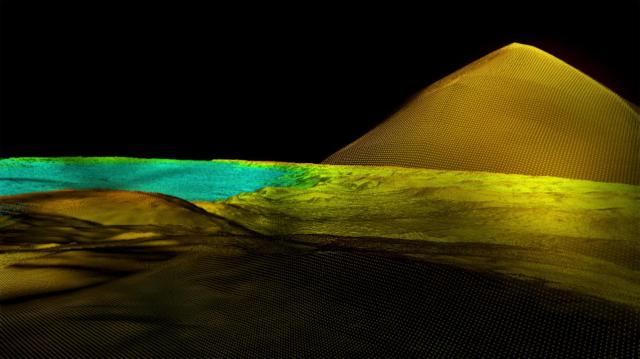
Using a revolutionary technology known as LiDAR (short for “Light Detection And Ranging”), scholars digitally removed the tree canopy from aerial images of the now-unpopulated landscape, revealing the ruins of a sprawling pre-Columbian civilization that was far more complex and interconnected than most Maya specialists had supposed.

“The LiDAR images make it clear that this entire region was a settlement system whose scale and population density had been grossly underestimated,” said Thomas Garrison, an Ithaca College archaeologist and National Geographic Explorer who specializes in using digital technology for archaeological research.

Garrison is part of a consortium of researchers who are participating in the project, which was spearheaded by the PACUNAM Foundation, a Guatemalan nonprofit that fosters scientific research, sustainable development, and cultural heritage preservation.

The project mapped more than 800 square miles (2,100 square kilometers) of the Maya Biosphere Reserve in the Petén region of Guatemala, producing the largest LiDAR data set ever obtained for archaeological research.

The results suggest that Central America supported an advanced civilization that was, at its peak some 1,200 years ago, more comparable to sophisticated cultures such as ancient Greece or China than to the scattered and sparsely populated city states that ground-based research had long suggested.

In addition to hundreds of previously unknown structures, the LiDAR images show raised highways connecting urban centers and quarries. Complex irrigation and terracing systems supported intensive agriculture capable of feeding masses of workers who dramatically reshaped the landscape.

The ancient Maya never used the wheel or beasts of burden, yet “this was a civilization that was literally moving mountains,” said Marcello Canuto, a Tulane University archaeologist and National Geographic Explorer who participated in the project.

“We’ve had this western conceit that complex civilizations can’t flourish in the tropics, that the tropics are where civilizations go to die,” said Canuto, who conducts archaeological research at a Guatemalan site known as La Corona. “But with the new LiDAR-based evidence from Central America and [Cambodia’s] Angkor Wat, we now have to consider that complex societies may have formed in the tropics and made their way outward from there.”

“LiDAR is revolutionizing archaeology the way the Hubble Space Telescope revolutionized astronomy,” said Francisco Estrada-Belli, a Tulane University archaeologist and National Geographic Explorer. “We’ll need 100 years to go through all [the data] and really understand what we’re seeing.”

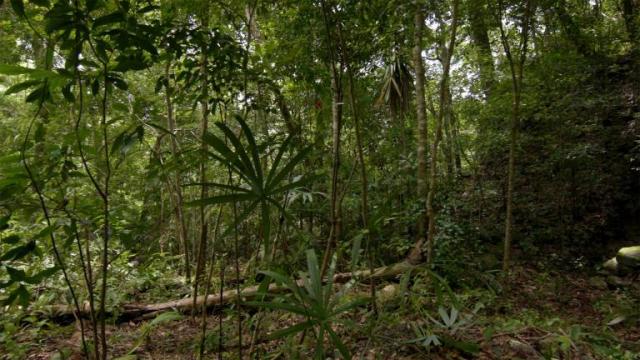
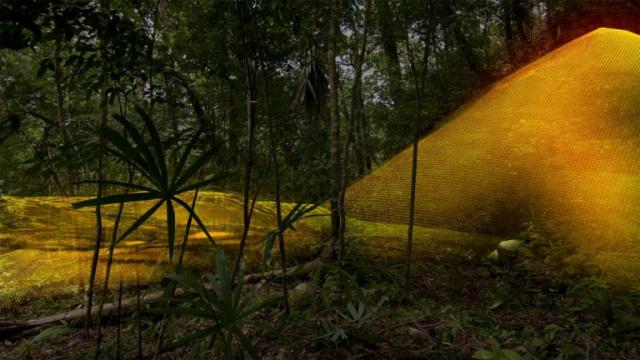
The unaided eye sees only jungle and an overgrown mound, but LiDAR and augmented reality software reveal an ancient Maya pyramid.

Already, though, the survey has yielded surprising insights into settlement patterns, inter-urban connectivity, and militarization in the Maya Lowlands. At its peak in the Maya classic period (approximately A.D. 250–900), the civilization covered an area about twice the size of medieval England, but it was far more densely populated.

“Most people had been comfortable with population estimates of around 5 million,” said Estrada-Belli, who directs a multi-disciplinary archaeological project at Holmul, Guatemala. “With this new data it’s no longer unreasonable to think that there were 10 to 15 million people there—including many living in low-lying, swampy areas that many of us had thought uninhabitable.”


Hidden deep in the jungle, the newly-discovered pyramid rises some seven stories high but is nearly invisible to the naked eye.

Virtually all the Mayan cities were connected by causeways wide enough to suggest that they were heavily trafficked and used for trade and other forms of regional interaction. These highways were elevated to allow easy passage even during rainy seasons. In a part of the world where there is usually too much or too little precipitation, the flow of water was meticulously planned and controlled via canals, dikes, and reservoirs.

Among the most surprising findings was the ubiquity of defensive walls, ramparts, terraces, and fortresses. “Warfare wasn’t only happening toward the end of the civilization,” said Garrison. “It was large-scale and systematic, and it endured over many years.”

The survey also revealed thousands of pits dug by modern-day looters. “Many of these new sites are only new to us; they are not new to looters,” said Marianne Hernandez, president of the PACUNAM Foundation. (Read “Losing Maya Heritage to Looters.”)

Environmental degradation is another concern. Guatemala is losing more than 10 percent of its forests annually, and habitat loss has accelerated along its border with Mexico as trespassers burn and clear land for agriculture and human settlement.

“By identifying these sites and helping to understand who these ancient people were, we hope to raise awareness of the value of protecting these places,” Hernandez said.

The survey is the first phase of the PACUNAM LiDAR Initiative, a three-year project that will eventually map more than 5,000 square miles (14,000 square kilometers) of Guatemala’s lowlands, part of a pre-Columbian settlement system that extended north to the Gulf of Mexico.

“The ambition and the impact of this project is just incredible,” said Kathryn Reese-Taylor, a University of Calgary archaeologist and Maya specialist who was not associated with the PACUNAM survey. “After decades of combing through the forests, no archaeologists had stumbled across these sites. More importantly, we never had the big picture that this data set gives us. It really pulls back the veil and helps us see the civilization as the ancient Maya saw it.”

https://news.nationalgeographic.com/2018/02/maya-laser-lidar-guatemala-pacunam/

Thanks to Kebmodee for bringing this to the It’s Interesting community.

The World’s First Autonomous Ship Will Set Sail In 2018

By Vanessa Bates Ramirez

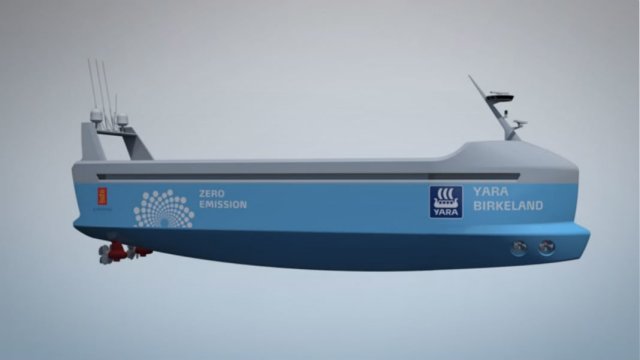
A Norwegian container ship called the Yara Birkeland will be the world’s first electric, autonomous, zero-emissions ship.

With a capacity of up to 150 shipping containers, the battery-powered ship will be small compared to modern standards (the biggest container ship in the world holds 19,000 containers, and an average-size ship holds 3,500), but its launch will mark the beginning of a transformation of the global shipping industry. This transformation could heavily impact global trade as well as the environment.

The Yara Birkeland is being jointly developed by two Norwegian companies: agricultural firm Yara International, and agricultural firm, and Kongsberg Gruppen, which builds guidance systems for both civilian and military use.

The ship will be equipped with a GPS and various types of sensors, including lidar, radar, and cameras—much like self-driving cars. The ship will be able to steer itself through the sea, avoid other ships, and independently dock itself.

The Wall Street Journal states that building the ship will cost $25 million, which is about three times the cost of a similarly-sized conventional ship. However, the savings will kick in once the ship starts operating, since it won’t need traditional fuel or a big crew.

Self-driving cars aren’t going to suddenly hit the streets straight off their production line; they’ve been going through multiple types of road tests, refining their sensors, upgrading their software, and generally improving their functionality little by little. Similarly, the Yara Birkeland won’t take to the sea unmanned on its first voyage, nor any of its several first voyages, for that matter.

Rather, the ship’s autonomy will be phased in. At first, says the Journal, “a single container will be used as a manned bridge on board. Then the bridge will be moved to shore and become a remote-operation center. The ship will eventually run fully on its own, under supervision from shore, in 2020.”

Kongsberg CEO Geir Haoy compared the ship’s sea-to-land bridge transition to flying a drone from a command center, saying, “It will be GPS navigation and lots of high-tech cameras to see what’s going on around the ship.”

Interestingly, there’s currently no legislation around autonomous ships (which makes sense since, well, there aren’t any autonomous ships, either). Lawmakers are getting to work, though, and rules will likely be set up by the time the Yara makes it first fully-autonomous trip.

The ship will sail between three ports in southern Norway, delivering Yara International fertilizer from a production facility to a port called Larvik. The planned route is 37 nautical miles, and the ship will stay within 12 nautical miles of the coast.

The United Nations’ International Maritime Organization estimates over 90 percent of the world’s trade is carried by sea, and states that maritime transport is “By far the most cost-effective way to move en masse goods and raw materials around the world.”

But ships are also to blame for a huge amount of pollution; one study showed that just 15 of the world’s biggest ships may emit as much pollution as all the world’s cars, largely due to the much higher sulfur content of ship fuel. Oddly, shipping emission regulations weren’t included in the Paris Agreement.

Besides reducing fuel emissions by being electric, the Yara Birkeland will supposedly replace 40,000 truck drives a year through southern Norway. Once regulations are in place and the technology has been tested and improved, companies will start to build larger ships that can sail longer routes.

The World’s First Autonomous Ship Will Set Sail In 2018

Radical plan proposed to re-freeze the Arctic

Physicist Steven Desch has come up with a novel solution to the problems that now beset the Arctic. He and a team of colleagues from Arizona State University want to replenish the region’s shrinking sea ice – by building 10 million wind-powered pumps over the Arctic ice cap. In winter, these would be used to pump water to the surface of the ice where it would freeze, thickening the cap.

The pumps could add an extra metre of sea ice to the Arctic’s current layer, Desch argues. The current cap rarely exceeds 2-3 metres in thickness and is being eroded constantly as the planet succumbs to climate change.

“Thicker ice would mean longer-lasting ice. In turn, that would mean the danger of all sea ice disappearing from the Arctic in summer would be reduced significantly,” Desch told the Observer.

Desch and his team have put forward the scheme in a paper that has just been published in Earth’s Future, the journal of the American Geophysical Union, and have worked out a price tag for the project: $500bn (£400bn).

It is an astonishing sum. However, it is the kind of outlay that may become necessary if we want to halt the calamity that faces the Arctic, says Desch, who, like many other scientists, has become alarmed at temperature change in the region. They say that it is now warming twice as fast as their climate models predicted only a few years ago and argue that the 2015 Paris agreement to limit global warming will be insufficient to prevent the region’s sea ice disappearing completely in summer, possibly by 2030.

“Our only strategy at present seems to be to tell people to stop burning fossil fuels,” says Desch. “It’s a good idea but it is going to need a lot more than that to stop the Arctic’s sea ice from disappearing.”

The loss of the Arctic’s summer sea ice cover would disrupt life in the region, endanger many of its species, from Arctic cod to polar bears, and destroy a pristine habitat. It would also trigger further warming of the planet by removing ice that reflects solar radiation back into space, disrupt weather patterns across the northern hemisphere and melt permafrost, releasing more carbon gases into the atmosphere.

Hence Desch’s scheme to use wind pumps to bring water that is insulated from the bitter Arctic cold to its icy surface, where it will freeze and thicken the ice cap. Nor is the physicist alone in his Arctic scheming: other projects to halt sea-ice loss include one to artificially whiten the Arctic by scattering light-coloured aerosol particles over it to reflect solar radiation back into space, and another to spray sea water into the atmosphere above the region to create clouds that would also reflect sunlight away from the surface.

All the projects are highly imaginative – and extremely costly. The fact that they are even being considered reveals just how desperately worried researchers have become about the Arctic. “The situation is causing grave concern,” says Professor Julienne Stroeve, of University College London. “It is now much more dire than even our worst case scenarios originally suggested.’

Last November, when sea ice should have begun thickening and spreading over the Arctic as winter set in, the region warmed up. Temperatures should have plummeted to -25C but reached several degrees above freezing instead. “It’s been about 20C warmer than normal over most of the Arctic Ocean. This is unprecedented,” research professor Jennifer Francis of Rutgers University told the Guardian in November. “These temperatures are literally off the charts for where they should be at this time of year. It is pretty shocking. The Arctic has been breaking records all year. It is exciting but also scary.”

Nor have things got better in the intervening months. Figures issued by the US National Snow and Ice Data Center (NSIDC), in Boulder, Colorado, last week revealed that in January the Arctic’s sea ice covered 13.38 million sq km, the lowest January extent in the 38 years since satellites began surveying the region. That figure is 260,000 sq km below the level for January last year, which was the previous lowest extent for that month, and a worrying 1.26 million sq km below the long-term average for January.

In fact, sea ice growth stalled during the second week of January – in the heart of the Arctic winter – while the ice cap actually retreated within the Kara and Barents seas, and within the Sea of Okhotsk. Similarly, the Svalbard archipelago, normally shrouded in ice, has remained relatively free because of the inflow of warm Atlantic water along the western part of the island chain. Although there has been some recovery, sea ice remains well below all previous record lows.

This paucity of sea ice bodes ill for the Arctic’s summer months when cover traditionally drops to its lower annual level, and could plunge to a record minimum this year. Most scientists expect that, at current emission rates, the Arctic will be reliably free of sea ice in summer by 2030.

By “free” they mean there will be less than 1m sq km of sea ice left in the Arctic, most of it packed into remote bays and channels, while the central Arctic Ocean over the north pole will be completely open. And by “reliably”, scientists mean there will have been five consecutive years with less than 1m sq km of ice by the year 2050. The first single ice-free year will come much earlier than this, however.

And when that happens, the consequences are likely to be severe for the human and animal inhabitants of the region. An ice-free Arctic will be wide open to commercial exploitation, for example. Already, mining, oil and tourism companies have revealed plans to begin operations – schemes that could put severe strain on indigenous communities’ way of life in the region.

Equally worrying is the likely impact on wildlife, says Stroeve. “Juvenile Arctic cod like to hang out under the sea ice. Polar bears hunt on sea ice, and seals give birth on it. We have no idea what will happen when that lot disappears. In addition, there is the problem of increasing numbers of warm spells during which rain falls instead of snow. That rain then freezes on the ground and forms a hard coating that prevents reindeer and caribou from finding food under the snow.”

Nor would the rest of the world be isolated. With less ice to reflect solar radiation back into space, the dark ocean waters of the high latitudes will warm and the Arctic will heat up even further.

“If you warm the Arctic you decrease the temperature difference between the poles and the mid-latitudes, and that affects the polar vortex, the winds that blow between the mid latitudes and the high latitudes,” says Henry Burgess, head of the Arctic office of the UK Natural Environment Research Council.

“Normally this process tends to keep the cold in the high north and milder air in mid-latitudes but there is an increasing risk this will be disrupted as the temperature differential gets weaker. We may get more and more long, cold spells spilling down from the Arctic, longer and slower periods of Atlantic storms and equally warmer periods in the Arctic. What happens up there touches us all. It is hard to believe you can take away several million sq km of ice a few thousand kilometres to the north and not expect there will be an impact on weather patterns here in the UK.”

For her part, Stroeve puts it more bleakly: “We are carrying out a blind experiment on our planet whose outcome is almost impossible to guess.”

This point is backed by Desch. “Sea ice is disappearing from the Arctic – rapidly. The sorts of options we are proposing need to be researched and discussed now. If we are provocative and get people to think about this, that is good.

“The question is: do I think our project would work? Yes. I am confident it would. But we do need to put a realistic cost on these things. We cannot keep on just telling people, ‘Stop driving your car or it’s the end of the world’. We have to give them alternative options, though equally we need to price them.”

THE BIG SHRINK
The Arctic ice cap reaches its maximum extent every March and then, over the next six months, dwindles. The trough is reached around mid-September at the end of the melting season. The ice growth cycle then restarts. However, the extent of regrowth began slackening towards the end of the last century. According to meteorologists, the Arctic’s ice cover at its minimum is now decreasing by 13% every decade – a direct consequence of heating triggered by increased levels of carbon dioxide in the atmosphere.

Climate change deniers claim this loss is matched by gains in sea ice around the Antarctic. It is not. Antarctic ice fluctuations are slight compared with the Arctic’s plummeting coverage and if you combine the changes at both poles, you find more than a million sq km of ice has been lost globally in 30 years.

https://www.theguardian.com/world/2017/feb/12/plan-to-refreeze-arctic-before-ice-goes-for-good-climate-change