Fungi in outer space

By Jennifer Frazer

In addition to irritatingly lodging themselves everywhere from shower grout to the Russian space station Mir, fungi that live inside rocks in Antarctica have managed to survive a year and half in low-Earth orbit under punishing Mars-like conditions, scientists recently reported in the journal Astrobiology. A few of them even managed to cap their year in Mars-like space by reproducing.

Why were they subjected to such an ordeal? Scientists have concluded over the past decade that Mars (which like Earth is about four and a half billion years old) supported water for long periods during its first billion years, and they wonder if life that may have evolved during that time may remain on the planet in fossilized or even fresh condition. The climate back then was more temperate than today, featuring a thicker atmosphere and a more forgiving and moist climate.

But how do you search for that life? Using life that exists in what they believe is this planet’s closest analogue, a team of scientists from Europe and the United States hoped to identify the kind of biosignatures that might prove useful in such a search, while also seeing if the Earthly life forms might be capable of withstanding current Mars-like conditions.

Which is to say, not nice.

The temperature on Mars fluctuates wildly on a daily basis. The Mars Science Laboratory rover has measured daily swings of up to 80°C (that’s 144°F), veering from -70°C(-94°F) at night to 10°C(50°F) at Martian high noon. If you can survive that, you also have to get past the super-intense ultraviolet radiation, an atmosphere of 95% carbon dioxide (the effect of which on humans was vividly illustrated at the end of Total Recall), a pressure of 600 to 900 Pascals (Earth: 101,325 Pascals), and cosmic radiation at a dose of about .2mGy/day (Earth: .001 mGy/day). I don’t know about you, but Mars is not my first vacation choice.

And it’s probably not Cryomyces antarcticus’s either, in spite of the extreme place it calls home. Cryomyces antarcticus and its relative Cryomyces minteri – the two fungi tested independently in this study — are members of a group called black fungi or black yeast for their heavily pigmented hulls that allow them to withstand a wide variety environmental stresses. Members of the group somewhat notoriously turned up a few years ago in a study that found two species of the group commonly live inside dishwashers in people’s homes (they were opportunistic human pathogns, but most humans are immune to them). But most of these fungi live quietly in the most extreme environments on earth.

The particular black fungi used in this experiment, generally considered the toughest on the planet, live in tiny tunnels of their own creation inside Antarctic rocks. This is apparently the only place they can grow without being annihilated by the crushing climate and blistering ultraviolet radiation of Antarctica. Antarctica also happens to be the place on Earth most similar – although still not particularly similar, as you have seen — to our friendly neighborhood Red Planet. This endurance has made both black fungi and their neighbors the lichens popular test pilots for Mars-like conditions on the international space station.

For example, lichen-forming fungi that create the common and beautiful orange Xanthoria elegans and also Acarospora made the same trip to the ISS previously, in a European module of the International Space Station called EXPOSE-E. Both survived the experience, and Acarospora even managed to reproduce.

But this seems to be the first time a non-lichen forming fungus has received the ISS treatment.

These particular two fungi – Cryomyces antarcticus and Cryomyces minteri – were collected from the McMurdo Dry Valleys of Antarctica in Southern Victoria Land, supposedly the most Mars-like place on Earth. They were isolated from dry sandstone onto a plate of fungus food called malt extract agar. This gelatinous disc was then dried along with the fungus living on it inside a dessicator, and sent into space like that.

Each colony was about 1mm in diameter, and each yeast cell in it was 10 micrometers in size. Like most black yeast/fungi, they have a dark outer wall.

The scientists also tested an entire community of “cryptoendolithic” organisms – those that live secretly inside rocks, including not just fungi but also rock-dwelling blue-green algae – by testing whole fragments of rocks collected on Battleship Promontory in Southern Victoria Land, Antarctica. The various organisms live in bands of varying color and depth within 1 centimeter of the rock surface.

The fungi were launched into space in February 2008 and returned to Earth on September 12, 2009. During that time they were placed in a bath of gasses as similar as possible to the atmosphere of Mars and exposed to simulated full Martian UV radiation, one-thousandth Martian UV, or kept in the dark. They also endured the cosmic background radiation of space and temperature swings between -21.7°C and 42.9°C – much warmer than Mars, but the best that could be done. Control samples remained in the dark on Earth.

Once back on Earth, the colonies and rock samples were rehydrated. Their appearance had not changed during their voyage. They were then tested for viability by diluting them in water and plating the resulting solution to see how many new colonies formed. They also estimated the percentage of cells with undamaged cell membranes by using a chemical that can only penetrate damaged cell membranes.

The scientists found that the black yeast’s ability to form new colonies was severely impaired by its time on “Mars”, but it was not zero. When kept in the dark on the ISS, about 1.5% of C. antarcticus was able to form colonies post-exposure, while only .08% of C. minteri could. Surprisingly, those exposed to .1% of Mars UV did better, with 4-5 times more surviving: just over 8% for C. antarcticus and 2% for C. minteri. Perhaps the weak radiation stimulated mutations or stress-response proteins that might have helped the fungi somehow.

With the full force of Martian radiation, the survival rates were about the same as for those samples kept in the dark, which is to say, nearly nil. By comparison, about 46% of control C. antarcticus samples kept in the dark back on Earth yielded colony forming units, while only about 17% of C. minteri did. Not super high rates, but still much higher than their space-faring comrades.

On the other hand, the percentage of cells with intact cell membranes was apparently much higher than the number that could reproduce. 65% of C. antarcticus cells remained intact regardless of UV exposure, while C. minteri’s survival rates fluctuated between 18 and 50%, again doing better with UV exposure than in the dark. Colonized rock communities yielded the highest percentage of intact cells of any samples when kept in the dark – around 75%, but some of the lowest when exposed to solar UV, with just 10-18 % surviving intact.

What explains this apparent survival discrepancy between being alive and being able to reproduce? It may be that the reproductive apparati of the fungi are more sensitive to cosmic radiation than their cell membranes and walls, the authors suggest.

The authors’ results also suggest to them that DNA is the biomolecule of choice to use to search for life on Mars, as it, like the cell membranes, survived largely intact even in cells that could no longer reproduce.

Although Mars-based life may not use DNA genetic material, then again, it just might. It certainly seems to have worked well for us here on Earth.

Even though few of the fungi exposed to Mars-like conditions survived well enough to reproduce, in all cases, at least a fraction did. Perhaps that is the material thing. A similar previous experiment showed one green alga, Stichococcus, and one fungus, Acarospora were able to reproduce after a very similar trip on the space station. Another experiment with the bacterium Bacillus subtilis found that up to 20% of their spores were able to germinate and grow after Mars-like exposure. Theoretically, it only takes one or two to hang on and adapt to these conditions to found a whole lineage of Mars-tolerant life (the major reason, by the way, for NASA’s Planetary Protection Program).

On the other hand, some have suggested that long-term survival of Earthly life is impossible on Mars. Given the extremely low reproductive ability after just 1.5 years, this study did nothing to undermine that idea either.

But all of our studies have tested life that evolved on Earth. What about life that evolved on Mars? There’s just no telling how similar or dissimilar such creatures — supposing they exist or ever existed – might be.

http://blogs.scientificamerican.com/artful-amoeba/fungi-in-space/
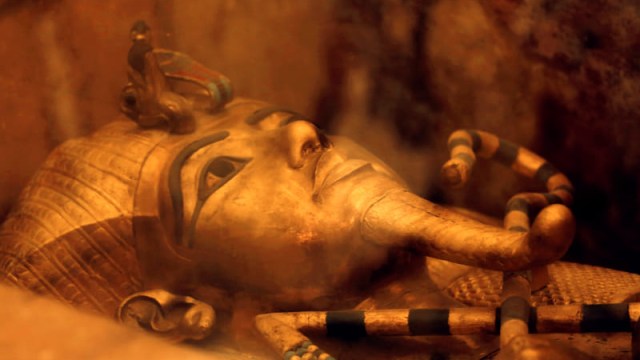
King Tut’s dagger was made from a meteorite

Tutankhamun, the boy king of ancient Egypt who died at 18 and later exploded inside his own sarcophagus (http://gizmodo.com/king-tut-s-body-spontaneously-combusted-inside-its-sarc-1458705368), apparently owned—and was buried with—a literal space dagger made from meteoric iron.

Researchers from Milan Polytechnic, Pisa University, and the Egyptian Museum in Cairo used a X-ray fluorescence spectrometry to determine the composition of the knife without damaging it. The iron in the blade had high percentages of nickel, and trace amounts of cobalt, phosphorus, and other material that suggest the raw material was of extraterrestrial origin. That exact composition was traced to a specific meteorite nearby. Researcher Daniela Comelli told Discovery:

“Only one [meteorite], named Kharga, turned out to have nickel and cobalt contents which are possibly consistent with the composition of the blade,” she added.

The meteorite fragment was found in 2000 on a limestone plateau at Mersa Matruh, a seaport some 150 miles west of Alexandria.

Objects made from the metal of meteorites were probably considered extremely valuable in ancient Egypt, but they also reveal the sophistication of smithing during that era of human history. And the blade was not the only object in Tut’s tomb made from an unusual and rare material: a scarab necklace he was buried with is believe to be silica glass, caused by the impact of another space rock smashing into the Libyan desert and melting the nearby sand.

http://gizmodo.com/king-tut-had-a-space-dagger-1779709241

Amino acid and phosphorous building blocks of life on Earth found in comet’s atmosphere

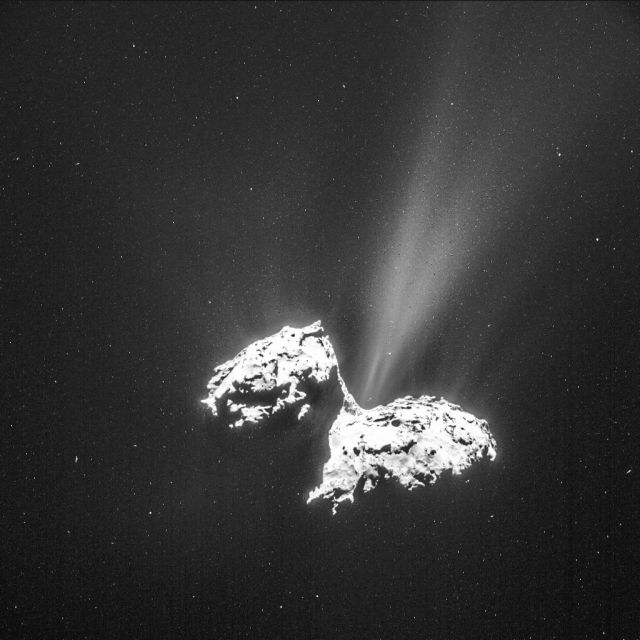
67p-jets
Instruments on the Rosetta spacecraft have detected compounds critical to life, including the amino acid glycine and the element phosphorus, in the shroud of gases surrounding Comet 67P/Churyumov-Gerasimenko

For the first time, scientists have directly detected a crucial amino acid and a rich selection of organic molecules in the dusty atmosphere of a comet, further bolstering the hypothesis that these icy objects delivered some of life’s ingredients to Earth.

The amino acid glycine, along with some of its precursor organic molecules and the essential element phosphorus, were spotted in the cloud of gas and dust surrounding Comet 67P/Churyumov-Gerasimenko by the Rosetta spacecraft, which has been orbiting the comet since 2014. While glycine had previously been extracted from cometary dust samples that were brought to Earth by NASA’s Stardust mission, this is the first time that the compound has been detected in space, naturally vaporized.

The discovery of those building blocks around a comet supports the idea that comets could have played an essential role in the development of life on early Earth, researchers said.

“With all the organics, amino acid and phosphorus, we can say that the comet really contains everything to produce life — except energy,” said Kathrin Altwegg of the University of Bern in Switzerland, the principal investigator for the Rosetta mission’s ROSINA instrument.

“Energy is completely missing on the comet, so on the comet you cannot form life,” Altwegg told Space.com. “But once you have the comet in a warm place — let’s say it drops into the ocean — then these molecules get free, they get mobile, they can react, and maybe that’s how life starts.”

Getting a glimpse

Glycine, one of the simplest amino acids, is usually bound up as a solid, which means it’s difficult to detect from afar, Altwegg said.

While scientists have searched for glycine through telescopes in star-forming regions of the sky, the newly reported detection marks the first sighting of the compound in space. In this case, the orbiting Rosetta was close enough to pick up the glycine released by the comet’s dust grains as they heated up in the sun.

The study is a powerful confirmation of earlier, earth-bound detections of life’s building blocks in comet and meteor material.

“We know the Earth was pretty heavily bombarded both with asteroidal material and cometary material,” said Michael A’Hearn, a comet researcher at the University of Maryland who was not involved in the new study.

“There have been various claims of amino acids in meteorites, but all of them have suffered from this problem of contamination on Earth. The Stardust [samples] — which are from a comet, not an asteroid — are probably the least susceptible to the terrestrial contamination problem, but even there the problem is severe,” A’Hearn told Space.com. “I think they [Stardust] really did have glycine, but this is a much cleaner detection in many ways.”

Cooking up life
Amino acids form the basis of proteins, which are complexly folded molecules that are critical to life on Earth. Altwegg’s team searched for other amino acids around the comet as well, but located only glycine — the only one that can form without liquid water (as in the frigid reaches of space).

The glycine probably didn’t form on the comet itself, Altwegg said, but rather in the broad stretches of dust and debris that made up the solar system before planetary bodies formed.

“The solar system was made out of material which formed in a disk, in a solar nebula,” Altwegg said. “In these clouds, it’s pretty cold, so the chemistry you do there is catalytic chemistry on the dust surfaces. And these very small dust grains [1 micron in size] are very good to lead to organic chemistry. This is also done in the lab.” Earth itself was far too hot for similar delicate amino acids to survive its formation, Altwegg said; only the smallest solar system bodies stayed cold.

So glycine formed during that time could have provided a boost to newly forming life if it was delivered to Earth by comets.

“It’s not that it couldn’t have formed on Earth — it certainly could — it’s just that it didn’t have to,” A’Hearn said. “Basically, the Earth got a head start.”

Other, more complex amino acids require liquid water, and so would have likely formed on Earth itself, Altwegg said. This idea is supported by the fact that Rosetta has not identified any amino acids other than glycine near Comet 67P.

Phosphorus is also vital to life as we know it. Among other things, the element is a key constituent of DNA and adenosine triphosphate (ATP), a molecule that stores the chemical energy used by cells.

See more at: http://www.space.com/33011-life-building-blocks-found-around-comet.html#sthash.47SrU6BY.dpuf

Thanks to Kebmodee for bringing this to the attention of the It’s Interesting community.

Lightning storms make it rain diamonds on Saturn and Jupiter

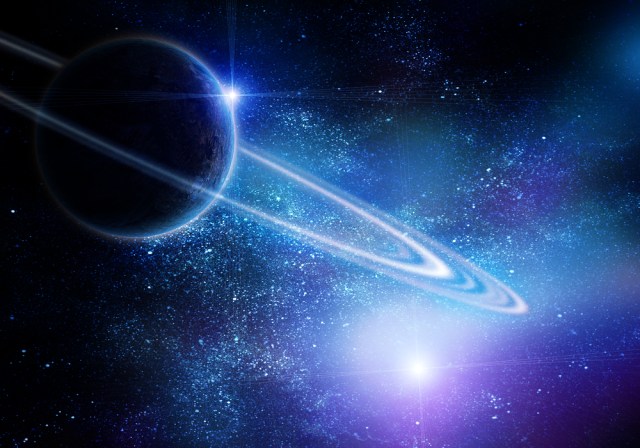
saturn

t sounds like a wacky fantasy, but scientists believe that it rains diamonds in the clouds of Saturn and Jupiter.

Diamonds are made from highly compressed and heated carbon. Theoretically, if you took a charcoal bricket out of your grill and heated it and pressed it hard enough for long enough, you could make a diamond.

On Earth, diamonds form about 100 miles underground. Volcanic magma highways then bring them closer to the surface, providing us with shiny gemstones that we stick in rings and ear studs.

But in the dense atmospheres of planets like Jupiter and Saturn, whose massive size generates enormous amounts of gravity, crazy amounts of pressure and heat can squeeze carbon in mid-air — and make it rain diamonds.

Scientists have speculated for years that diamonds are abundant in the cores of the smaller, cooler gas giants, Neptune and Uranus. They believed that the larger gaseous planets, Jupiter and Saturn, didn’t have suitable atmospheres to forge diamonds.

But when researchers recently analyzed the pressures and temperatures for Jupiter’s and Saturn’s atmospheres, then modeled how carbon would behave, they determined that diamond rain is very likely.

Diamonds seem especially likely to form in huge, storm-ravaged regions of Saturn, and in enormous quantities — Kevin Baines, a researcher at University of Madison-Wisconsin and NASA JPL, told BBC News it may rain as much as 2.2 million pounds of diamonds there every year.

The diamonds start out as methane gas. Powerful lightning storms on the two huge gas giants then zap it into carbon soot.

“As the soot falls, the pressure on it increases,” Baines told the BBC. “And after about 1,000 miles it turns to graphite – the sheet-like form of carbon you find in pencils.”

And the graphite keeps falling. When it reaches the deep atmosphere of Saturn, for example — around 3,700 miles down — the immense pressure squeezes the carbon into diamonds, which float in seas of liquid methane and hydrogen.

Eventually the gems sink toward the interior of the planet (a depth of 18,600 miles), where nightmarish pressure and heat melts the diamonds into molten carbon.

“Once you get down to those extreme depths,” Baines told the BBC, “the pressure and temperature is so hellish, there’s no way the diamonds could remain solid.”

http://www.techinsider.io/diamond-rain-saturn-jupiter-2016-4

Researchers reveal white dwarf rampaging through the universe that may have destroyed 15 alien worlds


By MARK PRIGG FOR DAILYMAIL.COM

A real-life ‘Death Star’ caught is the act of destroying a planet is continuing its destructive journey, researchers have found.

Last year astronomers used the Very Large Telescope in Chile to see an asteroid being ripped apart by a white dwarf – a small star that has ‘run out of fuel’ – and forming a glowing debris ring.
Now, it is believed it may have ‘eaten’ at least 15.

The discovery has provided a glimpse of what is expected to happen to our own solar system when the sun stops burning.

‘Our sun will one day balloon out to become a red giant star, wiping out Mercury and Venus and maybe Earth, before it becomes a white dwarf,’ lead author Boris Gänsicke, an astronomer at the University of Warwick, told Space.com

‘By looking at this white dwarf, we get a look at what the future of the solar system might be like.’
The dead star is a white dwarf known as WD 1145+017, which lies about 570 light-years from Earth in the constellation Virgo, according the the paper, which set to detailed their findings Feb. 3 in the journal Astrophysical Journal Letters.

Gänsicke found the killer white dwarf system has rapidly evolved in the few months since the discovery.
‘It’s exciting and unexpected that we can see this kind of dramatic change on human timescales,’ Gänsicke said.

The team ‘identified six, but there are clearly more — it could be 10, maybe 15.’

The bodies are orbiting the dead star at about the same distance as the planetesimal that previous research spotted, and are each two to four times the size of the white dwarf.

It is believed they are huge clouds of gas and dust.

WHAT IS A WHITE DWARF?
A white dwarf is the remains of a smaller star that has run out of nuclear fuel.

While large stars – those exceeding ten ten times the mass of our sun – suffer a spectacularly violent climax as a supernova explosion at the ends of their lives, smaller stars are spared such dramatic fates.

When stars like the sun come to the ends of their lives they exhaust their fuel, expand as red giants and later expel their outer layers into space.

The hot and very dense core of the former star – a white dwarf – is all that remains.

White dwarfs contain approximately the mass of the sun but have roughly the radius of Earth, meaning they are incredibly dense.

The gravity on the surface of a white dwarf is 350,000 times that of gravity on Earth.

They become so dense because their electrons are smashed together, creating what’s caused ‘degenerative matter’.

This means that a more massive white dwarf has a smaller radius than its less massive counterpart.

Read more: http://www.dailymail.co.uk/sciencetech/article-3488287/The-real-life-DEATH-STAR-Researchers-reveal-white-dwarf-rampaging-universe-destroyed-15-alien-worlds.html#ixzz42lFVHZMu

Lost Tapes Reveal Apollo Astronauts Heard Unexplained ‘Music’ On Far Side Of The Moon

The crew of an Apollo mission to the moon were so startled when they encountered strange music-like radio transmissions coming through their headsets, they didn’t know whether or not to report it to NASA, it’s been revealed.

It was 1969, two months before Apollo 11’s historic first manned landing on the moon, when Apollo 10 entered lunar orbit, which included traversing the far side of the moon when all spacecraft are out of radio contact with Earth for about an hour and nobody on Earth can see or hear them.

As far as the public knew, everything about the mission went smoothly.

Almost four decades went by before lost recordings emerged that revealed something unsettling that the three Apollo astronauts had experienced while flying above the far side of the moon.

The taped recordings contained “strange, otherworldly music coming through the Apollo module’s radio,” according to the upcoming Science Channel series, “NASA’s Unexplained Files.”

The conversation between the three astronauts indicated they heard sounds like they had never heard before:

“It sounds like, you know, outer space-type music.”

“You hear that? That whistling sound? Whooooooooo!”

“Well, that sure is weird music!”
The unexplained “music” transmission lasted almost an hour, and just before the astronauts regained radio contact with Earth, they discussed whether or not to tell Mission Control what they had experienced:

“It’s unbelievable! You know?”

“Shall we tell them about it?”

“I don’t know. We ought to think about it.”

“The Apollo 10 crew was very used to the kind of noise that they should be hearing. Logic tells me that if there was something recorded on there, then there was something there,” Apollo 15 astronaut Al Worden says on the Science Channel program. “NASA would withhold information from the public if they thought it was in the public’s best interest.”

The transcripts of the Apollo 10 mission were classified and untouched in NASA’s archives until 2008, producing an ongoing debate as to the nature and origin of the strange sounds heard by the astronauts.

“You don’t hear about anything like that until years after the incident occurs, and then you kind of wonder, because it’s such an old memory of those things that you get concerned about if they were making something up or was there something really there? Because you never really know,” Worden told The Huffington Post.

“If you’re behind the moon and hear some weird noise on your radio, and you know you’re blocked from the Earth, then what could you possibly think?” Worden said.

“We’d had a lot of incidents where guys who flew in space saw and heard things that they didn’t recognize, and you wonder about all of that. I have a very open mind about what could’ve happened. It’s somebody’s hearsay evidence — it’s only a visual or audio event, which is hard to pin down. Recollection is one thing, but actual proof is something entirely different.”

http://www.huffingtonpost.com/entry/apollo-10-astronauts-reported-unexplained-music-at-moon_us_56c80662e4b0928f5a6c0679

China Telescope to Displace 9,000 Villagers in Hunt for Extraterrestrials

By EDWARD WONG

The Chinese government is relocating thousands of villagers to complete construction by September of the world’s biggest radio telescope, whose intended purpose is to detect signs of extraterrestrial life.

The telescope would be 500 meters, or 1,640 feet, in diameter, by far the largest of its kind in the world. It is called FAST, for Five-hundred-meter Aperture Spherical Telescope, and costs an estimated 1.2 billion renminbi, or $184 million.

The mass relocation was announced on Tuesday in a report by Xinhua, the state news agency. The report said officials were relocating 2,029 families, a total of 9,110 people, living within a three-mile radius of the telescope in the area of Pingtang and Luodian Counties in the southwestern province of Guizhou.

Officials plan to give each person the equivalent of $1,800 for housing compensation, the report said. Guizhou is one of China’s poorest provinces.

Forced relocations for infrastructure projects are common across China, and the people being moved by officials often complain both of the eviction from their homes and inadequate compensation. The Three Gorges Dam displaced more than one million people along the Yangtze River, and the middle route of the gargantuan South-North Water Diversion Project has resulted in the relocation of 350,000 people to make way for a series of canals.

The Chinese government has announced ambitious plans for its space program, at a time when the American one is in retreat. China aims to put an astronaut on the moon and a space station in orbit. The FAST project is another important element in the larger plan.

The telescope is being built in a wide depression among karst hills. The depression is far from cities and ideal for picking up radio transmissions, the Xinhua report said. Scientists began looking for a site in 1994 and finally settled on the Dawodang depression.

If the truth is out there, then some Chinese scientists are confident that the giant telescope will find it. The current largest operational radio telescope is the 300-meter-diameter Arecibo Observatory in Puerto Rico, but FAST in Guizhou will far surpass that.

Li Di, a chief scientist with the National Astronomical Observatories under the Chinese Academy of Sciences, told China Daily last year that “with a larger signal receiving area and more flexibility, FAST will be able to scan two times more sky area than Arecibo, with three to five times higher sensitivity.”

Last November, scientists successfully tested the telescope’s “retina,” which weighs 33 tons and is suspended 460 to 525 feet above the reflector dish, which was half-finished at the time, China Daily reported.

The telescope has 4,500 panels that are mostly triangular and whose sides measure 36 feet, the report said. Those create a parabolic shape. The panels move and, by doing so, alter the shape of the antenna, which is supposed to pick up radio signals from distant corners of the universe. Those signals would then be reflected to a focal point.

Mr. Li told China Daily that engineers were aiming to install all the panels by this June and complete debugging by September.

“Ultimately, exploring the unknown is the nature of mankind,” he said, adding that it was “as visceral as feeding and clothing ourselves.”

“It drives us to a greater future,” he said.

The Opportunity Rover Was Supposed To Last 90 Days. It Recently Celebrated Twelve Years On Mars

by Alfredo Carpineti

On Sunday, January 24, NASA’s Mars rover Opportunity reached 12 Earth years on the surface of Mars, having landed on the same day in 2004.

It was budgeted to last 90 days, with a lifespan of a few months, before it was thought its solar panel would be covered in dust and stop working. But thanks to a number of factors, including wind on Mars, the tenacious rover has been able to endure the harsh Martian environment for much, much longer.

The rover has begun to show its age, becoming more difficult to maneuver and having memory storage problems. Also, two of its scientific instruments have now stopped functioning completely. Problems aside, though, Opportunity continues to produce an abundance of science.

Opportunity is currently exploring a region rich in clay minerals that would have formed in wet conditions. The area is called Marathon Valley, since it’s 42 kilometers (26 miles) – the Olympic marathon distance – from Opportunity’s landing site in Eagle Crater.

“With healthy power levels, we are looking forward to completing the work in Marathon Valley this year and continuing onward with Opportunity,” Exploration Rover Project Manager John Callas said in a statement.

The rover is currently removing surface crust from rocks in the valley, and the texture and composition are being examined with the use of its robotic arm.

The Martian winter started in January, so the solar energy that the rover is currently receiving is significantly lower than usual. The team positioned the rover in a more favorable sun-facing orientation, which has increased the amount of power the solar panels are generating, allowing for power-consuming operations like drilling and rock-grinding.

“Opportunity has stayed very active this winter, in part because the solar arrays have been much cleaner than in the past few winters,” said Callas.

The rover is fully funded until the end of 2016, and the Jet Propulsion Laboratory is currently working on the next extension proposal. In the last review, Opportunity received the highest rating of any ongoing Mars mission.

http://www.iflscience.com/opportunity-s-twelve-years-red-planet

Lego-Man Travels to Space and Brings Back Photos and Videos

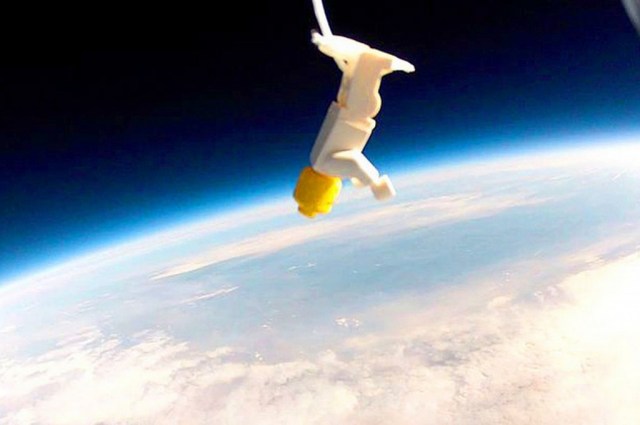
A Lego man has successfully gone where no Lego man has gone before – the edge of space and back down.

It’s all thanks to two friends, teacher Jon Chippindall, 31 and entrepreneur Ian Cunningham, 29, who met while studying aerospace engineering at Manchester University. Together, they created a homemade probe called The Meteor, that was attached to a balloon and sent into the stratosphere (or to the edge of it) with Lego Man and camera equipment all together.

The craft was launched from Mold in North Wales on Wednesday.

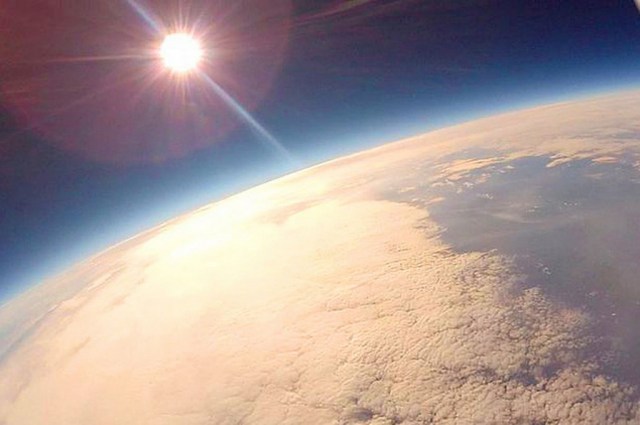
Within two hours it had reached 90,000ft above the Earth – three times the height of Mount Everest – where the balloon burst and the camera plunged back down.

It’s an exciting feat for both men.

“It was really exhilarating to know that this thing had been to the edge of space and come back down, and that the technology had worked as it was supposed to,” Chippindall enthusiastically told media.
Cunningham added, ““We knew we would get some pictures back from space, but didn’t expect anything as good as those.”

Read more at http://weinterrupt.com/2013/11/lego-man-travels-to-space-and-brings-back-photos-and-videos/#Q37T5YltrhdRiY3r.99

Pluto has ‘floating hills,’ NASA says

By Jareen Imam

Last Thursday, NASA released a photo of what they are calling Pluto’s “floating hills.” The images were captured by New Horizons spacecraft during its historic 2015 fly by.

The hill clusters lie in a vast ice plain inside the dwarf planet’s “heart” region. It’s believed that the frozen formations stretch for miles. Experts at NASA theorize that the mysterious floating hills are fragments of water ice that resemble giant glaciers, similar to the icebergs we see on Earth.

Since water ice is lighter than nitrogen ice, the hills are floating above a sea of nitrogen. These huge chucks of water ice move much like the icebergs that float in Earth’s Arctic Ocean, NASA scientists said in a statement.

It’s likely that the floating hills are fragmented water ice that have broken away from the rugged uplands and are gliding towards the Sputnik Planum.

This photo comes after NASA announced in January that the dwarf planet is covered with way more water ice than the American space agency initially expected. The water ice discovery came after NASA stitched together two infrared images taken by New Horizons.

Since it’s initial flyby, the images captured by New Horizons continue to reveal new characteristics about the dwarf planet.

The floating hills are joining Pluto’s already fascinating geographic activity from its towering ice mountains to its potential ice volcanoes.

http://www.cnn.com/2016/02/06/us/pluto-floating-hills-irpt/index.html