Discovery of 550 million year old worm-like creature as the first ancestor on the human and animal family tree

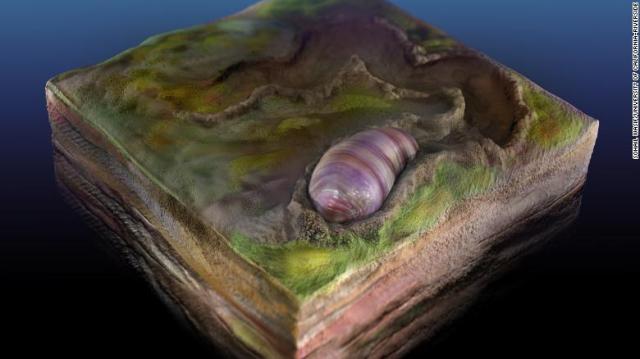
Evidence of a worm-like creature about the size of a grain of rice has been uncovered in South Australia, and researchers believe it is the oldest ancestor on the family tree that includes humans and most animals.

The creature lived 555 million years ago.

It’s considered to be the earliest bilaterian. Bilaterians are organisms with a front, back, two openings on either end and a gut that connects them. They were an evolutionary step forward for early life on Earth.

Some of the oldest life on Earth, including those sponges and algal mats, is referred to as the Ediacaran Biota. This group is based on the earliest fossils ever discovered, providing evidence of complex, multicellular organisms.

But those aren’t directly related to animals living today. And researchers have been trying to find fossilized evidence of the common ancestor of most animals.

Developing bilaterian body structure and organization successfully allowed life to move in specific, purposeful directions. This includes everything from worms and dinosaurs to amphibians and humans.

But for our common ancestor, they knew that fossils of the tiny, simple creatures they imagined would be nearly impossible to find because of its size and soft body.
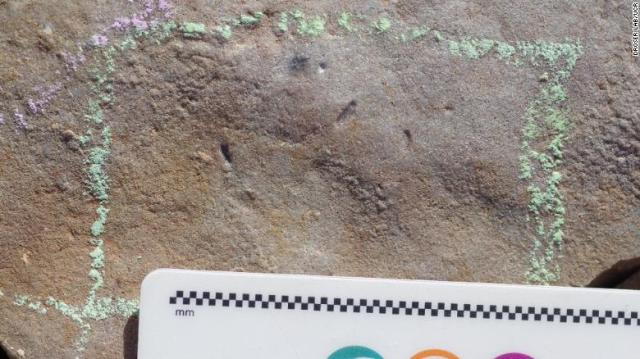

Burrows were found in stone that belonged to a tiny creature who lived billions of years ago.

Then, they turned to fossilized burrows, dated to the Ediacaran Period some 555 million years ago, found in Nilpena, South Australia. For 15 years, scientists knew they were created by bilaterians. But there was no evidence of what made the burrows and lived in them.

That is, until researchers decided to take a closer look at the burrows. Geology professor Mary Droser and doctoral graduate Scott Evans, both from the University of California, Riverside, spotted impressions shaped like ovals near the burrows.

A 3-D laser scan revealed the impressions contained evidence of a body shaped and sized like a rice grain, with a noticeable head, tail and even V-shaped grooves suggesting muscles.

Contractions of the muscles would have enabled the creature to move and create the burrows, like the way a worm moves. Patterns of displaced sediment and signs of feeding led the researchers to determine that it had a mouth, gut and posterior opening.

And the size of the creature matched with the size of the burrows they found.

The study published Monday in the journal Proceedings of the National Academy of Sciences.
“We thought these animals should have existed during this interval, but always understood they would be difficult to recognize,” Evans said. “Once we had the 3D scans, we knew that we had made an important discovery.”
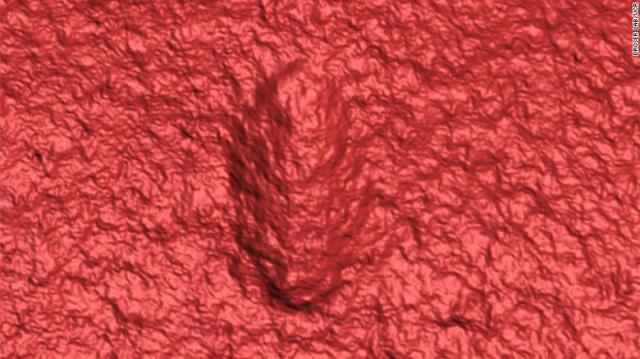

A 3D scan revealed the shape and characteristics of the creature that made the burrows.

The researchers involved in the study named the creature Ikaria wariootia. The first name translates to “meeting place” in the Adnyamathanha language. Adnyamathanha is the name of contemporary Indigenous Australian people that live in the area where the fossil was found. And the name of the species is a variation on a waterway in the area, called Warioota Creek.

The fossilized burrows were found beneath the impressions of other fossils in the lowest layer of Nilpena’s Ediacaran Period deposits. During its lifetime, Ikaria searched for the organic matter it fed on by burrowing through layers of sand on the ocean floor. Given that the burrows track through sand that was oxygenated, rather than toxic spots, suggest the creature had basic senses.

“Burrows of Ikaria occur lower than anything else. It’s the oldest fossil we get with this type of complexity,” Droser said. “We knew that we also had lots of little things and thought these might have been the early bilaterians that we were looking for.”

Droser also explained that other, larger fossils belonging to other creatures they found in the past were likely evolutionary dead-ends.

“This is what evolutionary biologists predicted,” Droser said. “It’s really exciting that what we have found lines up so neatly with their prediction.”

https://www.cnn.com/2020/03/23/world/animal-ancestor-ikaria-scn/index.html

First drug repurposing trial for COVID-19 falls flat

By Anette Breindl

The first attempt at using existing drugs to treat patients infected with SARS-CoV-2 has yielded disappointing results.

In 200 hospitalized patients with severe COVID-19, a 14-day regimen of twice-daily treatment with Kaletra/Aluvia (lopinavir/ritonavir, Abbvie Inc.) did not hasten recovery when added to the standard of care. Chinese clinicians led by Bin Cao of the National Clinical Research Center for Respiratory Diseases reported their findings in the March 19, 2020, issue of The New England Journal of Medicine.

Lopinavir is a protease inhibitor, while ritonavir increases the half-life of lopinavir by inhibiting its metabolism. The drug was tested because screening studies had flagged it as having activity against MERS-CoV, which has led to a clinical trial of a combination of Kaletra/Aluvia and interferon-beta for the treatment of MERS-CoV in the Kingdom of Saudi Arabia.

In the COVID-19 trial, 199 patients were treated, split evenly between drug and standard-of-care groups. The study’s primary endpoint, time to improvement, was the same between the two groups, both of which took 16 days to improve. Mortality and viral load at various time points were also not different.

In an editorial published alongside the paper, Lindsey Baden, of Harvard Medical School, and Eric Rubin, of the Harvard TH Chan School of Public Health, wrote that “the results for certain secondary endpoints are intriguing,” but also acknowledged that those results were hard to interpret, due to a mix of trial size, possible differences in illness severity at baseline, and the fact that the trial was randomized but not blinded.

And if certain endpoints were intriguing, others were discouraging. In particular, viral loads did not differ between the groups, tellingly so, according to Baden and Rubin. “Since the drug is supposed to act as a direct inhibitor of viral replication, the inability to suppress the viral load and the persistent detection of viral nucleic acid strongly suggest that it did not have the activity desired,” they wrote. “Thus, although some effect of the drug is possible, it was not easily observed.”

It is possible that larger trials will yet uncover an effect of Kaletra/Aluvia. But for now, perhaps the best hope is that other drugs will work better – in particular, remdesivir (Gilead Sciences Inc.), which was originally developed for Ebola virus disease, but proved less effective there than several other options.

A paper in the Jan. 10, 2020, issue of Nature Communications investigated the effects of Aluvia on MERS-CoV in mouse experiments, where it showed ho-hum effects. The authors of the Nature Communications paper reported that “prophylactic [Kaletra/Aluvia plus interferon-beta] slightly reduces viral loads without impacting other disease parameters.”

But remdesivir was more effective. “Both prophylactic and therapeutic [remdesivir] improve pulmonary function and reduce lung viral loads and severe lung pathology” in a mouse model of MERS, the authors reported.

Remdesivir is in both an NIH-sponsored clinical trial and a Japanese-Chinese trial as potential COVID-19 treatment, after a January case report of a patient who showed rapid improvement after he was treated with the drug for COVID-19.

Though the Kaletra/Aluvia trial’s results were not as hoped, Baden and Rubin noted that the trial itself was an encouraging bit of news, as well as a “heroic effort…. As we saw during the 2014 Ebola outbreak in West Africa, obtaining high-quality clinical trial data to guide the care of patients is extremely difficult in the face of an epidemic, and the feasibility of a randomized design has been called into question. Yet Cao’s group of determined investigators not only succeeded but ended up enrolling a larger number of patients (199) than originally targeted.”

Regeneron and Sanofi speed Kevzara into coronavirus trials

Dive Brief:

Rheumatoid arthritis drug Kevzara will be used in an international study of patients infected with the new coronavirus and suffering from acute respiratory distress syndrome, Regeneron Pharmaceuticals and Sanofi announced Monday.

The trial will kick off in disease hotspot New York City, expanding to a total of 16 U.S. sites and enrolling 400 patients. The companies aim to study whether Kevzara can reduce fever and the need for supplemental oxygen in patients severely affected by COVID-19, the illness caused by the virus.

Roche’s Actemra, which has a similar mechanism of action, has been tested in Chinese patients and led to a decrease in fever and oxygen use, prompting the country to include it in treatment guidelines. The drug’s use shows the speed with which global public health officials are willing to consider using drugs off-label in order to address the coronavirus pandemic.

Dive Insight:

A vaccine to prevent infections of the novel coronavirus SARS-CoV-2 is likely a year or more away — at best — and treatments specifically designed to fight this virus or its complications are similarly far off.

Possible treatments, however, could already be available in the form of marketed or existing experimental drugs. Global public health officials, eager for a weapon to use in the midst of a global pandemic, are showing a willingness to be flexible in terms of the clinical trials and the evidence needed to prove treatments’ effectiveness.

Earlier this month, China OK’d the use of Actemra in patients with lung complications and high levels of interleukin-6, or IL-6, a protein that mediates inflammatory and immune response. High levels of IL-6 have been associated with a greater risk of death in patients with community-acquired pneumonia.

Actemra and Kevzara both block IL-6 and are prescribed for rheumatoid arthritis, a disorder in which an overactive immune system creates joint-damaging inflammation and pain. Actemra is similarly approved in conjunction with cancer cell therapy, which can sometimes trigger an immune reaction known as cytokine release syndrome.

The U.S.-based Kevzara trial is a two-part design that will initially evaluate fever and oxygen use in patients with acute respiratory distress syndrome, or ARDS. Two different dose levels will be used and compared to a placebo.

Longer-term, the trial hopes to measure prevention of death, use of ventilation, supplemental oxygen or hospitalization, but the design will be “adaptive” to determine the number of patients that will be followed and the endpoints to be used. ARDS often causes permanent lung damage and can lead to early death.

The trial aims to enroll 400 patients in the U.S. Regeneron’s partner Sanofi will handle international trial sites, naming Italy as one likely location for testing in coronavirus patients.

To get the trial underway quickly, Regeneron and Sanofi worked closely with the Food and Drug Administration and the Biomedical Advanced Research and Development Authority, the division of HHS involved in preparing for natural and man-made biological threats.

https://www.biopharmadive.com/news/regeneron-sanofi-kevzara-coronavirus-trial/574208/

The antimicrobial compounds ants excrete to defend themselves from pathogens may protect plants as well.

by Emily Makowski

Some ants produce natural antibiotic chemicals to defend themselves against fungi and bacteria. Ecologist Joachim Offenberg of Aarhus University in Denmark wondered what effect these compounds had on the health of the plants the ants called home. “We had this thought that if ants produce antibiotics, maybe these antibiotics could have an effect . . . on the diseases of the plants they walk on,” he tells The Scientist.

In a review of studies investigating the effect of ants on plant pathogens, he and fellow Aarhus ecologist Christian Damgaard found that, out of 30 plant species that were commonly inhabited by some kind of ant, 18 showed a decrease in the effects of pathogens. These included reduced bacterial load and increased germination rates enjoyed by plants inhabited by ants compared with plants of the same species that did not host ants.

Data have long confirmed that ants provide protection to their botanical hosts by eating pests, says Andreas Schramm, a microbiologist at Aarhus University who was not involved with the study. “The chemical defense of plants is really another direction that the authors quite convincingly put out here,” he says. Overall, Offenberg and Damgaard estimated that the effects of ants’ antibiotics were comparable to the benefits plants receive from the insects’ consumption of herbivorous pests.

Six of the plant species had increased pathogen incidence with ants, however, and six either had no significant difference between groups or insufficient data. Offenberg notes that a plant that hosts ants may already have a major infection that can’t be controlled with ant-produced antimicrobial compounds. Moreover, the insects can inadvertently disperse pathogens: fungal spores, for example, can cling to their legs.

https://www.the-scientist.com/the-literature/ants-produce-antibiotics-that-may-protect-plants-67146?utm_campaign=TS_DAILY%20NEWSLETTER_2020&utm_source=hs_email&utm_medium=email&utm_content=84780129&_hsenc=p2ANqtz-8vy_DyVzYey60_OuWc7ru8xDBOaFDqY8SBmNFDbnwRvOJhcMVtWw5zqUiDUV9Pe3OQONFHw1hSBij4rxpF9ER4OfSsEw&_hsmi=84780129

Second person cured of HIV is still free of active virus two years on


Adam Castillejo, known in the scientific literature as the London Patient, in London’s East End, March 1, 2020.

By Gina Yu and Amy Woodyatt

he second person ever to be cured of HIV is still free of active virus more than two years on, a study published by medical journal The Lancet HIV revealed on Tuesday.

Two and a half years ago, Adam Castillejo — previously identified as the “London patient” — finished HIV antiretroviral therapy.

He underwent a stem cell transplant to treat lymphoma and his donor carried a mutation known as CCR5-delta 32, which made him resistant to HIV.

Researchers said that in treating his lymphoma, they believe Castillejo, now 41, was cured of HIV.

HIV (human immunodeficiency virus) is a life-long viral infection that attacks the body’s immune system and can have significant health consequences. There is no widely available cure, however, the virus is treatable with a combination of drugs known as antiretroviral therapy that reduces the amount of virus in a person’s blood and it is preventable by using PrEP, which was approved by the US Food and Drug Administration in 2012.

According to UNAids there were 37.9 million people globally living with HIV in 2018.

“Our findings show that the success of stem cell transplantation as a cure for HIV, first reported nine years ago in the Berlin patient, can be replicated,” said Ravindra Gupta, lead author of the study and a professor in University of Cambridge’s clinical microbiology department.

Unlike the Berlin patient — identified later as Timothy Ray Brown — Castillejo underwent only one stem-cell transplantation instead of two and did not have radiotherapy to his entire body as part of his treatment.

Castillejo represents a step toward a less intensive treatment approach, the authors said.
Still, given the invasive nature of the experimental treatment, the authors caution its widespread use.

“It is important to note that this curative treatment is high-risk, and only used as a last resort for patients with HIV who also have life-threatening haematological malignancies,” Gupta said. “Therefore, this is not a treatment that would be offered widely to patients with HIV who are on successful antiretroviral treatment.”

Since Castillejo is only the second reported patient to undergo this experimental treatment successfully, the authors note that he will require continued, but much less frequent, monitoring for re-emergence of the virus.

Sharon Lewin, director of the Peter Doherty Institute for Infection and Immunity at the University of Melbourne, said that the case was an “exciting advance” but should be viewed in context.

“It’s hard to know if this is a cure, only time will tell, but this is looking very promising,” Lewin said in a statement sent to CNN.

“This case is an exciting advance, but we need to also place it in context — curing people of HIV via a bone marrow transplant is just not a viable option on any kind of scale. We need to constantly reiterate the importance of, prevention, early testing and treatment adherence as the pillars of the current global response to HIV/AIDS. And maintain the search for an HIV cure,” she added.

In an interview with the New York Times, Castillejo said that he decided to reveal his identity after years of difficult treatments and moments of despair.

“This is a unique position to be in, a unique and very humbling position,” Castillejo told the newspaper. “I want to be an ambassador of hope.”

Kat Smithson, director of policy at the National AIDS Trust, applauded Castillejo for sharing his experience, adding that there is a stigma around HIV which can make it difficult for some people to seek help.

“His story helps raise much-needed awareness of HIV, but broader than that it’s a story about incredible resilience, determination and hope,” she said in a statement to CNN.

https://www.cnn.com/2020/03/10/health/hiv-treatment-cure-london-intl-scli-gbr/index.html

If you drive an expensive car you’re probably a jerk, scientists say

By Rob Picheta

The science is looking pretty unanimous on this one: Drivers of expensive cars are the worst.

A new study has found that drivers of flashy vehicles are less likely to stop and allow pedestrians to cross the road — with the likelihood they’ll slow down decreasing by 3% for every extra $1,000 that their vehicle is worth.

Researchers from the University of Nevada, Las Vegas speculated that the expensive car owners “felt a sense of superiority over other road users” and were less able to empathize with lowly sidewalk-dwellers.

They came to this conclusion after asking volunteers to cross a sidewalk hundreds of times, filming and analyzing the responses by car drivers.

Researchers used one white and one black man, and one white and one black woman — also finding that cars were more likely to yield for the white and female participants. Vehicles stopped 31% of the time for both women and white participants, compared with 24% of the time for men and 25% of the time for black volunteers.

But the best predictor of whether a car would stop was its cost, researchers discovered. “Disengagement and a lower ability to interpret thoughts and feelings of others along with feelings of entitlement and narcissism may lead to a lack of empathy for pedestrians” among costly car owners, they theorized in the study.

And the discovery of a car-value-to-jerkish-behavior correlation isn’t new; the research, published in the Journal of Transport and Health, backed up a Finnish study published last month that found that men who own flashy vehicles are more likely to be “argumentative, stubborn, disagreeable and unempathetic.”

According to that survey of 1,892 drivers by the University of Helsinki, those deemed to have more disagreeable character traits were “more drawn to high-status cars.”

But it also found that conscientious people often favor higher-priced vehicles, too. If you’re reading this while stuck in traffic in your brand new BMW: yes, you’re definitely in that category.

“I had noticed that the ones most likely to run a red light, not give way to pedestrians and generally drive recklessly and too fast were often the ones driving fast German cars,” Helsinki University’s Jan-Erik Lönnqvist said in a press release.

He set out to discover what kind of person is more likely to buy an expensive car, creating a personality test of Finnish car owners.

“The answers were unambiguous: self-centred men who are argumentative, stubborn, disagreeable and unempathetic are much more likely to own a high-status car such as an Audi, BMW or Mercedes,” the press release states.

“These personality traits explain the desire to own high-status products, and the same traits also explain why such people break traffic regulations more frequently than others,” Lönnqvist added.

His study cited previous research that indicated drivers behind the wheel of a costly vehicle are more likely to flout traffic regulations or drive recklessly.

But he also found people with “conscientious” characters seek out pricey models, too.

“People with this type of personality are, as a rule, respectable, ambitious, reliable and well-organised,” the statement said. “They take care of themselves and their health and often perform well at work.”

https://www.cnn.com/2020/02/26/world/expensive-car-drivers-study-scli-scn-intl/index.html

Philip Leder, Who Deciphered Amino Acid Sequences, Dies


The Harvard Medical School researcher’s work on the genetic basis of protein coding and production led him to make groundbreaking discoveries in immunology, molecular biology, and cancer genetics.

by ASHLEY YEAGER

Harvard Medical School molecular geneticist Philip Leder died last week (February 2). He was 85.

Leder was revered for his work in molecular biology, immunology, and cancer genetics. His first scientific breakthrough came in the 1960s when he was working as a postdoc in geneticist Marshall Nirenberg’s lab at the National Institutes of Health (NIH). Together they developed a technique that confirmed that amino acids were encoded by a sequence of three nucleotides and revealed the triplet code of ambiguous amino acids.

From there, Leder went on to determine the first complete sequence of a mammalian gene, develop the first recombinant DNA vector system safe for use in the lab, identify the structure of genes that encode antibody molecules, discover a gene that caused cancer, and develop the first mouse model of cancer.

“Phil Leder was special. Among great scientists, he was special, and among scientists, he was an icon,” David Livingston, a geneticist at Harvard who worked in Leder’s lab at NIH, tells The Scientist. “He was gifted. He was generous. He was a splendid person to listen to talk, to run experiments by, and be criticized by. He was a splendid human being on top of all of it.”

Leder was born on November 19, 1934 in Washington, DC, and grew up there. He attended Western High School, graduated in 1952, and went on to study at Harvard University. He interned at NIH as an undergraduate, working in biochemist Martha Vaughan’s lab in the National Heart Institute, which is now the National Heart, Lung, and Blood Institute. He finished his bachelor’s degree at Harvard in 1956 and stayed there for medical school, graduating in 1960.

After a two-year residency program at the University of Minnesota Hospitals, he returned to NIH to work with Nirenberg. Leder dove headfirst into the race to decipher the way genes encode proteins and helped to design a filtering instrument to rapidly test 45 amino acid samples simultaneously, instead of one at a time. Leder and Nirenberg could quickly tag amino acids with a radioactive label, bind them to triplet RNA sequences, and put them into the filtering instrument, which helped the team decode unknown amino acid codon sequences, well before other scientists could, according to a remembrance on Leder posted by NIH.

It was one of the most exciting times in Leder’s life, he said. “I would go to bed thinking about the next day’s experiments and then jump out of bed in the morning and rush to the laboratory,” he recalled in a 2012 interview with American Society for Biochemistry and Molecular Biology Today. “I stayed late at night. It was a lot of work, but the intellectual excitement was enormous.” The two published their work on the codons in 1964.

Leder’s “work w/Marshall Nirenberg set the stage for the revolution in molecular genetics,” NIH director Francis Collins wrote on Twitter last Friday (February 7).

In 1965, Leder joined the Weizmann Institute in Rehovot, Israel, as a visiting scientist and stayed until 1966. He returned to the NIH, serving as a research medical officer in the National Cancer Institute from 1966 to 1969 and then became head of the Section on Molecular Genetics in the Laboratory of Molecular Genetics in the National Institute of Child Health and Human Development and in 1972 was promoted to the director of the lab.

During this time and through the 1970s, he and his colleagues worked on deciphering the genetic sequence of alpha globin, a component of hemoglobin, a protein in red blood cells that carries oxygen to the body’s cells and tissues. His work also revealed important details about the genetics of encoding antibodies and that the synthesis of antibodies was not only regulated by genetics but also biochemical processes that ensure specificity to target the right antigen presented by viruses, bacteria, or other invaders in the body.

What made Leder such an outstanding scientist, Livingston explains, was his immense rigor. Control experiments, for example, had to be “at least as incisive or demanding and rigorous as the actual experiments . . . to prove that nothing in the discovery experiment was an artifact,” he says. “And he had an immensely adventurous mind. No problem was beyond at least discussion,” which made Leder unique as a mentor. “In fact, his ability to mentor was internationally celebrated,” Livingston explains. “You could listen to his talks, and you knew he was a fantastic teacher because his mind was utterly clear.”

Leder joined Harvard Medical School (HMS) in 1980, founding its genetics department in 1981 and chairing the department for 25 years. His research there led to the discovery of a specific gene, MYC. With Harvard colleague Timothy Stewart, Leder began using a fine glass needle to insert the cancer-causing gene into mouse embryos just after fertilization, thereby creating OncoMouse, a genetic line of mice that were prone to developing the disease. The duo patented the animal in 1988, giving researchers an unprecedented tool to study cancer and how to treat it.

His work at Harvard was not limited to his research. He made fundamental changes to hiring, instituting nationwide searches for new assistant professors in the genetics department, which increased the likelihood of hiring women, notes Jonathan Seidman, a geneticist at Harvard who worked in Leder’s lab at NIH in the 1970s. Leder also made sure the department didn’t get too big, Seidman says, and he insisted that if faculty were on different floors, spiral staircases—rather than drab stairwells—would connect them, making it easy for researchers to communicate and collaborate.

Leder’s “contributions to science and to HMS cannot be overstated, and he will never be forgotten,” George Daley, Harvard’s dean of the faculty of medicine wrote to colleagues on February 4.

For his work, Leder was honored with the Albert Lasker Award for Basic Medical Research, the US National Medal of Science, the Heineken Prize from the Royal Netherlands Academy of Arts of Sciences, and the William Allan Medal from the American Society of Human Genetics. He was a member of the National Academy of Sciences, a Fellow of the American Association for the Advancement of Science, and a Howard Hughes Medical Institute investigator.

Surviving him are his wife, Aya Leder, his children, Micki, Tani, and Ben, his daughters-in-law, Karen Leder and Mary Leder, and his grandchildren, Jacob, David, Sarah, Eli, Alex, Matt, Amanda, and Annie.

Ashley Yeager is an associate editor at The Scientist. Email her at ayeager@the-scientist.com. Follow her on Twitter @AshleyJYeager.

https://www.the-scientist.com/news-opinion/philip-leder–who-deciphered-amino-acid-sequences–dies-67096

Ecuadorian Cactus Absorbs Ultrasound, Enticing Bats to Flowers

by EMILY MAKOWSKI

Plants pollinated by nectar-drinking bats often have flowers that reflect ultrasonic waves, making it easier for the animals to locate flowers through echolocation. But one cactus does the opposite—it absorbs more ultrasound in the area surrounding its flowers, making them stand out against a “quieter” background, according to a preprint published on bioRxiv last month.

Espostoa frutescens is a type of column-shaped cactus found only in the Ecuadorian Andes mountains. It has small flowers on its side that open at night, attracting bats as they fly from flower to flower in search of nectar. One of its main pollinators is Geoffroy’s tailless bat (Anoura geoffroyi).

“Bats are really good pollinators,” Ralph Simon, a postdoc in Wouter Halfwerk’s lab at Vrije Universiteit Amsterdam and the lead author of the preprint, tells The Scientist. “They carry a lot of pollen in their fur, and they have a huge home range so they can transport pollen from plants that grow far apart. For plants with a patchy distribution pattern like this cactus, it’s especially beneficial to rely on bats for pollination,” he says.

For bats to find the flowers at night, they use echolocation, emitting ultrasonic calls too high for humans to hear that bounce off objects and allow the bats to form a mental map of their surroundings. Some plants have evolved techniques that take advantage of this sonar system and allow bats to better detect flowers, such as making their petals more concave, forming a more reflective surface that can bounce more echolocation back to the bat. But E. frutescens takes a different approach.

Each of E. frutescens’s flowers are surrounded by an area of wooly hairs called the cephalium. Simon and colleagues knew from past measurements that the hairs were sound-absorbent, and were interested in seeing whether this part of the cactus could be involved in helping bats find the flowers. They attached a microphone and speaker to a device resembling the shape and size of a bat head in order to mimic a bat, and played prerecorded echolocation calls to the cacti and measured how much sound was reflected back to the bat replica.

The team found that the hairy cephalium absorbed ultrasound, and that the greatest absorption occurred above 90 kHz, in the range of the frequency of Geoffroy’s tailless bat’s echolocation call. The sound that bounced back to the microphone from the cephalium area was about 14 decibels quieter than the sound that bounced off the non-hairy part of the cacti.

It’s a “totally different mechanism” than the reflection method other cacti use, says Simon. “Instead of making the flowers conspicuous, it dampens the background. The background absorbs the ultrasound, and the flowers show up in [the middle of] this absorbent fur.”

This mechanism makes sense from a communication standpoint, writes May Dixon, a graduate student studying bat behavior in Mike Ryan’s lab at the University of Texas at Austin who was not involved with the study, in an email to The Scientist. “If you are trying to send a message, you have to think not only about the message itself but also the context. For example, if you are calling someone, you should be loud enough for them to hear, sure, but you should also call from a quiet place,” she says.

“There is something wonderful about the ways that plants have found to communicate with animals through evolution,” Dixon notes. “A cactus has no sense of what it is to be a bat—it can’t see, smell, or echolocate—but here it is, sending a bat a message in a language that a bat can understand.”

The cephalium appears to have originally evolved to protect flowers from environmental stressors such as UV rays, drying out, getting too cold, or being eaten, but “during evolution, it co-opted another function, and it functions as a sound absorbing structure as well,” says Simon. The evolution of this mechanism benefits both cactus and bat. “From the bat point of view, with this mechanism, they save time. And for them, it’s important to save time, because they have to visit several hundred flowers each night to get enough energy,” he says.

The current study did not look at whether sites on the plants with the highest sound absorption in the bats’ echolocation range “indeed resulted in the highest detection and visitation rates by bats,” says Jan Komdeur, an evolutionary ecologist at University of Groningen in the Netherlands who did not participate in the research, in an email to The Scientist. In the future, researchers could investigate how often real-life bats approach hairy versus experimentally manipulated hairless flowers, he suggests.

Jorge Schondube, an ecologist at the Universidad Nacional Autónoma de México who was not involved with the study, agrees that research on real-life bats is needed. “The pattern’s very clear, but now [researchers] need to show how the mechanism is actually changing the behavior of the bats,” he says.

Still, he’s impressed by the findings so far. “Nature is very creative. And by being creative, it allows the origin of completely new and unimaginable things. It’s really surprising that something like this can happen, and the paper shows it really, really beautifully. . . . What we’re seeing here is something that has not been seen before in terms of sound.”

https://www.the-scientist.com/news-opinion/ecuadorian-cactus-absorbs-ultrasound–enticing-bats-to-flowers-66981?utm_campaign=TS_DAILY%20NEWSLETTER_2020&utm_source=hs_email&utm_medium=email&utm_content=82166272&_hsenc=p2ANqtz-9in3Tqjl731fVW0JE_k3Ht2NOEvCOnql7E5ADhmEp4j43Rrs5Q6gxTipSPvHXAs-8C6MvOvVFdBpktnFeyya1pvZPF2A&_hsmi=82166272

Robert Moir, 58, Dies; His Research Changed Views on Alzheimer’s disease


Dr. Moir’s radical and iconoclastic theories defied conventional views of the disease. But some scientists were ultimately won over.

By Gina Kolata

Robert D. Moir, a Harvard scientist whose radical theories of the brain plaques in Alzheimer’s defied conventional views of the disease, but whose research ultimately led to important proposals for how to treat it, died on Friday at a hospice in Milton, Mass. He was 58.

His wife, Julie Alperen, said the cause was glioblastoma, a type of brain cancer.

Dr. Moir, who grew up on a farm in Donnybrook, a small town in Western Australia, had a track record for confounding expectations. He did not learn to read or write until he was nearly 12; Ms. Alperen said he had told her that the teacher at his one-room schoolhouse was “a demented nun.” Yet, she said, he also knew from age 7 that he wanted to be a scientist.

Dr. Moir succeeded in becoming a researcher who was modest and careful, said his Ph.D. adviser, Dr. Colin Masters, a neuropathologist at the University of Melbourne. So Dr. Masters was surprised when Dr. Moir began publishing papers proposing an iconoclastic rethinking of the pathology of Alzheimer’s disease.

Dr. Moir’s hypothesis “was and is a really novel and controversial idea that he alone developed,” Dr. Masters said.

“I never expected this to come from this quiet achiever,” he said.

Dr. Moir’s theory involved the protein beta amyloid, which forms plaques in the brains of Alzheimer’s patients.

Conventional wisdom held that beta amyloid accumulation was a central part of the disease, and that clearing the brain of beta amyloid would be a good thing for patients.

Dr. Moir proposed instead that beta amyloid is there for a reason: It is the way the brain defends itself against infections. Beta amyloid, he said, forms a sticky web that can trap microbes. The problem is that sometimes the brain goes overboard producing it, and when that happens the brain is damaged.

The implication is that treatments designed to clear the brain of amyloid could be detrimental. The goal would be to remove some of the sticky substance, but not all of it.

The idea, which Dr. Moir first proposed 12 years ago, was met with skepticism. But he kept at it, producing a string of papers with findings that supported the hypothesis. Increasingly, some of the doubters have been won over, said Rudolph Tanzi, a close friend and fellow Alzheimer’s researcher at Harvard.

Dr. Moir’s unconventional ideas made it difficult for him to get federal grants. Nearly every time he submitted a grant proposal to the National Institutes of Health, Dr. Tanzi said in a phone interview, two out of three reviewers would be enthusiastic, while a third would simply not believe it. The proposal would not be funded.

But Dr. Moir took those rejections in stride.

“He’d make a joke about it,” Dr. Tanzi said. “He never got angry. I never saw Rob angry in my life. He’d say, ‘What do we have to do next?’ He was always upbeat, always optimistic.”

Dr. Moir was supported by the Cure Alzheimer’s Fund, and he eventually secured some N.I.H. grants.

Dr. Moir first came to the United States in 1994, when Dr. Tanzi was looking for an Alzheimer’s biochemist to work in his lab. Working with the lab as a postdoctoral fellow and later as a faculty member with his own lab, Dr. Moir made a string of major discoveries about Alzheimer’s disease.

For example, Dr. Moir and Dr. Tanzi found that people naturally make antibodies to specific forms of amyloid. These antibodies protect the brain from Alzheimer’s but do not wipe out amyloid completely. The more antibodies a person makes, the greater the protection against Alzheimer’s.

That finding, Dr. Tanzi said, inspired the development of an experimental drug, which its manufacturer, Biogen, says is helping to treat some people with Alzheimer’s disease. Biogen plans to file for approval from the Food and Drug Administration.

Robert David Moir was born on April 2, 1961, in Kojonup, Australia, to Mary and Terrence Moir, who were farmers. He studied the biochemistry of Alzheimer’s disease at the University of Western Australia before joining Dr. Tanzi’s lab.

Once he learned to read, Ms. Alperen said, he never stopped — he read science fiction, the British magazine New Scientist and even PubMed, the federal database of scientific publications.

“Rob had an encyclopedic knowledge of the natural world,” she said.

He shared that love with his family, on frequent hikes and on trips with his young children to look for rocks, insects and fossils. He also played Australian-rules football, which has elements of rugby as well as American football, and helped form the Boston Demons Australian Rules Football Team in 1997, his wife said.

In addition to his wife, with whom he lived in Sharon, Mass., Dr. Moir’s survivors include three children, Alexander, Maxwell and Holly Moir; a brother, Andrew; and a sister, Catherine Moir. His marriage to Elena Vaillancourt ended in divorce.

Bounding and Galloping crocodiles

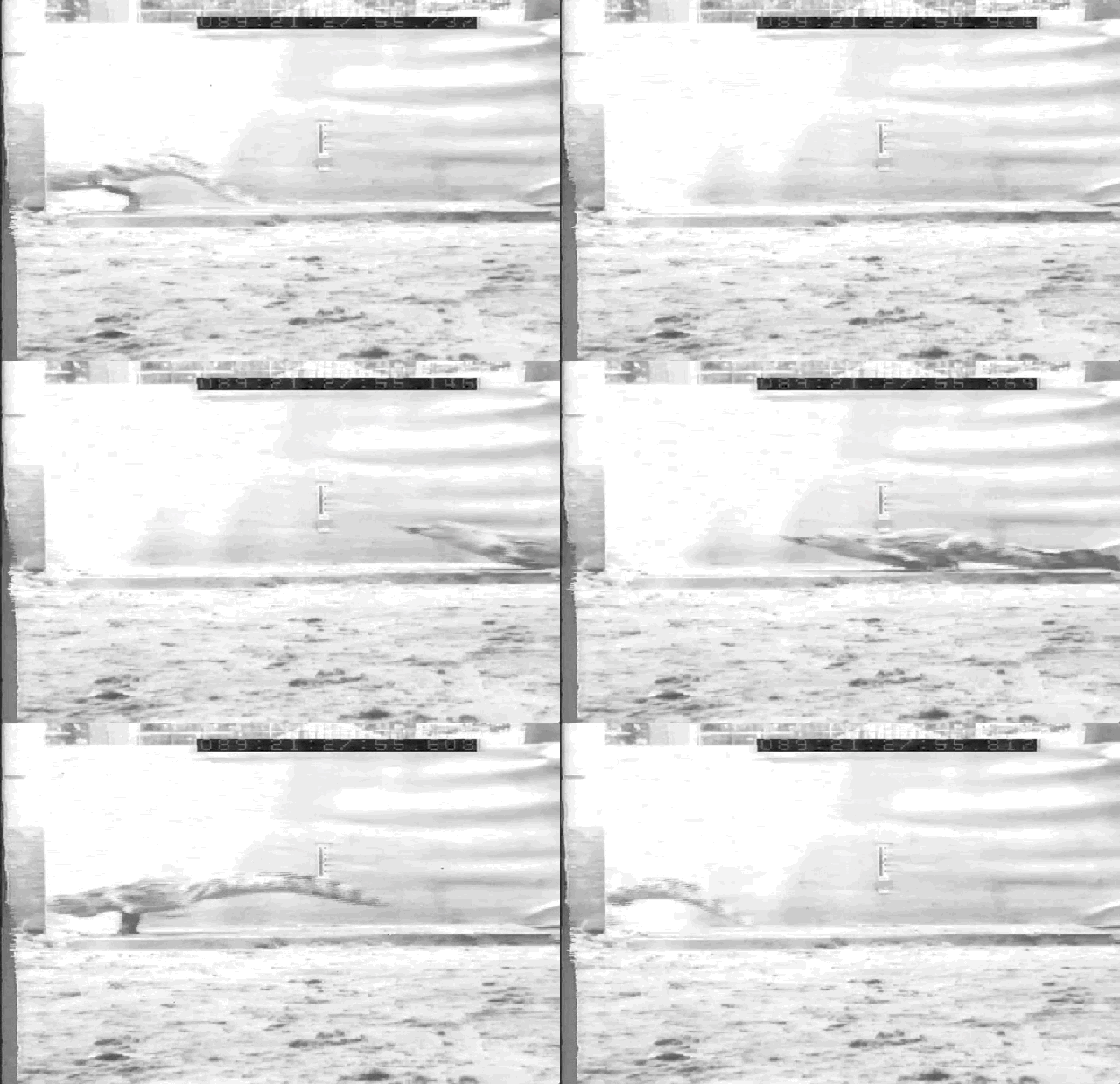
Even on land, crocodiles are no fish out of water. While these reptiles might look lazy and slow sunning on the bank, they can easily pick up speed when necessary, and a scary number can gallop or bound like a horse or a dog.

Bounding is when an animal’s forelimbs hit the ground at the same time, with the back legs pushing off soon after; meanwhile, a gallop is a four-beat sequence whereby the fore and hindlimbs take turns landing.

Freshwater crocodiles from Australia (Crocodylus johnstoni) were historically thought to be the only species capable of doing both. But that’s not actually true. Not even close.

It turns out even scientists have underestimated these creatures. Past research suggested only a handful of croc species were able to gallop, but a new study now adds five more to the mix, suggesting it’s a whole lot more common than we ever thought.

Setting up video cameras around a zoological park in Florida, veterinary scientists analysed the gaits and speeds of 42 individuals from 15 species of crocodylia, which includes true crocodiles (family Crocodylidae), alligators and caimans.

While alligators and caimans were only able to trot on land, the team noticed eight species of crocodile capable of galloping or bounding.

They claim their study is the first to properly document galloping in the Philippine crocodile (Crocodylus mindorensis), the Cuban crocodile (C. rhombifer), the American crocodile (C. acutus), the West-African slender-snouted crocodile (Mecistops cataphractus) and the dwarf crocodile (Osteolaemus tetraspis).

Judging by how common this skill appears to be, there might even be more species that can do the same. There have already been anecdotal reports of galloping in species such as the marsh crocodile (C. palustris) and the New Guinea crocodile (C. novaeguineae).

“We were really surprised at one major thing – despite the different gaits crocodiles and alligators use, they all can run about as fast,” John Hutchinson, a specialist in evolutionary biomechanics at the Royal Veterinary College (RVC), told PA.

No matter what their size, almost every species studied was able to reach nearly 18 kilometres per hour (11 mph), whether it be through trotting, galloping or bounding.

Only crocodiles, however, could use their legs asymmetrically, providing longer stride frequencies, especially among those with smaller body sizes. Why alligators cannot do this remains uncertain, but the researchers think this skill is probably ancestral and has less to do with speed than we thought.

“We suspect that bounding and galloping give small crocodiles better acceleration and manoeuvrability, especially useful for escaping from danger,” explains Hutchinson

“It seems like alligators and caiman stand their ground rather than run away with an extreme gait.”

Similar to other studies, the researchers think the crocodile’s unusual asymmetrical gait came from a long-lost ancestor that lived on the land and had longer legs.

If this is right, it could mean that the ancestors of the alligators somehow lost this ability or no longer express it.

But there’s also another possibility that is rarely acknowledged: the common ancestor of today’s 20 crocodile species may have actually evolved this asymmetrical gait as opposed to inheriting it.

Looking at related species could clear up some of the confusion – the gharial is an Asian fish-eating crocodile that lies outside the Crocodyloidea  and Alligatoroidea ancestry, so if they can be shown to have asymmetrical gaits, it could shed light on how this skill appeared.

But similar to crocodiles and alligators, the gaits of the gharial’s are not well documented, so there’s clearly a lot more research that needs to be done.

“Together, our new observations of asymmetrical gaits and our broader dataset on locomotor kinematics spanning the clade Crocodylia considerably expand our knowledge of their behaviours and natural history,” the authors conclude.

“Importantly, this combined evidence strongly refutes the popular notion that only a few crocodiles use asymmetrical gaits.”

The study was published in Scientific Reports.

https://www.sciencealert.com/approach-with-caution-more-crocodile-species-than-we-thought-can-reach-a-gallop