Paper invented that can be printed with light instead of ink, and reprinted up to 80 times


No ink required to print on this paper — yet look how readable the type is. (Photo: University of California, Riverside/YouTube)

by BRYAN NELSON

As much as 40 percent of our landfills consist of paper and cardboard, and a major source of that material comes from office supplies. Just think of all the paper that gets used and discarded on a daily basis through the printer in your office alone. Even if that paper gets recycled, it still presents a different sort of problem due to pollution associated with the ink removal process.

Then there’s the concern about deforestation. In the United States, about one-third of all harvested trees are used for paper and cardboard production.

Paper and printing is a problem, to be sure. But now, thanks to a breakthrough from a team of scientists at Shandong University in China, the University of California, Riverside, and Lawrence Berkeley National Laboratory, it might be a problem with a solution.

The researchers have invented a new type of rewritable paper that can be printed with light — no ink required. The paper feels like normal paper to the touch, but it’s coated in color-changing nanoparticles that react to UV light. The technology works simply enough: a UV light printer zaps the paper everywhere except where the text is meant to be. The text then boldly stands out against the clear, light-zapped background.

“The greatest significance of our work is the development of a new class of solid-state photoreversible color-switching system to produce an ink-free light-printable rewritable paper that has the same feel and appearance as conventional paper, but can be printed and erased repeatedly without the need for additional ink,” explained Yadong Yin, chemistry professor at the University of California, Riverside. “Our work is believed to have enormous economic and environmental merits to modern society.”

The researchers published a paper on their work in the journal Nano Letters.

The nanoparticles return to their original background state if left untreated for five days, so the text will disappear naturally. (It certainly beats a paper shredder.) But if you wanted to erase and rewrite onto the same paper sooner than that, it will also revert back if heated for only about 10 minutes at 250 degrees Fahrenheit. It’s kind of like a hardcopy version of Snapchat, assuming you’ve got the proper equipment on hand to erase a message after it’s been read.

“We believe the rewritable paper has many practical applications involving temporary information recording and reading, such as newspapers, magazines, posters, notepads, writing easels, product life indicators, oxygen sensors, and rewritable labels for various applications,” said Yin.

Aside from producing little waste, the technology is also inexpensive. The coating materials are so cheap that they add almost nothing to the cost of a sheet of paper. Meanwhile, the printing technology ought to be cheaper than traditional inkjet printers simply because no ink is required. (Imagine never having to change out your ink cartridge again!)

And of course, because the paper can be re-used more than 80 times before the effect is dulled, the technology saves on the cost of paper as well.

“Our immediate next step is to construct a laser printer to work with this rewritable paper to enable fast printing,” said Yin. “We will also look into effective methods for realizing full-color printing.”


http://www.mnn.com/green-tech/research-innovations/stories/scientists-invent-paper-can-be-printed-light-instead-ink

Scientists Finally Figured Out Why Whales Do Awesome Leaps Into the Air

By Drake Baer

Everybody knows that humpback whales make excellent professional wrestlers: With zero hesitation, these gentle giants will leap out of the sea, corkscrew their bodies, and then slam back into the water with 66,000 pounds of fury.

It turns out that these cetaceans aren’t just doing this to show off: According to a recent paper in Marine Mammal Science, the breaching serves as an acoustic telegram, communicating with far-off pods. It’s like how European or African peoples would send sonic signals from village to village via drum, or how wolves howl at the moon. Make a big enough splash, and the percussion speaks for itself.

As noted in the marine-life publication Hakai magazine, University of Queensland marine biologist Ailbhe S. Kavanagh and colleagues observed 76 humpback groups off the coast of Australia for 200 hours between 2010 and 2011. They found that breaching is way more common when pods are at least 2.5 miles apart, with fin- or fluke-slapping deployed when fellow whales are nearby.

The breaching probably carries better than whales’ signature songs: “They’re potentially using [these behaviors] when background noise levels are higher,” Kavanagh tells Hakai, “as the acoustic signal possibly travels better than a vocal signal would.” Given that whale songs have regional accents, you have to wonder if their aerial gymnastics have a certain patois, too.

http://nymag.com/scienceofus/2017/02/why-whales-jump-into-the-air.html

Thanks to Pete Cuomo for bringing this to the It’s Interesting community.

Scientists are building an animal fart database

By Jason Bittel

Do baboons fart? What about salamanders? Millipedes?

These questions sound like the sort Bart Simpson might have asked to derail science class. But real-life scientists are now taking to Twitter to provide answers. So far, they’ve created a hashtag — #DoesItFart — and a Google Spreadsheet that details the flatulence habits of more than 60 animals.

So, which animals cut the proverbial cheese? Tons, it turns out. Bats do, according to David Bennett, a PhD candidate at Queen Mary University of London. And the bigger they are, the harder they honk.

Rats, zebras and bearded dragons are also among Those Creatures That Fart. Birds, on the other hand, do not seem to have a biological need for passing gas, but they could let one rip, theoretically. Marine invertebrates such as oysters, mussels and crabs? Alas, they are whoopee-impaired.

The science of farts is not just about potty humor, by the way. Cattle gas, for example, is a significant contributor to atmospheric methane that contributes to climate change. And fauna flatulence is also a hot topic among certain crowds — ones scientists want to engage.

“Does it fart?” is one of most frequent questions zoologists receive from kids, said Dani Rabaiotti of the Zoological Society of London. In fact, the whole #DoesItFart adventure started when her teenage brother asked if snakes ever experience flatulence. Rabaiotti knew from her own work that the wild dogs of Africa definitely fart, as do the extremely gassy seals that reside on the Atlantic island of South Georgia. But she wasn’t sure about snakes, so she consulted snake expert David Steen.

The short answer is yes, says Steen, a wildlife ecologist at Auburn University. “Snakes sometimes discharge feces and musk as a defensive strategy, and this is often accompanied by what I would consider classic fart noises,” he said.

Steen said this is far from the first time he’s fielded this question, as it seems to be a favorite of the preteen crowd.

“I don’t know if animal flatulence questions can serve as a significant gateway to a greater appreciation of biodiversity, but it is always fun to see what captures people’s attention,” he said. “It is at least an opportunity to engage with a larger audience and bring new folks into the conversation.”

And if engagement is the goal — or at least a byproduct — does it really matter what the topic is? “Just because it’s flatulence doesn’t mean it’s inherently silly,” said Adriana Lowe, a researcher of biological anthropology at the University of Kent in the United Kingdom. “The diets and digestive systems of animals are an important and fascinating field of study, and gas is just a part of that.”

Lowe studies chimpanzees in Uganda’s Budongo forest, animals whose gas appears to vary with their diet. “Fruit is tootier than leaves, and figs seem to be the worst offenders,” she said. On occasion, these bodily functions have even aided in her research. “Several times I have been with one or two chimps and not been aware others are nearby until the farts start,” says Lowe. “Some of them have that very long, air-being-released-from-a-balloon quality, which is handy because it gives you a bit longer to pinpoint where it’s coming from.”

https://www.washingtonpost.com/news/animalia/wp/2017/01/11/scientists-are-building-an-animal-fart-database/?utm_term=.f1296e0091da

Scientists are One Step Closer to Reversing the Aging Process Entirely

by Philip Perry

Researchers at the Salk Institute in La Jolla, California have discovered a way to turn back the hands of time. Juan Carlos Izpisua Belmonte led this study, published in the journal Cell. Here, elderly mice underwent a new sort of gene therapy for six weeks. Afterward, their injuries healed, their heart health improved, and even their spines were straighter. The mice also lived longer, 30% longer.

Today, we target individual age-related diseases when they spring up. But this study could help us develop a therapy to attack aging itself, and perhaps even target it before it begins taking shape. But such a therapy is at least ten years away, according to Izpisua Belmonte.

Many biologists now believe that the body, specifically the telomeres—the structures at the end of chromosomes, after a certain time simply wear out. Once degradation overtakes us, it’s the beginning of the end. This study strengthens another theory. Over the course of a cell’s life, epigenetic changes occur. This is the activation or depression of certain genes in order to allow the organism to respond better to its environment. Methylation tags are added to activate genes. These changes build up over time, slowing us down, and making us vulnerable to disease.


Chromosomes with telomeres in red.

Though we may add life to years, don’t consider immortality an option, at least not in the near-term. “There are probably still limits that we will face in terms of complete reversal of aging,” Izpisua Belmonte said. “Our focus is not only extension of lifespan but most importantly health-span.” That means adding more healthy years to life, a noble prospect indeed.

The technique employs induced pluripotent stem cells (iPS). These are similar to those which are present in developing embryos. They are important as they can turn into any type of cell in the body. The technique was first used to turn back time on human skin cells, successfully.

By switching around four essential genes, all active inside the womb, scientists were able to turn skin cells into iPS cells. These four genes are known as Yamanaka factors. Scientists have been aware of their potential in anti-aging medicine for some time. In the next leg, researchers used genetically engineered mice who could have their Yamanaka factors manipulated easily, once they were exposed to a certain agent, present in their drinking water.

Since Yamanaka factors reset genes to where they were before regulators came and changed them, researchers believe this strengthens the notion that aging is an accumulation of epigenetic changes. What’s really exciting is that this procedure alters the epigenome itself, rather than having the change the genes of each individual cell.


The mechanics of epigenetics.

In another leg of the experiment, mice with progeria underwent this therapy. Progeria is a disease that causes accelerated aging. Those who have seen children who look like seniors know the condition. It leads to organ damage and early death. But after six months of treatment, the mice looked younger. They had better muscle tone and younger looking skin, and even lived around 30% longer than those who did not undergo the treatment.

Luckily for the mice, time was turned back the appropriate amount. If turned back too far, stem cells can proliferate in an uncontrolled fashion, which could lead to tumor formation. This is why researchers have been reticent to activate the Yamanaka factors directly. However, these scientists figured out that by intermittently stimulating the factors, they could reverse the aging process, without causing cancer. The next decade will concentrate on perfecting this technique.

Since the threat of cancer is great, terminally ill patients would be the first to take part in a human trial, most likely those with progeria. Unfortunately, the method used in this study could not directly be applied to a fully functioning human. But researchers believe a drug could do the job, and they are actively developing one.

“This study shows that aging is a very dynamic and plastic process, and therefore will be more amenable to therapeutic interventions than what we previously thought,” Izpisua Belmonte said. Of course, mouse systems and human one’s are far different. This only gives us an indication of whether or not it might work. And even if it does, scientists will have to figure out how far to turn back the clock. But as Izpisua Belmonte said, “With careful modulation, aging might be reversed.”

Small RNA identified that offers clues for quieting the “voices” of schizophrenia


St. Jude Children’s Research Hospital scientists have linked disruption of a brain circuit associated with schizophrenia to an age-related decline in levels of a single microRNA in one brain region

St. Jude Children’s Research Hospital scientists have identified a small RNA (microRNA) that may be essential to restoring normal function in a brain circuit associated with the “voices” and other hallucinations of schizophrenia. The microRNA provides a possible focus for antipsychotic drug development. The findings appear today in the journal Nature Medicine.

The work was done in a mouse model of a human disorder that is one of the genetic causes of schizophrenia. Building on previous St. Jude research, the results offer important new details about the molecular mechanism that disrupts the flow of information along a neural circuit connecting two brain regions involved in processing auditory information. The findings also provide clues about why psychotic symptoms of schizophrenia are often delayed until late adolescence or early adulthood.

“In 2014, we identified the specific circuit in the brain that is targeted by antipsychotic drugs. However, the existing antipsychotics also cause devastating side effects,” said corresponding author Stanislav Zakharenko, M.D., Ph.D., a member of the St. Jude Department of Developmental Neurobiology. “In this study, we identified the microRNA that is a key player in disruption of that circuit and showed that depletion of the microRNA was necessary and sufficient to inhibit normal functioning of the circuit in the mouse models.

“We also found evidence suggesting that the microRNA, named miR-338-3p, could be targeted for development of a new class of antipsychotic drugs with fewer side effects.”

There are more than 2,000 microRNAs whose function is to silence expression of particular genes and regulate the supply of the corresponding proteins. Working in a mouse model of 22q11 deletion syndrome, researchers identified miR-338-3p as the microRNA that regulates production of the protein D2 dopamine receptor (Drd2), which is the prime target of antipsychotics.

Individuals with the deletion syndrome are at risk for behavior problems as children. Between 23 and 43 percent develop schizophrenia, a severe chronic disorder that affects thinking, memory and behavior. Researchers at St. Jude are studying schizophrenia and other brain disorders to improve understanding of how normal brains develop, which provides insights into the origins of diseases like cancer.

The scientists reported that Drd2 increased in the brain’s auditory thalamus when levels of the microRNA declined. Previous research from Zakharenko’s laboratory linked elevated levels of Drd2 in the auditory thalamus to brain-circuit disruptions in the mutant mice. Investigators also reported that the protein was elevated in the same brain region of individuals with schizophrenia, but not healthy adults.

Individuals with the deletion syndrome are missing part of chromosome 22, which leaves them with one rather than the normal two copies of more than 25 genes. The missing genes included Dgcr8, which facilitates production of microRNAs.

Working in mice, researchers have now linked the 22q11 deletion syndrome and deletion of a single Dgcr8 gene to age-related declines in miR-338-3p in the auditory thalamus. The decline was associated with an increase in Drd2 and reduced signaling in the circuit that links the thalamus and auditory cortex, a brain region implicated in auditory hallucination. Levels of miR-338-3p were lower in the thalamus of individuals with schizophrenia compared to individuals of the same age and sex without the diagnosis.

The miR-338-3p depletion did not disrupt other brain circuits in the mutant mice, and the findings offer a possible explanation. Researchers found that miR-338-3p levels were higher in the thalamus than in other brain regions. In addition, miR-338-3p was one of the most abundant microRNAs present in the thalamus.

Replenishing levels of the microRNA in the auditory thalamus of mutant mice reduced Drd2 protein and restored the circuit to normal functioning. That suggests that the microRNA could be the basis for a new class of antipsychotic drugs that act in a more targeted manner with fewer side effects. Antipsychotic drugs, which target Drd2, also restored circuit function.

The findings provide insight into the age-related delay in the onset of schizophrenia symptoms. Researchers noted that microRNA levels declined with age in all mice, but that mutant mice began with lower levels of miR-338-3p. “A minimum level of the microRNA may be necessary to prevent excessive production of the Drd2 that disrupts the circuit,” Zakharenko said. “While miR-338-3p levels decline as normal mice age, levels may remain above the threshold necessary to prevent overexpression of the protein. In contrast, the deletion syndrome may leave mice at risk for dropping below that threshold.”

The study’s first authors are Sungkun Chun, Fei Du and Joby Westmoreland, all formerly of St. Jude. The other authors are Seung Baek Han, Yong-Dong Wang, Donnie Eddins, Ildar Bayazitov, Prakash Devaraju, Jing Yu, Marcia Mellado Lagarde and Kara Anderson, all of St. Jude.

https://www.stjude.org/media-resources/news-releases/2016-medicine-science-news/small-rna-identified-that-offers-clues-for-quieting-the-voices-of-schizophrenia.html

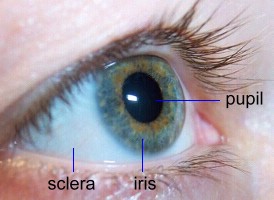
Pupil response to negative facial expressions predicts risk for depression relapse

Pupil dilation in reaction to negative emotional faces predicts risk for depression relapse, according to new research from Binghamton University, State University of New York.

Researchers at Binghamton University, led by PhD student Anastacia Kudinova, aimed to examine whether physiological reactivity to emotional stimuli, assessed via pupil dilation, served as a biological marker of risk for depression recurrence among individuals who are known to be at a higher risk due to having previous history of depression. Participants were 57 women with a history of major depressive disorder (MDD). The researchers recorded the change in pupil dilation in response to angry, happy, sad and neutral faces. The team found that women’s pupillary reactivity to negative (sad or angry faces) but not positive stimuli prospectively predicted MDD recurrence.

“The study focuses on trying to identify certain markers of depression risk using measures that are readily accessible, reliable and less expensive,” said Kudinova. “It is something we can put in any doctor’s office that gives us a quick and easy objective measure of risk.”

Additionally, the researchers found that both high and low reactivity to angry faces predicted risk for MDD recurrence. These findings suggest that disrupted physiological response to negative stimuli indexed via pupillary dilation could serve as a physiological marker of MDD risk, thus presenting clinicians with a convenient and inexpensive method to predict which of the at-risk women are more likely to experience depression recurrence.

“It’s a bit complicated because different patterns of findings were found for pupil reactivity to angry versus sad faces. Specifically, really high or really low pupil dilation to angry faces was associated with increased risk whereas only low dilation to sad faces was associated with risk (high dilation to sad faces was actually protective),” said Brandon Gibb, professor of psychology at Binghamton University and director of the Mood Disorders Institute and Center for Affective Science.

Other contributors to this research include Katie Burkhouse and Mary Woody, both PhD students; Max Owens, assistant professor of psychology at the University of South Florida, St. Petersburg; and Greg Siegle, associate professor of psychiatry at the University of Pittsburgh School of Medicine.
The paper, “Pupillary reactivity to negative stimuli prospectively predicts recurrence of major depressive disorder in women,” was published in Psychophysiology.

https://www.binghamton.edu/mpr/news-releases/news-release.html?id=2448

How to make phosphorus by doing disgusting things with urine

by Esther Inglis-Arkell

Hennig Brand discovered the element of phosphorus in 1669. That sounds like quite an achievement, but Brand’s life wasn’t one that should, necessarily, be emulated. His steps to discovering this element were undignified, to say the least. His first step was marrying well; he was an officer in the army, but his wife had enough money for him to leave. She didn’t have enough money overall — at least not according to Brand — and so he used what money she had to try to make more money.

Sadly, his chosen path for this increase in wealth was alchemy. He wanted to come up with the philosopher’s stone, which turned everyday elements into gold. At that stage, the science generally meant doing weird and dangerous things to any substance scientists could get their hands on. It wasn’t cheap, and Brand burned through all of his wife’s money. She didn’t have to live in poverty only because she was born in the 1600s, and so died young. Brand mourned for a time, and then went in search of another financially secure wife. Surprisingly, he got one.

As soon as he got his hands on her money, he started his experiments again. Alchemists tried anything, but they generally fixated on certain substances. Terribly rare and precious elements were popular, but so were human fluids. Humans were alchemical factories, turning ordinary substances like meat and grain into all kinds of things. The easiest thing to be got from the body was urine, and Brand, somehow, acquired a lot of it. About 1500 gallons of urine went into his experiment, but it paid off. After a complicated process of boiling and separating and recombining, he utterly failed to come up with gold. He did, however, come up with something he called “cold fire.” It glowed, perpetually, in the dark. It was what we now call phosphorus.

Although no direct use was found for cold fire in Brand’s life, people were fascinated with it. Brand capitalized on that — probably to his wife’s great relief. He sold the secret to anyone who would pay enough, including Wilhelm Leibniz, the inventor of calculus. The buyers sold the secret to others, but it remained valuable and well-kept until 1737, when someone sold it to the Academy of Science in Paris and it was published.

How do you get phosphorus from urine? Boil the urine until it’s a “syrup.” Heat the syrup until a red oil comes out of it. Grab that oil! Let the rest cool. The substance will cool into two parts, a black upper part and a grainy lower part. Scrape off the lower part and throw it away. Mix the oil back into the black upper part. Heat that for about 16 hours. The oil will come back out, followed by phosphorus fumes. Channel the phosphorus into water to cool it down. Voila.

Lying feels bad at first but our brains soon adapt to deceiving

By Jessica Hamzelou

Lies have a tendency to snowball, because the more we lie, the more our brains become desensitised to the act of lying. Could this discovery help prevent dishonesty spiralling out of control? It isn’t difficult to think of someone who has ended up in a tangled web of their own lies. In many cases, the lies start small, but escalate.

Tali Sharot at University College London and her colleagues wondered if a person’s brain might get desensitised to lying, in the same way we get used to the horror of a violent image if we see it enough times. Most people feel guilty when they intentionally deceive someone else, but could this feeling ebb away with practice?

To find out, Sharot and her colleagues set up an experiment that encouraged volunteers to lie. In the task, each person was shown jars of pennies, full to varying degrees. While in a brain scanner, each person had to send their estimate to a partner in another room.

The partner was only shown a blurry low-resolution image of the jar, and so relied on the volunteer’s estimate. In some rounds, a correct answer would mean a financial reward for both the volunteer and their partner. But in others, the volunteer was told that a wrong answer from the partner would result in a higher reward for them, but a lower reward for their partner – and the more incorrect the answer, the greater the personal reward. In other rounds, incorrect answers benefited the partner, but not the volunteer.

Sharot found that her volunteers seemed happy to lie if it meant that their partner would benefit. On each of these rounds, the volunteer lied to the same degree. But when it came to self-serving lies, the volunteer’s dishonesty escalated over time – each lie was greater than the one before. For example, a person might start with a lie that earned them £1, but end up telling untruths worth £8.

Brain scans showed that the first lie was associated with a burst of activity in the amygdalae, areas involved in emotional responses. But this activity lessened as the lies progressed. The effect was so strong that the team could use a person’s amygdala activity while they were lying to predict how big their next lie would be.

“When you lie or cheat for your own benefit, it makes you feel bad,” says Sophie van der Zee at the Free University of Amsterdam in the Netherlands. “But when you keep doing it, that feeling goes away, so you’re more likely to do it again.”

“This highlights the danger of engaging in small acts of dishonesty,” says Sharot. Frequent liars are also likely to be better at lying, and harder to catch out, she says. That’s because the amygdala is responsible for general emotional arousal, and all the clues we would normally look for in a liar, such as nervous sweating.

Sharot hopes that her research will help us avoid the spiralling of lies. “If you can understand the mechanism, you might be able to nudge people away from dishonesty,” she says.

One way could be by playing on a person’s emotions to boost the level of activity in the amygdala, says Sharot. “For example, if a government wants people to pay their taxes, they might want to make an emotional case for doing so,” she says.

Van der Zee is working with insurance companies to encourage their customers to file honest claims. In her own research, she has found that people are more likely to lie if they feel they have been rejected, so she is working on ways to reduce the number of failed claims. She has also found that people are more likely to fill in claims forms honestly if they sign their name at the top of the page, before they start filling it in, rather than at the end.

Journal reference: Nature Neuroscience, DOI: 10.1038/nn.4426

https://www.newscientist.com/article/2110130-lying-feels-bad-at-first-but-our-brains-soon-adapt-to-deceiving/

‘Brain wi-fi’ shown to be able to reverse leg paralysis in a primate.

By James Gallagher

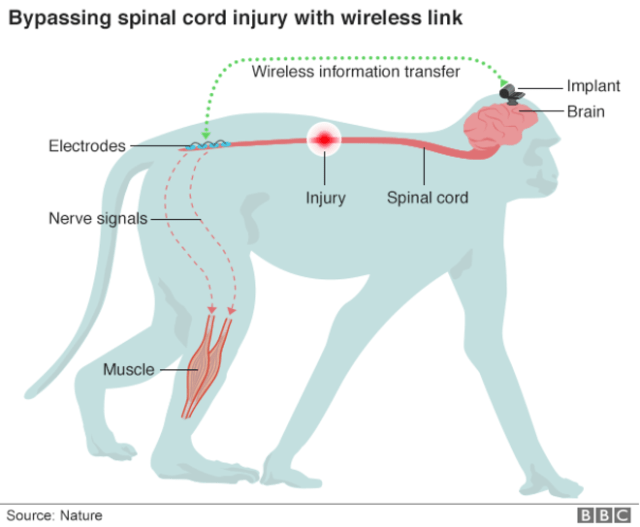
An implant that beams instructions out of the brain has been used to restore movement in paralysed primates for the first time, say scientists.

Rhesus monkeys were paralysed in one leg due to a damaged spinal cord. The team at the Swiss Federal Institute of Technology bypassed the injury by sending the instructions straight from the brain to the nerves controlling leg movement. Experts said the technology could be ready for human trials within a decade.

Spinal-cord injuries block the flow of electrical signals from the brain to the rest of the body resulting in paralysis. It is a wound that rarely heals, but one potential solution is to use technology to bypass the injury.

In the study, a chip was implanted into the part of the monkeys’ brain that controls movement. Its job was to read the spikes of electrical activity that are the instructions for moving the legs and send them to a nearby computer. It deciphered the messages and sent instructions to an implant in the monkey’s spine to electrically stimulate the appropriate nerves. The process all takes place in real time. The results, published in the journal Nature, showed the monkeys regained some control of their paralysed leg within six days and could walk in a straight line on a treadmill.

Dr Gregoire Courtine, one of the researchers, said: “This is the first time that a neurotechnology has restored locomotion in primates.” He told the BBC News website: “The movement was close to normal for the basic walking pattern, but so far we have not been able to test the ability to steer.” The technology used to stimulate the spinal cord is the same as that used in deep brain stimulation to treat Parkinson’s disease, so it would not be a technological leap to doing the same tests in patients. “But the way we walk is different to primates, we are bipedal and this requires more sophisticated ways to stimulate the muscle,” said Dr Courtine.

Jocelyne Bloch, a neurosurgeon from the Lausanne University Hospital, said: “The link between decoding of the brain and the stimulation of the spinal cord is completely new. “For the first time, I can image a completely paralysed patient being able to move their legs through this brain-spine interface.”

Using technology to overcome paralysis is a rapidly developing field:
Brainwaves have been used to control a robotic arm
Electrical stimulation of the spinal cord has helped four paralysed people stand again
An implant has helped a paralysed man play a guitar-based computer game

Dr Mark Bacon, the director of research at the charity Spinal Research, said: “This is quite impressive work. Paralysed patients want to be able to regain real control, that is voluntary control of lost functions, like walking, and the use of implantable devices may be one way of achieving this. The current work is a clear demonstration that there is progress being made in the right direction.”

Dr Andrew Jackson, from the Institute of Neuroscience and Newcastle University, said: “It is not unreasonable to speculate that we could see the first clinical demonstrations of interfaces between the brain and spinal cord by the end of the decade.” However, he said, rhesus monkeys used all four limbs to move and only one leg had been paralysed, so it would be a greater challenge to restore the movement of both legs in people. “Useful locomotion also requires control of balance, steering and obstacle avoidance, which were not addressed,” he added.

The other approach to treating paralysis involves transplanting cells from the nasal cavity into the spinal cord to try to biologically repair the injury. Following this treatment, Darek Fidyka, who was paralysed from the chest down in a knife attack in 2010, can now walk using a frame.

Neither approach is ready for routine use.

http://www.bbc.com/news/health-37914543

Thanks to Kebmodee for bringing this to the It’s Interesting community.

Pain Sensitivity Can Be Socially Transmitted Via Olfactory Cues

by Tori Rodriguez, MA, LPC

The social transmission of emotions has been reported in several studies in recent years. Research published in 2013, for example, found that joy and fear are transmissible between people, while a 2011 study showed that stress — as measured by an increase in cortisol — can be transmitted from others who are under pressure.1,2 Results of a new study that appeared in Science Advances suggest that pain may also be communicable.3

“Being able to perceive and communicate pain to others probably gives an evolutionary advantage to animals,” study co-author Andrey E. Ryabinin, PhD, a professor of behavioral neuroscience at Oregon Health & Science University, told Clinical Pain Advisor. Such awareness may trigger self-protective or caretaking behaviors, for instance, that facilitate the survival of the individual and the group.
In the current study, Ryabinin and colleagues investigated whether “bystander” mice would develop hyperalgesia after being housed in the same room as “primary” mice who had received a noxious stimulus. In one experiment, the paws of primary mice were injected with complete Freund’s adjuvant (CFA), which, as expected, induced persistent hypersensitivity that was apparent for 2 weeks. Bystander mice who had been injected with phosphate-buffered saline (PBS) similarly demonstrated hypersensitivity throughout the same 2-week period.

Bystander mice also displayed acquired hypersensitivity in another set of experiments in which primary mice experienced pain related to withdrawal from morphine and alcohol. This suggests that the transfer of hyperalgesia is not limited to the effects of inflammatory stimuli. In addition, the transfer was consistent across mechanical, thermal, and chemical modalities of nociception.

Tests revealed that nociceptive thresholds returned to basal levels in both primary and bystander mice within 4 days, and the transferred hyperalgesia was not accounted for by familiarity, as the effects were similar between mice that were not familiar with the others and those that were.
Finally, the authors determined that the transfer of hyperalgesia was mediated by olfactory cues (as measured by exposing naïve mice to the bedding of hypersensitive co-housed mice), and it could not be accounted for by anxiety, visual cues, or stress-induced hyperalgesia.

Future research is needed to pinpoint the molecular messenger involved in the transfer of hyperalgesia, and whether a similar process occurs in humans.

“Here we show for the first time that you do not need an injury or inflammation to develop a pain state–pain can develop simply because of social cues,” said Dr Ryabinin. These findings have important implications for the treatment of chronic pain patients. “We cannot dismiss people with chronic pain if they have no physical pathology. They can be in pain without the pathology and need to be treated for their pain despite lack of injury.”

References
Dezecache G, Conty L, Chadwick M, et al. Evidence for Unintentional Emotional Contagion Beyond Dyads.PLoS One. 2013; 8(6): e67371.
Buchanan TW , Bagley SL, Stansfield RB, Preston SD. The empathic, physiological resonance of stress. Soc Neurosci. 2012; 7(2):191-201.
Smith ML, Hostetler CM, Heinricher MM, Ryabinin AE. Social transfer of pain in mice. Sci Adv. 2016; 2(10): e1600855.

http://www.psychiatryadvisor.com/anxiety/social-transfer-of-hyperalgesia/article/571087/?DCMP=EMC-PA_Update_RD&cpn=psych_md%2cpsych_all&hmSubId=&NID=1710903786&dl=0&spMailingID=15837872&spUserID=MTQ4MTYyNjcyNzk2S0&spJobID=902320519&spReportId=OTAyMzIwNTE5S0