This new blood test can detect early signs of 8 kinds of cancer

By DEBORAH NETBURN

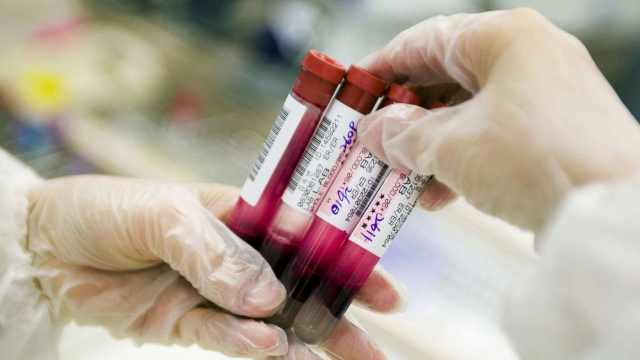
Scientists have developed a noninvasive blood test that can detect signs of eight types of cancer long before any symptoms of the disease arise.

The test, which can also help doctors determine where in a person’s body the cancer is located, is called CancerSEEK. Its genesis is described in a paper published Thursday in the journal Science.

The authors said the new work represents the first noninvasive blood test that can screen for a range of cancers all at once: cancer of the ovary, liver, stomach, pancreas, esophagus, colon, lung and breast.

Together, these eight forms of cancer are responsible for more than 60% of cancer deaths in the United States, the authors said.

In addition, five of them — ovarian, liver, stomach, pancreatic and esophageal cancers — currently have no screening tests.

“The goal is to look for as many cancer types as possible in one test, and to identify cancer as early as possible,” said Nickolas Papadopoulos, a professor of oncology and pathology at Johns Hopkins who led the work. “We know from the data that when you find cancer early, it is easier to kill it by surgery or chemotherapy.”

CancerSEEK, which builds on 30 years of research, relies on two signals that a person might be harboring cancer.

First, it looks for 16 telltale genetic mutations in bits of free-floating DNA that have been deposited in the bloodstream by cancerous cells. Because these are present in such trace amounts, they can be very hard to find, Papadopoulos said. For example, one blood sample might have thousands of pieces of DNA that come from normal cells, and just two or five pieces from cancerous cells.

“We are dealing with a needle in a haystack,” he said.

To overcome this challenge, the team relied on recently developed digital technologies that allowed them to efficiently and cost-effectively sequence each individual piece of DNA one by one.

“If you take the hay in the haystack and go through it one by one, eventually you will find the needle,” Papadopoulos said.

In addition, CancerSEEK also screens for eight proteins that are frequently found in higher quantities in the blood samples of people who have cancer.

By measuring these two signals in tandem, CancerSEEK was able to detect cancer in 70% of blood samples pulled from 1,005 patients who had already been diagnosed with one of eight forms of the disease.

The test appeared to be more effective at finding some types of cancer than others, the authors noted. For example, it was able to spot ovarian cancer 98% of the time, but was successful at detecting breast cancer only 33% of the time.

The authors also report that CancerSEEK was better at detecting later stage cancer compared to cancer in earlier stages. It was able to spot the disease 78% of the time in people who had been diagnosed with stage III cancer, 73% of the time in people with stage II cancer and 43% of the time in people diagnosed with stage I cancer.

“I know a lot of people will say this sensitivity is not good enough, but for the five tumor types that currently have no test, going from zero chances of detection to what we did is a very good beginning,” Papadopoulos said.

It is also worth noting that when the researchers ran the test on 812 healthy control blood samples, they only saw seven false-positive results.

“Very high specificity was essential because false-positive results can subject patients to unnecessary invasive follow-up tests and procedures to confirm the presence of cancer,” said Kenneth Kinzler, a professor of oncology at Johns Hopkins who also worked on the study.

Finally, the researchers used machine learning to determine how different combination of proteins and mutations could provide clues to where in the body the cancer might be. The authors found they could narrow down the location of a tumor to just a few anatomic sites in 83% of patients.

CancerSEEK is not yet available to the public, and it probably won’t be for a year or longer, Papadopoulos said.

“We are still evaluating the test, and it hasn’t been commercialized yet,” he said. “I don’t want to guess when it will be available, but I hope it is soon.”

He said that eventually the test could cost less than $500 to run and could easily be administered by a primary care physician’s office.

In theory, a blood sample would be taken in a doctor’s office, and then sent to a lab that would look for the combination of mutations and proteins that would indicate that a patient has cancer. The data would then go into an algorithm that would determine whether or not the patient had the disease and where it might be.

“The idea is: You give blood, and you get results,” Papadopoulos said.

http://beta.latimes.com/science/sciencenow/la-sci-sn-blood-test-cancer-20180118-story.html

Recovering from Locked-In Syndrome

By Robert McCoppin

Lying motionless in a hospital bed, Jose Rodriguez Jr. lost the will to live.

He’d suffered a stroke, fallen into a coma and awoken with an extremely rare condition known as locked-in syndrome. He was unable to move anything except for his eyes.

Previously a healthy young man, Rodriguez now couldn’t walk, talk, swallow or even breathe on his own. He felt trapped inside his body.

As the reality of his situation sunk in — that he could no longer work or hug his mother — Junior, as his family calls him, felt the life he’d had was over. He wanted to die.

To survive, doctors said, he needed surgery for a tracheotomy, to attach a ventilator through his throat to keep him breathing.

Rodriguez’s father pleaded with him to have the life-saving operation. But now that he was conscious, the decision was his.

When the doctors asked for his answer — looking up meant yes; down was no — Rodriguez didn’t respond at first. He thought of his father, with whom he’d always been close; the two even worked at the same Naperville warehouse. However desperate his situation, Junior decided, he did not want to let his father down. He rolled his eyes upward. He would do what he could to survive.

That decision began a long, torturous journey for Rodriguez, his family and a team of medical workers. Eventually, it would move him into an even rarer status: someone who is recovering from locked-in syndrome.

His experience reflects a movement in stroke treatment toward therapy that promotes new connections and functions between nerve cells, called neuroplasticity. Where the brain was previously thought to have little ability to regenerate, recent research has suggested that exercise and movement can promote healing. The idea is to get the body moving, and the brain follows.

Rodriguez’s decision wasn’t without some second-guessing, though, as he faced a seemingly insurmountable challenge to move again.

“It was only (from) my mom and dad’s constant reassurance that I’d get better (that) I had a change of heart,” Rodriguez said in an email. “Ever since then I’ve been working to get myself better.”

Uncomfortably numb

On Aug. 5, 2013, Rodriguez felt a sharp pain in his head and strange numbness on his side. He didn’t think much of it, and it soon went away. He went to work, moving heavy shipping orders at a train parts facility.

Co-workers warned his symptoms could be signs of a stroke but, Rodriguez, then 31, thought he was too young and healthy for that.

The next morning, the headache was back and worse, and now his entire left side was numb. He drove himself to the emergency room at Rush Copley Medical Center in Aurora, where, he later wrote in a memoir about his ordeal: “My whole body began to shake uncontrollably. … I tried so hard to stop shaking, but I couldn’t. I blacked out and that’s all I remember.”

Rodriguez was airlifted to Central DuPage Hospital in Winfield, where he underwent a four-hour surgery to remove the clot causing his stroke. He was in a coma for about 12 days.

When he came to, he not only was paralyzed, but his brain could no longer regulate his body temperature. He became so overheated that sweat pooled in his eye sockets. He was packed in ice with fans blowing on him.

Early on, Rodriguez — who shared his recollections through his memoir and via email, with his family and some of his medical attendants confirming details — suffered severe hiccups that caused a hernia. He underwent another surgery to repair the hernia and install a feeding tube. He still uses that, subsisting on a liquid diet.

During those times, his father often slept in his room because he was afraid to be alone. His mother and six younger brothers also visited frequently. One of his uncles promised him $100 if he could someday give the middle finger.

Every day, a nurse tested his reactions by pinching his finger. Unlike some people with paralysis, Rodriguez can feel his body, and he flinched every time. But medical workers were still waiting for some sign that he could initiate voluntary movement.


Extreme paralysis, extremely rare

The extremely rare condition of locked-in syndrome occurs when the brain stem is disabled and can no longer relay signals for functions like movement, breathing and heart rate. The syndrome can develop from a stroke, tumor, injury or from ALS, also known as Lou Gehrig’s disease. French journalist Jean-Dominique Bauby described the condition in his 1997 memoir “The Diving Bell and the Butterfly,” later made into a film.

Most people with locked-in syndrome don’t regain movement. In one study of 14 patients, about 20 percent recovered some movement, about 30 percent regained some verbal communication and about half were weaned off a ventilator.

Rodriguez’s recovery appears to be a good example of neuroplasticity at work, according to expert Edward Taub, a University of Alabama at Birmingham professor of psychology not involved in Rodriguez’s treatment.

As director of the university’s Taub Therapy Clinic, he oversees treatment of patients with strokes and other injuries. His clinic uses constraint-induced therapy, in which patients use incapacitated limbs to repeat tasks like moving checkers to build up fine motor skills.

The key, Taub said, is to increase the difficulty of the task slowly so the patient keeps striving to improve. Through repetitive motions, and more intensive therapy than is otherwise typical, the theory is, the brain grows new connections to rewire itself.

“The heart of it is, use it or lose it,” Taub said. “If you use it, it’ll keep improving.”

Rough road to rehabilitation

Rodriguez took that attitude to heart. After recovering from surgery, he tried each day to make some movement with his body, and by the time he left the hospital, he was able to open his mouth slightly. Eventually he could breathe on his own, his ventilator was removed and he was sent to the Rehabilitation Institute of Chicago, now called Shirley Ryan AbilityLab.

There, he began different therapies to relearn how to speak, eat and move. One therapist had him work on moving his head from side to side.

To communicate, he would spell out words by lifting his head when a therapist pointed to letters on a card. It was laborious, but it allowed him to convey thoughts beyond yes and no.

There were times, he said, that staff members made no effort to communicate with him or left him in his wheelchair or leg braces too long until it became painful.

“I never felt so vulnerable,” he said.

His family transferred him to Marianjoy Rehabilitation Hospital in Wheaton, closer to home. There, he would meet the team that would help to bring him back to life.

At Marianjoy, a speech therapist made sure his teeth were brushed every day, encouraged him to make what few sounds he could with his voice and got him to begin eating a bit of blueberry yogurt.

He later practiced chewing gum with a string attached so he could pull it out without swallowing, and eventually was able to eat pureed food.

He also tried his first motorized wheelchair, which he directed with head movements, but it was difficult and scary for him since he couldn’t control it well.

Like some other stroke patients, it was also very hard for Rodriguez to control his emotions. Sometimes he would laugh uncontrollably at inappropriate times, and worried that people thought he was laughing at them.

One day, while sitting in a wheelchair with other patients waiting for therapy, it struck Rodriguez how profoundly disabled he was, and he began sobbing uncontrollably. Using the letter board, he kept asking his parents, “Why me? I don’t deserve this, and I just want to be normal again.”

He blamed God for what happened, until his father convinced him that if God controlled such things, only murderers and rapists would be struck down.

“He was right. Circumstances put me in this situation, and only I could get myself out,” Rodriguez wrote in his memoir. “When I got to Marianjoy’s garden outside I was suddenly hit by how beautiful the day was and started to weep. It was a lesson for me not to take anything for granted, and appreciate even the little things.”

Slowly, he began to recover a lot of movement in his right arm and leg, but not on his left side. Therapists used robotic exo-skeletons to move his left arm and to help him walk. The exo-skeleton provided all the motion to start with, then less and less as he learned to move using his own power.

That’s crucial to relearning movement, researchers say, because to rewire neurons, the brain has to will the movement and then learn from trial and error, like a toddler, rather than just letting the body move passively.

The physician who oversaw his rehabilitation at Marianjoy, Dr. Anjum Sayyad, said Rodriguez’s recovery was a testament to his youth and health, his motivation to get better and his family’s support.

“It was really unusual to see how much he recovered, probably the best I’ve ever seen in a locked-in patient,” Sayyad said. “He is a walking miracle. Jose taught me that for any patient, regardless of their diagnosis, you can’t assume what’s going to happen. I have much more faith in what people can do.”

For locked-in patients who don’t show such strides, though, researchers are trying to find other ways to reach them. Ongoing studies are looking into whether brain-computer interfaces can help patients communicate.

One study out of the Netherlands, for instance, claims to be the first to test whether a device implanted in the brain can read activity directly in the brain and convert it to a digital switch, initially to answer yes or no questions, and eventually for other commands.


A new life back home

With daily practice and effort, Rodriguez learned to breathe on his own and get rid of the tracheotomy tube in his throat, which made him much happier. With the help of therapist Kelly Ball and a support harness, he gradually learned to stand, then to take a few steps and then to walk about 70 feet.

He also learned to operate a power wheelchair with his hand, and doctors cleared him to go home.

Though Rodriguez owned his own house, he moved into his father’s home in Aurora, where his brothers and stepmother help to take care of him. His father built a ramp so his son could wheel into his own room on the ground floor, and installed a bell for his son to ring anytime he needs help.

“He was always very strong-willed, very positive,” Jose Rodriguez Sr. said. “I push him as much as I can. He tries as hard as he can. Of course I’m proud of him.”

To communicate, Rodriguez Jr. learned to use a Tobii eye-tracking device, with which he could type letters into a computer by focusing his eyes on one letter at a time. With that, he could speak with a computerized voice, write emails and texts, set an alarm, use Facebook and other apps, play games and music, and take photos.

As he recovered more movement in his hand, he began to write on a laptop, typing with one finger. Rodriguez had written fiction for years as a hobby before his stroke, and since has continued writing a series of science fiction/fantasy books called “The Guardians of Rhea,” in which monsters are re-imagined as races that must join together to fight evil.

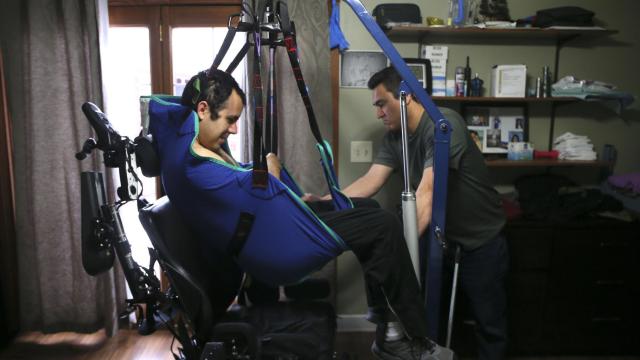
With his father’s help, he’s learned to live with his condition. He exercises daily at home and takes occasional trips around the neighborhood and out to stores or movies. The improvements are slow: More than five years after the stroke, he can now speak a word or two at a time, though it remains easier to write. He also gets regular Botox shots to relax the tightness in his left arm and leg. With his father’s help and a special lifting device, he can get out of bed to move around in his wheelchair and can sit at a desk his father made for him to write on his computer.

After all he’s been through, he wrote, hunting down one letter at a time on his laptop, he’s glad to have a second chance to live.

“I can’t tell you how many times I thought about giving up or being better off dead, but I found the strength to move on,” he wrote. “Whatever you do, don’t ever give up. There is always hope.”

http://www.chicagotribune.com/suburbs/ct-met-locked-in-syndrome-recovery-20171220-story.html

Human Hibernation Could Get Us to Mars

Journeying to Mars is seldom out of the news these days. From Elon Musk releasing plans for his new rocket to allow SpaceX to colonize Mars, to NASA announcing another rover as part of the Mars 2020 mission, both private and public organizations are racing to the red planet.

But human spaceflight is an exponentially bigger task than sending robots and experiments beyond Earth. Not only do you have to get the engineering of the rocket, the calculations of the launch, the plans for zero-gravity travel and the remotely operated Martian landing perfect, but you’d also have to keep a crew of humans alive for six months without any outside help.

There are questions around how to pack enough food and water to sustain the crew without making the rocket too heavy and around how much physical space would be left for the crew to live in. There are questions about what happens if someone gets dangerously ill and about what a claustrophobic half-year in these circumstances would do to the mental health of the Martian explorers.

Enter John Bradford of Atlanta-based SpaceWorks Enterprises.

Using a $500,000 grant from NASA, Bradford’s team has been working on an adaptation of a promising medical procedure that could alleviate many of the human-related limitations of space travel.

Presenting at the annual Hello Tomorrow Summit in Paris, Bradford shared his team’s concept of placing the crew in what’s called a “low-metabolic torpor state” for select phases during space travel—in other words, hibernating the crew.

The idea stems from a current medical practice called therapeutic hypothermia, or targeted temperature management. It is used in cases of cardiac arrest and neonatal encephalopathy. Patients are cooled to around 33°C for 48 hours to prevent injury to tissue following lack of blood flow. Sedatives are then administered to induce sleep. Ex Formula 1 driver Michael Schumacher was famously held in this state following his ski accident in 2013.

Adapting the procedure for spaceflight, the crew would be fed and watered directly into the stomach using what’s called a percutaneous endoscopic gastronomy tube to remove the need for eating and standard digestion, and using whole-body electrical stimulation, their muscles would be activated to avoid atrophy.

Bradford’s team found that while in this torpor state, the body needs over a third less food and water to sustain itself, greatly reducing the payload weight estimates for Mars missions.

A large part of the concept is the rotational element of who is awake and who is in stasis. Current medical procedures only last two to three days, so the plan is to extend the time each person is in torpor state to around eight days. Adding in a two-day wake period, a schedule can be drawn up so that a different member of the crew acts as the caretaker for the others, each in cycles of eight days of torpor and two days awake.

This means humans won’t be asleep for the whole journey, but with these torpor periods making up the majority of their trip, the physical and mental pressure put on the crew and the weight of resources on board would be greatly reduced. The plan for the research, however, is to get these periods up from days to weeks.

It’s not just SpaceWorks who’s looking into the idea of human hibernation for space travel. The European Space Agency has part of their Advanced Concepts team dedicated to this research as well. But their last paper was published in 2004, which suggests Bradford and his crew have the most promising progress.

Naysayers tend to question the ability of the human body to effectively and safely “wake up” from these long periods of stasis, and have concerns around whether our bodies can truly adapt to running healthily at a lower temperature. We are evolved to run at a pretty precise measure, and long-term body temperature changes in humans have not yet been studied.

But the SpaceWorks team’s research has both short and long-term prospects. The advances being made in our understanding and implementation of the torpor state can likely be adapted for use in organ transplants and critical care in extreme environments.

Of course, it’s the long term that excites Bradford. He estimates they could possibly achieve this capability for manned missions as soon as the 2030s. And with Elon Musk aiming for the first manned flights of his new rocket in 2024, it seems this pair might have the ingredients for a Martian future for Earthlings sooner than we expect.

This Unbelievable Research on Human Hibernation Could Get Us to Mars

25% of scientific statisticians report being asked by their colleagues to commit scientific fraud

As the saying goes, “There are three kinds of lies: lies, damned lies, and statistics.” We know that’s true because statisticians themselves just said so.

A stunning report published in the Annals of Internal Medicine concludes that researchers often ask statisticians to make “inappropriate requests.” And by “inappropriate,” the authors aren’t referring to accidental requests for incorrect statistical analyses; instead, they’re referring to requests for unscrupulous data manipulation or even fraud.

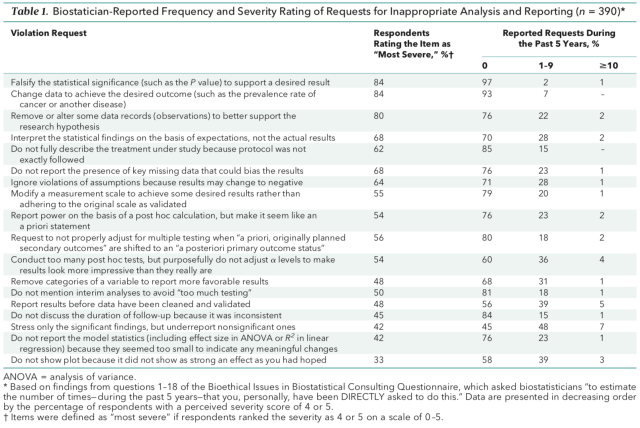
The authors surveyed 522 consulting biostatisticians and received sufficient responses from 390. Then, they constructed a table (shown below) that ranks requests by level of inappropriateness. For instance, at the very top is “falsify the statistical significance to support a desired result,” which is outright fraud. At the bottom is “do not show plot because it did not show as strong an effect as you had hoped,” which is only slightly naughty.

On the right, the authors report how often the biostatisticians estimated that they received such a request over the past five years. The results are jaw-dropping.

The absolute worst offense (i.e., being asked to fake statistical significance) occurred to 3% of the survey respondents. Another 7% reported being asked to change data, and a whopping 24% — nearly 1 in 4 — said they were asked to remove or alter data. Unequivocally, that is a request to commit scientific fraud.

Of the less serious offenses, 55% of biostatisticians said that they received requests to underreport non-significant results.

This article has been republished from materials provided by the American Council on Science and Health. Note: material may have been edited for length and content. For further information, please contact the cited source.

Reference
Min Qi Wang, Alice F. Yan, Ralph V. Katz. “Researcher Requests for Inappropriate Analysis and Reporting: A U.S. Survey of Consulting Biostatisticians.” Ann Intern Med 169(8): 554-558. Published: 16-Oct-2018. DOI: 10.7326/M18-1230.

https://www.technologynetworks.com/informatics/news/1-in-4-statisticians-asked-to-commit-scientific-fraud-311329?utm_campaign=NEWSLETTER_TN_Breaking%20Science%20News&utm_source=hs_email&utm_medium=email&utm_content=68543465&_hsenc=p2ANqtz–8ZbNt7sDLF6bujB3qX9CeJA-hpSQwPHeSLoR5Ju1WYXA6SnOEepdO0o-J7qw_1aGB3nfwldpf30hV3pAvVi7SzJa8fw&_hsmi=68543465

Ebola survivors still immune to virus after 40 years


Tissue samples from survivors of the Yambuku Ebola outbreak are transported to a field lab.

by Erika Check Hayden

Survivors of the world’s first known Ebola outbreak have immunity to the virus 40 years after they were infected, scientists have found.

“It’s interesting to see that after such a long time, people still have this kind of reactivity against the virus,” says virologist Stephan Becker of the Philipps University of Marburg in Germany. The findings were published online on 14 December in the Journal of Infectious Diseases1.

Becker says that the discovery was “not completely unexpected”, because previous studies had found that survivors had immune responses to Ebola virus as long as 11 years after they were infected2.

But until last year, no one had ever studied immunity in the survivors of the first recorded Ebola outbreak, which occurred in 1976 near the town of Yambuku, in what is now the Democratic Republic of the Congo (DRC).

“Nobody even knew if these people were still alive,” says Anne Rimoin, an epidemiologist at the University of California, Los Angeles (UCLA), and the lead author of the latest study.

Lessons from the past

After the disastrous 2014–16 West African Ebola outbreak that killed 11,310 people, Rimoin decided that it was crucial to find the Yambuku survivors. Many of the tens of thousands of people who survived the more recent outbreak have ongoing health problems, such as eye and joint issues. Rimoin thought that doctors might gain a better understanding of what lies ahead for these people by looking at the Yambuku survivors.

“The aperture for studying these people is closing, and they are our best opportunity to study the decades-long aftermath of Ebola,” Rimoin says.

Her team worked with Sukato Mandzomba, one of the Yambuku survivors, to recruit participants to the study. The group used handwritten maps kept by infectious-disease doctors who worked on the outbreak, which killed 280 people, to find more survivors. Ultimately, 14 people enrolled in the study.

Immune memory

Rimoin and her colleagues set up a mobile lab in Yambuku, and invited the 14 survivors to come to the town from the nearby villages where they lived. Rimoin’s team then collected blood from the survivors, stored the samples in portable freezers and drove them to labs in the capital, Kinshasa, or shipped them to the United States.

There, researchers found that cells from all 14 survivors could make defensive proteins called antibodies in response to portions of the Ebola virus. This means that the survivors’ immune systems recognize the Ebola virus, probably because they have encountered it before.

Immune cells from four of the survivors could prevent Ebola viruses from infecting other cells in the lab, indicating that these people are still protected from new Ebola infections 40 years after they became ill with the virus. It’s this type of immunity that researchers seek to mimic when they make vaccines against viruses, including Ebola; Rimoin says that the latest study could aid these attempts.

Rimoin also wants to continue working with the Yambuku survivors to understand how their infections decades ago affected their lives and their long-term health. The Ebola outbreak devastated the villages around Yambuku. Whole families were wiped out, survivors returned to find their homes and belongings destroyed, and children were moved to orphanages, says Nicole Hoff, country director for the UCLA–DRC Health Research and Training Program in Kinshasa, who has worked with survivors in Yambuku.

One survivor walked 30 kilometres to Yambuku with his adult son to participate in the study, Hoff says. When the man and his wife caught Ebola in 1976, their son was placed in an orphanage 100 kilometres away. The survivor’s wife died of Ebola, but the son escaped from the orphanage and ran home to help his father with his farm.

Hoff says that these men and other survivors were glad that the researchers were interested in their histories.“They can tell you everything that happened to them,” she says. “Their stories are so vivid, despite the fact that all of this happened 40 years ago.”

https://www.nature.com/articles/d41586-017-08664-w

Greenland sharks grow a centimeter a year and live more than four centuries.

By Elizabeth Pennisi

Imagine having to wait a century to have sex. Such is the life of the Greenland shark—a 5-meter-long predator that may live more than 400 years, according to a new study, making it the longest lived vertebrate by at least a century. So it should come as no surprise that the females are not ready to reproduce until after they hit their 156th birthday.

The longevity of these sharks is “astonishing,” says Michael Oellermann, a cold-water physiologist at Loligo Systems in Viborg, Denmark, who was not involved with the work. That’s particularly true because oceans are quite dangerous places, he notes, where predators, food scarcity, and disease can strike at any time.

Greenland sharks (Somniosus microcephalus) had been rumored to be long-lived. In the 1930s, a fisheries biologist in Greenland tagged more than 400, only to discover that the sharks grow only about 1 centimeter a year—a sure sign that they’re in it for the long haul given how large they get. Yet scientists had been unable to figure out just how many years the sharks last.

Intrigued, marine biologist John Steffensen at the University of Copenhagen collected a piece of backbone from a Greenland shark captured in the North Atlantic, hoping it would have growth rings he could count to age the animal. He found none, so he consulted Jan Heinemeier, an expert in radiocarbon dating at Aarhus University in Denmark. Heinemeier suggested using the shark’s eye lenses instead. His aim was not to count growth rings, but instead to measure the various forms of carbon in the lenses, which can give clues to an animal’s age.

Then came the hard part. Steffensen and his graduate student Julius Nielsen spent several years collecting dead Greenland sharks, most of them accidently ensnared in trawling nets used to catch other types of fish. After that, they employed an unusual technique: They looked for high amounts of carbon-14, a heavy isotope left behind by nuclear bomb testing in the mid-1950s. Extra carbon from the resulting “bomb pulse” had infiltrated ocean ecosystems by the early 1960s, meaning that inert body parts formed during this time—in particular eye lenses—also have more of the heavy element. Using this technique, the researchers concluded that two of their sharks—both less than 2.2 meters long—were born after the 1960s. One other small shark was born right around 1963.

The team used these well-dated sharks as starting points for a growth curve that could estimate the ages of the other sharks based on their sizes. To do this, they started with the fact that newborn Greenland sharks are 42 centimeters long. They also relied on a technique researchers have long used to calculate the ages of sediments—say in an archaeological dig—based on both their radiocarbon dates and how far below the surface they happen to be. In this case, researchers correlated radiocarbon dates with shark length to calculate the age of their sharks. The oldest was 392 plus or minus 120 years, they reported in Science. That makes Greenland sharks the longest lived vertebrates on record by a huge margin; the next oldest is the bowhead whale, at 211 years old. And given the size of most pregnant females—close to 4 meters—they are at least 150 years old before they have young, the group estimates.

Oellermann is impressed not only with how old the sharks are, but also how Nielsen and his colleagues figured out their ages. “Who would have expected that nuclear bombs [one day] could help to determine the life span of marine sharks?” he asks.

He and others think cold water helps lengthen the animals’ lives by slowing down their growth and biochemical activity. “Lower metabolic rate plays a big role,” agrees Shawn Xu, a geneticist at the University of Michigan, Ann Arbor. “But that’s not the whole story.” Three years ago, his work in nematodes showed that cold can also activate antiaging genes that help an animal better fold proteins, get rid of DNA-damaging molecules, and even fight off infections more effectively, extending life span. The cold-activated molecules “are evolutionarily conserved” across the animal kingdom, and thus these pathways very likely exist in these sharks, too, he predicts.

Paul Butler isn’t surprised that frigid waters host such old creatures. In 2013, the sclerochronologist (a scientist who studies the growth of hard tissues in invertebrates) at Bangor University in the United Kingdom and his colleagues described a 500-year-old ocean quahog (Arctica islandica), a chowder clam found in the North Atlantic. Still, even though two multicentenarian species have turned up in the North Atlantic in just a few years, Butler is skeptical that there are many more out there awaiting discovery. “It won’t be that we won’t have more surprises,” he says, “but I regard these [two] as exceptions.”

http://www.sciencemag.org/news/2016/08/greenland-shark-may-live-400-years-smashing-longevity-record

Huntington’s breakthrough may stop disease


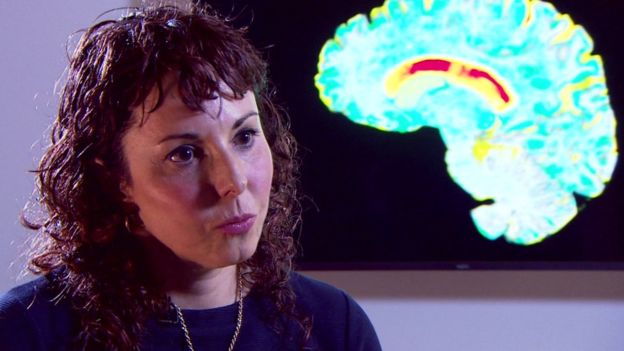
Prof Sarah Tabrizi , from the UCL Institute of Neurology, led the trials

By James Gallagher

The defect that causes the neurodegenerative disease Huntington’s has been corrected in patients for the first time, the BBC has learned. An experimental drug, injected into spinal fluid, safely lowered levels of toxic proteins in the brain. The research team, at University College London, say there is now hope the deadly disease can be stopped.

Experts say it could be the biggest breakthrough in neurodegenerative diseases for 50 years.

Huntington’s is one of the most devastating diseases. Some patients described it as Parkinson’s, Alzheimer’s and motor neurone disease rolled into one.

Peter Allen, 51, is in the early stages of Huntington’s and took part in the trial: “You end up in almost a vegetative state, it’s a horrible end.”

Huntington’s blights families. Peter has seen his mum Stephanie, uncle Keith and grandmother Olive die from it. Tests show his sister Sandy and brother Frank will develop the disease. The three siblings have eight children – all young adults, each of whom has a 50-50 chance of developing the disease.

The unstoppable death of brain cells in Huntington’s leaves patients in permanent decline, affecting their movement, behaviour, memory and ability to think clearly.

Peter, from Essex, told me: “It’s so difficult to have that degenerative thing in you.

“You know the last day was better than the next one’s going to be.”
Huntington’s generally affects people in their prime – in their 30s and 40s
Patients die around 10 to 20 years after symptoms start
About 8,500 people in the UK have Huntington’s and a further 25,000 will develop it when they are older

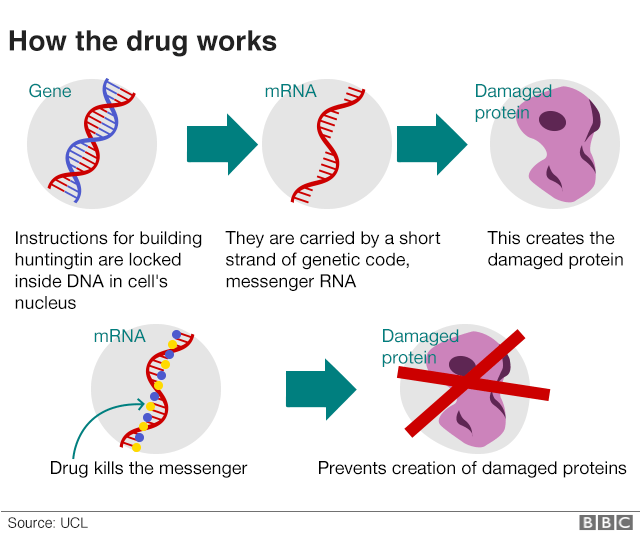
Huntington’s is caused by an error in a section of DNA called the huntingtin gene. Normally this contains the instructions for making a protein, called huntingtin, which is vital for brain development. But a genetic error corrupts the protein and turns it into a killer of brain cells.

The treatment is designed to silence the gene.

On the trial, 46 patients had the drug injected into the fluid that bathes the brain and spinal cord. The procedure was carried out at the Leonard Wolfson Experimental Neurology Centre at the National Hospital for Neurology and Neurosurgery in London. Doctors did not know what would happen. One fear was the injections could have caused fatal meningitis. But the first in-human trial showed the drug was safe, well tolerated by patients and crucially reduced the levels of huntingtin in the brain.

Prof Sarah Tabrizi, the lead researcher and director of the Huntington’s Disease Centre at UCL, told the BBC: “I’ve been seeing patients in clinic for nearly 20 years, I’ve seen many of my patients over that time die. For the first time we have the potential, we have the hope, of a therapy that one day may slow or prevent Huntington’s disease . This is of groundbreaking importance for patients and families.”

Doctors are not calling this a cure. They still need vital long-term data to show whether lowering levels of huntingtin will change the course of the disease. The animal research suggests it would. Some motor function even recovered in those experiments.

Peter, Sandy and Frank – as well as their partners Annie, Dermot and Hayley – have always promised their children they will not need to worry about Huntington’s as there will be a treatment in time for them. Peter told the BBC: “I’m the luckiest person in the world to be sitting here on the verge of having that. “Hopefully that will be made available to everybody, to my brothers and sisters and fundamentally my children.”

He, along with the other trial participants, can continue taking the drug as part of the next wave of trials. They will set out to show whether the disease can be slowed, and ultimately prevented, by treating Huntington’s disease carriers before they develop any symptoms.

Prof John Hardy, who was awarded the Breakthrough Prize for his work on Alzheimer’s, told the BBC: “I really think this is, potentially, the biggest breakthrough in neurodegenerative disease in the past 50 years. That sounds like hyperbole – in a year I might be embarrassed by saying that – but that’s how I feel at the moment.”

The UCL scientist, who was not involved in the research, says the same approach might be possible in other neurodegenerative diseases that feature the build-up of toxic proteins in the brain. The protein synuclein is implicated in Parkinson’s while amyloid and tau seem to have a role in dementias.

Off the back of this research, trials are planned using gene-silencing to lower the levels of tau.

Prof Giovanna Mallucci, who discovered the first chemical to prevent the death of brain tissue in any neurodegenerative disease, said the trial was a “tremendous step forward” for patients and there was now “real room for optimism”.

But Prof Mallucci, who is the associate director of UK Dementia Research Institute at the University of Cambridge, cautioned it was still a big leap to expect gene-silencing to work in other neurodegenerative diseases.

She told the BBC: “The case for these is not as clear-cut as for Huntington’s disease, they are more complex and less well understood. But the principle that a gene, any gene affecting disease progression and susceptibility, can be safely modified in this way in humans is very exciting and builds momentum and confidence in pursuing these avenues for potential treatments.”

The full details of the trial will be presented to scientists and published next year.

The therapy was developed by Ionis Pharmaceuticals, which said the drug had “substantially exceeded” expectations, and the licence has now been sold to Roche.

http://www.bbc.com/news/health-42308341

Stem cells in the hypothalamus shown to have unexpected critical role in ageing

By Ashley P. Taylor

During adulthood, the mouse brain manufactures new neurons in several locations, including the hippocampus and the subventricular zone of the forebrain. The hypothalamus, previously identified as an area with an important role in aging, also generates new neurons from neural stem cells. In a study published July 26 in Nature, Dongsheng Cai and his team at the Albert Einstein College of Medicine in New York connect the dots between these two observations, reporting that hypothalamic neural stem cells have widespread effects on the rate of aging in mice.

In what David Sinclair, who studies aging at Harvard Medical School and who was not involved in the work, calls a “Herculean effort,” the researchers “discovered that stem cells in the hypothalamus of the mouse play a role in overall health and life span,” he tells The Scientist.

Cai and his team found that killing hypothalamic neural stem cells accelerates aging, and transplantation of additional neural stem cells into the same brain region slows it down. Further, the stem cells’ anti-aging effects could be reproduced simply by administering the cells’ secreted vesicles, called exosomes, containing microRNAs (miRNAs).

“If this is true for humans, one could imagine a day when we are treated with these small RNAs injected into our bodies or even implanted with new hypothalamic stem cells to keep us younger for longer,” Sinclair adds.

Researchers who study aging have long been searching for a central location that controls the process system-wide. In a 2013 paper, Cai and his team reported aging-associated inflammation in the hypothalamus of the mouse, which they could experimentally manipulate to speed up or slow down various types of aging-related decline, from muscle endurance to cognitive skills.

This study, Cai says, suggested the hypothalamus might be that central locus in control of aging. The researchers wanted to understand more about how this region of the brain drives aging and what role hypothalamic neural stem cells might play in that process, so they undertook a series of experiments.

Age-defying stem cells

The researchers first confirmed that cells bearing protein markers of neural stem cells (Sox2 and Bmi1) were present in the hypothalamus of early-to-middle-aged mice (11 to 16 months old) and that the number of those cells decreased in older mice.

Next, they destroyed neuronal stem cells in the hypothalamus by injecting the third ventricle, adjacent to the hypothalamic region where the stem cells are found, with a lentivirus that converted an administered compound into a toxin in cells expressing the stem-cell marker Sox2. Three or four months later, the researchers compared a variety of aging-related measures, including muscle endurance, coordination, social behaviors, novel object recognition, and cognitive performance, between mice injected with the virus and various control groups of mice that received a brain injection of some sort but in which the toxin could not be produced and the hypothalamic stem cells were consequently not ablated.

The mice in the experimental group lost 70 percent of their hypothalamic stem cells and, based on results of the physiological tests, had accelerated aging. Mice with ablated hypothalamic stem cells also died earlier than control mice.

Next, the researchers implanted middle-aged mice with neural stem cells derived from newborn mice to see if the additional stem cells would slow aging. But the implanted stem cells almost all died, which the researchers believe was a result of the inflammatory environment of the aging hypothalamus. Newborn neuronal stem cells genetically engineered to withstand that environment, on the other hand, did survive, and mice implanted with those cells lived longer and performed better on aging-related measures than control mice.

“What’s cool about this study is that they specifically delete a population of cells in the hypothalamus of the brain . . . and they show pretty striking alterations in whole-body aging,” says Anna Molofsky, a psychiatrist at the University of California, San Francisco, who studies glial cells and whose graduate work focused on neuronal stem cells and aging. “That’s really showing that there’s a mechanism within the brain that’s regulating whole-body organismal aging,” she adds. Molofsky, who was not involved in the work, says that these results support the idea of the hypothalamus as a central regulator of aging.

Anti-aging mechanism

Although neural stem cells are known for their ability to produce new neurons, that doesn’t seem to be their primary method for protecting against aging. The anti-aging effects of these hypothalamic stem cells were visible at around four months—not long enough, the authors write, for significant adult neurogenesis to have taken place.

The authors looked instead for some other factor that might be responsible for the stem cells’ effects. In the hypothalamic neural stem cells, the researchers detected exosomes—secreted vesicles that can contain RNA and proteins—containing a variety of miRNAs, short RNA molecules that inhibit the expression of targeted genes. These exosomes were not present in non-stem cells of the hypothalamus.

To test the effects of the exosomes alone on aging, the researchers purified the vesicles from cultured hypothalamic neural stem cells and transplanted them into middle-aged mice, finding that the exosome-treated mice aged more slowly than vehicle-treated controls. They also found that the exosomes could ameliorate the aging symptoms of mice whose hypothalamic neurons had been ablated.

Cai says microRNAs could be a potential mechanism by which hypothalamic neural stem cells have such wide-ranging effects on aging, yet he believes that neurogenesis may also be involved.

Regardless of the mechanism, Molofsky says, “the medical applications could be pretty profound.” The phenotypes, such as muscle mass and skin thickness, affected by these stem cells are the same ones that cause age-related disease, she notes. “The fact that you can reverse that with a brain-specific modulation, potentially, in a cell type that one could pharmacologically target, I think potentially that could be very profound, assuming that the mouse work translates to humans.”

Y. Zhang et al., “Hypothalamic stem cells control ageing speed partly through exosomal miRNAs,” Nature, doi:10.1038/nature23282, 2017.

A genetic analysis finds that the Canaanites survived a divine call for their extinction and that their descendants live in Lebanon

There is a story in the Hebrew Bible that tells of God’s call for the annihilation of the Canaanites, a people who lived in what are now Jordan, Lebanon, Syria, Israel and the Palestinian territories thousands of years ago.

“You shall not leave alive anything that breathes,” God said in the passage. “But you shall utterly destroy them.”

But a genetic analysis published on Thursday has found that the ancient population survived that divine call for their extinction, and their descendants live in modern Lebanon.

“We can see the present-day Lebanese can trace most of their ancestry to the Canaanites or a genetically equivalent population,” said Chris Tyler-Smith, a geneticist with the Wellcome Trust Sanger Institute who is an author of the paper. “They derive just over 90 percent of their ancestry from the Canaanites.”

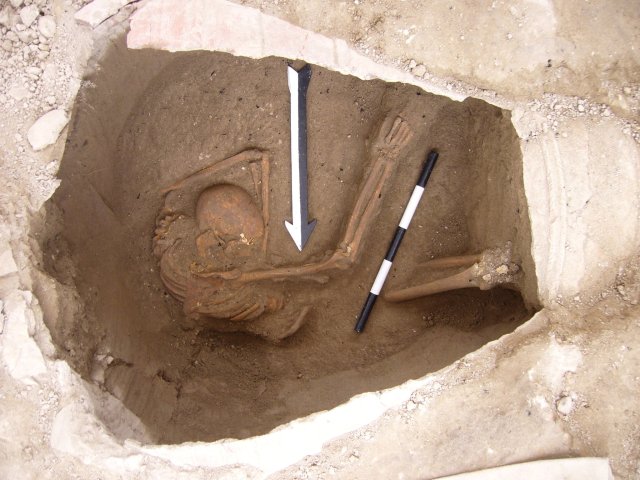
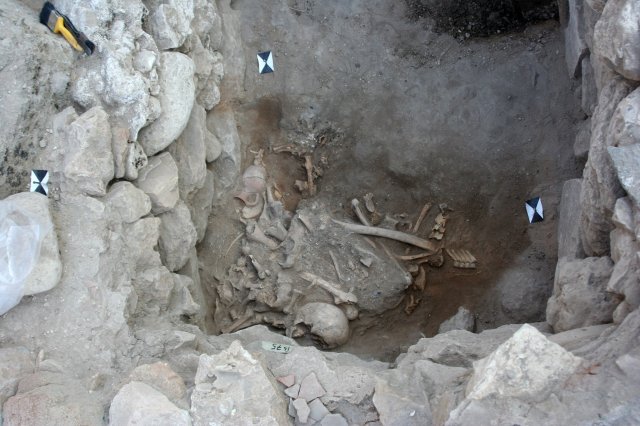
Dr. Tyler-Smith and an international team of geneticists and archaeologists recovered ancient DNA from bones belonging to five Canaanites retrieved from an excavation site in Sidon, Lebanon, that were 3,650 to 3,750 years old. The team then compared the ancient DNA with the genomes of 99 living people from Lebanon that the group had sequenced. It found that the modern Lebanese people shared about 93 percent of their ancestry with the Bronze Age Sidon samples.

The team published its results in The American Journal of Human Genetics.

“The conclusion is clear,” said Iosif Lazaridis, a geneticist at Harvard who was not involved in the study. “Based on this study it turns out that people who lived in Lebanon almost 4,000 years ago were quite similar to people who lived there today, to the modern Lebanese.”

Marc Haber, a postdoctoral fellow at the Wellcome Trust Sanger Institute in England and lead author on the study, said that compared with other Bronze Age civilizations, not much is known about the Canaanites.

“We know about ancient Egyptians and ancient Greeks, but we know very little about the ancient Canaanites because their records didn’t survive,” he said. Their writings may have been kept on papyrus, which did not stand the test of time as clay did. What is known about the Canaanites is that they lived and traded along the eastern coast of the present-day Mediterranean, a region that was known as the Levant.

“What we see is that since the Bronze Age, this ancestry, or the genetics of the people there, didn’t change much,” Dr. Haber said. “It changed a little, but it didn’t change much and that is what surprised me.”

At first the team was not sure if it would be able to retrieve DNA from the ancient skeletons, which were recovered from the hot and humid excavation site within the last 19 years. Dr. Haber had chosen more than two dozen bones from the site that looked promising and had them investigated for genetic material. It turned out that only five contained ancient DNA. All of those came from the petrous part of the temporal bone, which is the tough part of the skull behind the ear, from five different individuals.

After extracting that DNA, the team members compared it with a database that contained genetic information from hundreds of human populations. They then further compared their results with the genomes of the modern-day Lebanese population sample, which revealed what happened to the ancient Canaanite population.

“Genetics has the power to answer questions that historical records or archaeology are not able to answer,” Dr. Haber said.

He said researchers thought that migrations, conquests and the intermixing of Eurasian people — like the Assyrians, Persians or Macedonians — with the Canaanites 3,800 to 2,200 years ago might have contributed to the slight genetic changes seen in modern Lebanese populations. Still, the Lebanese retain most of their ancestral DNA from the Canaanites.

“It confirms the continuity of occupation and rooted tradition we have seen on-site, which was occupied from the 4th millennium B.C. right to the Crusader period,” Claude Doumet-Serhal, an archaeologist and director of the Sidon Excavation who is a co-author on the paper, said in an email.

She said that the archaeologists had found about 160 burials to date at their excavation site, which is in the heart of modern Sidon. They include graves and burials where a person was placed in a large jar, and they date to between 1900 and 1550 B.C. The genetic results further support the archaeological findings.

“We were delighted by the findings,” Dr. Doumet-Serhal said. “We are looking at the Canaanite society through 160 burials and at the same time uncovering a common past for all the people of Lebanon, whatever religion they belong to.”

HOW DID I END UP HERE? – reflections of an amazing young woman scientist


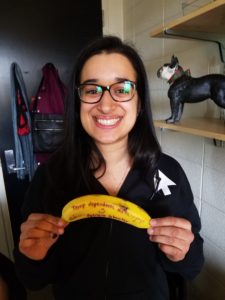
I’m a Computer Science major in the school of Literature, Science, and the Arts. Eleven months ago, I knew nothing about nuclear engineering. In ten days, I’ll be interning at Sandia National Laboratories in Livermore, CA to work on a Helium-3 well counter. You might be wondering how I ended up here- I know that I am.

By Aditi Rajadhyaksha

I was pretty lost at the beginning of the Fall 2016 semester. I had just decided to major in Computer Science, which I was satisfied with. I enjoyed my Computer Science courses, but I felt out of place. I had just been accepted to the UROP program, which I was apprehensive about because I had heard many stories of friends who ended up with terrible UROP projects and even worse mentors. Boy, I had no idea what I was in for.

Fast forward a month and I’m on Professor Sara Pozzi’s project working with Dr. Patricia Schuster. I don’t know a single thing about nuclear engineering, but the field has always intrigued me, so I’m excited about the prospect of this project. Patricia has explained the project to me, and I sort of understand it, but not really. Luckily, I understand the first coding assignment, so I get to work on that


March 24, 2017. Our first measurement

As the months go by, I start understanding more and more of the project and get engaged in the work. I also start to get an idea of the magnitude of the importance of the field of nuclear engineering.

Rewind a week, then a month, then two months… research is hard. Things take time. Things always take longer than you think they will. Things never work the first time, and, if they do, something’s wrong. Some group members start getting frustrated with the pace of progress. Stress starts building. We were supposed to have stilbene data by the ANS Student Conference in April, but that might not happen.

As the months go by, I start understanding more and more of the project and get engaged in the work. I also start to get an idea of the magnitude of the importance of the field of nuclear engineering.

Rewind a week, then a month, then two months… research is hard. Things take time. Things always take longer than you think they will. Things never work the first time, and, if they do, something’s wrong. Some group members start getting frustrated with the pace of progress. Stress starts building. We were supposed to have stilbene data by the ANS Student Conference in April, but that might not happen.

At the student conference, I start to realize that I really enjoy this work. I’m beginning to think that this is something I could see myself doing for a long time. I mean, I submitted my data to a Science as Art contest held by the university. So, not only do I enjoy the work, but I think it’s art, too.

People respond really well to my ANS student conference talk. This tells me that this work is something that I’m good at. I want to start actively pursuing this.

At the conference, two CVT/DNNG upperclassmen, Evan and Kyle, tell me that they will be working at national laboratories this summer. I have heard about these national laboratories- they do amazing work, the best people in nuclear have worked at them, and Patricia did her graduate work at Sandia National Laboratories. Now I want to work at one really badly. My sights are set on it for my summer 2018 internship. Also, I feel like I’ve been robbed of an award for my talk at the conference. Vengeance starts brewing.

In April, I find out that I’ve been accepted as a summer CVT undergraduate fellow. I am ecstatic! I will get to continue working on this project that I have gotten really into. And I will get to continue working with Patricia. And I win an award for the best poster in my session at the UROP symposium. More evidence that I am good at what I am doing and that my passion for it is being conveyed to others.

λλλλλλλλλλλλλλλλλλλλλλλλλλλλλλλλλλλλλλλλλλλλλλλλλ

I started the summer with three goals:
1.Take measurements of the stilbene organic scintillator detector.
2.Give an award-winning talk at the INMM conference.
3.Learn how to drive (this is something that they do not teach you when you grow up in New York City).

My CVT internship began with the MCNP-PoliMi workshop. That was exciting for me because I had never been exposed to MCNP prior to this and had heard a lot about it. I was able to become familiar with the program and meet people that had traveled far distances to Ann Arbor for this workshop.

Throughout the internship, I continued working on my temperature dependence of organic scintillator detectors project. We took measurements of the stilbene organic scintillator detector and a plastic organic scintillator detector along with the EJ-309 liquid organic scintillator detector again. I improved upon and wrote new data analysis scripts in Python.

Then, it was time for the INMM conference! It was an amazing opportunity and an amazing conference. I met a lot of people, exchanged several business cards, and heard a lot of interesting talks. I especially enjoyed hearing some of the policy talks because that’s something I don’t normally get to hear about.

The best was hearing Sieg Hecker’s talk. It was an honor. Hearing about his experiences after the Cold War and hearing him talk about the current state of nuclear policy and weapons showed me the importance of this work. I left inspired.

I spent a lot of time at the national lab exhibits because I have a one-track mind, and that mind was set on getting contacts at national labs in order to secure myself an internship for summer 2018. I also met with some companies that are also doing impressive and groundbreaking work, so those are other places to pursue for next summer.

I presented my work. It was a great experience because I got to hear suggestions and answer questions from audience members and present my work to some CVT and DNNG members for the first time. I was also the only undergraduate presenter from the DNNG and in my session, which I’m proud of.

I met my judge during a social event. I asked him what I did well and how to improve. He told me that I had the best slides by far and that I had the best presentation material. He said that I held myself well on stage and had great poise and public speaking skills. However, he was disappointed that I read from my notes when presenting. He said that he knew that I knew the information and did not need those notes.

This information is invaluable. For the future, I know what I do well, and I know where to improve. Hopefully, next year when I implement the judge’s advice I can win an award!

But best of all, Patricia scored me an internship at Sandia National Laboratories starting in August. She introduced me to Dr. Scott Kiff, who, after hearing about the work I did during the year and during my CVT internship, offered me a position to work on his well counter project for five weeks. As you know, this is a dream come true for me. I get to work on a new project at a national lab, learn about well counters, and get a taste for what it would be like to work at Sandia at Livermore. I will get to meet new people there and network and hopefully earn a position there next summer. I also want to obtain some of the new organic glass scintillator material that was just developed there to characterize its temperature dependence. And the best part is that Professor Pozzi agreed to fund me. It really can’t get any better than this.

λλλλλλλλλλλλλλλλλλλλλλλλλλλλλλλλλλλλλλλλλλλλλλλλλ

I was lost at the beginning of this year. And I really didn’t know what I was getting into when I sent that email to Patricia asking to hear about her UROP project. Little did I know it would be a life-changing experience in which I would find my place and my passion.

For so long I’ve had such a hard time finding something that I really enjoy in a place where I feel like I really belong. I spent countless hours trying to come up with a passion for myself when writing my college essays, when selecting my freshman year classes, when pondering potential careers. Today I realize that I have finally found it. I’ve found something that I do well and that I love doing and that I feel passionate about with a group of some of the nicest and smartest people that I have ever met.

I watched my friends take jobs in marketing and finance and at big commercial tech companies and struggled to do the same. Those jobs didn’t appeal to me because they didn’t help anything or anybody. In fact, many of those jobs seem to make life harder for people. I guess it was the altruist that my parents and family raised in me that told me that I didn’t belong in one of those professions doing that work.

But this field is different. As I learned from being at the INMM Conference and listening to Sieg Hecker’s talk, this work matters so much to everybody. The work that I do can help countless people, and has the potential to even save the planet. This makes me feel like I’m doing really important work, which in turn pushes me to work harder and produce better and better work every day.

λλλλλλλλλλλλλλλλλλλλλλλλλλλλλλλλλλλλλλλλλλλλλλλλλ

I started the summer with three goals:
1.Take measurements of the stilbene organic scintillator detector.
2.Give an award-winning talk at the INMM conference.
3.Learn how to drive.

I took measurements of the stilbene organic scintillator detector, and I learned how to drive. I am still working towards winning an award, and I am coming closer every day.

I am very excited to start this new project at Sandia. This will help me work towards my goals of excelling in this field and contributing to the safety of the United States and the world.

At the end of this internship, I know two things for sure: 1. I am the luckiest person in the world. 2. That well counter has no idea what’s coming for it.

λλλλλλλλλλλλλλλλλλλλλλλλλλλλλλλλλλλλλλλλλλλλλλλλλ

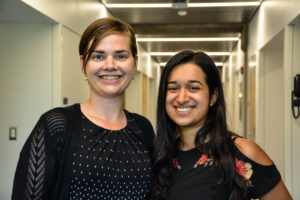
Thank you to Patricia Schuster, who has done so much for me. From teaching me everything I know about nuclear engineering, to pushing me to give talks and be a better researcher, to advocating for me to the DNNG and CVT, to getting me the CVT internship, to getting me the position at Sandia, and for being there for me when it gets hard to be a woman in engineering. She has been instrumental in helping me find my passion and my purpose and in making me the researcher, nuclear engineer and data scientist that I am today.

https://itsinterestingdotcom.wordpress.com/wp-admin/post-new.php