Researchers break spinning world record

A team of researchers at the University of St Andrews have made it into the record books by creating the fastest rotating man-made object ever recorded.

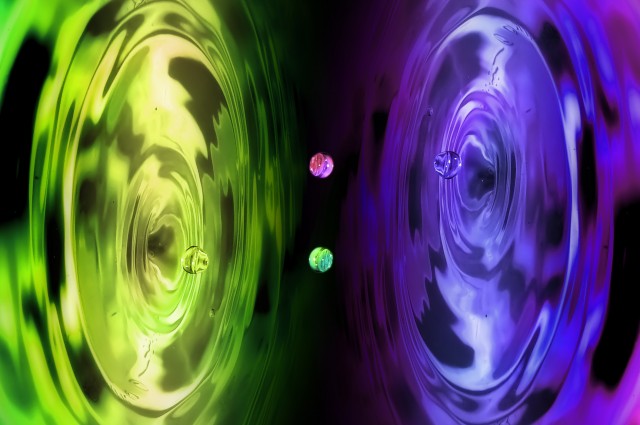
Professor Kishan Dholakia, Dr Yoshihiko Arita and Dr Michael Mazilu of the University’s School of Physics and Astronomy, managed to spin a tiny sphere of calcium carbonate 600 million revolutions per minute (rpm) using optical tweezers.

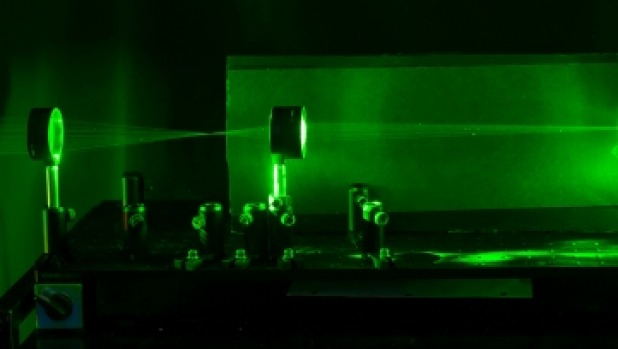
The team, who are leading experts in light technology, used optical tweezers to spin the four micrometre diameter particle inside a vacuum chamber. As the light passed through the sphere the change in polarisation of the light exerted a small torque on the sphere, thus spinning it. The lack of drag and frictional forces allowed a very high rotation rate to be achieved -10 million revolutions per second, or 600 million revolutions per minute, before the sphere left the trap (most likely disintegrating).

Professor Dholakia said: “This has been an exciting team effort to realise this world record. The result is a major breakthrough in our physics understanding of the light-matter interaction. We are planning new advances and even hope to challenge our own record in the near future.”

The research was published in Nature Communications and now the feat has been acknowledged as the fastest rotating man-made object to date, by the Guinness Book of World Records, and appears in the latest edition of the publication.

More broadly, the achievement fits into the work of the team which looks at the interaction of light and matter including, potentially, studies at the boundary between classical physics and quantum physics.

New proof shows that it’s possible that the Big Bang created a parallel universe in which time runs backwards

By Gregory Walton

Radical new research led by a British scientist has suggested that there may be a second universe where time runs backwards.

The theoretical claims put forward in the Physical Review Letters journal could revolutionise the field of research into the origin and future of the universe.

In the paper titled ‘Identification of a Gravitational Arrow of Time’, an international team of world renowned scientists led by Oxfordshire-based Dr Julian Barbour challenge assumptions about the so called ‘arrow of time’.

The ‘arrow of time’ is the theory that time is symmetric and therefore time moves forward. They contend that there is no scientific reason that a mirror universe could not have been created where time moved in an distinct way from our own.

But in a quirk of science it is thought that if a parallel universe did exist where time moved backward, any sentient beings there would consider that time in our universe in fact moved backward.

The arrow of time is also known as the ‘one-way’ direction of time and was devised by a British scientist, Dr Arthur Eddington, in the twenties.

All of the laws of physics apply no matter which way time is moving and therefore there is no scientific impediment to such a parallel universe.

Dr. Barbour says: “Time is a mystery. Basically, all the known laws of physics look exactly the same whichever way time runs, and in the world in which we live in everything goes in one direction.”

“If you look at a simple model with a swarm of bees in the middle of the Big Bang but breaking up in either direction, then you would say there are two arrows of time, pointing in opposite direction from the swarm. One arrow would be forwards and one backwards.”

However Dr Barbour acknowledges that locating the ‘other’ universe in practical terms is an altogether different question.

“Our results are a proof of principle,” he said.

http://www.telegraph.co.uk/news/science/science-news/11285605/Did-the-Big-Bang-create-a-parallel-universe-where-time-goes-backwards.html

Watch A Bowling Ball And Feather Falling In A Vacuum

Here is the perfect example of how any two objects will fall at the same rate in a vacuum, brought to us by physicist Brian Cox. He checked out NASA’s Space Simulation Chamber located at the Space Power Facility in Ohio. With a volume of 22,653 cubic meters, it’s the largest vacuum chamber in the world.

In this clip from the BBC, Cox drops a bowling ball and a feather together, first in normal conditions, and then after virtually all the air has been sucked out of the chamber. We know what happens, but that doesn’t stop it from being awesome, especially with the team’s ecstatic faces.

http://www.iflscience.com/physics/dropping-bowling-ball-and-feather-vacuum

Thanks to Kebmodee for bringing this to the attention of the It’s Interesting community.

Scientists propose existence and interaction of parallel worlds: Many Interacting Worlds theory challenges foundations of quantum science

Academics are challenging the foundations of quantum science with a radical new theory on parallel universes. Scientists now propose that parallel universes really exist, and that they interact. They show that such an interaction could explain everything that is bizarre about quantum mechanics.

Griffith University academics are challenging the foundations of quantum science with a radical new theory based on the existence of, and interactions between, parallel universes.

In a paper published in the journal Physical Review X, Professor Howard Wiseman and Dr Michael Hall from Griffith’s Centre for Quantum Dynamics, and Dr Dirk-Andre Deckert from the University of California, take interacting parallel worlds out of the realm of science fiction and into that of hard science.
The team proposes that parallel universes really exist, and that they interact. That is, rather than evolving independently, nearby worlds influence one another by a subtle force of repulsion. They show that such an interaction could explain everything that is bizarre about quantum mechanics.

Quantum theory is needed to explain how the universe works at the microscopic scale, and is believed to apply to all matter. But it is notoriously difficult to fathom, exhibiting weird phenomena which seem to violate the laws of cause and effect.

As the eminent American theoretical physicist Richard Feynman once noted: “I think I can safely say that nobody understands quantum mechanics.”

However, the “Many-Interacting Worlds” approach developed at Griffith University provides a new and daring perspective on this baffling field.

“The idea of parallel universes in quantum mechanics has been around since 1957,” says Professor Wiseman.

“In the well-known “Many-Worlds Interpretation,” each universe branches into a bunch of new universes every time a quantum measurement is made. All possibilities are therefore realised — in some universes the dinosaur-killing asteroid missed Earth. In others, Australia was colonised by the Portuguese.

“But critics question the reality of these other universes, since they do not influence our universe at all. On this score, our “Many Interacting Worlds” approach is completely different, as its name implies.”

Professor Wiseman and his colleagues propose that:

•The universe we experience is just one of a gigantic number of worlds. Some are almost identical to ours while most are very different;
•All of these worlds are equally real, exist continuously through time, and possess precisely defined properties;
•All quantum phenomena arise from a universal force of repulsion between ‘nearby’ (i.e. similar) worlds which tends to make them more dissimilar.
Dr Hall says the “Many-Interacting Worlds” theory may even create the extraordinary possibility of testing for the existence of other worlds.

“The beauty of our approach is that if there is just one world our theory reduces to Newtonian mechanics, while if there is a gigantic number of worlds it reproduces quantum mechanics,” he says.

“In between it predicts something new that is neither Newton’s theory nor quantum theory.

“We also believe that, in providing a new mental picture of quantum effects, it will be useful in planning experiments to test and exploit quantum phenomena.”

The ability to approximate quantum evolution using a finite number of worlds could have significant ramifications in molecular dynamics, which is important for understanding chemical reactions and the action of drugs.

Professor Bill Poirier, Distinguished Professor of Chemistry at Texas Tech University, has observed: “These are great ideas, not only conceptually, but also with regard to the new numerical breakthroughs they are almost certain to engender.”

Journal Reference:

1.Michael J. W. Hall, Dirk-André Deckert, Howard M. Wiseman. Quantum Phenomena Modeled by Interactions between Many Classical Worlds. Physical Review X, 2014; 4 (4) DOI: 10.1103/PhysRevX.4.041013

http://www.sciencedaily.com/releases/2014/10/141030101654.htm

Physicists discover the Majorna Particle, originally predicted in 1937, which is simultaneously matter and anti-matter

Since the 1930s scientists have been searching for particles that are simultaneously matter and antimatter. Now physicists have found strong evidence for one such entity inside a superconducting material. The discovery could represent the first so-called Majorana particle, and may help researchers encode information for quantum computers.

Physicists think that every particle of matter has an antimatter counterpart with equal mass but opposite charge. When matter meets its antimatter equivalent, the two annihilate one another. But some particles might be their own antimatter partners, according to a 1937 prediction by Italian physicist Ettore Majorana. For the first time researchers say they have imaged one of these Majorana particles, and report their findings in the October 3 Science.

The new Majorana particle showed up inside a superconductor, a material in which the free movement of electrons allows electricity to flow without resistance. The research team, led by Ali Yazdani of Princeton University, placed a long chain of iron atoms, which are magnetic, on top of a superconductor made of lead. Normally, magnetism disrupts superconductors, which depend on a lack of magnetic fields for their electrons to flow unimpeded. But in this case the magnetic chain turned into a special type of superconductor in which electrons next to one another in the chain coordinated their spins to simultaneously satisfy the requirements of magnetism and superconductivity. Each of these pairs can be thought of as an electron and an antielectron, with a negative and a positive charge, respectively. That arrangement, however, leaves one electron at each end of the chain without a neighbor to pair with, causing them to take on the properties of both electrons and antielectrons—in other words, Majorana particles.

As opposed to particles found in a vacuum, unattached to other matter, these Majoranas are what’s called “emergent particles.” They emerge from the collective properties of the surrounding matter and could not exist outside the superconductor.

The new study shows a convincing signature of Majorana particles, says Leo Kouwenhoven of the Delft University of Technology in the Netherlands who was not involved in the research but previously found signs of Majorana particles in a different superconductor arrangement. “But to really speak of full proof, unambiguous evidence, I think you have to do a DNA test.” Such a test, he says, must show the particles do not obey the normal laws of the two known classes of particles in nature—fermions (protons, electrons and most other particles we are familiar with) and bosons (photons and other force-carrying particles, including the Higgs boson). “The great thing about Majoranas is that they are potentially a new class of particle,” Kouwenhoven adds. “If you find a new class of particles, that really would add a new chapter to physics.”

Physicist Jason Alicea of California Institute of Technology, who also did not participate in the research, said the study offers “compelling evidence” for Majorana particles but that “we should keep in mind possible alternative explanations—even if there are no immediately obvious candidates.” He praised the experimental setup for its apparent ability to easily produce the elusive Majoranas. “One of the great virtues of their platform relative to earlier works is that it allowed the researchers to apply a new type of microscope to probe the detailed anatomy of the physics.”

The discovery could have implications for searches for free Majorana particles outside of superconducting materials. Many physicists suspect neutrinos—very lightweight particles with the strange ability to alter their identities, or flavors—are Majorana particles, and experiments are ongoing to investigate whether this is the case. Now that we know Majorana particles can exist inside superconductors, it might not be surprising to find them in nature, Yazdani says. “Once you find the concept to be correct, it’s very likely that it shows up in another layer of physics. That’s what’s exciting.”

The finding could also be useful for constructing quantum computers that harness the laws of quantum mechanics to make calculations many times faster than conventional computers. One of the main issues in building a quantum computer is the susceptibility of quantum properties such as entanglement (a connection between two particles such that an action on one affects the other) to collapse due to outside interference. A particle chain with Majoranas capping each end would be somewhat immune to this danger, because damage would have to be done to both ends simultaneously to destroy any information encoded there. “You could build a quantum bit based on these Majoranas,” Yazdani says. ”The idea is that such a bit would be much more robust to the environment than the types of bits people have tried to make so far.”

http://www.scientificamerican.com/article/majorana-particle-matter-and-antimatter/

New invisibility technology


Doctoral student Joseph Choi demonstrates a multidirectional ‘perfect paraxial’ cloak using 4 lenses.


Choi uses his hand to further demonstrate his device.


A laser shows the paths that light rays travel through the system, showing regions that can be used for cloaking an object.

Scientists at the University of Rochester have discovered a way to hide large objects from sight using inexpensive and readily available lenses.

Cloaking is the process by which an object becomes hidden from view, while everything else around the cloaked object appears undisturbed.

“A lot of people have worked on a lot of different aspects of optical cloaking for years,” John Howell, a professor of physics at the upstate New York school, said on Friday.

The so-called Rochester Cloak is not really a tangible cloak at all. Rather the device looks like equipment used by an optometrist. When an object is placed behind the layered lenses it seems to disappear.

Previous cloaking methods have been complicated, expensive, and not able to hide objects in three dimensions when viewed at varying angles, they say.

“From what, we know this is the first cloaking device that provides three-dimensional, continuously multidirectional cloaking,” said Joseph Choi, a graduate student who helped develop the method at Rochester, which is renowned for its optical research.

In their tests, the researchers have cloaked a hand, a face, and a ruler – making each object appear “invisible” while the image behind the hidden object remains in view. The implications for the discovery are endless, they say.

“I imagine this could be used to cloak a trailer on the back of a semi-truck so the driver can see directly behind him,” Choi said. “It can be used for surgery, in the military, in interior design, art.”

Howell said the Rochester Cloak, like the fictitious cloak described in the pages of the Harry Potter series, causes no distortion of the background object.

Building the device does not break the bank either. It cost Howell and Choi a little over $US1000 ($1140) in materials to create it and they believe it can be done even cheaper.

Although a patent is pending, they have released simple instructions on how to create a Rochester Cloak at home for under $US100 (114).

There is also a one-minute video about the project on YouTube.

http://www.smh.com.au/technology/sci-tech/scientists-unveil-invisibility-cloak-to-rival-harry-potters-20140927-10n1dp.html

NASA unveils model of warp-drive starship, which is currently impossible.

NASA’s Harold White has been working since 2010 to develop a warp drive that will allow spacecraft to travel at speeds faster than light — 186,000 miles per second.

White, who heads NASA’s Advanced Propulsion Team, spoke about his conceptual starship at a conference last fall. But interest in his project reached a new level this week when he unveiled images of what the craft might look like.

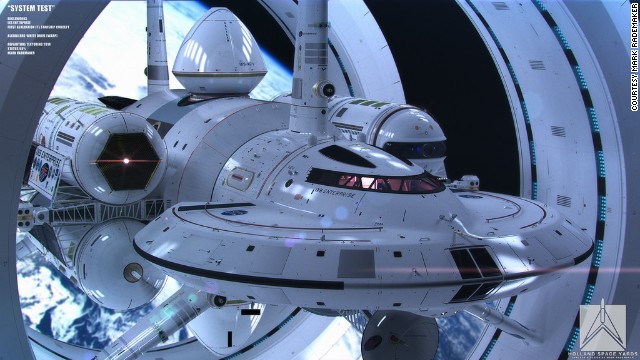
Created by artist Mark Rademaker, who based them on White’s designs, the images show a technologically detailed spacecraft that wouldn’t look out of place in a “Star Trek” movie. Rademaker says creating them took more than 1,600 hours.

For now, warp speed is only possible in TV and movies, with both “Star Trek” and “Star Wars” referencing an idea that was completely speculative at the time. White has fittingly named the concept spacecraft IXS Enterprise, for the starship famously piloted by Captain James T. Kirk in the “Star Trek” TV series and movies.

At the SpaceVision 2013 Space Conference last November in Phoenix, White talked about his design, the concepts behind it and the progress that’s been made in warp-drive development over the decades. He discussed the idea of a “space warp,” a loophole in the theory of general relativity that would allow for massive distances to be traveled very quickly, reducing travel times from thousands of years to days.

In his speech, White described space warps as faraway galaxies that can bend light around them. They work on the principle of bending space both in front of and behind a spacecraft. This would essentially allow for the empty space behind the craft to expand, both pushing and pulling it forward at the same time. The concept is similar to that of an escalator or moving walkway.

“There’s no speed limit on the expansion and contraction of space,” White said at the conference. “You can actually find a way to get around what I like to call the 11th commandment: Thou shall not exceed the speed of light.”

It’s the idea of space warps that inspired physicist Miguel Alcubierre in 1994 to first theorize a mathematical model of a warp drive that would be able to bend space and time. While studying Alcubierre’s equations, White decided to design his own retooled version of the Alcubierre Drive. His recently unveiled design has much less empty space than the first concept model, increasing its efficiency.

The warp drive that White’s team has been working on would literally transcend space, shortening the distance between two points and allowing the craft to break the speed of light. This would be a spaceship with no speed limit.

Because travel into space has been extremely limited due to existing means of propulsion, such a technology could blow open the possibilities of space exploration. It could allow for study of the farthest reaches of space, parts that scientists once considered unimaginable.

Although the technology to create the spacecraft or the warp drive doesn’t yet exist, the artistic renderings Rademaker created could potentially be a model of what’s to come — the first spacecraft to break the speed-of-light barrier and journey beyond our solar system.

In his design, White says he drew from Matthew Jeffries’ 1965 sketches of the Enterprise from “Star Trek,” saying parts of that ship were mathematically correct. He worked with Rademaker and graphic designer Mike Okuda to update the math and produce what he believes to be a viable spacecraft.

According to NASA, there hasn’t been any proof that a warp drive can exist, but the agency is experimenting nonetheless. Although the concept doesn’t violate the laws of physics, that doesn’t guarantee that it will work.

“We’re starting to talk about what the next chapter for human space exploration going to be,” White said at SpaceVision.

http://www.cnn.com/2014/06/12/tech/innovation/warp-speed-spaceship/index.html