Experiments Reveal What Birds See in Their Mind’s Eye

Songbirds known as Japanese tits communicate using human-like rules for language and can mentally picture what they’re talking about, research suggests.

by Brandon Keim

Hear a word, particularly an important one — like “snake!” — and an image appears in your mind. Now scientists are finding that this basic property of human language is shared by certain birds and, perhaps, many other creatures.

In a series of clever tests, a researcher has found that birds called Japanese tits not only chirp out a distinctive warning for snakes, but also appear to imagine a snake when they hear that cry. This glimpse into the mind’s eye of a bird hints at just how widespread this ostensibly human-like capacity may be.

“Animal communication has been considered very different from human speech,” says Toshitaka Suzuki, an ethologist at Japan’s Kyoto University. “My results suggest that birds and humans may share similar cognitive abilities for communication.”

Perhaps this went unappreciated for so long, says Suzuki, simply because “we have not yet found a way to look at the animals’ minds.”

Over the last several years, Suzuki conducted a series of experiments deciphering the vocalizations of Japanese tits — or Parus minor, whose family includes such everyday birds as chickadees and titmice — and describing their possession of syntax, or the ability to produce new meanings by combining words in various orders. (“Open the door,” for example, versus “the open door.”)

Syntax has long been considered unique to human language, and language in turn is often thought to set humans apart from other animals. Yet Suzuki found it not in a bird typically celebrated for intelligence, like crows or parrots, but in humble P. minor.

MENTAL PICTURES
Once he realized that birds are using their own form of language, Suzuki wondered: what happens in their minds when they talk? Might words evoke corresponding images, as happens for us?

Suzuki tested that proposition by broadcasting recordings of P. minor’s snake-specific alarm call from a tree-mounted speaker. Then he analyzed the birds’ responses to a stick that he’d hung along the trunk and could manipulate to mimic a climbing snake.

If the call elicited a mental image, Suzuki figured the birds would pay extra-close attention to the snake-like stick. Indeed they did, he recently reported in the journal Proceedings of the National Academy of Sciences.

In contrast, when Suzuki broadcast a call used by tits to convey a general, non-specific alarm, the birds didn’t pay much notice to the stick. And when he set the stick swinging from side to side in a decidedly non-snakelike manner, the birds ignored it.

“Simply hearing these calls causes tits to become more visually perceptive to objects resembling snakes,” he writes in PNAS. “Before detecting a real snake, tits retrieve its visual image from snake-specific alarm calls and use this to search out snakes.”

Rob Magrath, a behavioral ecologist at Australia National University who specializes in bird communication, thinks Suki’s interpretation is consistent with the results. He also calls the work “truly delightful.”

“I love the way that Suzuki employs simple experiments, literally using sticks and string, to test ideas,” Magrath says. Similarly impressed is ecologist Christine Sheppard of the American Bird Conservancy. “It’s incredibly challenging to devise an experiment that would allow you to answer this question,” she says. “It’s really neat.”

MINDS OF THEIR OWN
Sheppard says it makes evolutionary sense for animals to possess a ‘mind’s eye’ that works in tandem with their communications: It allows individuals to respond more quickly to threats. Suzuki agrees, and believes it’s likely found not only in P. minor and their close relatives, but in many other birds and across the animal kingdom.

“Many other animals produce specific calls when finding specific types of food or predators,” he says. He hopes researchers will use his methodology to peek into the mind’s eyes of other animals.

For Sheppard, the findings also speak to how people think about birds: not just as pretty or interesting or ecologically important, but as fellow beings with rich minds of their own.

“When I was in school, people still thought that birds were little automata. Now “bird brain” is becoming a compliment,” she says.

“I think this kind of insight helps people see birds as living, breathing creatures with whom we share the planet,” she says.

https://news.nationalgeographic.com/2018/02/japanese-songbirds-process-language-syntax/

Cannabinoids are easier on the brain than booze, study finds


Kent Hutchinson of the CU Change Lab is one of authors of this new research on the effects of Marijuana on the brain.

by Cay Leytham-Powell

Marijuana may not be as damaging to the brain as previously thought, according to new research from the University of Colorado Boulder and the CU Change Lab.

The research, which was published in the journal Addiction, examined the brains of more than 1,000 participants of varying ages, and found that long-term alcohol use is much more damaging to the brain than marijuana, contradicting years of research into the effects of marijuana and other cannabinoid products on the brain.

These findings, and other conclusions suggesting the potential public health benefits of marijuana, come amid the recent back-and-forth on federal marijuana policy and the nation’s opioid crisis.

Yet scientists are still hesitant to say that cannabinoid usage, specifically as it pertains to marijuana and its associated products, is beneficial.

“Particularly with marijuana use, there is still so much that we don’t know about how it impacts the brain,” said Rachel Thayer, a graduate student in clinical psychology at CU Boulder and the lead author of the study. “Research is still very limited in terms of whether marijuana use is harmful, or beneficial, to the brain.”

While the negative effects of alcohol on the brain have been known by researchers for years, it has been assumed that cannabinoids are as damaging to long-term brain health—if not more—given the immediate psychoactive effects of the THC (the chemical that gets a person high) in marijuana.

However, this may not necessarily be true.

“When you look at the research much more closely, you see that a lot of it is probably not accurate,” said study co-author Kent Hutchison, a professor of behavioral neuroscience at CU Boulder and co-director of the CU Change Lab, which explores the factors linked with health and risk behavior.

“When you look at these studies going back years, you see that one study will report that marijuana use is related to a reduction in the volume of the hippocampus. The next study then comes around, and they say that marijuana use is related to changes in the cerebellum or the whatever.”

“The point is that there’s no consistency across all of these studies in terms of the actual brain structures.”

To combat this misconception in the existing literature, the researchers gave a fresh look at some existing neurological imaging data from the MRIs of both adolescents and adults to see how, using the same variables and controls, the influence of cannabinoids on the brain compared to or contrasted with alcohol.
“With alcohol, we’ve known it’s bad for the brain for decades,” said Hutchison. “But for cannabis, we know so little.”

To see any potential difference, the researchers used the data to examine the most important neurological components: gray matter and white matter.

Gray and white matter are the two main types of tissue that make up the brain and central nervous system. Gray matter is the “stuff”—the cell bodies, dendrites and axon terminals—that enable functionality. White matter, then, is how the grey matter communicates between clusters. Any loss of size or integrity in either can make the brain not work quite like it should.

The study found that alcohol use was significantly associated with a decrease in gray matter size and white matter integrity, particularly for adults who may have decades of exposure. Marijuana and associated cannabinoid products, on the other hand, were not shown to have any long-term impact on the amount of gray matter in the brain or on the integrity of the white matter.

The research demonstrated that, “while marijuana may also have some negative consequences, it definitely is nowhere near the negative consequences of alcohol,” according to Hutchison.

Despite marijuana not being as harmful as once thought, and definitely not as damaging as other legal and illegal products, the research has not yet proved any possible benefits. This is particularly the case as it relates to the different products on the market (both THC and non-THC-containing cannabinoid products), their usage with pain and addiction treatment and the effect on different ages — especially as cannabinoid usage is on the rise among older populations.

“Considering how much is happening in the real world with the legalization movement, we still have a lot of work to do,” Hutchison said.

https://www.colorado.edu/asmagazine/2018/02/02/cannabinoids-are-easier-brain-booze-study-finds

New evidence that traumatic brain injury increases the risk of dementia 3 decades later

by Tessa Gregory

Traumatic brain injury (TBI) has been associated with dementia, but the association has not been studied over a long period of time. Anna Nordström and Peter Nordström from Umeå University in Sweden recently published a study in PLOS Medicine that investigates this gap in knowledge.

In the new study, the researchers tracked all diagnoses of dementia and TBI in Swedish nationwide databases from 1964 through 2012. They used the data to make comparisons within three groups of patients. In one group, 164,334 people with TBI were compared with control participants who did not have TBI. In the second group, 136,233 people with TBI who were later diagnosed with dementia were compared with control participants who did not develop dementia, and in a third group, the researchers studied 46,970 sibling pairs with one sibling having a TBI.

The researchers found that in the first year after TBI, the risk of dementia increased by four- to sixfold. Thereafter, the risk decreased rapidly but was still significant more than 30 years after the TBI.

“The results indicate that a TBI could increase the risk for dementia even more than 30 years after the incident,” the authors say. “To our knowledge, no previous prospective study with similar power and follow-up time has been reported.”

Reference: Nordström A, Nordström P (2018) Traumatic brain injury and the risk of dementia diagnosis: A nationwide cohort study. PLoS Med 15(1): e1002496. https://doi.org/10.1371/journal.pmed.1002496

http://researchnews.plos.org/2018/01/30/diagnosing-dementia-brain-damage-linked-to-increased-dementia-risk-for-decades-after-injury/

New study suggests that living in dim light can affect our brains

By Andy Henion

Spending too much time in dimly lit rooms and offices may actually change the brain’s structure and hurt one’s ability to remember and learn, indicates groundbreaking research by Michigan State University neuroscientists.

The researchers studied the brains of Nile grass rats (which, like humans, are diurnal and sleep at night) after exposing them to dim and bright light for four weeks. The rodents exposed to dim light lost about 30 percent of capacity in the hippocampus, a critical brain region for learning and memory, and performed poorly on a spatial task they had trained on previously.

The rats exposed to bright light, on the other hand, showed significant improvement on the spatial task. Further, when the rodents that had been exposed to dim light were then exposed to bright light for four weeks (after a month-long break), their brain capacity – and performance on the task – recovered fully.

The study, funded by the National Institutes of Health, is the first to show that changes in environmental light, in a range normally experienced by humans, leads to structural changes in the brain. Americans, on average, spend about 90 percent of their time indoors, according to the Environmental Protection Agency.

“When we exposed the rats to dim light, mimicking the cloudy days of Midwestern winters or typical indoor lighting, the animals showed impairments in spatial learning,” said Antonio “Tony” Nunez, psychology professor and co-investigator on the study. “This is similar to when people can’t find their way back to their cars in a busy parking lot after spending a few hours in a shopping mall or movie theater.”

Nunez collaborated with Lily Yan, associate professor of psychology and principal investigator on the project, and Joel Soler, a doctoral graduate student in psychology. Soler is also lead author of a paper on the findings published in the journal Hippocampus.

Soler said sustained exposure to dim light led to significant reductions in a substance called brain derived neurotrophic factor – a peptide that helps maintain healthy connections and neurons in the hippocampus – and in dendritic spines, or the connections that allow neurons to “talk” to one another.

“Since there are fewer connections being made, this results in diminished learning and memory performance that is dependent upon the hippocampus,” Soler said. “In other words, dim lights are producing dimwits.”

Interestingly, light does not directly affect the hippocampus, meaning it acts first on other sites within the brain after passing through the eyes. Yan said the research team is investigating one potential site in the rodents’ brains – a group of neurons in the hypothalamus that produce a peptide called orexin that’s known to influence a variety of brain functions. One of their major research questions: If orexin is given to the rats that are exposed to dim light, will their brains recover without being re-exposed to bright light?

The project could have implications for the elderly and people with glaucoma, retinal degeneration or cognitive impairments.

“For people with eye disease who don’t receive much light, can we directly manipulate this group of neurons in the brain, bypassing the eye, and provide them with the same benefits of bright light exposure?” Yan said. “Another possibility is improving the cognitive function in the aging population and those with neurological disorders. Can we help them recover from the impairment or prevent further decline?”

http://msutoday.msu.edu/news/2018/does-dim-light-make-us-dumber/

Mind-controlling molecules (ampulexins) from wasp venom could someday help Parkinson’s patients

After being stung by a parasitic wasp, the American cockroach loses control of its behavior, becoming host to the wasp’s egg. Days later, the hatchling consumes the cockroach alive. While this is a gruesome process for the cockroach, scientists now report in ACS’ journal Biochemistry the discovery of a new family of peptides in the wasp’s venom that could be key to controlling roach minds, and might even help researchers develop better Parkinson’s disease treatments.

Scientists have long studied venoms, such as that of the wasp, seeking out novel and potent molecules to treat disease, among other applications. In the case of the enigmatic wasp Ampulex compressa, it uses its venom in a two-pronged approach against the cockroach, with an initial sting to the thorax to paralyze the front legs and a subsequent sting directly to the brain. This second sting causes the roach first to vigorously groom itself, then to fall into a state of lethargy, allowing the wasp to do whatever it wants. This immobile state resembles symptoms of Parkinson’s disease, and both may be related to dysfunction in the dopamine pathway. In this study, Michael E. Adams and colleagues wanted to identify the ingredients in wasp venom that dictate this behavior.

The researchers milked wasps for their venom and then analyzed the components using liquid chromatography and mass spectrometry. They identified a new family of alpha-helical peptides and named them ampulexins. To test their function, the team injected the most abundant venom peptide into cockroaches. Afterward, the bugs needed, on average, a 13-volt electric shock to the foot to get them moving, while an average of 9 volts sufficed prior to the injection, suggesting the peptides help the wasp immobilize its prey. Future work will focus on identifying cellular targets of ampulexins, and potentially generating a useful animal model for the study of Parkinson’s disease treatments.

The authors acknowledge funding from the United States-Israel Binational Science Foundation, the University of California, Riverside Office of Research and Economic Development and the University of California Agricultural Experiment Station.

https://www.acs.org/content/acs/en/pressroom/presspacs/2018/acs-presspac-february-7-2018/mind-controlling-molecules-from-wasp-venom-could-someday-help-parkinsons-patients.html

Potential Drug Target for Bipolar Disease Identified

Bipolar Disorder (BD) is a multifactorial brain disorder in which patients experience radical shifts in mood and undergo periods of depression followed by periods of mania. It has been known for some time that both environmental and genetic factors play important roles in the disease. For instance, being exposed to high levels of stress for long periods, and especially during childhood, has been associated with the development of BD.

Immediate early genes (IEGs) are a class of genes that respond very rapidly to environmental stimuli, and that includes stress. IEGs respond to a stressor by activating other genes that lead to neuronal plasticity, the ability of brain cells to change in form and function in response to changes in the environment. Ultimately, it is the process of neuronal plasticity that gives the brain the ability to learn from and adapt to new experiences.

One type of protein produced by IEGs is the so-called Early Growth Response (EGR) proteins, which translate environmental influence into long-term changes in the brain. These proteins are found throughout the brain and are highly produced in response to environmental changes such as stressful stimuli and sleep deprivation. Without the action played out by these proteins, brain cells and the brain itself cannot appropriately respond to the many stimuli that are constantly received from the environment.

Effective neuronal plasticity also depends on neurotrophins, which are regulatory factors that promote development and survival of brain cells. Brain-derived neurotrophic factor (BDNF) is the neurotrophin mostly found in the brain. It has been extensively investigated in BD patients and has been suggested as a hallmark of BD. Indeed, some studies have shown that the levels of BDNF in the serum of BD patients are reduced whenever patients undergo a period of depression, hypomania, or mania. Other studies have shown that regardless of mood state, BD patients present reduced levels of BDNF. Overall, changes in BDNF levels seem to be a characteristic found in BD patients that may contribute to the pathophysiology of the disease.

Now an international team of researchers from Universidade Federal do Rio Grande do Sul in Brazil, University of Arizona College of Medicine in the United States and McMaster University in Canada have published an article connecting the dots between these two players to explain the impaired cellular resilience observed in BD that in the grand scheme of things may relate to the impaired resilience presented by BD patients to respond to events, including stress.

In a previous study done by the group in 2016, one type of IEG gene known as EGR3, that normally responds to environmental events and stressful stimuli, was found repressed in the brain of BD patients, suggesting that when facing a stressor, the EGR3 in BD patients does not respond to the stimulus appropriately. Indeed, BD patients are highly prone to stress and have more difficulties dealing with stress or adapting to it if compared to healthy individuals. What the research group is now suggesting is that both EGR3 and BDNF may each play a critical role in the impaired cellular resilience seen in BD, and that each of these two genes may affect each other’s expression in the cell. “We believe that the reduced level of BDNF that has been extensively observed in BD patients is caused by the fact that EGR3 is repressed in the brain of BD patients. The two molecules are interconnected in a regulatory pathway that is disrupted in BD patients,” says Fabio Klamt, leading author of the article entitled “EGR3 immediate early gene and the brain-derived neurotrophic factor in bipolar disorder” and published on February 5th in the journal Frontiers in Behavioral Neuroscience.

The authors also add that the fact that EGR3 responds very quickly to environmental stimuli renders the molecule a potential drug target. “It is possible to imagine that EGR3 may be modulated in order to increase its expression and that of BDNF, which may have a positive impact on BD patients,” says Bianca Pfaffenseller, a scientist working at Hospital de Clínicas de Porto Alegre, in Brazil, and the first author of the study.

The idea that mental disorders should be seen as any other chronic disease in which the underlying biology plays an important role has replaced the old descriptions of mental illnesses as the result of bad psychological influences. As Nobel prize laureate Eric Kandel has said, “all mental processes are brain processes and therefore all disorders of mental functioning are biological diseases.” The perspective article authored by Fabio Klamt and colleagues supports this view by offering new insights into the underlying biology of this lifelong and devastating mental disorder affecting millions of people worldwide.

This article has been republished from materials provided by Universidade Federal do Rio Grande do Sul. Note: material may have been edited for length and content. For further information, please contact the cited source.

Reference
Pfaffenseller, B., Kapczinski, F., Gallitano, A., & Klamt, F. (2018). EGR3 immediate early gene and the brain-derived neurotrophic factor in bipolar disorder. Frontiers in Behavioral Neuroscience, 12, 15.

https://www.technologynetworks.com/genomics/news/potential-drug-target-for-bipolar-identified-297204?utm_campaign=Newsletter_TN_BreakingScienceNews&utm_source=hs_email&utm_medium=email&utm_content=60440362&_hsenc=p2ANqtz-89oHJTQFUqboYjSURU_IOr9bzx6r5zFJCMV1mEAzlZHgi02vXuuEgb5JNs196HT9b7QaknWb1xraugbZ8U_bITr6Kw-A&_hsmi=60440362

Uncovering the early origins of Huntington’s disease


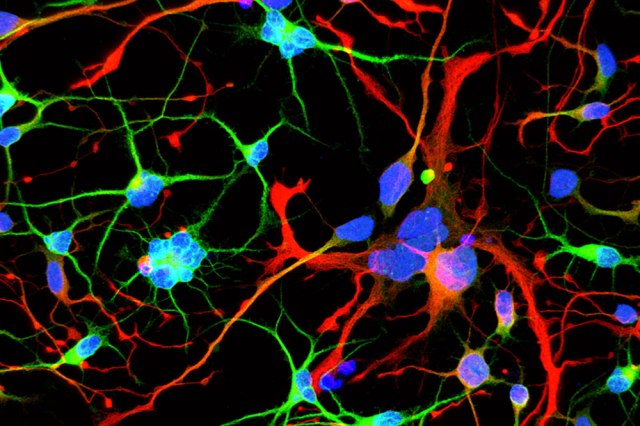
Huntington’s neurons show multiple nuclei (blue) within the same cell, and other signs of trouble, long before symptoms emerge.

With new findings, scientists may be poised to break a long impasse in research on Huntington’s disease, a fatal hereditary disorder for which there is currently no treatment.

One in 10,000 Americans suffer from the disease, and most begin to show symptoms in middle age as they develop jerky movements—and as these patients increasingly lose brain neurons, they slide into dementia. But the new research suggests that these symptoms may be a late manifestation of a disease that originates much earlier, in the first steps of embryonic development.

A team at Rockefeller led by Ali Brivanlou, the Robert and Harriet Heilbrunn Professor, developed a system to model Huntington’s in human embryonic stem cells for the first time. In a report published in Development, they describe early abnormalities in the way Huntington’s neurons look, and how these cells form larger structures that had not previously been associated with the disease.

“Our research supports the idea that the first domino is pushed soon after fertilization,” Brivanlou says, “and that has consequences down the line. The final domino falls decades after birth, when the symptoms are observable.”

The findings have implications for how to best approach treating the disorder, and could ultimately lead to effective therapies.

A new tool

Huntington’s is one of the few diseases with a straightforward genetic culprit: One hundred percent of people with a mutated form of the Huntingtin (HTT) gene develop the disease. The mutation takes the form of extra DNA, and causes the gene to produce a longer-than-normal protein. The DNA itself appears in the form of a repeating sequence, and the more repeats there are, the earlier the disease sets in.

Research on Huntington’s has thus far relied heavily on animal models of the disease, and has left many key questions unanswered. For example, scientists have not been able to resolve what function the HTT gene serves normally, or how its mutation creates problems in the brain.

Suspecting that the disease works differently in humans, whose brains are much bigger and more complex than those of lab animals, Brivanlou, along with research associates Albert Ruzo and Gist Croft, developed a cell-based human system for their research. They used the gene editing technology CRISPR to engineer a series of human embryonic stem cell lines, which were identical apart from the number of DNA repeats that occurred at the ends of their HTT genes.

“We started seeing things that were completely unexpected,” says Brivanlou. “In cell lines with mutated HTT, we saw giant cells. It looked like a jungle of disorganization.”

When cells divide, they typically each retain one nuclei. However, some of these enlarged, mutated cells flaunted up to 12 nuclei—suggesting that neurogenesis, or the generation of new neurons, was affected. The disruption was directly proportional to how many repeats were present in the mutation: The more repeats there were, the more multinucleated neurons appeared.

“Our work adds to the evidence that there is an unrecognized developmental aspect to the pathology,” Brivanlou says. “Huntington’s may not be just a neurodegenerative disease, but also a neurodevelopmental disease.”

Toxic or essential?

Treatments for Huntington’s have typically focused on blocking the activity of the mutant HTT protein, the assumption being that the altered form of the protein was more active than normal, and therefore toxic to neurons. However, Brivanlou’s work shows that the brain disruption may actually be due to a lack of HTT protein activity.

To test its function, the researchers created cell lines that completely lacked the HTT protein. These cells turned out to be very similar to those with Huntington’s pathology, corroborating the idea that a lack of the protein—not an excess of it—is driving the disease.

The findings are significant, Brivanlou notes, since they indicate that existing treatments that were designed to block HTT activity may actually do more harm than good.

“We should rethink our approach to treating Huntington’s,” he says. “Both the role of the HTT protein and the timing of treatment need to be reconsidered; by the time a patient is displaying symptoms, it may be too late to medicate. We need to go back to the earliest events that trigger the chain reaction that ultimately results in disease so we can focus new therapies on the cause, not the consequences.”

The researchers hope their new cell lines will be a useful resource for studying the cellular and molecular intricacies of Huntington’s further, and suggest they may provide a model for examining other diseases of the brain that are specific to humans.

https://www.rockefeller.edu/news/21212-uncovering-early-origins-huntingtons-disease/

Neuroscience can tell who are friends are by looking at the response of our brains to video clips

You may perceive the world the way your friends do, according to a Dartmouth study finding that friends have similar neural responses to real-world stimuli and these similarities can be used to predict who your friends are.

The researchers found that you can predict who people are friends with just by looking at how their brains respond to video clips. Friends had the most similar neural activity patterns, followed by friends-of-friends who, in turn, had more similar neural activity than people three degrees removed (friends-of-friends-of-friends).

Published in Nature Communications, the study is the first of its kind to examine the connections between the neural activity of people within a real-world social network, as they responded to real-world stimuli, which in this case was watching the same set of videos.

“Neural responses to dynamic, naturalistic stimuli, like videos, can give us a window into people’s unconstrained, spontaneous thought processes as they unfold. Our results suggest that friends process the world around them in exceptionally similar ways,” says lead author Carolyn Parkinson, who was a postdoctoral fellow in psychological and brain sciences at Dartmouth at the time of the study and is currently an assistant professor of psychology and director of the Computational Social Neuroscience Lab at the University of California, Los Angeles.

The study analyzed the friendships or social ties within a cohort of nearly 280 graduate students. The researchers estimated the social distance between pairs of individuals based on mutually reported social ties. Forty-two of the students were asked to watch a range of videos while their neural activity was recorded in a functional magnetic resonance imaging (fMRI) scanner. The videos spanned a range of topics and genres, including politics, science, comedy and music videos, for which a range of responses was expected. Each participant watched the same videos in the same order, with the same instructions. The researchers then compared the neural responses pairwise across the set of students to determine if pairs of students who were friends had more similar brain activity than pairs further removed from each other in their social network.

Figure 1 from paper: Social network. The social network of an entire cohort of first-year graduate students was reconstructed based on a survey completed by all students in the cohort (N = 279; 100% response rate). Nodes indicate students; lines indicate mutually reported social ties between them. A subset of students (orange circles; N = 42) participated in the fMRI study. Image by Carolyn Parkinson.

The findings revealed that neural response similarity was strongest among friends, and this pattern appeared to manifest across brain regions involved in emotional responding, directing one’s attention and high-level reasoning. Even when the researchers controlled for variables, including left-handed- or righthandedness, age, gender, ethnicity, and nationality, the similarity in neural activity among friends was still evident. The team also found that fMRI response similarities could be used to predict not only if a pair were friends but also the social distance between the two.

“We are a social species and live our lives connected to everybody else. If we want to understand how the human brain works, then we need to understand how brains work in combination— how minds shape each other,” explains senior author Thalia Wheatley, an associate professor of psychological and brain sciences at Dartmouth, and principal investigator of the Dartmouth Social Systems Laboratory.

For the study, the researchers were building on their earlier work, which found that as soon as you see someone you know, your brain immediately tells you how important or influential they are and the position they hold in your social network.

The research team plans to explore if we naturally gravitate toward people who see the world the same way we do, if we become more similar once we share experiences or if both dynamics reinforce each other.

http://www.nature.com/articles/s41467-017-02722-7

https://www.technologynetworks.com/neuroscience/news/neuroscience-can-tell-you-who-your-friends-are-296989?utm_campaign=NEWSLETTER_TN_Neuroscience_2017&utm_source=hs_email&utm_medium=email&utm_content=60340987&_hsenc=p2ANqtz–WbyIooqediqm4Mr6D09zjNCyCmjIe-6JF5OpygCiR3HaX93JSj3dyP1fGYyKLhvXSaI-EheJTPpuOIN_2UXpdsA4ewg&_hsmi=60340987

Scientists explain the link between music and drugs

By Ian Hamilton

For centuries, musicians have used drugs to enhance creativity and listeners have used drugs to heighten the pleasure created by music. And the two riff off each other, endlessly. The relationship between drugs and music is also reflected in lyrics and in the way these lyrics were composed by musicians, some of whom were undoubtedly influenced by the copious amounts of heroin, cocaine and “reefer” they consumed, as their songs sometimes reveal.

Acid rock would never have happened without LSD, and house music, with its repetitive 4/4 beats, would have remained a niche musical taste if it wasn’t for the wide availability of MDMA (ecstasy, molly) in the 1980s and 1990s.

And don’t be fooled by country music’s wholesome name. Country songs make more references to drugs than any other genre of popular music, including hip hop.

Under the influence

As every toker knows, listening to music while high can make it sound better. Recent research, however, suggests that not all types of cannabis produce the desired effect. The balance between two key compounds in cannabis, tetrahydrocannabinol and cannabidiols, influence the desire for music and its pleasure. Cannabis users reported that they experienced greater pleasure from music when they used cannabis containing cannabidiols than when these compounds were absent.

Listening to music – without the influence of drugs – is rewarding, can reduce stress (depending upon the type of music listened to) and improve feelings of belonging to a social group. But research suggests that some drugs change the experience of listening to music.

Clinical studies that have administered LSD to human volunteers have found that the drug enhances music-evoked emotion, with volunteers more likely to report feelings of wonder, transcendence, power and tenderness. Brain imaging studies also suggest that taking LSD while listening to music, affects a part of the brain leading to an increase in musically inspired complex visual imagery.

Certain styles of music match the effects of certain drugs. Amphetamine, for example, is often matched with fast, repetitive music, as it provides stimulation, enabling people to dance quickly. MDMA’s (ecstasy) tendency to produce repetitive movement and feelings of pleasure through movement and dance is also well known.

An ecstasy user describes the experience of being at a rave:

“I understood why the stage lights were bright and flashing, and why trance music is repetitive; the music and the drug perfectly complemented one another. It was as if a veil had been lifted from my eyes and I could finally see what everyone else was seeing. It was wonderful.”

There is a rich representation of drugs in popular music, and although studies have shown higher levels of drug use in listeners of some genres of music, the relationship is complex. Drug representations may serve to normalise use for some listeners, but drugs and music are powerful ways of strengthening social bonds. They both provide an identity and a sense of connection between people. Music and drugs can bring together people in a political way, too, as the response to attempts to close down illegal raves showed.

People tend to form peer groups with those who share their own cultural preferences, which may be symbolised through interlinked musical and substance choices. Although there are some obvious synergies between some music and specific drugs, such as electronic dance music and ecstasy, other links have developed in less obvious ways. Drugs are one, often minor, component of a broader identity and an important means of distinguishing the group from others.

Although it is important not to assume causality and overstate the links between some musical genres and different types of drug use, information about preferences is useful in targeting and tailoring interventions, such as harm reduction initiatives, at music festivals.

https://www.technologynetworks.com/neuroscience/articles/music-and-drugs-scientists-explain-the-link-296886?utm_campaign=NEWSLETTER_TN_Neuroscience_2017&utm_source=hs_email&utm_medium=email&utm_content=60340987&_hsenc=p2ANqtz–WbyIooqediqm4Mr6D09zjNCyCmjIe-6JF5OpygCiR3HaX93JSj3dyP1fGYyKLhvXSaI-EheJTPpuOIN_2UXpdsA4ewg&_hsmi=60340987

What happens in the brain before a bungee jump

Surjo R. Soekadar, psychiatrist and neuroscientist at the University of Tübingen, and his doctoral candidate Marius Nann have for the very first time succeeded in measuring the readiness potential, outside a laboratory and under extreme conditions, namely prior to a 192-meter bungee jump.

The readiness potential is a characteristic electrical voltage shift in the brain that indicates an upcoming willful act, and that appears even before a person becomes aware of his/her own conscious decision to act. The results of the study will be published in an international journal later this spring but are now available online: https://www.biorxiv.org/content/early/2018/01/27/255083 (DOI:
https://doi.org/10.1101/255083)

The readiness potential was first described in 1964 by Hans-Helmut Kornhuber and Lüder Deecke, who measured the brain waves of a test person over hundreds of finger movements and under strict laboratory conditions. Despite numerous studies, the readiness potential has never been measured in a real-life situation: Since the voltage shift is in the range of only a few millionths of a volt, only measurements under laboratory conditions were considered possible.

To advance the development of brain-machine interfaces, the researchers from Tübingen wanted to find out whether the readiness potential can be assessed in everyday environments. In addition, they were interested in whether the willpower necessary for initiating an act would influence the characteristics of the brain potential. For the study, two semi-professional cliff divers agreed to have their brain waves recorded before jumping from the second tallest bungee jumping platform in Europe, the 192-meter Europa Bridge near Innsbruck in Austria.

After only a few jumps, the researchers were able to measure the readiness potential beyond any doubt. “Once again, the current experiment shows that the boundaries of the possible are shifting and that neurotechnology might soon be part of our everyday life,” Soekadar says. “The small number of jumps necessary for the experiment shows that the readiness potential prior to a bungee jump is very well expressed”, Nann explains.

This article has been republished from materials provided by The University of Tuebingen. Note: material may have been edited for length and content. For further information, please contact the cited source.

Reference:
Nann, M., Cohen, L. G., Deecke, L., & Soekadar, S. R. (2018). To jump or not to jump: The Bereitschaftspotential required to jump into 192-meter abyss. arXiv preprint arXiv:1801.07244.

https://www.technologynetworks.com/neuroscience/news/taking-neuroscience-over-the-edge-exploring-the-brains-readiness-potential-prior-to-a-bungee-jump-296942?utm_campaign=Newsletter_TN_BreakingScienceNews&utm_source=hs_email&utm_medium=email&utm_content=60306590&_hsenc=p2ANqtz-8cO5QFZovVgMC9zlBl6UK9zld0IglpGEZRtDFFBjG_caWEqxM9VD_6ZqqTZPoGcZiMaQbIw-Kb5k_J2FTQkKGb0Odu3g&_hsmi=60306590