Checking Your Phone at Night Won’t Necessarily Throw Off Your Internal Clock, Mouse Study Finds

by Ed Cara

People who only occasionally fall down an internet rabbit hole on their smartphones late at night might be able to rest easier—at least according to the results of a new study in mice. Researchers found that short bursts of light exposure at night won’t necessarily disrupt your internal clock, including sleep habits.

The researchers used mice to study the circadian rhythm. In both mice and humans, the circadian rhythm is primarily controlled by the brain’s suprachiasmatic nucleus (SCN), a tiny region found in the hypothalamus. One crucial aspect of the SCN involves regulating our sleep/wake, or light/dark, cycle. It’s long been thought that any kind of light exposure our eyes take in affects the SCN, and thus, can affect our sleep.

“Light information comes into the SCN, and that’s what synchronizes all of the body’s clocks to the light/dark cycle,” said lead author Tiffany Schmidt, a neurogeneticist at Northwestern, in a release from the university. “This one master pacemaker makes sure everything is in sync.”

Schmidt and her team wanted to test this long-held theory that the SCN responds to any light exposure. So they bred mice that had light-sensitive nerve cells in the retina that were only capable of communicating with the SCN. Then they exposed these mice to light for short periods of time.

Because mice, unlike people, are nocturnal, the light should have made them want to fall asleep. But they instead just carried out on with their day, sleeping and waking as normal. Their body temperature, which fluctuates predictably before, during, and after sleep, also followed the same pattern seen in mice with normal circadian rhythms.

What this could mean, according to the authors, is that our brains respond to acute light—meaning brief exposures to light—through a different neural pathway than what’s used for long periods of light exposure, a pathway that doesn’t involve the SCN.

“If these two effects—acute and long-term light exposure—were driven through the same pathway, then every minor light exposure would run the risk of completely shifting our body’s circadian rhythms,” Schmidt said.

The findings will be published this week in the journal eLife.

Mice and their brains aren’t a perfect proxy for people, obviously. And even if the same general principle does apply to us, Schmidt and her team say there’s no clear lead on where these other pathways could exist in the brain. And there’s undoubtedly a point where being exposed to light late at night too long or too often can start to affect our internal clock—even if where that point lies is still a mystery right now. There needs to be a lot much research studying these questions and others.

What is clear, the authors cautioned, is that chronic nighttime light exposure, and the disruptions to our sleep it can cause, can be very bad for health. In other words, don’t use this study as an excuse to start regularly binge-watching Netflix till 4 a.m.

“Light at the wrong time of day is now recognized as a carcinogen,” Schmidt said. “We want people to feel alert while they are exposed to light without getting the health risks that are associated with shifted circadian rhythms, such as diabetes, depression and even cancer.”

https://gizmodo.com/checking-your-phone-at-night-wont-necessarily-throw-off-1836603924
Prosthetics can sense touch with ‘electronic skin’ invention

Users of prosthetic limbs could soon be able to feel sensation on them, thanks to an “electronic skin” (e-skin) invented by researchers from the National University of Singapore (NUS).

The artificial nervous system can detect touch more than 1,000 times faster than the human equivalent and is the first e-skin in the world to do so, according to Assistant Professor Benjamin Tee from the Department of Materials Science and Engineering at the NUS Faculty of Engineering, who led the research.

Previously, damaged e-skins would lose their function due to their interlinked wiring system.

But if a corner of the Asynchronous Coded Electronic Skin (Aces) nervous system tears, the rest of the skin continues to have sensation, just like human skin, the researchers said.

This is because the Aces detects signals like the human nervous system and it comprises a network of sensors – each working independently – connected via a single electrical conductor.

The research team, which took 11/2 years to develop the sensor system, published its innovation in Science Robotics journal today.

“When you lose a limb and get fitted with a prosthetic that doesn’t feel, it’s almost like you’re always feeling numb and cannot control things very well,” said Prof Tee. “If we have a skin that can make prosthetics smarter, we can restore motor functions, productivity and general quality of life for these people.”

In human skin, receptors send information about touch to the brain, which enables humans to intuitively sense touch.

When the Aces is attached to a prosthetic hand, a neural implant must be inserted into the patient’s arm so that the brain can detect the sense of touch from the e-skin.

The team will work with prosthetics researchers abroad to conduct a clinical trial of the e-skin with a patient using an artificial hand.

The Aces has also been designed for robots. “Robots need to have a sense of touch to interact better with humans, but robots today still cannot feel objects very well,” said Prof Tee.

For instance, a search-and-rescue robot digging through rubble will need sensation to know that it has to push away rocks and concrete to rescue a trapped person.

E-skin such as the Aces can be commercialised for robots within a year or two, Prof Tee said, but it will take five to 10 years for prosthetics that sense touch to reach patients, to allow for clinical trials.

https://www.straitstimes.com/singapore/prosthetics-can-sense-touch-with-electronic-skin-invention

Drug to treat malaria could mitigate hereditary hearing loss


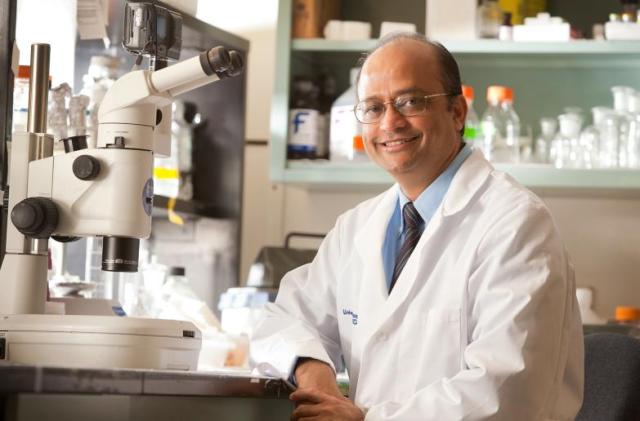
Kumar Alagramam. PhD, Case Western Reserve University

The ability to hear depends on proteins to reach the outer membrane of sensory cells in the inner ear. But in certain types of hereditary hearing loss, mutations in the protein prevent it from reaching these membranes. Using a zebrafish model, researchers at Case Western Reserve University School of Medicine have found that an anti-malarial drug called artemisinin may help prevent hearing loss associated with this genetic disorder.

In a recent study, published in the Proceedings of the National Academy of Sciences (PNAS), researchers found the classic anti-malarial drug can help sensory cells of the inner ear recognize and transport an essential protein to specialized membranes using established pathways within the cell.

The sensory cells of the inner ear are marked by hair-like projections on the surface, earning them the nickname “hair cells.” Hair cells convert sound and movement-induced vibrations into electrical signals that are conveyed through nerves and translated in the brain as information used for hearing and balance.

The mutant form of the protein–clarin1–render hair cells unable to recognize and transport them to membranes essential for hearing using typical pathways within the cell. Instead, most mutant clarin1 proteins gets trapped inside hair cells, where they are ineffective and detrimental to cell survival. Faulty clarin1 secretion can occur in people with Usher syndrome, a common genetic cause of hearing and vision loss.

The study found artemisinin restores inner ear sensory cell function—and thus hearing and balance—in zebrafish genetically engineered to have human versions of an essential hearing protein.

Senior author on the study, Kumar N. Alagramam, the Anthony J. Maniglia Chair for Research and Education and associate professor at Case Western Reserve University School of Medicine Department of Otolaryngology at University Hospitals Cleveland Medical Center, has been studying ways to get mutant clarin1 protein to reach cell membranes to improve hearing in people with Usher syndrome.

“We knew mutant protein largely fails to reach the cell membrane, except patients with this mutation are born hearing,” Alagramam said. “This suggested to us that, somehow, at least a fraction of the mutant protein must get to cell membranes in the inner ear.”

Alagramam’s team searched for any unusual secretion pathways mutant clarin1 could take to get to hair cell membranes. “If we can understand how the human clarin1 mutant protein is transported to the membrane, then we can exploit that mechanism therapeutically,” Alagramam said.

For the PNAS study, Alagramam’s team created several new zebrafish models. They swapped the genes encoding zebrafish clarin1 with human versions—either normal clarin1, or clarin1 containing mutations found in humans with a type of Usher syndrome, which can lead to profound hearing loss.

“Using these ‘humanized’ fish models,” Alagramam said, “we were able to study the function of normal clarin1 and, more importantly, the functional consequences of its mutant counterpart. To our knowledge, this is the first time a human protein involved in hearing loss has been examined in this manner.”

Zebrafish offer several advantages to study hearing. Their larvae are transparent, making it easy to monitor inner ear cell shape and function. Their genes are also nearly identical to humans—particularly when it comes to genes that underlie hearing. Replacing zebrafish clarin1 with human clarin1 made an even more precise model.

The researchers found the unconventional cellular secretion pathway they were looking for by using florescent labels to track human clarin1 moving through zebrafish hair cells. The mutated clarin1 gets to the cell membrane using proteins and trafficking mechanisms within the cell, normally reserved for misfolded proteins “stuck” in certain cellular compartments.

“As far as we know, this is the first time a human mutant protein associated with hearing loss has been shown to be ‘escorted’ by the unconventional cellular secretion pathway,” Alagramam said. “This mechanism may shed light on the process underlying hearing loss associated with other mutant membrane proteins.”

The study showed the majority of mutant clarin1 gets trapped inside a network of tubules within the cell analogous to stairs and hallways helping proteins, including clarin1, get from place to place. Alagramam’s team surmised that liberating the mutant protein from this tubular network would be therapeutic and tested two drugs that target it: thapsigargin (an anti-cancer drug) and artemisinin (an anti-malarial drug).

The drugs did enable zebrafish larvae to liberate the trapped proteins and have higher clarin1 levels in the membrane; but artemisinin was the more effective of the two. Not only did the drug help mutant clarin1 to reach the membrane, hearing and balance functions were better preserved in zebrafish treated with the anti-malarial drug than untreated fish.

In zebrafish, survival depends on normal swim behavior, which in turn depends on balance and the ability to detect water movement, both of which are tied to hair cell function. Survival rates in zebrafish expressing the mutant clarin1 jumped from 5% to 45% after artemisinin treatment.

“Our report highlights the potential of artemisinin to mitigate both hearing and vision loss caused by clarin1 mutations,” Alagramam said. “This could be a re-purposable drug, with a safe profile, to treat Usher syndrome patients.”

Alagramam added that the unconventional secretion mechanism and the activation of that mechanism using artemisinin or similar drugs may also be relevant to other genetic disorders that involve mutant membrane proteins aggregating in the cell’s tubular network, including sensory and non-sensory disorders.

Gopal SR, et al. “Unconventional secretory pathway activation restores hair cell mechanotransduction in an USH3A model.” PNAS.

Drug to treat malaria could mitigate hereditary hearing loss

Hopes raised of cervical cancer eradication

Vaccination against the human papilloma virus, which causes most cervical cancers, began over a decade ago.

A Lancet review of 65 studies covering 60 million people showed a fall in HPV cases and in pre-cancerous growths.

Over decades, this should translate into a significant fall, and possible eradication, of the cancer they said.

Jo’s Cervical Cancer Trust said the data should boost faith in the jab.

What is the human papilloma virus (HPV)?

HPV is the name for a common group of viruses; there are more than 100 types of HPV
Many women will be infected with HPV over the course of their lifetime, with no ill effect
Most cervical cancers are caused by infection from a high-risk HPV
Others cause conditions including genital warts and cancers of the head and neck
The vaccine, given as two injections to girls aged 12 and 13, protects against four types of HPV – 16 and 18, which are linked to more than 70% of cervical cancers – and six and 11, which
cause about 90% of genital warts
Girls who miss the HPV jab at school can still get it for free on the NHS up to the age of 25
It is also available privately, costing around £150 per dose
Boys aged 12-13 will also be offered the jab from September this year
The vaccine does not protect against all the types of HPV that can cause cervical cancer, so women still need to go for regular screening

There are 3,200 cases of cervical cancer and 850 deaths from the disease each year.

‘Real-world’ evidence
The review covered studies in 14 high-income countries, including the UK. They looked at HPV rates, plus cases of genital warts and pre-cancerous cells in the cervix called CIN.

It found that when rates were compared before vaccination started and eight years after:

Cases of HPV 16 and 18 were down 83% in girls aged 15-19 – 66% in women 20-24
Genital warts cases fell 67% in girls 15-19 – 54% in women 20-24
Pre-cancerous growths were down by 51% in girls 15-19 – 31% in women 20-24
It also showed people who were not vaccinated benefited. Cases of genital warts in boys aged 15-19 fell by almost 50%, and also significantly in women over 30.

Rates fell more in countries where a wider age group was vaccinated and where coverage was higher.

Public Health England principal scientist Dr David Mesher said: “We are seeing reductions in HPV strains and in cervical disease as well, so there is every suggestion there will be reductions in cervical cancers too.”

Prof Marc Brisson, from Laval University, Canada, who led the review, said: “We will see reductions in women aged 20-30 within the next 10 years.”

He said cervical cancer elimination – defined as fewer than four cases per 100,000 – “might be possible if sufficiently high vaccination coverage can be achieved and maintained”.

Jo’s Cervical Cancer Trust said the findings “clearly showed” the impact of HPV vaccination.

“This study furthers the growing evidence to counteract those who don’t believe that this vaccine works, which is now extremely encouraging,” said chief executive Robert Music.

“We sincerely hope this will boost public faith in the HPV vaccine, so that more lives can be saved and we get closer to a world where cervical cancer is a thing of the past.”

https://www.bbc.com/news/health-48758730?utm_source=Nature+Briefing&utm_campaign=5a6f57394e-briefing-dy-20190627&utm_medium=email&utm_term=0_c9dfd39373-5a6f57394e-44039353

Three Public Health Interventions Could Prevent 94 Million Premature Deaths

“Focusing our resources on the combination of these three interventions can have a huge potential impact on cardiovascular health through 2040,” said lead author Goodarz Danaei, associate professor of global health at Harvard Chan School.

Researchers used global data from multiple studies and estimates from the World Health Organization in making their calculations.

They estimated that scaling up treatment of high blood pressure to 70% of the world’s population could extend the lives of 39.4 million people. Cutting sodium intake by 30% could stave off another 40 million deaths and could also help decrease high blood pressure, a major risk factor for CVD. And eliminating trans fat could prevent 14.8 million early deaths.

More than half of all delayed deaths, and two-thirds of deaths delayed before age 70, are projected to be among men, who have the highest numbers of noncommunicable disease deaths globally, researchers found. Regions expected to benefit most from the interventions include East Asia, the Pacific, and South Asia, as well as countries in sub-Saharan Africa.

The authors said that a variety of programs and policies would be necessary to reduce premature CVD-related deaths. One important strategy would be to increase the use of blood pressure medications, many of which are safe and affordable.

The researchers acknowledged that scaling up the three interventions would be a “huge challenge,” requiring countries to commit additional resources to boost health care capacity and quality. But they added that previous analyses have shown that the interventions are achievable and affordable. For example, a Kaiser Permanente program in Northern California increased control of hypertension to 90% among thousands of the health system’s patients between 2001 and 2013, using strategies such as improved treatment protocols, patient-friendly services, and healthcare information systems that facilitate tracking people with hypertension. Similar approaches have been adapted and tested in some low- and middle-income countries, leading to notable improvements in hypertension treatment and control, the authors said.

“These are realistic goals that have been shown to be attainable on smaller scales,” said Danaei. “We need the commitment to scale up the programs to achieve them globally.”

A newly identified type of dementia that is sometimes mistaken for Alzheimer’s disease

Doctors have newly outlined a type of dementia that could be more common than Alzheimer’s among the oldest adults, according to a report published Tuesday in the journal Brain.

The disease, called LATE, may often mirror the symptoms of Alzheimer’s disease, though it affects the brain differently and develops more slowly than Alzheimer’s. Doctors say the two are frequently found together, and in those cases may lead to a steeper cognitive decline than either by itself.

In developing its report, the international team of authors is hoping to spur research — and, perhaps one day, treatments — for a disease that tends to affect people over 80 and “has an expanding but under-recognized impact on public health,” according to the paper.

“We’re really overhauling the concept of what dementia is,” said lead author Dr. Peter Nelson, director of neuropathology at the University of Kentucky Medical Center.

Still, the disease itself didn’t come out of the blue. The evidence has been building for years, including reports of patients who didn’t quite fit the mold for known types of dementia such as Alzheimer’s.

“There isn’t going to be one single disease that is causing all forms of dementia,” said Sandra Weintraub, a professor of psychiatry, behavioral sciences and neurology at Northwestern University Feinberg School of Medicine. She was not involved in the new paper.

Weintraub said researchers have been well aware of the “heterogeneity of dementia,” but figuring out precisely why each type can look so different has been a challenge. Why do some people lose memory first, while others lose language or have personality changes? Why do some develop dementia earlier in life, while others develop it later?

Experts say this heterogeneity has complicated dementia research, including Alzheimer’s, because it hasn’t always been clear what the root cause was — and thus, if doctors were treating the right thing.

What is it?

The acronym LATE stands for limbic-predominant age-related TDP-43 encephalopathy. The full name refers to the area in the brain most likely to be affected, as well as the protein at the center of it all.

“These age-related dementia diseases are frequently associated with proteinaceous glop,” Nelson said. “But different proteins can contribute to the glop.”

In Alzheimer’s, you’ll find one set of glops. In Lewy body dementia, another glop.

And in LATE, the glop is a protein called TDP-43. Doctors aren’t sure why the protein is found in a modified, misfolded form in a disease like LATE.

“TDP-43 likes certain parts of the brain that the Alzheimer’s pathology is less enamored of,” explained Weintraub, who is also a member of Northwestern’s Mesulam Center for Cognitive Neurology and Alzheimer’s Disease.

“This is an area that’s going to be really huge in the future. What are the individual vulnerabilities that cause the proteins to go to particular regions of the brain?” she said. “It’s not just what the protein abnormality is, but where it is.”

More than a decade ago, doctors first linked the TDP protein to amyotrophic lateral sclerosis, otherwise known as ALS or Lou Gehrig’s disease. It was also linked to another type of dementia, called frontotemporal lobar degeneration.

LATE “is a disease that’s 100 times more common than either of those, and nobody knows about it,” said Nelson.

The new paper estimates, based on autopsy studies, that between 20 and 50% of people over 80 will have brain changes associated with LATE. And that prevalence increases with age.

Experts say nailing down these numbers — as well as finding better ways to detect and research the disease — is what they hope comes out of consensus statements like the new paper, which gives scientists a common language to discuss it, according to Nelson.

“People have, in their own separate bailiwicks, found different parts of the elephant,” he said. “But this is the first place where everybody gets together and says, ‘This is the whole elephant.’ ”

What this could mean for Alzheimer’s

The new guidelines could have an impact on Alzheimer’s research, as well. For one, experts say some high-profile drug trials may have suffered as a result of some patients having unidentified LATE — and thus not responding to treatment.

In fact, Nelson’s colleagues recently saw that firsthand: a patient, now deceased, who was part of an Alzheimer’s drug trial but developed dementia anyway.

“So, the clinical trial was a failure for Alzheimer’s disease,” Nelson said, “but it turns out he didn’t have Alzheimer’s disease. He had LATE.”

Nina Silverberg, director of the Alzheimer’s Disease Research Centers Program at the National Institute on Aging, said she suspects examples like this are not the majority — in part because people in clinical trials tend to be on the younger end of the spectrum.

“I’m sure it plays some part, but maybe not as much as one might think at first,” said Silverberg, who co-chaired the working group that led to the new paper.

Advances in testing had already shown that some patients in these trials lacked “the telltale signs of Alzheimer’s,” she said.

In some cases, perhaps it was LATE — “and it’s certainly possible that there are other, as yet undiscovered, pathologies that people may have,” she added.

“We could go back and screen all the people that had failed their Alzheimer’s disease therapies,” Nelson said. “But what we really need to do is go forward and try to get these people out of the Alzheimer’s clinical trials — and instead get them into their own clinical trials.”

Silverberg describes the new paper as “a roadmap” for research that could change as we come to discover more about the disease. And researchers can’t do it without a large, diverse group of patients, she added.

“It’s probably going to take years and research participants to help us understand all of that,” she said.

https://www.cnn.com/2019/04/30/health/dementia-late-alzheimers-study/index.html

Neuroscientists reverse some behavioral symptoms of Williams syndrome

Williams Syndrome, a rare neurodevelopmental disorder that affects about one in 10,000 babies born in the United States, produces a range of symptoms including cognitive impairments, cardiovascular problems, and extreme friendliness, or hypersociability.

In a study of mice, MIT neuroscientists have garnered new insight into the molecular mechanisms that underlie this hypersociability. They found that loss of one of the genes linked to Williams Syndrome leads to a thinning of the fatty layer that insulates neurons and helps them conduct electrical signals in the brain.

The researchers also showed that they could reverse the symptoms by boosting production of this coating, known as myelin. This is significant, because while Williams Syndrome is rare, many other neurodevelopmental disorders and neurological conditions have been linked to myelination deficits, says Guoping Feng, the James W. and Patricia Poitras Professor of Neuroscience and a member of MIT’s McGovern Institute for Brain Research.

“The importance is not only for Williams Syndrome,” says Feng, who is one of the senior authors of the study. “In other neurodevelopmental disorders, especially in some of the autism spectrum disorders, this could be potentially a new direction to look into, not only the pathology but also potential treatments.”

Zhigang He, a professor of neurology and ophthalmology at Harvard Medical School, is also a senior author of the paper, which appears in the April 22 issue of Nature Neuroscience. Former MIT postdoc Boaz Barak, currently a principal investigator at Tel Aviv University in Israel, is the lead author and a senior author of the paper.

Impaired myelination

Williams Syndrome, which is caused by the loss of one of the two copies of a segment of chromosome 7, can produce learning impairments, especially for tasks that require visual and motor skills, such as solving a jigsaw puzzle. Some people with the disorder also exhibit poor concentration and hyperactivity, and they are more likely to experience phobias.

In this study, the researchers decided to focus on one of the 25 genes in that segment, known as Gtf2i. Based on studies of patients with a smaller subset of the genes deleted, scientists have linked the Gtf2i gene to the hypersociability seen in Williams Syndrome.

Working with a mouse model, the researchers devised a way to knock out the gene specifically from excitatory neurons in the forebrain, which includes the cortex, the hippocampus, and the amygdala (a region important for processing emotions). They found that these mice did show increased levels of social behavior, measured by how much time they spent interacting with other mice. The mice also showed deficits in fine motor skills and increased nonsocial related anxiety, which are also symptoms of Williams Syndrome.

Next, the researchers sequenced the messenger RNA from the cortex of the mice to see which genes were affected by loss of Gtf2i. Gtf2i encodes a transcription factor, so it controls the expression of many other genes. The researchers found that about 70 percent of the genes with significantly reduced expression levels were involved in the process of myelination.

“Myelin is the insulation layer that wraps the axons that extend from the cell bodies of neurons,” Barak says. “When they don’t have the right properties, it will lead to faster or slower electrical signal transduction, which affects the synchronicity of brain activity.”

Further studies revealed that the mice had only about half the normal number of mature oligodendrocytes—the brain cells that produce myelin. However, the number of oligodendrocyte precursor cells was normal, so the researchers suspect that the maturation and differentiation processes of these cells are somehow impaired when Gtf2i is missing in the neurons.

This was surprising because Gtf2i was not knocked out in oligodendrocytes or their precursors. Thus, knocking out the gene in neurons may somehow influence the maturation process of oligodendrocytes, the researchers suggest. It is still unknown how this interaction might work.

“That’s a question we are interested in, but we don’t know whether it’s a secreted factor, or another kind of signal or activity,” Feng says.

In addition, the researchers found that the myelin surrounding axons of the forebrain was significantly thinner than in normal mice. Furthermore, electrical signals were smaller, and took more time to cross the brain in mice with Gtf2i missing.

Symptom reversal

It remains to be discovered precisely how this reduction in myelination leads to hypersociability. The researchers suspect that the lack of myelin affects brain circuits that normally inhibit social behaviors, making the mice more eager to interact with others.

“That’s probably the explanation, but exactly which circuits and how does it work, we still don’t know,” Feng says.

The researchers also found that they could reverse the symptoms by treating the mice with drugs that improve myelination. One of these drugs, an FDA-approved antihistamine called clemastine fumarate, is now in clinical trials to treat multiple sclerosis, which affects myelination of neurons in the brain and spinal cord. The researchers believe it would be worthwhile to test these drugs in Williams Syndrome patients because they found thinner myelin and reduced numbers of mature oligodendrocytes in brain samples from human subjects who had Williams Syndrome, compared to typical human brain samples.

“Mice are not humans, but the pathology is similar in this case, which means this could be translatable,” Feng says. “It could be that in these patients, if you improve their myelination early on, it could at least improve some of the conditions. That’s our hope.”

Such drugs would likely help mainly the social and fine-motor issues caused by Williams Syndrome, not the symptoms that are produced by deletion of other genes, the researchers say. They may also help treat other disorders, such as autism spectrum disorders, in which myelination is impaired in some cases, Feng says.

“We think this can be expanded into autism and other neurodevelopmental disorders. For these conditions, improved myelination may be a major factor in treatment,” he says. “We are now checking other animal models of neurodevelopmental disorders to see whether they have myelination defects, and whether improved myelination can improve some of the pathology of the defects.”

More information: Neuronal deletion of Gtf2i, associated with Williams syndrome, causes behavioral and myelin alterations rescuable by a remyelinating drug, Nature Neuroscience (2019). DOI: 10.1038/s41593-019-0380-9 , https://www.nature.com/articles/s41593-019-0380-9

https://medicalxpress.com/news/2019-04-neuroscientists-reverse-behavioral-symptoms-williams.html

Forever young: study uncovers protein that keeps skin youthful.

Beauty might only be skin deep, but for those wondering how to keep that skin young, scientists may have found an answer in the form of a protein that encourages cell competition.

The prosaically named COL17A1 might not sound like a fountain of youth, but the new study suggests it does the heavy lifting when it comes to keeping skin intact and unimpaired.

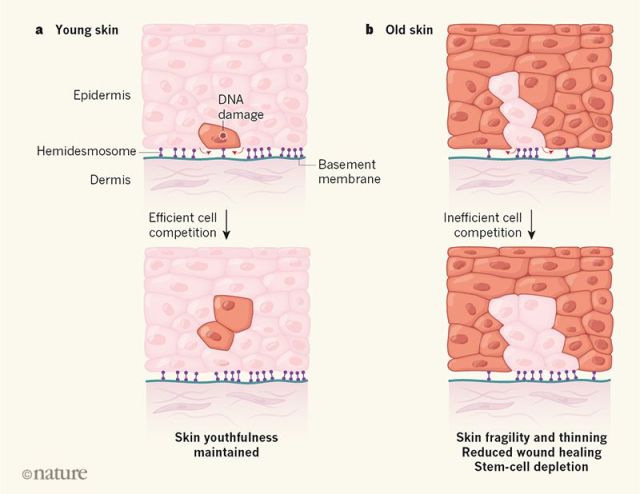
The protein works by encouraging cell competition, a key process to maintain tissue fitness. That effectively “drives out” weaker cells while encouraging replication of stronger ones.

“Damaged or stressed stem cells can be selectively eliminated by intact stem cells every day in our skin,” said Emi Nishimura, a professor at the Tokyo Medical and Dental University’s Stem Cell Biology department, who led the research.

But ageing results in a depletion of COL17A1, as do familiar enemies of youthful skin, like UV radiation and other stress factors.

And when that happens, weaker cells replicate, leaving the skin thinner, more prone to damage and slower to heal.

The research published Thursday in the journal Nature is based on investigations using mice tails, which share many of the same characteristics as human skin.

After confirming the importance of COL17A1, the team decided to investigate whether they could stimulate the protein once it was depleted—effectively looking for compounds that could kickstart the anti-ageing process in skin.

They isolated two chemical compounds—Y27632 and apocynin—and tested both on skin cells, with positive results.

“Application of these drugs to full-thickness skin wounds significantly promoted wound repair,” the study said.

The two compounds point to ways of “facilitating skin regeneration and reducing skin ageing,” the study added.

In a review of the study commissioned by Nature, two professors from the University of Colorado said cell competition had previously only been studied extensively in fruit flies.

The research “provides evidence that healthy cells in mammals can also efficiently repopulate adult tissues, replacing unfit or damaged cells,” wrote professors Ganna Bilousova and James DeGregori.

And they said the research offered “proof-of-principle” that the two chemical compounds could combat ageing.

“Future studies are needed to determine the mechanisms of cell competition in other tissues, and to identify compounds capable of reversing ageing in other organs,” they said.

Nishimura told AFP that the work could eventually lead to products like creams or tablets that could stop skin deterioration and promote repair.

“We are going to collaborate with pharmaceutical or cosmetic companies for the clinical use of the chemicals,” she said.

She said additional research would investigate whether the same process might also be at work in other parts of the body that have so-called epithelial cells like skin does.

“We are working on other epithelial organs as well to find out (whether) similar competition may underlie long-term tissue maintenance as well as organ ageing,” she said.

https://medicalxpress.com/news/2019-04-young-uncovers-protein-skin-youthful.html

Scientists Have Devised a Blood Test That Can Accurately Diagnose Fibromyalgia

by CARLY CASSELLA

Scientists are closing in on a blood test for fibromyalgia, and the result could save patients from what is currently a lengthy and vague process of diagnosis.

Researchers at Ohio State University are now aiming to have a diagnostic blood test available for widespread use within the next five years.

Their confidence stems from a recently discovered biomarker – a “metabolic fingerprint” as the researchers put it – traceable in the blood of those with the disorder.

“We found clear, reproducible metabolic patterns in the blood of dozens of patients with fibromyalgia,” says lead author Kevin Hackshaw, a rheumatologist at Ohio State University.

“This brings us much closer to a blood test than we have ever been.”

Fibromyalgia is a common, debilitating, and poorly understood disorder, marked by widespread pain and fatigue, with no known cause and absolutely no cure.

In the United States, it’s the most common cause of chronic widespread pain, and that’s not even counting the thousands of patients who go undiagnosed every year.

Without a reliable way to detect this disorder, it’s estimated that up to three out of four people with the condition remain undiagnosed. And on average it can take five years from when a person’s symptoms first appear to them actually receiving a diagnosis.

In total, the US Centers for Disease Control and Prevention estimates that about two percent of the population – around four million adults – have fibromyalgia, with women making up a disproportionate slice.

Left with few options, many patients are simply forced to live with their pain.With nowhere to go, many become desperate and turn to potentially harmful treatments.

“When you look at chronic pain clinics, about 40 percent of patients on opioids meet the diagnostic criteria for fibromyalgia,” says Hackshaw.

“Fibromyalgia often gets worse, and certainly doesn’t get better, with opioids.”

It was Hackshaw’s goal to intervene sooner. Using vibrational spectroscopy, a technique which measures the energy of molecules, his team analysed blood samples from 50 people with fibromyalgia, 29 with rheumatoid arthritis, 19 with osteoarthritis, and 23 with lupus.

Despite the fact these disorders can present with similar symptoms, the blood of those participants with fibromyalgia was distinct.

Using these unique patterns, the researchers then tried to blindly predict participants’ diagnoses. Even without knowing their true disorder, the researchers were able to accurately diagnose every study participant based on that molecular fingerprint in the blood.

“These initial results are remarkable,” says co-author Luis Rodriguez-Saona, an expert in vibrational spectroscopy at Ohio State University.

“If we can help speed diagnosis for these patients, their treatment will be better and they’ll likely have better outlooks. There’s nothing worse than being in a grey area where you don’t know what disease you have.”

While the sample size is undoubtedly small, the results are promising. If the team can replicate their results on a larger scale, with a couple hundred diverse participants, then a blood test in five years might not seem so far-fetched.

Not to mention what that would mean for treatment. If the researchers can prove they really have identified a biological fingerprint for fibromyalgia, this could give us new drug targets in the future.

“Thus,” the authors conclude, “our studies have great importance both from development of a reproducible biomarker as well as identifying potential new therapeutic targets for treatment.”

This study has been published in the Journal of Biological Chemistry.

https://www.sciencealert.com/scientists-have-devised-a-blood-test-that-can-accurately-diagnose-fibromyalgia

Neuroscientists Translate Brain Waves Into Recognizable Speech

by George Dvorsky

Using brain-scanning technology, artificial intelligence, and speech synthesizers, scientists have converted brain patterns into intelligible verbal speech—an advance that could eventually give voice to those without.

It’s a shame Stephen Hawking isn’t alive to see this, as he may have gotten a real kick out of it. The new speech system, developed by researchers at the ​Neural Acoustic Processing Lab at Columbia University in New York City, is something the late physicist might have benefited from.

Hawking had amyotrophic lateral sclerosis (ALS), a motor neuron disease that took away his verbal speech, but he continued to communicate using a computer and a speech synthesizer. By using a cheek switch affixed to his glasses, Hawking was able to pre-select words on a computer, which were read out by a voice synthesizer. It was a bit tedious, but it allowed Hawking to produce around a dozen words per minute.

But imagine if Hawking didn’t have to manually select and trigger the words. Indeed, some individuals, whether they have ALS, locked-in syndrome, or are recovering from a stroke, may not have the motor skills required to control a computer, even by just a tweak of the cheek. Ideally, an artificial voice system would capture an individual’s thoughts directly to produce speech, eliminating the need to control a computer.

New research published today in Scientific Advances takes us an important step closer to that goal, but instead of capturing an individual’s internal thoughts to reconstruct speech, it uses the brain patterns produced while listening to speech.

To devise such a speech neuroprosthesis, neuroscientist Nima Mesgarani and his colleagues combined recent advances in deep learning with speech synthesis technologies. Their resulting brain-computer interface, though still rudimentary, captured brain patterns directly from the auditory cortex, which were then decoded by an AI-powered vocoder, or speech synthesizer, to produce intelligible speech. The speech was very robotic sounding, but nearly three in four listeners were able to discern the content. It’s an exciting advance—one that could eventually help people who have lost the capacity for speech.

To be clear, Mesgarani’s neuroprosthetic device isn’t translating an individual’s covert speech—that is, the thoughts in our heads, also called imagined speech—directly into words. Unfortunately, we’re not quite there yet in terms of the science. Instead, the system captured an individual’s distinctive cognitive responses as they listened to recordings of people speaking. A deep neural network was then able to decode, or translate, these patterns, allowing the system to reconstruct speech.

“This study continues a recent trend in applying deep learning techniques to decode neural signals,” Andrew Jackson, a professor of neural interfaces at Newcastle University who wasn’t involved in the new study, told Gizmodo. “In this case, the neural signals are recorded from the brain surface of humans during epilepsy surgery. The participants listen to different words and sentences which are read by actors. Neural networks are trained to learn the relationship between brain signals and sounds, and as a result can then reconstruct intelligible reproductions of the words/sentences based only on the brain signals.”

Epilepsy patients were chosen for the study because they often have to undergo brain surgery. Mesgarani, with the help of Ashesh Dinesh Mehta, a neurosurgeon at Northwell Health Physician Partners Neuroscience Institute and a co-author of the new study, recruited five volunteers for the experiment. The team used invasive electrocorticography (ECoG) to measure neural activity as the patients listened to continuous speech sounds. The patients listened, for example, to speakers reciting digits from zero to nine. Their brain patterns were then fed into the AI-enabled vocoder, resulting in the synthesized speech.

The results were very robotic-sounding, but fairly intelligible. In tests, listeners could correctly identify spoken digits around 75 percent of the time. They could even tell if the speaker was male or female. Not bad, and a result that even came as “a surprise” to Mesgaran, as he told Gizmodo in an email.

Recordings of the speech synthesizer can be found here (the researchers tested various techniques, but the best result came from the combination of deep neural networks with the vocoder).

The use of a voice synthesizer in this context, as opposed to a system that can match and recite pre-recorded words, was important to Mesgarani. As he explained to Gizmodo, there’s more to speech than just putting the right words together.

“Since the goal of this work is to restore speech communication in those who have lost the ability to talk, we aimed to learn the direct mapping from the brain signal to the speech sound itself,” he told Gizmodo. “It is possible to also decode phonemes [distinct units of sound] or words, however, speech has a lot more information than just the content—such as the speaker [with their distinct voice and style], intonation, emotional tone, and so on. Therefore, our goal in this particular paper has been to recover the sound itself.”

Looking ahead, Mesgarani would like to synthesize more complicated words and sentences, and collect brain signals of people who are simply thinking or imagining the act of speaking.

Jackson was impressed with the new study, but he said it’s still not clear if this approach will apply directly to brain-computer interfaces.

“In the paper, the decoded signals reflect actual words heard by the brain. To be useful, a communication device would have to decode words that are imagined by the user,” Jackson told Gizmodo. “Although there is often some overlap between brain areas involved in hearing, speaking, and imagining speech, we don’t yet know exactly how similar the associated brain signals will be.”

William Tatum, a neurologist at the Mayo Clinic who was also not involved in the new study, said the research is important in that it’s the first to use artificial intelligence to reconstruct speech from the brain waves involved in generating known acoustic stimuli. The significance is notable, “because it advances application of deep learning in the next generation of better designed speech-producing systems,” he told Gizmodo. That said, he felt the sample size of participants was too small, and that the use of data extracted directly from the human brain during surgery is not ideal.

Another limitation of the study is that the neural networks, in order for them do more than just reproduce words from zero to nine, would have to be trained on a large number of brain signals from each participant. The system is patient-specific, as we all produce different brain patterns when we listen to speech.

“It will be interesting in future to see how well decoders trained for one person generalize to other individuals,” said Jackson. “It’s a bit like early speech recognition systems that needed to be individually trained by the user, as opposed to today’s technology, such as Siri and Alexa, that can make sense of anyone’s voice, again using neural networks. Only time will tell whether these technologies could one day do the same for brain signals.”

No doubt, there’s still lots of work to do. But the new paper is an encouraging step toward the achievement of implantable speech neuroprosthetics.

https://gizmodo.com/neuroscientists-translate-brain-waves-into-recognizable-1832155006

https://www.nature.com/articles/s41598-018-37359-z