Current restrictions on United States autonomous robot weapons systems set to expire this year

By Ryan Browne

America’s second-highest ranking military officer, Gen. Paul Selva, advocated Tuesday for “keeping the ethical rules of war in place lest we unleash on humanity a set of robots that we don’t know how to control.”

Selva was responding to a question from Sen. Gary Peters, a Michigan Democrat, about his views on a Department of Defense directive that requires a human operator to be kept in the decision-making process when it comes to the taking of human life by autonomous weapons systems.

Peters said the restriction was “due to expire later this year.”

“I don’t think it’s reasonable for us to put robots in charge of whether or not we take a human life,” Selva told the Senate Armed Services Committee during a confirmation hearing for his reappointment as the vice chairman of the Joint Chiefs of Staff, during which a wide range of topics were covered, including North Korea, Iran and defense budget issues.

He predicted that “there will be a raucous debate in the department about whether or not we take humans out of the decision to take lethal action,” but added that he was “an advocate for keeping that restriction.”

Selva said humans needed to remain in the decision making process “because we take our values to war.” He pointed to the laws of war and the need to consider issues like proportional and discriminate action against an enemy, something he suggested could only be done by a human.

His comments come as the US military has sought increasingly autonomous weapons systems.

In July 2016, a group of concerned scientists, researchers and academics, including theoretical physicist Stephen Hawking and billionaire entrepreneur Elon Musk, argued against the development of autonomous weapons systems. They warned of an artificial intelligence arms race and called for a “ban on offensive autonomous weapons beyond meaningful human control.”

But Peters warned that America’s adversaries may be less hesitant to adopt such lethal technology.

“Our adversaries often do not to consider the same moral and ethical issues that we consider each and every day,” the senator told Selva.

Selva acknowledged the possibility of US adversaries developing such technology, but said the decision not to pursue it for the US military “doesn’t mean that we don’t have to address the development of those kinds of technologies and potentially find their vulnerabilities and exploit those vulnerabilities.”

Plastic-eating bacteria discovered in recycling plant

By Eva Botkin-Kowacki

Plastic is everywhere around us. We drink out of plastic cups, buy disposable water bottles, unwrap new electronics from plastic packaging, take home plastic shopping bags, and even wear plastic in polyester fabrics.

Some 311 million tons of plastic is produced across the globe annually, and just 10 percent makes it back to a recycling plant. The rest ends up in landfills, or as litter on land or in the ocean, where it remains for decades and longer.

As for the plastic that has been recycled, it has given rise to an unintended side effect: A team of scientists searching through sediments at a plastic bottle recycling plant in Osaka, Japan have found a strain of bacteria that has evolved to consume the most common type of plastic.

Ideonella sakaiensis 201-F6 can degrade poly (ethylene terephthalate), commonly called PET or PETE, in as little as six weeks, they report in a new paper published Thursday in the journal Science.

Common uses of PET include polyester fibers, disposable bottles, and food containers. The last two are typically labelled with a No. 1 inside a recycling symbol.

But this new paper doesn’t mean you should ditch your reusable water bottles in favor of a tray of disposable ones, or that we’re going to inject this bacteria into landfills tomorrow. This study simply evaluated if the bacteria in question could degrade PET and was conducted under laboratory conditions.

“We hope this bacterium could be applied to solve the severe problems by the wasted PET materials in nature,” Kohei Oda, one of the study authors, tells The Christian Science Monitor in an email. But “this is just the initiation for application.” More research has to be done in order to make this a practical solution to plastic pollution.

But could this sort of fix work in theory?

“[Plastics] have been engineered for cost and for durability, or longevity,” says Giora Proskurowski, an oceanographer at the University of Washington who studies plastic debris in the ocean but was not part of this study, in a phone interview with the Monitor. But he’s hopeful that this research could yield further studies and technologies to mitigate the problem.

The durability of plastic isn’t the only challenge this potential fix faces. Microbes are like teenagers, Christopher Reddy, a senior scientist at Woods Hole Oceanographic Institution who studies environmental pollution and was not part of this study, explains in an interview with the Monitor.

“You can tell them to clean the garage over the weekend but they’re going to do it on their own timescale, they’re going to do it when they want, they’re going to pick the easiest thing to do and they’re likely going to leave you more frustrated than you think,” he explains the metaphor. Similarly, you can’t rely on microbes to break down compounds. “Don’t rely on microbes to clean the environment.”

Dr. Reddy says that has a lot to do with the environment outside the lab. In the experiment, he says, the researchers controlled the situation so the bacteria ate the plastic, but in nature, they would have many options for food.

Also, if I. sakaiensis 201-F6 were to be applied, it would likely only help plastic pollution on land. PET particles are denser than water, so they tend to sink down into the sediment. The trillions of tons of plastic particles amassing in the oceans are other types of plastics, types for which this bacteria probably lacks an appetite. Also, Dr. Proskurowski says, marine organisms have evolved to withstand the saltwater and sunlight that sediment-dwelling organisms might not.

Still, perhaps this bacteria could be harnessed to accelerate degradation of plastics that make it to a landfill, he says.

But this study does show that “the environment is evolving and you get the microbes evolving along with that as well,” Proskurowski says. “These are evolving systems.”

Neither Proskurowski nor Reddy were surprised that the researchers found an organism that can consume PET.

“I’m surprised it’s taken this long. I’ve been waiting for results like this,” Proskurowski says.

“Nature is incredibly wily, microbes are incredibly wily,” Reddy says. “Microbes are very good eaters.”

This is not the first time researchers have found an organism that will eat trashed plastic. Last year engineers at Stanford University found a mealworm that can eat styrofoam. And in that case, it was not the animal’s digestion that broke down the styrofoam, but bacteria it its gut.

http://www.csmonitor.com/Science/2016/0310/Researchers-discover-plastic-eating-bacteria-in-recycling-plant

Graphene successfully interfaced with neurons in the brain

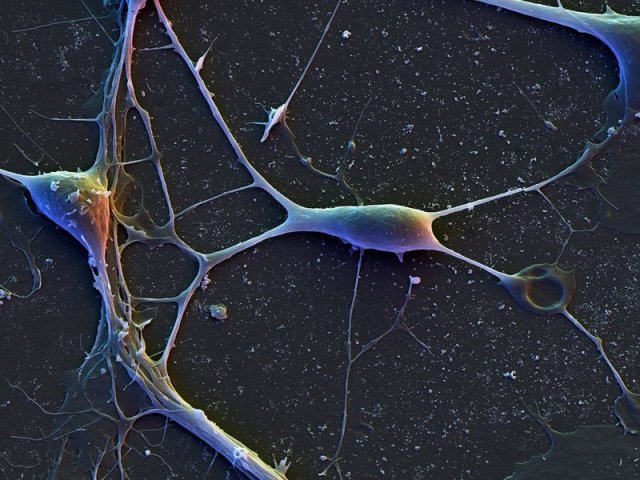
Scientists have long been on a quest to find a way to implant electrodes that interface with neurons into the human brain. If successful, the idea could have huge implications for the treatment of Parkinson’s disease and other neurological disorders. Last month, a team of researchers from Italy and the UK made a huge step forward by showing that the world’s favorite wonder-material, graphene, can successfully interface with neurons.

Previous efforts by other groups using treated graphene had created an interface with a very low signal to noise ratio. But an interdisciplinary collaborative effort by the University of Trieste and the Cambridge Graphene Centre has developed a significantly improved electrode by working with untreated graphene.

“For the first time we interfaced graphene to neurons directly,” said Professor Laura Ballerini of the University of Trieste in Italy. “We then tested the ability of neurons to generate electrical signals known to represent brain activities, and found that the neurons retained their neuronal signaling properties unaltered. This is the first functional study of neuronal synaptic activity using uncoated graphene based materials.”

Prior to experimenting with graphene-based substrates (GBS), scientists implanted microelectrodes based on tungsten and silicon. Proof-of-concept experiments were successful, but these materials seem to suffer from the same fatal flaws. The body’s reaction to the insertion trauma is to form scarring tissue, inhibiting clear electrical signals. The structures were also prone to disconnecting, due to the stiffness of the materials, which were unsuitable for a semi-fluid organic environment.

Pure graphene is promising because it is flexible, non-toxic, and does not impair other cellular activity.

The team’s experiments on rat brain cell cultures showed that the untreated graphene electrodes interfaced well with neurons, transmitting electrical impulses normally with none of the adverse reactions seen previously.

The biocompatibility of graphene could allow it to be used to make graphene microelectrodes that could help measure, harness and control an impaired brain’s functions. It could be used to restore lost sensory functions to treat paralysis, control prosthetic devices such a robotic limbs for amputees and even control or diminish the impact of the out-of-control electrical impulses that cause motor disorders such as Parkinson’s and epilepsy.

“We are currently involved in frontline research in graphene technology towards biomedical applications,” said Professor Maurizio Prato from the University of Trieste. “In this scenario, the development and translation in neurology of graphene-based high-performance bio-devices requires the exploration of the interactions between graphene nano and micro-sheets with the sophisticated signaling machinery of nerve cells. Our work is only a first step in that direction.”

The results of this research were recently published in the journal ACS Nano. The research was funded by the Graphene Flagship, a European initiative that aims to connect theoretical and practical fields and reduce the time that graphene products spend in laboratories before being brought to market.

http://www.cam.ac.uk/research/news/graphene-shown-to-safely-interact-with-neurons-in-the-brain

DARPA program aims to develop an implantable neural interface capable of connecting with one million neurons

A new DARPA program aims to develop an implantable neural interface able to provide unprecedented signal resolution and data-transfer bandwidth between the human brain and the digital world. The interface would serve as a translator, converting between the electrochemical language used by neurons in the brain and the ones and zeros that constitute the language of information technology. The goal is to achieve this communications link in a biocompatible device no larger than one cubic centimeter in size, roughly the volume of two nickels stacked back to back.

The program, Neural Engineering System Design (NESD), stands to dramatically enhance research capabilities in neurotechnology and provide a foundation for new therapies.

“Today’s best brain-computer interface systems are like two supercomputers trying to talk to each other using an old 300-baud modem,” said Phillip Alvelda, the NESD program manager. “Imagine what will become possible when we upgrade our tools to really open the channel between the human brain and modern electronics.”

Among the program’s potential applications are devices that could compensate for deficits in sight or hearing by feeding digital auditory or visual information into the brain at a resolution and experiential quality far higher than is possible with current technology.

Neural interfaces currently approved for human use squeeze a tremendous amount of information through just 100 channels, with each channel aggregating signals from tens of thousands of neurons at a time. The result is noisy and imprecise. In contrast, the NESD program aims to develop systems that can communicate clearly and individually with any of up to one million neurons in a given region of the brain.

Achieving the program’s ambitious goals and ensuring that the envisioned devices will have the potential to be practical outside of a research setting will require integrated breakthroughs across numerous disciplines including neuroscience, synthetic biology, low-power electronics, photonics, medical device packaging and manufacturing, systems engineering, and clinical testing. In addition to the program’s hardware challenges, NESD researchers will be required to develop advanced mathematical and neuro-computation techniques to first transcode high-definition sensory information between electronic and cortical neuron representations and then compress and represent those data with minimal loss of fidelity and functionality.

To accelerate that integrative process, the NESD program aims to recruit a diverse roster of leading industry stakeholders willing to offer state-of-the-art prototyping and manufacturing services and intellectual property to NESD researchers on a pre-competitive basis. In later phases of the program, these partners could help transition the resulting technologies into research and commercial application spaces.

To familiarize potential participants with the technical objectives of NESD, DARPA will host a Proposers Day meeting that runs Tuesday and Wednesday, February 2-3, 2016, in Arlington, Va. The Special Notice announcing the Proposers Day meeting is available at https://www.fbo.gov/spg/ODA/DARPA/CMO/DARPA-SN-16-16/listing.html. More details about the Industry Group that will support NESD is available at https://www.fbo.gov/spg/ODA/DARPA/CMO/DARPA-SN-16-17/listing.html. A Broad Agency Announcement describing the specific capabilities sought will be forthcoming on http://www.fbo.gov.

NESD is part of a broader portfolio of programs within DARPA that support President Obama’s brain initiative. For more information about DARPA’s work in that domain, please visit: http://www.darpa.mil/program/our-research/darpa-and-the-brain-initiative.

http://www.darpa.mil/news-events/2015-01-19

Thanks to Kebmodee for bringing this to the It’s Interesting community.

Uploading Our Minds into Digital Space


Human cortical neurons in the brain. (David Scharf/Corbis)

By Jerry Adler
Smithsonian Magazine

Ken Hayworth, a neuroscientist, wants to be around in 100 years but recognizes that, at 43, he’s not likely to make it on his own. Nor does he expect to get there preserved in alcohol or a freezer; despite the claims made by advocates of cryonics, he says, the ability to revivify a frozen body “isn’t really on the horizon.” So Hayworth is hoping for what he considers the next best thing. He wishes to upload his mind—his memories, skills and personality—to a computer that can be programmed to emulate the processes of his brain, making him, or a simulacrum, effectively immortal (as long as someone keeps the power on).

Hayworth’s dream, which he is pursuing as president of the Brain Preservation Foundation, is one version of the “technological singularity.” It envisions a future of “substrate-independent minds,” in which human and machine consciousness will merge, transcending biological limits of time, space and memory. “This new substrate won’t be dependent on an oxygen atmosphere,” says Randal Koene, who works on the same problem at his organization, Carboncopies.org. “It can go on a journey of 1,000 years, it can process more information at a higher speed, it can see in the X-ray spectrum if we build it that way.” Whether Hayworth or Koene will live to see this is an open question. Their most optimistic scenarios call for at least 50 years, and uncounted billions of dollars, to implement their goal. Meanwhile, Hayworth hopes to achieve the ability to preserve an entire human brain at death—through chemicals, cryonics or both—to keep the structure intact with enough detail that it can, at some future time, be scanned into a database and emulated on a computer.

That approach presumes, of course, that all of the subtleties of a human mind and memory are contained in its anatomical structure—conventional wisdom among neuroscientists, but it’s still a hypothesis. There are electrochemical processes at work. Are they captured by a static map of cells and synapses? We won’t know, advocates argue, until we try to do it.

The initiatives require a big bet on the future of technology. A 3-D map of all the cells and synapses in a nervous system is called a “connectome,” and so far researchers have produced exactly one, for a roundworm called Caenorhabditis elegans, with 302 neurons and about 7,000 connections among them. A human brain, according to one reasonable estimate, has about 86 billion neurons and 100 trillion synapses. And then there’s the electrochemical activity on top of that. In 2013, announcing a federal initiative to produce a complete model of the human brain, Francis Collins, head of the National Institutes of Health, said it could generate “yottabytes” of data—a million million million megabytes. To scan an entire human brain at the scale Hayworth thinks is necessary—effectively slicing it into virtual cubes ten nanometers on a side—would require, with today’s technology, “a million electron microscopes running in parallel for ten years.” Mainstream researchers are divided between those who regard Hayworth’s quest as impossible in practice, and those, like Miguel Nicolelis of Duke University, who consider it impossible in theory. “The brain,” he says, “is not computable.”

And what does it mean for a mind to exist outside a brain? One immediately thinks of the disembodied HAL in 2001: A Space Odyssey. But Koene sees no reason that, if computers continue to grow smaller and more powerful, an uploaded mind couldn’t have a body—a virtual one, or a robotic one. Will it sleep? Experience hunger, pain, desire? In the absence of hormones and chemical neurotransmitters, will it feel emotion? It will be you, in a sense, but will you be it?

These questions don’t trouble Hayworth. To him, the brain is the most sophisticated computer on earth, but only that, and he figures his mind could also live in one made of transistors instead. He hopes to become the first human being to live entirely in cyberspace, to send his virtual self into the far future.

Read more: http://www.smithsonianmag.com/innovation/quest-upload-mind-into-digital-space-180954946/#OBRGToqVzeqftrBt.99

Chef Massimo Bottura on Why the Future of Food is in Our Trash

By MASSIMO BOTTURA

WHEN I THINK ABOUT THE FUTURE of restaurants—what chefs will be cooking in the years to come—the first thing that comes to mind is garbage: day-old bread, potato peels, fish bones, wilted vegetables. We currently produce enough food to feed the world’s 7.3 billion people, and yet 795 million are hungry, according to the United Nations. The reason is waste: a 2013 U.N. report reveals that 550 million tons of food are discarded by distributors, supermarkets and consumers every year. The U.S. and EU have pledged to reduce food waste in the next 10 to 15 years. This is where chefs come in.

This year the 20th anniversary of my restaurant, Osteria Francescana, coincided with the Expo Milano 2015. In an effort to address the expo’s ambitious theme—“Feeding the Planet, Energy for Life”—Francescana collaborated with the Catholic charity Caritas Ambrosiana and the culture maven Davide Rampello to turn a renovated theater in the Greco quarter into a think tank and experimental soup kitchen. This collaboration was baptized Refettorio Ambrosiano after Sant’Ambrogio, Milan’s patron saint. The word Refettorio has roots in the Latin word refice, to restore, and Refettorio Ambrosiano runs on salvaged waste and volunteer labor, including stints from the best chefs in the world.

In May, Daniel Humm of Eleven Madison Park made a sweet pudding from day-old, discarded bread. In June, René Redzepi of Noma turned black bananas into mouth-watering banana bread. In July, Daniel Patterson of Coi produced the quintessential minestrone from a crate of dismal-looking vegetables. Osteria Francescana made weekly broths from vegetable scraps and peelings. The guests were not fine-dining regulars, but a selection of Milan’s homeless community. What surprised us all was just how fabulous salvaged food can become.

Every Refettorio Ambrosiano recipe is an ode to imperfection with revolutionary potential; these dishes could change the way we feed the world, because they can be cooked by anyone, anywhere, on any budget. For families in need, it’s a way to bring dignity back to the table—dignity based not on the quality of ingredients, but on the quality of ideas.

Chefs have greater social responsibility than ever before. Celebrity status has allowed some of us to become ambassadors of culture and advocates for artisans, ethics and change. But have we spent enough time and energy considering the waste that results from our work? Imagine a school where young chefs are taught to be as resourceful with ingredients as they are with ideas. Imagine chefs embracing imperfect, discarded food and treating it with the same reverence they would a rack of lamb or ripe tomato. Imagine changing the perceptions about what is beautiful, nutritious and worthy of being shared.

Cooking is a call to act. At its best it can unite, revive and restore. As populations grow and food supplies are threatened, we are called to educate and spread ideas that will be the motivational force behind the evolution of our kitchens, our communities and our future. Let us begin by turning our waste—in our homes and our restaurants—into food that’s ethical and delicious. Because something salvaged is something gained.

http://www.wsj.com/articles/chef-massimo-bottura-on-why-the-future-of-food-is-in-our-trash-1449506020

Ethical and legal questions arising from developing sex robot technology

by Peter Mellgard

Back in the 80s there was a student at the Massachusetts Institute of Technology who confessed to a professor that he hadn’t quite figured out “this sex thing,” and preferred to spend time on his computer rather than with girls. For “Anthony,” computers were safer and made more sense; romantic relationships, he said, usually led to him “getting burned in some way.”

Years later, Anthony’s story made a big impression on David Levy, an expert in artificial intelligence, who was amazed that someone as educated as Anthony was developing an emotional attachment to his computer so long ago. Levy decided he wanted to give guys like Anthony a social and sexual alternative to real girls. The answer, he thinks, is sexbots. And he’s not talking about some blow-up doll that doesn’t talk.

Levy predicts that a lot of us, mostly but not exclusively shy guys like Anthony, will be having sex with robots sometime around the 2040s. By then, he says, robots will be so hot, human-like and mind-blowing under the sheets that a lot of people will find them sexually enjoyable. What’s more, Levy believes they will be able to engage and communicate with people in a meaningful, emotional way, so that guys like Anthony won’t need to worry about real girls if they don’t want to.

To give a robot the ability to communicate and provide the kind of emotional satisfaction someone would normally get from a human partner, Levy is improving an award-winning chat program called Do-Much-More that he built a few years ago. His aim is for it to become “a girlfriend or boyfriend chatbot that will be able to conduct amorous conversations with a user,” he told The WorldPost. “I’m trying to simulate the kind of conversation that two lovers might have.”

Levy admits that “this won’t come about instantly.” Eventually he wants his advanced conversation software embedded in a sexbot so that it becomes more than just a sexual plaything — a companion, perhaps. But it won’t be for everyone. “I don’t believe that human-robot relationships are going to replace human-human relationships,” he said.

There will be people, however, Levy said, people like Anthony maybe, for whom a sexbot holds a strong appeal. “I’m hoping to help people,” he said, then elaborated:

People ask me the question, ‘Why is a relationship with a robot better than a relationship with a human?’ And I don’t think that’s the point at all. For millions of people in the world, they can’t make a good relationship with other humans. For them the question is not, ‘Why is a relationship with a robot better?’ For them the question is, would it be better to have a relationship with a robot or no relationship at all?

The future looks bright if you’re into relationships with robots and computers.

Neil McArthur, a professor of philosophy and ethics at the University of Manitoba in Canada, imagines that in 10 to 15 years, “we will have something for which there is great consumer demand and that people are willing to say is a very good and enjoyable sexbot.”

For now, the closest thing we have to a genuine sexbot is the RealDoll. A RealDoll is the most advanced sex doll in the world — a sculpted “work of art,” in the words of Matt McMullen, the founder of the company, Abyss Creations, that makes them. For a few thousand dollars a pop, customers can customize the doll’s hair color, skin tone, eyes, clothing and genitalia (removable, exchangeable, flaccid, hard) — and then wait patiently for a coffin-sized box to arrive in the mail. For some people, that box contains a sexual plaything and an emotional companion that is preferable to a human partner.

“The goal, the fantasy, is to bring her to life,” McMullen told Vanity Fair.

Others already prefer virtual “people” to living humans as emotional partners. Love Plus is a hugely popular game in Japan that is played on a smartphone or Nintendo. Players take imaginary girls on dates, “kiss” them, buy them birthday cakes.

“Well, you know, all I want is someone to say good morning to in the morning and someone to say goodnight to at night,” said one gamer who has been dating one of the imaginary girls for years, according to TIME Magazine.

And there’s Invisible Girlfriend and Invisible Boyfriend, apps that connects you with a real, paid human who will text you so that you can prove you have a girlfriend or boyfriend to nosy relatives or disbelieving buddies. At least one user, a culture critic for the Washington Post, confessed she might actually being in love with the person on the other side who, remember, is being paid to satisfy customers’ desires. They’d never even met.

McArthur and others suspect that there might be people for whom a sexbot is no mere toy but a way to access something — sex — that for one reason or another was previously unattainable.

When it comes to the disabled, McArthur explained, there are two barriers to sexual activity: an external — “they’re not seen as valuable sexual partners” — and an internal anxiety. “Sexbots can give them access to partners. And they are sort of a gateway as well: disabled people could use a sexbot to build confidence and to build a sense of sexuality.”

“When it comes to sex,” he concluded, “more is better.”

It’s a new and emerging technology, but let’s nip in the bud,” Kathleen Richardson, a senior research fellow in the ethics of robotics at De Montfort University in England, told the Washington Post. Richardson released a paper this month titled “The Asymmetrical ‘Relationship’: Parallels Between Prostitution and the Development of Sex Robots.”

“I propose that extending relations of prostitution into machines is neither ethical, nor is it safe,” the paper reads.

And the ethical questions extend beyond machine “prostitution.” RealDoll, the sex doll company, refuses to make child-like dolls or animals. But what if another company does?

“It’s really a legal, moral, societal debate that we need to have about these systems,” said Matthias Scheutz, the director of the human-robot interaction laboratory at Tufts University. “We as a society need to discuss these questions before these products are out there. Because right now, we aren’t.”

If, in the privacy of your own home, you want to have sex with a doll or robot that looks like a 10-year-old boy or virtual children in porn apps, is that wrong? In most though not all countries in the world, it’s illegal to possess child pornography, including when it portrays a virtual person that is “indistinguishable” from a real minor. But some artistic representations of naked children are legal even in the U.S. Is a sexbot art? Is what a person does to a sexbot, no matter what it looks like, a legal question?

Furthermore, the link between viewing child pornography and child abuse crimes is unclear. Studies have been done on people incarcerated for those crimes that found that child pornography fueled the desire to abuse a real child. But another study on self-identified “boy-attracted pedosexual males” found that viewing child pornography acted as a substitute for sexual molestation.

“I think the jury is out on that,” said McArthur. “It depends on an empirical question: Do you think that giving people access to satisfaction of that kind is going to stimulate them to move on to actual contact crimes, or do you think it will provide a release valve?”

Scheutz explained: “People will build all sorts of things. Some people have made arguments that for people who otherwise would be sex offenders, maybe a child-like robot would be a therapeutic thing. Or it could have exactly the opposite effect.”
McArthur is most worried about how sexbots will impact perceptions about gender, body image and human sexual behavior. Sexbots will “promote unattainable body ideals,” he said. Furthermore, “you just aren’t going to make a robot that has a complicated personality and isn’t always in the mood. That’s going to promote a sense that, well, women should be more like an idealized robot personality that is a pliant, sexualized being.”

As sexbots become more popular and better at what they’re built to do, these questions will become more and more important. We, as a society and a species, are opening a door to a new world of sex. Social taboos will be challenged; legal questions will be raised.

And there might be more people — maybe people like Anthony — who realize they don’t need to suffer through a relationship with a human if they don’t want to because a robot provides for their emotional and sexual needs without thinking, contradicting, saying no or asking for much in return.

http://www.huffingtonpost.com/entry/robot-sex_55f979f2e4b0b48f670164e9

Thanks to Dr. Lutter for bringing this to the attention of the It’s Interesting community.

New synthetic chameleon skin could lead to instant wardrobe changes

Technology could lead to the transformation of clothes, cars, buildings and even billboards.

Chameleons are one of the few animals in the world capable of changing their color at will. Scientists have only recently figured out how these shifty creatures perform their kaleidoscopic act, and now they have developed a synthetic material that can mimic the color-changing ability of chameleon skin, reports Gizmodo.

Though it may seem magical, the chameleon’s trick is quite simple. It turns out that chameleons have a layer of nanocrystals in their skin cells that can reflect light at different wavelengths depending on their spacing. So when the skin is relaxed, it takes on one color. But when it stretches, the color changes. Chameleons merely need to flex their skin in subtle ways to alter their appearance.

Learning to mimic this animal’s ability could lead to more than just new forms of advanced camouflage. Imagine if you could change the color of your wardrobe instantly, or if your car could get a new “paint job” at any time. Buildings lined with synthetic chameleon skin could alter their appearance in moments without architectural changes, or billboards could flash new messages at the drop of a hat.

All of these technologies could now be just around the corner thanks to the development of “flexible photonic metastructures for tunable coloration” that essentially work like artificial chameleon skin.

Basically, the material involves tiny rows of ridges that are etched onto a silicon film a thousand times thinner than a human hair. Each of these ridges reflects a specific wavelength of light, so it’s possible to finely tune the wavelength of light that is reflected by simply manipulating the spacing between the ridges.

The technology does not yet have a direct commercial application — it’s still in the beginning stages — but it may not be long before chameleon-like surfaces cover everything around us. More can be read about the technology in the journal Optica, where the new research was published.

Read more: http://www.mnn.com/green-tech/research-innovations/stories/new-synthetic-chameleon-skin-could-lead-to-instant-wardrobe#ixzz3VoTTwf8P

Boeing granted patent for world’s first real-life ‘force field’

The technology is reminiscent of the deflector shields popularized in the world of ‘Star Trek.’

There are several technologies from the world of “Star Trek” that perhaps seem forever relegated to science fiction: transporters, warp drives, universal translators, etc. But if Boeing has its way, you won’t find deflector shields on that list. The multinational corporation has been granted a patent for a real life force field-like defense system that is reminiscent of the Trekkie tech most famous for keeping Enterprise safe from phaser blasts and photon torpedoes, reports CNN.

The patent, originally filed in 2012, calls the technology a “method and system for shockwave attenuation via electromagnetic arc.” Though not exactly the same thing as featured in “Star Trek,” the concept isn’t that far off from its fictional counterpart. Basically, the system is designed to create a shell of ionized air — a plasma field, essentially — between the shockwave of an oncoming blast and the object being protected.

According to the patent, it works “by heating a selected region of the first fluid medium rapidly to create a second, transient medium that intercepts the shockwave and attenuates its energy density before it reaches a protected asset.”

The protective arc of air can be superheated using a laser. In theory, such a plasma field should dissipate any shockwave that comes into contact with it, though its effectiveness has yet to be proven in practice. The device would also include sensors that can detect an oncoming blast before it makes impact, so that it wouldn’t have to be turned on at all times. It would only activate when needed, kind of like how a vehicle’s airbag is only triggered by an impact.

Boeing’s force field would not protect against shrapnel or flying projectiles — it is only designed to guard against a shockwave — so it isn’t an all-encompassing shield. But if it works, it will still offer improved protection against dangers commonly met on modern battlefields.

“Explosive devices are being used increasingly in asymmetric warfare to cause damage and destruction to equipment and loss of life. The majority of the damage caused by explosive devices results from shrapnel and shock waves,” reads the patent.

So the world of “Star Trek” may not be so far off after all. Maybe next, we’ll have subspace communications and Vulcan mind melds. The line between science and science fiction is becoming increasingly blurred indeed.

Read more: http://www.mnn.com/green-tech/research-innovations/stories/boeing-granted-patent-for-worlds-first-real-life-force-field#ixzz3VoQfqOyA

Thanks to Kebmodee and Da Brayn for bringing this to the attention of the It’s Interesting community.