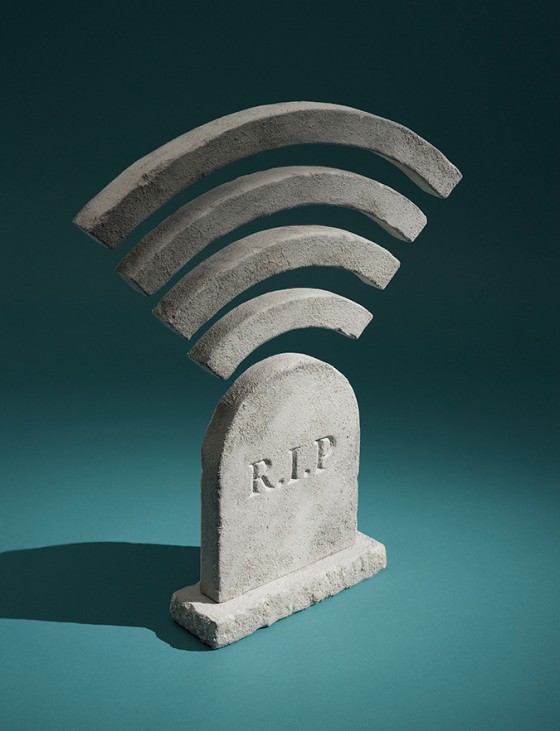
Why you should believe in the digital afterlife

by Michael Graziano

Imagine scanning your Grandma’s brain in sufficient detail to build a mental duplicate. When she passes away, the duplicate is turned on and lives in a simulated video-game universe, a digital Elysium complete with Bingo, TV soaps, and knitting needles to keep the simulacrum happy. You could talk to her by phone just like always. She could join Christmas dinner by Skype. E-Granny would think of herself as the same person that she always was, with the same memories and personality—the same consciousness—transferred to a well regulated nursing home and able to offer her wisdom to her offspring forever after.

And why stop with Granny? You could have the same afterlife for yourself in any simulated environment you like. But even if that kind of technology is possible, and even if that digital entity thought of itself as existing in continuity with your previous self, would you really be the same person?

Is it even technically possible to duplicate yourself in a computer program? The short answer is: probably, but not for a while.

Let’s examine the question carefully by considering how information is processed in the brain, and how it might be translated to a computer.

The first person to grasp the information-processing fundamentals of the brain was the great Spanish neuroscientist, Ramon Y Cajal, who won the 1906 Nobel Prize in Physiology. Before Cajal, the brain was thought to be made of microscopic strands connected in a continuous net or ‘reticulum.’ According to that theory, the brain was different from every other biological thing because it wasn’t made of separate cells. Cajal used new methods of staining brain samples to discover that the brain did have separate cells, which he called neurons. The neurons had long thin strands mixing together like spaghetti—dendrites and axons that presumably carried signals. But when he traced the strands carefully, he realized that one neuron did not grade into another. Instead, neurons contacted each other through microscopic gaps—synapses.

Cajal guessed that the synapses must regulate the flow of signals from neuron to neuron. He developed the first vision of the brain as a device that processes information, channeling signals and transforming inputs into outputs. That realization, the so-called neuron doctrine, is the foundational insight of neuroscience. The last hundred years have been dedicated more or less to working out the implications of the neuron doctrine.

It’s now possible to simulate networks of neurons on a microchip and the simulations have extraordinary computing capabilities. The principle of a neural network is that it gains complexity by combining many simple elements. One neuron takes in signals from many other neurons. Each incoming signal passes over a synapse that either excites the receiving neuron or inhibits it. The neuron’s job is to sum up the many thousands of yes and no votes that it receives every instant and compute a simple decision. If the yes votes prevail, it triggers its own signal to send on to yet other neurons. If the no votes prevail, it remains silent. That elemental computation, as trivial as it sounds, can result in organized intelligence when compounded over enough neurons connected in enough complexity.

The trick is to get the right pattern of synaptic connections between neurons. Artificial neural networks are programmed to adjust their synapses through experience. You give the network a computing task and let it try over and over. Every time it gets closer to a good performance, you give it a reward signal or an error signal that updates its synapses. Based on a few simple learning rules, each synapse changes gradually in strength. Over time, the network shapes up until it can do the task. That deep leaning, as it’s sometimes called, can result in machines that develop spooky, human-like abilities such as face recognition and voice recognition. This technology is already all around us in Siri and in Google.

But can the technology be scaled up to preserve someone’s consciousness on a computer? The human brain has about a hundred billion neurons. The connectional complexity is staggering. By some estimates, the human brain compares to the entire content of the internet. It’s only a matter of time, however, and not very much at that, before computer scientists can simulate a hundred billion neurons. Many startups and organizations, such as the Human Brain project in Europe, are working full-tilt toward that goal. The advent of quantum computing will speed up the process considerably. But even when we reach that threshold where we are able to create a network of a hundred billion artificial neurons, how do we copy your special pattern of connectivity?

No existing scanner can measure the pattern of connectivity among your neurons, or connectome, as it’s called. MRI machines scan at about a millimeter resolution, whereas synapses are only a few microns across. We could kill you and cut up your brain into microscopically thin sections. Then we could try to trace the spaghetti tangle of dendrites, axons, and their synapses. But even that less-than-enticing technology is not yet scalable. Scientists like Sebastian Seung have plotted the connectome in a small piece of a mouse brain, but we are decades away, at least, from technology that could capture the connectome of the human brain.

Assuming we are one day able to scan your brain and extract your complete connectome, we’ll hit the next hurdle. In an artificial neural network, all the neurons are identical. They vary only in the strength of their synaptic interconnections. That regularity is a convenient engineering approach to building a machine. In the real brain, however, every neuron is different. To give a simple example, some neurons have thick, insulated cables that send information at a fast rate. You find these neurons in parts of the brain where timing is critical. Other neurons sprout thinner cables and transmit signals at a slower rate. Some neurons don’t even fire off signals—they work by a subtler, sub-threshold change in electrical activity. All of these neurons have different temporal dynamics.

The brain also uses hundreds of different kinds of synapses. As I noted above, a synapse is a microscopic gap between neurons. When neuron A is active, the electrical signal triggers a spray of chemicals—neurotransmitters—which cross the synapse and are picked up by chemical receptors on neuron B. Different synapses use different neurotransmitters, which have wildly different effects on the receiving neuron, and are re-absorbed after use at different rates. These subtleties matter. The smallest change to the system can have profound consequences. For example, Prozac works on people’s moods because it subtly adjusts the way particular neurotransmitters are reabsorbed after being released into synapses.

Although Cajal didn’t realize it, some neurons actually do connect directly, membrane to membrane, without a synaptic space between. These connections, called gap junctions, work more quickly than the regular kind and seem to be important in synchronizing the activity across many neurons.

Other neurons act like a gland. Instead of sending a precise signal to specific target neurons, they release a chemical soup that spreads and affects a larger area of the brain over a longer time.

I could go on with the biological complexity. These are just a few examples.

A student of artificial intelligence might argue that these complexities don’t matter. You can build an intelligent machine with simpler, more standard elements, ignoring the riot of biological complexity. And that is probably true. But there is a difference between building artificial intelligence and recreating a specific person’s mind.

If you want a copy of your brain, you will need to copy its quirks and complexities, which define the specific way you think. A tiny maladjustment in any of these details can result in epilepsy, hallucinations, delusions, depression, anxiety, or just plain unconsciousness. The connectome by itself is not enough. If your scan could determine only which neurons are connected to which others, and you re-created that pattern in a computer, there’s no telling what Frankensteinian, ruined, crippled mind you would create.

To copy a person’s mind, you wouldn’t need to scan anywhere near the level of individual atoms. But you would need a scanning device that can capture what kind of neuron, what kind of synapse, how large or active of a synapse, what kind of neurotransmitter, how rapidly the neurotransmitter is being synthesized and how rapidly it can be reabsorbed. Is that impossible? No. But it starts to sound like the tech is centuries in the future rather than just around the corner.

Even if we get there quicker, there is still another hurdle. Let’s suppose we have the technology to make a simulation of your brain. Is it truly conscious, or is it merely a computer crunching numbers in imitation of your behavior?

A half-dozen major scientific theories of consciousness have been proposed. In all of them, if you could simulate a brain on a computer, the simulation would be as conscious as you are. In the Attention Schema Theory, consciousness depends on the brain computing a specific kind of self-descriptive model. Since this explanation of consciousness depends on computation and information, it would translate directly to any hardware including an artificial one.

In another approach, the Global Workspace Theory, consciousness ignites when information is combined and shared globally around the brain. Again, the process is entirely programmable. Build that kind of global processing network, and it will be conscious.

In yet another theory, the Integrated Information Theory, consciousness is a side product of information. Any computing device that has a sufficient density of information, even an artificial device, is conscious.

Many other scientific theories of consciousness have been proposed, beyond the three mentioned here. They are all different from each other and nobody yet knows which one is correct. But in every theory grounded in neuroscience, a computer-simulated brain would be conscious. In some mystical theories and theories that depend on a loose analogy to quantum mechanics, consciousness would be more difficult to create artificially. But as a neuroscientist, I am confident that if we ever could scan a person’s brain in detail and simulate that architecture on a computer, then the simulation would have a conscious experience. It would have the memories, personality, feelings, and intelligence of the original.

And yet, that doesn’t mean we’re out of the woods. Humans are not brains in vats. Our cognitive and emotional experience depends on a brain-body system embedded in a larger environment. This relationship between brain function and the surrounding world is sometimes called “embodied cognition.” The next task therefore is to simulate a realistic body and a realistic world in which to embed the simulated brain. In modern video games, the bodies are not exactly realistic. They don’t have all the right muscles, the flexibility of skin, or the fluidity of movement. Even though some of them come close, you wouldn’t want to live forever in a World of Warcraft skin. But the truth is, a body and world are the easiest components to simulate. We already have the technology. It’s just a matter of allocating enough processing power.

In my lab, a few years ago, we simulated a human arm. We included the bone structure, all the fifty or so muscles, the slow twitch and fast twitch fibers, the tendons, the viscosity, the forces and inertia. We even included the touch receptors, the stretch receptors, and the pain receptors. We had a working human arm in digital format on a computer. It took a lot of computing power, and on our tiny machines it couldn’t run in real time. But with a little more computational firepower and a lot bigger research team we could have simulated a complete human body in a realistic world.

Let’s presume that at some future time we have all the technological pieces in place. When you’re close to death we scan your details and fire up your simulation. Something wakes up with the same memories and personality as you. It finds itself in a familiar world. The rendering is not perfect, but it’s pretty good. Odors probably don’t work quite the same. The fine-grained details are missing. You live in a simulated New York City with crowds of fellow dead people but no rats or dirt. Or maybe you live in a rural setting where the grass feels like Astroturf. Or you live on the beach in the sun, and every year an upgrade makes the ocean spray seem a little less fake. There’s no disease. No aging. No injury. No death unless the operating system crashes. You can interact with the world of the living the same way you do now, on a smart phone or by email. You stay in touch with living friends and family, follow the latest elections, watch the summer blockbusters. Maybe you still have a job in the real world as a lecturer or a board director or a comedy writer. It’s like you’ve gone to another universe but still have contact with the old one.

But is it you? Did you cheat death, or merely replace yourself with a creepy copy?

I can’t pretend to have a definitive answer to this philosophical question. Maybe it’s a matter of opinion rather than anything testable or verifiable. To many people, uploading is simply not an afterlife. No matter how accurate the simulation, it wouldn’t be you. It would be a spooky fake.

My own perspective borrows from a basic concept in topology. Imagine a branching Y. You’re born at the bottom of the Y and your lifeline progresses up the stalk. The branch point is the moment your brain is scanned and the simulation has begun. Now there are two of you, a digital one (let’s say the left branch) and a biological one (the right branch). They both inherit the memories, personality, and identity of the stalk. They both think they’re you. Psychologically, they’re equally real, equally valid. Once the simulation is fired up, the branches begin to diverge. The left branch accumulates new experiences in a digital world. The right branch follows a different set of experiences in the physical world.

Is it all one person, or two people, or a real person and a fake one? All of those and none of those. It’s a Y.

The stalk of the Y, the part from before the split, gains immortality. It lives on in the digital you, just like your past self lives on in your present self. The right hand branch, the post-split biological branch, is doomed to die. That’s the part that feels gypped by the technology.

So let’s assume that those of us who live in biological bodies get over this injustice, and in a century or three we invent a digital afterlife. What could possibly go wrong?

Well, for one, there are limited resources. Simulating a brain is computationally expensive. As I noted before, by some estimates the amount of information in the entire internet at the present time is approximately the same as in a single human brain. Now imagine the resources required to simulate the brains of millions or billions of dead people. It’s possible that some future technology will allow for unlimited RAM and we’ll all get free service. The same way we’re arguing about health care now, future activists will chant, “The afterlife is a right, not a privilege!” But it’s more likely that a digital afterlife will be a gated community and somebody will have to choose who gets in. Is it the rich and politically connected who live on? Is it Trump? Is it biased toward one ethnicity? Do you get in for being a Nobel laureate, or for being a suicide bomber in somebody’s hideous war? Just think how coercive religion can be when it peddles the promise of an invisible afterlife that can’t be confirmed. Now imagine how much more coercive a demagogue would be if he could dangle the reward of an actual, verifiable afterlife. The whole thing is an ethical nightmare.

And yet I remain optimistic. Our species advances every time we develop a new way to share information. The invention of writing jump-started our advanced civilizations. The computer revolution and the internet are all about sharing information. Think about the quantum leap that might occur if instead of preserving words and pictures, we could preserve people’s actual minds for future generations. We could accumulate skill and wisdom like never before. Imagine a future in which your biological life is more like a larval stage. You grow up, learn skills and good judgment along the way, and then are inducted into an indefinite digital existence where you contribute to stability and knowledge. When all the ethical confusion settles, the benefits may be immense. No wonder people like Ray Kurzweil refer to this kind of technological advance as a singularity. We can’t even imagine how our civilization will look on the other side of that change.

http://www.theatlantic.com/science/archive/2016/07/what-a-digital-afterlife-would-be-like/491105/

Thanks to Dan Brat for bringing this to the It’s Interesting community.
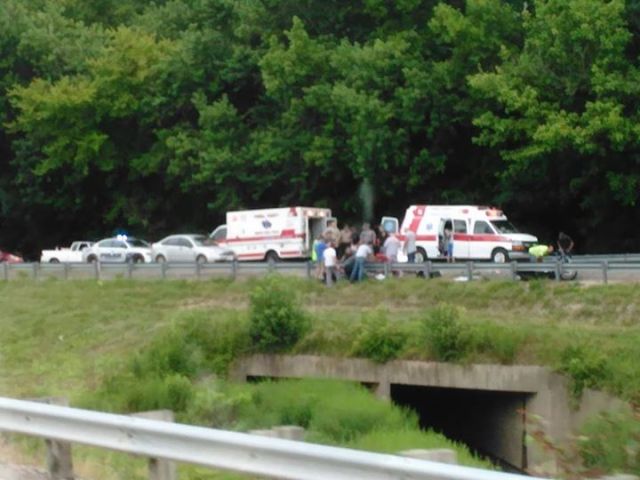
Ghostly image captured in fatal accident photo

By Doug Criss

Many people think a Kentucky man captured a supernatural moment when he took a picture of a fatal motorcycle crash earlier this week.

Saul Vazquez said his father snapped the accident scene as he passed by it Tuesday afternoon from the cab of his truck.

The photo appears to show the faint outline of a figure hovering over the accident scene. The man involved in the motorcycle crash later died at the hospital.

He posted the pic on Facebook a few minutes later, and many commenters said the photo captures the dead man’s spirit leaving his body.

Vazquez told CNN affiliate WLEX the photo wasn’t altered.

http://www.cnn.com/2016/07/14/us/spirit-leaving-body-photo-trnd/index.html?campaign_id=A100&campaign_type=Email

Pokemon Go leads teen to dead body

by Jose Pagliery

“Pokemon Go” is a wildly popular new smartphone game that has players exploring their real-life neighborhoods.

And in rural Wyoming, it led a teenager to discover a dead man’s body in a river.

Like so many others, Shayla Wiggins, 19, was eager to play this version of the blockbuster 1990s Game Boy video game.

“Since it’s virtual reality, I thought: that’s cool,” she said.

Pokemon Go uses augmented reality — tapping your phone’s camera to superimpose cute, virtual creatures in the real world. It was released on Thursday and has already been downloaded more than a million times on Android and Apple devices.

Wiggins started playing Thursday night, catching 50 virtual animals as she walked through a parking lot and a gas station.

On Friday morning, she grabbed her iPhone 6 and slipped on a pair of sandals. Then she took a short walk to explore the Big Wind River, which winds behind her home in the town of Riverton.

“I was trying to get a water Pokemon,” she explained.

The game cautions users to keep aware of their surroundings. But like most players, Wiggins stared intently at her phone as she made her way beneath the Wyoming Highway 789 Bridge.

She spotted two deer near the water — but still no Pokemon. So, she walked down to the rocky river bank. She didn’t immediately notice the man’s body lying face down in the water six feet to her left.

“I guess I was only paying attention to my phone and where I was walking,” she said.

When she finally realized she was standing near a corpse, Wiggins called the police and led them to the scene.

The Fremont County Sheriff’s Office confirmed that it’s investigating the man’s death. Investigators think it’s likely the man drowned at that spot, where the water is only three feet deep.

“The death appears to be accidental in nature,” Undersheriff Ryan D. Lee said in a statement.
Police haven’t publicly identified the man.

Shawna Wiggins told CNNMoney her daughter was “pretty scared and shaken,” but is doing much better.

“I probably would have never went down there if it weren’t for this game,” Shayla Wiggins admitted.

“But in a way, I’m thankful. I feel like I helped find his body. He could have been there for days.”
Wiggins, who is working at a Dairy Queen for the summer before starting college in Arizona, said she still plans to keep playing Pokemon Go to explore her central Wyoming town.

http://money.cnn.com/2016/07/09/technology/pokemon-go-dead-body/index.html

German man writes his own bitter obituary

A German man has taken his grudges to the grave by telling his family they are banned from his funeral.

In a self-penned obituary in the Trierischer Volksfreund, a newspaper in Western Germany, Hubert Martini, 64, went to great lengths to let those he left behind what he thought of them.

In the death notice, he admits hurting people, but said it was a good thing and that he was an atheist until the end and therefore any religious symbolism was banned at his committal.

Roughly translated, Martini wrote: ‘I sign up herewith from life. I had a good life, but it was overshadowed by many diseases. The last one was unfortunately invincible. One last word – I was a convinced atheist, and there I stayed, so at the farewell ceremony there will be no mourning, no crosses and no other overt or covert religious symbols. As for flowers, if at all, please just bring yellow and orange lilies – without a strong odour. Forbid the other five children of my parents and their partners and offspring. I am to take part in this celebration. You are all discarded.’

It is unclear what made Martini want to have the last word, but the 64-year-old notes that in life ‘I have hurt some people – and that’s good.’

Local undertaker Martina Schmidt called the obituary ‘out of order – He wanted to settle scores and now the relatives have to live with that,’ she said.

HUBERT MARTINI’S OBITUARY, ROUGHLY TRANSLATED, IN FULL
I sign up herewith from life.
I had a good life, but it was overshadowed by many diseases. The last one was unfortunately invincible.
I’ve known and loved a wonderful woman, learned I have a good son that I fathered with her which gave me two great grandchildren..
Well, despite everything, a good life.
I would like to thank the few friends who were always on my path..
You will now assist also Hiltrud and Dirk and a special thanks so to Birgit and Hans and Eva.
Thanks also to my Turkish friend Mustafa – the insight into his family culture were not always painless for me.
My parts probably always remained alien.
But he was honest with me.
And openness and honesty have always been very important to me .
One last word – I was a convinced atheist, and there I stayed, so at the farewell ceremony on Saturday, July 2, 2016 in Ruheforst at 11am, there will be no mourning, no crosses and no other overt or covert religious symbols.
As for flowers, if at all, please just bring yellow and orange lilies – without a strong odour.
Forbid the other five children of my parents and their partners and offspring.
I am to take part in this celebration. You are all discarded.

Read more: http://www.dailymail.co.uk/news/article-3670246/German-grandfather-bans-family-funeral-self-pens-bizarre-obituary.html#ixzz4DGadQqbe
Follow us: @MailOnline on Twitter | DailyMail on Facebook

Jane Little, world’s longest-serving orchestra musician, collapses and dies performing

Jane Little, who debuted as a bassist in Atlanta on Feb. 4, 1945, at age 16 and who never stopped playing, died during a performance of the Atlanta Symphony Orchestra on Sunday. She was said to be the longest tenured orchestra musician in the world. She was 87.

“We can say that Jane was fortunate to do what she loved until the very end of her storied life and career,” the symphony said in a Facebook post. “The Atlanta Symphony Orchestra was truly blessed to have Jane as part of our family for the past 71 years and we all miss her passion, vitality, spirit and incredible talent.”

“Her footprints are permanently etched on that stage,” wrote another admirer, Doug Ireland. “Everyone who ever attended a concert was amazed to see this tiny woman with that huge instrument!”

“Was at the performance today when Jane Little collapsed,” said a post by Rosemary Kord. “So sad to witness this tragedy. Happened in the last couple of minutes of the final song. I am still shakened and send my prayers to Jane’s family and to her musical family, The Atlanta Symphony. If there is a Requiem in her honor, I would like to be in attendance. RIP dear lady; you are an inspiration!”

The symphony was performing a pops concert called “Broadway’s Golden Age,” according to its schedule. A spokeswoman said the players were about 30 seconds from the last measures of “There’s No Business Like Show Business” from Irving Berlin’s “Annie Get Your Gun,” the encore to the concert when Little collapsed and was carried backstage by her fellow bassists. She never regained consciousness.

“She seemed to be made of bass resin and barbed wire. She was unstoppable,” bassist Michael Kurth, who was playing next to Little when she collapsed, told The Washington Post on Sunday night.

Kurth, 44, added that “I honestly thought I was going to retire before she did, honestly.”

“What an amazing way to go,” added Amanda Turner in a post on the ASO website.

The symphony did not provide a cause of death. Little had not been feeling well. She’s been undergoing chemotherapy for multiple myeloma, had missed the orchestra’s April concert in Carnegie Hall in New York, and told Russell Williamson, the ASO’s senior orchestra manager, during intermission at Saturday night’s concert that she felt weak and woozy. That night, violinist Ellie Kosek asked Little to call when she got home safely, which she did.

Little was not a physically imposing figure. She weighed 98 pounds and had battled through, in addition to the myeloma, a broken shoulder, elbow and pelvis in recent years. Last August, she fell and cracked her vertebra, leaving her unable to play.

But in February, after months of rehabilitation, Little took to the stage and passed the record set by Frances Darger, the Utah Symphony violinist who had retired in 2012 after 70 years of playing. Little took pride in her feat.

“I’d thumb through the Guinness book and say, ‘Wouldn’t it be neat?’” Little told The Post in February. “A lot of people do crazy things like sitting on a flagpole for three days. I just kept on. It was just me and the lady in Utah. So finally, I said, ‘I’m going to do this.’”

Though frail and injury-prone, the prospect of setting the record seemed to have helped keep her going, albeit not for every ASO concert. “I was competing with this woman out in Utah, who played 70 years, 69 of them with the Utah Symphony,” she told Atlanta Magazine. “When I heard she was retiring, I said, ‘I’m going for it.’”

“Seventy-one years ago,” Little told The Post during the intermission after a five-minute-long standing ovation earlier this year. “It’s hard to remember when I wasn’t here.”

By then, she had already said she would retire at the end of the season. Little, a widow with no children, planned to spend time at her house in North Carolina. Truth is, she hated the idea of walking away.

“She wanted to play,” Williamson said. “She certainly could have afforded to retire years and years ago. But this is what she did. This was her family.”

Little did not set out to play the bass when she first took an interest in music during the Great Depression. She wanted to be a ballerina, she recalled in an interview with Atlanta Magazine.

I always loved music from the time I was a kid. My aunt had a dancing school in Atlanta, and my mother was the piano accompanist. She played by ear; she could just sit down and play everything. I started dancing, and I wanted to be a ballerina, but to be a ballerina, you need to have these nice feet, and mine just weren’t right. So my dreams were shattered there. But I still loved music, and I taught myself to play the piano on my next-door neighbor’s piano. This was during the Depression, and we didn’t own one, even though my mother was a pianist.

Later, at Girls High School in Grant Park, I wanted to join the glee club, and I found out that freshmen had to take a musical aptitude test….I took the test along with all the other freshmen, and about a week later, I was called up to the orchestra room. I had scored really well, in the top percent of all the students. The orchestra leader asked me what instrument I played, and I told her I didn’t really play an instrument, I just wanted to join the glee club. She was shocked. She told me, you must play an instrument! You’ve obviously got the ear for it, and the rhythm for it.

She asked what I’d like to play, and I named a few small instruments like the clarinet and the violin. She said, “Actually, we really need bass players.” I was five-foot-three and weighed all of 98 pounds at the time, but she asked me to try it. She gave me lessons, and within a month, I was hooked. I loved it. It was awfully difficult to push those heavy strings down, and to carry the instrument around, but I just loved it.

According to her profile on the website of the American Federation of Musicians, “She struggled at first to hear the lowest pitches and could barely press down the thick E string — not to mention, even just carrying the bass around was no easy task. ‘I thought, ‘Oh my gosh, this is going to be a challenge!’ she says. ‘But I was back for the next lesson, and the next, and the next.’ After just a couple months of private lessons, Little was ready to join the orchestra — and not only did she join, but she was quickly appointed principal bass.”

While playing in the symphony, she met the man who would become her husband, Warren Little, who played the flute. Their first date was a performance by the legendary violinist David Oistrakh.

“’I must say that when I met Warren, I was very impressed that he played a small instrument,’” she commented in the profile, “‘so he could carry my bass around!’” He retired in 1992 and died in 2002.

There was no Atlanta Symphony Orchestra at that time. But there was an Atlanta Youth Symphony, for which she auditioned and joined in 1945. Three years later, that youth symphony became the Atlanta Symphony.

“It’s just mind-boggling,” Timothy Cobb, the principal bassist with the New York Philharmonic, told The Post in February. “It takes a tremendous amount of physical power, frankly, and just brute force to play in a big orchestra. I have had friends who have made it into their 70s but to be pumping it out in the orchestra is really something.”

Little took a fall last August, cracked a vertebra and was so weak and in such pain she could only practice for minutes at a time during her recovery. She was taking prescribed steroid pills to help her through performances.

Little, according to the ASO, played under all four of the orchestra’s music directors, as well as guest conductors including Igor Stravinsky, Aaron Copland, Pierre Montez, Leopold Stokowski, John Barbirolli and James Levine.

“To me, it seems like more than the end of an era,” Kurth said. “She outlasted every era of this orchestra. She outlasted three music directors. The next, most longest tenured member was here I think twenty years less than she was. There are no words to describe how remarkable she was. You think of superlatives and you just run out.”

There was great sadness among orchestra members Sunday night. There was also a sense that there was a poetic beauty to the timing of Little’s death, playing her bass during a performance of a classic from the “Great American Songbook.”

“Hollywood could not have scripted it better,” said Paul Murphy, the orchestra’s associate principal viola.

“For her to go out at the end of a concert, the golden age of Broadway, and it was during the encore,” said Williamson. “The words are ‘let’s go on with the show.’”

https://www.washingtonpost.com/news/morning-mix/wp/2016/05/16/what-an-amazing-way-to-go-bassist-jane-little-worlds-longest-serving-orchestra-musician-dead-at-87-after-collapsing-while-performing/?tid=pm_national_pop_b

World’s oldest person dies in New York at age 116

The death of 116-year-old Susannah Mushatt Jones in New York City on Thursday leaves just one person on Earth who was alive in the 1800s.

Born about a month before 1900 began and when England’s Queen Victoria was still on the throne, Emma Morano is now the oldest living person. Incredibly, she still lives on her own in northern Italy.

On Friday, she was happy to hear the title had passed to her, one of her relatives told London’s Daily Telegraph newspaper. “She was told this morning and she said ‘My word, I’m as old as the hills,’ but she was very pleased,” Rosi Santoni said.

Morano was not able to come to the phone, the Telegraph reported – she is almost completely deaf. When the Telegraph reporter called she was eating a lunch of semolina with a boiled egg. She eats a raw egg each day, ever since a doctor’s recommendation when she was diagnosed with anemia at the age of 20.

Here is her story:

Name: Emma Morano
Country of residence: Italy
Birthday: Nov. 29, 1899

Morano was the first of eight children, all of whom have since died. One sister lived to be 102. In 1926, she married and in 1937 her only child was born, but died at a few months old. In 1938, she separated from her husband, Giovanni Martinuzzi, but never divorced. Until 1954, she was a worker at a jute factory in her town before working in the kitchen of a boarding school. She retired at 75.

When asked about the secret of her longevity by the La Stampa newspaper in 2015, she first mentioned her daily glass of homemade brandy.

But Morano mostly cites her eating habits for helped her live so long. “For breakfast I eat biscuits with milk or water,” she said. “Then during the day I eat two eggs — one raw and one cooked — just like the doctor recommended when I was 20 years old. For lunch I’ll eat pasta and minced meat then for dinner, I’ll have just a glass of milk.”

Sleep is another important factor in her longevity, she told the newspaper. Morano goes to bed before 7 every night and wakes up before 6 a.m.

Her physician, Dr. Carlo Bava, is convinced there’s a genetic component as well.

“From a strictly medical and scientific point of view, she can be considered a phenomenon,” he told the Associated Press, noting that Morano takes no medication and has been in stable, good health for years.

Italy is known for its centenarians — many of whom live in Sardinia — and gerontologists at the University of Milan are studying Morano, along with a handful of Italians over age 105, to try to figure out why they live so long.

“Emma seems to go against everything that could be considered the guidelines for correct nutrition: She has always eaten what she wants, with a diet that is absolutely repetitive,” Bava said. “For years, she has eaten the same thing every day, not much vegetables or fruit. But she’s gotten this far.”

When the AP visited in 2015, Morano was in feisty spirits, displaying the sharp wit and fine voice that she says used to stop men in their tracks.

“I sang in my house, and people on the road stopped to hear me singing. And then they had to run because they were late and should go to work,” she recalled, before breaking into a round of the 1930s Italian love song Parlami d’amore Mariu.

“Ahh, I don’t have my voice anymore,” she lamented at the end.

But even though her movements now are limited, according to the AP — she gets out of bed and into her armchair and back again, her eyesight is bad and hearing weak — she does seem to walk around at night.

“Her niece and I leave some biscuits and chocolates out at night in the kitchen. And in the morning they’re gone, which means someone has gotten up during the night and eaten them,” Bava said.

On her 116th birthday last year Morano received a congratulatory telegram from Sergio Mattarella, the president of Italy, according to the Telegraph, and a signed parchment of blessing from Pope Francis, which is now framed and hangs on the wall of her apartment.

http://www.usatoday.com/story/news/world/2016/05/13/shes-only-person-left-born-1800s/84321322/

Psychedelic Therapy and Bad Trips


Synthetic psilocybin, a compound found in magic mushrooms, has been administered to cancer patients in a study at New York University. Researcher Anthony Bossis says many subjects report decreased depression and fear of death after their session. Although some patients do not report persistent positive feelings, none report persistent adverse effects. Photo: Bossis, NYU.

By John Horgan

Bossis, a psychologist at New York University, belongs to an intrepid cadre of scientists reviving research into psychedelics’ therapeutic potential. I say “reviving” because research on psychedelics thrived in the 1950s and 1960s before being crushed by a wave of anti-psychedelic hostility and legislation.

Psychedelics such as LSD, psilocybin and mescaline are still illegal in the U.S. But over the past two decades, researchers have gradually gained permission from federal and other authorities to carry out experiments with the drugs. Together with physicians Stephen Ross and Jeffrey Guss, Bossis has tested the potential of psilocybin—the primary active ingredient of “magic mushrooms”–to alleviate anxiety and depression in cancer patients.

Journalist Michael Pollan described the work of Bossis and others in The New Yorker last year. Pollan said researchers at NYU and Johns Hopkins had overseen 500 psilocybin sessions and observed “no serious adverse effects.” Many subjects underwent mystical experiences, which consist of “feelings of unity, sacredness, ineffability, peace and joy,” as well as the conviction that you have discovered “an objective truth about reality.”

Pollan’s report was so upbeat that I felt obliged to push back a bit, pointing out that not all psychedelic experiences—or mystical ones–are consoling. In The Varieties of Religious Experience, William James emphasized that some mystics have “melancholic” or “diabolical” visions, in which ultimate reality appears terrifyingly alien and uncaring.

Taking psychedelics in a supervised research setting doesn’t entirely eliminate the risk of a bad trip. That lesson emerged from a study in the early 1990s by psychiatrist Rick Strassman, who injected dimethyltryptamine, DMT, into human volunteers.

From 1990 to 1995, Strassman supervised more than 400 DMT sessions involving 60 subjects. Many reported dissolving blissfully into a radiant light or sensing the presence of a loving god. But 25 subjects had “adverse effects,” including terrifying hallucinations of “aliens” that took the shape of robots, insects or reptiles. (For more on Strassman’s study, see this link: https://www.rickstrassman.com/index.php?option=com_content&view=article&id=61&Itemid=60

Swiss chemist Albert Hofmann, who discovered LSD’s powers in 1943 and later synthesized psilocybin, sometimes expressed misgivings about psychedelics. When I interviewed him in 1999, he said psychedelics have enormous scientific, therapeutic and spiritual potential. He hoped someday people would take psychedelics in “meditation centers” to awaken their religious awe.

Yet in his 1980 memoir LSD: My Problem Child, Hofmann confessed that he occasionally regretted his role in popularizing psychedelics, which he feared represent “a forbidden transgression of limits.” He compared his discoveries to nuclear fission; just as fission threatens our fundamental physical integrity, so do psychedelics “attack the spiritual center of the personality, the self.”

I had these concerns in mind when I attended a recent talk by Bossis near New York University. A large, bearded man who exudes warmth and enthusiasm, Bossis couldn’t reveal details of the cancer-patient study, a paper on which is under review, but he made it clear that the results were positive.

Many subjects reported decreased depression and fear of death and “improved well-being” after their session. Some called the experience among the best of their lives, with spiritual implications. An atheist woman described feeling “bathed in God’s love.”

Bossis said psychedelic therapy could transform the way people die, making the experience much more meaningful. He quoted philosopher Victor Frankl, who said, “Man is not destroyed by suffering. He is destroyed by suffering without meaning.”

During the Q&A, I asked Bossis about bad trips. Wouldn’t it be awful, I suggested, if a dying patient’s last significant experience was negative? Bossis said he and his co-researchers were acutely aware of that risk. They minimized adverse reactions by managing the set (i.e., mindset, or expectations, of the subject) and setting (context of the session).

First, they screen patients for mental illness, eliminating those with, say, a family history of schizophrenia. Second, the researchers prepare patients for sessions, telling them to expect and explore rather than suppressing negative emotions, such as fear or grief. Third, the sessions take place in a safe, comfortable room, which patients can decorate with personal items, such as photographs or works of art. A researcher is present during sessions but avoids verbal interactions that might distract the patient from her inner journey. Patients and researchers generally talk about sessions the following day.

These methods seem to work. Some patients, to be sure, became frightened or melancholy. One dwelled on the horrors of the Holocaust, which had killed many members of his family, but he found the experience meaningful. Some patients did not emerge from their sessions with persistent positive feelings, Bossis said, but none reported persistent adverse effects.

Bossis has begun a new study that involves giving psilocybin to religious leaders, such as priests and rabbis. His hope is that these subjects will gain a deeper understanding of the mystical roots of their faiths.

http://blogs.scientificamerican.com/cross-check/psychedelic-therapy-and-bad-trips/

Wife crashes her own funeral, horrifying her husband, who had paid to have her killed

By Sarah Kaplan

Noela Rukundo sat in a car outside her home in Melbourne, Australia, watching as the last few mourners filed out. They were leaving a funeral — her funeral.

Finally, she spotted the man she’d been waiting for. She stepped out of her car, and her husband put his hands on his head in horror.

“Is it my eyes?” she recalled him saying. “Is it a ghost?”

“Surprise! I’m still alive!” she replied.

Far from being elated, the man looked terrified. Five days earlier, he had ordered a team of hit men to kill Rukundo, his partner of 10 years. And they did — well, they told him they did. They even got him to pay an extra few thousand dollars for carrying out the crime.

Now here was his wife, standing before him. In an interview with the BBC on Thursday, Rukundo recalled how he touched her shoulder to find it unnervingly solid. He jumped. Then he started screaming.

“I’m sorry for everything,” he wailed.

But it was far too late for apologies; Rukundo called the police. The husband, Balenga Kalala, ultimately pleaded guilty and was sentenced to nine years in prison for incitement to murder.

The happy ending — or as happy as can be expected to a saga in which a man tries to have his wife killed — was made possible by three unusually principled hit men, a helpful pastor and one incredibly gutsy woman: Rukundo.

Here is how she pulled it off.

Rukundo’s ordeal began almost exactly a year ago, when she flew from her home in Melbourne with her husband, Kalala, to attend a funeral in her native Burundi. Her stepmother had died, and the service left her saddened and stressed. She retreated to her hotel room in Bujumbura, the capital, early in the evening; despondent after the events of the day, she lay down in bed. Then her husband called.

“He told me to go outside for fresh air,” she told the BBC.

But the minute Rukundo stepped out of her hotel, a man charged forward, pointing a gun right at her.

“Don’t scream,” she recalled him saying. “If you start screaming, I will shoot you. They’re going to catch me, but you? You will already be dead.”

Rukundo, terrified, did as she was told. She was ushered into a car and blindfolded so she couldn’t see where she was being taken. After 30 or 40 minutes, the car came to a stop, and Rukundo was pushed into a building and tied to a chair.

She could hear male voices, she told the ABC. One asked her, “You woman, what did you do for this man to pay us to kill you?”

“What are you talking about?” Rukundo demanded.

“Balenga sent us to kill you.”

They were lying. She told them so. And they laughed.

“You’re a fool,” they told her.

There was the sound of a dial tone, and a male voice coming through a speakerphone. It was her husband’s voice.

“Kill her,” he said.

And Rukundo fainted.

Rukundo had met her husband 11 years earlier, right after she arrived in Australia from Burundi, according to the BBC. He was a recent refugee from Congo, and they had the same social worker at the resettlement agency that helped them get on their feet. Since Kalala already knew English, their social worker often recruited him to translate for Rukundo, who spoke Swahili.

They fell in love, moved in together in the Melbourne suburb of Kings Park, and had three children (Rukundo also had five kids from a previous relationship). She learned more about her husband’s past — he had fled a rebel army that had ransacked his village, killing his wife and young son. She also learned more about his character.

“I knew he was a violent man,” Rukundo told the BBC. “But I didn’t believe he can kill me.”

But, it appeared, he could.

Rukundo came to in the strange building somewhere near Bujumbura. The kidnappers were still there, she told the ABC.

They weren’t going to kill her, the men then explained — they didn’t believe in killing women, and they knew her brother. But they would keep her husband’s money and tell him that she was dead. After two days, they set her free on the side of a road, but not before giving her a cellphone, recordings of their phone conversations with Kalala, and receipts for the $7,000 in Australian dollars they allegedly received in payment, according to Australia’s The Age newspaper.

“We just want you to go back, to tell other stupid women like you what happened,” Rukundo said she was told before the gang members drove away.

Shaken, but alive and doggedly determined, Rukundo began plotting her next move. She sought help from the Kenyan and Belgian embassies to return to Australia, according to The Age. Then she called the pastor of her church in Melbourne, she told the BBC, and explained to him what had happened. Without alerting Kalala, the pastor helped her get back home to her neighborhood near Melbourne.

Meanwhile, her husband had told everyone she had died in a tragic accident and the entire community mourned her at her funeral at the family home. On the night of Feb. 22, 2015, just as the widower Kalala waved goodbye to neighbors who had come to comfort him, Rukundo approached him, the very man whose voice she’d heard over the phone five days earlier, ordering that she be killed.

“I felt like somebody who had risen again,” she told the BBC.

Though Kalala initially denied all involvement, Rukundo got him to confess to the crime during a phone conversation that was secretly recorded by police, according to The Age.

“Sometimes Devil can come into someone, to do something, but after they do it they start thinking, ‘Why I did that thing?’ later,” he said, as he begged her to forgive him.

Kalala eventually pleaded guilty to the scheme. He was sentenced to nine years in prison by a judge in Melbourne.

“Had Ms. Rukundo’s kidnappers completed the job, eight children would have lost their mother,” Chief Justice Marilyn Warren said, according to the ABC. “It was premeditated and motivated by unfounded jealousy, anger and a desire to punish Ms. Rukundo.”

Rukundo said that Kalala tried to kill her because he thought she was going to leave him for another man — an accusation she denies.

But her trials are not yet over. Rukundo told the ABC she’s gotten backlash from Melbourne’s Congolese community for reporting Kalala to the police. Someone left threatening messages for her, and she returned home one day to find her back door broken. She now has eight children to raise alone and has asked the Department of Human Services to help her find a new place to live.

And lying in bed at night, Kalala’s voice still comes to her: “Kill her, kill her,” she told the BBC. “Every night, I see what was happening in those two days with the kidnappers.”

Despite all that, “I will stand up like a strong woman,” she said. “My situation, my past life? That is gone. I’m starting a new life now.”

https://www.washingtonpost.com/news/morning-mix/wp/2016/02/05/wife-crashes-her-own-funeral-horrifying-her-husband-who-had-paid-have-her-killed/

Coffee drinkers may live longer

Coffee lovers may live longer than those who don’t imbibe — with lower risks of early death from heart disease and neurological conditions such as Parkinson’s disease, a large U.S. study finds.

Researchers said the study, published online Nov. 16 in Circulation, adds to a large body of evidence on the good side of coffee.

People often think of coffee-drinking as a bad habit that they need to break, said study leader Dr. Frank Hu, a professor of nutrition and epidemiology at Harvard School of Public Health in Boston.

But, Hu said, many studies have linked moderate coffee intake to lower risks of developing various diseases — from heart disease and diabetes, to liver cancer, to neurological diseases such as Parkinson’s, multiple sclerosis and Alzheimer’s.

His team’s study, funded by the U.S. National Institutes of Health, adds another layer of evidence. It found that coffee drinkers were not only less likely to develop certain diseases — they also tended to live longer.

Over 30 years, nonsmokers who drank three to five cups of coffee a day were 15 percent less likely to die of any cause, versus nondrinkers. Specifically, they had lower rates of death from heart disease, stroke, neurological conditions and suicide.

Both regular coffee and decaf were linked to longer survival, the study found.

None of that proves coffee, itself, extends people’s lives or directly protects against certain diseases, Hu said. Other factors might explain the connection.

But, Hu added, his team did account for many of those factors. And the coffee benefit remained.

The findings are based on more than 200,000 U.S. doctors, nurses and other health professionals who were surveyed repeatedly over almost three decades. During that time, almost 32,000 study participants died.

It turned out that people who drank one to five cups of coffee at the outset had lower odds of dying during the study period when other lifestyle habits and certain health problems, such as high blood pressure and diabetes, were taken into account.

The relationship grew stronger when the researchers looked only at nonsmokers: Those who drank three to five cups of coffee a day were 15 percent less likely to die during the study period, compared with adults who didn’t drink coffee. Lower risks were even seen among the heaviest coffee drinkers (more than five cups a day), who had a 12 percent lower death risk than nondrinkers.

“The body of evidence does suggest coffee can fit into a healthy lifestyle,” Hu said.

That evidence, Hu noted, has already been incorporated into the latest U.S. dietary guidelines, which say that a healthy diet can include up to three to five cups of coffee a day.

But overall lifestyle is key, Hu said. That is, there’s a difference between a person who gets little sleep, then uses coffee to function during the day, and a person who sleeps well, exercises, and eats a balanced diet that includes some coffee.

Alice Lichtenstein, a spokesperson for the American Heart Association, agreed.

“This doesn’t mean you should start drinking coffee in the hopes of getting health benefits,” said Lichtenstein, who is also a professor of nutrition science and policy at Tufts University in Boston.

But, she added, the new findings build on years of evidence that coffee is not the bad guy many believe it is. “There’s this lingering idea that coffee must be bad for you because it’s enjoyable,” Lichtenstein said. “It’s almost like we’ve been trying to find something wrong with it.”

There are caveats, though. “You do need to be careful about what you’re putting in your coffee,” Lichtenstein pointed out. Some milk is fine, she said, but watch the sugar and heavy cream.

And why would coffee be related to health benefits? It’s not clear from this study, Hu said, but other research has suggested that compounds in coffee can reduce inflammation, act as antioxidants, and improve blood sugar regulation, among other things.

Also, when it comes to some neurological conditions, such as Parkinson’s disease, Hu said, there’s evidence that caffeine offers benefits.

SOURCES: Frank Hu, M.D., Ph.D., professor, nutrition and epidemiology, Harvard School of Public Health, Boston; Alice Lichtenstein, D.Sc., professor, nutrition science and policy, Tufts University, Boston; Nov. 16, 2015, Circulation, online

Read more at http://www.philly.com/philly/health/HealthDay705311_20151116_Coffee_Drinkers_May_Live_Longer.html#rPogcDb2tVXwEFwz.99

More people have died from selfies than from shark attacks this year

Over the past nine months, deaths have been reported from being electrocuted, falling from bridges, and running with bulls—all while attempting to capture an outrageous selfie. Now, following the most recent news of a Japanese tourist who fell to his death after trying to pose for a picture at the Taj Mahal’s Royal Gate in India, media website Mashable investigated just how many accidents like this have taken place over the last year, and compared that to the number of shark-related deaths.

Their findings: since the beginning of the year, 12 people have died while attempting to take selfies, while only eight people died following a shark attack. Mashable also pointed out that only four of the selfie fatalities occurred from falling; others died after being struck by trains, for example, and a Texas teenager recently died from accidentally shooting himself while posing for a selfie with a gun.

Back in January, two men were killed in Russia after posing for a selfie with a hand grenade, according to Al Jazeera, prompting the Russian police to launch a “safe selfie” campaign. And other tourist attractions—including Disneyland!—have banned selfies or selfie-sticks entirely, citing safety concerns. Selfie-related injuries and deaths even has its own Wikipedia page.

http://news.health.com/2015/09/24/selfie-shark-attack-deaths-mashable/