Dead man incorrectly identified and buried by the wrong family

Ever since her son disappeared almost 30 years ago, led someplace by his mental illness, Karen Bilyeu waited for him to call. She came up with theories: Maybe he witnessed a crime and was now hiding in a witness protection program. Maybe he was dead. His name was John Dean Dickens, and he was stocky and blue-eyed, with a baritone voice.

“One day, you want to think he’s alive,” the 72-year-old Cherryvale, Kansas, woman said. “The next day you don’t believe yourself.” But she remained hopeful and asked a retired police officer friend to try to find her boy.

Then, last month, Bilyeu found him.

The 54-year-old Dickens — known as J.D. — had died in May and been buried in a California grave, after the Orange County Sheriff coroner’s office mixed him up with another homeless man, Francis M. Kerrigan, who was alive. Local media covered the story, and it went viral.

At that moment, the lives of two families from California and Kansas became intertwined. They both loved an estranged, mentally ill, homeless family member, and tried to keep them close, but couldn’t. They both worried whether the men were cold or hungry or dead.

Bilyeu said she didn’t know her son was homeless until she learned of his death from the Orange County coroner’s office.

“At least he’s not suffering … not going hungry,” Bilyeu said.

Orange County officials are investigating how the mix-up happened. They plan to exhume Dickens’ body and cremate him at his family’s request.

J.D. was good at math, his younger sister, Diane Keaton, said. He would often help her with her homework, but they still bickered like siblings, she recalled, particularly when Dickens blasted Jackson Browne’s “Running on Empty.”

“That’s one reason he might have survived so long on his own: He had street smarts, he had the capability of thought,” said Keaton, 52, of Parsons, Kansas.

At 16, Dickens started to disappear and use drugs, his mother said. Shortly after, he was diagnosed with schizophrenia.

When he turned 18, he would leave home for months at a time but always popped back up, his family said.

“I always got frequent phone calls from him to let me know he was OK and to check on my well-being,” Bilyeu said.

J.D. began to settle down — albeit briefly — after a stint in the US Army in the 1980s, his family said.

In the late 1980s, he briefly stayed with Keaton, who was married, pregnant with her third child and living in Arkansas. But Keaton and her husband were struggling financially and their electricity was turned off, she said. They couldn’t afford to support their family and her brother.

So, J.D. left on good terms. He promised to let her know when he got settled.

“It wasn’t a big deal for him because he was used to getting up and going,” Keaton said.

J.D. made his way to Phoenix, and Bilyeu recalled having a cryptic conversation with him while he was there.

He said his car was stolen, and he knew who did it. But if he tried to recover the car, there would be trouble.

“We discussed it and we agreed, maybe the best thing was to leave it, get out the atlas and go down the road a little way,” Bilyeu said.

Again, he promised to call as soon as he got settled. That was the last time they talked.

“It’s heartbreaking, and it’s just over and over and over because you get your hopes up,” Bilyeu said. “Maybe he’ll call this birthday, and you hear nothing.”

“It’s the worst thing that could ever happen to a parent,” she said, “not knowing if (your child) is OK, if they’re hungry.”

‘My heart breaks for them’

About 15 years ago, Kerrigan was diagnosed with schizophrenia and bipolar disorder, said his sister, Carole Meikel, 56, of Silverado, California. She said the challenges her family and Dickens’ family faced were identical. “My heart breaks for them,” she said.

Kerrigan’s life started to unravel a few years after the diagnosis, when their mother died about a decade ago. That’s when he became homeless, Meikel said.

Meikel said her family tried to get her brother, known as Frankie, into housing, but he wanted to stay on the streets. Mostly, she said, he was good about keeping in touch, but she still feared that something would happen to him.

Mistaken identity

In May, the Kerrigan family got a call from the Orange County coroner’s office with startling news: Frankie was dead, they said.

Officials told 82-year-old Francis J. Kerrigan that they had identified his son through his fingerprints, and that they didn’t need the elder Kerrigan to identify the body, members of the Kerrigan family said.

Speaking through his lawyer, the elder Kerrigan told CNN he believed his son was dead at that point — “no question about it.” But a Kerrigan family attorney said officials had actually identified the body found outside the cellular store in Fountain Valley using an old Department of Motor Vehicles identification.

An autopsy said that man died of an enlarged heart and fluid in his lungs, KABC reported.

The Kerrigans saw the body days before a funeral on May 12, and it was tough to recognize, the station reported.

But on May 23, Frankie called his father from the home of a family friend, who had served as a pallbearer at the funeral. He was alive. Days later, the family attorney notified the coroner’s office of the mistake.

The attorney has filed notices of claims, a prelude to a lawsuit, against Orange County on behalf of the elder Kerrigan and Meikel, seeking a little more than $2 million. The court papers allege the younger Kerrigan’s civil rights were violated and the family suffered emotional distress.

‘That’s J.D. — I know it’

On May 30, Orange County officials correctly identified the body using fingerprints. About a month later, Orange County officials reached J.D.’s stepsister in Illinois, who passed a message to Bilyeau, Keaton said.

An official later told Bilyeu of her son’s death in Fountain Valley, but not about the cause of death, Keaton said.

“What upsets me and Mom … is the media knew what he died from, the (Kerrigan) family knew what he died from and the attorneys knew,” she said. “She should have told us.” Keaton said Orange County officials also didn’t mention the mix-up to her mother.

Keaton, who had seen news reports about the burial mix-up, suspected her brother may have been the misidentified body. She also noticed that a form to consent to his cremation said he died in Fountain Valley and was homeless, like the man in the news reports.

Her brother’s physical description also matched the description of the unidentified man.

She called her mother around midnight with the news. “That’s J.D. — I know it,” she said.

A Kerrigan family attorney, who knew the identity of the misidentified body, later confirmed it was her brother, Keaton said.

Soon, Bilyeu will get her son’s ashes and she may spread them at a family plot. Or she may hold onto them, and she’ll leave instructions to bury the two urns together when she’s cremated.

“He and I have always been so close,” she said.

Lives of families intertwined in homeless men’s burial mix-up
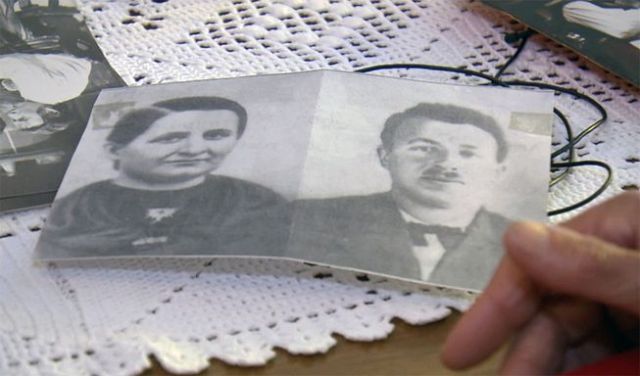
Frozen remains of missing couple emerge from Swiss glacier

Marcelin and Francine Dumoulin disappeared 75 years ago while hiking to a meadow in the Swiss Alps.


Marcelin and Francine Dumoulin disappeared while checking on their cows in the Swiss Alps in August 1942. (Photo: SRF/swissinfo.ch)

On a summer’s day in August 1942, Marcelin and Francine Dumoulin took a hike into the Swiss Alps above the small village of Chandolin. While the purpose of their excursion was to check on the status of their cows grazing in a mountain meadow, it was also an opportunity to briefly enjoy time alone as a couple. Marcelin, 40, a shoemaker, and Francine, 37, a teacher, had spent much of the last several years raising a family of seven children.

“It was the first time my mother went with him on such an excursion,” their youngest daughter, Marceline Udry-Dumoulin, 75, told the Lausanne daily Le Matin. “She was always pregnant and couldn’t climb in the difficult conditions of a glacier.”

When the couple failed to return that evening, search parties were sent out to find them. For two and a half months, locals scoured higher elevations hoping for some sign of their mysterious disappearance. None was ever discovered.


Swiss police circle the spot where the remains of the couple were discovered during a routine inspection of the area. (Photo: Swiss Police)

On July 14, nearly 75 years after they first went missing, a ski lift operator on a routine inspection discovered the mummified remains of the couple at the base of a receding glacier. Also present were personal items such as backpacks, mess kits, a glass bottle and even identification papers.

“The bodies were lying near each other. It was a man and a woman wearing clothing dating from the period of World War Two,” Bernhard Tschannen, the director of Glacier 3000, told the paper. “They were perfectly preserved in the glacier and their belongings were intact.”


Despite spending 75 years trapped in ice, all of the couple’s belongings remained relatively unscathed. (Photo: Swiss Police)

It is thought that the couple fell into one of the many crevasses in the region and were subsequently entombed in the glacier. Officials confirmed their identities by cross-matching their DNA with that of relatives.

For Udry-Dumoulin, a lifetime of heartache over the fate of her parents has finally come to an end.

“We spent our whole lives looking for them, without stopping. We thought that we could give them the funeral they deserved one day,” she said. “I can say that after 75 years of waiting this news gives me a deep sense of calm.”

https://www.mnn.com/lifestyle/arts-culture/blogs/frozen-remains-missing-couple-emerge-swiss-glacier

Johns Hopkins clinical pharmacologist Roland Griffiths talks about a major new study hinting at psychedelic drugs as therapeutic powerhouses

By Richard Schiffman

In one of the largest and most rigorous clinical investigations of psychedelic drugs to date, researchers at Johns Hopkins University and New York University have found that a single dose of psilocybin—the psychoactive compound in “magic” mushrooms—substantially diminished depression and anxiety in patients with advanced cancer.

Psychedelics were the subject of a flurry of serious medical research in the 1960s, when many scientists believed some of the mind-bending compounds held tremendous therapeutic promise for treating a number of conditions including severe mental health problems and alcohol addiction. But flamboyant Harvard psychology professor Timothy Leary—one of the top scientists involved—started aggressively promoting LSD as a consciousness expansion tool for the masses, and the youth counterculture movement answered the call in a big way. Leary lost his job and eventually became an international fugitive. Virtually all legal research on psychedelics shuddered to a halt when federal drug policies hardened in the 1970s.

The decades-long research blackout ended in 1999 when Roland Griffiths of Johns Hopkins was among the first to initiate a new series of studies on psilocybin. Griffiths has been called the grandfather of the current psychedelics research renaissance, and a 21st-century pioneer in the field—but the soft-spoken investigator is no activist or shaman/showman in the mold of Leary. He’s a scientifically cautious clinical pharmacologist and author of more than 300 studies on mood-altering substances from coffee to ketamine.

Much of Griffiths’ fascination with psychedelics stems from his own mindfulness meditation practice, which he says sparked his interest in altered states of consciousness. When he started administering psilocybin to volunteers for his research, he was stunned that more than two-thirds of the participants rated their psychedelic journey one of the most important experiences of their lives.

Griffiths believes that psychedelics are not just tools for exploring the far reaches of the human mind. He says they show remarkable potential for treating conditions ranging from drug and alcohol dependence to depression and post-traumatic stress disorder.

They may also help relieve one of humanity’s cruelest agonies: the angst that stems from facing the inevitability of death. In research conducted collaboratively by Griffiths and Stephen Ross, clinical director of the NYU Langone Center of Excellence on Addiction, 80 patients with life-threatening cancer in Baltimore and New York City were given laboratory-synthesized psilocybin in a carefully monitored setting, and in conjunction with limited psychological counseling. More than three-quarters reported significant relief from depression and anxiety—improvements that remained during a follow-up survey conducted six months after taking the compound, according to the double-blind study published December 1 in The Journal of Psychopharmacology.

“It is simply unprecedented in psychiatry that a single dose of a medicine produces these kinds of dramatic and enduring results,” Ross says. He and Griffiths acknowledge that psychedelics may never be available on the drugstore shelf. But the scientists do envision a promising future for these substances in controlled clinical use. In a wide-ranging interview, Griffiths told Scientific American about the cancer study and his other work with psychedelics—a field that he says could eventually contribute to helping ensure our survival as a species.

[An edited transcript of the interview follows.]

What were your concerns going into the cancer study?
The volunteers came to us often highly stressed and demoralized by their illness and the often-grueling medical treatment. I felt very cautious at first, wondering if this might not re-wound people dealing with the painful questions of death and dying. How do we know that this kind of experience with this disorienting compound wouldn’t exacerbate that? It turns out that it doesn’t. It does just the opposite. The experience appears to be deeply meaningful spiritually and personally, and very healing in the context of people’s understanding of their illness and how they manage that going forward.

Could you describe your procedure?
We spent at least eight hours talking to people about their cancer, their anxiety, their concerns and so on to develop good rapport with them before the trial. During the sessions there was no specific psychological intervention—we were just inviting people to lie on the couch and explore their own inner experience.

What did your research subjects tell you about that experience?
There is something about the core of this experience that opens people up to the great mystery of what it is that we don’t know. It is not that everybody comes out of it and says, ‘Oh, now I believe in life after death.’ That needn’t be the case at all. But the psilocybin experience enables a sense of deeper meaning, and an understanding that in the largest frame everything is fine and that there is nothing to be fearful of. There is a buoyancy that comes of that which is quite remarkable. To see people who are so beaten down by this illness, and they start actually providing reassurance to the people who love them most, telling them ‘it is all okay and there is no need to worry’— when a dying person can provide that type of clarity for their caretakers, even we researchers are left with a sense of wonder.

Was this positive result universal?
We found that the response was dose-specific. The larger dose created a much larger response than the lower dose. We also found that the occurrence of mystical-type experiences is positively correlated with positive outcomes: Those who underwent them were more likely to have enduring, large-magnitude changes in depression and anxiety.

Did any of your volunteers experience difficulties?
There are potential risks associated with these compounds. We can protect against a lot of those risks, it seems, through the screening and preparation procedure in our medical setting. About 30 percent of our people reported some fear or discomfort arising sometime during the experience. If individuals are anxious, then we might say a few words, or hold their hand. It is really just grounding them in consensual reality, reminding them that they have taken psilocybin, that everything is going to be alright. Very often these short-lived experiences of psychological challenge can be cathartic and serve as doorways into personal meaning and transcendence—but not always.

Where do you go from here?
The Heffter Research Institute, which funded our study, has just opened a dialogue with the FDA (Food and Drug Administration) about initiating a phase 3 investigation. A phase 3 clinical trial is the gold standard for determining whether something is clinically efficacious and meets the standards that are necessary for it to be released as a pharmaceutical. Approval would be under very narrow and restrictive conditions initially. The drug might be controlled by a central pharmacy, which sends it to clinics that are authorized to administer psilocybin in this therapeutic context. So this is not writing a prescription and taking it home. The analogy would be more like an anesthetic being dispensed and managed by an anesthesiologist.

You are also currently conducting research on psilocybin and smoking.
We are using psilocybin in conjunction with cognitive behavioral therapy with cigarette smokers to see if these deeply meaningful experiences that can happen with psilocybin can be linked with the intention and commitment to quit smoking, among people who have failed repeatedly to do so. Earlier we ran an uncontrolled pilot study on that in 50 volunteers, in which we had 80 percent abstinence rates at six months. Now we are doing a controlled clinical trial in that population.

How do you account for your remarkable initial results?
People who have taken psilocybin appear to have more confidence in their ability to change their own behavior and to manage their addictions. Prior to this experience, quite often the individual feels that they have no freedom relative to their addiction, that they are hooked and they don’t have the capacity to change. But after an experience of this sort—which is like backing up and seeing the larger picture—they begin to ask themselves ‘Why would I think that I couldn’t stop cigarette smoking? Why would I think that this craving is so compelling that I have to give in to it?’ When the psilocybin is coupled with cognitive behavioral therapy, which is giving smokers tools and a framework to work on this, it appears to be very helpful.

You are also working with meditation practitioners. Are they having similar experiences?
We have done an unpublished study with beginning meditators. We found that psilocybin potentiates their engagement with their spiritual practice, and it appears to boost dispositional characteristics like gratitude, compassion, altruism, sensitivity to others and forgiveness. We were interested in whether the psilocybin used in conjunction with meditation could create sustained changes in people that were of social value. And that appears to be the case.

So it is actually changing personality?
Yes. That is really interesting because personality is considered to be a fixed characteristic; it is generally thought to be locked down in an individual by their early twenties. And yet here we are seeing significant increases in their “openness” and other pro-social dimensions of personality, which are also correlated with creativity, so this is truly surprising.

Do we know what is actually happening in the brain?
We are doing neuro-imaging studies. Dr. Robin Carhart-Harris’s group at Imperial College in London is also doing neuro-imaging studies. So it is an area of very active investigation. The effects are perhaps explained, at least initially, by changes in something [in the brain] called “the default mode network,” which is involved in self-referential processing [and in sustaining our sense of ego]. It turns out that this network is hyperactive in depression. Interestingly, in meditation it becomes quiescent, and also with psilocybin it becomes quiescent. This may correlate with the experience of clarity of coming into the present moment.

That is perhaps an explanation of the acute effects, but the enduring effects are much less clear, and I don’t think that we have a good handle on that at all. Undoubtedly it is going to be much more complex than just the default mode network, because of the vast interconnectedness of brain function.

What are the practical implications of this kind of neurological and therapeutic knowledge of psychedelics?
Ultimately it is not really about psychedelics. Science is going to take it beyond psychedelics when we start understanding the brain mechanisms underlying this and begin harnessing these for the benefit of humankind.

The core mystical experience is one of the interconnectedness of all people and things, the awareness that we are all in this together. It is precisely the lack of this sense of mutual caretaking that puts our species at risk right now, with climate change and the development of weaponry that can destroy life on the planet. So the answer is not that everybody needs to take psychedelics. It is to understand what mechanisms maximize these kinds of experiences, and to learn how to harness them so that we don’t end up annihilating ourselves.

https://www.scientificamerican.com/article/psilocybin-a-journey-beyond-the-fear-of-death/

Optimistic Women May Live Longer


By Lisa Rapaport

Women who have a sunny outlook on life may live longer than their peers who take a dimmer view of the world, a recent study suggests.

Researchers analyzed data collected over eight years on about 70,000 women and found that the most optimistic people were significantly less likely to die from cancer, heart disease, stroke, respiratory disease or infections during the study period than the least optimistic.

“Optimistic people tend to act in healthier ways (i.e., more exercise, healthier diets, higher quality sleep, etc.), which reduces one’s risk of death,” said one of the study’s lead authors, Kaitlin Hagan, a public health researcher at Brigham and Women’s Hospital and Harvard University in Boston.

“Optimism may also have a direct impact on our biological functioning,” Hagan added by email. “Other studies have shown that higher optimism is linked with lower inflammation, healthier lipid levels and higher antioxidants.”

Hagan and colleagues examined data from the Nurses Health Study, which began following female registered nurses in 1976 when they were 30 to 55 years old. The study surveyed women about their physical and mental health as well as their habits related to things like diet, exercise, smoking and drinking.

Starting in 2004, the survey added a question about optimism. Beginning that year, and continuing through 2012, researchers looked at what participants said about optimism to see how this related to their other responses and their survival odds.

Researchers divided women into four groups, from least to most optimistic.

Compared with the least optimistic women, those in the most optimistic group were 29 percent less likely to die of all causes during the study period, the researchers report in the American Journal of Epidemiology, December 7th.

Once they adjusted the data for health habits, greater optimism was still associated with lower odds of dying during the study, though the effect wasn’t as pronounced.

Still, the most optimistic women had 16 percent lower odds of dying from cancer during the study, 38 percent lower odds of death from heart disease or respiratory disease, 39 percent lower odds of dying from stroke and a 52 percent lower risk of death from an infection.

While other studies have linked optimism with reduced risk of early death from cardiovascular problems, this was the first to find a link between optimism and reduced risk from other major causes, the study authors note.

One limitation of the study is the possibility that in some cases, underlying health problems caused a lack of optimism, rather than a grim outlook on life making people sick, the authors point out.

They also didn’t include men, though previous research has found the connection between optimism and health is similar for both sexes, said the study’s other lead author, Dr. Eric Kim, also of Brigham and Women’s and Harvard.

Despite the lack of men in the study, the findings still suggest that it may be worthwhile to pursue public health efforts focused on optimism for all patients, Kim said by email.

That’s because even though some people may have a less positive outlook on life for reasons beyond their control like unemployment or a debilitating illness, some previous research suggests that optimism can be learned.

“Negative thinking isn’t the cause or the only contributor to these illnesses,” said Dr. Susan Albers, a psychologist at the Cleveland Clinic in Ohio who wasn’t involved in the study. “Mindset is just one factor, but the results of the study indicate they are a significant one and can’t be ignored.”

Some people can develop optimism when it doesn’t come naturally, Albers added by email.

“It is worth tweaking your mindset as much as taking your medicine,” Albers said. “Work with a counselor, join with a friend, hang up optimistic messages, watch films and movies with a hopeful, positive message, find the silver lining in the situation.”

http://www.psychcongress.com/news/optimistic-women-may-live-longer

Librarian surprises school with $4 million gift


Robert Morin graduated from the University of New Hampshire in 1961, and he had a passion for books and movies.

by Mary Jo DiLonardo

Robert Morin spent nearly 50 years working as a librarian on the campus of his alma mater, the University of New Hampshire. Because he was known to live simply, few at the Durham university knew that the long-time employee had amassed a $4 million estate. Morin died in March 2015, but this week the school announced he had left his fortune to the university.

“Bob’s demonstrated commitment to UNH through his philanthropy is tremendously inspiring,” university President Mark Huddleston said in a statement. “His generous gift allows us to address a number of university priorities.”

Morin loved movies, and from 1979 to 1997 he watched more than 22,000 videos. After he satisfied his passion for movies, he turned his attention to books, deciding to read — in chronological order — every book published in the United States from 1930 to 1940 except for children’s books, textbooks and books about cooking and technology. When he died at the age of 77, he had gotten as far as 1938, the year he was born.

According to his obituary, his job at the library was to write short descriptions of DVDs, enter ISBN, or International Standard Book Numbers, for CDs, and to catalog books of sheet music.

Morin’s financial advisor, Edward Mullen, told the New Hampshire Union Leader that his client was able to accumulate so much wealth because he rarely spent money. He drove an older vehicle and ate frozen dinners.

“He never went out,” Mullen said.

In the last year or so of his life, Morin lived in an assisted living facility where he developed a new passion: football. He became an avid fan, watching games on TV, learning the rules of the game along with the names of the players and the teams.

Mullen said Morin chose to give all his savings to his alma mater because he didn’t have any relatives he wanted to leave it to. Morin trusted the university would spend the money wisely for its students.

The only specific request in the donation was $100,000 dedicated to the Dimond Library where Morin worked. The money will “provide scholarships for work-study students, support staff members who continue their studies in library science, and renovate and upgrade one of the library’s multimedia rooms.”

Of the remaining funds, Huddleston said $2.5 million will help launch an expanded and centrally located career center for students and alumni, and $1 million will go toward a video scoreboard at the school’s new football stadium.

http://www.mnn.com/money/personal-finance/stories/librarian-surprises-school-4-million-gift

Teen dies after girlfriend gives fatal hickey

By Cimaron Neugebauer

A 17-year-old has died after a hickey reportedly took his life, according to a local news outlet in Mexico City, Mexico.

Doctors say the teen began having convulsions while at the dinner table eating with his family in Mexico City. Before dinner, Julio Macias Gonzalez had spent the evening with his 24-year-old girlfriend, who is now in hiding.

Medical professionals believe the suction of the hickey resulted in a blood clot for the teen. Doctors believe the blood clot traveled to his brain and caused the fatal stroke.

This isn’t the first time for a passionate kiss on the neck to land someone in the hospital.

In a 2010 case, was reported in a New Zealand Medical Journal where a 44-year-old woman was rushed to the hospital after losing movement in her arm due to a hickey on her neck, Doctors weren’t sure why the woman was having a stroke, but then noticed a bruise on her neck and realized the suction on a major artery created a blood clot, which traveled to her heart, causing a minor stroke.

http://wlos.com/news/offbeat/teen-dies-after-girlfriend-gives-fatal-hickey-lover-now-on-the-run

Thanks to Kebmodee for bringing this to the It’s Interesting community.

Book lovers live longer, scientists say.

By Amy Ellis Nutt

A recent study by Yale University researchers, published online in the journal Social Science & Medicine, concluded that “book readers experienced a 20 percent reduction in risk of mortality over the 12 years of follow-up compared to non-book readers.”

The data was obtained from a longitudinal Health and Retirement Study sponsored by the National Institute on Aging. The study looked at 3,635 subjects, all older than 50, whom the researchers divided into three groups: those who didn’t read books, those who read up to 3.5 hours a week and those who read more than 3.5 hours a week.

The findings were remarkable: Book readers survived almost two years longer than those who didn’t crack open a book.

Accounting for variables such as education level, income and health status, the study found that those who read more than 3.5 hours weekly were 23 percent less likely to die during that 12-year period. Those who read up to 3.5 hours — an average of a half-hour a day — were 17 percent less likely.

In other words, just like a healthy diet and exercise, books appear to promote a “significant survival advantage,” the authors concluded.

Why or how that’s the case remains unclear; the research showed only an association between book reading and longevity, not a causal relationship. But the findings are not so surprising. Other recent research showed that reading novels appears to boost both brain connectivity and empathy.

Book buying has increased annually during the past few years. At least 652 million print and electronic books were sold in the United States in 2015, according to Nielsen BookScan, the main data collector for the book publishing industry.

The bad news: Americans barely crack the top 25 when it comes to which countries read the most books. India, Thailand and China are ranked one, two and three by the World Culture Index, while the United States comes in 23rd, behind countries such as Egypt, Australia, Turkey and Germany.

The better news is that 80 percent of young adults in America read a book last year, compared with 68 percent of those between the ages of 50 and 64, according to a Pew Research Center survey.

Unfortunately, the Yale researchers said longevity was not increased by reading newspapers.

https://www.washingtonpost.com/news/to-your-health/wp/2016/08/09/the-best-reason-for-reading-book-lovers-live-longer-say-scientists/?campaign_id=A100&campaign_type=Email

Couple married 63 years die minutes apart in same room

By Doug Criss

It’s said that love is the strongest force in the world. If that’s true, then a married couple from South Dakota proves that not even death is strong enough to keep loved ones apart.

A funeral will be held in Platte, South Dakota, on Monday for a couple married for more than six decades who died just minutes apart on the same day and in the same room.

Henry and Jeanette De Lange both died on July 31, just 20 minutes apart in their room at a nursing home.

The De Langes had been married for 63 years.

Lee De Lange, one of their sons, told CNN affiliate KSFY there was a divine quality to having both parents pass at nearly the same time.

“We’re calling it a beautiful act of God’s providential love and mercy,” he said. “You don’t pray for it because it seems mean but you couldn’t ask for anything more beautiful.”

Jeanette De Lange, 87 and suffering from Alzheimer’s disease, died first at 5:10 p.m. Family gathered with her was reading the Bible at the time.

“We read Psalm 103. We didn’t quite get done,” said Lee De Lange. “She passed away very, very peacefully. Incredibly peacefully.”

Lee said his brother told his father, 86 and fighting prostate cancer, “mom’s gone to heaven” and that he didn’t have to fight anymore. He could let go and join her if he wished, the son added.

Twenty minutes later, at 5:30 p.m., Henry De Lange did just that. His children remember him briefly opening his eyes and looking at his wife before he died.

http://www.cnn.com/2016/08/08/us/married-couple-dies-minutes-apart-trnd/index.html

The first human to live to be 1000 years old may be alive today

“The first person to live to be 1,000 years old is certainly alive today …whether they realize it or not, barring accidents and suicide, most people now 40 years or younger can expect to live for centuries,” claims Cambridge University geneticist Aubrey de Grey. “The only difference between my work and the work of the whole medical profession,” de Grey adds, “is that I think we’re in striking distance of keeping people so healthy that at 90 they’ll carry on waking up in the same physical state as they were at the age of 30, and their probability of not waking up one morning will be no higher than it was at the age of 30.”

The image above is one of 100 cast-iron life-size human figures by British sculptor Anthony Gormley that explore the place of humanity in nature. Gormley who has created and installed them high in the Alps, scattered over 150 sq km (58 sq miles) of some of Austria’s most dramatic scenery.

“I just don’t think [immortality] is possible,” countered Sherwin Nuland, a former professor of surgery at the Yale School of Medicine. “Aubrey and the others who talk of greatly extending lifespan are oversimplifying the science and just don’t understand the magnitude of the task. His plan will not succeed. Were it to do so, it would undermine what it means to be human.”

Perhaps de Gray is way too optimistic, but others have joined the search for a virtual fountain of youth. In fact, a growing number of scientists, doctors, geneticists and nanotech experts—many with impeccable academic credentials—are insisting that there is no hard reason why ageing can’t be dramatically slowed or prevented altogether. Not only is it theoretically possible, they argue, but a scientifically achievable goal that can and should be reached in time to benefit those alive today.

“I am working on immortality,” says Michael Rose, a professor of evolutionary biology at the University of California, Irvine, who has achieved breakthrough results extending the lives of fruit flies. “Twenty years ago the idea of postponing aging, let alone reversing it, was weird and off-the-wall. Today there are good reasons for thinking it is fundamentally possible.”

Even the US government finds the field sufficiently promising to fund some of the research. Federal funding for “the biology of ageing”, excluding work on ageing-specific diseases like heart failure and cancer – has been running at about $2.4 billion a year, according to the National Institute of Ageing, part of the National Institutes of Health.

So far, the most intriguing results have been spawned by the genetics labs of bigger universities, where anti-ageing scientists have found ways to extend live spans of a range of organisms—including mammals. But genetic research is not the only field that may hold the key to eternity.

“There are many, many different components of ageing and we are chipping away at all of them,” said Robert Freitas at the Institute for Molecular Manufacturing, a non-profit, nanotech group in Palo Alto, California. “It will take time and, if you put it in terms of the big developments of modern technology, say the telephone, we are still about 10 years off from Alexander Graham Bell shouting to his assistant through that first device. Still, in the near future, say the next two to four decades, the disease of ageing will be cured.”

But not everyone thinks ageing can or should be cured. Some say that humans weren’t meant to live forever, regardless of whether or not we actually can.

After all, we already have overpopulation, global warming, limited resources and other issues to deal with, so why compound the problem by adding immortality into the mix.

But anti-ageing enthusiasts argue that as our perspectives change and science and technology advance exponentially, new solutions will emerge. Space colonization, for example, along with dramatically improved resource management, could resolve the concerns associated with long life. They reason that if the Universe goes on seemingly forever—much of it presumably unused—why not populate it?

However, anti-ageing crusaders are coming up against an increasingly influential alliance of bioconservatives who want to restrict research seeking to “unnaturally” prolong life. Some of these individuals were influential in persuading President Bush in 2001 to restrict federal funding for embryonic stem cell research. They oppose the idea of life extension and anti-ageing research on ethical, moral and ecological grounds.

Leon Kass, the former head of Bush’s Council on Bioethics, insists that “the finitude of human life is a blessing for every human individual”. Bioethicist Daniel Callahan of the Garrison, New York-based Hastings Centre, agrees: “There is no known social good coming from the conquest of death.”

Maybe they’re right, but then why do we as humans strive so hard to prolong our lives in the first place? Maybe growing old, getting sick and dying is just a natural, inevitable part of the circle of life, and we may as well accept it.

“But it’s not inevitable, that’s the point,” de Grey says. “At the moment, we’re stuck with this awful fatalism that we’re all going to get old and sick and die painful deaths. There are a 100,000 people dying each day from age-related diseases. We can stop this carnage. It’s simply a matter of deciding that’s what we should be doing.”

http://www.dailygalaxy.com/my_weblog/2016/08/the-first-human-on-earth-to-live-to-be-1000-years-old-is-alive-today-weekend-feature-1.html?utm_source=feedburner&utm_medium=feed&utm_campaign=Feed%3A+TheDailyGalaxyNewsFromPlanetEarthBeyond+%28The+Daily+Galaxy+–Great+Discoveries+Channel%3A+Sci%2C+Space%2C+Tech.%29

Man left his family and started a new one using a dead man’s identity

By Peter Holley

For more than two decades, Terry Jude Symansky appeared to lead an ordinary life in Pasco County, Fla.

He had a wife and a teenage son, owned property, and “worked odd jobs,” according to the Tampa Bay Times.

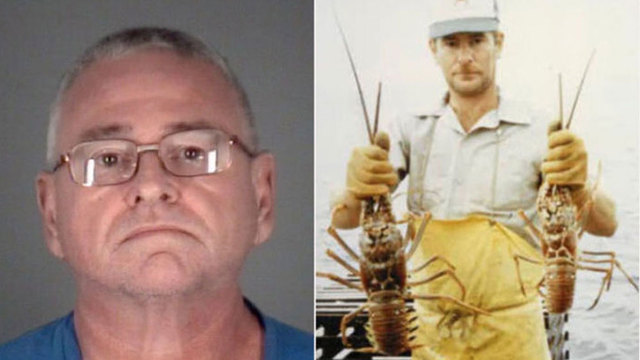
The only problem, police say, was that Terry Jude Symansky was not really Terry Jude Symansky. He was actually an Indiana man named Richard Hoagland who vanished 25 years ago and has been considered dead since 2003, the paper reported.

The lie lasted more than two decades. In the end, a single online search was all it took for the ruse to unravel.

The truth began to surface when a nephew of the real Terry Symansky — who drowned in 1991 at age 33 — started an Ancestry.com family search, according to ABC affiliate WFLA. Knowing that his uncle was dead, the nephew was surprised to find someone with the same name living in central Florida.

“He looks up his real uncle Terry Symansky and realizes that he died in 1991, which the family knew,” Pasco County Sheriff Chris Nocco told the station. “He then starts scrolling down the page and sees more details that Terry Symanksy was remarried in 1995. He owns property in Pasco County, Florida.”

Fearing that their fake relative might try to harm them, family members waited three years before eventually contacting authorities in April, police told the Tampa Bay Times.

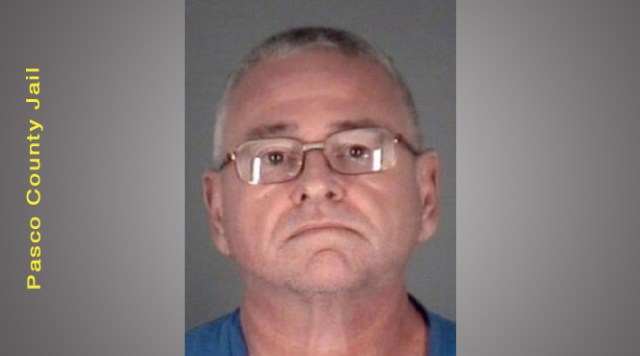
Hoagland, 63, was arrested Wednesday and charged with fraudulent use of personal identification, the paper reported.

How exactly Hoagland came to assume the identity of Terry Symansky — who moved to Florida from Cleveland to work as a commercial fisherman — remains a complicated mystery.

The Tampa Bay Times reported that investigators suspect it occurred as follows:

Deputies think Hoagland stole Terry Symansky’s identity like this: Hoagland once lived with Terry Symansky’s father in Palm Beach. Hoagland found a copy of Terry Symansky’s 1991 death certificate and used it to obtain a birth certificate from Ohio. With the birth certificate in hand, he then applied by mail for an Alabama driver’s license and used that to obtain a Florida driver’s license. That’s how deputies think Hoagland came to spend more than two decades living in Florida as Terry Symansky.

As Terry Symansky, he married Mary Hossler Hickman in 1995. The couple lived in Zephyrhills. He also fashioned a medical card to obtain a private pilot’s license as Terry Symansky from the Federal Aviation Administration.

Before he began the process of assuming a new identity, Hoagland left his old life — which included a wife and four children — behind in Indiana, according to Bay News 9. His former wife in Indiana told police that Hoagland had three businesses related to insurance.

She told investigators that Hoagland told her in the early 1990s that he was wanted by the FBI for embezzling millions of dollars and had no choice but to leave town, according to the Tampa Bay Times. In reality, police told the paper, Hoagland told investigators that he left Indiana to get away from his wife.

Eventually, the paper reported, Hoagland’s wife assumed her husband was dead.

“This is a selfish coward,” Nocco said. “This is a person who has lived his life destroying others.”

Gerry Beyer, a law professor at Texas Tech University who studies identity theft, told the Tampa Bay Times that Hoagland’s alleged actions are unusual because most identity thieves steal people’s names to commit crimes.

He told the paper that the fact that the real Symansky never married or had children made him a “perfect” candidate for identity theft.

Yet, he noted, Hoagland’s ability to maintain the lie for more than two decades was shocking. It was a lie that was probably made easier, Beyer said, because it began before digital records were commonplace.

“You just never know,” Beyer told the paper. “It will all catch up with you.”

Hoagland’s Florida tenants told Bay News 9 that they were shocked that their landlord was not who he said he was.

“We’ve been personal with him quite a bit, and Terry’s the nicest guy anyone could ever meet,” Gregory Yates told the station.

“He’s a really nice guy, and he’s a really good landlord,” Dean Lockwood, another tenant, said. “Never would have known this, couldn’t imagine this was happening.”

Perhaps most damaged by Hoagland’s hoax, police said, was his wife in Florida, who learned about her husband’s alleged crimes only when detectives showed up at her door last week.

“For 20 years, she’s been lied to, so now she doesn’t know what she has to do as far as whether her marriage is even legal — what’s going to happen to all the properties they own, their bank accounts,” Detective Anthony Cardillo told Bay News 9. “The son has the last name Symansky.”

https://www.washingtonpost.com/news/morning-mix/wp/2016/07/24/he-left-his-family-then-he-started-a-new-one-using-a-dead-mans-identity-police-say/?tid=pm_national_pop_b