A short story written by Ernest Hemingway in 1956 is being published for the first time

In a letter written in 1956, American author Ernest Hemingway told his publisher he had written five new short stories.

“They are probably very dull stories but some are very funny I think,” he wrote. “Anyway you can always publish them after I’m dead.”

Six decades later, a literary magazine is doing just that. One of those long-lost stories, “A Room on the Garden Side,” is being published for the first time in The Strand Magazine with permission from the Hemingway estate.

A signature Hemingway

Written 62 years ago, the short work of fiction has all the trademark elements readers love about Hemingway: War, wine and male camaraderie. In his signature staccato style, Hemingway opens the story inside the Hotel Ritz in Paris, where a group of soldiers are discussing combat, poetry and romance over drinks.

“We were all up in the room at the Ritz and the windows that overlooked the garden were open,” Hemingway begins. “I was lying back against four pillows on one of the beds with my boots off reading and the other bed was covered with maps of the country we had gone through.”

As fans of Hemingway know, much of his work, like “For Whom the Bell Tolls,” was inspired by war. His classic novel, “A Farewell to Arms,” drew from his time serving as an ambulance driver during World War I, and Hemingway was also a correspondent in Paris during World War II, when “A Room on the Garden Side” takes place.

In an afterword, Kirk Curnutt, a professor and board member of the Ernest Hemingway Society, writes that, most of all, the short story captures the importance of Paris to Hemingway and the world.

“Steeped in talk of Marcel Proust, Victor Hugo, and Alexandre Dumas, and featuring a long excerpt in French from Charles Baudelaire’s “Les Fleurs du Mal,” the story implicitly wonders whether the heritage of Parisian culture can recover from the dark taint of fascism,” Curnutt writes.

Like “A Room on the Garden Side,” several of Hemingway’s classic works like “A Moveable Feast,” “The Garden of Eden” and “The Dangerous Summer” were also published posthumously, after the author took his own life at age 61 in 1961.

Along with other Hemingway papers, “A Room on the Garden Side” is housed in the John F. Kennedy Presidential Library and Museum in Boston. And according to Curnutt, few people besides biographers and historians have ever read it.

https://www.cnn.com/2018/08/02/us/hemingway-war-story-published-trnd/index.html

New lung cell with role in cystic fibrosis discovered


Ionocytes (orange) extend through neighboring epithelial cells (nuclei, cyan) to the surface of the respiratory epithelial lining. This newly identified cell type expresses high levels of CFTR, a gene that is associated with cystic fibrosis when mutated.

by ABBY OLENA

Two independent research teams have used single-cell RNA sequencing to generate detailed molecular atlases of mouse and human airway cells. The findings, reported in two studies today (August 1) in Nature, reveal the gene-expression patterns of thousands of lung cells, as well as the existence of a previously unknown cell type that expresses high levels of the gene mutated in cystic fibrosis, the cystic fibrosis transmembrane conductance regulator (CFTR).

“These papers are extremely exciting,” says Amy Ryan, a lung biologist at the University of Southern California who was not involved in either study. “They’ve interrogated the cellular composition and the cellular hierarchy of the airways by using a single-cell RNA-sequencing technique. That kind of information is going to have a significant impact on advancing the research that we can do, and hopefully the derivation of new therapeutic approaches for any number of airway diseases.”

Jayaraj Rajagopal, a pulmonary physician at Massachusetts General Hospital and Harvard University and coauthor of one of the studies, had been studying lung regeneration and wanted to use single-cell sequencing to look at differences in the lungs’ stem-cell populations. He and his colleagues teamed up with Aviv Regev, a computational biologist at the Broad Institute of MIT and Harvard University, and together, the two groups characterized the transcriptomes of thousands of epithelial cells from the adult mouse trachea.

Rajagopal, Regev, and colleagues uncovered previously unknown differences in gene expression in several groups of airway cells; identified novel structures in the lung; and found new paths of cellular differentiation. They also described several new cell types, including one that the team has named the pulmonary ionocyte, after salt-regulating cells in fish and amphibian skin. These lung cells express similar genes as fish and amphibian ionocytes, the team found, including a gene coding for the transcription factor Foxi1, which regulates genes that play a role in ion transport.

The team also showed that pulmonary ionocytes highly express CFTR, and are in fact the primary source of its product, CFTR—a membrane protein that helps regulate fluid transport and the consistency of mucus—in both mouse and human lungs, suggesting that the cells might play a role in cystic fibrosis.

“So much that we found rewrites the way we think about lung biology and lung cells,” says Rajagopal. “I think the entire community of pulmonologists and lung biologists will have to take a step back and think about their problems with respect to all these new cell types.”

For the other study, Aron Jaffe, a biologist at Novartis who studies how different airway cell types are made, combined forces with Harvard systems biologist Allon Klein and his team. Klein’s group had previously developed a single-cell RNA-sequencing method that Jaffe describes as “the perfect technology to take a big picture view and really define the full repertoire of epithelial cell types in the airway.”

Jaffe, Klein, and colleagues sequenced RNA from thousands of single human bronchial epithelial and mouse tracheal epithelial cells. The atlas generated by their sequencing analysis revealed pulmonary ionocytes, as well as new gene-expression patterns in familiar cells. The team examined the expression of CFTR in human and mouse ionocytes in order to better understand the possible role for the cells in cystic fibrosis. Consistent with the findings of the other study, the researchers showed that pulmonary ionocytes make the majority of CFTR protein in the airways of humans and mice.

“Finding this new rare cell type that accounts for the majority of CFTR activity in the airway epithelium was really the biggest surprise,” Jaffe tells The Scientist. “CFTR has been studied for a long time, and it was thought that the gene was broadly expressed in many cells in the airway. It turns out that the epithelium is more complicated than previously appreciated.”

These studies are “very exciting work [and] a wonderful example of how new technologies that have come online in the last few years—in this case single-cell RNA sequencing—have made a very dramatic advance in our understanding of aspects of biology,” says Ann Harris, a geneticist at Case Western Reserve University who did not participate in either study.

In terms of future directions, the authors “have shown that transcription factor [Foxi1] is central to the transcriptional program of these ionocytes,” says Harris. One of the next questions is, “does it directly interact with the CFTR gene or is it working through other transcription factors or other proteins that regulate CFTR gene expression?”

According to Jennifer Alexander-Brett, a pulmonary physician and researcher at Washington University School of Medicine in St. Louis who was not involved in the studies, the possibility that a rare cell type could be playing a part in regulating airway physiology is “captivating.”

Apart from investigating the potential role for ionocytes in lung function, Alexander-Brett says that researchers can likely make broad use of the data from the studies—particularly details on the expression of genes coding for transcription factors and cell-surface markers. “One area that we really struggle with in airway biology . . . is [that] we just don’t have good markers” to differentiate cell types, she explains. But these papers are “very comprehensive. There’s a ton of data here.”

D.T. Montoro et al., “A revised airway epithelial hierarchy includes CFTR-expressing ionocytes,” Nature, doi:10.1038/s41586-018-0393-7, 2018.

L.W. Plasschaert et al., “A single-cell atlas of the airway epithelium reveals the CFTR-rich pulmonary ionocyte,” Nature, doi:10.1038/s41586-018-0394-6, 2018.

https://www.the-scientist.com/news-opinion/new-lung-cell-identified-64594?utm_campaign=TS_DAILY%20NEWSLETTER_2018&utm_source=hs_email&utm_medium=email&utm_content=64924537&_hsenc=p2ANqtz-_M5n43mM_3CJb8-lIkjE6yt4ij2HduxgVeZi_X5bG7ATrAOGkvtsg4DpCbuAc0NAG8lx4myMxN3kiH4C1qc9OdlQkAGg&_hsmi=64924537

A Lack of This One Molecule Might Be The Reason Millions of People Have Depression

By Michelle Star

People who live with depression have low blood levels of a specific molecule, new medical research has revealed. It’s called acetyl-L-carnitine, and those with particularly severe, treatment-resistant or childhood onset depression were found to have the lowest levels.

Naturally produced by the body, acetyl-L-carnitine plays a crucial role in metabolising fat and the production of energy. It’s also widely available as a dietary supplement – not some strange and esoteric thing.

Now researchers from multiple institutions have found a link to depression, noticing a clear correlation between the condition and noticeably low levels of acetyl-L-carnitine.

In recent years, more and more evidence has been building to suggest this link. Since at least 1991, medical researchers have been aware of acetyl-L-carnitine’s potential to treat depression, particularly in geriatric and comorbid patients, with the substance showing greater efficacy than a placebo.

More recently, Carla Nasca of the Rockefeller University led a study on rodents, which found that acetyl-L-carnitine had a fast-acting antidepressant effect on rats, kicking into effect in just a few days, rather than the weeks it takes for drugs like SSRIs.

Now Nasca and colleagues have conducted a study on human patients to see if there’s a basis for a similar trial in people.

“As a clinical psychiatrist, I have treated many people with this disorder in my practice,” said Stanford University School of Medicine psychiatrist Natalie Rasgon.

“It’s the number one reason for absenteeism at work, and one of the leading causes of suicide. Worse, current pharmacological treatments are effective for only about 50 percent of the people for whom they’re prescribed. And they have numerous side effects, often decreasing long term compliance.”

The research team recruited 71 patients with a diagnosis of depression. These were men and women, aged between 20 and 70. They also recruited 45 demographically matched healthy controls.

The patients had to fill out a detailed questionnaire, undergo a clinical assessment and medical history, and give a blood sample. Of the patients with depression, 28 had moderate depression and 43 had severe depression at the time of the study.

When compared to the age- and sex-matched healthy controls, the patients with depression had substantially lower levels of acetyl-L-carnitine.

Those with the most severe depression had the lowest levels. This included patients whose depression had resisted antidepressant drugs, those with early onset, and those who had experienced childhood abuse, neglect, poverty or violence.

These patients constitute around 25-30 percent of all people suffering depression, and are the most in need of help, the researchers said.

But there are a few steps to be done before acetyl-L-carnitine supplements can be approved as a treatment. In particular, clinical trials on human patients with depression, since, as we know, results from rodent models can’t always be replicated in humans.

The researchers also don’t know the reason for the correlation, or the effect it has. The rat research suggests that acetyl-L-carnitine plays a role in the brain, preventing the excessive firing of excitatory neurons, but this will need to be explored further as well.

“We’ve identified an important new biomarker of major depression disorder,” Rasgon said.

“We didn’t test whether supplementing with that substance could actually improve patients’ symptoms. What’s the appropriate dose, frequency, duration? We need to answer many questions before proceeding with recommendations, yet. This is the first step toward developing that knowledge, which will require large-scale, carefully controlled clinical trials.”

https://www.sciencealert.com/depression-linked-to-low-blood-levels-of-acetyl-l-carnitine-human-study

Dragon’s Breath liquid nitrogen treats causing injuries

by Lynna Lai

A trendy new treat called “Dragon’s Breath” is popping up in malls across the country. But don’t get burned, a local doctor warned. The dessert tastes like Froot Loops cereal and it’s dipped in liquid nitrogen, so that when you eat it — you can puff out “smoke” like a dragon.

While it may seem like a cool experience, there are already reports of injuries. A Florida mother says her son was rushed to the hospital after the frosty treat triggered a severe asthma attack. Rachael McKenny’s Facebook post garnered more 80,000 shares in less than a week.

The concern is not just for people with asthma.

“Any kind of contact with the liquid nitrogen before it turns into the gas — You’re going to be at risk of getting burns if it touches any part of the body,” said Dr. Kristie Ross, Director of Pediatric Pulmonology at UH Rainbow Babies and Children’s Hospital.

Liquid nitrogen can be as cold as negative 320F degrees. Last year, a 14-year-old girl reportedly burned her hand while handling the dessert. A man in India burned a hole in his stomach after drinking a cocktail with liquid nitrogen.

Dr. Ross warns that if liquid nitrogen is used in an area that is not well-ventilated, it displaces oxygen, which can lead to suffocation. She also expressed concern over a lack of regulation over liquid nitrogen in consumer food use.

“Liquid nitrogen is a highly regulated chemical in the medical field,” said Dr. Ross. “We have to use gloves, protective masks, and protective goggles. I’m surprised that it’s used like this for food,” she said.

In 2016 the Association of Food and Drug Officials issued a resolution urging the Food and Drug Administration to clarify its policy position on liquid nitrogen used as food and beverage ingredients, and the need for appropriate regulatory intervention.

But it appears that government regulations have not caught up with popular trends.

https://www.wkyc.com/article/news/dragons-breath-liquid-nitrogen-treats-cause-concern-among-parents-doctors/95-579238826

Rare dolphin-whale hybrid spotted near Hawaii


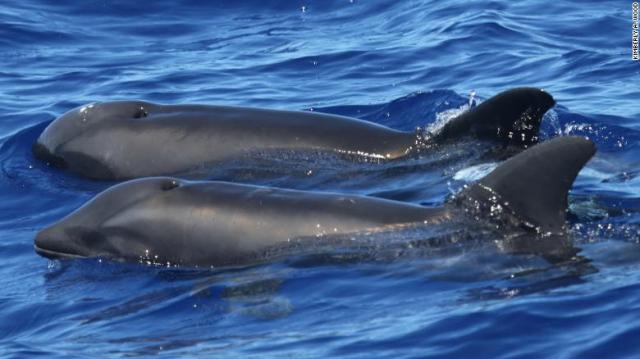
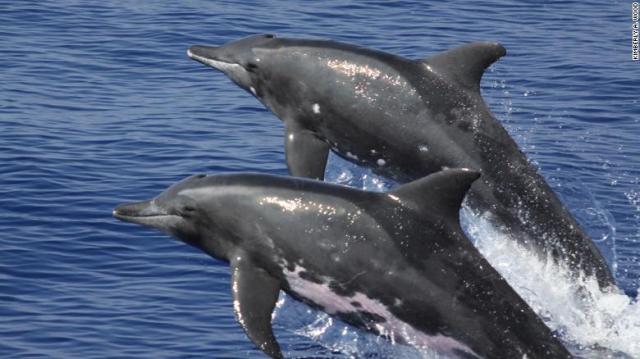
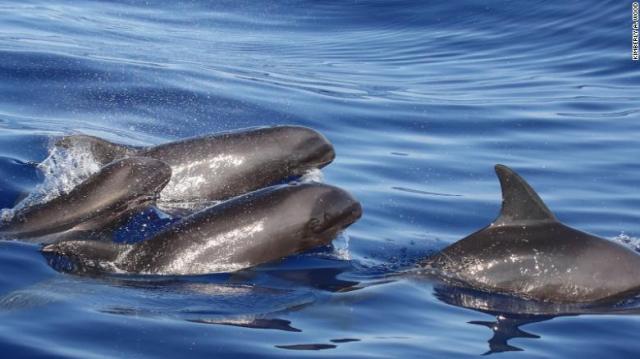
Researchers found the first known hybrid between a rough-toothed dolphin and a melon-headed whale near Kauai, Hawaii.


Rough-toothed dolphins.


Melon-headed whales.

By Jessie Yeung

Scientists from the Cascadia Research Collective have discovered a rare dolphin-whale hybrid off the coast of Kauai, Hawaii, according to a report published last week.

The marine mammal monitoring program, funded by the US Navy, first spotted the animal in August 2017. The team tagged various species, including commonly seen rough-toothed dolphins and rarer melon-headed whales.
However, researchers soon noticed that one tagged animal that looked a little odd. Although it had a typical melon-headed whale’s dorsal fin shape and dorsal cape, it was also blotchy in pigmentation and had a sloping forehead, more reminiscent of a rough-toothed dolphin.

A genetic sample soon confirmed their suspicions: it was a hybrid of the two species, the first to ever be found.The cross-species hybridization may seem bizarre, but is made possible by the fact that melon-headed whales aren’t actually whales. They belong to the Delphinidae family, otherwise known as oceanic dolphins, which also includes orcas and two species of pilot whales.

It also isn’t the first discovery of hybridization in the family
— there have also been cases of bottlenose dolphin/false killer whale (Pseudorca crassidens) hybrids, known as Wolphins, and common/bottlenose dolphin hybrids.

This is the first confirmed hybrid between rough-toothed dolphins and melon-headed whales. However, though it’s an exciting discovery, researchers point out it is not, as commonly thought, a new species.

“While hybridization can at times lead to new species, most of the time this does not happen,” Cascadia researcher Robin Baird told CNN, pointing that there was only a single hybrid found this time.

Some hybrid animals, such as the mule — a hybrid of a male donkey and female horse — are mostly sterile and therefore cannot propagate easily.

The dolphin-whale hybridization is especially surprising in this region, as a sighting of melon-headed whales had never before been confirmed near the Pacific Missile Range Facility (PMRF) navy base.

The hybrid was only traveling with one companion — a melon-headed whale. This, too was unusual, given that melon-headed whales typically travel in groups of 200-300. The solitary pair were “found associating with rough-toothed dolphins,” the report read.

The odd pair and their closeness to the other dolphins have led the researchers to speculate that the accompanying melon-headed whale is the hybrid’s mother.
The research team will return to Kauai next week, hoping to confirm their theory.

“If we were lucky enough to find the pair again, we would try to get a biopsy sample of the accompanying melon-headed whale, to see whether it might be the mother of the hybrid, as well as get underwater images of the hybrid to better assess morphological differences from the parent species,” said Baird.

The US Navy is required to monitor these species as part of the Marine Mammal Protection Act and the Endangered Species Act.

They do so through the Cascadia Research Collective, which conducts photo identification, genetic analyzes, and acoustic monitoring to determine the abundance of odontocetes, also known as toothed whales.

https://www.cnn.com/2018/07/30/us/dolphin-whale-hybrid-intl/index.html

A physicist is writing one Wikipedia entry a day to recognize women in science

By Christina Zdanowicz

When she’s not working in a physics lab, one London researcher is making sure women in science get the recognition they deserve. And she’s doing it one Wikipedia article at a time.

Jess Wade has written more than 280 Wikipedia pages this year, each highlighting a woman or someone from another group underrepresented in science, she said. She challenged herself to write one piece per day in 2018, and so far, she’s outpacing that rate. “In writing them, you get so inspired and excited because these people that you are researching … are absolutely incredible,” Wade, a postdoctoral researcher in physics at Imperial College London, told CNN. “It’s such a fun thing to do that you get motivated to keep contributing to science because you want to be one of these phenomenal people one day.”

There aren’t many women with Wikipedia bios
Only 17% of Wikipedia’s biographies in 2016 were about women, according to the Wikimedia Foundation, the charity that runs the collaboratively edited, online reference project. And when you narrow it down to women in science, technology, engineering and math, often dubbed STEM, the numbers are even lower because women are underrepresented in those fields.

“When you look up a scientist, the first thing that comes up is their Wikipedia page,” Wade said. “But more often than not, women don’t have them.”

Wade wanted to do something that could help close the gender gap and increase the representation of women in the sciences. So, she started writing Wikipedia bios. “I thought, ‘What could we do now to make sure that women are on an equal footing with men?’ and that’s where Wikipedia’s really useful,” she said. “It costs nothing for me to write a Wikipedia article, other than maybe an hour or an hour and a half of my time.”

She chose Wikipedia because people these days research life’s questions by Googling. Wikipedia articles, she said, are indexed quickly and appear near the top of most searches.
Meet a volcanologist, an immunobiologist and a particle physicist Beyond her crusade to expand their recognition, Wade has become enthralled with her subjects.
Her favorite article she’s written is about Tamsin Mather, an Oxford University volcanologist whose research has sometimes proven dangerous.

“(Mather) went to Chile, Nicaragua and Italy and at one point was held at gunpoint. It was incredibly dangerous research,” Wade said. “She’s been really successful in her studies and has a really cool story and (is) really cool herself, as well.”

Then, there was Gertrudis de la Fuente, a Spanish biochemist who led the government’s commission on “toxic oil syndrome,” which killed more than 1,100 people after a mass poisoning in 1981. Her story was made into a film. And Michael Johnson, assistant professor of immunobiology at the University of Arizona, who created the popular Black Science Blog.
And Sudanese radiologist Hania Morsi Fadl, who founded the Khartoum Breast Cancer Centre.

Wade tweets out her Wikipedia pages and other articles about scientists. In turn, people tweet and email her suggestions of whom she should cover. One of her latest writes grew out of a suggestion from Loyola University Chicago Associate Professor Robert McNees, who wanted to know about Frances Pleasonton. She was a particle physicist who was part of a team that measured the half-life of a neutron in 1951.

And sometimes, Wade gets to meet the people she writes about, such as 2017 TED fellow Elizabeth Wayne. Wade took the photo of Wayne that’s on the biomedical engineer’s Wikipedia page.

‘Science works better’ with diversity
Diversity in science has been Wade’s passion for years. She has sponsored seminars and workshops to bring hundreds of girls interested in science to her laboratory.
She is also trying to address the shortage of science teachers in schools, a problem that’s plaguing the United States and the United Kingdom. Not having enough passionate teachers with sufficient experience in the subjects they teach proves problematic, she said.

“(Students) realize that they may not want to do this subject when it gets quite difficult or challenging. At school, they want to be really good, so they don’t choose to study the subjects,” she said. “Then, they can’t choose that subject at university, … so we have this big skills gap in our country, and you have the same in America.”

She serves on the board of a UK group that works to foster more women in STEM, and she created the Women in Physics group at her university. “We see science works better, science works faster, engineering works better when we have the biggest and most diverse range of people contributing to it,” Wade said. “We need everyone to help solve these problems because they’re bigger than anyone can physically imagine, and … we need every single scientist in the country, really in the world, to solve it.”

The industry needs to be more supportive to retain scientists, Wade argues. That means, in part, nominating people for awards and speaking engagements — and even creating Wikipedia pages for them. “We need to get better at standing up for underrepresented groups’ ideas and putting them forward,” Wade said.

‘Not everyone in life needs a Wikipedia page’
There are some days Wade can’t write because she’s traveling. Other times, she authors several Wikipedia pages per day. And her reach stretches beyond gender to other groups underrepresented in science. “That might be a woman, an African-American, an LGBTQ+-identifying scientist,” she said. “It could be any of these people who so far haven’t been celebrated enough in the scientific community.”

Before Wade starts writing, she often checks with her subjects to make sure they want to be featured, she said. “Some people do a controversial area of research, and it’s not the best thing that they have loads of publicity,” she said. Others decline because they’ve been trolled on social media, she said.

Her criteria for selecting subjects are based on the rules of Wikipedia, which has guidelines for what gets posted on its site. “If a topic has received significant coverage in reliable sources that are independent of the subject, it is presumed to be suitable for a stand-alone article or list,” reads Wikipedia’s page on notability.

Wade’s only frustration with her project has been when her pages were deleted because the subjects weren’t notable enough, she said. She’s also meticulous about fact-checking and properly citing her sources to ensure the page meets Wikipedia’s standards. “Not everyone in life needs a Wikipedia page,” she said. “We need to make sure that this is documenting the most successful and important thinkers of our time.”

Wade, who works in printed electronics and creates light-emitting diodes, said she doesn’t find herself notable enough as a scholar. Yet Ben Britton, an engineer in the Department of Materials at her college, created a Wikipedia page about her. And Wikipedia hasn’t deleted it. “I know I’m not notable enough yet as an academic, and it has become a space for trolls to nominate me for deletion and basically discuss how rubbish I am!” Wade said. “I’m much happier talking about how great other people are other than anything I’ve achieved.”

‘We haven’t had a light shone on us’
And it’s working. The Wikimedia Foundation has acknowledged Wade’s work and featured her on its blog.
“Wikimedia UK applauds the work Dr. Jess Wade has done, not just to improve content on underrepresented women scientists on Wikipedia, but to do public outreach on this important issue,” Wikimedia UK said a statement.

Wade also has worked with Alice White, Wikimedian in Residence at the Wellcome Collection, a London library and museum, to help introduce people working in STEM to the Wikipedia community, that group said.

Maryam Zaringhalam, a molecular biologist who met Wade last year at a conference, is a leader of 500 Women Scientists, a grass-roots group that aims to make the scientific community more inclusive and has been boosting Wade’s Wikipedia work. “I see articles saying, ‘Where are the women in science?’ I think that we’ve always been here but that we haven’t had a light shone on us,” said Zaringhalam, who also has written Wikipedia entries and said they take a lot of time and effort. “I think that (Wade) going through and digging up those stories,” Zaringhalam said, “it really speaks to the fact that we have always been here but we’ve been ignored or written out.”

https://www.cnn.com/2018/07/27/health/scientist-women-wikipedia-entries-trnd/index.html

The World’s 1st Computer Algorithm, Written by Ada Lovelace, Sells for $125,000 at Auction

By Brandon Specktor

Young Ada Lovelace was introduced to English society as the sole (legitimate) child of scalawag poet Lord Byron in 1815. More than 200 years later, she is remembered by many as the world’s first computer programmer.

On Monday (July 23), Lovelace’s scientific reputation got a boost when a rare first edition of one of her pioneering technical works — featuring an equation considered by some to be the world’s first computer algorithm — sold at auction for 95,000 pounds ($125,000) in the U.K.

In the rare book, titled “Sketch of the Analytical Engine Invented by Charles Babbage, Esq”(Richard & John Taylor, 1843), Lovelace translated a paper by Italian mathematician (and later Italian Prime Minister) Luigi Menabrea that describes an automatic calculating machine (aka, a computer) proposed by English engineer Charles Babbage.

Starting in her teen years, Lovelace collaborated extensively with Babbage. Her work on the 1843 manuscript was not just simple translation; her own contributions were longer than the original Menabrea paper, including copious new notes, equations and a formula she devised for calculating Bernoulli numbers (a complex sequence of rational numbers often used in computation and arithmetic).

This formula, some scholars say, can be seen as the first computer program ever written.

“She’s written a program to calculate some rather complicated numbers — Bernoulli numbers,” Ursula Martin, an Ada Lovelace biographer and professor of computer science at the University of Oxford, told The Guardian. “This shows off what complicated things the computer could have done.”

According to auction house Moore Allen & Innocent, the “extremely rare” book is one of six first editions known to exist. Auctioneer Philip Allwood called the book “arguably the most important paper in the history of digital computing before modern times.”

In the auctioned copy, “Lady Lovelace” is inscribed below a line on the title page reading “with notes by the translator.” (This inscription, among other handwritten notes scribbled throughout the document, are believed to have been written by Lovelace’s friend Dr. William King, who is thought to be the book’s original owner.) According to a statement from Moore Allen & Innocent, Lovelace’s identity as the author was not revealed until 1848, just four years before she died of cancer at age 36.

Though Lovelace showed a mathematical aptitude her entire life, she is best known for her collaboration with Babbage on the automatic calculating machines, the “Difference Engine” and the never-built “Analytical Engine.” The extent of Lovelace’s contributions to this work have been debated by scholars for centuries, but evidence of her mathematical prowess — including correspondence with Babbage and handwritten notes of algorithms — continues to mount.

“Recent scholarship, seeing past the naivety and misogyny of earlier work, has recognized that [Lovelace] was an ablemathematician,” Martin told The Guardian. “Her [auctioned] paper went beyond the [limitations] of Babbage’s never-built invention to give far-reaching insights into the nature and potential of computation.”

https://www.livescience.com/63154-ada-lovelace-first-algorithm-auction.html?utm_source=notification

Discovery Reverses Wrinkles And Hair Loss in Mice

by PETER DOCKRILL

The appearance of wrinkled, weathered skin and the disappearance of hair are two of the regrettable hallmarks of getting older, but new research suggests these physical manifestations of ageing might not be permanent – and can potentially be reversed.

New experiments with mice show that by treating a mutation-based imbalance in mitochondrial function, animals that looked physically aged regrew hair and lost their wrinkles – restoring them to a healthy, youthful appearance in just weeks.

“To our knowledge, this observation is unprecedented,” says geneticist Keshav Singh from the University of Alabama at Birmingham.

One of the focal points of anti-ageing research is investigating the so-called mitochondrial theory of ageing, which posits that mutations in the DNA of our mitochondria – the ‘powerhouse of the cell’ – contribute over time to defects in these organelles, giving rise to ageing itself, associated chronic diseases, and other human pathologies.

To investigate these mechanisms, Singh and fellow researchers genetically modified mice to have depleted mitochondrial DNA (mtDNA).

They did this by adding the antibiotic doxycycline to the food and drinking water of transgenic mice. This turned on a mutation which causes mitochondrial dysfunction and depletes their healthy levels of mtDNA.

In the space of eight weeks, the previously healthy mice developed numerous physical changes reminiscent of natural ageing: greying and significantly thinning hair, wrinkled skin, along with slowed movements and lethargy.

The depleted mice also showed an increased numbers of skin cells, contributing to an abnormal thickening of the outer layer of their skin, in addition to dysfunctional hair follicles, and an imbalance between enzymes and inhibitors that usually prevents collagen fibres from wrinkling skin.

But once the doxycycline was no longer fed to the animals, and their mitochondria could get back to doing what they do best, the mice regained their healthy, youthful appearance within just four weeks.

Effectively, they reverted to the animals they were before their mitochondrial DNA content was tampered with – which could mean mitochondria are reversible regulators of skin ageing and hair loss.

“It suggests that epigenetic mechanisms underlying mitochondria-to-nucleus cross-talk must play an important role in the restoration of normal skin and hair phenotype,” says Singh.

“Further experiments are required to determine whether phenotypic changes in other organs can also be reversed to wildtype level by restoration of mitochondrial DNA.”

Even though the mitochondrial depletion affected the entire animal, for the most part the induced mutation did not seem to greatly affect other organs – suggesting hair and skin tissue are most susceptible to the depletion.

But it could also mean the discovery here isn’t the fountain of youth for slowing or reversing the wider physiological causes of ageing – only its more surface, cosmetic symptoms. Although, at least some in the scientific community aren’t persuaded yet.

“While this is a clever proof of principle, I am not convinced of the clinical relevance of this,” biologist Lindsay Wu, from the Laboratory for Ageing Research at the University of New South Wales, who was not involved in the study, told ScienceAlert.

“The rate of mitochondrial DNA mutations here is many orders of magnitude higher than the rate of mitochondrial DNA mutations observed during normal ageing.”

“I would be really keen to see what happens when they turn down the rate of mutations to a lower level more relevant to normal ageing,” Wu added.

In that vein – with further research, and assuming these effects can be replicated outside the bodies of mice, which isn’t yet known – it’s possible this could turn out to be a major discovery in the field.

For their part, at least, the researchers are convinced mtDNA mutations can teach us a lot more about how the clocks in our bodies might be stopped (or wound back to another time entirely).

“This mouse model should provide an unprecedented opportunity for the development of preventative and therapeutic drug development strategies to augment the mitochondrial functions for the treatment of ageing-associated skin and hair pathology,” the authors write in their paper, “and other human diseases in which mitochondrial dysfunction plays a significant role.”

The findings are reported in Cell Death and Disease.

https://www.sciencealert.com/unprecedented-dna-discovery-actually-reverses-wrinkles-and-hair-loss-mitochondria-mutation-mtdna

Artificial Intelligence Can Predict Your Personality By Simply Tracking Your Eyes


Researchers have developed a new deep learning algorithm that can reveal your personality type, based on the Big Five personality trait model, by simply tracking eye movements.

t’s often been said that the eyes are the window to the soul, revealing what we think and how we feel. Now, new research reveals that your eyes may also be an indicator of your personality type, simply by the way they move.

Developed by the University of South Australia in partnership with the University of Stuttgart, Flinders University and the Max Planck Institute for Informatics in Germany, the research uses state-of-the-art machine-learning algorithms to demonstrate a link between personality and eye movements.

Findings show that people’s eye movements reveal whether they are sociable, conscientious or curious, with the algorithm software reliably recognising four of the Big Five personality traits: neuroticism, extroversion, agreeableness, and conscientiousness.

Researchers tracked the eye movements of 42 participants as they undertook everyday tasks around a university campus, and subsequently assessed their personality traits using well-established questionnaires.

UniSA’s Dr Tobias Loetscher says the study provides new links between previously under-investigated eye movements and personality traits and delivers important insights for emerging fields of social signal processing and social robotics.

“There’s certainly the potential for these findings to improve human-machine interactions,” Dr Loetscher says.

“People are always looking for improved, personalised services. However, today’s robots and computers are not socially aware, so they cannot adapt to non-verbal cues.

“This research provides opportunities to develop robots and computers so that they can become more natural, and better at interpreting human social signals.”

Dr Loetscher says the findings also provide an important bridge between tightly controlled laboratory studies and the study of natural eye movements in real-world environments.

“This research has tracked and measured the visual behaviour of people going about their everyday tasks, providing more natural responses than if they were in a lab.

“And thanks to our machine-learning approach, we not only validate the role of personality in explaining eye movement in everyday life, but also reveal new eye movement characteristics as predictors of personality traits.”

Original Research: Open access research for “Eye Movements During Everyday Behavior Predict Personality Traits” by Sabrina Hoppe, Tobias Loetscher, Stephanie A. Morey and Andreas Bulling in Frontiers in Human Neuroscience. Published April 14 2018.
doi:10.3389/fnhum.2018.00105

Artificial Intelligence Can Predict Your Personality By Simply Tracking Your Eyes

SCIENTISTS DISCOVER EVIDENCE OF THE FIRST LARGE BODY OF LIQUID WATER ON MARS

FOR DECADES MARS has teased scientists with whispers of water’s presence. Valleys and basins and rivers long dry point to the planet’s hydrous past. The accumulation of condensation on surface landers and the detection of vast subterranean ice deposits suggest the stuff still lingers in gaseous and solid states. But liquid water has proved more elusive. Evidence to date suggests it flows seasonally, descending steep slopes in transient trickles every Martian summer. The search for a big, enduring reservoir of wet, potentially life-giving water has turned up nothing. Until now.

The Italian Space Agency announced Wednesday that researchers have detected signs of a large, stable body of liquid water locked away beneath a mile of ice near Mars’ south pole. The observations were recorded by the Mars Advanced Radar for Subsurface and Ionosphere Sounding instrument—Marsis for short. “Marsis was born to make this kind of discovery, and now it has,” says Roberto Orosei, a radioastronomer at the National Institute for Astrophysics, who led the investigation. His team’s findings, which appear in this week’s issue of Science, raise tantalizing questions about the planet’s geology—and its potential for harboring life.

Marsis collected its evidence from orbit, flying aboard the European Space Agency’s Mars Express spacecraft. It works by transmitting pulses of low-frequency electromagnetic waves toward the red planet. Some of those waves interact with features at and below the Martian surface and reflect back toward the instrument, carrying clues about the planet’s geological composition. Conceptually, using the instrument to study Mars’ polar regions couldn’t be more straightforward: Just point it toward the ice and see what bounces back.

In practice, though, it’s a lot more complicated. Marsis spends relatively little time above Planum Australe, the southern polar plane of Mars and the focus of Orosei’s team’s investigation. That meant the researchers could only listen for echoes periodically. It would take many readings—and many years—to get a clear picture of what lies hidden beneath the planet’s southern ice cap. So in May of 2012, on the heels of a software upgrade that enabled Marsis to acquire more detailed data, the researchers began their survey.

Three and a half years and 29 observations later, they had a radiogrammatic map of Mars’ southern polar plane. When they cross-referenced all their measurements, something immediately seized their attention: Bright reflections in the radar signals, corresponding to what Orosei now calls “a well-defined anomaly” some 12 miles across and several feet deep, roughly one mile beneath the surface of the polar ice cap. The surface of an ice cap tends to reflect radar waves more strongly than the regions below it. But on multiple passes, Marsis had detected uncommonly strong echoes originating from beneath the southern pole.

Or rather: Uncommonly strong for a solid material.

Analyses of subglacial lakes on our own planet—like the ones beneath the Antarctic and Greenland ice sheets—have shown that water reflects radar more strongly than rock and sediment. And in fact, the radar profile of this region of Mars’ southern pole resembles those of subglacial lakes here on Earth.

The researchers looked for other explanations for the bright signals. A layer of frozen carbon dioxide above or below the polar cap, for example, could conceivably produce readings like the ones they observed—though the researchers deemed this, and all other explanations that they considered, less likely than the presence of liquid water.

“I can’t absolutely prove it’s water, but I sure can’t think of anything else that looks like this thing does other than liquid water,” says Richard Zurek, chief scientist for the Mars Program Office at NASA’s Jet Propulsion Laboratory, who was unaffiliated with the study. “Maybe that has to do with a shortage of imagination on my part,” he adds, “but it probably has to do with a shortage of data, too.” More radar observations, he says, could give rise to explanations scientists haven’t even thought of yet—and more questions, too.

Not that there’s a shortage of unanswered questions. Still unclear is how the water remains liquid at temperatures tens of degrees below 0° Celsius. Orosei and his team think the answer could be magnesium, calcium, and sodium salts, all of which are present in Martian rock, that have dissolved in the water, lowering its freezing point.

Another question is whether future observations by Marsis and other spacecraft will detect more reservoirs beneath Mars’ southern ice cap. “If this lake is a single occurrence, if there is no other liquid water anywhere else, then the implication would be that we are seeing a quirk of nature—an effect of residual decay, a hydrothermal vent, some thermal irregularity in the crust,” Orosei says. “But, if we were to find that Mars possesses not one subglacial lake, but several, that would change the game.”

More lakes would suggest that the conditions necessary for their existence aren’t so rare. And if those conditions have persisted throughout the planet’s history, then subsurface reservoirs of liquid water could serve as a bridge to the early environment of Mars—a time capsule of sorts from a period billions of years ago, when Mars was a warm, wet planet.

Which, of course, raises the biggest question of all: Could there be life in the waters beneath Mars’ southern ice caps?

It’s certainly possible, says Montana State University glaciologist John Priscu. An expert in the biogeochemistry and microbiology of subglacial environments here on Earth, Priscu led the first team to discover microbial life in a lake beneath the West Antarctic ice sheet. “You need three things for life: liquid water; an energy source, like leaching minerals, which we know Mars has; and a biological seed,” he says. It’s plausible that the lake beneath Mars’ southern pole possesses the first two. As for the whole spark-of-life thing, “I’m not sure we’ll ever know where the seed comes from,” he says. But if Earth got a seed, maybe Mars did, too.

But we’re getting ahead of ourselves. “It’s tempting to think that if life ever evolved on Mars, it would have to be present today,” Orosei says, a subglacial lake like the one his team discovered would be an excellent place to look. But first comes the search for more lakes. And after that, perhaps landers equipped with drills. “Going from zero bodies of water to one is a big change, for sure,” Orosei says, “but the full extent of this discovery depends on what we find next.”

https://www.wired.com/story/large-body-of-liquid-water-on-mars/