Our thinking skills in childhood could offer a glimpse into how our minds might work at the age of 70, according to a study spanning decades.
The research started in 1946, when 502 8-year-olds, who were born in the U.K. in the same week, took tests to measure their thinking and memory skills. The participants took cognitive tests again between the ages of 69 and 71.
The participants also had scans, including a positron emission tomography (PET) scan that detects amyloid-beta plaques in the brain. These sticky collections of protein are linked to Alzheimer’s disease.
The study, published in the journal Neurology, shows those with the highest test scores in childhood were more likely to have high scores later in life. Kids in the top 25 percent had a greater chance of being in that same quartile at 70.
Educational attainment and socioeconomic status also appeared to make a difference. Those who were college-educated scored around 16 percent better in tests than those who left school before they hit 16. Participants who had a white-collar job were able to remember, on average, 12 details from a short story, versus 11 if they had a manual job. Overall, women did better than men when their memory and thinking speed were tested.
Participants who were found to have amyloid-beta plaques in their brains, meanwhile, scored lower on cognitive tests. In one assessment where participants had to find the missing pieces in five geometric shapes, those with the plaque got 23 out of 32 problems correct, versus 25 for those without the plaques.
Dr. Jonathan M. Schott of University College London commented: “Finding these predictors is important because if we can understand what influences an individual’s cognitive performance in later life, we can determine which aspects might be modifiable by education or lifestyle changes like exercise, diet or sleep, which may, in turn, slow the development of cognitive decline.
“Our study found that small differences in thinking and memory associated with amyloid plaques in the brain are detectable in older adults even at an age when those who are destined to develop dementia are still likely to be many years away from having symptoms.”
Earlier this year, Schott and his team published a separate study in the journal The Lancet Neurology that showed having high blood pressure in a person’s mid-30s was linked to higher levels of blood vessel damage in the brain, as well as shrinkage of the organ.
Professor Tara Spires-Jones from the UK Dementia Research Institute at the University of Edinburgh, who did not work on the new study, told Newsweek the findings add to other studies that suggest our genetics, as well as environmental factors, play a role in how we maintain our thinking skills as we age.
“However, this does not mean that all of your brain power during aging is determined during childhood,” she said. “There is good scientific evidence from this study and many others that keeping your brain and body active are likely to reduce your risk of developing Alzheimer’s disease, even as adults.”
Learning, socializing and exercise can all help, she said.
“One way this works is by building new connections between brain cells, called synapses. Synapses are the building blocks of memory, so building up a robust network of synapses, sometimes called ‘brain reserve’ is thought to be the biology behind the finding that more education is associated with a lower risk of dementia and age-related cognitive decline,” explained Spires-Jones.
Spires-Jones suggested amyloid-beta plaques might be linked with lower tests scores in the study because they build up and damage the connections between brain cells, called synapses, impairing brain function.
“Amyloid plaques are also widely thought to initiate a toxic cascade that leads to dementia in Alzheimer’s disease, including the build-up and spread of another pathology called ‘tangles,'” she said.
She said the study was “very strong” but limited because observational studies can’t explain the links that emerge, and the participants were all white so the results might not relate to other populations.
“It will be important in future work to try and understand the biological underpinnings for the associations between childhood intelligence and better cognitive ability during aging,” she said.
Dr. Jean-Jacques Muyembe first encountered Ebola in 1976, before it had been identified. Since then, from his post at the Congo National Institute for Biomedical Research, he has led the global search for a cure.
by EYDER PERALTA
Dr. Jean-Jacques Muyembe says his story starts in 1973. He had just gotten his Ph.D. at the Rega Institute in Belgium. He could have stayed in Europe, but he decided to return to Congo, or what was then known as Zaire, which had only recently attained independence from Belgium.
If he had stayed in Belgium, he says, he would have been doing routine lab work. But in Congo, he would be responsible for the “health of my people.”
“But when I arrived here the conditions of work were not good,” he says. “I had no lab; I had no mice for the experimentation, so it was very difficult to work here.”
Being a microbiologist without mice or a lab was useless, so he took a job as a field epidemiologist. In 1976, he was called to an outbreak of a mysterious disease in central Congo.
Lots of people had died of something that presented like yellow fever, typhoid or malaria. Muyembe arrived to a nearly empty hospital. He says people thought the infection was coming from the hospital, and he found only a mother and her baby.
“I thought that it was malaria or something like this,” he says. “But in the night the baby died, so the hospital was completely empty.”
By morning, as the people of Yambuku heard Muyembe had been sent by the central government in Kinshasa, they started lining up at the hospital hoping he had medicine for them.
“I started to make physical exam,” he says. “But at that time we had no gloves in the whole hospital.”
And, of course, he had to draw blood, but when he removed the syringes, the puncture would gush blood.
“It was the first time for me to see this phenomenon,” he says. “And also my fingers were soiled with blood.”
Muyembe says he washed his hands, but it was really luck that kept him from contracting an infection. He knew immediately this was something he’d never seen before. Some of the Belgian nuns in the village had been vaccinated against yellow fever and typhoid, but this disease was different. It was killing people fast. When he took liver samples with a long needle, the same thing would happen — blood would continue to gush.
He persuaded one of the nuns who had the disease to fly with him to Kinshasa. He took blood samples before she died and sent them to Belgium, where they had an electron microscope to try to identify the culprit. Scientists there and in the United States saw this was a new virus that caused hemorrhagic fever.
They named it Ebola, after a river near the village.
The discovery, says Muyembe, was thanks to a “consortium of research.”
But Google “Who discovered Ebola?” and you get a bunch of names — all of them white Western males. Dr. Jean Jacques Muyembe has been written out of history.
“Yes, but it is …” he pauses. He takes a breath and laughs, looking for the right way to respond.
“Yes. It is not correct,” he says. “It is not correct.”
The man who gets the bulk of the credit for discovering Ebola is Dr. Peter Piot. At the time, he was a young microbiologist at the Institute for Tropical Medicine in Belgium. He was the one to receive the blood samples sent by Muyembe.
He describes his experience in No Time to Lose, a book about his professional life, including his vast work on HIV.
But Ebola was his big break. In the book, he describes how vials of blood had arrived in melting ice, some of them broken.
He describes how the World Health Organization ordered them to give up the samples, to send them to England and eventually the Centers for Disease Control and Prevention in the United States, which was one of the only labs equipped to handle a deadly virus like Ebola.
He describes how angry that made him and Dr. Stefaan Pattyn, the man running the lab at the time, who died in 2008.
“[Pattyn] claimed that we needed a few more days to ready it for transport,” Piot wrote. “So we kept a few tubes of VERO cells, as well as some of the newborn mice, which were dying. Perhaps it was a stubborn rebellion against the whole Belgian history of constantly being forced to grovel to a greater power. That material was just too valuable, too glorious to let it go.”
Almost simultaneously, scientists at the CDC and Piot looked at the samples under an electron microscope and saw a snakelike filament — huge in comparison to other viruses and very similar to the Marburg virus. The CDC, which kept the world’s reference lab for hemorrhagic viruses, confirmed this was something new. This was Ebola.
The Congo National Institute for Biomedical Research sits in the middle of Kinshasa.
There are ragged couches along the corridors and goats feeding in the courtyard. But this is where the bulk of the science is being done on the second largest Ebola outbreak in history.
Tucked in corners around the building, there are high-tech labs. Scientists in full biohazard suits run Ebola samples through sophisticated machines that spit out DNA sequences. On the bulletin boards outside the offices, scientists have pinned papers published in international journals about the science done right here.
Workers are constantly dragging in boxes of brand-new scientific gear. On this day, almost all of them are stamped with the American flag.
It’s no secret there is resentment among scientists here about what many believe is a marginalization of their work by the West.
Joel Lamika, who runs an Ebola smartphone app at the institute, says many foreign governments want to stamp their flags on the work Congolese have done.
“They want to claim like it’s theirs,” he says. “But it is theft.”
Lamika says perhaps one good thing that has come out of this latest Ebola outbreak is that it is giving the world a chance to rewrite history.
Muyembe, he says, is a national hero. His picture is on a huge banner in front of this institute. During previous Ebola outbreaks, and especially the huge one in West Africa that killed more than 11,000 people, the the scientific community used Muyembe as an example of someone who had gotten it right. Under his leadership, Congo had managed to quickly quell nine previous outbreaks.
Maybe this outbreak, he says, will give the world an opportunity to know who Muyembe is.
“It’s time for the world to learn that Ebola was discovered by a Congolese,” he said. “By Dr. Jean-Jacques Muyembe.”
Today, Peter Piot is the director of the prestigious London School of Hygiene and Tropical Medicine. He’s friends with Muyembe and expresses nothing but admiration for not only his scientific prowess, but the way he has managed public health emergencies.
But in his book, he mentions Muyembe only in passing, as a bright scientist constantly pressuring Piot for more resources.
When asked if he feels responsible for writing Muyembe out of history, Piot pauses.
“I think that’s a fair comment,” he says. “But my book was not an attempt to write the history of Ebola, but more my personal experience.”
Piot says at the time of that first Ebola outbreak, African scientists were simply excluded. White scientists — with a colonial mentality — parachuted in, took samples, wrote papers that were published in the West and took all of the credit.
But things are changing, he says. Muyembe, for example, is finally starting to get his due. He was recently given a patent for pioneering the first treatment for Ebola and he has received several international awards, including the Royal Society Africa Prize and, just this year, the Hideyo Noguchi Africa Prize.
“That reflects, I think, the [change in] power relations in global health and science in general,” he said.
During this outbreak, Muyembe has also made a decision many thought unthinkable even a few years ago. He decided that all of the blood samples collected during this Ebola epidemic will stay in Congo. Anyone who wants to study this outbreak will have to come to his institute.
American scientists, who have led the way in studying Ebola, have privately expressed frustrations. But Piot says the decision was obviously made because of how African scientists have been treated. Western scientists, he says, should get over it.
“We have to wake up to two things,” he says. “One, the world has changed. And two, it’s a matter of fairness.”
Muyembe keeps his office ice cold, and when he talks, he nervously drums a pen against his notebook. He’s terribly serious about his work, but he also offers an easy smile as he remembers his work.
The thing that makes him glow is talking about the treatment he developed.
“It is the most important achievement of my life,” he says.
In 1995, during another outbreak, he wondered whether antibodies developed by Ebola survivors could be siphoned from their blood and used to treat new cases. So he injected Ebola patients with the blood of survivors, taking inspiration from a practice used before sophisticated advances in vaccine-making.
“We did eight patients and seven survived,” he says.
The medical establishment wrote him off. He didn’t have a control group, they told him. But Muyembe knew that in this village, Ebola was killing 81% of people. Just this year, however, that science became the foundation of what is now proven to be the first effective treatment against Ebola, saving about 70% of patients.
“But if this idea was accepted by scientists, we [could have] saved a lot of people, a lot of lives,” he says.
You can tell Muyembe is hurt by all this. Ever since he returned to Congo, he has fought for recognition for his country. His whole life, he has dreamed that big science could come out of his home country.
Just as he announced that samples would not leave Congo, he also got a commitment from Japan to build a state-of-the-art research facility right here. Soon, the goats in the courtyard will be gone, replaced by a facility just as good as those in Belgium or in the United States.
At 77, Muyembe says he doesn’t regret coming back to Congo. And, unlike when he returned in 1973, now he has equipment.
“Now I have mice here,” he says, laughing. “I have mice. I have subculture. Now, everything is here.”
His biggest legacy, he says, won’t be that he helped to discover Ebola or a cure for it. It’ll be that if another young Congolese scientist finds himself with an interesting blood sample, he’ll be able to investigate it right here in Congo.
The 60 souls that signed on for Dr. Alain Brunet’s memory manipulation study were united by something they would rather not remember. The trauma of betrayal.
For some, it was infidelity and for others, a brutal, unanticipated abandonment. “It was like, ‘I’m leaving you. Goodbye,” the McGill University associate professor of psychiatry says.
In cold, clinical terms, his patients were suffering from an “adjustment disorder” due to the termination (not of their choosing) of a romantic relationship. The goal of Brunet and other researchers is to help people like this — the scorned, the betrayed, the traumatized — lose their total recall. To deliberately forget.
Over four to six sessions, volunteers read aloud from a typed script they had composed themselves — a first-person account of their breakup, with as many emotional details as possible — while under the influence of propranolol, a common and inexpensive blood pressure pill. The idea was to purposely reactivate the memory and bring the experience and the stinging emotions it aroused to life again. “How did you feel about that?” they were asked. How do you feel right now? And, most importantly: Has your memory changed since last week?
The investigators had hypothesized that four to six sessions of memory reactivation under propranolol would be sufficient to dramatically blunt the memories associated with their “attachment injury.” Decrease the strength of the memory, Brunet says, and you decrease the strength of the pain.
The study is now complete, and Brunet is hesitant to discuss the results, which have been submitted to a journal for peer review and publication. However, the participants “just couldn’t believe that we could do so much in such a small amount of time,” he confides.
“They were able to turn the page. That’s what they would tell us — ‘I feel like I’ve turned the page. I’m no longer obsessed by this person, or this relationship.’”
Brunet insists he isn’t interested in deleting or scrubbing painful memories out entirely. The idea of memory erasure, of finding the cellular imprint of a specific, discreet memory in the brain, of isolating and inactivating the brain cells behind that memory, unnerves him. ‘It’s not going to come from my lab,” he says, although others are certainly working on it. Memories are part of who we are, what forms our identity, what makes us authentic, “and as long as only one choice exists right now, and it’s toning down a memory, we feel on very solid and comfortable ground,” ethically speaking, Brunet says.
“However, if one day you had two options — I can tone down your memory, or I can remove it altogether, from your head, from your mind — what would you choose?”
The choice might soon be yours.
“If you could erase the memory of the worst day of your life, would you,” Elizabeth Phelps and Stefan Hofmann write in the journal, Nature. “How about your memory of a person who has caused you pain?”
What was once purely science fiction is moving ever closer to clinical reality. Researchers are working on techniques and drugs that might enable us to edit our memories or at least seriously dull their impact — to make the intolerable bearable — by, say, swallowing a pill to block the synaptic changes needed for a memory to solidify. A pill that could be taken hours, even months or years after the event.
Much of the work is based on the theory of memory reconsolidation – the belief that the mere conscious act of recalling or conjuring a memory makes it vulnerable to tinkering or meddling. When a memory is evoked, a reconsolidation window opens for a brief period of time (two to five hours, according to Brunet), during which time the memory returns to a state of “lability.” It becomes pliable, like Play-Doh. It also becomes susceptible to modification, before “reconsolidating” or re-storage. The thought is that propranolol interferes with proteins in the brain needed to lock down the memory again.
A similar line of thinking holds that a memory isn’t an exact impression of the original event, an Iphone video of the past, says Boston University neuroscientist Steve Ramirez. Rather it’s more like Plato’s wax tablet. Press a signet ring into the wax and it leaves an imprint, but the wax can melt when we recall the memory, form again and then melt all over again. “Memory is dynamic,” Ramirez says. It isn’t static. Memories can also be updated with new information when they’re recalled, like hitting “save as” every time you go into a Word file.
But the idea that memories can be edited, softened or dialled down, is more than a little discomfiting to some, and not just for what it means for eyewitness testimony. “We’re not reliable narrators when it comes to some details, and sometimes even entire scenarios,” Ramirez says. More profoundly, without good and bad memories it’s hard to imagine how we would know how to behave, says Dr. Judy Illes, professor of neurology and Canada Research Chair in neuroethics at the University of British Columbia.
Learning doesn’t occur without memory. How do we learn from a bad relationship, if we can’t remember it? “And so now, if we pre-select what memories stick and don’t stick, it almost starts to be like the eugenics of memory,” Illes says. “We ought to think carefully about that.”
She has absolutely no qualms about using memory manipulation for people suffering desperately from post-traumatic stress disorder, people whose burden of suffering from horrifying experiences exceeds any moral argument against using it.
“To me, a PTSD that is profound and debilitating is like a disease of any other and, to the extent that we can have an intervention that treats it, we should vigorously pursue it.”
Even the heartbroken recruited for Brunet’s study were experiencing symptoms congruent with PTSD. We’re geared to form attachments, he says, and not so much to detach.
But memory manipulation has a slippery slope. Would it bleed into not-so-disabling disorders? If someone misbehaves at a cocktail party and would really sooner forget what happened, is that an appropriate use? Isn’t it good to be embarrassed by your past behaviour, to keep you from doing it again? What about war fighters, asks Illes. “If we had a drug that can mitigate a bad memory, could we possibly use it in advance of an act to actually prevent a memory from forming, and therefore enable people to fight less fearfully, and more fiercely, because there’s no consolidation of the acts of crime, or acts of war?”
The pull of moral responsibility — “one’s future ‘oughtness’” — is grounded in our life story, writes bioethicist Dr. Peter DePergola in the Journal of Cognition and Neuroethics. Using blood pressure pills or some other intervention like, say, transcranial direct current stimulation, to deaden or blast away memories of trauma “ultimately undermines one’s ability to seek, identify and act on the good,” DePergola argues.
And how do you manipulate a bad memory, without risking happy, shiny, positive ones? What does a memory even look like in the brain? Can we visualize it? Can we see what happens when positive and negative memories form? And where would all the bad memories go? Saved in glass bottles in the Ministry of Magic?
We can’t go into the brain and erase memories in an Eternal-Sunshine-of-the-Spotless-Mind kind of way, Ramirez says, at least not yet. We can’t touch or poke a memory. However, scientists are starting to get unprecedented glimpses into the physical structure of memory in the brain. The goal is to identify the brain cells a particular memory gloms onto, and artificially manipulate those cells.
The challenge is that human memories aren’t localized to one specific location in the brain. There’s no spot X you can point to, and say, Aha! There it is. Rather, they’re scattered throughout the organ. The sights and sounds and smells and emotions of a memory are going to recruit different corners of the brain that are involved in processing the sights and sounds and smells and emotions, Ramirez says.
“Right now, there are a lot of memories that are asleep in your brain. If I asked you, ‘what did you do last night?’, that memory just woke up. How did that happen? You just did that effortlessly in, like, 500 milliseconds. And yet we don’t know how that process works.”
However, we know that it does happen, and scientists have some pretty good indications of what happens physiologically when we recall a memory, and what it means for that memory to become awake again.
American-Canadian neurosurgeon Wilder Penfield was one of the first to hint at where to look. When Penfield stimulated cells in the hippocampus of people who were undergoing surgery for epilepsy in the 1940s with mild jolts of electricity, specific episodic memories — memories of actual experiences — suddenly popped into their minds. “It was like, ‘I have no idea why, but I’m randomly remembering my 16th birthday and I was walking my cat,’’” Ramirez said on a National Geographic podcast earlier this year.
In experiments that helped open the floodgates, Ramirez and other scientists at MIT reported that they could identify — in mice — the cells that make up part of an engram, the coding for a specific memory, and reactive those same cells using a technology called optogenetics.
Briefly, here’s what they did: Viruses were inserted into the brain cells of genetically modified mice that made the cells glow green in response to light. Next, the researchers isolated cells in the hippocampus of a mouse as the rodents were forming a specific memory — in this case, the memory of receiving a mild electric foot shock while exploring a box.
A day later, the mouse was placed in a different box — different smells, different floor, meaning there should be no reason for them to be fearful. But when those memory cells were activated with a laser, the mouse froze in fear.
More recently, in a paper published earlier this year, Ramirez and co-author Briana Chen mapped out which cells in the hippocampus were being activated when male mice made new memories of positive (meeting a female mouse) and negative (those mild electric foot zaps again) experiences. They were able to trigger the memories again later, using laser light to activate the memory cells. When memory cells in the bottom part of the hippocampus were stimulated, it seemed to dial up the negative memories. But stimulating memory cells in the top part of the hippocampus seemed to dial them down.
The goal, says Ramirez, is to artificially activate positive memories to overwrite the bad ones — in a sense, using the brain as a drug. “In depression, there is a bias toward negative thinking,” Ramirez says. We’ve been using drugs like Xanax and Prozac for decades, but we haven’t really advanced all that much since the 1970s, Ramirez says. “Maybe we need to tackle these kinds of disorders from all angles.”
Ten years ago, Sheena Josselyn’s lab was the first to offer fairly convincing evidence that we can erase a specific fear memory in mice, without erasing every one of the rodent’s fears. The University of Toronto neuroscientist used a toxin to destroy a handful of neurons housing the memory “It wasn’t like a huge legion. If you take out the entire brain, the mouse doesn’t remember a darn thing.”
That’s obviously not technically, or ethically ideal in humans. No one is talking about ablating neurons in people, or injecting viruses into human brain cells to make them glow green. “But it does tell us that in order to manipulate a memory in people we don’t have to give an entire, systemic thing,” Josselyn says. Rather, we could go in and just hit the target neurons using some kind of smart bomb.
Mice aren’t humans, and efforts to translate the results from animal experiments to healthy humans have been mixed, Phelps and Hoffman note in their Nature article. Still, whether it’s beta-blockers like propranolol, or ecstasy or ketamine or other drugs being tested that might block the synthesis of proteins required to lock down a memory after it’s been retrieved, Ramirez and others believe we could tackle the emotional “oomph,” the psychological sting, of a traumatic memory, while leaving the autobiographic experience — the actual, conscious recollection of the event — intact. No, you may not be able to erase the memory of the “venomous, evil snake that is my ex,” as one Redditor asked Ramirez. There isn’t a memory anti-venom. With memory manipulation, people would still remember the breakup, and the person, but the toxic, gut-twisting emotions associated with it would melt, like ice cream in the sun. And, just as doctors shouldn’t hand out anti-depressants to the entire population of Boston, Ramirez says memory manipulation should be reserved for those suffering crippling anxiety, depression or other symptoms.
Betrayal and abandonment themselves are “no small stuff,” adds Brunet. “This is the material Greek tragedies are made of.” People can become hyper vigilant, he says. They have intrusive thoughts. Everything around them reminds them of the former relationship. “It affects negatively your world views, your self esteem and the trust you can place in other people,” Brunet says.
However, a memory buster is challenging, Illes, of UBC says, because it interferes with our experience as humans.
Our brains are hardwired to remember emotionally charged events. “Do you remember where you were on 9/11? Do you remember five supermarkets ago?” Illes asks.
Our memories are so closely interrelated and interconnected, she adds, that you can’t just pull one brick out without the integrity of the entire wall being affected.
“Go back to your dating question,” Illes says as a thought experiment. “We have a bad relationship. Unless two people are on an isolated island and don’t interact with other humans, your bad relationship has other people in there. And, so, how do you remove all the memories associated with all the complexities that we have on a daily basis?”
Memories give us a sense of consciousness, she says, of who we are and what we know to be right and wrong and moral and immoral.
A prescient 2003 report from the U.S. President’s Council on Bioethics asked whether the then-emerging field of memory-alteration would mean abandoning our own truthful identities.
“Armed with new powers to ease the suffering of bad memories, we might come to see all psychic pain as unnecessary and in the process come to pursue a happiness that is less than human,” the authors wrote, “an unmindful happiness, unchanged by time and events, unmoved by life’s vicissitudes.”
Steve Ramirez was running in the Boston marathon in 2013 when two crude pressure cooker bombs detonated 12 seconds apart near the finish line, killing three and injuring several hundred more. The sights, the sounds, the smells — “they helped carve a very deep corner into my personality,” he says.
“It exposed a darker aspect of humanity, but I wouldn’t really find any personal gain in not knowing that corner, either.”
Laura Lewis and her team of researchers have been putting in late nights in their Boston University lab. Lewis ran tests until around 3:00 in the morning, then ended up sleeping in the next day. It was like she had jet lag, she says, without changing time zones. It’s not that Lewis doesn’t appreciate the merits of a good night’s sleep. She does. But when you’re trying to map what’s happening in a slumbering human’s brain, you end up making some sacrifices. “It’s this great irony of sleep research,” she says. “You’re constrained by when people sleep.”
Her results, published last week in the journal Science, show how our bodies clear toxins out of our brains while we sleep and could open new avenues for treating and preventing neurodegenerative diseases like Alzheimer’s.
When we sleep our brains travel through several phases, from a light slumber to a deep sleep that feels like we’ve fallen unconscious, to rapid eye movement (REM) sleep, when we’re more likely to have dreams. Lewis’ work looks at non-REM sleep, that deep phase which generally happens earlier in the night and which has already been associated with memory retention. One important 2013 study on mice showed that while the rodents slept, toxins like beta amyloid, which can contribute to Alzheimer’s disease, got swept away.
Lewis was curious how those toxins were cleared out and why that process only happened during sleep. She suspected that cerebrospinal fluid, a clear, water-like liquid that flows around the brain, might be involved. But she wasn’t sure what was unique about sleep. So her lab designed a study that measured several different variables at the same time.
Study participants had to lie down and fall asleep inside an MRI machine. To get realistic sleep cycles, the researchers had to run the tests at midnight, and they even asked subjects to stay up late the night before so people would be primed to drift off once the test began.
Lewis outfitted the participants with an EEG cap so she could look at the electrical currents flowing through their brains. Those currents showed her which stage of sleep the person was in. Meanwhile, the MRI measured the blood oxygen levels in their brains and showed how much cerebrospinal fluid was flowing in and out of the brain. “We had a sense each of these metrics was important, but how they change during sleep and how they relate to each other during sleep was uncharted territory for us,” she says.
What she discovered was that during non-REM sleep, large, slow waves of cerebrospinal fluid were washing over the brain. The EEG readings helped show why. During non-REM sleep, neurons start to synchronize, turning on and off at the same time. “First you would see this electrical wave where all the neurons would go quiet,” says Lewis. Because the neurons had all momentarily stopped firing, they didn’t need as much oxygen. That meant less blood would flow to the brain. But Lewis’s team also observed that cerebrospinal fluid would then rush in, filling in the space left behind.
“It’s a fantastic paper,” says Maiken Nedergaard, a neuroscientist at the University of Rochester who led the 2013 study that first described how sleep can clear out toxins in mice. “I don’t think anybody in their wildest fantasy has really shown that the brain’s electrical activity is moving fluid. So that’s really exciting.”
One big contribution of the paper is it helps show that the systems Nedergaard has been studying in mice are present and hugely important for humans too. “It’s telling you sleep is not just to relax,” says Nedergaard. “Sleep is actually a very distinct function.” Neurons don’t all turn off at the same time when we’re awake. So brain blood levels don’t drop enough to allow substantial waves of cerebrospinal fluid to circulate around the brain and clear out all the metabolic byproducts that accumulate, like beta amyloid.
The study also could have clinical applications for treating Alzheimer’s. Recent attempts at developing medications have targeted beta amyloid. But drugs that looked promising at first all failed once they got into clinical trials. “This opens a new avenue,” says Nedergaard. Instead of trying to act on one particular molecule, new interventions might instead focus on increasing the amount of cerebrospinal fluid that washes over the brain.
That would help clear out beta amyloid but also could help with other molecules like tau, a protein that gets tangled in Alzheimer’s patients’ brains and harms the connections between neurons. Finding a way to clear out all of that garbage could be much more powerful than just focusing on one piece of the problem. “Aging is not just about one molecule,” says Nedergaard. “Everything fails.”
These discoveries bring along their own set of questions. Lewis didn’t study what happens during other stages of sleep, and she only looked at healthy young adults. But the methods she used were entirely noninvasive—or as noninvasive as having people sleep in an MRI while hooked up to lots of machines can be. She didn’t even inject any dye. That will make it easier to start studying older participants who may be developing neurodegenerative diseases.
An infection with a drug-resistant strain of E. coli proved fatal for a man who received a fecal transplant.
The first person known to die as a result of a fecal transplant is a 73-year-old man who developed a fatal infection with antibiotic-resistant bacteria that were in the donor’s stool sample.
News of the man’s death surfaced in June; he was one of two patients in separate clinical trials who became ill after receiving fecal transplants from the same donor.
Both patients developed infections with a strain of Escherichia coli, or E. coli, that demonstrated resistance to different types of antibiotics. Details of the man’s death were described in a new study published online Oct. 30 in The New England Journal of Medicine.
The two patients, who were participants in clinical trials conducted at Massachusetts General Hospital (MGH), received fecal transplants in the form of pills that were made in November 2018.
Fecal microbiota transplantation (FMT) — commonly known as a “poop transplant” or fecal transplant — is emerging as an effective experimental treatment for Clostridium difficile, or C. diff, a potentially life-threatening bacterial gut infection. In guts with depleted microbial diversity, poop transplants boost diversity with microbial infusions from a healthy person’s gut microbiome, distilled from stool samples and delivered as an enema or an oral pill.
But FMT is also being tested as a method of restoring gut microbial diversity for conditions not caused by C. diff. The two clinical trials at MGH were testing the impact of FMT on microbiome issues associated with liver disease and the effectiveness of preventive FMT prior to stem cell transplants.
Eight days after the 73-year-old patient received his last FMT dose, he developed a fever and chills, and exhibited “altered mental status,” according to the study. His condition quickly worsened. The man developed sepsis — an extreme immune response to infection causing inflammation throughout the body and organ damage — and died two days later, with evidence of an antibiotic-resistant strain of E. coli in his blood.
The other patient who became ill from the FMT, a 69-year-old man, also tested positive for the drug-resistant strain of E. coli. However, his infection responded to treatment with antibiotics. Eventually, he was pronounced “clinically stable,” the researchers wrote in the study.
Antibiotic resistance in harmful bacteria is a growing concern worldwide. With the emergence of these so-called superbugs — some of which can share their resistance with other bacteria — entire classes of antibiotics are becoming less effective at quelling infections, and health practitioners are losing key weapons in their disease-fighting arsenals.
High-risk patients
In January 2019, a regulatory review by the U.S. Food and Drug Administration (FDA) dictated that stool samples for FMT had to be screened for drug-resistant microbes. But as this E. coli strain is rare in healthy people, the pills that were produced in November were not tested retroactively, the study authors reported.
Both of the FMT-sickened patients were considered at high risk for bacterial infection because of conditions that weakened their immune systems. The man who recovered had advanced cirrhosis — severe scarring of the liver — and the man who died had recently undergone a stem cell transplant and was taking immunosuppressing drugs so that the transplant would not be rejected, the scientists reported. Samples from the same donor were administered to 22 patients in all, and although several other recipients tested positive for the resistant E. coli, the bacteria didn’t make them ill.
On Nov. 4, FDA officials will conduct a 7-hour public hearing at the agency’s Silver Spring, Maryland, campus, “to obtain public input on the state of the science regarding FMT to treat C. difficile infection not responsive to standard therapies,” according to a notice on the FDA website.
The FDA hearing will also review clinical evidence to evaluate the effectiveness and risks of using FMT to combat persistent C. difficile “and to better understand the impact of FDA’s enforcement policy on product development,” agency officials said in the statement.
Richard Miles was a teenager when he was arrested and accused of murder. At 20, he was sentenced to 60 years behind bars.
He was an innocent man.
“I oftentimes say, ‘May 15, 1994 is the day that Richard Ray Miles, Jr. died.’ I became a number — 728716.”
Miles spent the next 15 years in a Texas prison. He was 34 when he was released in 2009.
“I was overwhelmed. I was 34 years old in age, but I was 19 from society standpoints. I had not dealt with the world, and I was literally scared,” he said. “I didn’t know about taxes and employment. The world was totally different.”
For two years, Miles struggled to get back on his feet. Ultimately, he found a job, a home, and today is married with a child.
His own struggles and seeing other formerly incarcerated individuals in the same situation were the impetus to start what is now Miles of Freedom, a nonprofit in Dallas that aims to help people transition and stay out of prison.
“I saw firsthand these points of despair for people coming home from prison. Yes, they committed a crime, but a lot of them wanted to do better, and they were just not in a space to do better,” said Miles, now 44.
The United States has the highest rate of incarceration in the world. More than 2 million adults were imprisoned or jailed in the United States by the end of 2016, according to recent federal statistics.
And oftentimes, one arrest is enough to get caught up in the criminal justice system. One study showed that nearly half of 25,000 federal offenders were rearrested for a new crime or parole violation after their release.
Miles was fully exonerated in February 2012 and used a portion of the money he received from the state to provide comprehensive reentry services for people and families affected by incarceration.
Operating in South Dallas, the nonprofit assists individuals returning home from prison by helping them obtain identification, enroll in college and secure housing. The group also provides computer and career training, financial literacy programs and job placement.
The Miles of Freedom Lawn Care Service provides temporary employment for men and women in the program. Miles also offers a shuttle service that takes family members to see their loved ones who are incarcerated.
“There are so many people making this happen,” Miles said. “One of my prayers is always to be humble; I very rarely want to be in the picture by myself. … At the age of 19, all I had was 60 years and a bunk. And God has given me so much at the age of 44.”
CNN’s Allie Torgan spoke with Miles about his work. Below is an edited version of their conversation.
CNN: What got you through the years that you were wrongfully convicted and locked up?
Richard Miles: The first thing is my faith. Because when the judge said I was guilty, everything let me down at that point in time. I felt the system let me down, the system is supposed to protect, it’s supposed to do justice. I went to church every day of my life. When I went to prison, I sure needed something, and so it was double-time trying to take it from more of a mental idea to something that I could stand on. My mom and dad were a great factor, because they came to visit me. My mom would always tell me, “When you look out the window, don’t look at the bars, look at the sky.” It’s all about perception, you know. You might be in a situation that can’t change, but can you change in the situation? So, when they were gone and my situation didn’t change, I could change my perception within the place of incarceration. I oftentimes tell people that there is a peace in being innocent. I was able to find that peace. I wasn’t an inmate. I was an innocent man in prison, and I could not let that slip from my mind.
CNN: Why is your work focused in South Dallas?
Miles: Our goal is to provide holistic services for areas impacted by incarceration. South Dallas is one of the areas that’s targeted for most people returning home from prison. We have quite a few people that are transitioning to Dallas by way of transitional homes. Some of the challenges that people will face is that there are not a lot of jobs or employment opportunities. Through our case management services, we help individuals returning home from prison or who have been out for quite some time. We help them with anything that’s really needed for a person to be successful.
CNN: In addition to the support and job training programs, what else do you offer?
Miles: We take a deep dive into financial literacy, which is taught by Frost Bank. We also have a nine-lesson curriculum that deals with the soft skills, diversity and change in the workplace, sexual harassment—and all this stuff gets our participants ready for employment, which is very key. Because they’re coming from an institution that did not provide these skill sets to maintain employment.
We also have a youth program. We have high schools across the street where we go in and talk about going to prison, challenges, making the right choices. We host different community events, back to school events, where we’re able to talk with kids and family members about incarceration, staying out of incarceration and needs for education.
CNN: You also go back into prisons to offer encouragement.
Miles: Going back to prison to me is probably one of the best things that I’m doing right now because I feel like the people in prison are the ones that really, really need to know that it’s possible. Coming home is possible. Being successful is possible. So, when I’m able to go back in the prison and they hear that I’ve been there, that’s one thing that gives them encouragement. It totally changes their mindset and puts them in a position to really look in the mirror and check themselves, like, “If this gentleman went through this and he was innocent, I know I can at least try to set myself up for success.” I’m healed by going in, because I can walk back out and encourage. And the men are healed, because they see somebody that was in there with them coming back.
A vampire bat carrying a proximity sensor to study its social behavior in the wild.
By Jessie Young
Vampire bats may be bloodsucking creatures of the night — but they also form strong friendships and help each other out in times of need, a study has found.
The study, published in the journal Current Biology on Thursday, found that vampire bats who formed social bonds in captivity maintained those bonds even after they were released back into the wild.
This is significant because it’s often difficult to tell whether “partner fidelity” in animal relationships is due to the immediate costs and benefits of helping each other, or due to some shared relationship history. But in this experiment, the bats remembered and helped each other in two drastically different environments, even when they didn’t have to.
The study, conducted by researchers at Ohio State University, housed 23 wild female vampire bats and their captive-born offspring for almost two years. To encourage them to help each other and to measure these relationships, researchers withheld food from some individual bats “to induce social grooming and regurgitated food sharing.”
They found that the bats who didn’t receive food had a higher probability of being groomed and fed by other bats. This kind of cooperation is particularly rare between vampire bats that aren’t related because they have to pay a cost to help their peers — to feed each other, they have to regurgitate their own meals.
“It’s pretty rare outside of humans to have behaviors where I’m paying an obvious cost to help you and you’re not related to me,” said Gerald Carter, one of the study’s lead authors, in the press release.
Then, the bats were released back into their original roost, wearing small sensors to monitor their behavior. Even though they were now part of a bigger group with other bats who hadn’t been part of the experiment, the “test” bats who had lived together in the lab stuck together — they had higher levels of social grooming, food sharing, and close contact with each other.
The fact that the bats continued their friendships in the wild was “a sign that the relationships weren’t borne only of convenience while they lived together in a cage,” said the study’s press release.
“It’s kind of analogous to being friends in high school,” said Carter. “After you graduate, and you’re released out of this structured environment, do you continue to stay in touch with those people, or do you lose touch with them? It depends on personality types and the kinds of experiences you shared. That’s essentially what we were after with this study.”
The study concluded that, much like humans, vampire bat friendships are generally strengthened by their shared past experiences.
However, sometimes humans drift apart after high school — and similarly, not all the lab bat friendships survived in the wild. In particular, the captive-born offspring had bite marks after returning to the wild colony, and they eventually left the roost. The study suggested they might have tried to fly back to their place of birth — the lab — or perhaps failed to develop natural wild bat behaviors.
Dogs and their sensitive noses are known for finding people during search and rescue efforts, sniffing out drugs and even diseases like cancer. But the powerful canine nose can also act like radar for other things that are hidden from our sight.
Now, they’re acting like watchdogs for endangered species and assisting with conservation efforts.
Organizations like Working Dogs for Conservation train dogs to identify the scents of endangered animals and their droppings, which helps scientists track species that may be declining.
Tracking animal scat, or fecal matter, can reveal where endangered species live, how many of them are living in an area and what might be threatening them. And it’s a less stressful way of monitoring species than trapping and releasing them.
Previously, conversation dogs have successfully tracked the San Joaquin kit fox, gray wolves, cougars, bobcats, moose, river otters, American minks, black-footed ferrets and even the North Atlantic right whale, according to a new study published Wednesday in the Journal of Wildlife Management.
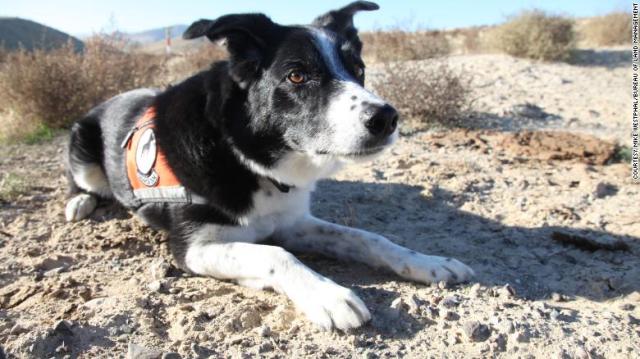
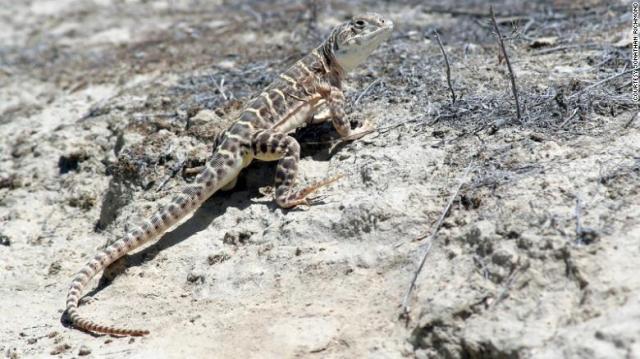
In the new study, scientists trained conservation dogs to focus on a new kind of animal: reptiles. They wanted to track the elusive and endangered blunt-nosed leopard lizard in the San Joaquin Valley. The experienced conservation dogs, including one female German shepherd and two male border collies, were trained to detect the scent of the lizard’s scat.
Then, the scientists could retrieve the samples and determine the gender, population genetics, diet, hormones, parasites, habitat use and health of the lizards. Humans have a difficult time identifying such small samples by sight because they are hard to distinguish from the environment. They can also be very similar to other scat.
The blunt-nosed leopard lizard is a fully protected species in California. It’s endangered because its habitat has been destroyed. Surveying the species and their habitat can help scientists to understand if existing conservation efforts are helping.
Over four years, scientists took the dogs out to the desert to detect and collect samples. The dogs would signal their discovery by laying down next to the scat. Then, they would be rewarded by a toy or play session.
Working between one and two hours a day, the dogs went out with survey teams from the end of April to mid May, when the lizards would emerge from brumation, otherwise known as reptile hibernation, according to the study. The dogs were trained not to approach the lizards if they saw them.
Over four years, they collected 327 samples and 82% of them were confirmed as belonging to blunt-nosed leopard lizards.
The researchers believe this method of tracking has potential and now they want to refine the method to see if it will work on a larger scale.
“So many reptilian species have been hit so hard,” said Mark Statham, lead study author and associate researcher with the Mammalian Ecology and Conservation Unit of the UC Davis School of Veterinary Medicine. “A large proportion of them are endangered or threatened. This is a really valuable way for people to be able to survey them.”
Ever wonder what would have happened if you’d taken up the “Hey, let’s get coffee” offer from that cool classmate you once had? If you believe some of today’s top physicists, such questions are more than idle what-ifs. Maybe a version of you in another world did go on that date, and is now celebrating your 10th wedding anniversary.
The idea that there are multiple versions of you, existing across worlds too numerous to count, is a long way from our intuitive experience. It sure looks and feels like each of us is just one person living just one life, waking up every day in the same, one-and-only world.
But according to an increasingly popular analysis of quantum mechanics known as the “many worlds interpretation,” every fundamental event that has multiple possible outcomes — whether it’s a particle of light hitting Mars or a molecule in the flame bouncing off your teapot — splits the world into alternate realities.
Multiple splits, multiple worlds
Even to seasoned scientists, it’s odd to think that the universe splits apart depending on whether a molecule bounces this way or that way. It’s odder still to realize that a similar splitting could occur for every interaction taking place in the quantum world.
Things get downright bizarre when you realize that all those subatomic splits would also apply to bigger things, including ourselves. Maybe there’s a world in which a version of you split off and bought a winning lottery ticket. Or maybe in another, you tripped at the top of a cliff and fell to your death — oops.
“It’s absolutely possible that there are multiple worlds where you made different decisions. We’re just obeying the laws of physics,” says Sean Carroll, a theoretical physicist at the California Institute of Technology and the author of a new book on many worlds titled “Something Deeply Hidden.” Just how many versions of you might there be? “We don’t know whether the number of worlds is finite or infinite, but it’s certainly a very large number,” Carroll says. “There’s no way it’s, like, five.”
Carroll is aware that the many worlds interpretation sounds like something plucked from a science fiction movie. (It doesn’t help that he was an adviser on “Avengers: Endgame.”) And like a Hollywood blockbuster, the many worlds interpretation attracts both passionate fans and scathing critics.
Renowned theorist Roger Penrose of Oxford University dismisses the idea as “reductio ad absurdum”: physics reduced to absurdity. On the other hand, Penrose’s former collaborator, the late Stephen Hawking, described the many worlds interpretation as “self-evidently true.”
Carroll himself is comfortable with the idea that he’s but one of many Sean Carrolls running around in alternate versions of reality. “The concept of a single person extending from birth to death was always just a useful approximation,” he writes in his new book, and to him the many worlds interpretation merely extends that idea: “The world duplicates, and everything within the world goes along with it.”
How did we get here?
The mind-bending saga of the many worlds interpretation began in 1926, when Austrian physicist Erwin Schrödinger mathematically demonstrated that the subatomic world is fundamentally blurry.
In the familiar, human-scale reality, an object exists in one well-defined place: Place your phone on your bedside table, and that’s the only spot it can be, whether or not you’re looking for it. But in the quantum realm, objects exist in a smudge of probability, snapping into focus only when observed.
“Before you look at an object, whether it’s an electron, or an atom or whatever, it’s not in any definite location,” Carroll says. “It might be more likely that you observe it in one place or another, but it’s not actually located at any particular place.”
Nearly a century of experimentation has confirmed that, strange as it seems, this phenomenon is a core aspect of the physical world. Even Einstein struggled with the notion: What happened to all of the other possible locations where the object could have been, and all the other different outcomes that could have ensued? Why should an object’s behavior depend on whether or not somebody was looking at it?
In 1957, a Princeton student named Hugh Everett III came up with a radical explanation. He proposed that all possible outcomes really do occur — but that only a single version plays out in the world we inhabit. All the other possibilities split off from us, each giving rise to its own separate world. Nothing ever goes to waste, in this view, since everything that can happen does happen in some world.
For decades, Everett’s colleagues mostly brushed aside his explanation, treating it more like a ghost story than serious science. But nobody has found any flaws in Schrödinger’s equation; nor can they explain away its implications. As a result, many contemporary physicists — including David Deutsch at Oxford University and Max Tegmark at the Massachusetts Institute of Technology — have come to agree with Carroll that the many worlds interpretation is the only coherent way to understand quantum mechanics.
A field guide to many worlds
The many worlds interpretation raises all kinds of puzzling questions about the multiple versions of reality, and about the multiple versions of you that exist in them. Carroll has some answers.
If new universes are constantly popping into existence, isn’t something being created from nothing, violating one of the most basic principles of physics? Not so, according to Carroll: “It only looks like you are creating extra copies of the universe. It’s better to think of it as taking a big thick universe and slicing it.”
Why do we experience one particular reality but none of the others? “What other one would you find yourself in?” Carroll says, amused. “It’s like asking why you live now instead of some other time. Everyone in every world thinks that they’re in that world.”
Carroll also has a disappointing response for one of the most compelling questions of all: Could you cross over and visit one of the other realities and compare notes with an alternate-world version of yourself? “Once the other worlds come into existence, they go their own way,” Carroll says. “They don’t interact, they don’t influence each other in any form. Crossing over is like traveling faster than the speed of light. It’s not something that you can do.”
War of the many worlds
One criticism of the many worlds interpretation is that while it offers a colorful way to think about the world, it doesn’t deliver any new insights into how nature works. “It is completely content-less,” says physicist Christopher Fuchs of the University of Massachusetts, Boston.
Fuchs favors an alternative called Quantum Bayesianism, which offers a path back to an old-fashioned single reality. He argues that the universe changes when you look at it not because you are creating new worlds but simply because observation requires interacting with your surroundings. No coffee dates, no other lives for you. “In this way, measurement is demoted from being something mystical to being about things as mundane as walking across a busy street: It’s an action I can take that clearly has consequences for me,” he says.
Coming at the critique from a different angle, Oxford’s Roger Penrose argues that the whole idea of many worlds is flawed, because it’s based on an overly simplistic version of quantum mechanics that doesn’t account for gravity. “The rules must change when gravity is involved,” he says.
In a more complete quantum theory, Penrose argues, gravity helps anchor reality and blurry events will have only one allowable outcome. He points to a potentially decisive experiment now being carried out at the University of California, Santa Barbara, and Leiden University in the Netherlands that’s designed to directly observe how an object transforms from many possible locations to a single, fixed reality.
Carroll is unmoved by these alternative explanations, which he considers overly complicated and unsupported by data. The notion of multiple yous can be unnerving, he concedes. But to him the underlying concept of many worlds is “crisp, clear, beautiful, simple and pure.”
If he’s right, he’s not the only Sean Carroll who feels that way.
From spooky abandoned houses to dark forest corners, spider webs have an aura of eternal existence. In reality, the silk threads can last hours to weeks without rotting. That’s because bacteria that would aid decomposition are unable to access the silk’s nitrogen, a nutrient the microbes need for growth and reproduction, a new study suggests.
Previous research had hinted that spider webs might have antimicrobial properties that outright kill bacteria. But subjecting the webs of three spider species to four types of bacteria revealed that the spiders use a resist strategy instead, researchers report October 23 in the Journal of Experimental Biology.
The scientists “challenge something that has gone significantly overlooked,” says Jeffery Yarger, a biochemist at Arizona State University in Tempe, who wasn’t involved in the research. “We just assumed [the silk] has some kind of standard antimicrobial property.”
Spiders spin strings of silk to trap food, wrap their eggs and rappel. Their silk webs can sport leaf debris for camouflage amidst tree canopies or leftover dead insects for a meal later. These bits and bobs lure bacteria and fungi involved in decomposition to the web, exposing the protein-rich web silks to the microbes.
“But [the microbes] don’t seem to affect spider silk,” says Dakota Piorkowski, a biologist at Tunghai University in Taichung, Taiwan.
To check if the silk was lethal to bacteria, Piorkowski’s team placed threads from three tropical spider species — giant golden orb weaver (Nephila pilipes), lawn wolf spider(Hippasa holmerae) anddome tent spider (Cyrtophora moluccensis) — in petri dishes and grew four types of bacteria, including E. coli, in perpendicular lines across the silk. “The idea is that if the silk has antibacterial properties, you should see no growth between the piece of silk and … bacteria,” Piorkowski says.
There was no evidence of this “clear zone” of dead bacteria in spots where the bacteria came in direct contact with the silk, the researchers found. So the team then tested if the silk kept hungry bacteria at bay by blocking them from its nitrogen reserves. Wetting the silk threads with an assortment of nutrient solutions showed that the bacteria readily grew on all three types of spider silk when extra nitrogen was available. That indicated that the bacteria are capable of growing on and possibly decomposing the silk, as long as the threads themselves aren’t the only source of nitrogen.
The researchers hypothesize that an outer coating of fat or complex protein on the silk may block bacteria’s access to nitrogen.
Randy Lewis, a spider silk biologist at Utah State University in Logan, cautions against ruling out antibacterial features in all spider silks, though. Underground webs of tarantulas (SN: 5/23/11), for example, can face environments rife in microorganisms compared with that experienced by aerial web-spinning spiders, he says, and may need the extra protection.







 It's Interesting