Exercising Before Eating Burns More Fat

Exercising before breakfast may have more health benefits than waiting until after the meal to get moving, according to a study published in the Journal of Clinical Endocrinology & Metabolism in October.

Researchers led by Javier Gonzalez, a physiologist at the University of Bath in England, conducted the study on a group of 30 overweight, sedentary men. One group drank a carbohydrate-laden vanilla shake for breakfast two hours before moderate cycling, while another group drank it after the same exercise. Both groups exercised three times per week. A third group was given the carb-rich drink but did not work out.

While riders in both cycling groups burned about the same number of calories each time they exercised, those in the group that worked out before drinking the shake burned about twice as many calories from fat per ride as the ones who had the shake beforehand. After the six-week study, members of the exercise-before-meal group also had improved insulin sensitivity, which lowers the risk of diabetes. People in both exercise groups had improved cardiorespiratory fitness compared to those who did not cycle, according to the study.

Exercising before breakfast may have burned more fat because fatty acids can fuel cells if glucose isn’t available, such as after a time of fasting when blood sugar is low, according to Runner’s World. While exercising before breakfast takes advantage of overnight fasting, similar results might be possible by abstaining from food at another time. “We believe that the key is the fasting period, rather than the time of day,” Gonzalez tells The New York Times.

Emily Makowski is an intern at The Scientist. Email her at emakowski@the-scientist.com.

https://www.the-scientist.com/news-opinion/exercising-before-eating-burns-more-fat–study-66789?utm_campaign=TS_DAILY%20NEWSLETTER_2019&utm_source=hs_email&utm_medium=email&utm_content=80070748&_hsenc=p2ANqtz-_mk5jB1Vyqx3xPsKPzk1WcGdxEqSmuirpfpluu4Opm4tMO6n7rXROJrCvQp0yKBw2eCo4R4TZ422Hk6FcfJ7tDWkMpyg&_hsmi=80070748

Ketamine Could Help Cut Alcohol Consumption by Rewiring Memory of Alcohol Reward


Preliminary findings from a clinical trial of heavy drinkers suggest that the drug can weaken certain memories tied to the reward of imbibing, although the mechanisms aren’t fully clear.

by CATHERINE OFFORD

he anesthetic drug ketamine could be used to rewire heavy drinkers’ memories and help them cut down on alcohol consumption, according to a study published yesterday (November 26) in Nature Communications. In a clinical trial of people who reported consuming around 590 grams of alcohol—equivalent to nearly two cases of beer—per week on average, researchers found that a procedure that involved administering the drug while people were thinking about drinking durably reduced consumption.

While it’s not clear how the method works at a neurological level, the study represents “a really exciting development,” Amy Milton, a behavioral neuroscientist at the University of Cambridge who was not involved in the work, tells STAT. She adds that the findings mark “the first time it’s been shown in a clinical population that this can be effective.”

The study was designed to manipulate the brain’s retrieval and stabilization of memories—in this case, those linking the sight and thoughts of alcohol to the reward of drinking it, study coauthor Ravi Das, a psychopharmacologist at University College London, tells Science News. “We’re trying to break down those memories to stop that process from happening.”

To do that, the team asked 30 of the participants to look at a glass of beer, followed by a sequence of images of alcoholic and non-alcoholic drinks. On the first day of tests, the session ended with participants being invited to drink the beer. On the second day, after viewing the beer and images, the screen cut off, and instead of drinking the beer, participants were given a shot of ketamine.

Among various functions, ketamine blocks NMDA receptors—key proteins in the brain’s reward pathways—so the researchers hypothesized that administering the drug during memory retrieval would help weaken participants’ associations between the sight or contemplation of alcohol and the reward of drinking it. Their results somewhat support that hypothesis. Nine months following the several-day trial, the volunteers reported cutting their drinking back by half.

“To actually get changes in [participants’] behavior when they go home and they’re not in the lab is a big deal,” Mary Torregrossa, a neuroscientist at the University of Pittsburgh who was not involved in the work, tells Science. But she notes that it’s not clear whether it was the ketamine or some other part of the procedure that led to the effect.

Another 60 participants, split into two control groups, received slightly different procedures that involved either beer or ketamine and still showed, on average, a 35 percent decrease in alcohol consumption after nine months. The participants themselves were recruited to the study through online ads—meaning that the researchers may have selected for people already interested in reducing consumption.

Whatever the mechanisms behind the effect, the results so far suggest the method is worth investigating, David Epstein, an addiction researcher at the National Institute on Drug Abuse, tells Science News. “If a seemingly small one-time experience in a lab produces any effects that are detectable later in real life, the data are probably pointing toward something important.”

Catherine Offord is an associate editor at The Scientist. Email her at cofford@the-scientist.com.

https://www.the-scientist.com/news-opinion/ketamine-could-help-cut-alcohol-consumption-by-rewiring-memory-66792?utm_campaign=TS_DAILY%20NEWSLETTER_2019&utm_source=hs_email&utm_medium=email&utm_content=80070748&_hsenc=p2ANqtz-_mk5jB1Vyqx3xPsKPzk1WcGdxEqSmuirpfpluu4Opm4tMO6n7rXROJrCvQp0yKBw2eCo4R4TZ422Hk6FcfJ7tDWkMpyg&_hsmi=80070748

Archaeologists Unearth Remains of Infants Wearing ‘Helmets’ Made From the Skulls of Other Children


Members of Ecuador’s Guangala culture may have outfitted the infants in skulls as a protective measure

By Jason Daley

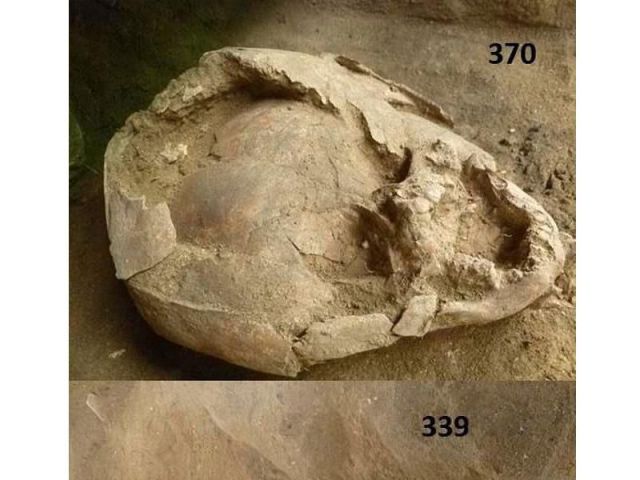
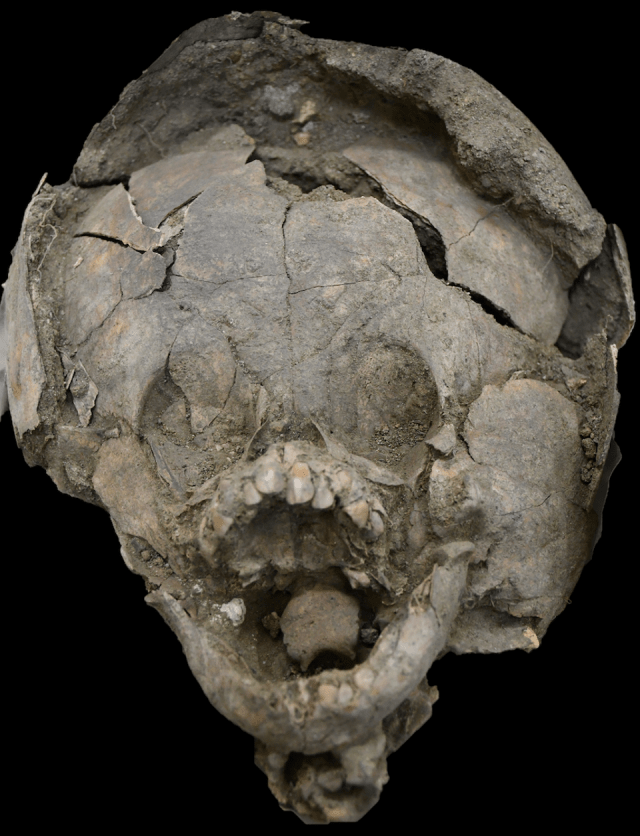
Archaeologists excavating a site in Salango, Ecuador, have discovered evidence of a burial ritual that might even make Indiana Jones shiver. As the researchers report in the journal Latin American Antiquity, excavations at a pair of 2,100-year-old funerary mounds revealed several unusual sets of remains: namely, the skeletons of two infants wearing what appear to be bone “helmets” made from the skulls of older children.

Members of the Guangala culture interred the infants at Salango, an ancient ritual complex on the country’s central coast, around 100 B.C. Archaeologists unearthed the remains—as well as those of nine other individuals, many of whom were buried with small objects including figurines and shells—while conducting excavations between 2014 and 2016. Per the study, the discovery represents the only known evidence of “using juvenile crania as mortuary headgear” found to date.

One of the babies was around 18 months old at time of death, while the second was between 6 and 9 months old.

As the study’s authors write, “The modified cranium of a second juvenile was placed in a helmet-like fashion around the head of the first, such that the primary individual’s face looked through and out of the cranial vault of the second.”

The older infant’s helmet originally belonged to a child aged 4 to 12 years old; interestingly, the researchers found a small shell and a finger bone sandwiched between the two layered skulls. The second baby’s helmet was fashioned from the cranium of a child between 2 and 12 years old.


The researchers found a small shell and a finger bone sandwiched between the two layered skulls. (Sara Juengst/UNC Charlotte)

Perhaps most eerily, the older children’s skulls likely still had flesh when they were outfitted over the infants’ heads. Juvenile skulls “often do not hold together” if they are simply bare bone, the archaeologists note.

“We’re still pretty shocked by the find,” lead author Sara Juengst of the University of North Carolina at Charlotte tells Forbes’ Kristina Killgrove. “Not only is it unprecedented, there are still so many questions.”

Potential explanations for the unexpected burials abound: DNA and isotope analysis currently underway may clarify whether the infants and children were related, but even if these tests fail to provide a definitive answer, Juengst says the researchers “definitely have a lot of ideas to work with.”

Speaking with New Atlas’ Michael Irving, Jeungst explains that “heads were commonly depicted in iconography, pottery, stone, and with literal heads in pre-Columbian South America.”

She adds, “They are generally representative of power, ancestors, and may demonstrate dominance over other groups—such as through the creation of trophy heads from conquered enemies.”

According to the paper, the helmets could have been intended to protect the deceased’s “presocial and wild” souls as they navigated the afterlife. Other infants found in the funerary platform were buried with figurines placed near their heads, perhaps for a similar purpose. An alternative theory posits the skull helmets belonged to the infants’ ancestors and were actually worn in both life and death.

Jeungst and her colleagues also outline a “tantalizing hypothesis” centered on a volcano located near the burial site. Ash found at Salango suggests the volcano was active and likely interfering with agriculture in the area, potentially subjecting the children to malnourishment and even starvation. Sîan Halcrow, an archaeologist at New Zealand’s University of Otago whose research focuses on juvenile health and disease, tells Killgrove that all four sets of bones showed signs of anemia.

Another less likely explanation identifies the children as victims of a ritual designed to quiet the volcano. The remains show no signs of trauma, however, and as Juengst says to Newsweek’s Aristos Georgiou, the evidence suggests the four juveniles “probably were quite ill anyway.”

The most plausible explanation, according to Jeungst, is that the Guangala outfitted the infants with skulls “in reaction to some sort of natural or social disaster and [to ensure] that these infants had extra protection or extra links to ancestors through their burials.”

While the unusual burial may seem macabre to modern readers, Juengst tells Killgrove she found the helmets “strangely comforting.”

“Dealing with the death of young infants is always emotional,” she explains, “but in this case, it was strangely comforting that those who buried them took extra time and care to do it in a special place, perhaps accompanied by special people, in order to honor them.”

Read more: https://www.smithsonianmag.com/smart-news/remains-infants-found-wearing-helmets-made-skulls-other-children-180973608/#qA6mSw6T0mpl92KM.99

Study shows extra virgin olive oil staves off multiple forms of dementia in mice

Boosting brain function is key to staving off the effects of aging. And if there was one thing every person should consider doing right now to keep their brain young, it is to add extra virgin olive oil (EVOO) to their diet, according to research by scientists at the Lewis Katz School of Medicine at Temple University (LKSOM). EVOO is a superfood, rich in cell-protecting antioxidants and known for its multiple health benefits, including helping put the brakes on diseases linked to aging, most notably cardiovascular disease. Previous LKSOM research on mice also showed that EVOO preserves memory and protects the brain against Alzheimer’s disease.

In a new study in mice published online in the journal Aging Cell, LKSOM scientists show that yet another group of aging-related diseases can be added to that list—tauopathies, which are characterized by the gradual buildup of an abnormal form of a protein called tau in the brain. This process leads to a decline in mental function, or dementia. The findings are the first to suggest that EVOO can defend against a specific type of mental decline linked to tauopathy known as frontotemporal dementia.

Alzheimer’s disease is itself one form of dementia. It primarily affects the hippocampus—the memory storage center in the brain. Frontotemporal dementia affects the areas of the brain near the forehead and ears. Symptoms typically emerge between ages 40 and 65 and include changes in personality and behavior, difficulties with language and writing, and eventual deterioration of memory and ability to learn from prior experience.

Senior investigator Domenico Praticò, MD, Scott Richards North Star Foundation Chair for Alzheimer’s Research, Professor in the Departments of Pharmacology and Microbiology, and Director of the Alzheimer’s Center at Temple at LKSOM, describes the new work as supplying another piece in the story about EVOO’s ability to ward off cognitive decline and to protect the junctions where neurons come together to exchange information, which are known as synapses.

“EVOO has been a part of the human diet for a very long time and has many benefits for health, for reasons that we do not yet fully understand,” he said. “The realization that EVOO can protect the brain against different forms of dementia gives us an opportunity to learn more about the mechanisms through which it acts to support brain health.”

In previous work using a mouse model in which animals were destined to develop Alzheimer’s disease, Dr. Praticò’s team showed that EVOO supplied in the diet protected young mice from memory and learning impairment as they aged. Most notably, when the researchers looked at brain tissue from mice fed EVOO, they did not see features typical of cognitive decline, particularly amyloid plaques—sticky proteins that gum up communication pathways between neurons in the brain. Rather, the animals’ brains looked normal.

The team’s new study shows that the same is true in the case of mice engineered to develop tauopathy. In these mice, normal tau protein turns defective and accumulates in the brain, forming harmful tau deposits, also called tangles. Tau deposits, similar to amyloid plaques in Alzheimer’s disease, block neuron communication and thereby impair thinking and memory, resulting in frontotemporal dementia.

Tau mice were put on a diet supplemented with EVOO at a young age, comparable to about age 30 or 40 in humans. Six months later, when mice were the equivalent of age 60 in humans, tauopathy-prone animals experienced a 60 percent reduction in damaging tau deposits, compared to littermates that were not fed EVOO. Animals on the EVOO diet also performed better on memory and learning tests than animals deprived of EVOO.

When Dr. Praticò and colleagues examined brain tissue from EVOO-fed mice, they found that improved brain function was likely facilitated by healthier synapse function, which in turn was associated with greater-than-normal levels of a protein known as complexin-1. Complexin-1 is known to play a critical role in maintaining healthy synapses.

Dr. Praticò and colleagues now plan to explore what happens when EVOO is fed to older animals that have begun to develop tau deposits and signs of cognitive decline, which more closely reflects the clinical scenario in humans. “We are particularly interested in knowing whether EVOO can reverse tau damage and ultimately treat tauopathy in older mice,” Dr. Praticò added.

More information: Elisabetta Lauretti et al, Extra virgin olive oil improves synaptic activity, short‐term plasticity, memory, and neuropathology in a tauopathy model, Aging Cell (2019). DOI: 10.1111/acel.13076

https://m.medicalxpress.com/news/2019-11-extra-virgin-olive-oil-staves.html

AI debates both sides of the dangers of artificial intelligence to the human race

By Donna Lu

An artificial intelligence has debated the dangers of AI – narrowly convincing audience members that the technology will do more good than harm.

Project Debater, a robot developed by IBM, spoke on both sides of the argument, with two human teammates for each side helping it out. Talking in a female American voice to a crowd at the University of Cambridge Union on Thursday evening, the AI gave each side’s opening statements, using arguments drawn from more than 1100 human submissions made ahead of time.

On the proposition side, arguing that AI will bring more harm than good, Project Debater’s opening remarks were darkly ironic. “AI can cause a lot of harm,” it said. “AI will not be able to make a decision that is the morally correct one, because morality is unique to humans.”

“AI companies still have too little expertise on how to properly assess datasets and filter out bias,” it added. “AI will take human bias and will fixate it for generations.”

The AI used an application known as “speech by crowd” to generate its arguments, analysing submissions people had sent in online. Project Debater then sorted these into key themes, as well as identifying redundancy – submissions making the same point using different words.

The AI argued coherently but had a few slip-ups. Sometimes it repeated itself – while talking about the ability of AI to perform mundane and repetitive tasks, for example – and it didn’t provide detailed examples to support its claims.

While debating on the opposition side, which was advocating for the overall benefits of AI, Project Debater argued that AI would create new jobs in certain sectors and “bring a lot more efficiency to the workplace”.

But then it made a point that was counter to its argument: “AI capabilities caring for patients or robots teaching schoolchildren – there is no longer a demand for humans in those fields either.”

The pro-AI side narrowly won, gaining 51.22 per cent of the audience vote.

Project Debater argued with humans for the first time last year, and in February this year lost in a one-on-one against champion debater Harish Natarajan, who also spoke at Cambridge as the third speaker for the team arguing in favour of AI.

IBM has plans to use the speech-by-crowd AI as a tool for collecting feedback from large numbers of people. For instance, it could be used by governments seeking public opinions about policies or by companies wanting input from employees, said IBM engineer Noam Slonim.

“This technology can help to establish an interesting and effective communication channel between the decision maker and the people that are going to be impacted by the decision,” he said.

Read more: https://www.newscientist.com/article/2224585-robot-debates-humans-about-the-dangers-of-artificial-intelligence/#ixzz66PTD9YuG

A blue whale’s heart beats just twice a minute when it dives for food

By Layal Liverpool

We have checked the pulse of a wild-living blue whale for the first time, and discovered something remarkable. When blue whales dive for food they can reduce their heart rates to as low as 2 beats per minute. This is well below the rates the large animals were calculated to have. Previous predictions were that the whales would have a resting heart rate of 15 beats per minute.

The finding is particularly extraordinary given that whales have an energetically demanding feeding method, says Jeremy Goldbogen at Stanford University, California. During lunge feeding, a blue whale engulfs a volume of prey-filled water that can be larger than its own body.

From a large inflatable boat in Monterey Bay, California, Goldbogen and his team used a 6-metre pole to attach heart rate monitors to a single blue whale. The monitors were held in place with suction cups. The researchers were then able to monitor the whale’s heart rate for almost 9 hours. They detected heart rates of just 2 to 8 beats per minute hundreds of times.

The whale dived for as long as 16.5 minutes at a time, reaching a maximum depth of 184 metres, and stayed at the surface for intervals ranging from 1 to 4 minutes. The whale’s heart rate was at its lowest when it was diving for food and shot up after it resurfaced, reaching a peak of 37 beats per minute.

The reduction in heart rate during dives enables whales to temporarily redistribute oxygenated blood from the heart to other muscles needed for lunging, says Goldbogen. Whales then recover upon resurfacing by dramatically increasing their breathing and heart rate, he says.

These results demonstrate “the quite extraordinary level of flexibility and control that these diving mammals have over their heart rate and blood flow”, says Sascha Hooker at the University of St Andrews, UK.

Recent technological advances have enabled these kinds of readings to be collected from free-living whales, says Hooker. “These are opening the door to a much greater understanding of how these animals are able to perform some quite amazing feats of diving and exercise,” she says.

Journal reference: PNAS, DOI: 10.1073/pnas.1914273116

Read more: https://www.newscientist.com/article/2224674-a-blue-whales-heart-beats-just-twice-a-minute-when-it-dives-for-food/#ixzz66PRZuGAd

New late-onset Alzheimer’s disease risk gene discovered: Mucin 6

A new paper in the Journal of Neuropathology & Experimental Neurology finds a gene that may help explain a large part of the genetic risk for developing Alzheimer disease.

Late-onset Alzheimer disease, the most common form of the illness, is a devastating neurological condition with aspects of heritable risk that are incompletely understood. Unfortunately, the complexity of the human genome and shortcomings of earlier research are limiting factors, so that some genetic phenomena were not surveyed completely in prior studies. For example, there are many incompletely mapped genomic regions, and areas with repetitive sequences, that could not be studied previously.

Although Alzheimer’s is known to be largely heritable, a substantial proportion of the actual genetic risk for the disease has remained unexplained, despite extensive studies. This knowledge gap is known to researchers are the “missing (or hidden) heritability” problem. For example, while heritability explained 79% of late-onset Alzheimer disease risk in a Swedish twin study, common risk variants identified by pervious genetic studies explained only 20% to 50% of late-onset Alzheimer disease. In other words, a relatively large amount of genetic influence on late-onset Alzheimer disease risk was not explained by prior genetic studies.

Recent advances in sequencing technologies have enabled more comprehensive studies. Such developments allow for more precise and accurate identification of genetic material than was available in earlier gene variant studies.

In the present study, researchers analyzed Alzheimer’s Disease Sequencing Project data derived from over 10,000 people (research volunteers who agreed to have their genetic data evaluated in combination with their disease status), with the goal of identifying genetic variation associated with late-onset Alzheimer disease.

Preliminary results found evidence of late-onset Alzheimer disease -linked genetic variation within a segment of a gene called Mucin 6. Although the underlying mechanisms are mostly still unknown, researchers here believe that it’s possible to draw credible and testable hypotheses based on these results. For example, the genetic variant that was associated with Alzheimer’s disease risk may implicate a biochemical pathway in the brain that then represents a potential therapeutic target, a topic for future studies.

Corresponding authors were Yuriko Katsumata and Peter Nelson, both from the University of Kentucky. Dr. Nelson said of this study, “Our findings were made in a group of patients that is relatively small for a genetics study–some recent studies included hundreds of thousands of research subjects! That small sample size means two things: first, we should exercise caution and we need to make sure the phenomenon can be replicated in other groups; and second, it implies that there is a very large effect size–the genetic variation is strongly associated with the disease.”

https://eurekalert.org/pub_releases/2019-11/oupu-nar111819.php

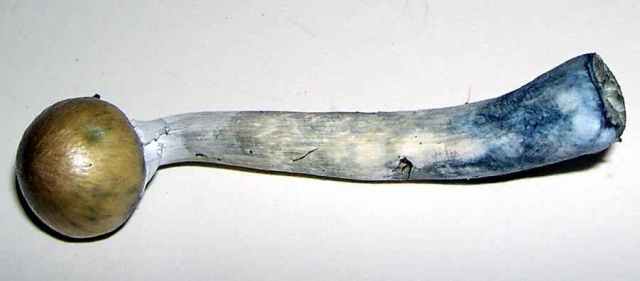
Scientists isolate two enzymes that paint psilocybin-laden mushrooms the unearthly blue color after they have been picked or bruised.

As if in protest, the stems of many species of mushroom instantly turn blue when they are plucked. The mechanism that underlies this ‘bluing’ is well known for some mushrooms, but bluing of psychedelic mushrooms that contain a compound called psilocybin has puzzled scientists for decades.

Dirk Hoffmeister at the Hans Knöll Institute in Jena, Germany, and his colleagues investigated the mushroom Psilocybe cubensis and discovered an enzyme that they named PsiP. When a mushroom is bruised or sliced, PsiP cuts off the phosphorus-containing portion of the psilocybin molecule, freeing the psychoactive molecule psilocin.

A second enzyme that the scientists named PsiL then destabilizes psilocin by stealing an electron from it. That forces individual psilocin molecules to fuse into pairs, trios and larger groupings. Some of the psilocin assemblies turn into blue compounds after losing hydrogen atoms. This process might explain the bluing of other psilocybin-laced mushrooms, such as Psilocybe azurescens.

Enzymes that behave like PsiP are also found in the human body. There, the psilocin produced by the enzymes creates psychedelic effects rather than a blue colour.

Angew. Chem. Int. Edn (2019)

https://www.nature.com/articles/d41586-019-03614-0

FDA Calls Psychedelic Psilocybin a ‘Breakthrough Therapy’ for Severe Depression

By Yasemin Saplakoglu

The FDA is helping to speed up the process of researching and approving psilocybin, a hallucinogenic substance in magic mushrooms, to treat major depressive disorder (MDD).

For the second time in a year, the U.S. Food and Drug Administration (FDA) has designated psilocybin therapy — currently being tested in clinical trials — as “breakthrough therapy,” an action that is meant to accelerate the typically sluggish process of drug development and review. It is typically requested by a drug company and granted only when preliminary evidence suggests the drug may be an enormous improvement over already available therapy, according to the FDA.

Last year, the FDA granted “breakthrough therapy” status to psilocybin therapy in the still-ongoing clinical trials run by the company Compass Pathways, which are looking into psilocybin’s potential to treat severe treatment-resistant depression, or depression in patients who have not improved after undergoing two different antidepressant treatments, according to New Atlas.

Now, the FDA has granted another “breakthrough therapy” status to the psychedelic treatment, this time for a U.S.-based clinical trial conducted by the nonprofit Usona Institute, according to a statement from the company. This clinical trial, which includes 80 participants at seven different sites across the U.S., focuses on the efficacy of treating patients with MDD with a single dose of psilocybin.

There are more than 17 million people in the U.S. who have major depressive disorder, or severe depression that lasts more than two weeks, according to the statement. Psilocybin, with a single dose, could profoundly impact the brain and have long-lasting impacts after wiping away depressive symptoms, according to the statement.

The phase 2 trial is expected to be completed by early 2021, and with the help of this status, Usona expects it to quickly move into a larger phase 3 trial, according to New Atlas. Around one in three treatments previously given a Breakthrough Therapy status have moved on to get market approval, New Atlas wrote.

“What is truly groundbreaking is FDA’s rightful acknowledgement that MDD, not just the much smaller treatment-resistant depression population, represents an unmet medical need and that the available data suggest that psilocybin may offer a substantial clinical improvement over existing therapies,” Dr. Charles Raison, the director of clinical and translational research at Usona, said in the statement.

This isn’t the first time that a psychedelic has been researched for its potential in treating depression. In March, the FDA approved a nasal spray depression treatment for treatment-resistant patients based on Esketamine, a substance related to ketamine — an anesthetic that’s also been used as an illicit party drug. But much is still unknown even of this approved drug. Though fast-acting, it’s unclear how Esketamine changes the brain and thus what its long-term effects will be, according to a previous Live Science report.

https://www.livescience.com/psilocybin-depression-breakthrough-therapy.html

How Behavioral Science Solved Chicago’s Plastic Bag Problem: the fee works better than the ban

Like a lot of cities seeking to reduce the unrecyclable plastic waste that has burdened their landfills and fouled their waterways, Chicago officials had two basic policy remedies to pick from: a ban or a fee. And like a lot of cities, they made that choice based largely on gut instinct and voter preference. They picked a ban but soon after it went into effect in August 2015, officials discovered it was having some unintended and unwelcome consequences.

“It was only a matter of months,” said Paul Sajovec, chief of staff to Alderman Scott Waguespack, “because people pretty quickly realized that it wasted more plastic.”

The ban applied to only thin, single-use plastic bags, prompting stores to find alternatives like paper bags, which are less likely to wind up in local waterways but cost more energy to manufacture than plastic. One independent grocer gave out 9,500 fewer plastic bags a week after the ban, according to the Illinois Retail Merchant Association, but those bags were twice the thickness—negating the benefit of the ban. In all, it was a real-time confirmation of a 2017 study by the University of Sydney: plastic bag bans tend to increase purchases of both plastic trash bags and paper bag use.

There was some anecdotal evidence consumers were changing their behavior by bringing their own reusable bags but the law was generally earning mixed reviews. Politicians and environmentalists wanted more impact. Retailers were frustrated at the increased cost of bagging supplies.

“The silver lining in that bad policy was it brought retailers to the table,” said Jordan Parker, founder and director of Bring Your Own Bag Chicago, an environmental advocacy group that helped shape the new legislation.

In November 2016, the city repealed the ban, replacing it with a 7-cent fee on paper and plastic bags. In a short period of time, Chicago had effectively become a municipal laboratory to study which of the two basic policy remedies works best. What researchers found when they examined the data was that consumers are less motivated by emotional appeals to save the environment and more by the impact on their pocketbook—even when it’s just a few cents. Over the course of the first year, Chicagoans reduced their disposable bag usage from 2.3 bags per trip to 1.8 bags per trip—a nearly 28 percent difference, according to a 2018 study by the University of Chicago, New York University and the non-profit ideas42.

Tatiana Homonoff, an assistant professor of economics and public policy at New York University, and her research team surveyed shoppers inside Chicago and its neighboring suburbs, which were not subject to a bag fee, before and after the city’s tax went into effect. When she asked why they brought a reusable bag, shoppers would tick off environmentalist talking points such as the pile of garbage twice the size of Texas floating in the Pacific Ocean. But when Homonoff asked customers when they started bringing their own bag they answered, “After the tax was passed.”

“Sometimes these informational campaigns can work,” she said. “Telling people about the environmental ills of plastic isn’t going to work.” At least not on its own.


Washington, D.C. resident Takia Holmes carries a jumble of groceries to her car without using a plastic bag, which would have cost her an extra nickel.

To understand the bag tax’s success, Homonoff points to a phenomenon in behavioral economics known as loss aversion. The painful experience of loss is more effective at changing habits than a positive gain. During her surveys, customers often said they wouldn’t bring a reusable bag if they could save a nickel but would bring a bag if it meant avoiding a 5-cent charge.

“You do see this asymmetry when we’re talking about a bonus versus a tax,” she said.

Interestingly, that small but painful fee proved effective on customers across all demographics and income levels, she added.

“It’s not to say that it only works when it’s a big financial burden, then you would expect the drop in low-income neighborhoods but not high-income neighborhoods,” she said. “This tells me that it’s not just about the financial burden of this, that maybe there’s something behavioral.”

Knowing that the modest fee can work at different income levels could also help policymakers understand how to calculate the most palatable tax for consumers. In Seattle, the plastic bag industry goaded voters to reject a 20-cent plastic bag fee. The city ultimately replaced the fee with a hybrid solution that banned plastic bags and charged 5 cents for larger paper bags. In the four years after the policy went into effect, the city of Seattle reported a 50 percent reduction of plastic bags going to city dumps. However, the same report noted that about half of convenience stores and grocery stores were out of compliance.

The takeaway, Homonoff says, is that while you might get a bigger change if you have a large tax, you can change consumer habits with a small tax as well.

Parker agreed that even a modest tax can force people to think twice about the environment.

“These tiny slaps on the wrist are effective at making people care,” she said. “The data points to money. If they feel like they’re losing money, the loss aversion is so much more powerful when changing human behavior.”

The city had initially projected the fee would garner $9.2 million in revenue. Instead, the tax collected just $5.6 million in the first year. (Unlike some municipalities that dedicate revenue from the bag fee to environmental cleanups, Chicago retailers collect 2 cents while the city retains the other 5 for its general operating budget.)

While revenue climbed to $6.4 million in 2018, the city’s fiscal year 2020 budget overview projects that number will decline to $5.9 million in 2019 and will stabilize the following year. That drop doesn’t bother the city’s budget experts, who argue the tax wasn’t really about the revenue in the first place.

“It really was trying to encourage people to bring reusable bags when shopping,” said Susie Park, the city’s budget director. “The decline in revenue is potentially a good thing, because it shows a change in behavior. So we’re hoping that continues.”

Evidence of the fee’s success is anecdotal in other cities, such as Washington, D.C., that have implemented one. In Washington, the Anacostia River has served as the poster child for the city’s 5-cent fee. The waterway is the intended recipient of the tax’s revenue and despite evidence that some of the funds earmarked for cleaning the river have floated down other revenue streams, local politicians say there is less plastic clogging the river.

Even as Chicago acknowledges its bag tax hasn’t beefed up the city’s coffers, its performance hasn’t dissuaded the state government from eyeing a similar fee as a potential revenue source. In February, Illinois Governor J.B. Pritzker proposed a 5-cent tax on plastic checkout bags across the state, a fee his administration expects would garner between $19 million and $23 million. State Rep. Ann Williams, a Democrat whose district encompasses parts of northern Chicago neighborhoods, introduced a bag tax bill in the Illinois House of Representatives earlier this year. Williams noticed a dramatic change in behavior in her home district after the tax, but can’t say the same for the state capital, where there’s no disposable bag policy. Her new habits, she said, travel with her.

“I’m throwing stuff in my purse,” she said. “… I absolutely try and there’s that guilt factor.”

https://www.politico.com/news/magazine/2019/11/21/plastic-bag-environment-policy-067879