More Than 30 Million People in China Live in Caves


Reporting from Yanan, China—

Like many peasants from the outskirts of Yanan, China, Ren Shouhua was born in a cave and lived there until he got a job in the city and moved into a concrete-block house.

His progression made sense as he strove to improve his life. But there’s a twist: The 46-year-old Ren plans to move back to a cave when he retires.

“It’s cool in the summer and warm in the winter. It’s quiet and safe,” said Ren, a ruddy-faced man with salt-and-pepper hair who moved to the Shaanxi provincial capital, Xian, in his 20s. “When I get old, I’d like to go back to my roots.”

More than 30 million Chinese people live in caves, many of them in Shaanxi province where the Loess plateau, with its distinctive cliffs of yellow, porous soil, makes digging easy and cave dwelling a reasonable option.

Each of the province’s caves, yaodong, in Chinese, typically has a long vaulted room dug into the side of a mountain with a semicircular entrance covered with rice paper or colorful quilts. People hang decorations on the walls, often a portrait of Mao Tse-tung or a photograph of a movie star torn out of a glossy magazine.

The better caves protrude from the mountain and are reinforced with brick masonry. Some are connected laterally so a family can have several chambers. Electricity and even running water can be brought in.

“Most aren’t so fancy, but I’ve seen some really beautiful caves: high ceilings and spacious with a nice yard out front where you can exercise and sit in the sun,” said Ren, who works as a driver and is the son of a wheat and millet farmer.

The caves have an important role in modern Chinese history. The Long March, the famous retreat of the Communist Party in the 1930s, ended near Yanan, where Mao took refuge in caves. In “Red Star Over China,” writer Edgar Snow described a Red Army university that “was probably the world’s only seat of ‘higher learning’ whose classrooms were bombproof caves, with chairs and desks of stone and brick, and blackboards and walls of limestone and clay.”

Chinese Vice President Xi Jinping, who is expected to succeed Hu Jintao next year as president, lived for seven years in a cave when he was exiled to Shaanxi province during the Cultural Revolution.

“The cave topology is one of the earliest human architectural forms; there are caves in France, in Spain, people still living in caves in India,” said David Wang, an architecture professor at Washington State University in Spokane who has written widely on the subject. “What is unique to China is the ongoing history it has had over two millenniums.”

In recent years, architects have been reappraising the cave in environmental terms, and they like what they see.

“It is energy efficient. The farmers can save their arable land for planting if they build their houses in the slope. It doesn’t take much money or skill to build,” said Liu Jiaping, director of the Green Architecture Research Center in Xian and perhaps the leading expert on cave living. “Then again, it doesn’t suit modern complicated lifestyles very well. People want to have a fridge, washing machine, television.”

Liu helped design and develop a modernized version of traditional cave dwellings that in 2006 was a finalist for a World Habitat Award, sponsored by a British foundation dedicated to sustainable housing. The updated cave dwellings are built against the cliff in two levels, with openings over the archways for light and ventilation. Each family has four chambers, two on each level.

“It’s like living in a villa. Caves in our villages are as comfortable as posh apartments in the city,” said Cheng Wei, 43, a Communist Party official who lives in one of the cave houses in Zaoyuan village on the outskirts of Yanan. “A lot of people come here looking to rent our caves, but nobody wants to move out.”

The thriving market around Yanan means a cave with three rooms and a bathroom (a total of 750 square feet) can be advertised for sale at $46,000. A simple one-room cave without plumbing rents for $30 a month, with some people relying on outhouses or potties that they empty outside.

Many caves, however, are not for sale or rent because they are handed down from one generation to another, though for just how many generations, people often can’t say.

Ma Liangshui, 76, lives in a one-room cave on a main road south of Yanan. It is nothing fancy, but there is electricity — a bare bulb dangling from the ceiling. He sleeps on a kang, a traditional bed that is basically an earthen ledge, with a fire underneath that is also used for cooking. His daughter-in-law has tacked up photographs of Fan Bingbing, a popular actress.

The cave faces west, which makes it easy to bask in the late afternoon sun by pulling aside the blue-and-white patchwork quilt that hangs next to drying red peppers in the arched entrance.

Ma said his son and daughter-in-law have moved to the city, but he doesn’t want to leave.

“Life is easy and comfortable here. I don’t need to climb stairs. I have everything I need,” he said. “I’ve lived all my life in caves, and I can’t imagine anything different.”

Thanks to Kedmobbe for bringing this to the attention of the It’s Interesting community: http://kebmodee.blogspot.com/2012/03/in-china-millions-make-themselves-at.html?utm_source=feedburner&utm_medium=email&utm_campaign=Feed%3A+Kebmodee+%28kebmodee%29


Astronauts Suffer Brain and Eye Damage After One Month in Space

Astronauts who have spent more than a month in space have shown evidence of damage to their eyeballs and brain tissue.

MRI scans on 27 Nasa astronauts revealed a pattern of deformities in their eyeballs, optic nerves and pituitary glands, it was revealed in the journal Radiology.

Seven of the astronauts had a flattening of one or both of the eyeballs, causing them to become long-sighted. Four had swelling around the optic nerve and three had deformed pituitary glands.

The study was led by Larry Kramer at the University of Texas Health Science Centre in Houston, who says the findings could be explained by a build-up of cerebrospinal fluid in the brains of the astronauts, caused by exposure to the micro-gravity of space.

He added: “Microgravity-induced intracranial hypertension represents a hypothetical risk factor and a potential limitation to long-duration space travel.

“Consider the possible impact on proposed manned missions to Mars or even the concept of space tourism. Can risks be eventually mitigated? Can abnormalities detected be completely reversed?

“The next step is confirming the findings, defining causation and working towards a solution based on solid evidence.”

The findings have not rendered any astronauts ineligible for future space travel.

Shuttle missions typically last a couple of weeks, AFP reports, while International Space Station journeys can last more than six months.

A Mars mission could potentially last a year-and-a-half.

Last month Nasa published a feature about vision changes experienced by astronauts on board the ISS. It referenced research from the October 2011 issue of Ophthalmology and referred to tests on seven astronaut test subjects who all reported blurred vision.

Astronaut Bob Thirsk, who spent six months as a member of the Expedition 20 and 21 crews in 2007, told a post-flight survey: “After a few weeks aboard I noticed that my visual acuity had changed.

“My distant vision was not too bad, but I found that it was more difficult to read procedures. I also had trouble manually focusing cameras, so I would ask a crewmate to verify my focus setting on critical experiments.”

Nasa provides space anticipation glasses (spectacles with a stronger prescription) for crew members over the age of 40

Crews also have access to SuperFocus glasses – adjustable focus glasses eliminating the need for bi- and tri-focal lens associated with multiple vision adjustments. These specialised glasses are in addition to an astronaut’s regular prescription glasses.

http://www.huffingtonpost.co.uk/2012/03/13/astronauts-in-space-for-more-than-one-month-suffer-brain-and-eye-damage_n_1341190.html?1331642133&ncid=edlinkusaolp00000008

Woman Finds Out She Was Married to Multiple Men Due To Identity Theft


Anna Vargas thought she was happily married — she just didn’t know she was “married” to four guys.

The 37-year-old Queens mom has been the victim of an identity-theft nightmare, in which a parade of mysterious creeps arranged fake marriages by using her birth certificate which she lost some 16 years ago.

Vargas had no idea what was going on — until she tried to get married in 2004 and was heartbroken to find her application for a license rejected by the City Clerk’s Office.

She was turned down after records showed she was already been “married” twice in 1996, once to a man from Mexico and once to a man from Ecuador.

“I was very shocked and distraught [being rejected] because it was three weeks before I was supposed to get married,” Vargas told The Post.

It wasn’t clear why the men got married with women using her identity, but often such ID theft involves immigration scams.

After the discovery, Vargas’ relatives suggested she call off her wedding. On the advice of the family priest and a lawyer, Vargas got a license from another jurisdiction.

The ceremony was moved to Long Island, where she and fiancé Angel Poggi said their “I do’s” and prepared to live happily ever after.

Then one of her other “husbands” turned up.

Out of the blue in 2009, the man from Ecuador slapped her with divorce papers.

“I was really astounded,” Vargas recalled. “Who is this person? It was very disturbing since I’ve never been married to anyone but my husband.”

When she refused to sign those documents and hired a lawyer, the Ecuadorean man showed up at her mother-in-law’s house.

“Luckily, my mother-in-law had a picture of our wedding day,” Vargas explained. “She said, ‘Is this the person you were married to?’ He said, ‘No.’ ”

Vargas decided to go back and clear her name with the City Clerk’s Office.

On Jan. 25, Administrative Law Judge Joan Salzman ruled that Vargas had indeed been the victim of fraud and nullified the two 1996 marriages.

The fakery wasn’t tough to root out. The bogus 1996 marriage application said Vargas’ father was born in Venezuela; he is a native of Puerto Rico.

Unfortunately, her troubles aren’t over. Vargas also discovered another fake marriage in her name, on Long Island, and is fighting to erase it.

Read more: http://www.nypost.com/p/news/local/queens/four_time_bride_it_one_done_YMrVcVqcsEEYTZl3byuKLL#ixzz1pZShuvff

Free Pizza With a Vasectomy in Cape Cod


If you’re considering a vasectomy, and happen to like pizza and basketball, a Massachusetts urology clinic has an offer for you.

Urology Associates of Cape Cod says it’s offering a free pizza to vasectomy patients during March Madness. An administrator with the group says it’s a lighthearted way to raise awareness about the procedure and drum up business.

Evan Cohen of the clinic told the Cape Cod Times that getting a vasectomy during the NCAA basketball tournament is the perfect time because typically a day or two of recovery is needed following the operation, so it gives patients an excuse to lie on the couch and watch hoops.

A commercial promoting the deal asks the question, “Hey guys! Want to watch the college basketball tournament guilt-free? You know you’ve been thinking about a vasectomy, anyway. Now’s the time to get it done.”

http://www.cbsnews.com/8301-504763_162-57398849-10391704/mass-clinic-offers-free-pizza-for-vasectomy-during-march-madness/

Dead Bunny


Til, a two-week old earless bunny,seemed destined to become Germany’s newest animal celebrity until a TV cameraman accidentally stepped on the bunny, instantly crushing him to death.

The unidentified cameraman was filming a story on the small zoo in Saxony as it prepared to present the 17-day-old bunny to the world at a press conference.

He says didn’t see Til, who was covered with hay, when he took a step backward, Spiegel Online reports.

“He was immediately dead, he didn’t suffer,” zoo director Uwe Dempewolf tells the website for the magazine Der Spiegel. “It was a direct hit. No one could have foreseen this. Everyone here is upset. The cameraman was distraught.”

Spiegel Online notes that earless rabbits are very rare and Til would have been a media sensation in Germany, which has a history of worshipping furry baby animals.

Til’s body will now be frozen while zoo officials decide whether to have him stuffed.

http://content.usatoday.com/communities/ondeadline/post/2012/03/tv-crew-accidentally-kills-celebrity-bunny–/1

Thanks to Nicole Stricker for bringing this to the It’s Interesting community.

John Wilkes Booth Bobblehead Dolls


GETTYSBURG, Pa. — Bobblehead dolls of the man who assassinated President Abraham Lincoln have been pulled from sale at the Gettysburg National Military Park visitors’ center bookstore.

The dolls of John Wilkes Booth with a handgun were removed from shelves on Saturday, a day after a reporter for Hanover’s The Evening Sun newspaper asked about them, officials said.

“On rare occasions, there’s an item that might cause concern, and obviously the bobbleheads appeared to be doing that,” Gettysburg Foundation spokeswoman Dru Anne Neil said Tuesday.

The Booth dolls, featuring big heads attached to the bodies by springs so they bobble, were available for only about a week before the park superintendent, the foundation president and the bookstore manager decided they shouldn’t be for sale, Neil said.

She declined to state the reason for the decision, and messages left Tuesday for the park and the company that operates the bookstore weren’t immediately returned.

The Booth dolls, which are about 7 inches tall and come in boxes that look like the inside of the theater where Lincoln was killed, sell online for about $20 each. They have proved to be popular, as more than 150 of the original run of 250 have been sold, and more are being made, Kansas City, Mo.-based manufacturer BobbleHead LLC said.

“There’s a market there,” sales manager Matt Powers said. “We like to let the customer decide if it’s a good item or not.”

Confederate sympathizer Booth shot and killed Lincoln at Ford’s Theatre in Washington in April 1865, as the Civil War was ending. He fled and was tracked into Virginia, where he was killed.

Gettysburg was the site of a July 1863 Civil War battle in which the Union Army repelled a Confederate invasion of the North under Gen. Robert E. Lee. The battle is often considered the turning point of the war.

http://www.huffingtonpost.com/2012/03/14/john-wilkes-booth-bobblehead-dolls_n_1343697.html?ref=weird-news

Homeless People WiF HotSpots at SXSX in Texas


New York ad agency BBH has teamed up with SXSW this year to present its Homeless Hotspots initiative. The controversial, charitable movement offers a new take on the old Street Newspaper model: Rather than selling print papers to earn money, boost moral and spread awareness about poverty-related issues, the Homeless Hotspots project hopes to achieve the same effects by providing people with the opportunity to sell a digital service, instead.

Homeless Hotspots has “hired” 13 people from Austin’s Front Steps Shelter to participate in the campaign. Donning wireless routers and t-shirts that read, “I am a 4G hotspot,” these “Hotspot Managers” will be around the city offering wifi to festivalgoers.

As the Homeless Hotspots site explains, “SXSW Interactive attendees can pay what they like to access 4G networks carried by our homeless collaborators. This service is intended to deliver on the demand for better transit connectivity during the conference.”

The best part? The “Hotspot Managers” get to keep all of the money they make. Donate at the fest or online at Homeless Hotspots.


1 House, 1 Island for Sale in Florida Keys


Robert Williford’s one-and-a-half acre property has gotten a lot of attention since it was put on the market in December. That is probably because it’s not just a home, it’s also an island – East Sister Rock Island.

“Not too many houses are built on a coral reef. I don’t think you can do that” anymore, Williford said, laughing.

Williford bought the island near Marathon 20 years ago. He lives in Coral Gables full time, and when he isn’t using it as a vacation home he rents it out, along with a boat, for $5,000 a week.

In 1992, the property cost Williford $1 million. Today, it’ll cost you $12 million – and Realtor Marvin Arrieta says people from all over the world are showing interest.

“It’s a really unique property,” Arrieta said. “You can have your own helicopter. It’s not all islands (that) have that all together – green, location.”

Adding to its uniqueness is something Williford did himself – making the entire home solar and wind powered.

“You don’t need any support from the utilities. We get all of our water from the rain,” he said.

The 3-bedroom, 2-bath home comes with a guest house and two boat docks – not to mention a full view of the Atlantic.

Williford says that after 20 years and tons of weekend trips there, his kids are grown and he feels it’s just time to sell.

Arrieta says that out of the 1,700 islands that make up the Keys, a mere fraction is like this one.

“Just nine islands have one house, so it’s really unique if someone wants privacy there,” she said.

http://www.nbcmiami.com/news/local/For-Sale-One-House-One-Island-in-Florida-Keys-142574095.html

Maryland Couple has 5,000 Cabbage Patch Dolls and has built a $200,000 amusement park for them

Kevin, a cheery, curled-top boy, extends an invitation to his friend by cell phone, “I’d love to have you come over and play.”

For most children that play date at Magic Crystal Valley in Maryland would be a dream come true: riding a miniature train, a motorized swing and even a hot-air balloon that sweeps them 30 feet in the air.

But Kevin, and his hundreds of friends from around the country, are Cabbage Patch Kids, and their “parents” are humans who are obsessed with the ugly, but cuddly dolls that hit the market by storm in 1983.

Pat and Joe Prosey own 5,000 and they consider them their own children, even though the 64-year-olds have a real-life grown daughter.

“They are kids. We don’t use the word D-O-L-L — they might hear,” said Joe, a former shipyard worker who built this special playground for other enthusiasts.

They are collectors, but say it really isn’t about the money, but an obsession with their “babies.”

The obsession all began with Pat Prosey, a former paint store technician, who had loved baby dolls as a girl. “Mother said one day I would probably collect some type of doll when I was older,” she said.

The soft dolls with the wrinkled faces were created by Xavier Roberts, a 21-year-old art student from Georgia, who adopted a German technique for sculpture with his mother’s quilting skills, according to his the Cabbage Patch Kids website.

His concept — adoptable “Little People” — was developed in 1976. Each doll was different and came with a double-barreled name and a birth certificate.

By the end of 1981, the Cabbage Patch doll had made the cover of Newsweek magazine, and he had sold nearly 3 million kids. By 1990, 65 million had been “adopted,” according to his web site.

Pat Prosey got her first Cabbage Patch Meg in 1985 for $50. “She was kind of cute and when I got her got her home, Joe thought I had lost my mind,” she said.

But soon, she found a boy, named Kevin, and today he is the spokesman for what has become their personal Cabbage Patch empire.

After Meg and Kevin, came the “preemies” and the ones with freckles. “They went from freckles to teeth to glasses and toothbrushes, and before you know it, our whole house in Baltimore was filled with Cabbage Patch Kids,” said Pat Prosey.

But when her father offered the couple a farm two hours south in Leonardstown, Md., they jumped at the chance to find room for their growing collection.

She said she thought, “Now, I could actually build a place for my kids,” and the amusement park was born.

As for Joe Prosey, he got hooked in the 1980s one day when he was at a waterskiing event and saw a miniature sample of a wet suit hanging on a shop wall. “I thought, that’ll fit a Cabbage Patch Kid.”

The following weekend, he dressed Kevin the wetsuit and took him waterskiing — even though has he got strange looks from others.

Soon, Joe Prosey was writing a column in a collectors’ newsletter using Kevin’s voice. “He was a real kid doing real stuff,” he said. “There was such response, a woman phoned us and asked, could I do it again?”

Then, as they met more Cabbage Patch parents, the Proseys sent gifts back and forth — eventually arranging play dates at their dream playground.

Now the couple displays and sells Cabbage Patch originals. Those from the 70s and 80s can sell for as much as $25,000 to $35,000 a piece.

“Xavier Robert told us, “If you want to prosper at this thing, you have to live the fantasy day in and day out,” said Joe Prosey. “The collectors will love you.”

Experts say there is a fine line between collecting and hoarding, which a serious psychological disorder.

“With hoarding, we look at three main behaviors: one, acquiring too many possessions; second, having great difficulty discarding something; and three difficulty organizing,” said Julie Pike, a clinical psychologist from the Anxiety Disorder Treatment Center in Durham, N.C. “But there is a lot of overlap.”

Pike has been featured on TLC’s reality show, “Hoarding: Buried Alive,” and spoke with ABCNews.com last year.

Collectors are usually well-organized and know exactly where each item is and what they have. They are also proud, not ashamed, of their possessions, she said.

“But if collectors get in a place where they are spending so much money that they can’t pay their mortgage, that’s a problem,” Pike said. “Or if they are spending so much time at it that they can’t go to their job or leave their house.”

Pat Prosey insists she loves her “fantasy world” and the couple has always had “a roof over our heads, food in our mouths and clothes on our back.”

“You can walk out of every day life and there is no harm done, no foul play and have a good time,” she said. “People pay $2 million for a painting — is that crazy? I love my Cabbage Patches like another person loves a Rembrandt or a shiny new car.”

http://abcnews.go.com/Health/crazy-obsession-couple-owns-5000-cabbage-patch-kids/story?id=15828541#.T1cbryM2GRC

Pudding to the Rescue


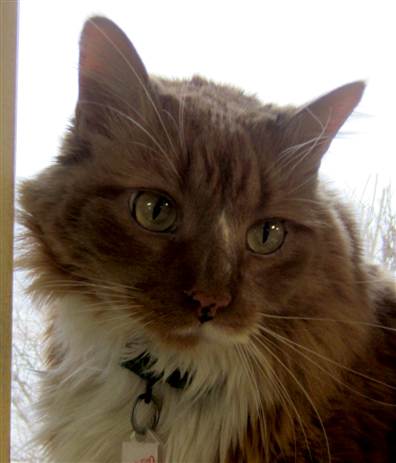
Pudding the cat is big. He is orange. He is laid-back. And he’s a lifesaver.

Just ask Amy Jung. The 36-year-old Wisconsin resident credits 21-pound Pudding with saving her from the grip of diabetic seizure mere hours after she adopted him from a local animal shelter.

“If something or someone hadn’t pulled me out of that, I wouldn’t be here,” Jung told the Green Bay Press-Gazette newspaper.

Here’s what happened: On Feb. 8, Jung visited the Door County Humane Society with her son, Ethan. She had no intention of adopting a pet; she and her son just wanted to play with the cats, who are allowed to roam free at the no-kill shelter.

But, as can happen with felines and humans, Pudding and Jung felt a strong and immediate connection.

“He just gravitated to her,” Door County Humane Society Executive Director Carrie Counihan told TODAY.com.

Jung made an on-the-spot decision to bring Pudding home. Always a calm and relaxed guy, Pudding took to his new digs right away, displaying not a hint of skittishness on his first day there.

That evening Jung, who has been living with diabetes since the age of 4, went to bed at about 9:30 p.m. About 90 minutes later, she started to have a diabetic seizure. That’s when, according to the Green Bay Press-Gazette, “Pudding planted his weight on her chest and, when he could not wake her, began swatting her face and biting her nose.”

Dog saves 11-year-old boy from cougar attack

Jung came to her senses enough to yell out to her son for assistance. At that point, Pudding jumped up onto Ethan’s bed and startled him into action. He immediately rushed to get his mom the help she needed.

“Her doctor said she could have gone into a coma and not come out of it if much more time had gone by,” Counihan said. “The fact that Pudding did what he did without knowing her that well is just amazing to me.”

Since the scary Feb. 8 incident, Jung has followed her doctor’s advice to have Pudding registered as a therapy animal.

“I think he’s already made his first trip to Walmart,” Counihan said.

Pudding had been living at the shelter for about a month before Jung took him home. He arrived there in early January with another cat named Wimsy after their owner died. Jung adopted Wimsy, too, because she didn’t want to separate them.

Cat protects couple from deadly gas leak

This wasn’t Pudding’s first stint at the Door County Humane Society. In 2008, a family surrendered him to the shelter because their son was allergic to cats. His name at that time was Starbuck. His last owner, the woman who just passed away, decided to change his name to Pudding.

“Pudding is 8 1/2-ish now — not too old,” Counihan said. “And Wimsy is 3 years old. Maybe he’ll pick up some of Pudding’s powers.”

Roast Beef the penguin charms nursing-home residents

http://today.msnbc.msn.com/id/46504285/ns/today-good_news/


Thanks to the future Dr. Goldman for bringing this to the attention of the It’s Interesting community.