
Movie theater accidentally showed Paranormal Activity instead of Madascar and terrified children

A group of children expecting to see a new animated movie fled in terror on Saturday when the theater accidentally played one of the goriest horror films of the season.
“They started playing the movie and I thought – this doesn’t look right,” Natasha Lewis, who took her 8-year-old son Dylan to the screening on Saturday, told The Sun. “It’s enough to make grown men jump, so you can imagine the terror in these young faces.”
Employees at the Cineworld cinema in Nottingham, England claim a “technical error” caused the the theater to show Paranormal Activity 4 instead of the more kid-friendly Madagascar 3, according to Yahoo Movies.
The roughly 25 families attending the screening immediately grabbed their children and bolted for the exits.
“It was only about two minutes worth of the film but it was enough to scar them for life,” Lewis, 32, told The Sun.
Fossils reveal that prehistoric people ate panda bears

China’s beloved national symbol — the panda — may have been seen quite differently by ancient humans: as food.
Scientist Wei Guangbiao says prehistoric man ate pandas in an area that is now part of the city of Chongqing in southwest China.
Wei, head of the Institute of Three Gorges Paleoanthropology at a Chongqing museum, says many excavated panda fossils “showed that pandas were once slashed to death by man.”
The Chongqing Morning Post quoted him Friday as saying: “In primitive times, people wouldn’t kill animals that were useless to them” and therefore the pandas must have been used as food.
But he says pandas were much smaller then.
Wei says wild pandas lived in Chongqing’s high mountains 10,000 to 1 million years ago.
The Chinese government invests greatly in studying the native species and trying to ensure its survival. Pandas number about 1,600 in the wild, where they are critically endangered due to poaching and development. More than 300 live in captivity, mostly in China’s breeding programs.
http://www.thestar.com/news/world/article/1271592–prehistoric-man-ate-pandas-fossils-show
Live shark mysteriously found on California golf course 4 miles from the coast

It wasn’t raining cats and dogs at a California golf course on Monday – it was raining sharks.
A live leopard shark was discovered thrashing about on the grass at around 4pm at the San Juan Hills golf club in San Juan Capistrano, which is four miles from the coast.
The sea creature was spotted by a startled golf club marshall near the 12th tee box, where a group of golfers had just been playing.
‘Shark falling from the sky, kind of odd,’ said Melissa McCormack, director of club operations at San Juan Hills.
Ms McCormack believes the two-foot-long shark may have been scooped out of the ocean by a predatory bird and dropped onto the golf course.
The creature had two puncture wounds near its dorsal fin and was covered in blood when it was found.
The staffer who came upon the shark picked it up, put it in the back of his golf cart and drove it to the clubhouse.
‘It was just wriggling around. He needed to get to the ocean right away,’ Ms McCormack told The Capistrano Dispatch. ‘Honestly, this is the weirdest thing that’s happened here.’


She and the marshall, Bryan Stizer, gave the shark a quick dip in a bucket of fresh water and salt, as they weren’t sure if the fish would survive if placed in a tank of fresh water.
They then drove the shark out to the nearby ocean.
Still alive, the shark was dropped back into the sea at Baby Beach near Dana Point.
‘I thought he was dead,’ Mr Stizer told The Dispatch.
‘When I dropped him into the water, he just lied (sic) there for a few seconds, but then he did a twist and shot off into the water.’
Leopard sharks, which are light bright in colour with black spots, are a common species in ocean waters around San Juan Capistrano.
Brazil car washer shows up alive at his own funeral

A 41-year-old car washer from northeastern Brazil shocked his family by turning up at his own wake after his family mistakenly identified a murdered local man at the morgue as him, local media reported on Tuesday.
Family and friends in the town of Alagoinhas in Bahia state were gathered around the body of another car washer resembling Gilberto Araujo when he showed up after being told of his “death” by a friend who had spotted him in the street.
“I said, ‘guys, I’m alive, pinch me,”’ Araujo told the O Globo news website. He had not seen his family for about four months until then.
His mother, shopkeeper Maria Menezes, said some of those attending the wake fainted while others fled.
“It was a fright … I’m very happy because what mother has a son that they say is dead then turns up alive?” she said.
On first learning of the confusion, Araujo tried to call an acquaintance at the wake to inform them he was alive, but his call was dismissed as a prank. The corpse has now been returned, O Globo reported.
http://cnews.canoe.ca/CNEWS/WeirdNews/2012/10/23/20303561.html
California woman breastfeeds her dog

A California mom who couldn’t breastfeed her children says she gets maternal satisfaction by breastfeeding her pet dog.
In an interview with the U.K. edition of Closer magazine, Terri Graham, 44, said nursing her pug, Spider, makes her feel like a better mom.
She told the magazine she was devastated when she couldn’t breastfeed daughter Leesa, now 9, and son Lucas, now 2.
She said Spider developed a taste for her breast milk in 2010, after he licked the nipple of a bottle she had pumped to feed baby Lucas.
“People might say I’m a freak, but having Spider suckle on my boob means I finally feel complete and a better mother,” Lucas is quoted as saying in the article, which appears in the Oct. 20 issue of the magazine, under the heading “Outrageous Mum.”
And Spider gets something out of it, too, she said — nutrition and love.
http://cnews.canoe.ca/CNEWS/WeirdNews/2012/10/19/20294376.html
Slithering movie theater thief stole up to $70,000 per week

A Pennsylvania man was convicted of slithering around theater floors and stealing moviegoers’ wallets and purses.
Anthony Johnson, 49, may have taken as much as $70,000 per week, according to authorities. Along with his accomplices, Johnson used the stolen credit cards and IDs to secure cash advances at local casinos. They also purchased thousands of dollars worth of goods from area retailers.
An accomplice testified against Johnson and detailed how the thefts occurred. Because the crimes necessitated purses on the floor, Johnson and a female accomplice would often buy tickets to female-oriented films like “Eat, Pray, Love” and “The Curious Case of Benjamin Button.” The pair sat in seats that allowed them a clear view of where the female patrons stored their handbags.
According to courtroom testimony, once the lights went down and the movie started, “Johnson crawled on the floor, removed credit cards from the stored purses, and returned the wallet to the purses.” Johnson would then buy things like gift cards, iPods, and sunglasses and sell them at discounted prices. Johnson had equipment that he used to make fake IDs to match the credit cards.
Now the jig is up. Johnson will be sentenced on January 14. He faces up to 10 years in prison on each of the seven charges of stealing credit cards. He also faces additional years behind bars due to his identity theft convictions.
Captive Beluga Whale Imitated Human Voices

“Who told me to get out?” asked a diver, surfacing from a tank in which a whale named NOC lived. The beluga’s caretakers had heard what sounded like garbled phrases emanating from the enclosure before, and it suddenly dawned on them that the whale might be imitating the voices of his human handlers.
The outbursts — described today in Current Biology and originally at a 1985 conference — began in 1984 and lasted for about four years, until NOC hit sexual maturity, says Sam Ridgway, a marine biologist at National Marine Mammal Foundation in San Diego, California. He believes that NOC learned to imitate humans by listening to them speak underwater and on the surface.
A few animals, including various marine mammals, songbirds and humans, routinely learn and imitate the songs and sounds of others. And Ridgway’s wasn’t the first observation of vocal mimicry in whales. In the 1940s, scientists heard wild belugas (Delphinapterus leucas) making calls that sounded like “children shouting in the distance”. Decades later, keepers at the Vancouver Aquarium in Canada described a beluga that seemed to utter his name, Lagosi.
Ridgway’s team recorded NOC, who is named after the tiny midges colloquially known as no-see-ums found near where he was legally caught by Inuit hunters in Manitoba, Canada, in the late 1970s. His human-like calls are several octaves lower than normal whale calls, a similar pitch to human speech. After training NOC to ‘speak’ on command, Ridgway’s team determined that he makes the sounds by increasing the pressure of the air that courses through his naval cavities. They think that he then modified the sounds by manipulating the shape of his phonic lips, small vibrating structures that sit above each nasal cavity.
“We do not claim that our whale was a good mimic compared to such well known mimics as parrots,” but it is an example of vocal learning nonetheless, the paper concludes. “It seems likely that NOC’s close association with humans played a role in how often he employed his human voice, as well as in its quality.”
Andy Foote, a marine ecologist at the University of Copenhagen who has studied vocal learning in killer whales, agrees that NOC’s calls sound human. Belugas are known as the ‘canaries of the sea,’ because of the wide range of their vocal calls. Killer whales, by contrast, produce a more limited range of sounds that rarely stray from the calls of their group, Foote notes, which could explain why Shamu and other captive orcas have never mimicked human speech.
Those looking to hear NOC for themselves will have to settle for these recordings. He died several years ago.
This article is reproduced with permission from the magazine Nature. NOC’s audio recording and the article was first published on October 22, 2012.
What will ice-free Arctic summers bring?

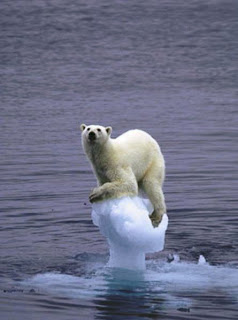
On Sunday, September 16, the sun did not rise above the horizon in the Arctic. Nevertheless enough of the sun’s heat had poured over the North Pole during the summer months to cause the largest loss of Arctic sea ice cover since satellite records began in the 1970s. The record low 3.41 million square kilometers of ice shattered the previous low—4.17 million square kilometers—set in 2007. All told, since 1979, the Arctic sea ice minimum extent has shrunk by more than 50 percent—and even greater amounts of ice have been lost in the corresponding thinning of the ice, according to the U.S. National Snow and Ice Data Center (NSIDC).
“There is much more open ocean than there used to be,” says NSIDC research scientist Walt Meier. “The volume is decreasing even faster than the extent [of surface area] as best as we can tell,” based on new satellite measurements and thickness estimates provided by submarines. Once sea ice becomes thin enough, most or all of it may melt in a single summer.
Some ice scientists have begun to think that the Arctic might be ice-free in summer as soon as the end of this decade—leaving darker, heat-absorbing ocean waters to replace the bright white heat-reflecting sea ice. The question is: Then what happens? Although the nature and extent of these rapid changes are not yet fully understood by researchers, the impacts could range from regional weather-pattern changes to global climate feedbacks that exacerbate overall warming. As Meier says: “We expect there will be some effect…but we can’t say exactly what the impacts have been or will be in future.”
On thin ice
Arctic ice influences atmospheric circulation and, hence, weather and climate. Take away the ice and impacts seem sure to follow. There’s more warming to come, as well, particularly in the Arctic, which is warming faster than the rest of the globe. Given cumulative greenhouse gas emissions, there’s likely at least as much warming to come as has occurred to date—a rise of 0.8 degree Celsius in global average temperatures, most of that in the past 30 years.
The biggest impacts of the loss of Arctic sea ice, of course, will be felt locally: from the potential for more snowfall (which can act like an insulating blanket keeping the ice warm and incapable of growing) to more storms with stronger winds. These will also whip up waves to pound the shore, eroding it, as well as bringing warmer temperatures to thaw the permafrost—leading to “drunken” trees and buildings as well as villages slipping into the sea. A loss of sea ice will also affect the largest animals in the Arctic: seals, walruses and polar bears. “My people rely on that ocean and we’ve seen some dramatic changes,” said Inupiat leader Caroline Cannon at a Greenpeace event on the Arctic in New York City on September 19. “We are the gatekeepers of the ocean. We speak for the animals. They provide for us so it’s our time to speak for them,” by arguing to ameliorate climate change.
Noting the climate change in Cannon’s backyard, the rest of the globe is indeed taking action—just not the type that could reduce greenhouse gas emissions. “The world is looking at the Arctic as a new ocean to be developed and exploited,” notes Arctic system scientist David Barber of the University of Manitoba, most particularly oil as evidenced by Shell’s bid to drill the first offshore well in the Chukchi Sea. The U.S. Geological Survey estimates that the Arctic holds an oil and gas bonanza—and companies from Russia to the U.S. are lining up to start exploiting it.
But the dwindling sea ice may actually interfere with that effort. Shell’s bid to drill this year had to be halted due to the dangers of drifting ice. In fact, the reduction in sea ice actually makes the Arctic Ocean more hazardous for oil exploration, not less, thanks to massive chunks floating free and much more speedily than in the past. “Overall, sea ice is becoming much more mobile,” Barber says. On the other hand, shipping across the Arctic Ocean has become viable for the first time—and weak or rotten ice, as it is called, suggests a path across the topmost part of the planet is already open for at least a short period of time. “We have already reached that point,” Barber argues, based on three decades of field experiments on the ice.
The warmer Arctic waters and land have also begun to release methane, a short-lived but potent greenhouse gas that is also the primary hydrocarbon in natural gas fuel. The Arctic Ocean alone contains more methane than the rest of the world’s oceans combined—though when and even if such a thawing would contribute a massive methane release remains a “known unknown” in the words of former Defense Secretary Donald Rumsfeld and oceanographer Wieslaw Maslowski of the Naval Postgraduate School in Monterey. “If we release that methane, we will amplify global warming by an unknown amount,” Maslowski says. “We have no idea.”
Global impacts
On a larger scale, the biggest impact may be the changes in the Arctic’s ability to function as a cooling system for the global ocean. Both the Pacific and Atlantic now have warmer waters from the top to the bottom, based on measurements from computerized floats. The Arctic has been functioning as a global air conditioner, losing roughly 350 watts of heat per square meter of open ocean to the atmosphere during the fall storm season as well as the early part of the winter. A warmer Arctic may not be able to shed those greater amounts of heat.
That inability, in turn, will affect the temperature differences between the northern polar region and areas further south. In the atmosphere, it is that temperature gradient that creates and sustains the jet stream—a band of high winds at altitude flowing from west to east that typically steers weather systems in the Northern Hemisphere. “The jet stream becomes more kinked,” NSIDC’s Meier notes, which allows cold air to spill further south or warm air to penetrate further north.
The loss of this temperature gradient may also stall weather patterns within the jet stream, allowing particular weather systems to park for a while in one place. That may, in turn, create stronger heat waves and droughts or precipitation. “If it’s a rain pattern that gets stuck in place, you get flooding that becomes a problem,” Meier says.
Understanding these so-called “teleconnections” is an urgent area of scientific rsearch, given the potential impacts on farming and other vital pursuits. “Our society depends on stable agriculture,” Barber notes. It is also likely to be the one that people notice. As climate scientists Jennifer Francis of Rutgers University and Stephen Vavrus of the University of Wisconsin–Madison wrote in a paper laying out how Arctic warming might stall weather patterns via the jet stream: “Gradual warming of the globe may not be noticed by most, but everyone—either directly or indirectly—will be affected to some degree by changes in the frequency and intensity of extreme weather events as greenhouse gases continue to accumulate in the atmosphere.”
Warming oceans globally will also allow for more thermal expansion of the waters themselves—the distance between liquid water molecules rises as the water grows warmer. That will raise sea levels further than the current roughly three millimeters per year.
Those warmer ocean waters are already lapping at the icy shores of Greenland, speeding the melt of outlet glaciers for the massive ice sheet. Combined with weather anomalies, like a heat wave that hit central Greenland this July and temporarily melted nearly the entire ice sheet surface, this could presage a more precipitous meltdown in the North. “Extreme melting from past years is preconditioning this year’s melt,” says ice melt researcher Marco Tedesco of the City College of New York, by melting away any accumulated snowfall from the winter sooner. “It’s like putting money in a bank account. If you start spending more money than you put in, you go negative. That is what is happening on the ice sheet.”
If Greenland were to melt entirely—which is still a distant prospect according to most glaciologists’ estimates—the ice sheet contains enough water to raise sea level by six meters globally. “How many people live within six meter sea level rise of the coast?” Barber asks. “The answer is: too many.”
Not all is lost
The seasonal loss of all “Arctic sea ice is one of those tipping points and unfortunately we’re going to pass that tipping point,” said climate scientist James Hansen, director of the NASA Goddard Institute for Space Studies in New York City, at the same Greenpeace event. “I think we’re going to lose that sea ice. The good news is: this tipping point is reversible.” Should local conditions change, for whatever reason, however, it is possible the ice could regrow.
After all, the ice spreads anew each cold, dark Arctic winter. Some scientists and environmentalists have even suggested it might be time to attempt geoengineering of one form or another to restore the Arctic’s cooler temperatures. “We need to look at the possibility of [solar radiation management], which some people call geoengineering,” which could be an option to control or reverse the Arctic meltdown, argues environmentalist Rafe Pomerance, former Deputy Assistant Secretary of State for Environment and Development. “Effectiveness and downsides and what the risks are, we need to know all that.” Cutting back on emissions of greenhouse gases other than carbon dioxide—such as methane or black carbon—might also have a bigger impact in the Arctic than elsewhere, given the role that soot plays in melting ice.
There are potential positives to the loss of sea ice to consider as well. Open ocean might permit more carbon-absorbing plankton to bloom, much as happens in the Southern Ocean around Antarctica. “At this time, the Arctic Ocean is a biological desert,” notes ecologist Louis Fortier of Laval University in Quebec City. If the plankton blooms, the tiny photosynthesizers pull carbon dioxide out of the air and can serve as the bottom of a food chain that could create new and productive fisheries. Plus, if the plankton die without being eaten or decomposed, they could bury CO2 with them as the tiny corpses fall to the seafloor. In fact, artificially fertilizing such plankton blooms has been tried as a geoengineering technique in the Southern Ocean, with some success.
But that success is unlikely to be repeated in a more watery Arctic Ocean. The northerly sea is “already more productive [in terms of plankton] than the ice-covered ocean of the near-past,” says marine biologist Victor Smetacek of the Alfred Wegener Institute for Polar and Marine Research in Germany, who helped lead those biological sequestration experiments in the Southern Ocean. But local conditions, such as a lack of nutrients and a lack of deep- and shallow-ocean water mixing, suggest that the newly open waters of the Arctic Ocean are unlikely to produce massive blooms, large fisheries or sequester CO2. “The CO2 sequestration potential of the Arctic is very limited,” Smetacek says. The Arctic will not save itself.
Model failure
Regardless of what the Arctic meltdown reveals, what is increasingly clear is that the computer models that scientists rely upon to make predictions have failed to capture the rapid pace of change in the far north. The problem stems from spatial resolutions that are too large—a single grid in a typical computer model encompasses 100 square kilometers—to “see” small but important features such as warm ocean water currents or ice export. And the computing capacity is insufficient to render Arctic cyclones and the role they play in breaking up the ice. “Are the models still too conservative or not?” Maslowski asks of the computer simulations that underpin future predictions. “If this present trend continues, we might be having almost no ice by the end of this decade.”
Such a total summer loss of sea ice remains speculative at this point. “I wouldn’t expect it to keep going straight down,” NSIDC’s Meier says. “The ice that is remaining may continue to stay thick even with more melt and that may be harder to get rid of. The melt could plateau.” At the very least, the sea ice is likely to rebound next year, as has happened after every previous ice melt record. “That wouldn’t surprise me at all,” Meier says.
What may surprise, however, are the global impacts of the already far advanced loss of Arctic sea ice, particularly on the weather. “We need a few more years of empirical evidence to give a confident answer,” Hansen says of the challenge of figuring out how the Arctic meltdown will affect the rest of the globe. Thanks to ever increasing greenhouse gas emissions trapping more and more heat, the world will find out this winter—and for many years to come.
“There’s evidence in the paleo-climate record that the climate system is capable of changing quite rapidly,” Barber notes. “We’re moving into new territory and the impacts of that are unknown scientifically.”
http://www.scientificamerican.com/article.cfm?id=arctic-sea-ice-loss-implications&WT.mc_id=MND_20121022
Tennessee couple discovers that they’ve been using a 4 billion year-old, extremely valuable meteorite as their doorstop

The rock is nothing much to look at: 33 pounds and oval shaped. If you didn’t know its history, you probably wouldn’t be surprised that Donna Lewis’s family used it as a doorstop, later parking it in the front garden.
It was even painted green for a time.
As it turned out, this was no ordinary rock. On Thursday, Donna and her husband George formally announced that the family rock picked out of a cow pasture in the 1930 is in fact a meteorite, Fox News reported.
Researchers from the University of Tennessee believe the ancient and very valuable rock came from a known meteorite strike that first turned up evidence in Tazewell, Tenn. in 1853.
According to Arizona State University’s Center for Meteorite Studies, a meteorite is a solid body from outer space that has fallen to the Earth’s surface. The Lewis meteorite is classified as a “find” by the center, since it was not observed falling to earth but rather was recognized after the fact by its distinct features.
George Lewis first started to suspect his rock might be special after running a metal detector over it in May. To his surprise, the detector’s dial registered “overload,” reports the Lexington Herald-Leader.
After confirming the rock’s other worldly pedigree, Eastern Kentucky University purchased it, for eventual display in the school’s new Science’s building.
EKU’s Department of Physics and Astronomy Chairman, Jerry Cook, says the meteorite will be at the Kentucky Academy of Science annual conference on campus Friday and Saturday, the Associated Press reported.
“We’re extremely lucky to find something like this,” Cook said, according to an EKU press release, ” and to find one locally is a real plus for us.” The rock is estimated to be more than 4 and a half billion years old.
In addition to being extremely rare, meteorites of this size are also valuable. In an October auction, cosmic rocks for sale had price tags ranging from the tens to hundreds of thousands of dollars, according to the Associated Press.
 It's Interesting