Brain stimulation at any age may slow memory decline

reading

It’s never too early to start protecting your brain power, a new study suggests.

Reading, writing and participating in other brain-stimulating activities at any age may protect your memory later in life, according to the research. The study, which tracked 294 individuals, is published online in the July 3 issue of Neurology.

“Our study suggests that exercising your brain by taking part in activities such as these across a person’s lifetime, from childhood through old age, is important for brain health in old age,” said the study’s lead author, Robert Wilson.

After adjusting for signs of brain disease, higher levels of cognitive activity across the life span were associated with slower cognitive decline, the study found. Mental activity explained about 14% of the differences between people in how much their memory and thinking skills declined.

The finding supports the hypothesis of cognitive reserve, which describes the brain’s ability to cope with disease or damage. According to the hypothesis, mental activity helps delay the cognitive consequences of disease.

Neuroimaging research suggests that cognitive activity can lead to changes in brain structure and function that may enhance cognitive reserve.

“An intellectually stimulating lifestyle helps to contribute to cognitive reserve and allows you to tolerate these age-related brain pathologies better than someone who has had a less cognitively active lifestyle,” says Wilson, a neuropsychologist at Rush University Medical Center in Chicago.

He recommends that people have cognitively stimulating hobbies that they enjoy, such as photography and quilting.

Intellectually stimulating activities involve processing and using information. Examples are reading a book and then predicting what will happen next, as well as watching a movie and then comparing it with other films, says Judy Willis, a neurologist based in Santa Barbara, Calif.

Willis says doing a variety of cognitive activities appears to be more protective of the cognitive reserve than focusing on one thing, even something like playing chess. “More research is needed to look at how much time should be devoted to an activity or learning a skill and how often it should be revisited,” she adds.

Willis, who was not involved in the study, agrees that the activities should be motivated by pleasure. “Forcing yourself to do something takes a lot of mental effort,” she adds. “If you try something and don’t like it, try something else.”

http://www.usatoday.com/story/news/nation/2013/07/03/brain-aging-activities/2461655/

Feces sandwich led to cop’s arrest for leaking information to Hell’s Angels

sandwich

A police officer accused of leaking sensitive information to Hells Angels associates first raised suspicions after human feces was found in a colleague’s sandwich.

Alex Therrien, 37, faces eight charges including breach of trust after information from the province’s police database was allegedly given to a group close to the Hells Angels.

The internal probe at the Sherbrooke, Que., police department initially had nothing to do with the alleged leak, a source tells QMI Agency.

The investigation began after two officers refused to ticket a colleague stopped on a speeding motorcycle in July 2012.

Someone reported the preferential treatment to management and the patrollers were forced to issue the ticket, QMI was told.

The identity of the speeding cop isn’t known, but one of the charges against Therrien is for obstruction of justice for allegedly destroying a ticket issued by a colleague.

The two patrollers who pulled over the motorbike were later targeted for harassment, says QMI’s source.

Last October, one of the victims opened the police precinct fridge to get his submarine sandwich, only to find excrement inside the bun.

The stomach-churning discovery prompted investigators to seek and obtain search warrants for the text messages of 10 suspected officers.

Detectives found that Alex Therrien’s cellphone included texts to a steroid dealer linked to the Hells Angels, says a source.

The content of the text messages led to Therrien’s arrest in early April.

He is currently suspended without pay.

http://cnews.canoe.ca/CNEWS/WeirdNews/2013/06/14/20901066.html

Clip-Air reimagines travel with modular mass transit aircraft

Clipair

Unless you happen to live right next to an airport, chances are hopping on an airplane isn’t the first step in your travel day. First there’s getting to the airport, which either means leaving your car in an expensive parking lot or hopping on a train.

And that’s what got the minds at Switzerland’s École Polytechnique Fédérale de Lausanne (EPFL) thinking. They surmised that most mass transit options are really just modules into which people are crammed. Train cars look a lot like the fuselage of an aircraft, for instance.

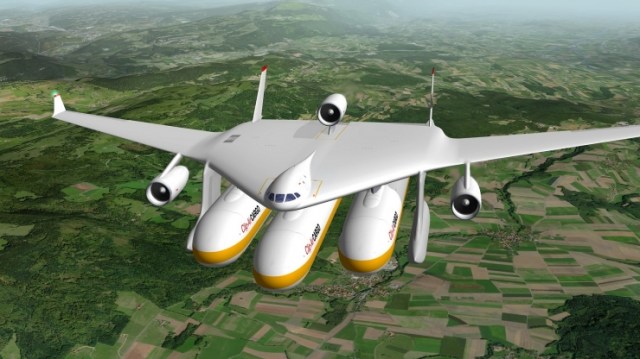
And so the Clip-Air concept was born. In theory, high-capacity Clip-Air train cars, each a self-contained fuselage, can be plucked from the tracks and snapped onto a set of wings. Customers would only have to board and pass through security once — at their local train depot. Once the plane lands, the whole process happens in reverse, dropping off passengers along a train route close to their final destination.

What’s more, Clip-Air is designed to fit up to three standard fuselages under a single set of wings, reducing the number of planes in the air. If only two of the three fuselages are booked by passengers, Clip-Air planes can snap on a cargo plane to keep efficiency up.

Clip-Air has been under development since 2009 and is described by its designers as “quite a long-term project.” However, EPFL has completed some encouraging studies which prove that their designs would indeed fly. And they’ll be showcasing a model of their modular design at the Paris Air Show later this month. So, while there are still plenty of hurdles to clear before we see the ease of travel Clip-Air promises, this mega-project is already inching closer to being part of tomorrow’s reality.

Thanks to Jody Troupe for bringing this to the attention of the It’s Interesting community.

http://www.dvice.com/2013-6-12/clip-air-reimagines-travel-modular-mass-transit-aircraft

Woman Drinks Coke Instead Of Water For 16 Years

coke

A 31-year-old Monaco woman was recently admitted to the hospital after suffering arrhythmia and fainting spells. Her potassium levels were found to be absurdly, dangerously low. These are bad warning signs, but the woman had no family history of heart problems. Further investigation revealed that the patient had not had a sip of water in 16 years; instead she drank only cola.

The doctors told her to stop drinking cola, and then promptly wrote a paper describing the case.

This is one of those instances, like in the movie Super Size Me, that isn’t really indicative of anything besides the specific case it describes. In Super Size Me, filmmaker Morgan Spurlock consumed nothing by McDonald’s for a full month, and found that his health rapidly deteriorated. And, well, yes, of course it did; probably not even McDonald’s executives would suggest that anybody actually do this.

That, though, was a movie about an experiment, not someone’s actual life. And so it’s fascinating to see just what kind of damage such an extreme diet choice can do to a person’s body. The patient apparently drank about two liters of cola every day! Here were the effects:

The patient’s blood-potassium level was 2.4 mmol/L. Norma blood-potassium levels for a woman of her age should have been about twice that.

A QT interval is the time in between the start of the Q wave and the end of the T wave in a patient’s heart. It’s dependent on heart rate but indicative of other things; a lengthened QT interval suggests severe arrhythmia and could indicate death. This patient’s QT interval was 610 ms. A normal QT interval for a woman her age should have been no more than 450 ms.

The patient suffered severe fainting fits.

Amazingly, as soon as the doctors took the patient off of her bonkers cola habit, her potassium levels and QT intervals returned to near-normal. Within one week, her QT interval was 430 ms, and her blood-potassium levels returned to 4.1 mmol/L. Amazing how much torture the human body can bounce back from!

The case was reported at a European health conference this week.

http://www.popsci.com/science/article/2013-06/woman-drinks-coke-instead-water-16-years

World’s Thinnest House is Just Four Feet Wide

Keret-Narrow-House-4

Keret-Narrow-House-3

Keret-Narrow-Hosue-2

Keret-Narrow-House-1

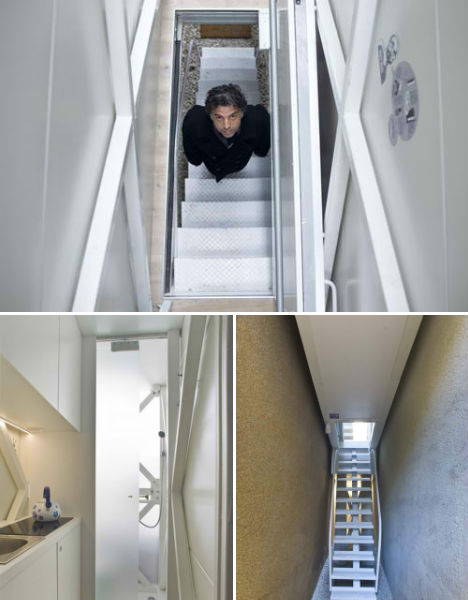
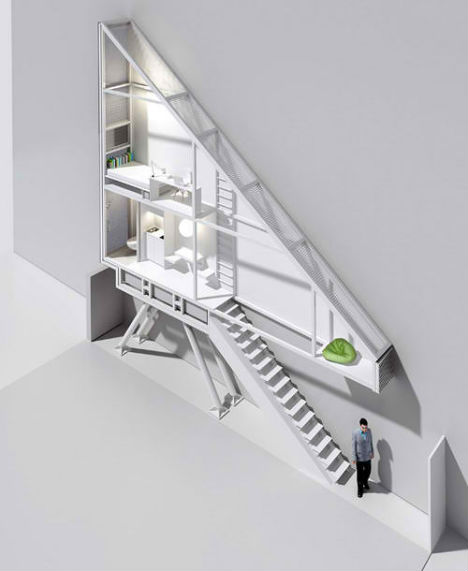
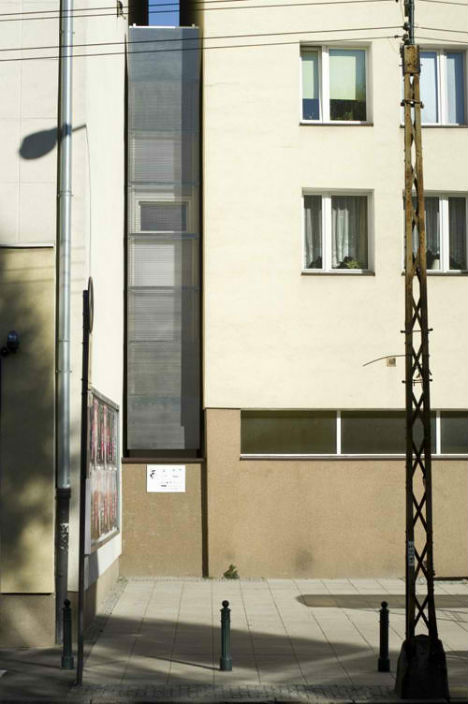
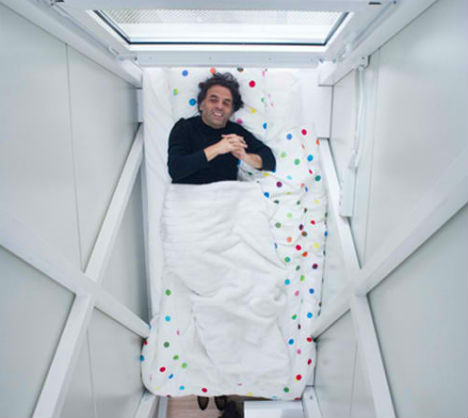
A four-foot-wide space between two buildings in Warsaw, Poland has become the world’s thinnest house. Architect Jakub Szczesny built a series of vertical spaces into the void including a kitchen, bathroom, Keret House will function as a place for artist residencies lasting from five to seven days. Its size prevents it from being considered a full-time residence. Szczesny, who has been working on the narrow home for three years, was inspired by the work of Israeli writer Etgar Keret, who writes extremely short stories.

You might imagine that such a thin house, crammed between two large buildings, would feel dark and claustrophobic inside. But a transparent roof, open stairways and a wall of windows enable lots of sunlight to stream inside. The house is set about ten feet above the ground, is 33 feet in depth and about 30 feet tall.

Slim Living: World’s Thinnest House is Just Four Feet Wide

July 19: A Chance to See Saturn, For the First Time in 7 Years

Saturn

In July, you will have the photo opp of a lifetime.

According to the Cassini Solstice Mission website, the sun will backlight Saturn on July 19, allowing you to clearly see the planet’s rings, photograph them and observe the changes over the past seven years, since Saturn was last photographed.

The positioning of the planets against the sun will also allow for a clear photo of Earth from 898 million miles away. This shot of the Earth will be only the third of its kind in the history of U.S. space travel. The first was taken from the Voyager in 1990, from 4 billion miles away; the second from Cassini in 2006, from 926 million miles away.

NASA posted directions on its website for waving at Saturn on July 19. Since the picture of Earth will be tiny, NASA is encouraging people to capture their own photos of Saturn and send them in, which they will then compile into a collage and post on its website.

NASA is promoting Wave at Saturn with a Flickr group, Facebook event page and a #waveatsaturn Twitter hashtag.

The Cassini portrait session of Earth is expected to last around 15 minutes, beginning at 5:27 p.m. ET on July 19.

Thanks to Kebmodee for bringing this to the attention of the It’s Interesting community.

http://mashable.com/2013/06/25/saturn-photo/

Sleeping banker accidentally transfers millions

dynamic_resize

A German banker fell asleep and accidentally transferred more than $300 million from his employer.

The man fell asleep on his keyboard and turned a small transfer into an enormous one, AFP reports.

He was supposed to transfer 62.40 euros to a retiree’s bank account. Instead, he “fell asleep for an instant, while pushing onto the number two key on the keyboard” and sent 222,222,222.22 euros, or more than $300 million.

The bank quickly noticed the error and fixed it.

But the man’s co-worker was sacked for letting the error slip through when he verified the order.

A German court ruled Monday the man should get his job back.

http://cnews.canoe.ca/CNEWS/WeirdNews/2013/06/11/20891731.html

UK politician Whitby Councillor Simon Parkes claims to have fathered child with space alien

592966-simon-parkes

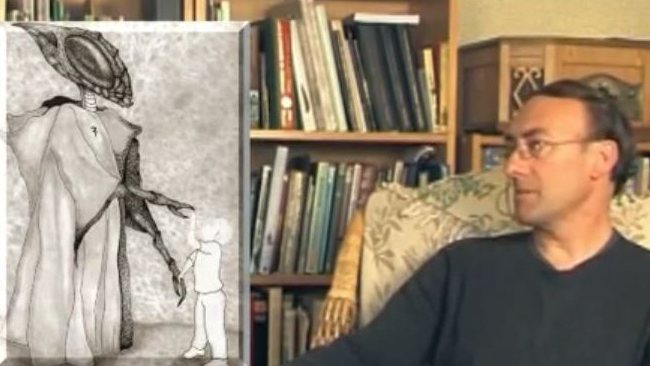
A UK politician claims that he fathered a child with an alien he calls the Cat Queen and that his wife was fuming after finding out about the extraterrestrial affair.

Simon Parkes, a town councillor from Whitby, near North Yorkshire, made the claim in a documentary aired in the UK called Confessions of an Alien Abductee.

The 53-year-old told the Whitby Gazette that he has had sex with the alien about four times a year and the couple had a child named Zarka

“What will happen is that we will hold hands, and I will say ‘I’m ready’ and then the technology I don’t understand will take us up to a craft orbiting the earth,” he said.

Cr Parkes, who has three human children, said his wife was extremely upset when she found out about his affair.

“That caused a few problems,” he said. “But it is not on a human level, so I don’t see it as wrong.”

Cr Parkes said he remembers being visited by aliens as a child. He said his family had been supportive since the documentary aired last week.

“My daughter emailed me doing the breaks and said, you’ve handled it well,” he said. “My family have been around me long enough to know very strange things happen around me. They didn’t want to be part of it because it frightens the life out of them.”

He said he did not believe that his experience should disqualify him from being a local councillor.

“I’m probably one of the most active members of the town council attending meetings and putting across the views of the electorate,” he said. “If people can’t handle the truth, that’s not my problem. Why should I lie.”

http://www.heraldsun.com.au/lifestyle/relationships/uk-politician-whitby-councillor-simon-parkes-i-had-alien-sex-romp/story-fni0dpm6-1226666592103

Former top-secret military plans for Jumping Jeep unveiled

jumping-jeep-660

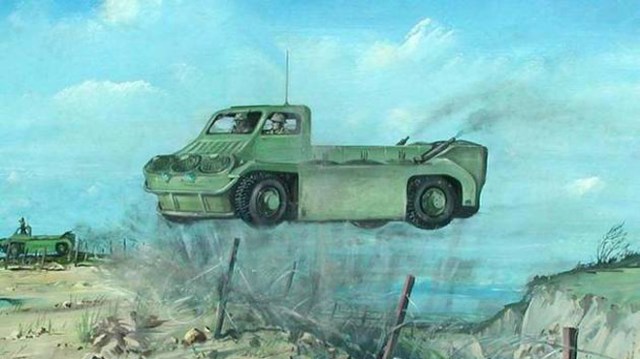
Military contractor BAE Systems has unveiled a once-top secret “Jumping Jeep” that was under development in the 1960’s.

Designed by the British Aerospace Corporation, one of BAE’s predecessors, the off and above-roader was envisioned to be used as a go-anywhere reconnaissance vehicle.

Twelve directional fans fitted around the vehicle were to provide lift, allowing it to fly up and over obstacles.

Unfortunately for flying car fans, the projected cost of the project kept it on the drawing boards next to a number of other futuristic proposals recently unearthed by BAE that included vertical take-off and landing commercial passenger jets and delta winged space planes.

Read more: http://www.foxnews.com/leisure/2013/06/18/top-secret-jumping-jeep-uncovered/?intcmp=obnetwork#ixzz2X40OCwSr

‘Lost’ Medieval City Discovered Beneath Cambodian Jungle

phnom-kulen-lost-city

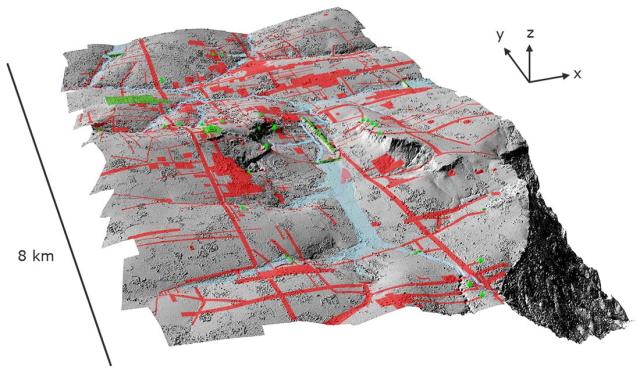
A lost city known only from inscriptions that existed some 1,200 years ago near Angkor in what is now Cambodia has been uncovered using airborne laser scanning.

The previously undocumented cityscape, called Mahendraparvata, is hidden beneath a dense forest on the holy mountain Phnom Kulen, which means “Mountain of the Lychees.”

The cityscape came into clear view, along with a vast expanse of ancient urban spaces that made up Greater Angkor, the large area where one of the largest religious monuments ever constructed — Angkor Wat, meaning “temple city” — was built between A.D. 1113 and 1150.

In a series of archaeological mapping projects, scientists had previously used remote sensing to map subtle traces of Angkor. Even so, dense vegetation now veils much of the complex, impenetrable to conventional remote-sensing techniques, the researchers noted.

In the new study, led by the Archaeology and Development Foundation’s (ADF) Phnom Kulen program, the team relied on airborne laser scanning, or LiDAR (light detection and ranging), to survey about 140 square miles (363 square kilometers) in northwestern Cambodia in 2012.

“LiDAR provides an unparalleled ability to penetrate dense vegetation cover and map archaeological remains on the forest floor,” the researchers wrote in an accepted manuscript submitted to the journal Proceedings of the National Academy of Sciences.

The survey revealed, “with exceptional clarity,” traces of planned urban spaces hidden beneath the dense forest surrounding the major temples of Angkor, they wrote. In addition, the researchers confirmed the existence of “a vast, low-density urban periphery stretching far beyond the major Angkorian temples.”

This low-density urban area suggests that rather than Angkor Thom being the central, walled-in city that some have suggested, it is just part of a more dispersed city with a densely populated area at its center.

“It’s the same sort of configuration as Los Angeles — so, a dense middle, but it consists of huge, sprawling suburbs connected by giant roads and canals in exactly the same way as the freeways link up Los Angeles,” said Roland Fletcher, of the University of Sydney.

Lost medieval city

To the north of central Angkor, the LiDAR data revealed a previously unknown city hidden beneath the forest, its roadways, temples and other urban infrastructure, etched into the surface of the holy Phnom Kulen mountain. The newfound cityscape would have existed between the eighth and ninth centuries (well before Angkor Wat) and seems to correspond to Mahendraparvata, one of the first capitals of the Khmer Empire. Until now, Mahendraparvata was known only from written inscriptions dating to A.D. 802, the researchers said.

When the LiDAR data revealed the elevation beneath Phnom Kulen’s dense vegetation, the researchers knew they had found something big.

“With this instrument — bang — all of a sudden, we saw an immediate picture of an entire city that no one knew existed, which is just remarkable,” Damien Evans, director of the University of Sydney’s archaeological research center in Cambodia, told Australia’s The Age.

Weird landscape

The LiDAR also revealed an entirely new class of Angkorian architecture, Fletcher said.

To the south of the Angkor Wat complex and dating to the 12th century, “there is a set of absolutely unique, very strange features, which we call rectilinear coils,” Fletcher told LiveScience. “They are like enormous embankments of sand with channels between them. They have no counterpart anywhere in Angkor; we’ve never seen the design of this sort before, and they’ve never been seen before in Angkorian architecture.”

Fletcher thinks the embankments represent gardens, but their exact purpose remains unknown. The channels would have carried water to the various plants and trees growing in the gardens, he suggested.

The research also involved French archaeologist and ADF program director Jean-­Baptiste Chevance, Christophe Pottier of the French School of the Far East (EFEO), and other scientists.

http://www.livescience.com/37520-lost-medieval-city-discovered-beneath-cambodian-jungle.html