Florida teenager undergoes world’s first penis reduction operation

17-year-old boy has undergone the world’s first penis reduction surgery, surgeons claim.

The American teen requested the surgery after his penis grew too large, restricting his ability to have sex or play competitive sports.

The boy’s surgeons were shocked when he came to them complaining that his penis was too big.

When flaccid, it measured almost seven inches in length and had a circumference of 10 inches – around the size of a grapefruit.

Surgeons described it as being shaped like an American football.

The surgeon who treated the teenager, Rafael Carrion, a urologist at the University of South Florida, said ‘There comes a time in every urologist’s career that a patient makes a request so rare and impossible to comprehend that all training breaks down and leaves the physician speechless.

‘That question was “can you make my penis smaller”?’

The teenager had suffered from several bouts of priapism – an unwanted erection, due to having a condition in which abnormally-shaped blood cells block vessels in the penis, causing it to swell.

These episodes had left his penis bloated and misshapen.

He said he was unable to have sex or play competitive sport, had difficulty wearing his pants due to his ‘large and heavy phallus’, and was embarrassed by how visible it appeared underneath regular clothing.

Though his penis was so large, it did not grow when he had erections – it merely became firmer.

‘His penis had inflated like a balloon,’ said Dr Carrion.

‘It sounds like a man’s dream – a tremendously inflated phallus – but unfortunately although it was a generous length, it’s girth was just massive, especially around the middle.

‘It looked like an American football.’

Dr Carrion and his team looked at the medical literature but couldn’t find any precedent for what to do.

‘Lord knows there’s a global race on how to make it longer and thicker in plastic surgery circles, but very little on how to make it smaller,’ he said.

In the end, they decided to embark on a surgical technique normally used to treat Peyronie’s disease, a condition where scar tissue develops along the penis, causing it to bend.

The surgeons sliced along an old circumcision scar, unwrapped the skin of the penis, and cut out two segments of tissue from either side.

‘It was a bit like having two side tummy-tucks – that’s how we explained it to him,’ said Dr Carrion.

The doctors were able to bypass the urethra – the tube which carries urine through the penis – and all of the nerves that provide sensation.

The teenager spent just two days in hospital before returning home, apparently ‘ecstatic’ with his new penis.

The doctors did not take final measurements of the penis, although Dr Carrion stated the result was ‘generous’.

It’s slightly longer and slightly thicker than the average male, but now it looks symmetrical, and the patient was very satisfied,’ he said.

The teen now has no problem having normal erections and has full sensation.

‘It looks cosmetically appealing, and he said it was a life-changing event, he’s all smiles,’ said Carrion.

Since the paper describing the surgery was published in The Journal of Sexual Medicine, Dr Carrion has only had one person approach him to request the same surgery.

He said: ‘This [second] man seems to have a naturally large penis, because there’s nothing unusual in his medical history, so it doesn’t seem like there’s any real abnormality in this case’.

Whereas the first teenager had an obvious medical condition that needed treating, performing surgery on someone who is completely healthy but having difficulties with the size of his penis is another matter, said Dr Carrion.

‘These are controversial waters we’re stepping in,’ he added. ‘Who is to judge what is a legitimate complaint and what isn’t?

‘You don’t normally have men complaining about this kind of thing. These are very unique cases.’

Read more: http://www.dailymail.co.uk/health/article-2950409/World-s-penis-REDUCTION-surgery-Teenager-requested-op-genitals-grew-large-stopped-having-sex.html#ixzz3RdedoFoy

Middle school students in Pennsylvania given ‘Fifty Shades of Grey’ puzzles

When James Carter got a look at the word puzzle his son said he received in his eighth-grade class Monday, he was shocked.

Words like “bondage,” ”leather cuffs,” “spanking” and “submissive” jumped out — and those were the tamer ones. Others were so racy they had to be covered over for a newscast.

The word puzzle was based on the erotic novel and upcoming movie “Fifty Shades of Grey.”

Then Carter’s son gave him more disturbing news.

“I asked my son who passed it out, and he said the teacher passed it out,” he told WTAE-TV in Pittsburgh. “I don’t think this is what they should be doing in the eighth-grade level.”

At least five students in the Monessen Middle School classroom reportedly got copies of the word puzzle. It was apparently downloaded from a website, copied and given students. A note at the bottom of the worksheet says it’s “suitable for individuals or educators that want something with a difficulty level of Very Difficult.” After brief instructions, it ends with, “But most of all HAVE FUN!!!”

Carter said he went to the school Tuesday afternoon but was denied information because he insisted on recording the conversation with school officials. Then he went to the school board meeting Tuesday evening.

“I wanted to record the conversation because a lot of parents had questions about it, and I was denied that,” Carter told the board. “So I guess I come here today to find out the timeline and how it happened.”

http://www.theblaze.com/stories/2015/02/11/fifty-shades-of-grey-word-puzzle-passed-out-in-middle-school-classroom-report/

Andy Grant defies odds to become runner after waking up from operation to remove leg below knee and finding key word missing from You’ll Never Walk Alone tattoo

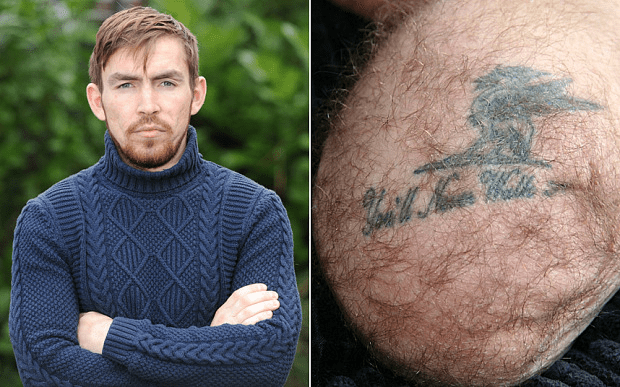
A Royal Marine who had his leg blown off, leaving his Liverpool FC tattoo missing a word and reading You’ll Never Walk, has defied the odds to become a runner and climber.

Andy Grant, 26, had his limb amputated after he stood on an improvised explosive device (IED) while on routine foot patrol in Afghanistan.

He had an operation to remove the leg below the knee and woke up to find the word Alone missing from his You’ll Never Walk Alone tattoo.

However, the father of three used the ironic inking as inspiration and went through vigorous rehabilitation sessions for 18 months.

He has not only learnt to walk, but is now closing in on a running world record.

Mr Grant, who lives in Liverpool and was serving with 45 Commando at the time of the blast, said he has always seen the funny side.

He said: “I am a huge Liverpool fan so had the Liver bird and the words to the song You’ll Never Walk Alone on my leg.

“The tattoo that I have been left with has always been a bit of a joke. I use it in my motivational speeches.

“It is ironic that it says I will never walk as I have gone on to run 10k in 40 mins. At the moment I am just two minutes off a record record for the 10k for a single leg amputee and I have that in my sights.

“It is bizarre and I just laugh about it. But it adds to my story I guess. The fact is that regardless of what the words says, the operation allowed me to walk and run and do so much else. You have got to see the funny side of it.

“I also won a couple of gold medals at the Invictus Games and got to abseil the shard so I don’t think I have done too badly.

“I guess I did use the tattoo I was left with as an extra inspiration. But I was always going to prove it wrong.”

The impact of the IED blast in Sangin six years ago severed Mr Grant’s femoral artery and took out a “big chunk” of his thigh. He broke both the fibula and tibia in his right leg and lost 6cm of bone.

But two years after the blast, the 26-year-old decided to have his right leg amputated after watching comrades with similar injuries enjoying activities with their prosthetic legs.

He can still recall the conversation he had with surgeon Anthony Lambert when he woke up.

Mr Lambert told him: “Well, we had to raise a flap of skin on your leg to cover the bone ends… and it’s meant that your Liverpool Football Club tattoos are a bit messed up. The Liver bird is a bit all over the place, and your tattoo now says ‘you’ll never walk’.”

The date of his blast, February 3, and the date of his amputation, November 25, are both anniversaries that Andy marks.

He said: “The anniversary of the blast is a bitter sweet day, but one that I like to get together with friends and family.

“I am very proud of my achievements and like to turn my story around to try and inspire other people about what they can achieve in the face of adversity.

“I am all about looking forward. I can not undo what happened and I have no regrets. I am all about making the best of a bad situation.”

Such is his positive outlook on life now, he says he feels like the bomb blast was “worthwhile”.

He said: “It’s been a rollercoaster ride of emotions, and it’s been bittersweet for me. On that day in 2009 I basically ended my career in the corps. I lost a bit of myself on that day and, as a 20-year-old I changed.

“It’s been hard when you look at it like that, but on the flip side I’ve had some amazing experiences that almost make it seem like it was worthwhile.

“It is weird to hear myself say that, but it just shows the level of recovery. It’s opened so many doors.

“My job as an inspirational speaker takes me around the world; I’ve started amazing relationships with people; I have three children and an amazing family; I’m looking to row across the Atlantic; and I’m hoping to be picked for the Paralympics next year.

“My life has moved on in an amazing way and it’s all down to what happened. It’s given me more of a life than I probably would have had.”

The Liverpool Football Club fan left the Royal Marines in May, 2012 and now works as a motivational speaker.

http://www.telegraph.co.uk/news/uknews/defence/11394618/Royal-Marines-Liverpool-FC-tattoo-reads-Youll-Never-Walk-after-amputation.html

How Much Sleep Should You Get? New Recommendations Released

There are new recommendations for how much time people should spend snoozing.

The new guidelines, released by the National Sleep Foundation, include small changes to the recommended ranges for the amount of sleep that children and teens should get. Most of the new advice recommends wider sleep ranges than before. Now, there are also specific sleep ranges for young and older adults, as well as for middle-age adults. Previously, the National Sleep Foundation had a single sleep recommendation for all adults.

To come up with the recommendations, a panel of experts reviewed more than 300 scientific studies on sleep — including studies of the health effects of getting too little or too much sleep — that were published between 2004 and 2014. Here are the new recommended sleep duration ranges for each age group:

• Newborns (up to 3 months old): 14 to 17 hours a day. (Previously, the recommendation was 12 to 18 hours daily.)
• Infants (4 to 11 months): 12 to 15 hours. (Previously, the recommendation was 14 to 15 hours.)
• Toddlers (ages 1 to 2): 11 to 14 hours. (Previously, the recommendation was 12 to 14 hours.)
• Preschoolers (ages 3 to 5): 10 to 13 hours. (Previously, the recommendation was 11 to 13 hours.)
• School-age children (ages 6 to 13): 9 to 11 hours. (Previously, the recommendation was 10 to 11 hours.)
• Teenagers (ages 14 to 17): 8 to 10 hours. (Previously, the recommendation was 8.5 to 9.5 hours.)
• Younger adults (ages 18 to 25): 7 to 9 hours (new age category)
• Adults (ages 26 to 64): 7 to 9 hours (same recommendation as before)
• Older adults (ages 65 and older): 7 to 8 hours (new age category)

“The National Sleep Foundation Sleep Duration Recommendations will help individuals make sleep schedules that are within a healthy range. They also serve as a useful starting point for individuals to discuss their sleep with their health care providers,” David Cloud, CEO of the National Sleep Foundation, said in a statement.

The panel also acknowledged that some people may naturally sleep for shorter or longer periods than the recommendations call for, without experiencing adverse health consequences. For this reason, the recommendations also include sleep ranges that “may be appropriate for some individuals.”

The panel also acknowledged that some people may naturally sleep for shorter or longer periods than the recommendations call for, without experiencing adverse health consequences. For this reason, the recommendations also include sleep ranges that “may be appropriate for some individuals.”

For example, although the NSF recommends that adults ages 26 to 64 sleep 7 to 9 hours, it may be appropriate for some people to sleep for as little as 6 hours, or as long as 10 hours, the guidelines say.

However, “individuals with sleep durations far outside the normal range may be engaging in volitional sleep restriction, or have serious health problems,” the recommendations say.

Too little sleep has been linked with health problems, including obesity and high blood pressure, as well as decreased productivity and drowsy driving, the NSF says. Too much sleep has been linked with health conditions as well, including heart disease and premature death.

A full chart of the recommendations is available from the National Sleep Foundation. The guidelines were released yesterday Feb. 2, and were published in Sleep Health: The Official Journal of the National Sleep Foundation.

The National Sleep Foundation is a non-profit organization that advocates for sleep-related research and education. It accepts funding from corporations involved in healthcare and consumer products, but the organization says that it accepts such money only on an unrestricted basis, meaning the corporations giving the money do not influence the ideas and content published or promoted by the research.

http://www.livescience.com/49676-new-sleep-recommendations.html

World’s First Robot-Staffed Hotel to Open in Japan

by Tanya Lewis

What if you could check into a hotel, have your luggage carried to your room and order a coffee — all with help from a team of robots?

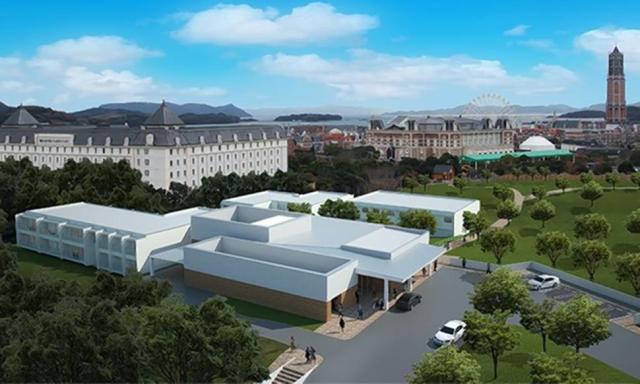
A new hotel at a theme park in Nagasaki, Japan, hopes to make that dream a reality. The Henn-na Hotel (whose name means “strange hotel”) will be partially staffed by androids that work as reception attendants, robot waiters, cleaning staff and a cloakroom attendant.

Developed by Japan’s Osaka University and manufactured by the Japanese robotics company Kokoro, many of the “Actroid” robots resemble a young Japanese woman. The bots will be able to speak Japanese, Chinese, Korean and English, make hand gestures, and pull off the somewhat creepy feat of mimicking eye movements.

The android-staffed hotel will be part of a theme park called Huis Ten Bosch, which is modeled after a typical Dutch town. Hotel guests will be able to access their rooms using facial recognition software instead of keys, if they choose.

“We’d like to draw visitors to this setting surrounded by nature by establishing a smart hotel, which could be something we could spread through Japan and the world, a spokeswoman for Huis Ten Bosch said.

If the robot hotel is a success, another one may be opened in 2016, the spokeswoman added.

Room rates at the Henn-na Hotel will start at about $60 U.S. (7,000 yen), but will likely remain well below the rates for the park’s other hotels, which start at around $170 to $255 (20,000 to 30,000 yen). The use of robots and renewable energy will help the hotel keep its operating costs down.

http://www.livescience.com/49711-japanese-robot-hotel.html

Among New York Subway’s Millions of Riders, a Study Finds Many Mystery Microbes

Have you ever been on the subway and seen something that you did not quite recognize, something mysteriously unidentifiable?

Well, there is a good chance scientists do not know what it is either.

Researchers at Weill Cornell Medical College released a study on Thursday that mapped DNA found in New York’s subway system — a crowded, largely subterranean behemoth that carries 5.5 million riders on an average weekday, and is filled with hundreds of species of bacteria (mostly harmless), the occasional spot of bubonic plague, and a universe of enigmas. Almost half of the DNA found on the system’s surfaces did not match any known organism and just 0.2 percent matched the human genome.

“People don’t look at a subway pole and think, ‘It’s teeming with life,’ ” said Dr. Christopher E. Mason, a geneticist at Weill Cornell Medical College and the lead author of the study. “After this study, they may. But I want them to think of it the same way you’d look at a rain forest, and be almost in awe and wonder, effectively, that there are all these species present — and that you’ve been healthy all along.”

Dr. Mason said the inspiration for the study struck about four years ago when he was dropping off his daughter at day care. He watched her explore her new surroundings by happily popping objects into her mouth. As is the custom among tiny children, friendships were made on the floor, by passing back and forth toys that made their way from one mouth to the next.

“I couldn’t help thinking, ‘How much is being transferred, and on which kinds of things?’ ” Dr. Mason said. So he considered a place where adults can get a little too close to each other, the subway.

Thus was the project, called PathoMap, born. Over the past 17 months, a team mainly composed of medical students, graduate students and volunteers fanned out across the city, using nylon swabs to collect DNA, in triplicate, from surfaces that included wooden benches, stairway handrails, seats, doors, poles and turnstiles.

In addition to the wealth of mystery DNA — which was not unexpected given that only a few thousand of the world’s genomes have been fully mapped — the study’s other findings reflected New York’s famed diversity, both human and microbial.

The Bronx was found to be the most diverse borough in terms of microbial species. Brooklyn claimed second place, followed by Manhattan, Queens and Staten Island, where researchers took samples on the Staten Island Railway.

On the human front, Dr. Mason said that, in some cases, the DNA that was found in some subway stations tended to match the neighborhood’s demographic profile. An area with a high concentration of Hispanic residents near Chinatown in Manhattan, for example, yielded a large amount of Hispanic and Asian genes.

In an area of Brooklyn to the south of Prospect Park that roughly encompassed the Kensington and Windsor Terrace neighborhoods, the DNA gathered frequently read as British, Tuscan, and Finnish, three groups not generally associated with the borough. Dr. Mason had an explanation for the finding: Scientists have not yet compiled a reliable database of Irish genes, so the many people of Irish descent who live in the area could be the source of DNA known to be shared with other European groups. The study produced some less appetizing news. Live, antibiotic-resistant bacteria were discovered in 27 percent of the collected samples, though among all the bacteria, only 12 percent could be associated with disease. Researchers also found three samples associated with bubonic plague and two with DNA fragments of anthrax, though they noted that none of those samples showed evidence of being alive, and that neither disease had been diagnosed in New York for some time. The presence of anthrax, Dr. Mason said, “is consistent with the many documented cases of anthrax in livestock in New York State and the East Coast broadly.”

The purpose of the study was not simply to satisfy scientific curiosity, the authors said. By cataloging species now, researchers can compare them against samples taken in the future to determine whether certain diseases, or even substances used as bioterrorism weapons, had spread.

City and transit officials did not sound grateful for the examination.

“As the study clearly indicates, microbes were found at levels that pose absolutely no danger to human life and health,” Kevin Ortiz, a spokesman for the Metropolitan Transportation Authority, said in an email. And the city’s health department called the study “deeply flawed” and misleading.

Dr. Mason responded by saying he and his team had simply presented their complete results.

“For us to not report the fragments of anthrax and plague in the context of a full analysis would have been irresponsible,” he said. “Our findings indicate a normal, healthy microbiome, and we welcome others to review the publicly available data and run the same analysis.”

Thanks to Kebmodee for bringing this to the attention of the It’s Interesting community.

New research identifies similarity between how pigeons and human children learn equivalent of words

The more scientists study pigeons, the more they learn how their brains—no bigger than the tip of an index finger—operate in ways not so different from our own.

In a new study from the University of Iowa, researchers found that pigeons can categorize and name both natural and manmade objects—and not just a few objects. These birds categorized 128 photographs into 16 categories, and they did so simultaneously.

Ed Wasserman, UI professor of psychology and corresponding author of the study, says the finding suggests a similarity between how pigeons learn the equivalent of words and the way children do.

“Unlike prior attempts to teach words to primates, dogs, and parrots, we used neither elaborate shaping methods nor social cues,” Wasserman says of the study, published online in the journal Cognition. “And our pigeons were trained on all 16 categories simultaneously, a much closer analog of how children learn words and categories.”

For researchers like Wasserman, who has been studying animal intelligence for decades, this latest experiment is further proof that animals—whether primates, birds, or dogs—are smarter than once presumed and have more to teach scientists.

“It is certainly no simple task to investigate animal cognition; But, as our methods have improved, so too have our understanding and appreciation of animal intelligence,” he says. “Differences between humans and animals must indeed exist: many are already known. But, they may be outnumbered by similarities. Our research on categorization in pigeons suggests that those similarities may even extend to how children learn words.”

Wasserman says the pigeon experiment comes from a project published in 1988 and featured in The New York Times in which UI researchers discovered pigeons could distinguish among four categories of objects.

This time, the UI researchers used a computerized version of the “name game” in which three pigeons were shown 128 black-and-white photos of objects from 16 basic categories: baby, bottle, cake, car, cracker, dog, duck, fish, flower, hat, key, pen, phone, plan, shoe, tree. They then had to peck on one of two different symbols: the correct one for that photo and an incorrect one that was randomly chosen from one of the remaining 15 categories. The pigeons not only succeeded in learning the task, but they reliably transferred the learning to four new photos from each of the 16 categories.

Pigeons have long been known to be smarter than your average bird—or many other animals, for that matter. Among their many talents, pigeons have a “homing instinct” that helps them find their way home from hundreds of miles away, even when blindfolded. They have better eyesight than humans and have been trained by the U. S. Coast Guard to spot orange life jackets of people lost at sea. They carried messages for the U.S. Army during World Wars I and II, saving lives and providing vital strategic information.

UI researchers say their expanded experiment represents the first purely associative animal model that captures an essential ingredient of word learning—the many-to-many mapping between stimuli and responses.

“Ours is a computerized task that can be provided to any animal, it doesn’t have to be pigeons,” says UI psychologist Bob McMurray, another author of the study. “These methods can be used with any type of animal that can interact with a computer screen.”

McMurray says the research shows the mechanisms by which children learn words might not be unique to humans.

“Children are confronted with an immense task of learning thousands of words without a lot of background knowledge to go on,” he says. “For a long time, people thought that such learning is special to humans. What this research shows is that the mechanisms by which children solve this huge problem may be mechanisms that are shared with many species.”

Wasserman acknowledges the recent pigeon study is not a direct analogue of word learning in children and more work needs to be done. Nonetheless, the model used in the study could lead to a better understanding of the associative principles involved in children’s word learning.

“That’s the parallel that we’re pursuing,” he says, “but a single project—however innovative it may be—will not suffice to answer such a provocative question.”

http://now.uiowa.edu/2015/02/pigeon-power

Sperm whale poonado

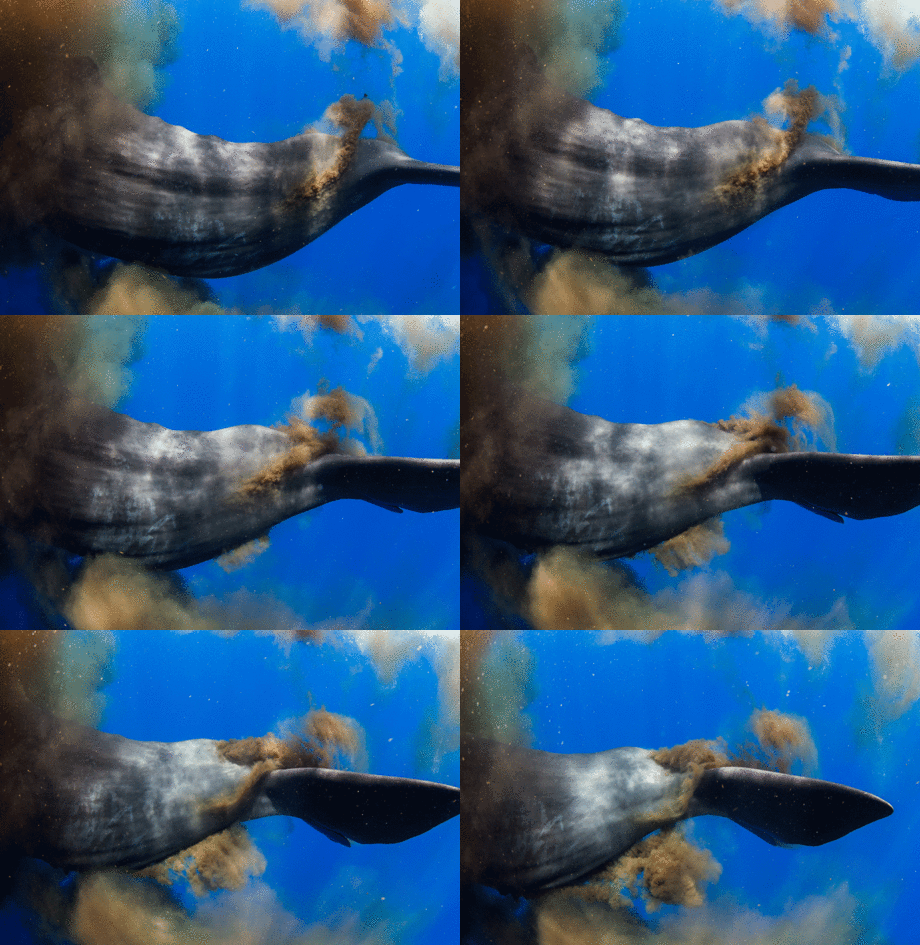
ENCOUNTERING a mighty sperm whale is a magical experience. But in this case, it was tempered somewhat by a rarely seen defence mechanism: emergency defecation.

Sperm whales are the largest toothed predators in the world, so what have they got to be scared of? Here it was pesky divers buzzing around them, taking photos.

Canadian photographer Keri Wilk was sailing off the island of Dominica in the Caribbean, hoping to film these gargantuan creatures, when he spotted one and jumped in for some close-ups. The whale approached Wilk and his three colleagues, pointed downwards, and began to evacuate its bowels. To make matters worse, it then started to churn up the water. “Like a bus-sized blender, it very quickly and effectively dispersed its faecal matter into a cloud,” says Wilk.

Defensive defecation has been recorded in pygmy and dwarf sperm whales, which, as their names suggest, are diminutive compared with their cousins. But this is perhaps less surprising, given that they have natural predators. Wilk is unaware of any other reports of sperm whales’ emergency excretion.

Despite what you might think of being enveloped in what Wilk describes as a “poonado”, he cherishes the moment. “I’ve experienced lots of interesting natural phenomenon underwater, all over the world, but this is near the top of the list,” he says. “As long as you didn’t take your mask off, you couldn’t really smell anything. Taste is another matter…”

http://www.newscientist.com/article/mg22530064.700-sperm-whales-emergency-evacuation-of-its-bowels.html#.VMtpm4dRGng

A more expensive placebo works better than a cheaper one.

Results of a small study suggest that Parkinson’s patients seem to improve if they think they’re taking a costly medication. The findings have been published online Jan. 28 in Neurology.

In the study, 12 patients had their movement symptoms evaluated hourly, for about four hours after receiving each of the placebos. On average, patients had bigger short-term improvements in symptoms like tremor and muscle stiffness when they were told they were getting the costlier of two drugs. In reality, both “drugs” were nothing more than saline, given by injection. But the study patients were told that one drug was a new medication priced at $1,500 a dose, while the other cost just $100 — though, the researchers assured them, the medications were expected to have similar effects.

Yet, the researchers found that when patients’ movement symptoms were evaluated in the hours after receiving the fake drugs, they showed greater improvements with the pricey placebo. What’s more, magnetic resonance imaging scans showed differences in the patients’ brain activity, depending on which placebo they’d received. The patients in the study didn’t get as much relief from the two placebos as they did from their regular medication, levodopa. But the magnitude of the expensive placebo’s benefit was about halfway between that of the cheap placebo and levodopa. What’s more, patients’ brain activity on the pricey placebo was similar to what was seen with levodopa.

And this effect is “not exclusive to Parkinson’s,” according to Peter LeWitt, M.D., a neurologist at the Henry Ford West Bloomfield Hospital in Michigan, who wrote an editorial published with the study. Research has documented the placebo effect in various medical conditions, he told HealthDay. “The main message here is that medication effects can be modulated by factors that consumers are not aware of — including perceptions of price.”

http://www.empr.com/pricey-placebo-works-better-than-cheaper-one-in-parkinsons-study/article/395255/?DCMP=EMC-MPR_DailyDose_rd&CPN=edgemont14,emp_lathcp&hmSubId=&hmEmail=5JIkN8Id_eWz7RlW__D9F5p_RUD7HzdI0&dl=0&spMailingID=10518237&spUserID=MTQ4MTYyNjcyNzk2S0&spJobID=462545599&spReportId=NDYyNTQ1NTk5S0

Ray Kurzweil’s Mind-Boggling Predictions for the Next 25 Years

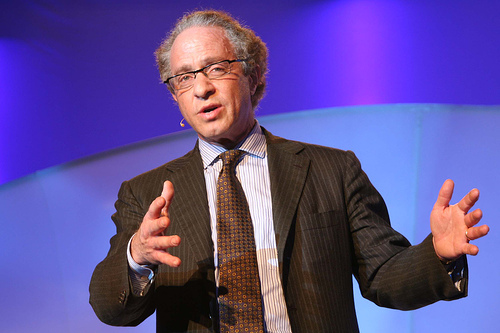
Bill Gates calls Ray, “the best person I know at predicting the future of artificial intelligence.” Ray is also amazing at predicting a lot more beyond just AI.

This post looks at his very incredible predictions for the next 20+ years.

So who is Ray Kurzweil?

He has received 20 honorary doctorates, has been awarded honors from three U.S. presidents, and has authored 7 books (5 of which have been national bestsellers).

He is the principal inventor of many technologies ranging from the first CCD flatbed scanner to the first print-to-speech reading machine for the blind. He is also the chancellor and co-founder of Singularity University, and the guy tagged by Larry Page to direct artificial intelligence development at Google.

In short, Ray’s pretty smart… and his predictions are amazing, mind-boggling, and important reminders that we are living in the most exciting time in human history.

But, first let’s look back at some of the predictions Ray got right.

Predictions Ray has gotten right over the last 25 years

In 1990 (twenty-five years ago), he predicted…

…that a computer would defeat a world chess champion by 1998. Then in 1997, IBM’s Deep Blue defeated Garry Kasparov.

… that PCs would be capable of answering queries by accessing information wirelessly via the Internet by 2010. He was right, to say the least.

… that by the early 2000s, exoskeletal limbs would let the disabled walk. Companies like Ekso Bionics and others now have technology that does just this, and much more.

In 1999, he predicted…

… that people would be able talk to their computer to give commands by 2009. While still in the early days in 2009, natural language interfaces like Apple’s Siri and Google Now have come a long way. I rarely use my keyboard anymore; instead I dictate texts and emails.

… that computer displays would be built into eyeglasses for augmented reality by 2009. Labs and teams were building head mounted displays well before 2009, but Google started experimenting with Google Glass prototypes in 2011. Now, we are seeing an explosion of augmented and virtual reality solutions and HMDs. Microsoft just released the Hololens, and Magic Leap is working on some amazing technology, to name two.

In 2005, he predicted…

… that by the 2010s, virtual solutions would be able to do real-time language translation in which words spoken in a foreign language would be translated into text that would appear as subtitles to a user wearing the glasses. Well, Microsoft (via Skype Translate), Google (Translate), and others have done this and beyond. One app called Word Lens actually uses your camera to find and translate text imagery in real time.

Ray’s predictions for the next 25 years

The above represent only a few of the predictions Ray has made.

While he hasn’t been precisely right, to the exact year, his track record is stunningly good.

Here are some of Ray’s predictions for the next 25+ years.

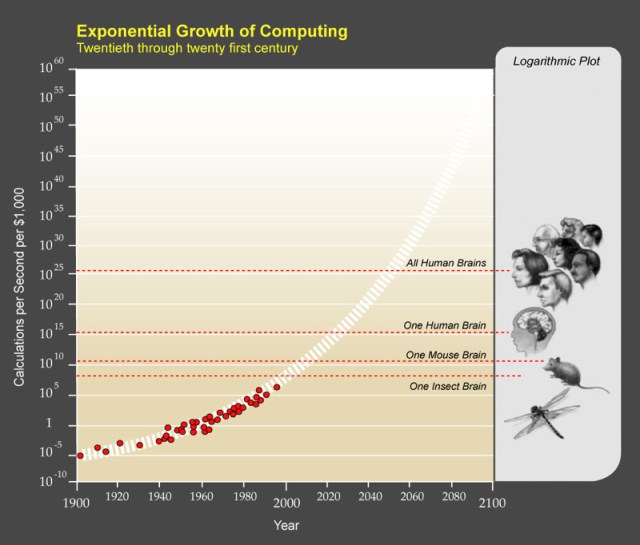
By the late 2010s, glasses will beam images directly onto the retina. Ten terabytes of computing power (roughly the same as the human brain) will cost about $1,000.

By the 2020s, most diseases will go away as nanobots become smarter than current medical technology. Normal human eating can be replaced by nanosystems. The Turing test begins to be passable. Self-driving cars begin to take over the roads, and people won’t be allowed to drive on highways.

By the 2030s, virtual reality will begin to feel 100% real. We will be able to upload our mind/consciousness by the end of the decade.

By the 2040s, non-biological intelligence will be a billion times more capable than biological intelligence (a.k.a. us). Nanotech foglets will be able to make food out of thin air and create any object in physical world at a whim.

By 2045, we will multiply our intelligence a billionfold by linking wirelessly from our neocortex to a synthetic neocortex in the cloud.

Ray’s predictions are a byproduct of his understanding of the power of Moore’s Law, more specifically Ray’s “Law of Accelerating Returns” and of exponential technologies.

These technologies follow an exponential growth curve based on the principle that the computing power that enables them doubles every two years.

Ray Kurzweil’s Mind-Boggling Predictions for the Next 25 Years

Thanks to Kebmodee for bringing this to the attention of the It’s Interesting community.