CNN to produce and broadcast news-like content on behalf of advertisers

By STEVEN PERLBERG

CNN is creating an in-house studio that will produce news-like content on behalf of advertisers, a move that reflects marketers’ growing desire for articles and videos that feel like editorial work.

About a dozen staffers (made up of journalists, filmmakers and designers) will help launch the new unit, called Courageous. The division will fashion and distribute “branded content” across CNN’s fleet of properties, from TV to the Web and newer platforms like Snapchat.

This isn’t the first foray into branded content for CNN, which is owned by Time Warner Inc.’s Turner Broadcasting. CNN’s recent push into more digital video yielded 18 original series last year, 17 of which are sponsored by a company.

But the idea now is to work more closely with companies to highlight things that may have news value, such as the building of a manufacturing plant or a philanthropic effort, according to Otto Bell, the lead of the studio and former creative director at OgilvyEntertainment.

Mr. Bell said that his team would be staffed with “folks who have journalistic instincts” who would go into a company and “find that newsworthy element and extract that.”

CNN’s new endeavor comes as more media companies invest in creating these types of in-house shops to help bolster revenue. Music companies like iHeartMedia and Pandora offer branded content studios, and news companies from the New York Times to BuzzFeed to The Wall Street Journal have units that create advertiser content. Condé Nast recently launched a program where magazine editors work directly with brands.

These undertakings often raise church-and-state questions about the divide between the editorial and business sides of a company.

“This isn’t about confusing editorial with advertising,” said Dan Riess, executive vice president of integrated marketing and branded content at Turner. “This is about telling advertisers’ stories — telling similar stories but clearly labeling that and differentiating that.”

Mr. Riess said CNN’s trustworthiness when it comes to news was part of the reason Courageous would be attractive to advertisers.

“This is CNN. We’re not here to blur the lines,” he said.

The new offering comes weeks after Turner made its “upfront” presentation to advertisers, which the broadcaster used to showcase new programs as well as the company’s data chops.

Mr. Riess added that, thanks to the company’s data-focused approach, CNN has the ability to give a brand’s content wide distribution and then report back on the extent to which it’s driving consumer interest.

http://blogs.wsj.com/cmo/2015/06/08/cnn-courageous-branded-content-studio/

New genetic evidence for the link between creativity and bipolar disorder / schizophrenia


Results imply creative people are 25% more likely to carry genes that raise risk of bipolar disorder and schizophrenia. But others argue the evidence is flimsy.

The ancient Greeks were first to make the point. Shakespeare raised the prospect too. But Lord Byron was, perhaps, the most direct of them all: “We of the craft are all crazy,” he told the Countess of Blessington, casting a wary eye over his fellow poets.

The notion of the tortured artist is a stubborn meme. Creativity, it states, is fuelled by the demons that artists wrestle in their darkest hours. The idea is fanciful to many scientists. But a new study claims the link may be well-founded after all, and written into the twisted molecules of our DNA.

In a large study published on Monday, scientists in Iceland report that genetic factors that raise the risk of bipolar disorder and schizophrenia are found more often in people in creative professions. Painters, musicians, writers and dancers were, on average, 25% more likely to carry the gene variants than professions the scientists judged to be less creative, among which were farmers, manual labourers and salespeople.

Kari Stefansson, founder and CEO of deCODE, a genetics company based in Reykjavik, said the findings, described in the journal Nature Neuroscience, point to a common biology for some mental disorders and creativity. “To be creative, you have to think differently,” he told the Guardian. “And when we are different, we have a tendency to be labelled strange, crazy and even insane.”

The scientists drew on genetic and medical information from 86,000 Icelanders to find genetic variants that doubled the average risk of schizophrenia, and raised the risk of bipolar disorder by more than a third. When they looked at how common these variants were in members of national arts societies, they found a 17% increase compared with non-members.

The researchers went on to check their findings in large medical databases held in the Netherlands and Sweden. Among these 35,000 people, those deemed to be creative (by profession or through answers to a questionnaire) were nearly 25% more likely to carry the mental disorder variants.

Stefansson believes that scores of genes increase the risk of schizophrenia and bipolar disorder. These may alter the ways in which many people think, but in most people do nothing very harmful. But for 1% of the population, genetic factors, life experiences and other influences can culminate in problems, and a diagnosis of mental illness.

“Often, when people are creating something new, they end up straddling between sanity and insanity,” said Stefansson. “I think these results support the old concept of the mad genius. Creativity is a quality that has given us Mozart, Bach, Van Gogh. It’s a quality that is very important for our society. But it comes at a risk to the individual, and 1% of the population pays the price for it.”

Stefansson concedes that his study found only a weak link between the genetic variants for mental illness and creativity. And it is this that other scientists pick up on. The genetic factors that raise the risk of mental problems explained only about 0.25% of the variation in peoples’ artistic ability, the study found. David Cutler, a geneticist at Emory University in Atlanta, puts that number in perspective: “If the distance between me, the least artistic person you are going to meet, and an actual artist is one mile, these variants appear to collectively explain 13 feet of the distance,” he said.

Most of the artist’s creative flair, then, is down to different genetic factors, or to other influences altogether, such as life experiences, that set them on their creative journey.

For Stefansson, even a small overlap between the biology of mental illness and creativity is fascinating. “It means that a lot of the good things we get in life, through creativity, come at a price. It tells me that when it comes to our biology, we have to understand that everything is in some way good and in some way bad,” he said.

But Albert Rothenberg, professor of psychiatry at Harvard University is not convinced. He believes that there is no good evidence for a link between mental illness and creativity. “It’s the romantic notion of the 19th century, that the artist is the struggler, aberrant from society, and wrestling with inner demons,” he said. “But take Van Gogh. He just happened to be mentally ill as well as creative. For me, the reverse is more interesting: creative people are generally not mentally ill, but they use thought processes that are of course creative and different.”

If Van Gogh’s illness was a blessing, the artist certainly failed to see it that way. In one of his last letters, he voiced his dismay at the disorder he fought for so much of his life: “Oh, if I could have worked without this accursed disease – what things I might have done.”

In 2014, Rothernberg published a book, “Flight of Wonder: an investigation of scientific creativity”, in which he interviewed 45 science Nobel laureates about their creative strategies. He found no evidence of mental illness in any of them. He suspects that studies which find links between creativity and mental illness might be picking up on something rather different.

“The problem is that the criteria for being creative is never anything very creative. Belonging to an artistic society, or working in art or literature, does not prove a person is creative. But the fact is that many people who have mental illness do try to work in jobs that have to do with art and literature, not because they are good at it, but because they’re attracted to it. And that can skew the data,” he said. “Nearly all mental hospitals use art therapy, and so when patients come out, many are attracted to artistic positions and artistic pursuits.”

http://www.theguardian.com/science/2015/jun/08/new-study-claims-to-find-genetic-link-between-creativity-and-mental-illness

New research shows that people with ‘O’ blood type have decreased risk of cognitive decline

A pioneering study conducted by leading researchers at the University of Sheffield has revealed blood types play a role in the development of the nervous system and may impact the risk of developing cognitive decline.

The research, carried out in collaboration with the IRCCS San Camillo Hospital Foundation in Venice, shows that people with an ‘O’ blood type have more grey matter in their brain, which helps to protect against diseases such as Alzheimer’s, than those with ‘A’, ‘B’ or ‘AB’ blood types.

Research fellow Matteo De Marco and Professor Annalena Venneri, from the University’s Department of Neuroscience, made the discovery after analysing the results of 189 Magnetic Resonance Imaging (MRI) scans from healthy volunteers.

The researchers calculated the volumes of grey matter within the brain and explored the differences between different blood types.

The results, published in the Brain Research Bulletin, show that individuals with an ‘O’ blood type have more grey matter in the posterior proportion of the cerebellum.

In comparison, those with ‘A’, ‘B’ or ‘AB’ blood types had smaller grey matter volumes in temporal and limbic regions of the brain, including the left hippocampus, which is one of the earliest part of the brain damaged by Alzheimer’s disease.

These findings indicate that smaller volumes of grey matter are associated with non-‘O’ blood types.

As we age a reduction of grey matter volumes is normally seen in the brain, but later in life this grey matter difference between blood types will intensify as a consequence of ageing.

“The findings seem to indicate that people who have an ‘O’ blood type are more protected against the diseases in which volumetric reduction is seen in temporal and mediotemporal regions of the brain like with Alzheimer’s disease for instance,” said Matteo DeMarco.

“However additional tests and further research are required as other biological mechanisms might be involved.”

Professor Annalena Venneri added: “What we know today is that a significant difference in volumes exists, and our findings confirm established clinical observations. In all likelihood the biology of blood types influences the development of the nervous system. We now have to understand how and why this occurs.”

More information: “‘O’ blood type is associated with larger grey-matter volumes in the cerebellum,” Brain Research Bulletin, Volume 116, July 2015, Pages 1-6, ISSN 0361-9230, dx.doi.org/10.1016/j.brainresbull.2015.05.005

Scientists Have Figured Out How to Recover Forgotten Memories Still Lurking in the Brain

memory

All might not be lost. Researchers recently announced a discovery that could have significant implications later down the road for helping people with severe amnesia or Alzheimer’s disease.

The research tackles a highly debated topic of whether memory loss due to damaged brain cells means that memories cannot be stored anymore or if just accessing that memory is inhibited in some way.

Scientists from MIT found in new research that the latter is most likely the case, demonstrating how lost memories could be recovered using technology known as optogenetics, which a news release about the study described as when “proteins are added to neurons to allow them to be activated with light.”

“The majority of researchers have favored the storage theory, but we have shown in this paper that this majority theory is probably wrong,” Susumu Tonegawa, a professor in MIT’s biology department and director of the RIKEN-MIT Center at the Picower Institute for Learning and Memory, said in a statement. “Amnesia is a problem of retrieval impairment.”

First, the scientists demonstrated how “memory engram cells” — brain cells that trigger a memory upon experiencing a related sight or smell, for example — could be strengthened in mice.

The researchers then gave the mice anisomycin, which blocked protein synthesis in neurons, after they had formed a new memory. In doing so, the researchers prevented the engram cells from strengthening.

A day later, the scientists tried to trigger the memory in mice, but couldn’t see any activation that would indicate the mice were remembering it.

“So even though the engram cells are there, without protein synthesis those cell synapses are not strengthened, and the memory is lost,” Tonegawa explained of this part of the research.

The team first developed a clever technique to selectively label the neurons representing what is known as a memory engram – in other words, the brain cells involved in forming a specific memory. They did this by genetically engineering mice so they had extra genes in all their neurons. As a result, when neurons fire as a memory is formed, they produce red proteins visible under a microscope, allowing the researchers to tell which cells were part of the engram. They also inserted a gene that made the neurons fire when illuminated by blue light.

After the researchers induced amnesia, they used optogenetic tools on the mice and witnessed the animals experiencing full recollection.

“If you test memory recall with natural recall triggers in an anisomycin-treated animal, it will be amnesiac, you cannot induce memory recall. But if you go directly to the putative engram-bearing cells and activate them with light, you can restore the memory,” Tonegawa said.

With this discovery, the researchers wrote in the study published this week in the journal Science that they believe a “specific pattern of connectivity of engram cells may be crucial for memory information storage and that strengthened synapses in these cells critically contribute to the memory retrieval process.”

James Bisby, a neuroscientist at University College London, told New Scientist that it’s “not surprising that they could trigger the memories, but it is a cool way to do it.”

http://www.newscientist.com/article/dn27618-lost-memories-recovered-in-mice-with-a-flash-of-light.html

Thanks to Steven Weihing for bringing this to the It’s Interesting community.

​Texas poised to allow open carry of handguns

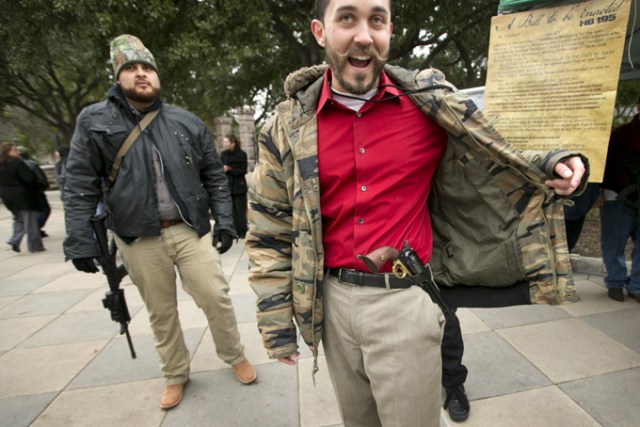
Texas lawmakers on Friday approved carrying handguns openly on the streets of the nation’s second most-populous state, sending the bill to Republican Gov. Greg Abbott, who immediately promised to sign it and reverse a ban dating to the post-Civil War era.

Gun owners would still have to get a license to carry a handgun in a visible holster.

The state, known for its Wild West cowboy history and some the nation’s most relaxed gun laws, has allowed concealed handguns for 20 years. Concealed handgun license holders are even allowed to skip the metal detectors at the state Capitol, as state troopers providing security assume they’re armed.

But Texas was one of only six states with an outright ban on so-called open-carry, and advocates have fought to be allowed to keep their guns in plain sight. Cast as an important expansion of the Second Amendment right to bear arms in the U.S. Constitution, it became a major issue for the state’s strong Republican majority.

“We think of Texas being gun-happy, but we didn’t afford our citizens the same rights most other states do,” said Rep. Larry Phillips, a Republican from Sherman, one of the bill’s authors.

The House gave final approval on a mostly party-line 102-43 vote, drawing gleeful whistles from some lawmakers. A short time later, the Senate passed it 20-11, also along party lines, with all Republicans supporting it and all Democrats opposing.

Within minutes of the bill passing, Abbott sent a Twitter message that he’ll sign it.

The bill passed after lawmakers made concessions to law enforcement groups, who had been upset by an original provision that barred police from questioning people carrying guns if they have no other reason to stop them.

The final bill scrapped that language, meaning police will be able to ask Texans with handguns in plain sight if they have proper licenses.

Before Friday’s vote, police groups had demanded that Abbott veto the bill if it wasn’t taken out.

Gun control advocates have argued that open-carry is less about personal protection than intimidation. Gun rights groups have staged several large public rallies in recent years, sometimes at notable historical landmarks such as the Alamo, where members carried rifles in plain sight, which is legal.

The open-carry debate also stirred drama at the Capitol early in the legislative session, when gun rights advocates confronted one state lawmaker in his office. The lawmaker, Democrat Poncho Nevarez, was assigned a state security detail and House members voted to make it easier to install panic buttons in their offices.

“This session has been an alarming show of politicking that caters to a gun lobby agenda,” Sandy Chasse with the Texas Chapter of Moms Demand Action for Gun Sense in America. “As a gun-owning Texas mom, this is not the Texas I want for my family or community.”

Just like the current concealed handgun law, the bill requires anyone wanting to openly carry a handgun to get a license. Applicants must be 21, pass a background check and receive classroom and shooting range instruction — although lawmakers have weakened those requirements since 2011.

Texas has about 850,000 concealed handgun license holders, a number that has increased sharply in recent years.

It also recognizes the concealed handgun licenses issued in more than 40 states, and license holders from those states will be allowed to openly carry their weapons in Texas once it becomes law.

“I have great faith in our concealed license holders that they will do the right thing and carry their gun appropriately,” said Sen. Craig Estes, the Wichita Falls Republican who sponsored the measure in that chamber.

Democrats such as Sen. Rodney Ellis of Houston said they fear violence on the streets.

“I hope we don’t have a host of Texans running around with a Rambo mentality,” Ellis said.

http://www.cbsnews.com/news/texas-poised-to-allow-open-carry-of-handguns/

Thanks to Pete Cuomo for bringing this to the It’s Interesting community..

Columbia University neuroscientist​ gives new perspective on drug abuse and addiction

“I grew up in the hood in Miami in a poor neighborhood. I came from a community in which drug use was prevalent. I kept a gun in my car. I engaged in petty crime. I used and sold drugs. But I stand before you today also — emphasis on also — a professor at Columbia University who studies drug addiction.”

That’s how Dr. Carl Hart, a neuroscientist and professor of psychology and psychiatry, opened a recent TED talk he gave about his research into addiction. After his difficult youth, Hart said he toed the drug war line for a number of years: “I fully believed that the crime and poverty in my community was a direct result of crack cocaine.” He bought into the notion, pushed by policymakers in the 1980s and 1990s, that you could get hooked on crack and other drugs after just one hit.

But his research has disabused him of these notions. He recruited cocaine and meth users into his lab, and over a period of several days offered them some options: they could either receive hits of their drug of choice, or they could take payments of five dollars instead. Crucially, the payments offered were less than the value of the drugs they could consume.

Contrary to the notion of the craven drug fiend who will do literally anything for one more hit, Hart found that half of cocaine and meth users opted for the money over the drugs. And when he increased the payments to 20 dollars, closer to 80 percent of meth users chose the money. The lesson? “Attractive alternatives dramatically decrease drug use,” he said in his talk.

This speaks to another point Hart made, which is worth quoting at length:

80 to 90 percent of people who use illegal drugs are not addicts. They don’t have a drug problem. Most are responsible members of our society. They are employed. They pay their taxes. They take care of their families. And in some cases they even become president of the United States.

He’s right, of course. Among people who have ever used marijuana, only 9 percent become addicted. That rate is 11 percent for cocaine and 17 percent for stimulants like meth. Even the vast majority of people who use heroin — 77 percent of them — never get addicted to the drug.

When it comes to his own kids, Hart, who is black, is less worried about drugs and more worried about the people who enforce drug laws. He says that the effects of drugs at the individual-level are predictable and easy to understand: you smoke some weed, you will experience X effects after Y amount of time. But interactions with the police are a different story. “I don’t know how to keep my children safe with the police because, particularly when it comes to Black folks, interactions with police are not predictable,” he said in a recent Q&A hosted by the Drug Policy Alliance and reported in Ebony magazine.

Thanks to Kebmodee for bringing this to the It’s Interesting community.

Indiana teen takes his 93 year old great-grandmother to junior prom

An Indiana teenager who took his 93-year-old great-grandmother to his junior prom says he had a great time, even though her early bedtime nearly cut the night short.

Drew Holm says his classmates thought it “was pretty cool” that he asked Kathryn Keith to last Friday’s Crothersville High School junior prom.

Holm picked Keith up in her Cadillac for the dance in Seymour, about 60 miles south of Indianapolis.

Keith, who wore a blue dress, said she’s proud that he asked her.

The pair hit the dance floor for only one song, sharing a slow dance. Their night ended by 9 p.m. because Keith has an early bedtime.

New Jersey judge rules twin girls have different fathers

A New Jersey father has been ordered to pay child support for one girl in a set of twins after DNA tests proved he is not the father of both, according to court documents.

The mother testified in a paternity case that, within a week’s time, she had sexual intercourse with two men — the man genetic tests confirmed as the father and another unidentified man.

The judge acknowledged the unusual circumstances of the case in a ruling this week.

“This is a case of first impression in New Jersey and only a handful of reported cases exist nationwide,” Superior Court Judge Sohail Mohammed said in his ruling.

The mother of 2-year-old twins went to court seeking child support from the father of the child. Neither party is named in court documents.

The Passaic County Board of Social Services filed an application to establish paternity and child support on behalf of the mother. A DNA test established that the man is not the father of one twin, according to the ruling.

Given that the mother provided the name of only one man, a paternity test was performed on that man, the documents said.

The ruling cited a 1997 article published by DNA expert Dr. Karl-Hanz Wurzinger that said one in every 13,000 reported paternity cases involving twins have different fathers.

Twins with different fathers are considered a rare phenomenon by the scientific community, according to the ruling.

Dr. Keith Eddleman, director of obstetrics at Mount Sinai Hospital in New York, said the process in which two ova are fertilized within the same menstrual cycle by two separate sperm is called superfecundation. Twins with different fathers are called bipaternal or heteropaternal twins, Eddleman said.

Since an egg has a life span of 12 to 48 hours and a sperm is viable for seven to 10 days, there is about a week’s time for potential overlap and the fertilization of two eggs by two sperm from two separate acts of intercourse with different men, according to Eddleman.

“It is more common than we think,” Eddleman said. “In many situations, you would never know because there is no reason to do a paternity test on twins.”

He believes the increase in the number of cases of bipaternal twins is a result of technological advances and the ability to detect it more easily.

The medical textbook example of bipaternal twins involves twins of different races, according to Eddleman.

There appears to be no central registry that documents cases of bipaternal twins, but some in the medical community believe it happens more frequently now than 50 years ago as a result of promiscuity, reproductive technologies, ovulation induction, and other factors, Mohammed said in his ruling.

Mohammed ordered the father to pay $28 a week in child support for the child, the ruling said.

http://www.cnn.com/2015/05/08/us/new-jersey-twins-two-fathers/index.html

Ex-prof set up company to re-sell lab equipment to Colorado University at 300% markup


Donald Cooper with scientific colleagues.


Donald Cooper mug shot.

A former University of Colorado professor has been arrested on suspicion of creating a company to sell marked-up lab equipment to the Boulder campus in what prosecutors call a theft “scheme.”

Donald Cooper, 44, was arrested at his home in Boulder on Tuesday afternoon, according to Boulder County District Attorney’s Office officials. It was unclear late Tuesday if Cooper had posted bond, which was set at $5,000.

He is facing a felony charge of theft between $20,000 and $100,000. Prosecutors allege that he created Boulder Science Resource to buy lasers and other lab equipment that he marked up 300 percent and then resold to his university laboratory, according to an arrest affidavit.

The arrangement also benefitted the professor’s father, who received a salary and a car from Boulder Science Resource, according to the arrest affidavit.

In total, CU paid Boulder Science Resource $97,554.03 between Jan. 1, 2009, and April 30, 2013, according to the affidavit.

According to CU’s calculations, Cooper’s markups cost the university $65,036.

Cooper resigned in July 2014 as part of a settlement deal with the university, which had begun the process of firing him on suspicion of fiscal misconduct. He had been director of the molecular neurogenetics and optophysiology laboratory in CU’s Institute for Behavioral Genetics, where he was a tenured associate professor.

After he learned about the university’s internal investigation, Cooper filed a notice of claim in September 2013 seeking $20 million in damages. Any person who wishes to sue a state entity must first file a notice of claim.

Cooper’s attorney Seth Benezra wrote in the notice of claim that Gary Cooper, the professor’s father, was the sole owner of Boulder Science Resource. He also wrote that the company sold CU equipment “at prices that were greatly discounted.”

Donald Cooper also complained that CU investigators had obtained an email about his father’s “alleged mental impairment,” according to the notice of claim.

“(The investigator’s) theory is that Gary Cooper lacks the mental capacity to run (Boulder Science Resource) and so Dr. Cooper must really be in charge,” Benezra wrote. “This assertion was pure speculation based on entirely private information and was rebutted by Dr. Cooper in multiple meetings with investigators.”

Benezra did not return messages from the Daily Camera on Tuesday. It’s unclear who is representing Cooper in the criminal case.

Though Cooper claims that his father was in charge of the company, prosecutors assert that the professor “employed a scheme” to deceive the university for his own gain, according to the affidavit.

“It is alleged that (Boulder Science Resource) was created to defraud the University of Colorado Boulder by acting as a middleman to generate income to employ Gary and to provide personal benefit for Cooper,” wrote Alisha Baurer, an investigator in the District Attorney’s Office.

‘Fake business’

CU was tipped off about Boulder Science Resource by another employee in Cooper’s department, who told investigators that he heard about the arrangement from Cooper’s ex-wife, according to the arrest affidavit.

The ex-wife told the CU employee that Cooper had created a “fake business” using “dirty money” from grants and start-up funds, according to the affidavit.

The financial manager for Cooper’s department told investigators that he never mentioned that his dad owned Boulder Science Resource, and said Cooper only referred to “Gary” by his first name, according to the affidavit.

The DA’s Office determined that Gary Cooper received $23,785.80 from Boulder Science Resource in the form of a salary and a car. They also found that $31,974.89 was paid from the company’s accounts to Donald Cooper’s personal credit card and that $14,733.54 was paid to his personal PayPal account from the business, according to the affidavit.

CU’s internal audit found that Boulder Science Resource had no customers other than the university and Mobile Assay, a company founded by Donald Cooper based on a technology he developed at the university.

Some of the money CU paid to Boulder Science Resource came from federal grants, including $7,220 from the National Institutes of Health and $15,288 from the National Institute on Drug Abuse, according to the internal audit report.

CU’s investigation found that although Cooper claimed his father purchased the lab equipment for Boulder Science Resource, the professor used his university email account to negotiate with the manufacturers.

“It is internal audit’s conclusion that the forgoing acts/failures to act were done with intent to gain an unauthorized benefit,” according to the audit report.

Boulder Science Resource was dissolved in December 2013, according to the Secretary of State’s Office.

Settlement terms

Reached by phone Tuesday afternoon, Patrick O’Rourke, CU’s chief legal officer, said the university was aware of Cooper’s arrest and will cooperate with prosecutors.

CU settled with Cooper last summer after initiating termination proceedings. In exchange for his resignation, the university agreed to provide the professor with a letter of reference “acknowledging his significant achievement in creating a neuroscience undergraduate program,” according to the settlement document.

CU also paid $20,000 to partially reimburse Cooper’s attorney and forgave an $80,000 home loan. CU provides down payment-assistance loans to some faculty members.

Had the university continued the termination process, which is lengthy, Cooper would have continued to receive his full salary of $89,743 and all benefits during the proceedings.

O’Rourke said the university instead opted to accept Cooper’s resignation and saved money with the settlement.

http://www.dailycamera.com/cu-news/ci_28056525/former-cu-boulder-professor-arrested-theft-case

American doctor declared free of Ebola finds the virus in his eye months later

American doctor Ian Crozier was treated for Ebola in Atlanta last year and declared free of the virus in his blood. But he had no way of knowing it still lurked in his eye.

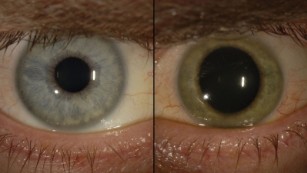
About two months after being released from the hospital, he experienced a piercing pain in his left eye, he told The New York Times. The pressure in his eye elevated while his vision decreased.

After repeated tests, doctors discovered the virus was still living in his eye.

“It felt almost personal that the virus could be in my eye without me knowing it,” he told the paper.

His case has left doctors stunned and highlighted the need for eye checkups for Ebola survivors.

Crozier, 44, was hospitalized at Emory University Hospital for more than a month in September after contracting the disease in Sierra Leone, where he worked at a hospital.

At the time, the hospital said he was the sickest of all the four Ebola patients treated there.

Crozier was discharged in October, and about two months later, he developed eye problems and returned to Emory. Doctors stuck a needle in his eye and removed some fluid, which tested positive for the virus.

“Following recovery from Ebola virus disease, patients should be followed for the development of eye symptoms including pain, redness, light sensitivity and blurred vision, which may be signs of uveitis,” said Steven Yeh, associate professor of ophthalmology at Emory University School of Medicine.

Uveitis is an inflammation of the eye’s middle layer. Ebola is also known to live in semen months after it’s gone from the blood.

No risk of spreading the virus

Despite the presence of the virus in the eye, samples from tears and the outer eye membrane tested negative, which means the patient was not at risk of spreading the disease during casual contact, Emory said in a statement Thursday.

It did not name the patient, but The New York Times did. The New England Journal of Medicine also released a study on the case.

Though the patient was not at risk of spreading the virus, all health care providers treating survivors, including eye doctors, must follow Ebola safety protocols, said Jay Varkey, assistant professor at Emory University School of Medicine.

Ebola patient for a second time

When the virus was found in Crozier’s eye, the eye started losing its original blue hue, he told the paper.

Bewildered, doctors tried different forms of treatment as he relived his Ebola nightmare.

They gave him a steroid shot above his eyeball and had him take an experimental antiviral pill that required special approval from the Food and Drug Administration, the Times reported.

His eye gradually returned to normal, but it’s unclear whether it was as a result of the steroid shot, pill or his body’s immune system.

While Ebola survivors in West Africa have reported eye problems, it’s unclear how prevalent the condition is and how often it happens.

“These findings have implications for the thousands of Ebola virus disease survivors in West Africa and also for health care providers who have been evacuated to their home countries for ongoing care,” Varkey said. “Surveillance for the development of eye disease in the post-Ebola period is needed.”

http://www.cnn.com/2015/05/08/health/ebola-eye-american-doctor/index.html