Sleep or die — growing body of research warns of heart attacks, strokes

We have all experienced the aftermath of a bad night’s sleep: grogginess, irritability, difficulty carrying out even the simplest of tasks. A growing amount of research suggests that not getting enough shut-eye could also have insidious effects on heart disease, obesity and other conditions.

The American Academy of Sleep Medicine, the largest physician-based organization for sleep medicine, recently put out their first recommendations for what is the right amount of sleep. It advises that adults get at least seven hours every night based on research on the link between inadequate sleep and a number of poor health outcomes.

Although most of us already know that we should get at least seven hours of sleep, a study last month suggested that Americans are creeping down to that cutoff. The average amount of sleep that they reported getting a night has dropped from 7.4 hours in 1985 to 7.29 hours in 1990 to 7.18 in 2004 and 2012.

The Centers for Disease Control and Prevention, which requested and helped support the development of the current recommendations, has called not getting enough sleep a public health epidemic.

For many aspects of health, “it was quite clear that seven to nine hours was good,” said Dr. Nathaniel F. Watson, president of the American Academy of Sleep Medicine and a professor of neurology at University of Washington. Watson led the panel of experts that wrote the recommendations. The group looked at more than 300 studies.

Getting only six hours of sleep a night or less was associated with setbacks in performance, including mental alertness and driving ability, and increased risk of heart attack, stroke, diabetes and obesity, Watson said.

There were not enough studies looking at the health of people who got between six and seven hours of sleep or more than nine hours to know how their health fared.

The panel did not put an upper cutoff on the amount of sleep a person should get because, in addition to the lack of evidence, “there are instances where a person might sleep longer if they are recovering from a sleep debt or illness, and we had trouble coming up with a biological way that sleep would be bad for you,” Watson said.

Although there have been reports that sleeping nine hours or more a night is associated with increased risk of death, that link probably has more to do with the fact that the people who slept a lot had underlying illnesses that ultimately did them in, said James Gangwisch, a sleep researcher at Columbia University who helped develop the current recommendations.

In addition, reports of sleeping a lot may actually be an indicator that a person is not exercising or socializing, which can carry health risks.

Sleep and how it relates to body mass and more

The panel looked at studies that reported connections between the amount of sleep that people said they got and their health over long periods. The panel also took into consideration studies that monitored people in sleep labs that controlled how much sleep they got.

For example, Gangwisch and his colleagues have reported a connection between getting less than seven hours of sleep a night and high body mass index. Separate studies in sleep labs suggest how inadequate sleep could lead to obesity: it drives up the levels of appetite-inducing hormones.

The weight gain that might be caused by inadequate shut-eye could, in turn, increase the risk of heart attack and stroke, Gangwisch said. In addition, sleep deficits seem to increase blood pressure as several studies have found, which could be bad for heart health.

One small study found that healthy adults had higher blood pressure after a night when they were only allowed to sleep four hours compared with a night when they were allowed to sleep for eight hours.

It is hard to say, however, if depriving people of sleep for an extended period would have lasting effects on blood pressure and appetite, even though studies linking sleep deprivation with heart disease and weight gain suggest so.

Sleep lab studies usually only investigate the effect of abridged snoozing for several nights, but people might adjust somewhat to sleep deprivation if it became the norm for them, Gangwisch said.

Although the recent recommendations are for the appropriate amount of shut-eye, getting bad sleep could be just as harmful as not getting enough sleep. Among the most common sleep disorders are insomnia and obstructive sleep apnea, which causes people to stop breathing intermittently throughout the night. About 10% of adults have chronic insomnia; obstructive sleep apnea affects an estimated 24% of men and 9% of women.

Obstructive sleep apnea in particular can take a toll in many ways beyond just shortening the amount of sleep you get, Watson said. The condition can increase blood pressure (separately from the effect of not getting enough sleep), deprive the body of oxygen, cause irregular heartbeat and make the blood more sticky, all of which can increase the risk of heart disease and stroke, he said.

A study that was presented this week at the European Society of Cardiology meeting found that men who had a sleep disorder were between 2 and 2.6 times more likely to have a heart attack and 1.5 to 4 times more likely to have a stroke over the 14-year period of the study.

Not sleeping well? Talk to the doc

“This study underscores to me the importance that if a person doesn’t think they are sleeping well, they should talk to their doctor,” said Kristen Knutson, an assistant professor of medicine at the University of Chicago who was not involved in the study.

Signs that you are not sleeping well or enough include needing a lot of caffeine to get through the day and falling asleep during a meeting or movie, which Knutson said does not usually happen in well-rested people no matter how bored they are.

ome people might need more or less than seven hours of shut-eye. To know what is right for you, see how long you sleep when you are a couple of days into a vacation and the alarm does not go off, Knutson suggested. (The first couple of days you might sleep longer because you are catching up.)

Knutson agrees with the advice that there does not seem to be a danger in sleeping too much. “People generally don’t sleep more than they should, and if you are laying in bed and can’t sleep, the general recommendation is to get up,” she said.

There are a number of strategies for making the most of your slumber. These include going to sleep and waking up about the same time every day, making your bedroom dark and cool and avoiding caffeine too close to bedtime.

“Some people view sleep as an obstruction to success, and we would rather have people view it as a tool for success,” Watson said. “We really want people to prioritize their sleep and understand that it is as important to their overall well being as diet and exercise,” he added.

http://www.cnn.com/2015/06/19/health/sleep-or-die/index.html

Peanut Allergy Drug Designated Breakthrough Therapy

Aimmune Therapeutics announced that the Food and Drug Administration (FDA) has granted Breakthrough Therapy designation to AR101, an oral immunotherapy for children and adolescents 4–17 years of age who are allergic to peanuts.

Aimmune Therapeutics recently announced positive results of ARC001, its randomized, double-blind, placebo-controlled Phase 2 study of AR101 for desensitization treatment of peanut allergy. Results demonstrated that 100% of patients who completed the active treatment regimen (n=23) tolerated exposure to a cumulative amount of at least 443mg of peanut protein, and 78% of those patients tolerated exposure to a cumulative amount of 1,043mg of peanut protein.

AR101 is a complex mixture of naturally occurring proteins and pharmaceutical-grade inactive ingredients designed to enable the dosing of consistent amounts of peanut protein with well-defined concentrations of peanut allergens. Patients ingest AR101 mixed with a common, age-appropriate food.

The company plans to initiate a Phase 3 confirmatory registration trial of AR101 for the desensitization treatment of peanut allergy in children and adults.

For more information visit Aimmune.com.

“Beautiful Mind” John Nash’s Schizophrenia “Disappeared” as he aged


The Princeton mathematician, who along with his wife died in a car crash last month, claimed that aging as opposed to medicine helped improve his condition

Mathematician John Nash, who died May 23 in a car accident, was known for his decades-long battle with schizophrenia—a struggle famously depicted in the 2001 Oscar-winning film “A Beautiful Mind.” Nash had apparently recovered from the disease later in life, which he said was done without medication.

But how often do people recover from schizophrenia, and how does such a destructive disease disappear?

Nash developed symptoms of schizophrenia in the late 1950s, when he was around age 30, after he made groundbreaking contributions to the field of mathematics, including the extension of game theory, or the math of decision making. He began to exhibit bizarre behavior and experience paranoia and delusions. Over the next several decades, he was hospitalized several times, and was on and off anti-psychotic medications.

But in the 1980s, when Nash was in his 50s, his condition began to improve. In an email to a colleague in the mid-1990s, Nash said, “I emerged from irrational thinking, ultimately, without medicine other than the natural hormonal changes of aging,” according to The New York Times. Nash and his wife Alicia died, at ages 86 and 82, respectively, in a crash on the New Jersey Turnpike while en route home from a trip on which Nash had received a prestigious award for his work.

Studies done in the 1930s, before medications for schizophrenia were available, found that about 20 percent of patients recovered on their own, while 80 percent did not, said Dr. Gilda Moreno, a clinical psychologist at Nicklaus Children’s Hospital in Miami. More recent studies have found that, with treatment, up to 60 percent of schizophrenia patients can achieve remission, which researchers define as having minimal symptoms for at least six months, according to a 2010 review study in the journal Advances in Psychiatric Treatment.

It’s not clear why only some schizophrenia patients get better, but researchers do know that a number of factors are linked with better outcomes. Nash appeared to have had many of these factors in his favor, Moreno said.

People who have a later onset of the disease tend to do better than those who experience their first episode of psychosis in their teens, Moreno said. (“Psychosis” refers to losing touch with reality, exhibited by symptoms like delusions.) Nash was 30 years old when he started to experience symptoms of schizophrenia, which include hallucinations and delusions.

In addition, social factors—such as having a job, a supportive community and a family that is able to help with everyday tasks—are also linked with better outcomes for schizophrenia patients, Moreno said.

Nash had supportive colleagues who helped him find jobs where people were protective of him, and a wife who cared for him and took him into her house even after the couple divorced, which may have prevented him from becoming homeless, according to an episode of the PBS show “American Experience” that focused on Nash. “He had all those protective factors,” Moreno said.

Some researchers have noted that patients with schizophrenia tend to get better as they age.

“We know, as a general rule, with exceptions, that as people with schizophrenia age, they have fewer symptoms, such as delusions and hallucinations,” Dr. E. Fuller Torrey, a psychiatrist who specializes in schizophrenia, said in an interview with “American Experience.”

However, Moreno said that many patients will get worse over time if they don’t have access to proper medical care and are not in a supportive environment.

“When you have a schizophrenic who has had the multiple psychotic breaks, there is a downward path,” Moreno said. Patients suffer financially because they can’t work, physically because they can’t take care of themselves, and socially because their bizarre behaviors distance them from others, Moreno said.

It may be that the people who have supportive environments are the ones who are able to live to an older age, and have a better outcome, Moreno said.

Still, there is no guarantee that someone will recover from schizophrenia—a patient may have all the protective factors but not recover, Moreno said. Most patients cope with their symptoms for their entire lives, but many are also able to live rewarding lives, according to the National Institute of Mental Health.

http://www.scientificamerican.com/article/beautiful-mind-john-nash-s-schizophrenia-disappeared-as-he-aged/

Netherlands close 8 prisons for lack of criminals

Netherlands is closing eight prisons because of a lack of criminals, the Dutch justice ministry has announced, reports Huffington Post.

Declining crime rates in the Netherlands mean that although the country has the capacity for 14,000 prisoners, there are only 12,000 detainees.

The decrease is expected to continue, the ministry said, with Deputy Justice Minister Nebahat Albayrak saying that natural redundancy and other measures should counter any forced lay-offs.

A report last year on prison overcrowding said that surging populations undermined the rehabilitation of prisoners and risked increasing reoffending in the future.

The Criminal Justice Alliance (CJA), which represents more than 60 organisations, called for the government to urgently limit “the unnecessary use of prison, ensuring it is reserved for serious, persistent and violent offenders for whom no alternative sanction is appropriate”.

It came after Chief Inspector of Prisons Nick Hardwick said the rising pressure on prisons from budget cuts and increasing numbers cannot go on indefinitely.

http://www.thedailystar.net/world/netherlands-close-8-prisons-lack-criminals-97480

Angry Arizona Coyotes hockey fan donates $10,000 for opportunity to shoot mayor with taser

An Arizona Coyotes fan got to take out her frustration on the mayor behind the decision to send the hockey team packing.

Disgruntled fan Ronda Pearson used a stun gun on Glendale Mayor Jerry Weiers on Saturday as part of a charity pledge.

Weiers volunteered to be stunned with a Taser at the mall event if a $10,000 donation was made to an Arizona charity that supports first-responders.

Firefighters determined Weiers was not injured.

Organizers say Pearson and another Coyotes fan showed up with a $10,000 money order.

Weiers and the Glendale City Council voted Wednesday to end an arena lease agreement with the Coyotes. A judge on Friday temporarily halted its termination.

Pearson gained attention on social media for a public rant directed at Weiers.

Zoo animals roam free in Georgia’s capital after flooding

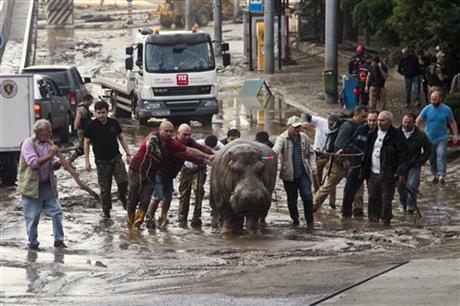
Tigers, lions, a hippopotamus and other animals escaped from the zoo in Georgia’s capital after heavy flooding destroyed their enclosures, prompting authorities to warn residents in Tbilisi to stay inside Sunday. At least 12 people have been killed in the disaster, including three zoo workers.

An escaped hippo was cornered in one of the city’s main squares and subdued with a tranquilizer gun, the zoo said. Some other animals also have been seized, but it remained unclear how many are on the loose. Bears and wolves are also among the animals that fled from their enclosures amid the flooding from heavy rains and high winds.

There were no immediate reports that any of the fatalities were due to animal attacks. The zoo said one of the dead was Guliko Chitadze, a zookeeper who lost an arm in an attack by a tiger last month; the Interfax news agency said her husband also died in the flooding.

As of mid-afternoon Sunday, it was unclear how many animals remained on the loose or what species they are.

“Not all the animals who ran away from the zoo have been captured. Therefore, I want to ask the populace to refrain from moving about the city without” an urgent need to, mayor David Narmania said.

A full accounting of what animals were missing wasn’t immediately possible because a large part of the zoo remained underwater, zoo spokeswoman Khaati Batsilaishvili told The Associated Press.

Heavy rains and wind hit Tbilisi during the night, turning a normally small stream that runs through the hilly city into a surging river. The flooding also damaged dozens of houses.

Narmania told journalists that 12 people were known to have died.

Helicopters circled the city and volunteers and rescue workers labored to help those whose residences were damaged or destroyed, despite the potential danger from the escaped animals. About 1.1 million people live in the former Soviet republic’s capital.

The head of the Georgian Orthodox Church, Patriarch Ilia II, was quoted by the Interfax news agency as telling a Sunday Mass that Georgia’s former Communist rulers could be seen as involved in the disaster.

“When Communists came to us in this country, they ordered that all crosses and bells of the churches be melted down and the money used to build the zoo,” he said. “The sin will not go without punishment. I am very sorry that Georgians fell so that a zoo was built at the expense of destroyed churches.”

http://bigstory.ap.org/urn:publicid:ap.org:ee2ba68a486d45558fccd24a653ac6b6

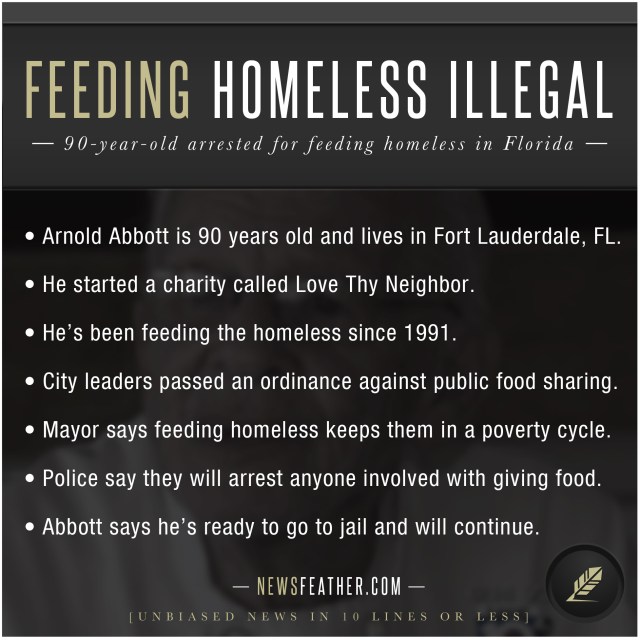
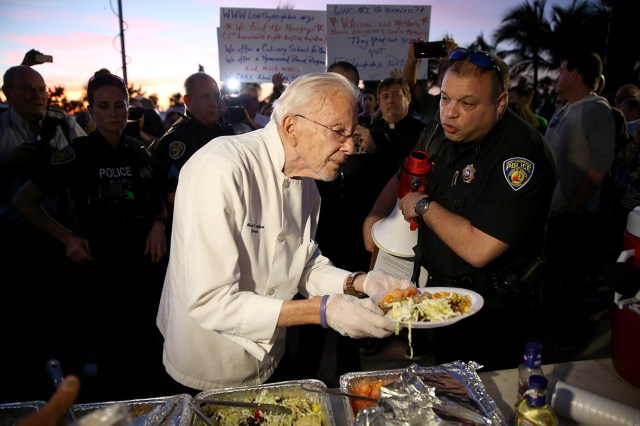
Many cities in the U.S. are making it illegal for people to give food to people who are homeless

Every Tuesday night, Joan Cheever hits the streets of San Antonio to feed the homeless. In a decade, she’s rarely missed a night. But on a recent, windy Tuesday, something new happens.

The police show up.

“He says we have to have a permit,” Cheever says. “We have a permit. We are a licensed nonprofit food truck.”

Cheever runs a nonprofit called the Chow Train. Her food truck is licensed by the city. On this night, she has loaded the back of a pickup with catering equipment and hot meals and driven to San Antonio’s Maverick Park, near a noisy downtown highway.

Officer Mike Marrota asks to see her permit.

Documents are produced, but there’s a problem: The permit is for the food truck, not her pickup. Cheever argues that the food truck, where she cooks the meals, is too big to drive down the alleyways she often navigates in search of the homeless.

“I tell you guys and the mayor, that we have a legal right to do this,” Cheever says to Marrota.

Marrota asks, “Legal right based on what?”

The Freedom of Religion Restoration Act, Cheever tells him, or RFRA, a federal law which protects free exercise of religion.

The officer isn’t buying it. He writes her a ticket, with a fine of up to $2,000, making clear that San Antonio tickets even good Samaritans if they don’t comply with the letter of the law.

The National Coalition for the Homeless says upwards of 30 cities have some kind of ban on distributing free food for the homeless. Many, including San Antonio, want to consolidate services for the homeless in one location — often, away from tourists.

Does invoking RFRA give Cheever and other good Samaritans license to ignore the law?

“That is not, actually, an easy question to answer,” says Michael Ariens, law professor at St. Mary’s University in San Antonio. “RFRA applies when the government of any type substantially burdens an individual’s free exercise of religion.”

The key phrase is “substantially burdens,” Ariens says.

“RFRA doesn’t allow any do-gooder to simply to do whatever they wish — to make a law onto themselves without interference from local or state government,” he says.

Cheever complains that San Antonio has joined other cities in turning feeding the homeless into a crime.

On the next Tuesday night, Cheever is back in Maverick Park, risking another ticket. She could even be arrested.

But this time there are no police. Cheever and her Chow Train volunteers are greeted by dozens of supporters and homeless people.

“It warms my heart, but it doesn’t surprise me, because the community is behind me and they are behind every other nonprofit that does what I do,” she says.

In late June, Cheever says, she will challenge the ticket in court.

http://www.npr.org/2015/06/13/413988634/when-feeding-the-homeless-runs-afoul-of-the-law

Montana considers releasing wild bison outside Yellowstone

By Laura Zuckerman

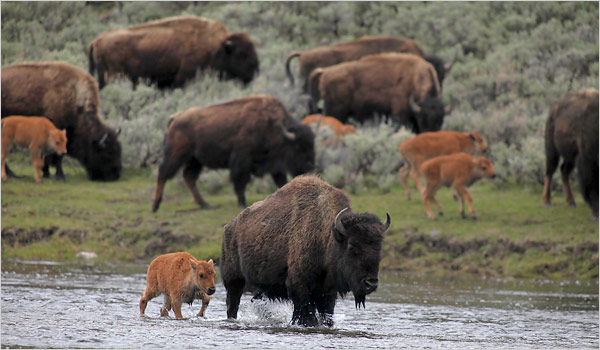
Montana wildlife managers are asking the public to weigh in on a plan that could see the state establish a herd of wild bison that originated at Yellowstone National Park.

The state for three years has crafted measures that would need to be in place for the return of a publicly managed wild bison herd to Montana after a decades-long absence, state Fish, Wildlife and Parks spokesman Tom Palmer said on Friday.

The agency has opened a 90-day comment period for proposals that range from taking no steps to restore bison to the landscape to reintroducing them on private or public acreage where there would be less competition with livestock for grass and a lower threat of disease transmission.

The state is not pinpointing where bison might be restored, Palmer said.

The options floated by the state come less than a year after it gave 145 bison that originated at Yellowstone National Park – which spans parts of Wyoming, Montana and Idaho – to a Native American tribe in Montana to further the conservation of the country’s last herd of wild, purebred bison.

Those animals had been quarantined to create a herd free of a disease, brucellosis, that could be transmitted to cows and cause them to miscarry.

The brucellosis-free band was later confined to a Montana ranch owned by media mogul Ted Turner before the state Fish and Wildlife Commission approved giving the animals to the Assiniboine and Sioux tribes of the Fort Peck Indian Reservation.

Bison that wander out of Yellowstone into neighboring Montana in winter in a search for food have been targeted for capture or death by government officials because roughly half the herd has been exposed to brucellosis.

Montana wildlife managers will make no firm plans before assessing the public response. Systematic hunting reduced the nation’s vast wild herds to the fewer than 50 of the animals that found sanctuary at Yellowstone in the early 20th century.

Jay Bodner, natural resource director for Montana Stockgrowers Association, said the industry would seek to ensure that any projects eyed by the state spelled out how the massive creatures would be contained or fenced to prevent them from damaging private property and mingling with livestock.

http://www.csmonitor.com/Environment/2015/0613/Montana-considers-releasing-wild-bison-outside-Yellowstone

Cat ownership in childhood linked to greater risk of later-life mental illness

Two studies published in the journals Schizophrenia Research and Acta Psychiatrica Scandinavica attribute this association to Toxoplasma gondii – a parasite found in the intestines of cats. Humans can become infected with the parasite by accidentally swallowing it after coming into contact with the animal’s feces.

T. gondii is the cause of a disease known as toxoplasmosis. According to the Centers for Disease Control and Prevention (CDC), more than 60 million people in the US are infected with the parasite, though the majority of people are not aware of it.

People with a healthy immune system often stave off T. gondii infection, so it does not present any symptoms. However, pregnant women and people with weakened immune systems are more susceptible to infection and may experience flu-like symptoms – such as muscle aches and pains and swollen lymph nodes – as a result, while more severe infection may cause blindness and even death.

Previous studies have also linked T. gondii infection to greater risk of mental disorders. In November 2014, for example, Medical News Today reported on a study claiming the parasite is responsible for around a fifth of schizophrenia cases. Now, new research provides further evidence of this association.

T. gondii infection ‘may double schizophrenia risk’

For one study, Dr. Robert H. Yolken, of the Stanley Laboratory of Developmental Neurovirology at Johns Hopkins University School of Medicine in Baltimore, MD, and colleagues assessed the results of two previous studies.

These studies had identified a link between cat ownership in childhood and development of later-life schizophrenia and other mental disorders, comparing them with the results of a 1982 National Alliance for the Mentally Ill (NAMI) questionnaire.

The NAMI questionnaire – conducted around a decade before any data was published on cat ownership and mental illness – revealed that around 50% of individuals who had a cat as a family pet during childhood were diagnosed with schizophrenia or other mental illnesses later in life, compared with 42% who did not have a cat during childhood.

The questionnaire, the researchers say, produced similar results to those of the two previous studies, suggesting that “cat ownership in childhood is significantly more common in families in which the child later becomes seriously mentally ill.”

“If true,” the authors add, “an explanatory mechanism may be T. gondii. We urge our colleagues to try and replicate these findings to clarify whether childhood cat ownership is truly a risk factor for later schizophrenia.”

In another study, A. L. Sutterland, of the Academic Medical Centre in Amsterdam, the Netherlands, and colleagues conducted a meta-analysis of more than 50 studies that established a link between T. gondii and increased risk of schizophrenia.

They found that people infected with T. gondii are at more than double the risk of developing schizophrenia than those not infected with the parasite.

The team also identified a link between T. gondii infection and greater risk of bipolar disorder, obsessive-compulsive disorder (OCD) and addiction.

“These findings suggest that T. gondii infection is associated with several psychiatric disorders and that in schizophrenia, reactivation of latent T. gondii infection may occur,” note the authors.

The CDC recommend changing a cat’s litter box every day to reduce the risk of T. gondii infection, noting that the parasite does not become infectious until 1-5 days after it has been shed in the animal’s feces.

They also recommend feeding cats only canned or dried commercial foods or well-cooked meats; feeding them raw or undercooked meats can increase the presence of T. gondii in a cat’s feces.

It is important to note that cat feces are not the only source of T. gondii infection. Humans can contract the parasite through consuming undercooked or contaminated meats and by drinking contaminated water.

http://www.medicalnewstoday.com/articles/295012.php

New research shows that high salt diet suppresses weight gain in mice on a high fat diet


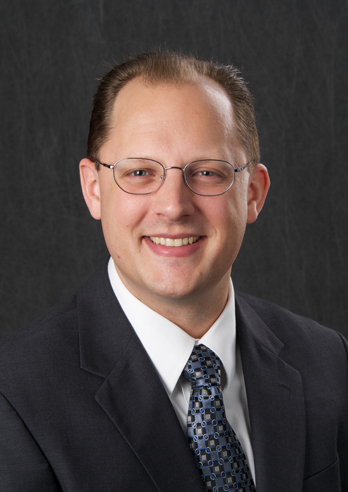
Dr. Justin Grobe, PhD


Dr. Michael Lutter, MD PhD

In a study that seems to defy conventional dietary wisdom, University of Iowa scientists have found that adding high salt to a high-fat diet actually prevents weight gain in mice.

As exciting as this may sound to fast food lovers, the researchers caution that very high levels of dietary salt are associated with increased risk for cardiovascular disease in humans. Rather than suggest that a high salt diet is suddenly a good thing, the researchers say these findings really point to the profound effect non-caloric dietary nutrients can have on energy balance and weight gain.

“People focus on how much fat or sugar is in the food they eat, but [in our experiments] something that has nothing to do with caloric content – sodium – has an even bigger effect on weight gain,” say Justin Grobe, PhD, assistant professor of pharmacology at the UI Carver College of Medicine and co-senior author of the study, which was published in the journal Scientific Reports on June 11.

The UI team started the study with the hypothesis that fat and salt, both being tasty to humans, would act together to increase food consumption and promote weight gain. They tested the idea by feeding groups of mice different diets: normal chow or high-fat chow with varying levels of salt (0.25 to 4 percent). To their surprise, the mice on the high-fat diet with the lowest salt gained the most weight, about 15 grams over 16 weeks, while animals on the high-fat, highest salt diet had low weight gain that was similar to the chow-fed mice, about 5 grams.

“We found out that our ‘french fry’ hypothesis was perfectly wrong,” says Grobe, who also is a member of the Fraternal Order of Eagles Diabetes Research Center at the UI and a Fellow of the American Heart Association. “The findings also suggest that public health efforts to continue lowering sodium intake may have unexpected and unintended consequences.”

To investigate why the high salt prevented weight gain, the researchers examined four key factors that influence energy balance in animals. On the energy input side, they ruled out changes in feeding behavior – all the mice ate the same amount of calories regardless of the salt content in their diet. On the energy output side, there was no difference in resting metabolism or physical activity between the mice on different diets. In contrast, varying levels of salt had a significant effect on digestive efficiency – the amount of fat from the diet that is absorbed by the body.

“Our study shows that not all calories are created equal,” says Michael Lutter, MD, PhD, co-senior study author and UI assistant professor of psychiatry. “Our findings, in conjunction with other studies, are showing that there is a wide range of dietary efficiency, or absorption of calories, in the populations, and that may contribute to resistance or sensitivity to weight gain.”

“This suppression of weight gain with increased sodium was due entirely to a reduced efficiency of the digestive tract to extract calories from the food that was consumed,” explains Grobe.

It’s possible that this finding explains the well-known digestive ill effects of certain fast foods that are high in both fat and salt, he adds.

Through his research on hypertension, Grobe knew that salt levels affect the activity of an enzyme called renin, which is a component in the renin- angiotensin system, a hormone system commonly targeted clinically to treat various cardiovascular diseases. The new study shows that angiotensin mediates the control of digestive efficiency by dietary sodium.

The clinical usefulness of reducing digestive efficiency for treating obesity has been proven by the drug orlistat, which is sold over-the-counter as Alli. The discovery that modulating the renin-angiotensin system also reduces digestive efficiency may lead to the developments of new anti-obesity treatments.

Lutter, who also is an eating disorders specialist with UI Health Care, notes that another big implication of the findings is that we are just starting to understand complex interactions between nutrients and how they affect calorie absorption, and it is important for scientists investigating the health effects of diet to analyze diets that are more complex than those currently used in animal experiments and more accurately reflect normal eating behavior.

“Most importantly, these findings support continued and nuanced discussions of public policies regarding dietary nutrient recommendations,” Grobe adds.

http://www.eurekalert.org/pub_releases/2015-06/uoih-hsp061115.php