Wheelchair-bound multiple sclerosis patients able to walk again after new stem-cell therapy


Holly Drewry, 25, of Sheffield, was wheelchair bound after the birth of her daughter Isla, now two.

A pioneering new stem cell treatment is reversing and then halting the potentially crippling effects of multiple sclerosis.

Patients embarking on a ground-breaking trial of the new treatment have found they can walk again and that the disease even appears to be stopped in its tracks.

Holly Drewry, 25, from Sheffield, was wheelchair bound after the birth of her daughter Isla, now two. But Miss Drewry claims the new treatment has transformed her life.

She told the BBC’s Panorama programme: “I couldn’t walk steadily. I couldn’t trust myself holding her (Isla) in case I fell. Being a new mum I wanted to do it all properly but my MS was stopping me from doing it.

“It is scary because you think, when is it going to end?”

The treatment is being carried out at Royal Hallamshire Hospital in Sheffield and Kings College Hospital, London and involves use a high dose of chemotherapy to knock out the immune system before rebuilding it with stem cells taken from the patient’s own blood.

Miss Drewry had the treatment in Sheffield. She said: “I started seeing changes within days of the stem cells being put in.

“I walked out of the hospital. I walked into my house and hugged Isla. I cried and cried. It was a bit overwhelming. It was a miracle.”

Her treatment has now been reviewed and her condition found to have been dramatically halted. She will need to be monitored for years but the hope is that her transplant will be a permanent fix.

She is now planning to get married.

For other patients, the results have been equally dramatic. Steven Storey was a marathon runner and triathlete before he was struck down with the disease and left completely paralysed: “I couldn’t flicker a muscle,” he said.

But within nine days of the treatment he could move his toe and after 10 months managed a mile-long swim in the Lake District. He has also managed to ride a bike and walk again.

“It was great. I felt I was back,” he said.

Mr Storey celebrated his first transplant birthday with his daughters. His treatment has been reviewed and, like Miss Drewry, there was no evidence of active disease.

The treatment – which effectively ‘reboots’ the immune systems – is the first to reverse the symptoms of MS, which has no cure, and affects around 100,000 people in Britain.

Stem cells are so effective because they can become any cell in the body based on their environment.

Although it is unclear what causes MS, some doctors believe that it is the immune system itself which attacks the brain and spinal cord, leading to inflammation and pain, disability and in severe cases, death.

Professor Basil Sharrack, a consultant neurologist at Sheffield Teaching Hospitals NHS Foundation Trust, said: “Since we started treating patients three years ago, some of the results we have seen have been miraculous.

“This is not a word I would use lightly, but we have seen profound neurological improvements.”

During the treatment, the patient’s stem cells are harvested and stored. Then doctors use aggressive drugs which are usually given to cancer patients to completely destroy the immune system.

The harvested stem cells are then infused back into the body where they start to grow new red and white blood cells within just two weeks.

Within a month the immune system is back up and running fully and that is when patients begin to notice that they are recovering.

However specialists warn that patients need to be fit to benefit from the new treatment.

The research has been published in the Journal of the American Medical Association.

http://www.telegraph.co.uk/news/health/news/12104774/Miraculous-results-from-new-MS-treatment.html

Thanks to Steve Weihing for bringing this to the It’s Interesting community.

The 62 richest people have as much wealth as half the world

inequality

by Tami Luhby

The world’s 62 richest billionaires have as much wealth as the bottom half of the world’s population, according to a new report from Oxfam International.

The wealthiest have seen their net worth soar over the five years ending in 2015. Back in 2010, it took 388 mega-rich people to own as much as half the world.

And the Top 1% own more than everyone else combined — a milestone reached in 2015, a year earlier than Oxfam had predicted.

Oxfam released its annual report ahead of the World Economic Forum in the Swiss city of Davos, a yearly gathering of political and financial leaders. The study draws from the Forbes annual list of billionaires and Credit Suisse’s Global Wealth Databook.

The anti-poverty group, whose leader co-chaired the forum last year, wants to call even more attention to the widening wealth divide. The top 62 saw their net worth rise by more half a trillion dollars between 2010 and 2015, while the 3.6 billion people in the bottom half of the heap lost a trillion dollars.

Each group has $1.76 trillion.

“Wealth is moving rapidly to concentrate at the tippy, tippy top of the pyramid,” said Gawain Kripke, the director of policy and research at Oxfam America.

he income gap between the richest and poorest is also growing. The poorest 20% of the world — who live below the extreme poverty line, living on less than $1.90 a day — barely saw their incomes budge between 1988 and 2011, while the most prosperous 10% enjoyed a 46% jump.

“The global economy is not working to pull these people out of extreme poverty,” said Deborah Hardoon, Oxfam’s deputy head of research.

A separate report published last year by the Pew Research Center found that poverty worldwide has fallen by nearly half over the past decade. Still, 71% of the world’s population remain low-income or poor, living off $10 or less a day.

As for a global middle class, Pew called it more promise than reality. While the middle class has nearly doubled over the decade to 13% in 2011, it still represents a small fraction of the world’s population.

To help counter inequality, Oxfam is renewing its call for global leaders to crack down on tax havens, where the rich have socked away $7.6 trillion, the group estimates.

Other things Oxfam is advocating: pay workers a living wage and protect workers’ right to unionize; end the gender pay gap and promote equal inheritance and land rights for women; minimize the power of big business and lobbyists on governments; shift the tax burden away from labor and consumption and towards wealth and capital gains, and use public spending to tackle inequality.

http://money.cnn.com/2016/01/17/news/economy/oxfam-wealth/index.html

Why do older white men have higher risk of suicide?

Older men of European descent (white men) have significantly higher suicide rates than any other demographic group in the United States, including older women across ethnicities and older men of African, Latino, or Indigenous decent, according to research published in Men and Masculinities.

In her latest addition to suicide research, Silvia Sara Canetto, PhD, professor in the Department of Psychology at Colorado State University, has found that older white men have higher suicide rates yet fewer burdens associated with aging. They are less likely to experience widowhood, have better physical health and fewer disabilities than older women, and have more economic resources than older women across ethnicities and ethnic minority older men.

Rather than being due to physical aging adversities, therefore, increased suicide rates among older white men in the United States may be because they are less psychologically equipped to deal with the normal challenges of aging; likely because of their privilege until late adulthood, Dr Canetto asserted.
Another important factor in white men’s vulnerability to suicide once they reach late life may be dominant cultural scripts of masculinity, aging, and suicide, Dr Canetto said. A particularly damaging cultural script may be the belief that suicide is a masculine response to “the indignities of aging.” This idea implies that suicide is justified or even glorified among men.

To illustrate these cultural scripts, Dr Canetto examined two famous suicide cases and their accompanying media coverage. The founder of Kodak, George Eastman, died of suicide at age 77. His biographer said that Eastman was “unprepared and unwilling to face the indignities of old age.”

American journalist and author Hunter S. Thompson died of suicide in 2005 at age 67, and was described by friends as having triumphed over “the indignities of aging.” Both of these suicides were covered in the press through scripts of conventional “white” masculinity, Dr Canetto stated. “The dominant story was that their suicide was a rational, courageous, powerful choice,” she said in a statement.

Canetto’s research challenges the idea that high suicide rates are inevitable among older white men. Canetto notes that older men are not the most suicide-prone group everywhere in the world; in China, for example, women at reproductive age are the demographic with the highest rate of suicide. This is additional evidence that suicide in older white men is culturally determined and thus preventable.

Dr Canetto’s research shows that cultural scripts may offer a new way of understanding and preventing suicide. The “indignities of aging” suicide script and the belief that suicide is a masculine, powerful response to aging can and should be challenged, Dr Canetto said.

Canetto SS. Suicide: Why Are Older Men So Vulnerable? Men Masc. 2015; doi:10.1177/1097184X15613832.

The employees shut inside coffins

South Korea has one of the highest suicide rates in the world, and workers often report feeling stressed. So in order to make people appreciate life, some companies are making employees take part in their own pretend funerals.

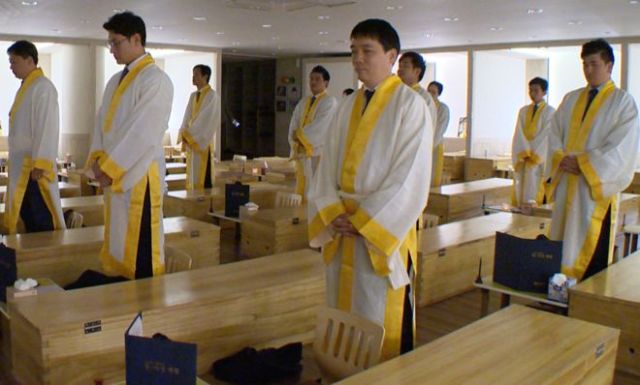
In a large room in a nondescript modern office block in Seoul, staff from a recruitment company are staging their own funerals. Dressed in white robes, they sit at desks and write final letters to their loved ones. Tearful sniffling becomes open weeping, barely stifled by the copious use of tissues.

And then, the climax: they rise and stand over the wooden coffins laid out beside them. They pause, get in and lie down. They each hug a picture of themselves, draped in black ribbon.

As they look up, the boxes are banged shut by a man dressed in black with a tall hat. He represents the Angel of Death. Enclosed in darkness, the employees reflect on the meaning of life.

The macabre ritual is a bonding exercise designed to teach them to value life. Before they get into the casket, they are shown videos of people in adversity – a cancer sufferer making the most of her final days, someone born without all her limbs who learned to swim.

All this is designed to help people come to terms with their own problems, which must be accepted as part of life, says Jeong Yong-mun who runs the Hyowon Healing Centre – his previous job was with a funeral company.

The participants at this session were sent by their employer, human resources firm Staffs. “Our company has always encouraged employees to change their old ways of thinking, but it was hard to bring about any real difference,” says its president, Park Chun-woong. “I thought going inside a coffin would be such a shocking experience it would completely reset their minds for a completely fresh start in their attitudes.”

“After the coffin experience, I realised I should try to live a new style of life,” says Cho Yong-tae as he emerges from the casket. “I’ve realised I’ve made lots of mistakes. I hope to be more passionate in all the work I do and spend more time with my family.”

As the company’s president, Park Chun-woong believes an employer’s responsibility extends beyond the office. For example, he sends flowers to the parents of his employees simply to thank them for bringing his workers up.

He also insists that his staff engage in another ritual every morning when they get to work – they must do stretching exercises together culminating in loud, joint outbursts of forced laughter. They bray uproariously, like laughing asses together. It is odd to see.

“At first, laughing together felt really awkward and I wondered what good it could do,” says one woman. “But once you start laughing, you can’t help but look at the faces of your colleagues around you and you end up laughing together.

“I think it really does have a positive influence. There’s so little to laugh about in a normal office atmosphere, I think this kind of laughter helps.”

Certainly, some laughter is needed in the South Korean workplace. The country has the highest rate of suicide in the industrialised world. There is a constant complaint of “presenteeism” – having to get to the office before the boss and stay until he – invariably he – has gone.

The Korean Neuropsychiatric Association found that a quarter of those it questioned suffered from high stress levels, with problems at work cited as a prime cause.

http://www.bbc.com/news/magazine-34797017

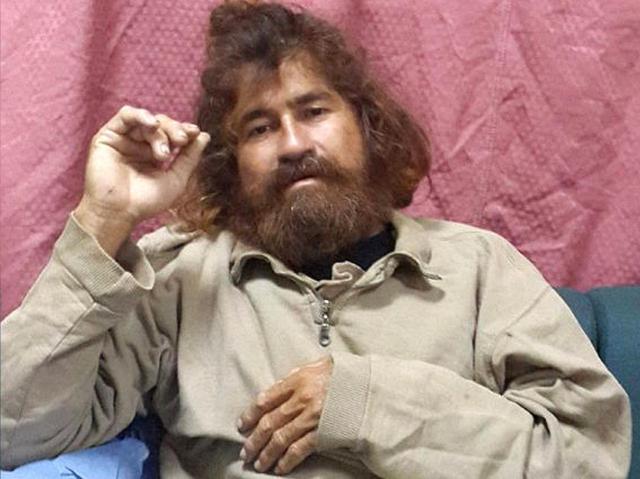
Salvador Alvarenga: Castaway who survived 15 months at sea sued for $1m after being accused of ‘eating colleague’

The fisherman who survived for 15 months at sea is being sued for one million dollars (£650,000) by the family of his dead colleague, who accuse him of eating their relative to survive.

Salvador Alvarenga, 36, paid Ezequiel Cordoba, 22, $50 to accompany him on a two-day fishing trip off the coast of Mexico in November 2012.

After a vicious storm pushed the boat out to sea, the pair survived by catching fish and birds, and drinking turtle blood and urine.

Mr Cordoba eventually died after making Mr Alvarenga promise not to eat his corpse and to find his mother and tell her what happened.

Mr Alvarenga kept the corpse on the boat for six days for company, until he realised he had lost his grip on reality and threw it overboard.

He was found on a remote island in the Pacific after 348 days adrift.

Mr Cordoba’s family are now demanding one million dollars compensation after claiming he was a victim of cannibalism.

Mr Alvarenga’s lawyer, Ricardo Cucalon, told local media he denied the castaway had eaten his shipmate.

He pointed out that the lawsuit was launched days after a book about Mr Alvarenga’s ordeal was published.

He told El Salvador’s El Diario de Hoy: “I believe that this demand is part of the pressure from this family to divide the proceeds of royalties.

http://www.independent.co.uk/news/world/americas/salvador-alvarenga-castaway-who-survived-15-months-at-sea-sued-for-1m-after-being-accused-of-eating-a6774756.html

French power station generates energy from cheese

A by-product of Beaufort cheese, skimmed whey, is converted into biogas, a mixture of methane and carbon dioxide, at the plant in Albertville, in Savoie in the French Alps.

Bacteria are added to the whey to produce the gas, which is then used to generate electricity that is sold to the energy company EDF.

“Whey is our fuel,” said François Decker of Valbio, the company that designed and built the power station, which opened in October. “It’s quite simply the same as the ingredient in natural yoghurt.”

After full-fat milk is used to make Beaufort cheese, whey and cream are left over. The cream is taken to make ricotta cheese, butter and protein powder, which is used as a food supplement.

The residual skimmed whey is then placed in a tank with bacteria, where natural fermentation produces methane in the same way that the gas is produced in cows’ stomachs.

The gas is then fed through an engine that heats water to 90 degrees C and generates electricity. The plant will produce about 2.8 million kilowatt-hours (kWh) per year, enough electricity to supply a community of 1,500 people, Mr Decker told Le Parisien newspaper.

It is not the first cheese-based power station, but one of the largest. Valbio built its first prototype plant 10 years ago beside an abbey where monks have made cheese since the 12th century.

Since then, about 20 other small-scale plants have been built in France, other European countries and Canada. More units are planned in Australia, Italy, Brazil and Uruguay.

In Somerset, the family-owned cheesemakers, Wyke Farms, generate their own electricity from waste cheese, cow manure and leftover crops. The mixture is poured into biodigester vessels that generate enough electricity to make the cheese producer self-sufficient.

http://www.telegraph.co.uk/news/worldnews/europe/france/12060538/French-power-station-generates-electricity-from-cheese.html

Mysterious ‘space balls’ found in Vietnam

Defence officials in Vietnam are investigating the origin of three metal spheres which fell from the sky in the north of the country.

The largest object weighs about 45kg (99lb) and was found near a stream in Tuyen Quang province, the Thanh Nien News website reports. Another orb landed in local resident’s garden in the neighboring Yen Bai region, while the lightest, weighing 250g (9oz), came down on a nearby roof before rolling onto the ground, the website says. Local people reported hearing what sounded like thunder in the minutes before the objects were found.

An initial investigation by Vietnam’s defence ministry has so far determined that the objects are compressed-air tanks from an aircraft or rocket, and that – at least now they’re no longer airborne – they aren’t dangerous. It says the orbs were manufactured in Russia, but that its not clear if they were subsequently sold to another country for use.

Aerospace expert Prof Nguyen Khoa Son thinks they could belong to an old satellite that failed to burn up in the Earth’s atmosphere. But he tells the Vietnam Bridge website that the objects don’t appear to be damaged, so they may be the result of a failed satellite launch.

http://www.bbc.com/news/blogs-news-from-elsewhere-35242079

John Beeden becomes first to row Pacific from US to Australia solo and non-stop


Beeden, who completed the 6,100 nautical miles in 209 days, said it was ‘10, 15, 100 times harder than I thought it would be’

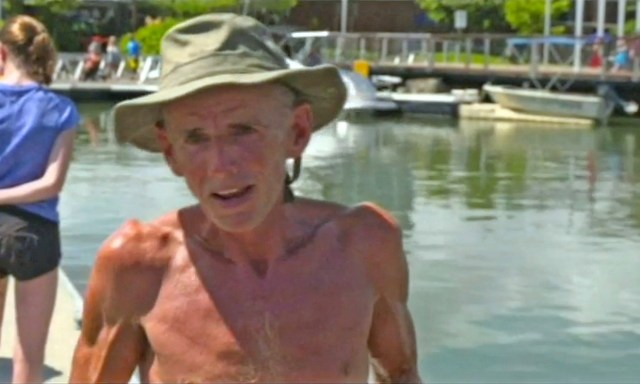
A British man has become the first person to row solo across the Pacific Ocean from North America to Australia non-stop. John Beeden arrived in Australia after more than 200 days at sea, and said he had not realised the trip would be so difficult.

He set off from San Francisco in June and expected to take between 140 and 180 days to cover the 6,100 nautical miles to Cairns in north-eastern Australia. Bad weather slowed the 53-year-old down, however, and he eventually reached his destination in 209 days.

Beeden, who is originally from Sheffield but now lives in Canada, had already rowed across the Atlantic. According to his website, he took 53 days to cover 2,600 nautical miles, the second fastest such crossing on record.

“To be the first person to achieve something on this scale is incredible, really. I haven’t processed it yet … I thought I was going to be here mid-October and it was going to be hard work but just like the Atlantic – it wasn’t going to try to kill me. But it tried a few times,” he told reporters after landing.

“It’s been difficult the whole way but, in fairness, that was what I was looking for. I just didn’t realise it was going to be so difficult.

“I did the Atlantic three years ago and, although it was hard work, I found the actual process of doing the 53 days relatively easy, in a sense. It was just hard work. So, I went looking for something more difficult to push me to the edge.

“I have peered right over the edge a number of times.”

He told Sky News that each day on the water presented him with “some massive challenge”. He said the crossing was “10, 15, 100 times harder than I thought it would be”.

He said that the record he set was of less interest to him than the challenge of making it across the ocean.

According to the BBC, his wife Cheryl, who met him in Cairns, said: “He’s an amazing guy. He’s different than a lot of other people. He’ll always fight to get the mile when he’s having a bad day … He’ll always be rowing.

“Always knew he could do it, it just took a lot longer than we expected and just glad that he’s home and safe.

“He says he’s not going to get in another boat for a while, but I am sure in a couple of weeks he’ll be having some other adventure, and I will have to restrain him a little bit.”

She told reporters that her husband’s achievement was incredible, adding that she had been living with it for seven months. But she knew he could do it, she said.

http://www.theguardian.com/uk-news/2015/dec/27/briton-john-beeden-becomes-first-to-row-pacific-solo-and-non-stop?CMP=oth_b-aplnews_d-1

Liver hormone discovered to drive sugar consumption

A recent study has shown that fibroblast growth factor 21 (FGF21), a liver-generated hormone, suppresses the FGF21 is produced in response to high carbohydrate levels, in which it enters the bloodstream and signals the brain to suppress the preference for sweets. Matthew Potthoff, assistant professor of pharmacology in the University of Iowa Carver College of Medicine, noted that this is the “first liver-derived hormone that regulates sugar intake specifically.”consumption of simple sugars.

Earlier studies have shown how some hormones affect appetite. However, these do not regulate any specific macronutrient (eg, carbohydrate, protein, fat) and are produced in organs other than the liver. FGF21 has been known to boost insulin sensitivity but the new findings “can help people who might not be able to sense when they’ve had enough sugar, which may contribute to diabetes,” said Lucas BonDurant, a doctoral student and co-first author in the study.

Researchers used genetically-engineered mouse models and pharmacological approaches to study FGF21 in regulating sugar cravings. Normal mice were injected with FGF21 and were given a choice between a normal diet and a sugar-enriched diet. These mice did not completely stop eating sugar but consumed 7 times less than normal. The team also looked at mice that either did not produce FGF21 at all or overproduced FGF21 (>500 times more than normal mice). When presented with the same two diets as the normal mice, researchers saw that the mice that didn’t produce FGF21 all consumed more sugar whereas the mice that overproduced FGF21 consumed less sugar.

Study findings support the conclusion that FGF21 decreased appetite and sugar intake. It did not, however, decrease intake of all sugars (eg, sucrose, fructose, glucose) nor did it affect the intake of complex carboydrates. The new data may help patients who are obese or have diabetes, researchers noted. More studies are needed to see if other hormones exist to regulate appetite for specific macronutrients comparable to the effects of FGF21 on carbohydrate intake.

http://www.empr.com/news/liver-derived-hormone-may-influence-sugar-cravings/article/461698/?DCMP=EMC-MPR_DailyDose_rd&cpn=psych_md&hmSubId=&hmEmail=5JIkN8Id_eWz7RlW__D9F5p_RUD7HzdI0&NID=1710903786&dl=0&spMailingID=13368691&spUserID=MTQ4MTYyNjcyNzk2S0&spJobID=700165841&spReportId=NzAwMTY1ODQxS0

The Stanford band made everybody furious at the Rose Bowl for the third time in four years

In 2013, Stanford went to the Rose Bowl, and their band made people upset.

In 2014, Stanford went to the Rose Bowl, and their band made people upset.

In 2016, Stanford went to the Rose Bowl to play the Iowa Hawkeyes, and guess what happened at halftime when the Hawks were down 35-0….

They played sinks and skateboards:

They brought out a cow:

cow.0

They didn’t explain what the cow was — it just kinda walked around — but Iowa people sure hated it and booed.

Thanks to Pete Cuomo and Kebmodee for bringing this to the attention of the It’s Interesting community.