Coral reefs are sometimes called the rain forests of the sea due to their immense biodiversity. Like rain forests, they’re typically found in the tropics, and because they usually thrive in clear, turquoise waters, they make for accessible attractions for divers, snorkelers, and researchers alike.
Reefs don’t usually like to form in muddy waters, such as at mouths of rivers — or so we used to think. But a remarkable new discovery in the Amazon could rewrite the book on coral reef biology. There, in the murky waters at the mouth of the Amazon River, scientists have found a massive, thriving coral reef that stretches from the French Guiana border to Brazil’s Maranhão State, an area covering about 3,600 square miles, reports The Smithsonian. That’s larger than the state of Delaware.
How did such a natural spectacle remain hidden from science until now? Well, as noted, scientists don’t usually think to look for coral reefs in muddy waters. Also, the Amazon has the largest discharge of any river in the world, so the waters at its mouth are more than murky — they’re downright thick and soupy.
Still, it’s incredible to discover such a massive new ecosystem like this in modern times. Scientists are giddy at the thought of the number of new creatures — animals that have evolved to thrive uniquely in this unexpected environment — that might soon be discovered here.
“This is something totally new and different from what is present in any other part of the globe,” said oceanographer Fabiano Thompson. “But until now, it’s been almost completely overlooked.”
“You wouldn’t expect to have gigantic reefs there, because the water is full of sediment and there’s nearly no light or oxygen,” added Thompson.
Researchers have already found at least 29 specimens of sponges that likely constitute new species. Strange microbes that seem to base their metabolism not on light but on minerals and chemicals such as ammonia, nitrogen and sulfur are also plentiful in early samples. This unconventional form of life could help explain how the creatures that live among this reef manage to survive.
So far, only a small fraction of the new habitat has been mapped, and it may have been discovered in the nick of time, seeing as oil and gas companies are rapidly expanding into the region for potential drilling. Discovering this unique reef system here will hopefully lead to protections that will help preserve it before it can be irreparably damaged.
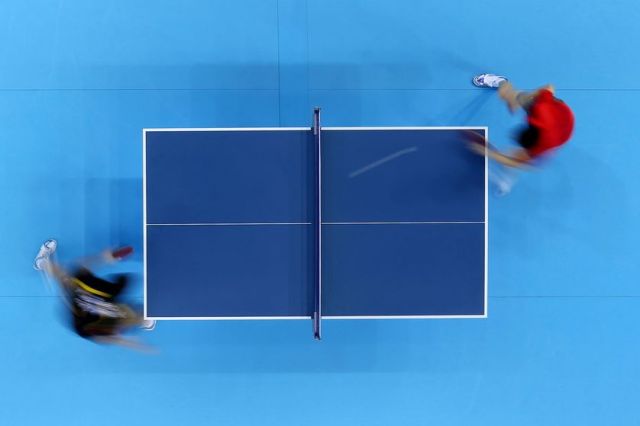
Ping-Pong, or table tennis, is played by some 300 million people worldwide, according to the International Table Tennis Federation (ITTF), making it one of Earth’s most popular sports. It has been an Olympic sport since 1988, and its U.S. cachet has spiked in recent years amid the rise of hip Ping-Pong hangouts like New York’s SPiN and Portland’s Pips & Bounce.
It’s not hard to see why. Ping-Pong is accessible for beginners, has relatively low injury risk, and works as a boozy bar game or intense test of wills. And despite long being relegated to garages and basements, Ping-Pong is also increasingly billed as a “brain sport,” featuring a mix of aerobics, strategy, quickness and coordination.
“There is a lot going on in table tennis,” says Wendy Suzuki, a tenured professor of neuroscience at New York University and author of “Healthy Brain, Happy Life,” a new book exploring how physical exercise can affect the human brain. “Attention is increasing, memory is increasing, you have a better mood. And you’re building motor circuits in your brain. A bigger part of your brain is being activated.”
Of course, Ping-Pong is only one path to the mental perks of exercise, Suzuki adds, and since not enough research has focused on its effects, we can’t be sure how it stacks up with other options. Many people prefer simpler activities like walking and running, for example, or more aerobic, larger-scale sports like lawn tennis.
Still, Ping-Pong has a certain mojo that’s hard to replicate. Its small playing area tends to accelerate the action, encouraging players to think and move at a dizzying pace. It’s a game of strategy, too, like high-speed chess without chairs. And not only can it complement a broader fitness regimen, but it’s also a gateway sport, masquerading as mindless fun until it gets our brains — and bodies — hooked on speed.
The sport of pings
Table tennis, like its outdoor ancestor, was born in England. The sport dates back to the late 19th century, according to the International Olympic Committee (IOC), and was pushing players to use their heads from the very beginning:
“It is thought that upper-class Victorians in England invented table tennis in the 1880s as a genteel, after-dinner alternative to lawn tennis, using whatever they could find as equipment. A line of books would often be the net, the rounded top of a champagne cork would be the ball and occasionally a cigar box lid would be a racket.”
This inspired several commercial spinoffs by the 1890s, although they didn’t sell well because the balls were either rubber (too wild) or cork (too mild), explains the ITTF. When celluloid balls debuted in 1900, table tennis finally got the bounce it needed.
Beyond changing the game itself, celluloid balls also gave it a new name: “Ping-Pong.” That phrase reportedly came from an 1884 song by English songwriter Harry Dacre, repurposed to describe the sound of a celluloid ball bouncing off a paddle.
Early versions of the game also went by a variety of other names, including: Whiff-Waff, Pim-Pam, Flim-Flam, Gossima, Netto and Parlor Tennis.
“Ping-Pong” proved most popular, but since it was trademarked, many similar games were marketed simply as table tennis. That remains the sport’s official name, yet while Ping-Pong is still a U.S. trademark — now owned by Indiana-based Escalade Sports — it also lives on as a widespread nickname for the sport.
The first standard rules, and world championships, came in 1926 with the founding of the ITTF. Japan’s Hiroji Satoh later upended the table-tennis world in 1952, and not just as the first non-European player to win a world title: He became the first person in history to win using a paddle coated in foam rubber. Its spin was a literal game-changer, and table tennis soon embraced foam as its future.
That began a shift in Ping-Pong power from Europe to Asia, as Japan, China and Korea went on to dominate international play for decades. The sport also served as a cultural and political bridge, most famously in the April 1971 Ping-Pong diplomacy, which helped restore relations between the U.S. and China.
Seventeen years later, table tennis debuted at the 1988 Olympics in Seoul, giving the former parlor game a new level of athletic legitimacy. Players have backed it up, too, smashing a 2.7-gram (0.1-ounce) ball at up to 150 kilometers per hour (93 miles per hour), often with seemingly impossible spin. But even at less than Olympic speeds, Ping-Pong can bring a lot more to the table than its casual origins might suggest.
Live pong and prosper
“I play table tennis for the same reason people do crosswords,” says Will Shortz, New York Times crossword puzzle editor and owner of Westchester Table Tennis Center (WTTC) in Pleasantville, New York. “It refreshes me and relaxes me. I get wrapped up in a game, and afterward I feel great and ready to go back to life.”
Shortz is famed for his puzzle-building skills, with a list of accolades too long to list here, but he’s also a table-tennis celebrity. He opened the WTTC in 2011, and even recently helped 18-year-old Chinese player Kai Zhang move to New York, where he’s already ranked No. 1 in the U.S. and hopes to represent his new country in the Olympics. But perhaps Shortz’s main claim to Ping-Pong fame is The Streak:
The Streak was only meant to last a year, but as the video above notes, Shortz kept going past 365 days because “his brain was too happy.” In fact, he still plays daily, and has done so for more than three-and-a-half years. When we spoke recently, he was still going strong at nearly 1,300 consecutive days of Ping-Pong.
“It built up over time. I had other streaks before I started this one,” he says. “I had one streak that went for 80 days before I had a trip to Europe and broke it. The next one went for 280 days before I missed a day.” That was in Croatia, where he’d made plans to play at a local table-tennis club but couldn’t get there in time.
“That was the last day I missed,” he adds. “Oct. 3, 2012, was the last day I didn’t play.”
Shortz says he isn’t aware of, or interested in, any official record for such a streak. He really just plays Ping-Pong every day because it rejuvenates him.
“Any exercise is good if it gets blood going through the entire body,” he says. “I think table tennis is especially good because it’s a brain sport, training your body to perform instantly in different situations.” By forcing us to anticipate our opponents’ moves, then react with both speed and precision, Ping-Pong “is a way of getting the brain and the body prepared for everything else you do in life.”
Staying on the ball
So what actually happens inside your head during Ping-Pong? We don’t have the brain scans to know for sure, but other exercise research does provide some hints. Based on her professional expertise in neuroscience, plus her personal experience with exercise, Suzuki offers a few basic examples of your brain on Ping-Pong:
• Mood: “The one thing we know that can happen immediately, that certainly happens to me when I exercise, is the mood boost,” Suzuki says. “This is not specific to table tennis; anything that is aerobic will give you a mood boost, because it increases the neurotransmitters that are decreased in depression.”
Neurotransmitters are vital chemicals that regulate various brain functions, and aerobic exercise affects major ones like dopamine (movement, emotional responses, feelings of pleasure), serotonin (mood, appetite, sleep, memory) and norepinephrine (stress response). On top of boosting moods in the short-term, regular exercise is associated with reduced depression and anxiety over time.
• Motor control: There are other long-term perks, too. “We know there are a lot of changes in the motor cortex, the part of the brain’s outer covering that lights up when you do any voluntary movement, and in the cerebellum, which is critical for fine motor control,” Suzuki says. “This is a wonderful example of brain plasticity, the ability of the brain to change based on an experience or environmental factors.”
• Memory: Aerobic activity can also raise levels of brain-derived neurotrophic factor (BDNF), a protein that promotes neuron growth and survival, thus helping fend off diseases like Alzheimer’s and Parkinson’s. In fact, exercise is a great way to get new brain cells, says Suzuki, who specializes in brain regions linked to memory.
“The hippocampus is special not only because it’s important for memory, but also because it’s one of the only brain structures that keeps making brand-new brain cells into adulthood,” she says. “In most of the brain, whatever cells you’re born with are all you get. But in the hippocampus, there’s a steady birth of new brain cells throughout our adult life. And the cool thing is we know that physical aerobic exercise will stimulate the growth of more brain cells and will help them survive longer. In studies of animals, that’s correlated with increases in various kinds of memory.”
• Attention: “And the final one, the one we know the most about in humans, is that increased aerobic exercise will improve your ability to shift and focus attention,” she says. “Certainly that’s what you’re getting in table tennis. You’re getting improved attention, and you’re practicing your attention capacities — keeping your eye on the ball, anticipating what will happen next.”
All pings to all people
Playing Ping-Pong can do wonders for our brains, but Suzuki adds an important footnote: “One caveat is that if you play really slowly, those benefits may drop off. So these comments are more about the aerobic play of Ping-Pong.”
The idea of Ping-Pong as aerobic exercise might have seemed silly in the early 20th century, and some people still see it more as a casual game than a serious sport. But therein lies its beauty: Thanks to a simple premise and variable pace, Ping-Pong can be both. It’s accessible to beginners who need to play slowly, but regular practice also trains veteran players to move (and think) at incredible speeds.
One of those veterans is Sean O’Neill, a former Olympic player and coach who was inducted into the USA Table Tennis (USATT) Hall of Fame in 2008. Video of Olympic table tennis on TV and YouTube “has shown the dynamic ability of the players on a more regular basis,” he says, and inspired a surge of popularity. “More and more recreational players are buying professional quality equipment to copy the pros.”
As an Olympian, O’Neill says he loves to see the sport’s increasingly global appeal. “No matter where you go, table tennis is viewed as a great sport which anyone can play. I think most people are attracted due to the non-discriminatory nature of the sport,” he says, noting that it can be fun for people of all ages, sizes, physical conditions or skill levels. And that makes it especially valuable as an entry point for people who might not otherwise see themselves as athletes.
“We see a trend of both creative people and those from science really fall in love with the sport,” O’Neill says. “There is something about fast-action problem solving with spin, speed and placement that seems to excite these crowds. It is non-impact and a great cardio workout with low joint and bone stress. Many players have a tough time stopping once they pick up the paddle.”
Head of the table
Shortz clearly fits that profile. “I’m an obsessive person,” he admits, but “in a good way, I think.” And while his level of commitment may be uncommon, he agrees with O’Neill that this everyman’s sport has unusual appeal for eggheads, too.
“My experience is that table tennis attracts smart people,” Shortz says. “You don’t have to be a genius to play, but it helps to have something on the ball.”
Ping-Pong’s popularity has waxed and waned over time, he adds, and it still has a long way to go before most Americans see it as a serious sport. “But I think things are on the upswing,” he says. “It has become semi-cool. Social Ping-Pong clubs are open all around now, and I think being in the Olympics has conferred legitimacy.”
Its reputation as a brain sport may be helping, too, although Suzuki notes we can’t easily quantify a sport’s braininess. Almost any aerobic activity could be considered a brain sport, and there isn’t enough research to indicate more cognitive benefits from table tennis than from basketball or badminton. Instead of waiting for that research to come out, however, she has a better idea: Do the research yourself.
“I like to encourage people to do their own experiments on themselves,” she says. “See if you notice the mood shift from exercise. People get sucked back into, ‘Oh, I’m so busy, I’m so stressed, I don’t have time for that,’ without noticing how much even a single bout of exercise can improve your mood and give you more energy.
“Just do it once,” she adds, “and see if it motivates you to continue.”
If it’s still a habit 1,300 days later, your brain must be pretty happy.
Some users of LSD say one of the most profound parts of the experience is a deep oneness with the universe. The hallucinogenic drug might be causing this by blurring boundaries in the brain, too.
The sensation that the boundaries between yourself and the world around you are erasing correlates to changes in brain connectivity while on LSD, according to a study published Wednesday in Current Biology. Scientists gave 15 volunteers either a drop of acid or a placebo and slid them into an MRI scanner to monitor brain activity.
After about an hour, when the high begins peaking, the brains of people on acid looked markedly different than those on the placebo. For those on LSD, activity in certain areas of their brain, particularly areas rich in neurons associated with serotonin, ramped up.
Their sensory cortices, which process sensations like sight and touch, became far more connected than usual to the frontal parietal network, which is involved with our sense of self. “The stronger that communication, the stronger the experience of the dissolution [of self],” says Enzo Tagliazucchi, the lead author and a researcher at the Netherlands Institute for Neuroscience.
Tagliazucchi speculates that what’s happening is a confusion of information. Your brain on acid, flooded with signals crisscrossing between these regions, begins muddling the things you see, feel, taste or hear around you with you. This can create the perception that you and, say, the pizza you’re eating are no longer separate entities. You are the pizza and the world beyond the windowsill. You are the church and the tree and the hill.
Albert Hofmann, the discoverer of LSD, described this in his book LSD: My Problem Child. “A portion of the self overflows into the outer world, into objects, which begin to live, to have another, a deeper meaning,” he wrote. He felt the world would be a better place if more people understood this. “What is needed today is a fundamental re-experience of the oneness of all living things.”
The sensation is neurologically similar to synesthesia, Tagliazucchi thinks. “In synesthesia, you mix up sensory modalities. You can feel the color of a sound or smell the sound. This happens in LSD, too,” Tagliazucchi says. “And ego dissolution is a form of synesthesia, but it’s a synesthesia of areas of brain with consciousness of self and the external environment. You lose track of which is which.”
Tagliazucchi and other researchers also measured the volunteers’ brain electrical activity with another device. Our brains normally generate a regular rhythm of electrical activity called the alpha rhythm, which links to our brain’s ability to suppress irrelevant activity. But in a different paper published on Monday in the Proceedings of the National Academy of Sciences, he and several co-authors show that LSD weakens the alpha rhythm. He thinks this weakening could make the hallucinations seem more real.
The idea is intriguing if still somewhat speculative, says Dr. Charles Grob, a psychiatrist at the Harbor-UCLA Medical Center who was not involved with the work. “They may genuinely be on to something. This should really further our understanding of the brain and consciousness.” And, he says, the work highlights hallucinogens’ powerful therapeutic potential.
The altered state of reality that comes with psychedelics might enhance psychotherapy, Grob thinks. “Hallucinogens are a catalyst,” he says. “In well-prepared subjects, you might elicit powerful, altered states of consciousness. [That] has been predicative of positive therapeutic outcomes.”
In recent years, psychedelics have been trickling their way back to psychiatric research. LSD was considered a good candidate for psychiatric treatment until 1966, when it was outlawed and became very difficult to obtain for study. Grob has done work testing the treatment potential of psilocybin, the active compound in hallucinogenic mushrooms.
He imagines a future where psychedelics are commonly used to treat a range of conditions. “[There could] be a peaceful room attractively fixed up with nice paintings, objects to look at, fresh flowers, a chair or recliner for the patient and two therapists in the room,” he muses. “A safe container for that individual as they explore deep inner space, inner terrain.”
Grob believes the right candidate would benefit greatly from LSD or other hallucinogen therapy, though he cautions that bad experiences can still happen for some on the drugs. Those who are at risk for schizophrenia may want to avoid psychedelics, Tagliazucchi says. “There has been evidence saying what could happen is LSD could trigger the disease and turn it into full-fledged schizophrenia,” he says. “There is a lot of debate around this. It’s an open topic.”
Tagliazucchi thinks that this particular ability of psychedelics to evoke a sense of dissolution of self and unity with the external environment has already helped some patients. “Psilocybin has been used to treat anxiety with terminal cancer patients,” he says. “One reason why they felt so good after treatment is the ego dissolution is they become part of something larger: the universe. This led them to a new perspective on their death.”
Add all of us up, all 7 billion human beings on earth, and clumped together we weigh roughly 750 billion pounds. That, says Harvard biologist E.O. Wilson, is more than 100 times the biomass of any large animal that’s ever walked the Earth. And we’re still multiplying. Most demographers say we will hit 9 billion before we peak, and what happens then?
Well, we’ve waxed. So we can wane. Let’s just hope we wane gently. Because once in our history, the world-wide population of human beings skidded so sharply we were down to roughly a thousand reproductive adults. One study says we hit as low as 40.
Forty? Come on, that can’t be right. Well, the technical term is 40 “breeding pairs” (children not included). More likely there was a drastic dip and then 5,000 to 10,000 bedraggled Homo sapiens struggled together in pitiful little clumps hunting and gathering for thousands of years until, in the late Stone Age, we humans began to recover. But for a time there, says science writer Sam Kean, “We damn near went extinct.”
I’d never heard of this almost-blinking-out. That’s because I’d never heard of Toba, the “supervolcano.” It’s not a myth. While details may vary, Toba happened.
Toba, The Supervolcano
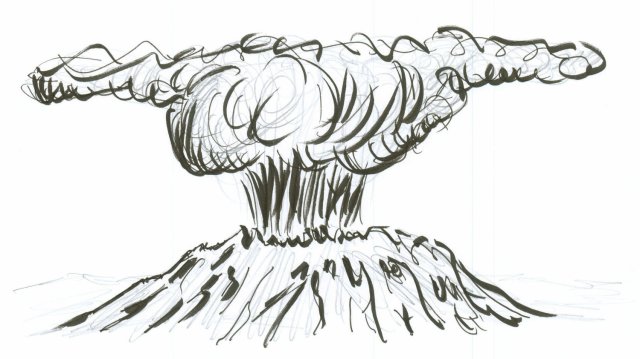
Once upon a time, says Sam, around 70,000 B.C., a volcano called Toba, on Sumatra, in Indonesia went off, blowing roughly 650 miles of vaporized rock into the air. It is the largest volcanic eruption we know of, dwarfing everything else…
That eruption dropped roughly six centimeters of ash — the layer can still be seen on land — over all of South Asia, the Indian Ocean, the Arabian and South China Sea. According to the Volcanic Explosivity Index, the Toba eruption scored an “8”, which translates to “mega-colossal” — that’s two orders of magnitude greater than the largest volcanic eruption in historic times at Mount Tambora in Indonesia, which caused the 1816 “Year Without a Summer” in the northern hemisphere.
With so much ash, dust and vapor in the air, Sam Kean says it’s a safe guess that Toba “dimmed the sun for six years, disrupted seasonal rains, choked off streams and scattered whole cubic miles of hot ash (imagine wading through a giant ashtray) across acres and acres of plants.” Berries, fruits, trees, African game became scarce; early humans, living in East Africa just across the Indian Ocean from Mount Toba, probably starved, or at least, he says, “It’s not hard to imagine the population plummeting.”
Then — and this is more a conjectural, based on arguable evidence — an already cool Earth got colder. The world was having an ice age 70,000 years ago, and all that dust hanging in the atmosphere may have bounced warming sunshine back into space. Sam Kean writes “There’s in fact evidence that the average temperature dropped 20-plus degrees in some spots,” after which the great grassy plains of Africa may have shrunk way back, keeping the small bands of humans small and hungry for hundreds, if not thousands of more years.
So we almost vanished.
But now we’re back.
It didn’t happen right away. It took almost 200,000 years to reach our first billion (that was in 1804), but now we’re on a fantastic growth spurt, to 3 billion by 1960, another billion almost every 13 years since then, till by October, 2011, we zipped past the 7 billion marker, says writer David Quammen, “like it was a “Welcome to Kansas” sign on the highway.”
In his new book Spillover, Quamman writes:
We’re unique in the history of mammals. We’re unique in this history of vertebrates. The fossil record shows that no other species of large-bodied beast — above the size of an ant, say or an Antarctic krill — has ever achieved anything like such abundance as the abundance of humans on Earth right now.
But our looming weight makes us vulnerable, vulnerable to viruses that were once isolated deep in forests and mountains, but are now bumping into humans, vulnerable to climate change, vulnerable to armies fighting over scarce resources. The lesson of Toba the Supervolcano is that there is nothing inevitable about our domination of the world. With a little bad luck, we can go too.
At 19, I enlisted in the U.S. Army and was deployed to Iraq. I spent 15 months there — eight at the U.S. Embassy, where I supported the communications for top generals. I understand that decisions at that level are complex and layered, but for me, as an observer, some of those actions left my conscience uneasy.
To counteract my guilt, I volunteered as a medic on my sole day off at Ibn Sina Hospital, the largest combat hospital in Iraq. There I helped wounded Iraqi civilians heal or transition into the afterlife. But I still felt lost and disconnected. I was nostalgic for a young adulthood I never had. While other 20-somethings had traditional college trajectories, followed by the hallmarks of first job interviews and early career wins, I had spent six emotionally numbing years doing ruck marches, camping out on mountaintops near the demilitarized zone in South Korea and fighting someone else’s battle in Iraq.
During my deployment, a few soldiers and I were awarded a short resort stay in Kuwait. There, I had a brief but powerful experience in a meditation healing session. I wanted more. So when I returned to the United States at the end of my service, I headed to Iowa.
Forty-eight hours after being discharged from the Army, I arrived on campus at Maharishi University of Management in Fairfield, Iowa. MUM is a small liberal arts college, smack dab in the middle of the cornfields, founded by Maharishi Mahesh Yogi, the guru of transcendental meditation. I joked that I was in a quarter-life crisis, but in truth my conscience was having a crisis. Iraq left me with questions about the world and grappling with my own mortality and morality.
Readjustment was a sucker punch of culture shock. While on a camping trip for incoming students, I watched girls curl their eyelashes upon waking up and burn incense and bundles of sage to ward off negative energy. I was used to being in a similar field environment but with hundreds of guys who spit tobacco, spoke openly of their sexual escapades and played video games incessantly. Is this what it looked like to be civilian woman? Is this what spirituality looked like?
Mediation was mandatory for students on campus, and the rest of the town was composed mainly of former students or longtime followers of the maharishi. Shortly after arriving, I completed an advanced meditator course and began meditating three hours a day — a habit that is still with me five years later. Every morning, I went to a dome where students, teachers and the people of Fairfield gathered to practice meditation. In the evening, we met again for another round of meditation. During my time in Fairfield, even Oprah came to meditate in the dome.
I was incredibly lucky to have supportive mentors in the Army, but Fairfield embraced me in a maternal way. I cried for hours during post-meditation reflection. I released the trauma that is familiar to every soldier who has gone to war but is rarely discussed or even acknowledged. I let go, and I blossomed. I was emancipated of the unhealthy habits of binge-drinking and co-dependency in romantic interludes, as well as a fear that I didn’t know controlled me.
Suicide and other byproducts of post-traumatic stress disorder plague the military. In 2010, a veteran committed suicide every 65 minutes. In 2012, there were more deaths by suicide than by combat. In Iraq, one of my neighbors took his M16, put it in his mouth and shot himself. Overwhelmed with PTSD-related issues from back-to-back deployments and with no clear solution to the problem, in 2012, the Defense Department began researching meditation practices to see whether they would affect PTSD. The first study of meditation and the military population, done with Vietnam veterans in 1985, had shown 70 percent of veterans finding relief, but meditation never gained in popularity nor was it offered through veterans’ services. Even in 2010, when I learned TM, the military was alien to the concept.
But today, the results of the studies showcase immense benefits for veterans. According to the journal Military Medicine, meditation has shown a 40 percent to 55 percent reduction in symptoms of PTSD and depression among veterans. Furthermore, studies show that meditation correlates with a 42 percent reduction in insomnia and a 25 percent reduction in the stress hormone cortisol in the veteran population. To complement meditation, yoga has also been embraced as a tool for treatment by the military. With the growing acceptance of holistic approaches, psychological wounds are beginning to heal.
The four-day training course to learn TM is now available at every Veterans Affairs facility for those who have PTSD or traumatic brain injury. Even medical staff and counselors who help veterans at the VA are offered training in both TM and mindfulness meditation. Additionally, Norwich University, the oldest military college in the country, has done extensive research on TM and incoming cadets, and many military installations have integrated meditation programs into their mental health services. When I had first learned to meditate, many of my active-duty friends found it a bit too crunchy. But with the military’s recent efforts at researching meditation and funding it for all veterans, the stigma is gone, and my battle buddies see meditation as a tool for building resilience.
For me, meditation has created small but significant changes. One day, while going for a walk downtown, I stopped and patted a dog. A few minutes later, I came to a halt. I realized what I had done. While in Iraq, during a month when we were under heavy mortar attack, a bomb-sniffing K-9 had become traumatized and attacked me. This, coupled with a life-long fear of dogs, had left me guarded around the canines. I touched the scar on my elbow from where the K-9 had latched on and could no longer find the fear that had been there. Soon I was shedding all the things that held me back from living my life in an entirely unforeseen way.
For the first time in my life, I found forgiveness for those who had wronged me in the past. I literally stopped to smell the flowers on my way to work every day. And I smiled. All the freaking time. I even felt smarter. Research shows that meditation raises IQ. I’m not surprised. After graduation, I went on to complete my master’s at Columbia University.
Fairfield is also home to generations of Iowans who are born there, brought up there and die there. Many of these blue-collar Midwesterners have had animosity toward the meditators. Locals felt as if their town had been overtaken. They preferred steak to quinoa, beers at the bar to yoga and pickup trucks to carbon-reducing bicycles. And with MUM having a student body from more than 100 countries, the ethnic differences were a challenge. However, things are changing. Meditators and townspeople now fill less stereotypical roles. And with the economic boom that meditating entrepreneurs have provided the town, the differences are easier to ignore.
It was strange for me to live removed from the local Iowans. When I went shopping at the only Walmart the town had, I’d see the “Wall of Heroes” — a wall of photos of veterans from Fairfield. One day, I noticed a familiar face — a soldier from my last assignment. Fairfield and other socioeconomically depressed areas are where most military recruits come from. Here I was living among them, but not moving in step with them. Having that synchronous experience made me come back full circle. When I had first learned to meditate, my teacher had asked me what my goal was. I told her, “I want to be in the world, but not of it.” And that’s exactly what I got.
For me, this little Iowan town provided a place of respite and rejuvenation. It was easy for me to trade one lifestyle of order and discipline for another, and this provided me with nourishment and an understanding of self. Nowhere else in America can you find an entire town living and breathing the principles of Eastern mysticism. It goes way beyond taking a yoga class or going to the Burning Man festival. I continue my meditation practice and am grateful for the gifts it has provided me. But in the end, my time had come, and I had to leave. As residents would say, that was just my karma.
But if video games weren’t created until the middle part of the twentieth century (most video game historians point to the Cathode Ray Tube Amusement Device, created in 1947, as the first true “video game”), what exactly did Nintendo do in its early years?
The company that would become “Nintendo” was founded in 1889 by entrepreneur Fusajiro Yamauchi as “Nintendo Koppai” (also known as the “Nintendo Playing Card Co. Ltd.,” and was styled as a playing card company that mostly made Japanese playing cards called “Hanafuda.” The so-called “flower cards” have been a part of Japanese gameplay for centuries, and Nintendo had great success in manufacturing and marketing them. The company still makes cards to this day.
Despite the company’s success with playing cards, Yamauchi’s grandson Hiroshi eventually realized that Nintendo had probably gone as far as anyone possibly could with just cards. In 1956, the young go-getter was astonished to see that the massive United States Playing Card Company was run out of a small office. If that’s what they were working with, what could Nintendo possibly aspire to?
First up: character cards. Nintendo (quite sagely) picked up the rights to the Disney cabal of characters, putting them on their cards and driving sales, but that wasn’t quite enough. They needed to think bigger.
The early sixties weren’t too kind to the ever-expanding Nintendo empire. The company, hellbent on mixing things up and pushing past just playing card sales, stretched itself too thin by getting involved with everything. Well, nearly everything.
Between 1963 and 1968, Nintendo began dabbling in such disparate industries as transportation (a taxi company), hospitality (a love hotel chain), and food (they specialized in ramen) under the umbrella of “Nintendo Co., Ltd.” None of these attempts at expanding into different industries worked out, and Nintendo soon needed to find something new to embrace.
After the mixed bag that was the ’50s, Nintendo turned its attentions to toys, including the carnival-like “Love Tester” and the popular “Kousenjuu” light gun games, which paved the way for the company to turn their attentions to more light gun-based gaming. Slowly, the company moved towards more electronics-heavy games and toys, even though they couldn’t initially keep up with big names like Bandai and Tomy.
Nintendo steadily worked their way into the video game realm, but things really changed in 1974, when the company bought the distribution rights for the Magnavox Odyssey video game console. In 1975, the company set about making their own video arcade games, with Genyo Takeda’s “EVR Race.” By 1977, the company was making its very own consoles, originally styled as five different kinds of the “Color TV-Game.” (The first Color-TV Game console is responsible for bringing six different takes on Pong to the world.)
These consoles were partially designed by Shigeru Miyamoto, who would go on to design Donkey Kong for the company in 1981, a game-changer through and through. Once Donkey Kong hit the market—allowing Nintendo to enjoy licensing their own products to other companies—Nintendo had established itself as a force to be reckoned with in the burgeoning video game sector.
Once Nintendo’s dominance in the industry was recognized, the company began churning out inspiring new creations, from the handheld “Game & Watch” game series, to the “Family Computer” for home gaming (eventually launched as the NES outside of Japan), to the smash-hit that was the Game Boy (invented in 1989). The company’s success continued in the late eighties, thanks to the release of the Super Nintendo (SNES), which also helped kick off the infamous battle with rival Sega.
In 1994, Nintendo celebrated the sale of one billion game cartridges (a tenth of them attributed to Mario games alone). A series of missteps marred the rest of the ’90s, including the disappointing Virtual Boy in 1995, but the company quickly rebounded with the Nintendo 64, the Game Boy Pocket, and the Game Boy Color.
The aughts proved to be similarly fraught for the company with the disappointment of machines like GameCube and Game Boy Micro. This was briefly tempered by the success of the Nintendo DS and the New Super Mario Bros. game in 2006.
If there’s one thing that’s really changed things for the company, though, it’s the Wii, first introduced in 2006. The motion-controlled system has proven to be especially successful for Nintendo.
Next up for the company? A heavier reliance on glasses-free 3D displays, an interest in video compression, and games that fold in advanced face and voice recognition.
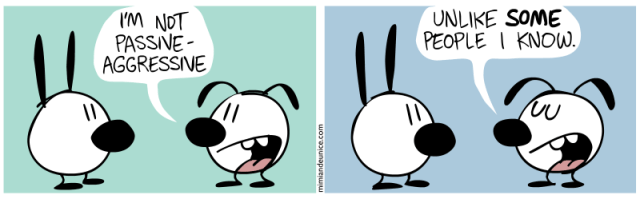
Ah, email. Everyone hates it, yet most of us use it for the majority of our communications with acquaintances, sales prospects, and pretty much everyone we do business with. We use email to brainstorm ideas, close deals, make pitches, and form new friendships and alliances. But it can also be a subtle tool that some people deploy with such precision that, like a razor-sharp rapier, you might be wounded before you even know what happened.
Some of the most effective email parries and thrusts are delivered in the form of passive-aggressive phrases–the kind that can impose an obligation, express ire, or even deliver an insult in such a nice and nonchalant way you won’t even know what hit you.
To put you on your guard, here’s a list of passive-aggressive email phrases and what they’re really saying. I’ve received almost every one of these. I bet you have too. I’ve used almost all of them as well. Because–unfortunately–they usually work.
1. “Thanks in advance.”
Translation: I’m already thanking you for doing me this favor, even though you haven’t yet agreed to it. Therefore, you must do it.
2. ” … I’d be most grateful.”
As in, “If you could respond to this inquiry any time within the next 24 hours, I’d be so grateful.” Another form of thanking someone in advance, with the same expected result.
3. “Can I send you some information?”
This is a classic sales technique that, as someone who gets lots of pitches, can drive me straight up the wall. If you’re going to mail me a book, it makes sense to ask my permission first. For anything else, the investment on your end is exactly the same whether you send me an email asking to send information or just go ahead and email the information. The only purpose of asking first is to create some sort of commitment that I’ll pay attention to that information. And to waste everyone’s time with two emails instead of one.
4. “Any interest in … ?”
Usually this is used to try to create what we in publishing call a “curiosity gap.” It’s followed by insufficient information–just enough to try to get a rise out of the recipient. As in, “Any interest in learning about a brilliant new innovation that will change the way you do business forever?” Say yes and you may feel obligated to buy. Say no and you may feel like you’re missing the boat.
5. “Looking forward to … “
” … hearing from you soon,” ” … working with you,” ” … learning more about your needs,” etc., etc. It’s the same idea as “Thanks in advance.” I’m already looking forward to your positive response. If I don’t get it, I’ll be disappointed. (Of course, this phrase is perfectly fine if it refers to something the recipient has already agreed to, for instance if you have a meeting scheduled the following day.)
6. “I hope you don’t mind … “
Translation: I’ve done something or am planning to do something when I should have obtained your permission first. This phrase should be a red flag every time it’s used.
7. “Just wondering … “
This is often used when making what you know is an unreasonable request. “Just wondering if you might have any free time tomorrow when I’m going to be in your city?” Translation: I probably shouldn’t be asking this, but I am anyway
8. “Checking in.”
As in, “I’m just checking in to see whether you’ve had a moment to review my latest proposal.” Translation: I’m going to keep sending you emails about this until you respond.
9. “Circling back.”
This is a relatively new and more aggressive version of “checking in.” As in, “Just circling back to see if you’ve reviewed my proposal.” The meaning of the word circle in this context is clear: I will keep coming around and around like a merry-go-round until you give me an answer.
10. “I don’t mean to be a pest.”
This statement is always a lie.
11. “FYI.”
This, of course, can be perfectly innocuous. But often it’s used when forwarding a message that a recipient might be unhappy about. Like the email I once got “just letting me know” about the harsh criticisms being lobbed at a project of mine that I might not have heard.
12. “See below.”
See above. This too can be used as a different form of “just letting you know.”
13. “Let me clarify.”
Often used as a lead-in to a more detailed or more explicit explanation of something the sender has said before. Translation: You completely misunderstood my last message, you idiot!
14. “Sorry for being unclear.”
I’ll admit to using this one sometimes myself. Sometimes I really was unclear and I am apologizing. Other times it means, “You didn’t really read what I wrote. Pay more attention this time!”
15. “Your thoughts?”
This could be a perfectly innocuous phrase, as in “We could go to the beach tomorrow. Or maybe we should go to the ballgame. Your thoughts?” But more often than not, it’s used to ask someone to comment on, or maybe even solve, a challenging problem or weigh in on a pernicious conflict.
And sometimes it’s a semi-subtle way of telling someone you think he or she has screwed up. As in, “It seems to me your latest actions could lead some investors and customers to believe you’ve completely given up on this company. Your thoughts?”
16. “All the best.”
This phrase, along with “Take care,” subtly or not so subtly indicates that the sender intends to end the conversation with this message. If it’s a continuing discussion, one might sign off with “Best,” “Sincerely,” or something equally neutral. “All the best” translates to: I wish you well in your future endeavors and I don’t expect to hear from you again. You definitely shouldn’t expect to hear from me again.
While researching the brain’s learning and memory system, scientists at Johns Hopkins say they stumbled upon a new type of nerve cell that seems to control feeding behaviors in mice. The finding, they report, adds significant detail to the way brains tell animals when to stop eating and, if confirmed in humans, could lead to new tools for fighting obesity. Details of the study were published by the journal Science today.
“When the type of brain cell we discovered fires and sends off signals, our laboratory mice stop eating soon after,” says Richard Huganir, Ph.D., director of the Department of Neuroscience at the Johns Hopkins University School of Medicine. “The signals seem to tell the mice they’ve had enough.”
Huganir says his team’s discovery grew out of studies of the proteins that strengthen and weaken the intersections, or synapses, between brain cells. These are an important target of research because synapse strength, particularly among cells in the hippocampus and cortex of the brain, is important in learning and memory.
In a search for details about synapse strength, Huganir and graduate student Olof Lagerlöf, M.D., focused on the enzyme OGT — a biological catalyst involved in many bodily functions, including insulin use and sugar chemistry. The enzyme’s job is to add a molecule called N-acetylglucosamine (GlcNAc), a derivative of glucose, to proteins, a phenomenon first discovered in 1984 by Gerald Hart, Ph.D., director of the Johns Hopkins University School of Medicine’s Department of Biological Chemistry and co-leader of the current study. By adding GlcNAc molecules, OGT alters the proteins’ behavior.
To learn about OGT’s role in the brain, Lagerlöf deleted the gene that codes for it from the primary nerve cells of the hippocampus and cortex in adult mice. Even before he looked directly at the impact of the deletion in the rodents’ brains, Lagerlöf reports, he noticed that the mice doubled in weight in just three weeks. It turned out that fat buildup, not muscle mass, was responsible.
When the team monitored the feeding patterns of the mice, they found that those missing OGT ate the same number of meals — on average, 18 a day — as their normal littermates but tarried over the food longer and ate more calories at each meal. When their food intake was restricted to that of a normal lab diet, they no longer gained extra weight, suggesting that the absence of OGT interfered with the animals’ ability to sense when they were full.
“These mice don’t understand that they’ve had enough food, so they keep eating,” says Lagerlöf.
Because the hippocampus and cortex are not known to directly regulate feeding behaviors in rodents or other mammals, the researchers looked for changes elsewhere in the brain, particularly in the hypothalamus, which is known to control body temperature, feeding, sleep and metabolism. There, they found OGT missing from a small subset of nerve cells within a cluster of neurons called the paraventricular nucleus.
Lagerlöf says these cells already were known to send and receive multiple signals related to appetite and food intake. When he looked for changes in the levels of those factors that might be traced to the absence of OGT, he found that most of them were not affected, and the activity of the appetite signals that many other research groups have focused on didn’t seem to be causing the weight gain, he adds.
Next, the team examined the chemical and biological activity of the OGT-negative cells. By measuring the background electrical activity in nonfiring brain cells, the researchers estimated the number of incoming synapses on the cells and found that they were three times as few, compared to normal cells.
“That result suggests that, in these cells, OGT helps maintain synapses,” says Huganir. “The number of synapses on these cells was so low that they probably aren’t receiving enough input to fire. In turn, that suggests that these cells are responsible for sending the message to stop eating.”
To verify this idea, the researchers genetically manipulated the cells in the paraventricular nucleus so that they would add blue light-sensitive proteins to their membranes. When they stimulated the cells with a beam of blue light, the cells fired and sent signals to other parts of the brain, and the mice decreased the amount they ate in a day by about 25 percent.
Finally, because glucose is needed to produce GlcNAc, they thought that glucose levels, which increase after meals, might affect the activity of OGT. Indeed, they found that if they added glucose to nerve cells in petri dishes, the level of proteins with the GlcNAc addition increased in proportion to the amount of glucose in the dishes. And when they looked at cells in the paraventricular nucleus of mice that hadn’t eaten in a while, they saw low levels of GlcNAc-decorated proteins.
“There are still many things about this system that we don’t know,” says Lagerlöf, “but we think that glucose works with OGT in these cells to control ‘portion size’ for the mice. We believe we have found a new receiver of information that directly affects brain activity and feeding behavior, and if our findings bear out in other animals, including people, they may advance the search for drugs or other means of controlling appetites.”
Researchers from Georgia Institute of Technology, backed by money from the Air Force, ran a test to see if people trying to escape from a high-rise building would trust a robot to lead them. Overwhelmingly, the sheeple followed the little droid to their simulated deaths.
The robot tried really hard to make itself look untrustworthy. It pretended to malfunction. It led people into rooms with no exits and then walked them around in circles. It pointed participants toward a dark room blocked by furniture. Still, participants deferred to the supposed authority of the little metal homunculus.
Researchers even manufactured a moment with the participants before the experiment began: The robot was meant to lead them to a conference room but behaved erratically along the way. These people were fooled into believing the robot was broken, and still, despite this, they stuck by the robot throughout the simulated fire until the researchers had to go in, retrieve them and tell them the test was over.
“We expected that if the robot had proven itself untrustworthy in guiding them to the conference room, that people wouldn’t follow it during the simulated emergency,” research engineer Paul Robinette said in a press release on the Georgia Tech website. “Instead, all of the volunteers followed the robot’s instructions, no matter how well it had performed previously. We absolutely didn’t expect this.”









 It's Interesting