Traffic ticket? State lawmaker says no problem, just burn it

A Republican Tennessee lawmaker says getting a traffic camera ticket isn’t a problem — he just burns them.

State Rep. Andy Holt set such ticket ablaze on Wednesday and posted the video to Facebook. A news release issued in conjunction with the Facebook video urges others who are issued traffic camera tickets in Tennessee to ignore them.

“What do you do if you get one? Throw it in the trash. Personally, I prefer to burn mine,” he said.

Knoxville Police Chief David Rausch said in an email Thursday to the Knoxville News Sentinel (http://bit.ly/1TH1DkL) that might not be a good idea. He called Holt’s advice unsound.

“No one likes to be caught violating traffic offenses, regardless of how they are caught, but they have a legal obligation to properly address it. Burning a citation or throwing it away is an emotional response that may feel good, but it does not make the violation and accountability go away,” Rausch said.

Holt is a longtime critic of traffic camera tickets and has previously called for banning them. In this year’s legislative session, he sponsored a bill that requires citations to include the following statement: “Nonpayment of this (citation) cannot adversely affect your credit score or report, driver’s license, and/or automobile insurance rates.”

http://bigstory.ap.org/e37818309fc045319ea29799821da178

Dead or Alive, Schrödinger’s Cat Can Be in 2 Boxes at Once, New Research Using Light Particles Reveals

schrodinger-cat-two-boxes

By Tia Ghose

Bizarrely behaving light particles show that the famous Schrödinger’s cat thought experiment, meant to reveal the strange nature of subatomic particles, can get even weirder than physicists thought.

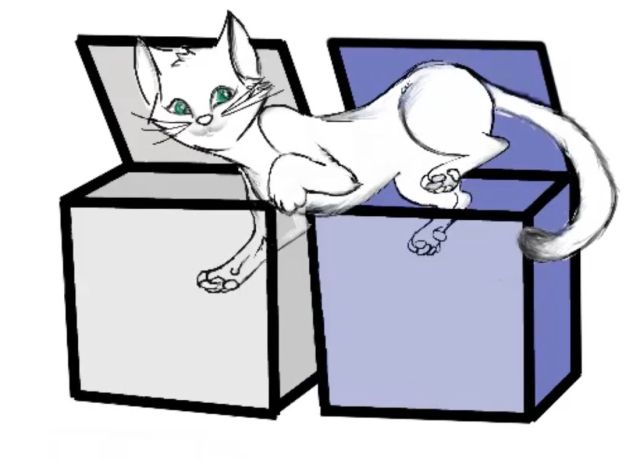
Not only can the quantum cat be alive and dead at the same time — but it can also be in two places at once, new research shows.

“We are showing an analogy to Schrödinger’s cat that is made out of an electromagnetic field that is confined in two cavities,” said study lead author Chen Wang, a physicist at Yale University. “The interesting thing here is the cat is in two boxes at once.”

The findings could have implications for cracking unsolvable mathematicalproblems using quantum computing, which relies on the ability of subatomic particles to be in multiple states at once, Wang said.

Cat experiment

The famous paradox was laid out by physicist Erwin Schrödinger in 1935 to elucidate the notion of quantum superposition, the phenomenon in which tiny subatomic particles can be in multiple states at once.

In the paradox, a cat is trapped in a box with a deadly radioactive atom. If the radioactive atom decayed, the cat was a goner, but if it had not yet decayed, the cat was still alive. Because, according to the dominant interpretation of quantum mechanics, particles can exist in multiple states until they are measured, logic dictated that the cat would be both alive and dead at the same time until the radioactive atom was measured.

Cat in two boxes

The setup for the new study was deceptively simple: The team created two aluminum cavities about 1 inch (2.5 centimeters) across, and then used a sapphire chip to produce a standing wave of light in those cavities. They used a special electronic element, called a Josephson Junction, to superimpose a standing wave of two separate wavelengths of light in each cavity. The end result was that the cat, or the group of about 80 photons in the cavities, was oscillating at two different wavelengths at once — in two different places. Figuring out whether the cat is dead or alive, so to speak, requires opening both boxes.

Though conceptually simple, the physical setup required ultrapure aluminum and highly precise chips and electromagnetic devices to ensure that the photons were as isolated from the environment as possible, Wang said.

That’s because at large scales, quantum superposition tends to disappear almost instantaneously, as soon as these superimposed subatomic particles whose fates are linked interact with the environment. Most of the time, this so-called decoherence would happen so quickly that researchers would have no time to observe the superposition, Wang said. So devices that keep coherence (or keep the particles in superposition) for long periods of time, known as the quality factor, is extremely important, Wang added.

“The quality of these things determines once you put a single excitation into the system, how long does it live, or does it die away,” Wang told Live Science.

If the excitation of the system — the production of the electromagnetic standing wave — is similar to the swing of a pendulum, then “our pendulum swings essentially tens of billions of times before it stops.”

The new findings could make for easier error correction in quantum computing, Wang said. In quantum computing, bits of information are encoded in the fragile superposition states of particles, and once that superposition is lost or corrupted, the data is also corrupted. So most quantum computing concepts involve a lot of redundancy.

“It’s well understood that 99 percent of computation or more will be done to correct for errors, rather than computation itself,” Wang said.

Their system could conceivably get around this problem by encoding the redundancy in the size of the cavity itself rather than in separate, calculated bits, Wang said.

“Demonstrating this cat in a ‘two boxes state’ is basically the first step in our architecture,” Wang said.

See more at: http://www.livescience.com/54890-schrodinger-cat-can-be-in-two-places.html#sthash.X4gB2Mc1.dpuf

Amino acid and phosphorous building blocks of life on Earth found in comet’s atmosphere

67p-jets
Instruments on the Rosetta spacecraft have detected compounds critical to life, including the amino acid glycine and the element phosphorus, in the shroud of gases surrounding Comet 67P/Churyumov-Gerasimenko

For the first time, scientists have directly detected a crucial amino acid and a rich selection of organic molecules in the dusty atmosphere of a comet, further bolstering the hypothesis that these icy objects delivered some of life’s ingredients to Earth.

The amino acid glycine, along with some of its precursor organic molecules and the essential element phosphorus, were spotted in the cloud of gas and dust surrounding Comet 67P/Churyumov-Gerasimenko by the Rosetta spacecraft, which has been orbiting the comet since 2014. While glycine had previously been extracted from cometary dust samples that were brought to Earth by NASA’s Stardust mission, this is the first time that the compound has been detected in space, naturally vaporized.

The discovery of those building blocks around a comet supports the idea that comets could have played an essential role in the development of life on early Earth, researchers said.

“With all the organics, amino acid and phosphorus, we can say that the comet really contains everything to produce life — except energy,” said Kathrin Altwegg of the University of Bern in Switzerland, the principal investigator for the Rosetta mission’s ROSINA instrument.

“Energy is completely missing on the comet, so on the comet you cannot form life,” Altwegg told Space.com. “But once you have the comet in a warm place — let’s say it drops into the ocean — then these molecules get free, they get mobile, they can react, and maybe that’s how life starts.”

Getting a glimpse

Glycine, one of the simplest amino acids, is usually bound up as a solid, which means it’s difficult to detect from afar, Altwegg said.

While scientists have searched for glycine through telescopes in star-forming regions of the sky, the newly reported detection marks the first sighting of the compound in space. In this case, the orbiting Rosetta was close enough to pick up the glycine released by the comet’s dust grains as they heated up in the sun.

The study is a powerful confirmation of earlier, earth-bound detections of life’s building blocks in comet and meteor material.

“We know the Earth was pretty heavily bombarded both with asteroidal material and cometary material,” said Michael A’Hearn, a comet researcher at the University of Maryland who was not involved in the new study.

“There have been various claims of amino acids in meteorites, but all of them have suffered from this problem of contamination on Earth. The Stardust [samples] — which are from a comet, not an asteroid — are probably the least susceptible to the terrestrial contamination problem, but even there the problem is severe,” A’Hearn told Space.com. “I think they [Stardust] really did have glycine, but this is a much cleaner detection in many ways.”

Cooking up life
Amino acids form the basis of proteins, which are complexly folded molecules that are critical to life on Earth. Altwegg’s team searched for other amino acids around the comet as well, but located only glycine — the only one that can form without liquid water (as in the frigid reaches of space).

The glycine probably didn’t form on the comet itself, Altwegg said, but rather in the broad stretches of dust and debris that made up the solar system before planetary bodies formed.

“The solar system was made out of material which formed in a disk, in a solar nebula,” Altwegg said. “In these clouds, it’s pretty cold, so the chemistry you do there is catalytic chemistry on the dust surfaces. And these very small dust grains [1 micron in size] are very good to lead to organic chemistry. This is also done in the lab.” Earth itself was far too hot for similar delicate amino acids to survive its formation, Altwegg said; only the smallest solar system bodies stayed cold.

So glycine formed during that time could have provided a boost to newly forming life if it was delivered to Earth by comets.

“It’s not that it couldn’t have formed on Earth — it certainly could — it’s just that it didn’t have to,” A’Hearn said. “Basically, the Earth got a head start.”

Other, more complex amino acids require liquid water, and so would have likely formed on Earth itself, Altwegg said. This idea is supported by the fact that Rosetta has not identified any amino acids other than glycine near Comet 67P.

Phosphorus is also vital to life as we know it. Among other things, the element is a key constituent of DNA and adenosine triphosphate (ATP), a molecule that stores the chemical energy used by cells.

See more at: http://www.space.com/33011-life-building-blocks-found-around-comet.html#sthash.47SrU6BY.dpuf

Thanks to Kebmodee for bringing this to the attention of the It’s Interesting community.

Neanderthals Likely Built These 176,000-Year-Old Underground Ring Structures

By Taylor Kubota

About 40,000 years before the appearance of modern man in Europe, Neanderthals in southwestern France were venturing deep into the earth, building some of the earliest complex structures and using fire.

That’s according to new research that more precisely dated bizarre cave structures built from stalagmites, or mineral formations that grow upward from the floor of a cave. Scientists discovered about 400 stalagmites and stalagmite sections that were collected and stacked into nearly circular formations about 1,100 feet (336 meters) from the entrance of Bruniquel Cave, which was discovered in 1990.

Dating these formations to a time when Neanderthals, but not modern humans, were present in Eurasia, makes the finding the oldest directly dated constructions attributed to Neanderthals, according to Marie Soressi, an archaeologist at Leiden University in the Netherlands, who wrote a News and Views article in the same issue of the journal Nature in which the original study is published.

Dating bone
Soot stains, heat fractures and burnt material, including bone, point to the likelihood that these circles were used to contain fires back in the day.

In 1995, some of the burnt bone was dated using carbon-14 dating, a technique that measures the ratio of carbon-14 to carbon-12; that ratio indicates about how long an organism has been dead. It was found to be 47,600 years old — the maximum age carbon-14 dating can attain.

More recently, lead author Jacques Jaubert, of the University of Bordeaux in France, and his colleagues revisited this site, with more advanced surveying and dating technology. Through a technique called uranium-series dating, which relies on the breakdown of uranium to thorium, they were able to estimate when the stalagmites were broken and moved into the circular formations. They found the installations are approximately 176,500 years old (give or take 2,000 years).

Human-made structures
These structures are “among the oldest known well-dated constructions made by humans,” Jaubert and his colleagues wrote in their research paper published yesterday (May 26) in the journal Nature.

Evidence of a human-made structure exists in Olduvai Gorge in Tanzania, dated at over 1 million years old. But this has not been studied extensively, Jaubert said. He added there is similarly little information about a Homo erectus campsite in Bilzingsleben, Germany (about 400,000 years old), early shelters in Terra Amata, France (about 400,000 years old), and the bone and stone materials found in France’s Lazaret cave (around 170,000 years old). Researchers have credited Neanderthals with making a building out of mammoth bone in Ukraine. They believe this is about 40,000 years old.

“In any case, there are many examples of concentrations [of] remains, hearths, lithic [stone] workshops, faunal structures … but never the structures of this magnitude. And in this deep cave context!” Jaubert wrote in an email to Live Science. Before the Bruniquel Cave discovery, the cave paintings of Chauvet, France, were the oldest evidence of cave use by humans or human ancestors. Those date back a mere 38,000 years.

The amazing Bruniquel Cave
The Bruniquel Cave is located on private property, overlooking the Aveyron Valley, near a tributary of the Tarn. This area is rich in Paleolithic sites (dated to about 2.6 million to 10,000 years ago). Near the entrance is another important paleontological site of a similar age or potentially older, Jaubert said. The cave has a narrow entrance and is 33 to 49 feet (10 to 15 meters) wide, 13 to 23 feet (4 to 7 m) high, and — as far as anyone knows — 1,581 feet (482 m) long.

When the cave was first discovered, speleologists (people who study caves) meticulously preserved its natural formations, which aside from the stalagmite circles, include translucent flowstone, an underground lake and calcite rafts, or thin sheets of calcite that formed on the surface of the lake. Calcite is a rock-forming mineral found in limestone and marble. The speleologists also took care to keep Bruniquel’s bone remains and dozens of bear hibernation hollows in pristine condition. A thick layer of calcite had coated all the structures, making dating techniques difficult to perform.

For the next two decades, very few people visited the cave, Jaubert said. He thinks part of this may have been due to the death of the original researcher, archaeologist Francois Rouzaud. Additionally, he said the cave is challenging to access, not only physically but also because it is on private property and there are many conditions that need to be met in order for the owners and the French Ministry of Culture to authorize new research.

In 2013, using 3D-surveying equipment and magnetic measurements that record anomalies caused by heat, researchers were able to map both the stalagmite structures and the burnt remnants. Stalagmite arrangements of this scale are unprecedented, so the research team created the term “speleofacts” to describe each piece of stalagmite used in the structures. They estimate there were about 400 speleofacts total, with a combined weight of between 2.3 and 2.6 tons (2.1 and 2.3 metric tonnes) and a combined length of 367 feet (112 m). Jaubert said the stalagmites were the only raw material available for building in the cave.

Social Neanderthals
Until now, Neanderthals were “presumed by the scientific community not to have ventured far underground, nor to have mastered such sophisticated use of lighting and fire, let alone to have built such elaborate constructions,” according to a statement by the National Center for Scientific Research.

“This type of construction implies the beginnings of a social organization: This organization could consist of a project that was designed and discussed by one or several individuals, a distribution of the tasks of choosing, collecting and calibrating the speleofacts, followed by their transport (or vice versa) and placement according to a predetermined plan,” wrote the researchers in the Naturearticle. The researchers also said this process would have required adequate lighting and determined that the fires in the cave were likely used as light sources.

Given their distance from the cave entrance and daylight, the team said it was unlikely the circles were used as shelters. They didn’t rule out the possibility that they could have been used for technical purposes, such as water storage, or religious or ceremonial purposes. Jaubert said the next steps in studying the cave will include further examination of the structures, a more extensive survey of the cave’s interior to uncover any additional archaeological remains, and a closer look at the cave’s entrance.

The find has added extensively to scientists’ knowledge of Neanderthal social organization and human cave dwelling in prehistory, the researchers said. Even so, they added, the question remains: What were the structures used for?

– See more at: http://www.livescience.com/54906-neanderthals-built-bizarre-underground-ring-structures.html?#sthash.zM2MKLXT.dpuf

Longtime Couples Get In Sync, In Sickness And In Health

by Lindsay Peterson

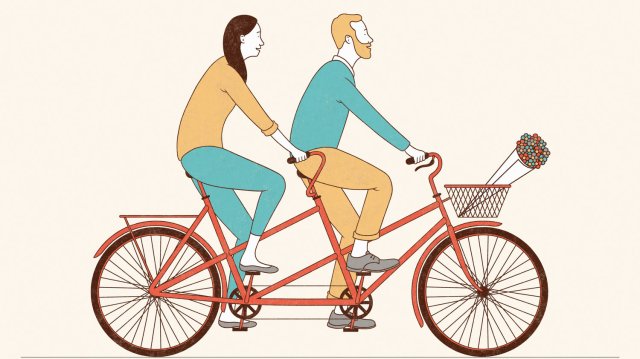
We think of aging as something we do alone, the changes unfolding according to each person’s own traits and experiences. But researchers are learning that as we age in relationships, we change biologically to become more like our partners than we were in the beginning.

“Aging is something that couples do together,” says Shannon Mejia, a postdoctoral research fellow involved in relationship research at the University of Michigan in Ann Arbor. “You’re in an environment together, and you’re appraising that environment together, and making decisions together.” And through that process, you become linked physically, not just emotionally.

It’s like finishing each other’s sentences, but it’s your muscles and cells that are operating in sync.

Doctors tend to treat people as individuals, guided by the need to ensure patient confidentiality. But knowing about one partner’s health can provide key clues about the other’s. For instance, signs of muscle weakening or kidney trouble in one may indicate similar problems for the other.

Looking at married couples who were together less than 20 years and couples together for more than 50, Mejia and her colleagues have found striking similarities between partners who have spent decades together, especially in kidney function, total cholesterol levels and the strength of their grips, which is a key predictor of mortality. They presented their findings at the annual meeting of the Gerontological Society of America.

The data came from 1,568 older married couples across the United States. The couples were part of a larger dataset that included information on their income and wealth, employment, family connections and health, including information based on blood tests.

One obvious reason for partner similarity is that people often choose partners who are like them — people from the same stock, with similar backgrounds. But that didn’t explain why there were more similarities between the long-time partners, compared to the others.

To learn more about this element of partner choice versus spending decades together, the researchers analyzed couples by age, education and race. When they accounted for the effect of partner choice, they found that the biological similarities persisted, based on markers in blood tests.

The way Mejia puts it, this likeness includes “something the couples co-created” over time, not just what they started with because they were similar at the beginning.

She’s now studying what may be causing these “co-created” biological similarities. “We’re working on a few things,” she said, such as the effect of partners’ shared experiences and of sharing an environment where they have similar advantages and disadvantages, like the ability to walk in their neighborhoods or find other ways to stay active.

Mejia’s work follows that of Christiane Hoppmann, an associate professor at the University of British Columbia, in Vancouver. She and her colleagues found that longtime couples experienced similar levels of difficulty with daily tasks, such as shopping for food, making a hot meal and taking medications. They found the same for depression, and with both depression and daily task difficulties, they found that the couples changed, for better or for worse, in sync.

They also found that the effects crossed over from the mental to the physical. In other words, increases in feelings of depression in one spouse led to more daily task limitations in the other.

Hoppmann and Denis Gerstorf, of Humboldt University in Berlin, suggest that a key factor here could be physical activity. For instance, if a depressed partner refuses to leave the house, the other may feel compelled to remain at home, too. The longer the two remain sedentary, the more vulnerable they become to a range of problems, from worsening depression to diabetes, that can limit their ability to function from day to day.

But the news in these partner studies is not all bad.

William Chopik, an assistant professor of psychology at Michigan State University, has found evidence of the power of optimism. He and his research colleagues studied optimism, in addition to health and activity limitations, in 2,758 older couples in a national dataset. Optimism scores came from a test that measured their level of agreement or disagreement with statements such as “in uncertain times, I usually expect the best.”

The researchers found that over a four-year period, when one partner’s optimism increased, the other partner experienced fewer illnesses such as diabetes and arthritis compared to people whose partners did not become more optimistic. So, “the fact that (your spouse) increased in optimism is good for you,” even if your optimism didn’t rise, Chopik said.

He isn’t sure why this is happening in their study, also presented at the Gerontological Society meeting. He and his colleagues had accounted for age, gender and education differences. He speculates that optimists are more likely to live healthy lives and use their influence over their partners to get them to live healthier, too.

Chopik is currently studying how two partners’ levels of cortisol, a hormone related to stress, change and become coordinated over time. He plans to compare couples whose relationships span at least 40 years to those who have been together for less than two.

These investigations of how couples affect each other’s health are relatively new, particularly the research into the biological changes, and the researchers are still searching for explanations.

Nevertheless, they say, the implications for health care are clear. People in relationships don’t experience chronic health problems on their own. When a spouse comes in with a problem, the other spouse could be part of the cause — or the solution.

http://www.npr.org/sections/health-shots/2016/05/22/478826744/longtime-couples-get-in-sync-in-sickness-and-in-health

That New Superbug Was Found in a UTI and That’s Key

BR3GWM bacteria streaked and grows on an agar plate in the lab

by SARAH ZHANG

THE WOMAN HARBORING E. coli resistant to colistin did not know it, and it’s only luck that we do. Her doctor would have never prescribed that last-resort antibiotic for a routine urinary tract infection—it can cause serious kidney damage. But her doctor did take a urine sample, which ended up at the Walter Reed National Military Medical Center, where researchers had recently started testing for colistin resistance. The test came back positive. Then the came scary headlines about a new superbug in the US.

Superbugs are bacteria with genetic mutations that let them survive humanity’s harshest weapons in germ warfare: antibiotics. The gene behind this E. coli’s colistin resistance is called mcr-1. It first emerged last year when Chinese researchers found it in samples from hospital patients and raw pork. Why pork? Colistin’s serious side effects mean it’s no longer used as a human antibiotic in many countries. But in China, farmers have been adding it by the pound into feed to fatten animals up.

Once epidemiologists knew to look for mcr-1, they found it in Malaysia, England and then the rest of Europe. It was only a matter of time before colistin resistance turned up in the US. On the same day news came out about this woman’s colistin-resistant UTI, the Department of Health and Human Services also announced it found mcr-1 in a sample from a pig intestine.

Colistin is not used in animal feed in the US, so it’s unclear how colistin-resistant bacteria ended up infecting that woman—or that pig. But food and people move freely across borders. And more even seriously, US animal farmers do use other antibiotics—even human ones—on chicken, pigs, and cows. A growing body of research has linked antibiotic use in food animals to drug-resistant bouts of food poisoning from salmonella, campylobacter, and MRSA. Even more interesting is a possible link between antibiotics on meat and urinary tract infections, which science journalist Maryn McKenna has covered extensively. The Food and Drug Administration issued a guidance last year for farms to phase out medically important antibiotics, though only voluntarily.


The Rise of the Drug-Resistant UTI

Urinary tract infections are damn common—annoyingly common if you ask many women. And antibiotic resistant UTIs are on the rise, too: From 2000 to 2010, the number of UTIs resistant to the antibiotic Cipro went from 3 percent to 17.1 percent. Because UTIs afflict so many people, they’re fairly representative antibiotic resistance out there in people community—especially compared to the resistant infections that epidemiologists tend to study most intensely, like ones that kill already sick hospital patients. “UTIs are a good picture of what people are being exposed to on a daily basis” says Amee Manges, an epidemiologist at the University of British Columbia. Case in point: That colistin-resistant bacteria in the woman from Philadelphia.

Manges has spent the past fifteen years studying the link between antibiotic use in meat production, especially poultry, and UTIs. Back when she was working on her doctoral thesis at the University of California, Berkeley, she kept seeing young, otherwise healthy students with UTIs. Originally, she thought she was going to track sexual transmission of the E. coli that caused such infections. With that kind of sporadic sexual transmission, she should have seen many different strains. But when she DNA fingerprinted the bacteria, she found they were all the same strain—the same pattern you’d see from a single source, like if the campus cafeteria gave everyone food poisoning. She was never able to trace those UTI cases back to the original source, but she’s been working on the question ever since.

UTIs are so hard to trace because the infection might not set in until long after a patient first acquired to bacteria. Say a woman eats some undercooked chicken. “The bacteria just hangs out in your intestine for months or possibly years,” says Manges. Then you get risk factor for UTI—sex or a catheter insertion—and that bacteria makes its way from, ahem, the end of your gut to the urethra. But getting people to remember what they ate a week ago is hard. Getting people to remember what they ate a year ago? Hahaha.

The Surveillance Net
Nevertheless, Manges and others have found that strains on meat match strains found in UTIs. Because of the difficulty in tracing UTIs, that evidence is not as ironclad as the evidence for antibiotics use and antibiotic-resistant food poisoning. With routine surveillance of UTIs though, epidemiologists could get a better handle of not only resistant bacteria that come from meat—but also other sources like drinking water or travel or family members being in the hospital. But that surveillance doesn’t happen. “There’s no organized infrastructure to get a good handle about resistance rates across communities,” says Kalpana Gupta, an infectious disease specialist at Boston University.

When patients walk in with UTIs, doctors will often hand out antibiotics without doing a urine culture. Growing the bacteria takes two days—testing for antibiotic-resistance a third—and by that time the patient is usually on the mend already. The fact that the women in Philadelphia got tested was unusual. The fact that her sample was tested against colistin even more so. As Gupta says, “Colistin is not something we would even use to treat UTIs.” (Resistance to another class of antibiotics triggered that extra test in this case.)

The Centers for Disease Control and Prevention is now following up with the woman in Philadelphia to find out she ended up with that colistin-strain of E. coli, which has never been found in the US before. Her infection was fortunately not resistant to all antibiotics. But what makes the colistin-resistance gene mcr-1 so worrisome is that it’s on a small loop of DNA that different bacteria easily swap back and forth. Someday, another bacteria already immune to all other antibiotics will pick up mcr-1, too. It’s only a matter of time.

The wider the surveillance net though, the more quickly we’ll find it.

In Search For Cures, Scientists Create Embryos That Are Both Animal And Human

A handful of scientists around the United States are trying to do something that some people find disturbing: make embryos that are part human, part animal.

The researchers hope these embryos, known as chimeras, could eventually help save the lives of people with a wide range of diseases.

One way would be to use chimera embryos to create better animal models to study how human diseases happen and how they progress.

Perhaps the boldest hope is to create farm animals that have human organs that could be transplanted into terminally ill patients.

But some scientists and bioethicists worry the creation of these interspecies embryos crosses the line. “You’re getting into unsettling ground that I think is damaging to our sense of humanity,” says Stuart Newman, a professor of cell biology and anatomy at the New York Medical College.

The experiments are so sensitive that the National Institutes of Health has imposed a moratorium on funding them while officials explore the ethical issues they raise.

Nevertheless, a small number of researchers are pursuing the work with alternative funding. They hope the results will persuade the NIH to lift the moratorium.

“We’re not trying to make a chimera just because we want to see some kind of monstrous creature,” says Pablo Ross, a reproductive biologist at the University of California, Davis. “We’re doing this for a biomedical purpose.”

The NIH is expected to announce soon how it plans to handle requests for funding.

Recently, Ross agreed to let me visit his lab for an unusual look at his research. During the visit, Ross demonstrated how he is trying to create a pancreas that theoretically could be transplanted into a patient with diabetes.

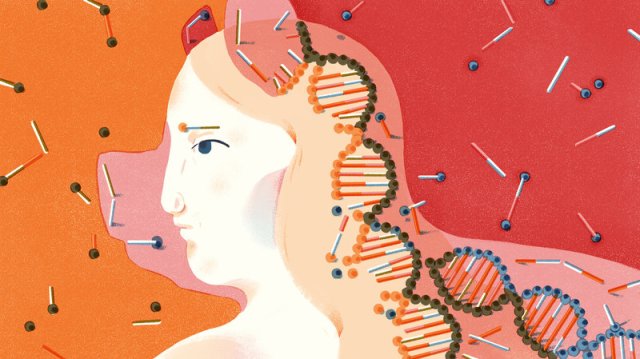
The first step involves using new gene-editing techniques to remove the gene that pig embryos need to make a pancreas.

Working under an elaborate microscope, Ross makes a small hole in the embryo’s outer membrane with a laser. Next, he injects a molecule synthesized in the laboratory to home in on and delete the pancreas gene inside. (In separate experiments, he has done this to sheep embryos, too.)

After the embryos have had their DNA edited this way, Ross creates another hole in the membrane so he can inject human induced pluripotent stem cells, or iPS for short, into the pig embryos.

Like human embryonic stem cells, iPS cells can turn into any kind of cell or tissue in the body. The researchers’ hope is that the human stem cells will take advantage of the void in the embryo to start forming a human pancreas.

Because iPS cells can be made from any adult’s skin cells, any organs they form would match the patient who needs the transplant, vastly reducing the risk that the body would reject the new organ.

But for the embryo to develop and produce an organ, Ross has to put the chimera embryos into the wombs of adult pigs. That involves a surgical procedure, which is performed in a large operating room across the street from Ross’s lab.

The day Ross opened his lab to me, a surgical team was anesthetizing an adult female pig so surgeons could make an incision to get access to its uterus.

Ross then rushed over with a special syringe filled with chimera embryos. He injected 25 embryos into each side of the animal’s uterus. The procedure took about an hour. He repeated the process on a second pig.

Every time Ross does this, he then waits a few weeks to allow the embryos to develop to their 28th day — a time when primitive structures such as organs start to form.

Ross then retrieves the chimeric embryos to dissect them so he can see what the human stem cells are doing inside. He examines whether the human stem cells have started to form a pancreas, and whether they have begun making any other types of tissues.

The uncertainty is part of what makes the work so controversial. Ross and other scientists conducting these experiments can’t know exactly where the human stem cells will go. Ross hopes they’ll only grow a human pancreas. But they could go elsewhere, such as to the brain.

“If you have pigs with partly human brains you would have animals that might actually have consciousness like a human,” Newman says. “It might have human-type needs. We don’t really know.”

That possibility raises new questions about the morality of using the animals for experimentation. Another concern is that the stem cells could form human sperm and human eggs in the chimeras.

“If a male chimeric pig mated with a female chimeric pig, the result could be a human fetus developing in the uterus of that female chimera,” Newman says. Another possibility is the animals could give birth to some kind of part-human, part-pig creature.

“One of the concerns that a lot of people have is that there’s something sacrosanct about what it means to be human expressed in our DNA,” says Jason Robert, a bioethicist at Arizona State University. “And that by inserting that into other animals and giving those other animals potentially some of the capacities of humans that this could be a kind of violation — a kind of, maybe, even a playing God.”

Ross defends what his work. “I don’t consider that we’re playing God or even close to that,” Ross says. “We’re just trying to use the technologies that we have developed to improve peoples’ life.”

Still, Ross acknowledges the concerns. So he’s moving very carefully, he says. For example, he’s only letting the chimera embryos develop for 28 days. At that point, he removes the embryos and dissects them.

If he discovers the stem cells are going to the wrong places in the embryos, he says he can take steps to stop that from happening. In addition, he’d make sure adult chimeras are never allowed to mate, he says.

“We’re very aware and sensitive to the ethical concerns,” he says. “One of the reasons we’re doing this research the way we’re doing it is because we want to provide scientific information to inform those concerns.”

Ross is working with Juan Carlos Izpisua Belmonte from the Salk Intitute for Biological Studies in La Jolla, Calif., and Hiromitsu Nakauchi at Stanford University. Daniel Garry of the University of Minnesota and colleagues are conducting similar work. The research is funded in part by the Defense Department and the California Institute for Regenerative Medicine (CIRM).

http://www.npr.org/sections/health-shots/2016/05/18/478212837/in-search-for-cures-scientists-create-embryos-that-are-both-animal-and-human

Thanks to Kebmodee for bringing this to the attention of the It’s Interesting community.

The Tardigrade – an indestructible life form

American Typewr... Aldo the Apache
American Typewr…
Aldo the Apache

After being locked in a deep freeze for more than 30 years, two microscopic creatures called tardigrades have been resuscitated, with one of the adults getting busy with reproduction “immediately” and “repeatedly,” scientists reported. Scientists were even able to revive a tardigrade egg after it spent the past three decades cooling its jets alongside the mature duo in a researcher’s freezer.

Their findings shattered the previous preservation and revival record for tardigrades and their eggs, which had been eight years for frozen tardigrades and nine years for dried eggs stored at room temperature.

Scientists retrieved the two microscopic Acutuncus antarcticus hitchhikers and one egg from a piece of frozen moss that had been collected in Antarctica in 1983. For years, the moss was kept frozen at minus 4 degrees Fahrenheit (minus 20 degrees Celsius.) During that time, the tardigrades maintained a state known as “cryptobiosis,” showing no visible signs of life and with their metabolic processes at a standstill. But after more than 30 years in this suspended state, they were brought back to life. Scientists rehydrated them and video-recorded the results, observing that after just one day, a revived tardigrade was tentatively stretching a pair of its stubby legs. Six days after rehydration, the tardigrade was moving its body, as though it were trying to lift itself, the researchers noted. After 13 days had passed, the animal was eating algae, its first meal in decades, And after 22 days, eggs were visible inside the tardigrade’s chubby body. It eventually laid 19 eggs. A. antarcticus reproduce through parthenogenesis, which means that their embryos grow and develop without fertilization, and in this instance, a total of 14 hatchlings emerged. The other tardigrade survived for just 20 days after rehydration, and died without reproducing. But the frozen egg hatched and produced a larva that went on to lay 15 eggs, of which seven hatched successfully.

Tardigrades, which also go by the endearing names “water bears” and “moss piglets,” measure about 0.02 inches (0.5 mm) long. They have eight limbs tipped with clawlike structures that propel their plump, segmented bodies through a variety of watery, algae-rich environments all over the world. But they have a hidden superpower — surviving adverse conditions such as extreme heat or cold that would kill just about any other form of life. Tardigrades were even sent into low-Earth orbit in 2007, where they weathered exposure to space’s vacuum, cosmic rays and solar ultraviolet radiation. Their secret lies in an ability to expel all the water in their cells and generate a protective coating, suspending them in a deathlike but still-living state that they can maintain until conditions improve. Other tiny creatures are known for similar long-term preservation capabilities. The researchers described prior studies that revived refrigerated adult and larval nematodes, microscopic worms, after as long as 39 years. But reviving a tardigrade after 30 years is unprecedented, and their ability to reproduce after a brief recovery period is a testament to their durability. It also raises questions about their preservation mechanisms, and how they and other organisms can survive a deep-freeze recover, and how they repair cellular and DNA damage when they’re restored to life, Megumu Tsujimto, the lead researcher at National Institute of Polar Research, said in a statement. Looks like the cold never bothered them anyway. The study was published online Feb. 16 in the journal Cryobiology

See more at: http://www.livescience.com/53781-tardigrade-revived-after-30-years.html#sthash.cF8xM2Fn.dpuf

Weighted blankets may help treat anxiety

tress, anxiety, and insomnia affect millions of people worldwide, and to alleviate the symptoms, there are a variety of routes one can take, including the ever-popular pharmaceutical pills. But as our world continues to break through the madness of synthetic options and expose each other to holistic options derived from both ancient teachings as well as present-day healers, it’s important we keep our eyes and ears open for our own good.

Anyone who suffers from the above disorders knows the word “simple” doesn’t quite fit with how they feel. In fact, it seems to be very much the opposite: a complex feeling that can barely be put into words. So, how can something as simple as sleeping with weighted blankets be a plausible solution to stress, anxiety, insomnia, and more?

Called deep pressure touch stimulation, (or DPTS), this type of therapy is similar to getting a massage. Pressure is exerted over the body and provides both physical and psychological benefits. Deep touch pressure, according to Temple Grandin, Ph.D., “is the type of surface pressure that is exerted in most types of firm touching, holding, stroking, petting of animals, or swaddling.” In comparison to very light touching, which has been found to alert the nervous system, deep pressure proves to be relaxing and calming.

Weighted blankets have been traditionally used by occupational therapists as a means to help children with sensory disorders, anxiety, stress, or issues related to autism, and research continues to support this practice. One study, using the Grandin’s Hug Machine device, which allows administration of lateral body pressure, investigated the effects of deep pressure as a tool for alleviating anxiety related to autism. The researchers found “a significant reduction in tension and a marginally significant reduction in anxiety for children who received the deep pressure compared with the children who did not.”

Of weighted blankets specifically, occupational therapist Karen Moore says in psychiatric care, “weighted blankets are one of our most powerful tools for helping people who are anxious, upset, and possibly on the verge of losing control.”

One study, published in Occupational Therapy in Mental Health in 2008, showed that weighted blankets helped with anxiety, and another study published in Australasian Psychiatry in 2012 confirmed this.

Weighted blankets are like warm hugs. They mold to your body to provide pressure that aids in relaxing the nervous system. Think of it like a baby being swaddled — the weight and pressure work to comfort and provide much-needed relief, encouraging the production of serotonin in order to uplift your mood. This same chemical naturally converts to melatonin, which signals your body to rest and relax. Weighted blankets are perfect for anyone looking to try out a non-drug therapy that is both safe and effective.

To weigh the blankets down, plastic poly pellets are typically used, being sewn into compartments throughout the blanket for even weight distribution. The weight of the blanket serves as a deep touch therapy, stimulating deep touch receptors all over your body that promote a more grounded and safe feeling to the individual.

Though the weight of the blanket depends on your size and personal preference, a standard weight for adults ranges from 15 to 30 pounds. It is recommended to speak with a doctor or occupational therapist regarding using one if you are suffering from a medical condition. It is also strongly advised not to use a weighted blanket should you be suffering from a respiratory, circulatory, or temperature regulation problem.

As for where you can buy them, there are many websites you can purchase them from, providing you with different weights, fabrics, colors, and sizes to personalize your experience. You can even make your own as well.

http://www.collective-evolution.com/2016/05/20/how-weighted-blankets-are-helping-people-with-anxiety/

New way to generate electric power from seawater


Scientists have successfully developed a method of producing electricity from seawater, with help from the Sun. Instead of harvesting hydrogen, the new photoelectrochemical cell produces hydrogen peroxide for electricity.

Researchers at Osaka University found a way to turn seawater—one of the most abundant resources on Earth—into hydrogen peroxide (H2O2) using sunlight, which can then be used to generate electricity in fuel cells. This adds to the ever growing number of existing alternative energy options as the world continues to move towards green energy.

“Utilization of solar energy as a primary energy source has been strongly demanded to reduce emissions of harmful and/or greenhouse gases produced by burning fossil fuels. However, large fluctuation of solar energy depending on the length of the daytime is a serious problem. To utilize solar energy in the night time, solar energy should be stored in the form of chemical energy and used as a fuel to produce electricity,” the researchers wrote in their paper.

Previous technologies focused on splitting the molecules of pure water to harvest hydrogen.

As previously mentioned, the new research, instead of harvesting hydrogen from pure water, turns seawater into hydrogen peroxide. Gaseous hydrogen production from pure water has a lower solar energy conversion and is much harder to store, whereas the team notes, “H2O2 can be produced as an aqueous solution from water and O2 in the air.”

It is also much easier and safer to store and transport in higher densities, compared to highly compressed hydrogen gas.

There are other methods of producing H2O2, but they are impractical in that the processes themselves require a lot of energy, essentially defeating the purpose. This is the first time someone developed a photocatalytic method efficient enough to make H2O2 use in fuel cells viable.

The process involves a new photoelectrochemical cell developed to produce H2O2 when sunlight illuminates the photocatalyst, which then absorbs photons and initiates chemical reactions with the energy, resulting in H2O2.

A test conducted for 24 hours shows that the H2O2 concentration in seawater reached about 48mM (millimolar), compared to 2mM in pure water. Researchers found that this was made possible by seawater’s negatively charged chlorine enhancing the photocatalysis.

That said, this method isn’t yet as good as other solar power processes, but it’s a start. Researchers aim to improve efficiency with better materials and lower costs.

“In the future, we plan to work on developing a method for the low-cost, large-scale production of H2O2 from seawater,” Fukuzumi said. “This may replace the current high-cost production of H2O2 from H2 (from mainly natural gas) and O2.”

http://futurism.com/theres-a-new-way-to-generate-power-using-seawater/