Air pollution linked to increased mental illness in children


Relatively small increases in air pollution were associated with a significant increase in treated psychiatric problems, the research showed.

by Damian Carrington

A major new study has linked air pollution to increased mental illness in children, even at low levels of pollution.

The new research found that relatively small increases in air pollution were associated with a significant increase in treated psychiatric problems. It is the first study to establish the link but is consistent with a growing body of evidence that air pollution can affect mental and cognitive health and that children are particularly vulnerable to poor air quality.

The research, published in the peer-reviewed journal BMJ Open, examined the pollution exposure of more than 500,000 under-18s in Sweden and compared this with records of medicines prescribed for mental illnesses, ranging from sedatives to anti-psychotics.

“The results can mean that a lower concentration of air pollution, first and foremost from traffic, may reduce psychiatric disorders in children and adolescents,” said Anna Oudin, at Umeå University, who led the study. “I would be worried myself if I lived in an area with high air pollution.”

Prof Frank Kelly, at King’s College London, said the research was important. “This builds on existing evidence that children are particularly sensitive to poor air quality probably because their lifestyles increase the dose of air pollution they are exposed too – ie they are more active – and that developing organs may be more vulnerable until they fully mature.”

Air pollution in the UK is above legal limits in many cities and estimated to cause 40,000 early deaths a year, though this only includes illnesses such as lung disease, heart attacks and strokes.

The EU and WHO limit for nitrogen dioxide (NO2) is 40mcg/m3 (micrograms per cubic metre), but levels can reach many times that in polluted cities like London. The researchers found that a 10mcg/m3 increase in NO2 corresponded to a 9% increase in mental illness in the children. For the same increase in tiny particulate matter (PM2.5 and PM10), the increase was 4%.

One striking aspect of the new research is that Sweden has low levels of air pollution, but the researchers still saw the link even below levels of 15mcg/m3. “Sweden is not a country that suffers from very bad air quality, said Kelly. “This suggests that other countries and cities have an even bigger challenge, as they will have to make significant improvements to their air quality so that it is even cleaner than Sweden’s.”

It is not possible to say from this study what would happen to rates of mental illness at higher levels of air pollution, but Oudin said they could rise: “In all the air pollution studies I have been involved in, the effects seem to be linear.”

This type of research cannot prove a causal link between the air pollution and increases in mental illness, but there is a plausible mechanism. “We know air pollution can get into bodies and brains and cause inflammation,” said Oudin. Animal studies indicate that inflammation is associated with a range of psychiatric disorders.

There have also been several earlier studies that found associations between air pollution and autism spectrum disorders and learning and development in children. “This study adds to evidence that air pollution may have detrimental effects on the brains of children and adolescents,” the Swedish researchers said.

In May, the Guardian revealed an unpublished air pollution report that demonstrated that 433 schools in London are located in areas that exceed EU limits for NO2 pollution and that four-fifths of those are in deprived areas. In May, a WHO report concluded that air pollution was rising at an “alarming rate” in the world’s cities, while a report in September found 3 million people a year suffer early deaths around the world from air pollution.

The new Swedish paper concludes: “The severe impact of child and adolescent mental health problems on society, together with the plausible and preventable association of exposure to air pollution, deserves special attention.”

Harvard vault protects the world’s rarest colors


The most unusual colors from Harvard’s storied pigment library include beetle extracts, poisonous metals, and human mummies.

Today, every color imaginable is at your fingertips. You can peruse paint swatches at hardware stores, flip through Pantone books, and fuss with the color finder that comes with most computer programs, until achieving the hue of your heart’s desire. But rewind to a few centuries ago and finding that one specific color might have meant trekking to a single mineral deposit in remote Afghanistan—as was the case with lapis lazuli, a rock prized for its brilliant blue hue, which made it more valuable than gold in medieval times.

The history of pigments goes back to prehistoric times, but much of what we know about how they relate to the art world comes from Edward Forbes, a historian and director of the Fogg Art Museum at Harvard University from 1909 to 1944. Considered the father of art conservation in the United States, Forbes traveled around the world amassing pigments in order to authenticate classical Italian paintings. Over the years, the Forbes Pigment Collection—as his collection came to be known—grew to more than 2,500 different specimens, each with its own layered backstory on its origin, production, and use.

Today, the collection is used mostly for scientific analysis, providing standard pigments to compare to unknowns. Narayan Khandekar is the director of the Straus Center for Conservation and Technical Studies at the Harvard Art Museums and the collection’s custodian. For the last 10 years, Khandekar has rebuilt the collection to include modern pigments to better analyze 20th century and contemporary art.

A lot has changed in the art world since painters worked with “colormen”—as tradesmen in dyes and pigments were known—to obtain their medium. The commercialization of paints has transformed that process. “Artists today will use anything to get the idea that’s in their head into a physical form,” Khandekar says. “It could be pieces of plastic. It could be cans of food. It could be anything. We need to be able to identify lots of different materials that are industrially produced as well as things that are produced specifically for artists’ use.”

The way he describes his work researching and cataloging pigments is akin to detective work. “We use our instruments in the same way that forensic scientists do,” Khandekar says. “We examine and find out what we can about the key compounds that will tell us the material’s origin.” But instead of tools such as DNA analysis, he and his team of conservation scientists use techniques such as Raman spectroscopy, mass spectrometry, gas chromatography, and electron microscopy to map out the precise chemical composition of a pigment.

For example, their work was instrumental in proving that a Jackson Pollock painting “rediscovered” in 2007 was actually a fake, after pigment analysis revealed that a specific red color was manufactured 20 years after the artist’s death. The color, Red 254, was a by-product of a chemical reaction first documented in 1974; it’s also nicknamed
“Ferrari red.”

“Every pigment has its own story,” Khandekar says. With that in mind, we asked him to share the stories of 10 of the rarest and most interesting pigments in the Forbes collection.


Synthetic Ultramarine

“This was discovered in 1826 as the result of a contest. In a way it is like discovering how to make gold as artists no longer had to buy natural ultramarine at great cost.”

Mummy Brown
“People would harvest mummies from Egypt and then extract the brown resin material that was on the wrappings around the bodies and turn that into a pigment. It’s a very bizarre kind of pigment, I’ve got to say, but it was very popular in the 18th and 19th centuries.”

Brazilwood
“Brazilwood is any of several tropical trees of the senna genus. Its hard, red-color wood has had limited use for violins, bows, veneer, and high-quality furniture. The wood contains the colorant brasilin, which gives a deep-red to brownish color. Brazilwood dye has been used for textile and leather dyes, inks, paints, varnish tints, and wood stains.”

Quercitron
“A yellow vegetable dye, quercitron is extracted from the black or dark brown bark of the black oak, Quercus velutina, that is native to the Eastern and Midwestern parts of the United States.”

Annatto
“The lipstick plant—a small tree, Bixa orellana, native to Central and South America—produces annatto, a natural orange dye. Seeds from the plant are contained in a pod surrounded with a bright red pulp. Currently, annatto is used to color butter, cheese, and cosmetics.”

Lapis Lazuli
“People would mine it in Afghanistan, ship it across Europe, and it was more expensive that gold so it would have its own budget line on a commission.”

Dragon’s Blood
“It has a great name, but it’s not from dragons. [The bright red pigment] is from the rattan palm.”

Cochineal
“This red dye comes from squashed beetles, and it’s used in cosmetics and food.”

Cadmium Yellow
“Cadmium yellow was introduced in the mid 19th century. It’s a bright yellow that many impressionists used. Cadmium is a heavy metal, very toxic. In the early 20th century, cadmium red was introduced. You find these pigments used in industrial processes. Up until the 1970s, Lego bricks had cadmium pigment in them.”


Emerald Green

“This is made from copper acetoarsenite. We had a Van Gogh with a bright green background that was identified as emerald green. Pigments used for artists’ purposes can find their way into use in other areas as well. Emerald green was used as an insecticide, and you often see it on older wood that would be put into the ground, like railroad ties.”

http://www.fastcodesign.com/3058058/the-harvard-vault-that-protects-the-worlds-rarest-colors

Drug 8-Times Stronger than Morphine Linked to at Least 50 Deaths in U.S.

A new synthetic drug called U-47700 has been linked with at least 50 deaths across the United States, and several states are trying to halt the spread of the drug, which can be bought online.

Georgia, Ohio, and Wyoming have taken action to ban the drug, and Kansas law enforcement agencies are seeking an emergency ban. The U.S. Drug Enforcement Administration is analyzing the drug but hasn’t yet moved to control it, a spokeswoman told the Associated Press.

U-47700 is an opioid that is nearly 8 times stronger than morphine. It comes in different forms and can be swallowed, snorted, or injected.

The drug — being made by chemical companies in China — was developed by pharmaceutical company UpJohn in the 1970s, and the recipe for making it is easy to find, Barry Logan, PhD, chief of forensic toxicology at NMS Labs in Pennsylvania, which provides lab services for government and private clients, told the AP.

Computers can now accurately predict future development of schizophrenia based on how a person talks


A new study finds an algorithmic word analysis is flawless at determining whether a person will have a psychotic episode.

by ADRIENNE LAFRANCE

Although the language of thinking is deliberate—let me think, I have to do some thinking—the actual experience of having thoughts is often passive. Ideas pop up like dandelions; thoughts occur suddenly and escape without warning. People swim in and out of pools of thought in a way that can feel, paradoxically, mindless.

Most of the time, people don’t actively track the way one thought flows into the next. But in psychiatry, much attention is paid to such intricacies of thinking. For instance, disorganized thought, evidenced by disjointed patterns in speech, is considered a hallmark characteristic of schizophrenia. Several studies of at-risk youths have found that doctors are able to guess with impressive accuracy—the best predictive models hover around 79 percent—whether a person will develop psychosis based on tracking that person’s speech patterns in interviews.

A computer, it seems, can do better.

That’s according to a researchers at Columbia University, the New York State Psychiatric Institute, and the IBM T. J. Watson Research Center. They used an automated speech-analysis program to correctly differentiate—with 100-percent accuracy—between at-risk young people who developed psychosis over a two-and-a-half year period and those who did not. The computer model also outperformed other advanced screening technologies, like biomarkers from neuroimaging and EEG recordings of brain activity.

“In our study, we found that minimal semantic coherence—the flow of meaning from one sentence to the next—was characteristic of those young people at risk who later developed psychosis,” said Guillermo Cecchi, a biometaphorical-computing researcher for IBM Research, in an email. “It was not the average. What this means is that over 45 minutes of interviewing, these young people had at least one occasion of a jarring disruption in meaning from one sentence to the next. As an interviewer, if my mind wandered briefly, I might miss it. But a computer would pick it up.”

Researchers used an algorithm to root out such “jarring disruptions” in otherwise ordinary speech. Their semantic analysis measured coherence and two syntactic markers of speech complexity—including the length of a sentence and how many clauses it entailed. “When people speak, they can speak in short, simple sentences. Or they can speak in longer, more complex sentences, that have clauses added that further elaborate and describe the main idea,” Cecchi said. “The measures of complexity and coherence are separate and are not correlated with one another. However, simple syntax and semantic incoherence do tend to aggregate together in schizophrenia.”

Here’s an example of a sentence, provided by Cecchi and revised for patient confidentiality, from one of the study’s participants who later developed psychosis:

I was always into video games. I mean, I don’t feel the urge to do that with this, but it would be fun. You know, so the one block thing is okay. I kind of lied though and I’m nervous about going back.

While the researchers conclude that language processing appears to reveal “subtle, clinically relevant mental-state changes in emergent psychosis,” their work poses several outstanding questions. For one thing, their sample size of 34 patients was tiny. Researchers are planning to attempt to replicate their findings using transcripts from a larger cohort of at-risk youths.

They’re also working to contextualize what their findings might mean more broadly. “We know that thought disorder is an early core feature of schizophrenia evident before psychosis onset,” said Cheryl Corcoran, an assistant professor of clinical psychiatry at Columbia University. “The main question then is: What are the brain mechanisms underlying this abnormality in language? And how might we intervene to address it and possibly improve prognosis? Could we improve the concurrent language problems and function of children and teenagers at risk, and either prevent psychosis or at least modify its course?”

Intervention has long been the goal. And so far it has been an elusive one. Clinicians are already quite good at identifying people who are at increased risk of developing schizophrenia, but taking that one step farther and determining which of those people will actually end up having the illness remains a huge challenge.

“Better characterizing a behavioral component of schizophrenia may lead to a clearer understanding of the alterations to neural circuitry underlying the development of these symptoms,” said Gillinder Bedi, an assistant professor of clinical psychology at Columbia University. “If speech analyses could identify those people most likely to develop schizophrenia, this could allow for more targeted preventive treatment before the onset of psychosis, potentially delaying onset or reducing the severity of the symptoms which do develop.”

All this raises another question about the nature of human language. If the way a person speaks can be a window into how that person is thinking, and further, a means of assessing how they’re doing, which mechanisms of language are really most meaningful? It isn’t what you say, the aphorism goes, it’s how you say it. Actually, though, it’s both.

As Cecchi points out, the computer analysis at the center of the study didn’t include any acoustic features like intonation, cadence, volume—all characteristics which could be meaningful in interpreting a person’s pattern of speaking and, by extension, thinking. “There is a deeper limitation, related to our current understanding of language and how to measure the full extent of what is being expressed and communicated when people speak to each other, or write,” Cecchi said. “The discriminative features that we identified are still a very simplified description of language. Finally, while language provides a unique window into the mind, it is still just one aspect of human behavior and cannot fully substitute for a close observation and interaction with the patient.”

http://www.theatlantic.com/technology/archive/2015/08/speech-analysis-schizophrenia-algorithm/402265/

Rancher lassos bike thief outside Oregon Wal-Mart

A rancher jumped on his horse Friday morning and lassoed a man who was trying to steal a bicycle in the parking lot of an Oregon Wal-Mart, police said.

Robert Borba was at the Eagle Point store loading dog food and a camping tent into his truck when he heard a woman screaming that someone was trying to steal her bike, the Medford Mail Tribune reports (http://goo.gl/L5PTLm).

The 28-year-old said he quickly got his horse, Long John, out of its trailer. He grabbed a rope, rode over to the man who was reportedly struggling with the bike gears and attempting to flee on foot. Borba lassoed the man around the legs and when he dropped, Borba dragged him to one end of the parking lot.

“I seen this fella trying to get up to speed on a bicycle,” Borba told the Tribune. “I wasn’t going to catch him on foot. I just don’t run very fast.”

Borba said the man tried to grab a tree and get away, but he kept the rope tight and the man in place.

“I use a rope every day, that’s how I make my living,” Borba said. “If it catches cattle pretty good, it catches a bandit pretty good.”

Eagle Point police Sgt. Darin May said officers arrived and found the lassoed man and bike on the ground in the parking lot.

“We’ve never had anyone lassoed and held until we got there,” May said. “That’s a first for me.”

Police arrested Victorino Arellano-Sanchez, whom they described as a transient from the Seattle area, on a theft charge.

Arellano-Sanchez is jailed in Jackson County. Staff members at the jail say they don’t think he has an attorney.

http://bigstory.ap.org/bd911de9190d4ec7b03d855312b04e39

Artificial intelligence replaces physicists


Physicists are putting themselves out of a job, using artificial intelligence to run a complex experiment. The experiment created an extremely cold gas trapped in a laser beam, known as a Bose-Einstein condensate, replicating the experiment that won the 2001 Nobel Prize.

Physicists are putting themselves out of a job, using artificial intelligence to run a complex experiment.

The experiment, developed by physicists from The Australian National University (ANU) and UNSW ADFA, created an extremely cold gas trapped in a laser beam, known as a Bose-Einstein condensate, replicating the experiment that won the 2001 Nobel Prize.

“I didn’t expect the machine could learn to do the experiment itself, from scratch, in under an hour,” said co-lead researcher Paul Wigley from the ANU Research School of Physics and Engineering.

“A simple computer program would have taken longer than the age of the Universe to run through all the combinations and work this out.”

Bose-Einstein condensates are some of the coldest places in the Universe, far colder than outer space, typically less than a billionth of a degree above absolute zero.

They could be used for mineral exploration or navigation systems as they are extremely sensitive to external disturbances, which allows them to make very precise measurements such as tiny changes in the Earth’s magnetic field or gravity.

The artificial intelligence system’s ability to set itself up quickly every morning and compensate for any overnight fluctuations would make this fragile technology much more useful for field measurements, said co-lead researcher Dr Michael Hush from UNSW ADFA.

“You could make a working device to measure gravity that you could take in the back of a car, and the artificial intelligence would recalibrate and fix itself no matter what,” he said.

“It’s cheaper than taking a physicist everywhere with you.”

The team cooled the gas to around 1 microkelvin, and then handed control of the three laser beams over to the artificial intelligence to cool the trapped gas down to nanokelvin.

Researchers were surprised by the methods the system came up with to ramp down the power of the lasers.

“It did things a person wouldn’t guess, such as changing one laser’s power up and down, and compensating with another,” said Mr Wigley.

“It may be able to come up with complicated ways humans haven’t thought of to get experiments colder and make measurements more precise.

The new technique will lead to bigger and better experiments, said Dr Hush.

“Next we plan to employ the artificial intelligence to build an even larger Bose-Einstein condensate faster than we’ve seen ever before,” he said.

The research is published in the Nature group journal Scientific Reports.

https://www.sciencedaily.com/releases/2016/05/160516091544.htm

Ingredient in green tea shown to help people with Down’s syndrome

By Agence France-Presse

A chemical in green tea has been shown to improve cognitive ability in people with Down’s syndrome, scientists and doctors said on Tuesday.

In a year-long clinical trial, the treatment led to improved scores on memory and behaviour tests, they reported in a study, published in the The Lancet Neurology.

The positive impact remained six months after the trial ended.

Brain scans revealed that the compound, called epigallocatechin gallate, altered the way neurons in the brain connect with one another.

“This is the first time that a treatment has shown efficacy in the cognitive improvement of persons with this syndrome,” said Mara Dierssen, senior author of the study and a researcher at the Centre for Genomic Regulation in Barcelona.

While significant, she added in a statement, the results should not be interpreted as a “cure”.

“But it may be a tool to improve these individuals’ quality of life.”

Experts not involved in the study described it as “exciting” and “an important piece of work.”

At the same time, they cautioned, the findings must be validated in additional trials.

Down’s syndrome is the most common genetic form of intellectual disability, and afflicts approximately one in 1,000 people, according to the World Health Organisation.

Also known as trisomy 21, the condition is caused by the presence of an extra, or third, copy of chromosome number 21.

Humans normally have 23 pairs of chromosomes, which together contain up to 25,000 protein-coding genes.

In Down’s syndrome, the extra copy causes some of the genes in chromosome 21 to be “over-expressed”, leading to reduced cognitive abilities and other health problems.

In earlier experiments with mice designed to mimic Down’s, Dierssen had shown that inhibiting one of these genes, DYRK1A, improved function and development in the brain.

But the technique used – gene therapy – was not an option for humans, so the researchers turned to the green tea compound.

In the trials, 84 young adults with Down’s syndrome were split into two groups.

One was given a decaffeinated green tea supplement containing 45 percent epigallocatechin gallate, along with weekly online cognitive training.

The second group had the same training, but ingested a look-alike placebo instead of the supplement.

The subjects took cognitive tests after three, six and 12 months.

There was little-to-no change in most categories, but in a few – the ability to remember patterns, verbal recall, adaptive behaviour – the “green tea” group scored significantly better.

Moreover, they improved over time.

“It’s exciting that an understanding of the genetic neurobiology of Down’s syndrome is leading to the possibility of disorder-specific treatments,” said David Nutt, head of the Centre for Neuropsychopharmacology at Imperial College London, in commenting on the study.

Marie-Claude Potier, a Down’s specialist at the Brain and Spine Institute in Paris, said the results were a “leap forward,” but that safety and efficacy need to be confirmed.

Still genetics is not everything, cautioned another pair of researchers, even as they recognised the importance of the new study.

“We can no longer afford to view someone with Down’s syndrome solely through the lens of trisomy 21,” noted Fabian Fernandez and Jamie Edgin of the Evelyn F. McKnight Brain Institute at the University of Arizona in a commentary.

It is equally important to “understand each individual in light of their larger genetic and environmental background,” as well as other health problems and access to education, they wrote in The Lancet Neurology.

http://www.telegraph.co.uk/news/2016/06/06/downs-syndrome-can-be-treated-with-green-tea/

Self-Medicating Monkeys Gobble Painkilling Bark

By Jason G. Goldman

When a monkey has the sniffles or a headache, it doesn’t have the luxury of popping a few painkillers from the medicine cabinet. So how does it deal with the common colds and coughs of the wildlife world?

University of Georgia ecologist Ria R. Ghai and her colleagues observed a troop of more than 100 red colobus monkeys in Uganda’s Kibale National Park for four years to figure out whether the rain forest provides a Tylenol equivalent.

Monkeys infected with a whipworm parasite were found to spend more time resting and less time moving, grooming and having sex. The infected monkeys also ate twice as much tree bark as their healthy counterparts even though they kept the same feeding schedules. The findings were published in September in the journal Proceedings of the Royal Society B.

The fibrous snack could help literally sweep the intestinal intruder out of the simians’ gastrointestinal tracts, but Ghai suspects a more convincing reason. Seven of the nine species of trees and shrubs preferred by sick monkeys have known pharmacological properties, such as antisepsis and analgesia. Thus, the monkeys could have been self-medicating, although she cannot rule out other possibilities. The sick individuals were, however, using the very same plants that local people use to treat illnesses, including infection by whipworm parasites. And that “just doesn’t seem like a coincidence,” Ghai says.

University of Helsinki researchers recently announced the first evidence of self-medication in ants. When the biologists exposed hundreds of Formica fusca ants to a dangerous fungus, many of the infected insects chose to consume a 4 to 6 percent hydrogen peroxide solution made available for the experiment. Healthy ants avoided the household chemical, which can quash infections in small doses but is otherwise deadly. The sick ants that partook were less likely to succumb to the grips of the fungus. In the wild, they could perhaps acquire the compound by eating plants that release it to fight aphid infestations.

http://www.scientificamerican.com/article/self-medicating-monkeys-gobble-painkilling-bark/

Copper discovered to be key component of burning fat


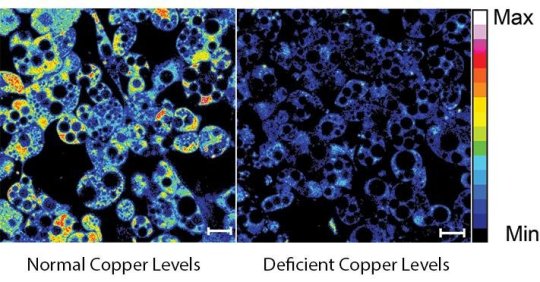
A fluorescent probe creates a heat map of copper in white fat cells. Higher levels of copper are shown in yellow and red. The left panel shows normal levels of copper from fat cells of control mice, and the right panel shows cells deficient in copper.
Credit: Lakshmi Krishnamoorthy and Joseph Cotruvo Jr./UC Berkeley

A new study is further burnishing copper’s reputation as an essential nutrient for human physiology. A research team led by a scientist at the Department of Energy’s Lawrence Berkeley National Laboratory (Berkeley Lab) and at the University of California, Berkeley, has found that copper plays a key role in metabolizing fat.

Long prized as a malleable, conductive metal used in cookware, electronics, jewelry and plumbing, copper has been gaining increasing attention over the past decade for its role in certain biological functions. It has been known that copper is needed to form red blood cells, absorb iron, develop connective tissue and support the immune system.

The new findings, to appear in the July print issue of Nature Chemical Biology but published online today, establishes for the first time copper’s role in fat metabolism.

The team of researchers was led by Chris Chang, a faculty scientist at Berkeley Lab’s Chemical Sciences Division, a UC Berkeley professor of chemistry and a Howard Hughes Medical Institute investigator. Co-lead authors of the study are Lakshmi Krishnamoorthy and Joseph Cotruvo Jr, both UC Berkeley postdoctoral researchers in chemistry with affiliations at Berkeley Lab.

“We find that copper is essential for breaking down fat cells so that they can be used for energy,” said Chang. “It acts as a regulator. The more copper there is, the more the fat is broken down. We think it would be worthwhile to study whether a deficiency in this nutrient could be linked to obesity and obesity-related diseases.”

Dietary copper

Chang said that copper could potentially play a role in restoring a natural way to burn fat. The nutrient is plentiful in foods such as oysters and other shellfish, leafy greens, mushrooms, seeds, nuts and beans.

According to the Food and Nutrition Board of the Institute of Medicine, an adult’s estimated average dietary requirement for copper is about 700 micrograms per day. The Food and Nutrition Board also found that only 25 percent of the U.S. population gets enough copper daily.

“Copper is not something the body can make, so we need to get it through our diet,” said Chang. “The typical American diet, however, doesn’t include many green leafy vegetables. Asian diets, for example, have more foods rich in copper.”

But Chang cautions against ingesting copper supplements as a result of these study results. Too much copper can lead to imbalances with other essential minerals, including zinc.

Copper as a ‘brake on a brake’

The researchers made the copper-fat link using mice with a genetic mutation that causes the accumulation of copper in the liver. Notably, these mice have larger than average deposits of fat compared with normal mice.

The inherited condition, known as Wilson’s disease, also occurs in humans and is potentially fatal if left untreated.

Analysis of the mice with Wilson’s disease revealed that the abnormal buildup of copper was accompanied by lower than normal lipid levels in the liver compared with control groups of mice. The researchers also found that the white adipose tissue, or white fat, of the mice with Wilson’s disease had lower levels of copper compared with the control mice and correspondingly higher levels of fat deposits.

They then treated the Wilson’s disease mice with isoproterenol, a beta agonist known to induce lipolysis, the breakdown of fat into fatty acids, through the cyclic adenosine monophosphate (cAMP) signaling pathway. They noted that the mice with Wilson’s disease exhibited less fat-breakdown activity compared with control mice.

The results prompted the researchers to conduct cell culture analyses to clarify the mechanism by which copper influences lipolysis. The researchers used inductively coupled plasma mass spectroscopy (ICP-MS) equipment at Berkeley Lab to measure levels of copper in fat tissue.

“It had been noted in cattle that levels of copper in the feed would affect how fatty the meat was,” said Chang. “This effect on fat deposits in animals was in the agricultural literature, but it hadn’t been clear what the biochemical mechanisms were linking copper and fat.”

The new work builds upon prior research from Chang’s lab on the roles of copper and other metals in neuroscience. In support of President Barack Obama’s BRAIN Initiative, Berkeley Lab provided Chang seed funding in 2013 through the Laboratory Directed Research and Development program. Chang’s work continued through the BRAIN Tri-Institutional Partnership, an alliance with Berkeley Lab, UC Berkeley and UC San Francisco.

Of the copper in human bodies, there are particularly high concentrations found in the brain. Recent studies, including those led by Chang, have found that copper helps brain cells communicate with each other by acting as a brake when it is time for neural signals to stop.

While Chang’s initial focus was on the role of copper in neural communications, he branched out to investigations of metals in fat metabolism and other biological pathways. This latest work was primarily funded by the National Institutes of Health.

https://www.sciencedaily.com/releases/2016/06/160606200439.htm

They found that copper binds to phosphodiesterase 3, or PDE3, an enzyme that binds to cAMP, halting cAMP’s ability to facilitate the breakdown of fat.

“When copper binds phosphodiesterase, it’s like a brake on a brake,” said Chang. “That’s why copper has a positive correlation with lipolysis.”

Hints from cows

The connection between copper and fat metabolism is not altogether surprising. The researchers actually found hints of the link in the field of animal husbandry.

Fungi in outer space

By Jennifer Frazer

In addition to irritatingly lodging themselves everywhere from shower grout to the Russian space station Mir, fungi that live inside rocks in Antarctica have managed to survive a year and half in low-Earth orbit under punishing Mars-like conditions, scientists recently reported in the journal Astrobiology. A few of them even managed to cap their year in Mars-like space by reproducing.

Why were they subjected to such an ordeal? Scientists have concluded over the past decade that Mars (which like Earth is about four and a half billion years old) supported water for long periods during its first billion years, and they wonder if life that may have evolved during that time may remain on the planet in fossilized or even fresh condition. The climate back then was more temperate than today, featuring a thicker atmosphere and a more forgiving and moist climate.

But how do you search for that life? Using life that exists in what they believe is this planet’s closest analogue, a team of scientists from Europe and the United States hoped to identify the kind of biosignatures that might prove useful in such a search, while also seeing if the Earthly life forms might be capable of withstanding current Mars-like conditions.

Which is to say, not nice.

The temperature on Mars fluctuates wildly on a daily basis. The Mars Science Laboratory rover has measured daily swings of up to 80°C (that’s 144°F), veering from -70°C(-94°F) at night to 10°C(50°F) at Martian high noon. If you can survive that, you also have to get past the super-intense ultraviolet radiation, an atmosphere of 95% carbon dioxide (the effect of which on humans was vividly illustrated at the end of Total Recall), a pressure of 600 to 900 Pascals (Earth: 101,325 Pascals), and cosmic radiation at a dose of about .2mGy/day (Earth: .001 mGy/day). I don’t know about you, but Mars is not my first vacation choice.

And it’s probably not Cryomyces antarcticus’s either, in spite of the extreme place it calls home. Cryomyces antarcticus and its relative Cryomyces minteri – the two fungi tested independently in this study — are members of a group called black fungi or black yeast for their heavily pigmented hulls that allow them to withstand a wide variety environmental stresses. Members of the group somewhat notoriously turned up a few years ago in a study that found two species of the group commonly live inside dishwashers in people’s homes (they were opportunistic human pathogns, but most humans are immune to them). But most of these fungi live quietly in the most extreme environments on earth.

The particular black fungi used in this experiment, generally considered the toughest on the planet, live in tiny tunnels of their own creation inside Antarctic rocks. This is apparently the only place they can grow without being annihilated by the crushing climate and blistering ultraviolet radiation of Antarctica. Antarctica also happens to be the place on Earth most similar – although still not particularly similar, as you have seen — to our friendly neighborhood Red Planet. This endurance has made both black fungi and their neighbors the lichens popular test pilots for Mars-like conditions on the international space station.

For example, lichen-forming fungi that create the common and beautiful orange Xanthoria elegans and also Acarospora made the same trip to the ISS previously, in a European module of the International Space Station called EXPOSE-E. Both survived the experience, and Acarospora even managed to reproduce.

But this seems to be the first time a non-lichen forming fungus has received the ISS treatment.

These particular two fungi – Cryomyces antarcticus and Cryomyces minteri – were collected from the McMurdo Dry Valleys of Antarctica in Southern Victoria Land, supposedly the most Mars-like place on Earth. They were isolated from dry sandstone onto a plate of fungus food called malt extract agar. This gelatinous disc was then dried along with the fungus living on it inside a dessicator, and sent into space like that.

Each colony was about 1mm in diameter, and each yeast cell in it was 10 micrometers in size. Like most black yeast/fungi, they have a dark outer wall.

The scientists also tested an entire community of “cryptoendolithic” organisms – those that live secretly inside rocks, including not just fungi but also rock-dwelling blue-green algae – by testing whole fragments of rocks collected on Battleship Promontory in Southern Victoria Land, Antarctica. The various organisms live in bands of varying color and depth within 1 centimeter of the rock surface.

The fungi were launched into space in February 2008 and returned to Earth on September 12, 2009. During that time they were placed in a bath of gasses as similar as possible to the atmosphere of Mars and exposed to simulated full Martian UV radiation, one-thousandth Martian UV, or kept in the dark. They also endured the cosmic background radiation of space and temperature swings between -21.7°C and 42.9°C – much warmer than Mars, but the best that could be done. Control samples remained in the dark on Earth.

Once back on Earth, the colonies and rock samples were rehydrated. Their appearance had not changed during their voyage. They were then tested for viability by diluting them in water and plating the resulting solution to see how many new colonies formed. They also estimated the percentage of cells with undamaged cell membranes by using a chemical that can only penetrate damaged cell membranes.

The scientists found that the black yeast’s ability to form new colonies was severely impaired by its time on “Mars”, but it was not zero. When kept in the dark on the ISS, about 1.5% of C. antarcticus was able to form colonies post-exposure, while only .08% of C. minteri could. Surprisingly, those exposed to .1% of Mars UV did better, with 4-5 times more surviving: just over 8% for C. antarcticus and 2% for C. minteri. Perhaps the weak radiation stimulated mutations or stress-response proteins that might have helped the fungi somehow.

With the full force of Martian radiation, the survival rates were about the same as for those samples kept in the dark, which is to say, nearly nil. By comparison, about 46% of control C. antarcticus samples kept in the dark back on Earth yielded colony forming units, while only about 17% of C. minteri did. Not super high rates, but still much higher than their space-faring comrades.

On the other hand, the percentage of cells with intact cell membranes was apparently much higher than the number that could reproduce. 65% of C. antarcticus cells remained intact regardless of UV exposure, while C. minteri’s survival rates fluctuated between 18 and 50%, again doing better with UV exposure than in the dark. Colonized rock communities yielded the highest percentage of intact cells of any samples when kept in the dark – around 75%, but some of the lowest when exposed to solar UV, with just 10-18 % surviving intact.

What explains this apparent survival discrepancy between being alive and being able to reproduce? It may be that the reproductive apparati of the fungi are more sensitive to cosmic radiation than their cell membranes and walls, the authors suggest.

The authors’ results also suggest to them that DNA is the biomolecule of choice to use to search for life on Mars, as it, like the cell membranes, survived largely intact even in cells that could no longer reproduce.

Although Mars-based life may not use DNA genetic material, then again, it just might. It certainly seems to have worked well for us here on Earth.

Even though few of the fungi exposed to Mars-like conditions survived well enough to reproduce, in all cases, at least a fraction did. Perhaps that is the material thing. A similar previous experiment showed one green alga, Stichococcus, and one fungus, Acarospora were able to reproduce after a very similar trip on the space station. Another experiment with the bacterium Bacillus subtilis found that up to 20% of their spores were able to germinate and grow after Mars-like exposure. Theoretically, it only takes one or two to hang on and adapt to these conditions to found a whole lineage of Mars-tolerant life (the major reason, by the way, for NASA’s Planetary Protection Program).

On the other hand, some have suggested that long-term survival of Earthly life is impossible on Mars. Given the extremely low reproductive ability after just 1.5 years, this study did nothing to undermine that idea either.

But all of our studies have tested life that evolved on Earth. What about life that evolved on Mars? There’s just no telling how similar or dissimilar such creatures — supposing they exist or ever existed – might be.

http://blogs.scientificamerican.com/artful-amoeba/fungi-in-space/