German man writes his own bitter obituary

A German man has taken his grudges to the grave by telling his family they are banned from his funeral.

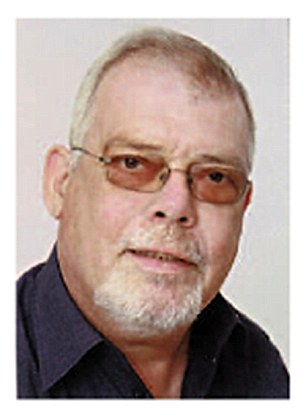
In a self-penned obituary in the Trierischer Volksfreund, a newspaper in Western Germany, Hubert Martini, 64, went to great lengths to let those he left behind what he thought of them.

In the death notice, he admits hurting people, but said it was a good thing and that he was an atheist until the end and therefore any religious symbolism was banned at his committal.

Roughly translated, Martini wrote: ‘I sign up herewith from life. I had a good life, but it was overshadowed by many diseases. The last one was unfortunately invincible. One last word – I was a convinced atheist, and there I stayed, so at the farewell ceremony there will be no mourning, no crosses and no other overt or covert religious symbols. As for flowers, if at all, please just bring yellow and orange lilies – without a strong odour. Forbid the other five children of my parents and their partners and offspring. I am to take part in this celebration. You are all discarded.’

It is unclear what made Martini want to have the last word, but the 64-year-old notes that in life ‘I have hurt some people – and that’s good.’

Local undertaker Martina Schmidt called the obituary ‘out of order – He wanted to settle scores and now the relatives have to live with that,’ she said.

HUBERT MARTINI’S OBITUARY, ROUGHLY TRANSLATED, IN FULL
I sign up herewith from life.
I had a good life, but it was overshadowed by many diseases. The last one was unfortunately invincible.
I’ve known and loved a wonderful woman, learned I have a good son that I fathered with her which gave me two great grandchildren..
Well, despite everything, a good life.
I would like to thank the few friends who were always on my path..
You will now assist also Hiltrud and Dirk and a special thanks so to Birgit and Hans and Eva.
Thanks also to my Turkish friend Mustafa – the insight into his family culture were not always painless for me.
My parts probably always remained alien.
But he was honest with me.
And openness and honesty have always been very important to me .
One last word – I was a convinced atheist, and there I stayed, so at the farewell ceremony on Saturday, July 2, 2016 in Ruheforst at 11am, there will be no mourning, no crosses and no other overt or covert religious symbols.
As for flowers, if at all, please just bring yellow and orange lilies – without a strong odour.
Forbid the other five children of my parents and their partners and offspring.
I am to take part in this celebration. You are all discarded.

Read more: http://www.dailymail.co.uk/news/article-3670246/German-grandfather-bans-family-funeral-self-pens-bizarre-obituary.html#ixzz4DGadQqbe
Follow us: @MailOnline on Twitter | DailyMail on Facebook

Smartphone Blindness

A short-lived optical sensation can lead some smartphone users to mistakenly believe they’ve lost sight in one eye, according to a research letter published in the June 23 issue of the New England Journal of Medicine.

The letter cites two case studies: a 22-year-old woman who’d suffered recurring bouts of nighttime vision loss in her right eye for several months, and a 40-year-old woman who would wake up with a loss of vision in one eye that lasted as long as 15 minutes.

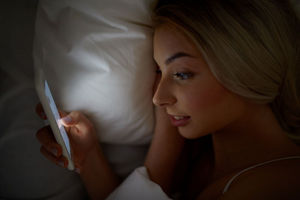
Both women underwent several tests, including magnetic resonance imaging and echocardiograms, before doctors realized that the transient “blindness” was due to an optical adaptation of the eyes caused by reading a smartphone in the dark while lying on their side in bed. When one eye was occluded by the pillow and they were viewing the phone with the other eye, the occluded eye adapted to the dark and the viewing eye adapted to the light. When both eyes were uncovered in the dark, the light-adapted eye was perceived to be “blind,” an effect lasting several minutes.

“I have seen a dozen or so similar cases,” study author Gordon Plant, M.D. an ophthalmologist with Moorfields Eye Hospital in London, told HealthDay. “The reason I wish to make this known is because it leads to anxiety and unnecessary investigation because the patients — and their doctors — think they have had a transient ischemic attack.”

http://www.empr.com/news/cases-of-smartphone-blindness-reported/article/505173/?DCMP=EMC-MPR_DailyDose_cp&cpn=psych_all&hmSubId=2yAHMYaJqF41&hmEmail=vPigp3w1pSfglyX1nN7WTB7-wZu_ebv40&NID=&c_id=&dl=0&spMailingID=14837517&spUserID=MjY3NzIzMzI1OTg1S0&spJobID=802028667&spReportId=ODAyMDI4NjY3S0

Creating a Synthetic Human Genome


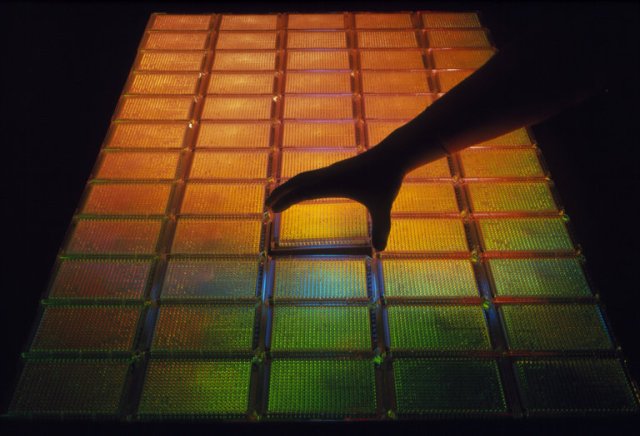
Sixty trays can contain the entire human genome as 23,040 different fragments of cloned DNA. Credit James King-Holmes/Science Source

By ANDREW POLLACK

Scientists are now contemplating the fabrication of a human genome, meaning they would use chemicals to manufacture all the DNA contained in human chromosomes.

The prospect is spurring both intrigue and concern in the life sciences community because it might be possible, such as through cloning, to use a synthetic genome to create human beings without biological parents.

While the project is still in the idea phase, and also involves efforts to improve DNA synthesis in general.

Organizers said the project could have a big scientific payoff and would be a follow-up to the original Human Genome Project, which was aimed at reading the sequence of the three billion chemical letters in the DNA blueprint of human life. The new project, by contrast, would involve not reading, but rather writing the human genome — synthesizing all three billion units from chemicals.

But such an attempt would raise numerous ethical issues. Could scientists create humans with certain kinds of traits, perhaps people born and bred to be soldiers? Or might it be possible to make copies of specific people?

“Would it be O.K., for example, to sequence and then synthesize Einstein’s genome?” Drew Endy, a bioengineer at Stanford, and Laurie Zoloth, a bioethicist at Northwestern University, wrote in an essay criticizing the proposed project. “If so how many Einstein genomes should be made and installed in cells, and who would get to make them?”

The project was initially called HGP2: The Human Genome Synthesis Project, with HGP referring to the Human Genome Project. An invitation to the meeting at Harvard said that the primary goal “would be to synthesize a complete human genome in a cell line within a period of 10 years.”

But by the time the meeting was held, the name had been changed to “HGP-Write: Testing Large Synthetic Genomes in Cells.”

The project does not yet have funding, Dr. Church said, though various companies and foundations would be invited to contribute, and some have indicated interest. The federal government will also be asked. A spokeswoman for the National Institutes of Health declined to comment, saying the project was in too early a stage.

Besides Dr. Church, the organizers include Jef Boeke, director of the institute for systems genetics at NYU Langone Medical Center, and Andrew Hessel, a self-described futurist who works at the Bay Area software company Autodesk and who first proposed such a project in 2012.

Scientists and companies can now change the DNA in cells, for example, by adding foreign genes or changing the letters in the existing genes. This technique is routinely used to make drugs, such as insulin for diabetes, inside genetically modified cells, as well as to make genetically modified crops. And scientists are now debating the ethics of new technology that might allow genetic changes to be made in embryos.

But synthesizing a gene, or an entire genome, would provide the opportunity to make even more extensive changes in DNA.

For instance, companies are now using organisms like yeast to make complex chemicals, like flavorings and fragrances. That requires adding not just one gene to the yeast, like to make insulin, but numerous genes in order to create an entire chemical production process within the cell. With that much tinkering needed, it can be easier to synthesize the DNA from scratch.

Right now, synthesizing DNA is difficult and error-prone. Existing techniques can reliably make strands that are only about 200 base pairs long, with the base pairs being the chemical units in DNA. A single gene can be hundreds or thousands of base pairs long. To synthesize one of those, multiple 200-unit segments have to be spliced together.

But the cost and capabilities are rapidly improving. Dr. Endy of Stanford, who is a co-founder of a DNA synthesis company called Gen9, said the cost of synthesizing genes has plummeted from $4 per base pair in 2003 to 3 cents now. But even at that rate, the cost for three billion letters would be $90 million. He said if costs continued to decline at the same pace, that figure could reach $100,000 in 20 years.

J. Craig Venter, the genetic scientist, synthesized a bacterial genome consisting of about a million base pairs. The synthetic genome was inserted into a cell and took control of that cell. While his first synthetic genome was mainly a copy of an existing genome, Dr. Venter and colleagues this year synthesized a more original bacterial genome, about 500,000 base pairs long.

Dr. Boeke is leading an international consortium that is synthesizing the genome of yeast, which consists of about 12 million base pairs. The scientists are making changes, such as deleting stretches of DNA that do not have any function, in an attempt to make a more streamlined and stable genome.

But the human genome is more than 200 times as large as that of yeast and it is not clear if such a synthesis would be feasible.

Jeremy Minshull, chief executive of DNA2.0, a DNA synthesis company, questioned if the effort would be worth it.

“Our ability to understand what to build is so far behind what we can build,” said Dr. Minshull, who was invited to the meeting at Harvard but did not attend. “I just don’t think that being able to make more and more and more and cheaper and cheaper and cheaper is going to get us the understanding we need.”

Researchers Solve Historical Medical Mysteries

A woman wearing men’s clothing and claiming to talk directly with God wouldn’t seem to be committing capital crimes.

But in the 15th century, she certainly would have been.

These offenses play a part in the legendary history of Joan of Arc, the teenage heroine who led giant armies to fight against the English during the Hundred Years’ War. She was eventually captured, tried for her crimes, and burned at the stake at the age of 19.

But in modern times, would she be convicted of her crimes on the basis of an insanity plea?

According to a jury of about 200 physicians, forensic psychologists, lawyers, judges, and medical students, the future saint would have been acquitted.

Apparently, having visions of other saints is a sign of mental instability, not heresy.

“She was not mentally responsible for what she had done, as in she was delusional,” Dr. Philip A. Mackowiak, a Carolyn Frenkil and Selvin Passen History of Medicine Scholar-in-Residence at the University of Maryland School of Medicine.

Mackowiak founded the Historical Clinicopathological Conference, held this year at the University of Maryland School of Medicine’s Davidge Hall, the oldest medical facility in the country continuously used for medical education. While similar groups meet to discuss current cases at the university, every year they choose one historic case to dig into.

In 24 years, they’ve covered cases including Beethoven (syphilis), Florence Nightingale (bipolar disorder with psychotic features), Christopher Columbus (HLA-B27-related reactive arthritis), and Charles Darwin (cyclic vomiting syndrome).

At this year’s conference, held last week, they dug into a case memorialized in tempera paint and currently hanging in the Museum of Modern Art in New York.

What Disease Shaped ‘Christina’s World?’

In Andrew Wyeth’s 1948 painting “Christina’s World,” a woman lies in an open field looking toward a house in the distance.

The woman depicted in the painting, Anna Christina Olson, was a friend of Wyeth. She suffered from a mysterious disorder that slowly degraded her ability to walk, so she’d make her way around the grounds by pulling herself along with her hands.

She was later confined to a wheelchair and died in 1968 at the age of 74.

What exactly was the cause of her symptoms?

Charcot-Marie-Tooth disease (CMT), according to Mayo Clinic neurologist Marc Patterson.

CMT, named after the doctors who discovered it, is a group of inherited disorders that affect the peripheral nerves, causing symptoms that include loss of muscle and fine motor skills. It remains incurable and one of the most common inherited neurological disorders.

To reach his diagnosis, Patterson reviewed not only the painting but also what was available of Olson’s medical records from what little biographical information her nieces wrote about her.

“This was a fascinating case,” Patterson said in a press release. “This painting has long been a favorite of mine, and the question of Christina’s ailment was an intriguing medical mystery. I think her case best fits the profile of this disease.”

Piecing Together Historical Health Records

Besides Patterson and the rest of the conference’s expertise, the symptoms were checked using a super computer located at Oak Ridge Leadership Computing Facility, which confirmed the diagnosis.

It also affirmed the previous year’s case, Oliver Cromwell, the English monarch who died in 1658. His undoing was a combination of malaria and typhoid fever caused by a salmonella infection.

Mackowiak takes pride in selecting the case and keeping it under an air of mystery before each year’s conference. The cases are often given vague titles, yet he says most people figure it out before they convene.

Beethoven was “The Sound That Failed,” and Alexander the Great was “Death of a Deity.”

Who was “The Greatest Tragedy in the History of Music?”

No, not Prince, David Bowie, or even John Lennon. It was Mozart, who died of acute rheumatic fever.

Another part of the mystery is that these historical House M.D.s rarely have full autopsy reports or even a single medical record for their subjects, so there is quite a bit of detective work. That only adds to the fun.

In the case of Booker T. Washington, researchers found his great-grandson, who is a physician and helped find Washington’s great-granddaughter. She gave them access to his medical records.

While syphilis was first suspected as a potential cause of death, a blood test done at Rockefeller Hospital in New York City tested negative.

In 2006, the clinicopathological conference determined the slave-turned-advisor to the president died of nephrosclerosis and hypertensive cardiomyopathy. In other words, the man worked his heart to death.

Other cases had to be decided on what was written in the legends.

In the case of Pericles, dubbed “the first citizen of Athens,” researchers went off of descriptions of what happened during the plague that also claimed his sons and first wife.

“To say we provide shocking new information would be an exaggeration,” Mackowiak said.

Mackowiak provides more information on these cases in his two books, “Post-Mortem: Solving History’s Great Medical Mysteries” and “Diagnosing Giants: Solving the Medical Mysteries of Thirteen Patients Who Changed the World.”

For him, every case, every conference meeting highlights how although doctors believe what they’re doing right now is correct, their grandchildren and great-grandchildren will look back and see how wrong they were.

“There is no perfect knowledge,” Mackowiak said. “You do the best with what you have.”

http://www.healthline.com/health-news/medical-researchers-solve-historic-deaths#6

Tylenol reduces empathy


When you take acetaminophen to reduce your pain, you may also be decreasing your empathy for both the physical and social aches that other people experience, a new study suggests.

Researchers at The Ohio State University found, for example, that when participants who took acetaminophen learned about the misfortunes of others, they thought these individuals experienced less pain and suffering,when compared to those who took no painkiller.

“These findings suggest other people’s pain doesn’t seem as big of a deal to you when you’ve taken acetaminophen,” said Dominik Mischkowski, co-author of the study and a former Ph.D. student at Ohio State, now at the National Institutes of Health.

“Acetaminophen can reduce empathy as well as serve as a painkiller.”

Mischkowski conducted the study with Baldwin Way, who is an assistant professor of psychology and member of the Ohio State Wexner Medical Center’s Institute for Behavioral Medicine Research; and Jennifer Crocker, Ohio Eminent Scholar in Social Psychology and professor of psychology at Ohio State. Their results were published online in the journal Social Cognitive and Affective Neuroscience.

Acetaminophen — the main ingredient in the painkiller Tylenol — is the most common drug ingredient in the United States, found in more than 600 medicines, according to the Consumer Healthcare Products Association, a trade group.

Each week about 23 percent of American adults (about 52 million people) use a medicine containing acetaminophen, the CHPA reports.

In an earlier study, Way and other colleagues found that acetaminophen also blunts positive emotions like joy.

Taken together, the two studies suggest there’s a lot we need to learn about one of the most popular over-the-counter drugs in the United States.

“We don’t know why acetaminophen is having these effects, but it is concerning,” said Way, the senior author of the study.

“Empathy is important. If you are having an argument with your spouse and you just took acetaminophen, this research suggests you might be less understanding of what you did to hurt your spouse’s feelings.”

The researchers conducted two experiments, the first involving 80 college students. At the beginning, half the students drank a liquid containing 1,000 mg of acetaminophen, while the other half drank a placebo solution that contained no drug. The students didn’t know which group they were in.

After waiting one hour for the drug to take effect, the participants read eight short scenarios in which someone suffered some sort of pain. For example, one scenario was about a person who suffered a knife cut that went down to the bone and another was about a person experiencing the death of his father.

Participants rated the pain each person in the scenarios experienced from 1 (no pain at all) to 5 (worst possible pain). They also rated how much the protagonists in the scenarios felt hurt, wounded and pained.

Overall, the participants who took acetaminophen rated the pain of the people in the scenarios to be less severe than did those who took the placebo.

A second experiment involved 114 college students. As in the first experiment, half took acetaminophen and half took the placebo.

In one part of the experiment, the participants received four two-second blasts of white noise that ranged from 75 to 105 decibels. They then rated the noise blasts on a scale of 1 (not unpleasant at all) to 10 (extremely unpleasant).

They were then asked to imagine how much pain the same noise blasts would cause in another anonymous study participant.

Results showed that, when compared to those who took the placebo, participants who took acetaminophen rated the noise blasts as less unpleasant for themselves — and also thought they would be less unpleasant for others.

“Acetaminophen reduced the pain they felt, but it also reduced their empathy for others who were experiencing the same noise blasts,” Mischkowski said.

In another part of the experiment, participants met and socialized with each other briefly. Each participant then watched, alone, an online game that purportedly involved three of the people they just met. (The other participants weren’t actually involved).

In the “game,” two of the people the participants had met excluded the third person from the activity.

Participants were then asked to rate how much pain and hurt feelings the students in the game felt, including the one who was excluded.

Results showed that people who took acetaminophen rated the pain and hurt feelings of the excluded student as being not as severe as did the participants who took the placebo.

“In this case, the participants had the chance to empathize with the suffering of someone who they thought was going through a socially painful experience,” Way said.

“Still, those who took acetaminophen showed a reduction in empathy. They weren’t as concerned about the rejected person’s hurt feelings.”

While these results had not been seen before, they make sense in the light of previous research, Way said.

A 2004 study scanned the brains of people as they were experiencing pain and while they were imagining other people feeling the same pain. Those results showed that the same part of the brain was activated in both cases.

“In light of those results, it is understandable why using Tylenol to reduce your pain may also reduce your ability to feel other people’s pain as well,” he said.

The researchers are continuing to study how acetaminophen may affect people’s emotions and behavior, Way said. They are also beginning to study another common pain reliever — ibuprofen — to see if it has similar results.

https://www.sciencedaily.com/releases/2016/05/160510084257.htm

Will machines one day control our decisions?

New research suggests it’s possible to detect when our brain is making a decision and nudge it to make the healthier choice.

In recording moment-to-moment deliberations by macaque monkeys over which option is likely to yield the most fruit juice, scientists have captured the dynamics of decision-making down to millisecond changes in neurons in the brain’s orbitofrontal cortex.

“If we can measure a decision in real time, we can potentially also manipulate it,” says senior author Jonathan Wallis, a neuroscientist and professor of psychology at the University of California, Berkeley. “For example, a device could be created that detects when an addict is about to choose a drug and instead bias their brain activity towards a healthier choice.”

Located behind the eyes, the orbitofrontal cortex plays a key role in decision-making and, when damaged, can lead to poor choices and impulsivity.

While previous studies have linked activity in the orbitofrontal cortex to making final decisions, this is the first to track the neural changes that occur during deliberations between different options.

“We can now see a decision unfold in real time and make predictions about choices,” Wallis says.

Measuring the signals from electrodes implanted in the monkeys’ brains, researchers tracked the primates’ neural activity as they weighed the pros and cons of images that delivered different amounts of juice.

A computational algorithm tracked the monkeys’ orbitofrontal activity as they looked from one image to another, determining which picture would yield the greater reward. The shifting brain patterns enabled researchers to predict which image the monkey would settle on.

For the experiment, they presented a monkey with a series of four different images of abstract shapes, each of which delivered to the monkey a different amount of juice. They used a pattern-recognition algorithm known as linear discriminant analysis to identify, from the pattern of neural activity, which picture the monkey was looking at.

Next, they presented the monkey with two of those same images, and watched the neural patterns switch back and forth to the point where the researchers could predict which image the monkey would choose based on the length of time that the monkey stared at the picture.

The more the monkey needed to think about the options, particularly when there was not much difference between the amounts of juice offered, the more the neural patterns would switch back and forth.

“Now that we can see when the brain is considering a particular choice, we could potentially use that signal to electrically stimulate the neural circuits involved in the decision and change the final choice,” Wallis says.

Erin Rich, a researcher at the Helen Wills Neuroscience Institute, is lead author of the study published in the journal Nature Neuroscience. The National Institute on Drug Abuse and the National Institute of Mental Health funded the work.

http://www.futurity.org/brains-decisions-1181542/

Mother-assisted C-section birth

Moments before her planned cesarean delivery last year Gerri Wolfe scrubbed up and donned surgical gloves.

She took her place on the surgical table and her doctors delivered an anesthetic into her spine.

When her surgeon gave her the signal, she reached down and helped deliver her own twin babies. Seconds after they entered the world, she was holding them close to her chest.

In a maternal-assisted cesarean, Mom doesn’t have to miss out on a thing.

Wolfe’s experience wasn’t an isolated case.

Other mothers in Australia have also participated in their cesarean deliveries.

In fact, the Western Australia Department of Health provides guidelines for mother-assisted elective cesarean.

Dr. David Garfinkel, OB-GYN, is an attending physician at Morristown Medical Center in Morristown, New Jersey, and senior partner at One to One FemaleCare. Healthline asked if he has had requests for mother-assisted cesarean delivery.

“I have not been asked to do that, but I would be open to it so long as I could ensure a safe and sterile environment,” he said. “There is a special system (drapes and sterile gloves for the mother) that can help facilitate that request. Safety is number one in providing care for the mother and the newborn.”

In the first half of the 20th century, control over how women gave birth went from mothers and midwives to doctors and hospitals.

By the 1960s, there was a growing movement to turn that around again. Moms wanted to be awake and alert. They also wanted fathers and partners to be able to share the experience.

Today, mothers-to-be work with their doctors, midwives, and support systems to create a personalized childbirth experience.

When you’re planning for a cesarean delivery, it’s an entirely different story.

While some cesarean deliveries are emergencies, many are planned ahead of time. Among the reasons for this are multiple births, large babies, or maternal health conditions that complicate labor and delivery.

In the United States, the cesarean delivery rate is slightly more than 32 percent of all births, according to the Centers for Disease Control and Prevention (CDC).

It’s a common procedure, but that doesn’t make it a minor one. A planned cesarean delivery is generally performed using an epidural so the mother can stay awake but not feel the pain of surgery.

A small curtain prevents the mother from seeing her own abdomen get cut open. It also prevents her from seeing her newborn enter the world.

Some mothers and doctors want to change that.

Mother-assisted cesarean delivery may not be all the rage in the United States, but there is a movement toward friendlier cesarean birth.

“A gentle C-section is a change in the attitudes toward C-sections,” said Garfinkel. “It’s where the care team (the OB, anesthesiologists, and nurse) aims to make the C-section experience in the operating room as similar as possible to the labor and delivery room.”

Garfinkel explained that with a gentle C-section, there are no drapes to block the woman’s view.

“While the patient may not be pushing, a patient can see the baby entering into the world for the first time. Unlike a traditional C-section, where the baby and partner are taken out of the room, a gentle C-section allows the family to stay together in one room, with the baby being cared for in the same room as the mother,” he said.

How women give birth has been evolving for decades. Now some are assisting in their own cesarean deliveries.

women watching c-sections
Moments before her planned cesarean delivery last year Gerri Wolfe scrubbed up and donned surgical gloves.

She took her place on the surgical table and her doctors delivered an anesthetic into her spine.

When her surgeon gave her the signal, she reached down and helped deliver her own twin babies. Seconds after they entered the world, she was holding them close to her chest.

In a maternal-assisted cesarean, Mom doesn’t have to miss out on a thing.

I have not been asked to do that, but I would be open to it so long as I could ensure a safe and sterile environment.
Dr. David Garfinkel, Morristown Medical Center
Wolfe’s experience wasn’t an isolated case.

Other mothers in Australia have also participated in their cesarean deliveries.

In fact, the Western Australia Department of Health provides guidelines for mother-assisted elective cesarean.

Dr. David Garfinkel, OB-GYN, is an attending physician at Morristown Medical Center in Morristown, New Jersey, and senior partner at One to One FemaleCare. Healthline asked if he has had requests for mother-assisted cesarean delivery.

“I have not been asked to do that, but I would be open to it so long as I could ensure a safe and sterile environment,” he said. “There is a special system (drapes and sterile gloves for the mother) that can help facilitate that request. Safety is number one in providing care for the mother and the newborn.”

Read More: Cesarean Rates Starting to Drop in the United States »

Changing Attitudes About Childbirth
In the first half of the 20th century, control over how women gave birth went from mothers and midwives to doctors and hospitals.

By the 1960s, there was a growing movement to turn that around again. Moms wanted to be awake and alert. They also wanted fathers and partners to be able to share the experience.

Today, mothers-to-be work with their doctors, midwives, and support systems to create a personalized childbirth experience.

When you’re planning for a cesarean delivery, it’s an entirely different story.

women watching c-sections
While some cesarean deliveries are emergencies, many are planned ahead of time. Among the reasons for this are multiple births, large babies, or maternal health conditions that complicate labor and delivery.

In the United States, the cesarean delivery rate is slightly more than 32 percent of all births, according to the Centers for Disease Control and Prevention (CDC).

It’s a common procedure, but that doesn’t make it a minor one. A planned cesarean delivery is generally performed using an epidural so the mother can stay awake but not feel the pain of surgery.

A small curtain prevents the mother from seeing her own abdomen get cut open. It also prevents her from seeing her newborn enter the world.

Some mothers and doctors want to change that.

Read More: A Mother’s Journey Through Chemotherapy and Pregnancy »

The ‘Gentle C-Section’
Mother-assisted cesarean delivery may not be all the rage in the United States, but there is a movement toward friendlier cesarean birth.

“A gentle C-section is a change in the attitudes toward C-sections,” said Garfinkel. “It’s where the care team (the OB, anesthesiologists, and nurse) aims to make the C-section experience in the operating room as similar as possible to the labor and delivery room.”

Garfinkel explained that with a gentle C-section, there are no drapes to block the woman’s view.

“While the patient may not be pushing, a patient can see the baby entering into the world for the first time. Unlike a traditional C-section, where the baby and partner are taken out of the room, a gentle C-section allows the family to stay together in one room, with the baby being cared for in the same room as the mother,” he said.

The gentle C-section allows immediate skin-to-skin contact or breastfeeding.

More patients at his facility are asking about them, said Garfinkel. He believes gentle C-sections are the future.

Besides the mother, this type of cesarean delivery benefits the father or partner and allows family bonding time.

The experience may feel gentler, but Garfinkel makes it clear that it’s still major surgery.

“As a physician, I am not being more gentle as I do the surgery,” he said.

He performs gentle C-sections, but Garfinkel has no interest in increasing the rate of cesarean births unnecessarily. He and his practice promote vaginal births whenever possible.

But if a cesarean delivery is called for, he wants his patients to have the option of a gentler, more emotional experience.

“A gentle C-section allows a woman to be almost as involved as if her birth was happening vaginally,” he said. “I believe all women should be given the opportunity to be as much a part of their births as they want.”

For those who are interested in pursuing a gentle C-section, Garfinkel recommends interviewing providers and asking about their attitudes toward these types of deliveries well in advance of the due date.

http://www.healthline.com/health-news/women-who-want-to-watch-their-c-sections#5

Bacteria can be turned into living hard drives


When scientists add code to bacterial DNA, it’s passed on to the next generation.

By Bryan Nelson

The way DNA stores genetic information is similar to the way a computer stores data. Now scientists have found a way to turn this from a metaphorical comparison into a literal one, by transforming living bacteria into hard drives, reports Popular Mechanics.

A team of Harvard scientists led by geneticists Seth Shipman and Jeff Nivala have devised a way to trick bacteria into copying computer code into the fabric of their DNA without interrupting normal cellular function. The bacteria even pass the information on to their progeny, thus ensuring that the information gets “backed up,” even when individual bacteria perish.

So far the technique can only upload about 100 bytes of data to the bacteria, but that’s enough to store a short script or perhaps a short poem — say, a haiku — into the genetics of a cell. For instance, here’s a haiku that would work:

Bacteria on
your thumb
might someday become
a real thumb drive

As the method becomes more precise, it will be possible to encode longer strings of text into the fabric of life. Perhaps some day, the bacteria living all around us will also double as a sort of library that we can download.

The technique is based on manipulation of an immune response that exists in many bacteria known as the CRISPR/Cas system. How the system works is actually fairly simple: when bacteria encounter a threatening virus, they physically cut out a segment of the attacking virus’s DNA and paste it into a specific region of their own genome. The bacteria can then use this section of viral DNA to identify future virus encounters and rapidly mount a defense. Copying this immunity into their own genetic code allows the bacteria to pass it on to future generations.

To get the bacteria to copy strings of computer code instead, researchers just book-ended the information with segments that look like viral DNA. The bacteria then got to work, conveniently cutting and pasting the relevant section into their genes.

The method does have a few bugs. For instance, not all of the bacteria snip the full section, so only part of the code gets copied. But if you introduce the code into a large enough population of bacteria, it becomes easy to deduce the full message from a sufficient percentage of the colony.

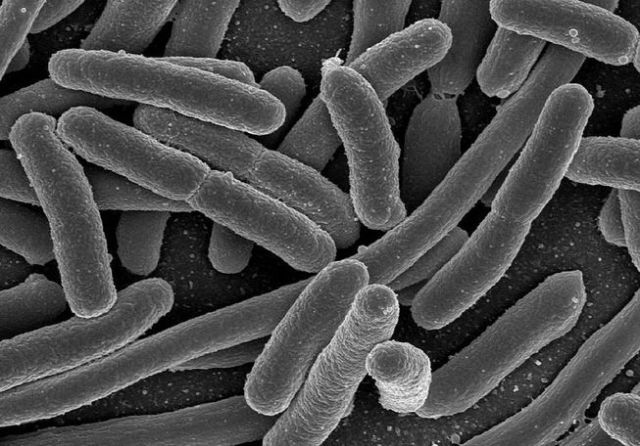
The amount of information that can be stored also depends on the bacteria doing the storing. For this experiment, researchers used E. coli, which was only efficient at storing around 100 bytes. But some bacteria, such as Sulfolobus tokodaii, are capable of storing thousands of bytes. With synthetic engineering, these numbers can be increased exponentially.

http://www.mnn.com/green-tech/research-innovations/stories/bacteria-can-now-be-turned-living-hard-drives

Rare Form of MS May Be Caused by a Single Gene Mutation

A single genetic mutation may increase a person’s risk of developing a rare, severe form of multiple sclerosis (MS) by roughly 60 percent, according to a study published recently in the journal Neuron.

That’s an unusually straightforward result for a complex disease like MS, which has previously been traced to hundreds of mutations that each increases the risk of developing the disease only slightly.

“That’s why our finding is unprecedented,” Carles Vilariño-Güell, Ph.D., an assistant professor of medical genetics at The University of British Columbia and one of the paper’s senior authors, told Healthline.

His team found the mutation by combing through a database of Canadians with MS who had donated blood samples as part of the Canadian Collaborative Project on Genetic Susceptibility to MS.

Some of these samples belonged to a family that was disproportionately diagnosed with the disease. Four first cousins and two parents developed MS.

The team isolated a common mutation from their DNA, and looked for that mutation in other individuals in the database.

That’s how they found a second family similarly afflicted. Three first cousins and two parents were diagnosed with MS.

Having so many cases of MS within a family is rare. The disease is not considered truly heritable, although a person’s risk does increase if a parent or sibling has the disease.

The families shared another rare trait. Most had the more severe version of the disease known as primary progressive MS, which makes up 10 to 15 percent of all MS cases.

Treatments for primary progressive MS have so far eluded scientists, although there are promising clinical trials underway of a drug called Ocrelizumab.


Future Research

The study found the mutation only in a handful of people, all of whom were diagnosed with a rare form of the disease.

Therefore, the researchers don’t suggest they have found the genetic basis of MS.

But they do think they’ve discovered a way to study how the disease progresses in the body and what drugs could be developed to slow or even stop it

Bruce Bebo, Ph.D., vice president of research at the National Multiple Sclerosis Society, agrees.

“Studying the genetics of a very rare form that is inherited can give us clues about pathways involved in MS in the general population,” he told Healthline.

The mutation appears to disable a regulatory gene called NR1H3, which codes for a protein that helps regulate the inflammation and the metabolism of lipids.

The researchers now plan to engineer a similar mutation in mice so they can study the outcome of a disabled NR1H3 gene and test potential new drugs in an animal model.

And because the NR1H3 pathway has already been implicated in diseases like atherosclerosis and heart disease, there are already drugs in clinical trials for safety that could be repurposed for treating MS, Vilariño-Güell said.

“Understanding the genetics of MS could help us get closer to individualizing therapy to people for better outcomes,” Bebo said.

Getting Personal with Treatment

People with a disease like MS, which appears in so many different ways and can be linked to so many different genetic components, could benefit by personalized medicine.

If the mechanism of each disease causing mutation or group of mutations is pinpointed, scientists could potentially design more effective, targeted treatments rather than the standard one-size-fits-all therapies.

That means tracking down the many different genetic hotspots that are linked to MS.

Overall, genetic predisposition accounts for only about a third of a person’s risk of developing the disease, Bebo said. Within that category only about half the genes responsible can be identified.

Researchers don’t know where the other half of that genetic risk comes from, Bebo said, but it makes sense that it would include rare mutations like this one that help explain risk in a small fraction of MS patients.

And there could be many different versions of these mutations.

“Odds are if you look at a different family the genetic risk would probably be something different than this,” Bebo said.

Speeding Through the Genome

The Canadian database has been available since the late 1990s, but only recently has the team had access to exome sequencing, a powerful, efficient tool that makes searching for tiny genetic changes easier.

This technique sequences only the DNA that codes for proteins — leaving the other 98 percent behind. It’s like speed reading the genome.

Exome sequencing has been particularly helpful for finding so-called “Mendelian” diseases — diseases that can be traced to a single, heritable mutation just like Gregor Mendel’s purple and white pea flowers. Cystic fibrosis and sickle cell anemia are two examples of these diseases.

With this discovery, the researchers say that have found a Mendelian form of MS.

That doesn’t mean the discovery won’t be beneficial for the 85 percent of people diagnosed with relapsing remitting MS. In many of those patients, the disease eventually changes course and becomes progressive.

Whatever is learned about primary progressive MS — a condition that doesn’t respond to treatments for other types of MS — could also potentially help those with secondary progressive MS, the researchers say.

http://www.healthline.com/health-news/form-of-ms-could-be-caused-by-single-genetic-mutation#5

The Reanima Project – Scientists Are Attempting to Reanimate the Brain Dead


Model of the human brain. The Reanima Project aims to regrow parts of the brain stem.

by Philip Perry

Imagine this, your loved one gets into a serious accident. You and your family gather at the hospital. In the I.C.U. the doctor makes a grim announcement, they‘re brain dead. It is highly unlikely they will ever come out of a vegetative state. Today, there is no way past such horror, save for a miracle. But if one biotech firm has its way, soon doctors would be able to regrow the person’s brain, using a new procedure and a host of technologies, which could theoretically restore them to who they were before. Even so, there are lots of questions and ethical dilemmas surrounding this procedure, and the advancements it may someday thrust upon the world.

The idea originates from nature, as certain fish and amphibians can actually heal whole sections of the brain, brain stem, and other portions of the central nervous system, even after significant injury. Scientists believe they can someday mimic this process in human patients.

This study surrounds Bioquark, Inc., a Philadelphia-based company, who has received ethical approval by a U.S. and Indian Institutional Review Board. Bioquark will collaborate with Revita Life Sciences, led by famed specialist Dr. Himanshu Bansaa. The team will run a pilot study of 20 clinically brain dead patients, each having suffered a traumatic brain injury (TBI). Taking place at Anupam Hospital in India, Bioquark is currently recruiting patients for the study, expected to take place over six weeks.

Known as the “Reanima Project,” several different therapies will be employed in combination, including stem cells injected into the brain to try and regrow damaged portions, lasers, nerve stimulation techniques—which have been successful in waking patients out of a coma, and a combination of different peptides. The peptides will be introduced daily through a spinal cord pump, and the stem cells injected every other week. The patients will be evaluated and monitored for months with brain imaging technology and an EEG to see if the brain, particularly the upper spinal cord or lower brain stem region, is regenerated. This is the oldest part of the brain which controls breathing and heartbeat.

The CEO of Bioquark Inc. Dr. Ira Pastor, said in a statement that this was the first step toward the “eventual reversal of death in our lifetime.” He believes they will achieve results within the first couple of months or so. This is the seminal stage, a “proof of concept” study. If you are afraid of the zombie apocalypse, Dr. Pastor says a common sense protocol, adopted industry-wide, should avoid any nasty scenarios from taking place. But every technology or advanced method is always thought ironclad at the onset. He believes this study will show that brain death is recoverable. Dr. Bansal has attempted a similar procedure on two brain dead patients, one in Europe and another in the Persian Gulf. They are currently in a “minimal conscious state,” but may still come out of it.

According to Dr. Bansal, “We are now trying to create a definitive study in 20 subjects and prove that the brain death is reversible. This will open the door for future research and especially for people who lose their dear ones suddenly.” Brain stem death is defined as the loss of such functions as breathing and consciousness. When a person’s brain stem has stopped functioning, there is no chance for recovery, as it stands.

Those on life support deemed brain dead still have active bodies which grow, mature, heal, digest, circulate blood, and excrete waste. A woman can even gestate and deliver a baby in this state. Some new studies suggest that even after brain death, blood flow and limited electrical activity take place inside the brain. But it isn’t enough to repair the damage, nor live without life support.

Dr. Sergei Paylian is the founder, president, and chief science officer of Bioquark Inc. He said that this experiment is not only important in developing our understanding of brain death, but also the vegetative and minimally conscious states, coma, and even neurodegenerative conditions, like Parkinson’s and Alzheimer’s. Critics urge that though these areas may not be irreparable, one pilot study is far from a complete neurological transformation. Truly it will take years or even decades for such a technique to be refined, should it even work.

Beyond that, advancements in science are always a mixed blessing. The splitting of the atom brought the microwave, the horrors of Hiroshima and Nagasaki, and generations afterward living under constant fear of nuclear annihilation. The internal combustion engine has wrought the transportation industry and climate change. What could reanimating a human brain after such trauma ultimately produce?

One wonders if neurons will grow back exactly as they were, or will the person be a blank slate? The attempt will try and engage a functional epimorphic event. Epimorphic cells are those that can wipe their memory banks clean and start anew. So is this what will happen with the brain dead, should their brains be neuro-regenerated? Think of the emotional trauma to families who aren’t recognized by a healed loved one, not to mention the trauma to the person themselves? Will adults be like walking babies and need to relearn everything over again? Will it be like with amnesia? There’s no way to tell at this point.

http://bigthink.com/philip-perry/scientists-attempt-to-reanimate-the-brain-dead-what-are-the-implications?utm_source=feedburner&utm_medium=feed&utm_campaign=Feed%3A+bigthink%2Fmain+%28Big+Think+Main%29