Childhood Trauma, Not Impulsivity, Linked With Suicide Attempts

by Tori Rodriguez, MA, LPC

While the top risk factor for completed suicide is a history of previous attempts, childhood trauma and impulsivity have also been found to increase the risk of suicidality in adults (1,2). However, there have been few investigations into whether these 2 variables influence each other in their association with suicidal ideation and attempts.

Prior research has linked childhood trauma with increased frequency of a range of psychiatric disorders, such as depression, posttraumatic stress disorder, eating disorders, panic disorder, and substance abuse.1 Additionally, a correlation between impulsivity and risky behaviors — including suicidality — has been found, and research published in 2014 discovered higher levels of impulsivity among patients with a self-reported history of at least 1 suicide attempt, compared to those with no reported previous attempts (3).

“People with histories of childhood trauma often develop difficulties with managing negative emotion, coping with stress, and maintaining optimism in the face of life stressors,” Lisa Cohen, PhD, a professor of psychiatry at Icahn School of Medicine at Mount Sinai Beth Israel in New York, told Psychiatry Advisor. “Impulsivity is a risk factor for all types of reckless behavior, including suicidal behavior,” she added.

Dr Cohen and others, including lead author Laura DeRubeis, a doctoral student at Adelphi University in New York, recently sought to determine whether impulsivity mediates the relationship between childhood trauma and suicidality in a sample of 113 adult inpatients (4). They hypothesized that after impulsivity was controlled for, childhood trauma would no longer predict suicidality at a statistically significant level.

As part of a larger investigation, participants were administered several questionnaires: the Childhood Trauma Questionnaire (CTQ), a Likert-type scale that measures emotional, physical, and sexual abuse, as well as emotional and physical neglect; the Barratt Impulsiveness Scale (BIS-11) and the Behavioral Activation Scale (BAS) of the Behavioral Inhibition and Activation Scales (collectively known as BIS/BAS, not to be confused with the BIS-11); and select items from the Columbia Suicide Severity Rating Scale (C-SSRS) to assess ideation and attempts.

According to the results, which were presented at the 2016 Annual Meeting of the American Psychiatric (APA) in Atlanta, Georgia, both childhood trauma and impulsivity had independent effects on suicidal ideation. However, childhood trauma was found to have an independent association with suicide attempts, while impulsivity was not. “We expected childhood trauma to influence suicidal ideation and attempts through a pathway of impulsivity, so that trauma leads to impulsivity which then leads to suicidal ideation and attempts,” explains Dr Cohen. Instead, they found that impulsivity was only related to suicidal ideation, and when childhood trauma was controlled for, impulsivity no longer predicted attempts.

Though these findings are in line with previous data on the correlation between childhood trauma, impulsivity, and suicidal ideation, they contradict the hypothesis of the current study as well as results of other studies suggesting that impulsivity is a risk factor for suicide attempts. “Childhood trauma seems to have a potent independent effect on both suicidal ideation and suicidal attempts,” the authors concluded in their paper.

References

1. O’Brien BS, Sher L. Child sexual abuse and the pathophysiology of suicide in adolescents and adults. Int J Adolesc Med Health. 2013;25(3):201-205.

2. Wedig MM, Silverman MH, Frankenburg FR, Reich DB, Fitzmaurice G, Zanarini MC. Predictors of suicide attempts in patients with borderline personality disorder over 16 years of prospective follow-up. Psychol Med. 2012;42(11):2395-2404.

3. Mccullumsmith CB, Williamson DJ, May RS, A, Bruer EH, Sheehan DV, Alphs LD. Simple measures of hopelessness and impulsivity are associated with acute suicidal ideation and attempts in patients in psychiatric crisis. Innov Clin Neurosci. 2014;11(9-10): 47-53.

4. DeRubeis L, Kim KHS, Ardalan F, Tanis T, Galynker I, Cohen L. The relationship between childhood trauma, impulsivity, and suicidality in an inpatient sample. Poster presentation at: 2016 Annual Meeting of the American Psychiatric Association; May 14-18, 2016; Atlanta, GA. Young Investigators’ New Research 1–017.

http://www.psychiatryadvisor.com/apa-2016-coverage/apa-2016-research-found-impulsivity-without-childhood-trauma-did-not-predict-suicide-attempts/article/497331/

Thieves using computers to hack ignition to steal cars

By JEFF BENNETT

Police and car insurers say thieves are using laptop computers to hack into late-model cars’ electronic ignitions to steal the vehicles, raising alarms about the auto industry’s greater use of computer controls.

The discovery follows a recent incident in Houston in which a pair of car thieves were caught on camera using a laptop to start a 2010 Jeep Wrangler and steal it from the owner’s driveway. Police say the same method may have been used in the theft of four other late-model Wranglers and Cherokees in the city. None of the vehicles has been recovered.

“If you are going to hot-wire a car, you don’t bring along a laptop,” said Senior Officer James Woods, who has spent 23 years in the Houston Police Department’s auto antitheft unit. “We don’t know what he is exactly doing with the laptop, but my guess is he is tapping into the car’s computer and marrying it with a key he may already have with him so he can start the car.”

The National Insurance Crime Bureau, an insurance-industry group that tracks car thefts across the U.S., said it recently has begun to see police reports that tie thefts of newer-model cars to what it calls “mystery” electronic devices.

“We think it is becoming the new way of stealing cars,” said NICB Vice President Roger Morris. “The public, law enforcement and the manufacturers need to be aware.”

Fiat Chrysler Automobiles NV said it “takes the safety and security of its customers seriously and incorporates security features in its vehicles that help to reduce the risk of unauthorized and unlawful access to vehicle systems and wireless communications.”

On Wednesday, a Fiat Chrysler official said he believes the Houston thieves “are using dealer tools to marry another key fob to the car.”

Titus Melnyk, the auto maker’s senior manager of security architecture for North America, said an individual with access to a dealer website may have sold the information to a thief. The thief will enter the vehicle identification number on the site and receive a code. The code is entered into the car’s computer triggering the acceptance of the new key.

The recent reports highlight the vulnerabilities created as cars become more computerized and advanced technology finds its way into more vehicles. Fiat Chrysler, General Motors Co. and Tesla Motors Inc. have had to alter their car electronics over the last two years after learning their vehicles could be hacked.

Fiat Chrysler last year recalled 1.4 million vehicles to close a software loophole that allowed two hackers to remotely access a 2014 Jeep Cherokee and take control of the vehicle’s engine, air conditioning, radio and windshield wipers.

Startups and auto-parts makers also are getting involved in cyberprotections for cars.

“In an era where we call our cars computers on wheels, it becomes more and more difficult to stop hacking,” said Yoni Heilbronn, vice president of marketing for Israel-based Argus Cyber Security Ltd., a company developing technologies to stop or detect hackers. “What we now need is multiple layers of protection to make the efforts of carrying out a cyberattack very costly and deter hackers from spending the time and effort.”

San Francisco-based Voyomotive LLC is developing a mobile application that when used with a relay switch installed on the car’s engine can prevent hackers with their own electronic key from starting a vehicle. Its technology also will repeatedly relock a car’s doors if they are accessed by a hacker.

This month, U.S. Secretary of Transportation Anthony Foxx is slated to attend an inaugural global automotive cybersecurity summit in Detroit. General Motors Co. Chief Executive Mary Barra and other industry executives are scheduled to speak.

Automotive industry trade groups are working on a blueprint of best practices for safely introducing new technologies. The Auto-Information Sharing and Analysis Center, created by the Alliance of Automobile Manufacturers and the Global Automakers Association, provides a way to share information on cyberthreats and incorporate cybercrime prevention technologies.

In the Houston car theft, a home-security camera captures a man walking to the Jeep and opening the hood. Officer Woods said he suspects the man is cutting the alarm. About 10 minutes later, after a car door is jimmied open, another man enters the Jeep, works on the laptop and then backs the car out of the driveway.

“We still haven’t received any tips,” the officer said.

The thief, says the NICB’s Mr. Morris, likely used the laptop to manipulate the car’s computer to recognize a signal sent from an electronic key the thief then used to turn on the ignition. The computer reads the signal and allows the key to turn.

“We have no idea how many cars have been broken into using this method,” Mr. Morris said. “We think it is minuscule in the overall car thefts but it does show these hackers will do anything to stay one step ahead.”

http://www.wsj.com/articles/thieves-go-high-tech-to-steal-cars-1467744606

Man makes video game to help grieve child’s death

by Sara Ashley O’Brien

When his one-year-old son was diagnosed with a rare form of cancer, Ryan Green turned to videogames. It was in part an escape, but also a way to share the the ups and downs of his family’s experiences.
In January 2016 — two years after four-year-old Joel passed away — ‘That Dragon, Cancer’ was released.

The two-hour game is less choose-your-own adventure and more about immersive experience — putting the player right in the center of the Green family’s battle for Joel’s life. You see the diagnosis, the tears, the desperate prayers — but you also hear Joel’s laughter, lots of it.

Green said that people have embraced it, despite the fact that it’s not the type of game you’d sit down to play over and over again.

“It was incredible, the groundswell of interest,” said Green, onstage at the Wired Business Conference in New York City on Thursday. “We were able to share our story and that gave other people permission to share theirs. That grief process — that’s all I could hope for.”

Green said the game was a team effort. There were four full-time people working on it, and his wife Amy wrote the script.

Green used the metaphor of a boat to describe players’ engagement with the game.

“If you’re in a boat, you’re going where it’s going. You can be freaked out and flail and try to drive it limited way,” he said. “[But] we invite you in as a friend. You go downstream with us. It’s about the discovery of the story … It’s about grace in the midst of having no choice.”

The game, which costs $14.99, was a memorial to Joel — but has also made him live on through the experiences of stranger.

Green said people write him and say, “‘The thing that I loved most was making Joel laugh.’ They wanted to comfort him as if he was present. I hope it adds to their life experience — to have loved Joel.”

But Green doesn’t return to the game himself.

“That work is done,” he said. “It’s been all consuming: losing Joel, grieving Joel — it needs to be done.”

As for what’s next? Green — who has four children — said his next project will be in the virtual reality space, although he won’t disclose details. His studio, Numinous Games, also plans to bring ‘That Dragon, Cancer’ to mobile devices, in order to share Joel’s story with even more people. Right now, it’s just available on Macs and PCs.

“We hope to continue to tell meaningful stories and show people that life is complex,” he said onstage. “It’s not all tears but it’s also laughter.”

http://money.cnn.com/2016/06/16/technology/that-dragon-cancer-ryan-green/index.html

Urinary biomarker of Parkinson’s disease identified

New findings indicate that phosphorylated LRRK2 (leucine-rich repeat kinase 2) protein levels in urine are elevated in patients diagnosed with idiopathic Parkinson Disease (PD), and that urinary phosphorylated LRRK2 levels correlate with the presence and severity of symptoms such as cognitive impairment in individuals with PD. Researchers affiliated with the University of Alabama at Birmingham published their findings in Neurology and in Movement Disorders (1,2).

The etiology of PD is currently unknown and mechanisms of action are still not completely clarified. It is well established, however, that aging is the single most important risk factor. PD is the second most frequent age-related neurodegenerative disorder, and one of the key pathogenic features is slow and progressive neuronal death that is concomitant with cognitive dysfunction. Current therapeutic modalities are inadequate and clinical need is significant. More than 6 million individuals worldwide are diagnosed with PD.

To date, several common genetic variants, or single nucleotide polymorphisms (SNPs), have been identified that influence the risk for disease. For example, polymorphic variants in LRRK2 gene have previously been validated as genetic factors that confer susceptibility to PD.

Although the gene remains poorly characterized, five different mutations in the gene encoding LRRK2 are considered a common cause of inherited PD (3). One of the five mutations that are causal is the G2019S mutation in the LRRK2 kinase domain, a mutation that significantly increases phosphorylation activity (1,3).

“There are currently no known ways to predict which G2019S mutation carriers will develop PD,” the authors wrote in the Neurology publication. Investigators purified LRRK2 protein from urinary exosomes collected from a total of 76 men. (Exosomes are membrane vesicles of endosomal origin that are secreted by most cells in culture, and are present in most biological fluids such as urine, blood, and saliva.) Then, they compared the ratio of phosphorylated LRRK2 to total LRRK2 in urine exosomes. Results show that “elevated … phosphorylated LRRK2 predicted the risk” for onset of PD in LRRK2 G2019S mutation carriers (1).

In their follow-up study, which was published in Movement Disorders, investigators compared phosphorylated LRRK2 levels in urine samples of 79 individuals diagnosed with PD to those of 79 healthy control participants. Results show that phosphorylated LRRK2 levels were significantly elevated in patients with PD when compared to those of controls. Also, phosphorylated LRRK2 levels correlated with the severity of cognitive impairment in patients with PD (2).

“Because few viable biomarkers for PD exist … phosphorylated LRRK2 levels may be a promising candidate for further exploration,” the authors concluded in their publication.

References
1. Fraser KB, Moehle MS, Alcalay RN, et al. Urinary LRRK2 phosphorylation predicts parkinsonian phenotypes in G2019S LRRK2 carriers. Neurology. 2016;86:994-999.
2. Fraser KB, Rawlins AB, Clar RG, et al. Ser(P)-1292 LRRK2 in urinary exosomes is elevated in idiopathic Parkinson’s disease. Mov Disord. 2016. doi: 10.1002/mds.26686.
3. Greggio E, Cookson MR. Leucine-rich repeat kinase 2 mutations and Parkinson’s disease: three questions. ASN Neuro. 2009;1:e00002.

http://www.psychiatryadvisor.com/neurocognitive-disorders/urinary-biomarker-of-parkinson-disease-identified/article/508195/?DCMP=EMC-PA_Update_RD&cpn=psych_md,psych_all&hmSubId=&hmEmail=5JIkN8Id_eWz7RlW__D9F5p_RUD7HzdI0&NID=1710903786&dl=0&spMailingID=14919209&spUserID=MTQ4MTYyNjcyNzk2S0&spJobID=820575619&spReportId=ODIwNTc1NjE5S0

Pokemon Go leads teen to dead body

by Jose Pagliery

“Pokemon Go” is a wildly popular new smartphone game that has players exploring their real-life neighborhoods.

And in rural Wyoming, it led a teenager to discover a dead man’s body in a river.

Like so many others, Shayla Wiggins, 19, was eager to play this version of the blockbuster 1990s Game Boy video game.

“Since it’s virtual reality, I thought: that’s cool,” she said.

Pokemon Go uses augmented reality — tapping your phone’s camera to superimpose cute, virtual creatures in the real world. It was released on Thursday and has already been downloaded more than a million times on Android and Apple devices.

Wiggins started playing Thursday night, catching 50 virtual animals as she walked through a parking lot and a gas station.

On Friday morning, she grabbed her iPhone 6 and slipped on a pair of sandals. Then she took a short walk to explore the Big Wind River, which winds behind her home in the town of Riverton.

“I was trying to get a water Pokemon,” she explained.

The game cautions users to keep aware of their surroundings. But like most players, Wiggins stared intently at her phone as she made her way beneath the Wyoming Highway 789 Bridge.

She spotted two deer near the water — but still no Pokemon. So, she walked down to the rocky river bank. She didn’t immediately notice the man’s body lying face down in the water six feet to her left.

“I guess I was only paying attention to my phone and where I was walking,” she said.

When she finally realized she was standing near a corpse, Wiggins called the police and led them to the scene.

The Fremont County Sheriff’s Office confirmed that it’s investigating the man’s death. Investigators think it’s likely the man drowned at that spot, where the water is only three feet deep.

“The death appears to be accidental in nature,” Undersheriff Ryan D. Lee said in a statement.
Police haven’t publicly identified the man.

Shawna Wiggins told CNNMoney her daughter was “pretty scared and shaken,” but is doing much better.

“I probably would have never went down there if it weren’t for this game,” Shayla Wiggins admitted.

“But in a way, I’m thankful. I feel like I helped find his body. He could have been there for days.”
Wiggins, who is working at a Dairy Queen for the summer before starting college in Arizona, said she still plans to keep playing Pokemon Go to explore her central Wyoming town.

http://money.cnn.com/2016/07/09/technology/pokemon-go-dead-body/index.html

Move over, Tatooine: Planet discovered orbiting three suns

By James Griffiths

Astronomers have discovered a planet with three suns, where an observer would experience either constant daylight or triple sunrises and sunsets depending on the seasons, which last longer than a human lifetime.

The planet, HD 131399Ab, is the first discovered in a stable orbit in a triple-star system; previously, it had been assumed that the unstable gravity would result in any planet being quickly flung out.

“If the planet was further away from the most massive star in the system, it would be kicked out of the system,” Daniel Apai of the University of Arizona said in a statement.

“Our computer simulations have shown that this type of orbit can be stable, but if you change things around just a little bit, it can become unstable very quickly.”

Kevin Wagner, who discovered the planet and led follow-up observations, said that “for about half of the planet’s orbit, which lasts 550 Earth years, three stars are visible in the sky.”

“It is not clear how this planet ended up on its wide orbit in this extreme system, and we can’t say yet what this means for our broader understanding of the types of planetary systems, but it shows that there is more variety out there than many would have deemed possible.”

The planet — reminiscent of Luke Skywalker’s twin-starred homeworld of Tatooine in “Star Wars” — is located in the Centaurus constellation, about 320 light-years from Earth.

It was found using the SPHERE instrument on the European Southern Observatory’s Very Large Telescope, which is sensitive to infrared light, allowing it to detect the heat signatures of young planets.

About 16 million years old, HD 131399Ab is one of the youngest exoplanets discovered to date, the observatory said in a statement.

By comparison, Earth is about 4.5 billion years old.

With an average temperature of about 580 degrees Celsius (1,076 degrees Fahrenheit) and an estimated mass of four Jupiters, it is also one of the coldest and smallest directly imaged exoplanets.

“HD 131399Ab is one of the few exoplanets that have been directly imaged, and it’s the first one in such an interesting dynamical configuration,” Apai said.

http://www.cnn.com/2016/07/07/health/planet-orbits-three-suns/index.html

Giant Noah’s Ark attraction In Kentucky features caged dinosaurs and unicorns

by Ed Mazza

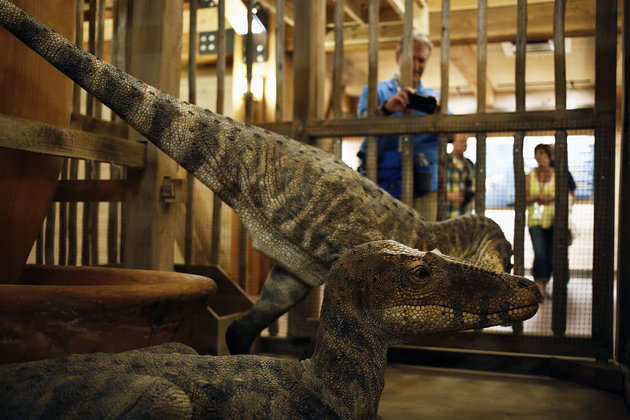
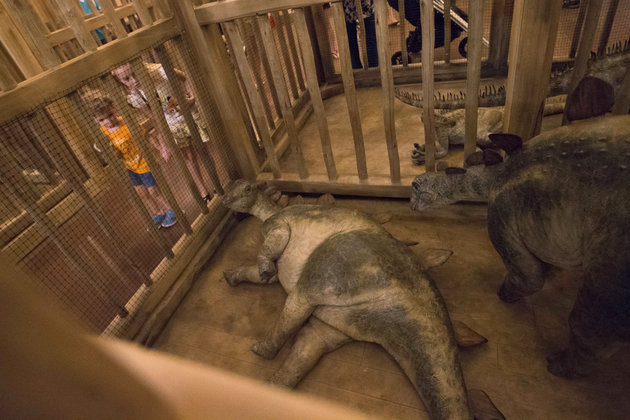
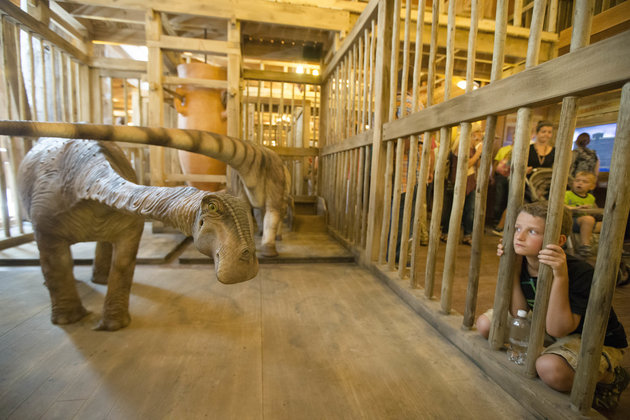
The new Ark Encounter tourist attraction in Kentucky wants you to think that dinosaurs were practically pets just a few thousand years ago.

While scientists agree that dinosaurs died out some 65 million years ago during the K-T mass extinction, Ark Encounter creator Ken Ham believes the planet is only around 6,000 years old. Thus, man and dinosaurs lived together… maybe like in the Flintstones.

The Noah’s Ark he built in Williamstown features exhibits showing dinosaurs peacefully living in cages aboard the ship.

Ham, a “young Earth” creationist, explained in a 2000 blog post exactly how massive dinosaurs could fit on the ship:

“Although there are about 668 names of dinosaurs, there are perhaps only 55 different ‘kinds’ of dinosaurs. Furthermore, not all dinosaurs were huge like the brachiosaurus, and even those dinosaurs on the Ark were probably ‘teenagers’ or young adults.”

Ham said the ark had 8,000 “animal genera” or about 16,000 in total, including some that are now extinct, like those dinosaurs.

“Without getting into all the math, the 16,000-plus animals would have occupied much less than half the space in the Ark (even allowing them some moving-around space),” he wrote.

Along with dinosaurs, NPR reported that there were other eyebrow-raising “animals” on display, including unicorns.

The fact that the displays were completely at odds with science hasn’t kept guests from enjoying them.

Rachael Cross, who visited with her five children, told CBS News that the Ark shows actual history.

“The truth. The absolute truth,” Cross told the network. “God’s word is the Bible and it’s the absolute truth. I totally believe that.”

Critics said the Ark was a threat to kids.

“Basically, this boat is a church raising scientifically illiterate children and lying to them about science,” local resident Jim Helton told The Associated Press.

The massive attraction has been the subject of controversy, not only because it stands as a giant monument to creationism, but also for its hiring practices and tax breaks.

Ark Encounter employees are required to sign a statement saying they are Christians and that Jesus Christ is their savior, the Christian Post reported. In addition, the site has been given $18 million in state tax incentives, something critics said shouldn’t have been allowed, given its religious nature.

Ark Encounter formally opens today.

http://www.huffingtonpost.com/entry/noahs-ark-dinosaurs_us_577d9ff8e4b0344d514dea93?

Ancient humans may have made giant telescopes 6,000 years ago

Telescopes as we think of them date back 400 years to the Enlightenment. But astronomers studying huge tombs in Portugal believe ancient humans were making their own stargazing instruments 6,000 years ago, the Atlantic reports. Researchers, who presented their findings Wednesday at the National Astronomy Meeting in Britain, believe the tombs themselves were a type of massive lensless telescope, according to Live Science. The Guardian reports the long, narrow entrances to the tombs—which were the only source of light—would focus the eye on a single piece of sky, block out the sun’s rays at dawn, and make the eye more sensitive to low light. “This would allow enhanced observing, especially in the twilight hours of dusk and dawn,” astronomer Daniel Brown tells Live Science.

The tombs may “have been the first astronomical tools to support the watching of the skies, millennia before telescopes were invented,” the Royal Astronomical Society says in a statement. Ancient humans admitted inside the tombs may have been seen as having “secret knowledge or foresight” due to being able to see the rise of seasonal stars days before those outside the tombs could see them. They might use that information to declare when it was time to move herds to new grazing areas, for example. Researchers are now experimenting to see what stars might align with the entrances to the tombs.

http://www.newser.com/story/227434/ancient-humans-may-have-made-giant-telescopes-6000-years-ago.html?utm_source=rss&utm_medium=applenews&utm_campaign=main

Thanks to Kebmodee for bringing this to the It’s Interesting community.

Thieves at large, with 20,000 pounds of cheese, in Wisconsin

Police in southeastern Wisconsin say 20,000 pounds of cheese have vanished. The cheese, produced by U.S. Foods, was in a semitrailer parked at a business in the Milwaukee suburb of Oak Creek when it went missing Thursday.

Police say the semi driver was transporting the load from Green Bay to the New York City area and unhitched the trailer to run an errand. When he returned, the trailer and $46,000 worth of cheese was gone.

It’s not the first such heist of the legacy commodity in a state where sports fans like to wear foam wedges on their heads. A semitrailer carrying $70,000 worth of cheese was stolen from Germantown, another Milwaukee suburb, in January.

http://bigstory.ap.org/f17f21e16dcc44eb9374057028e0ce33

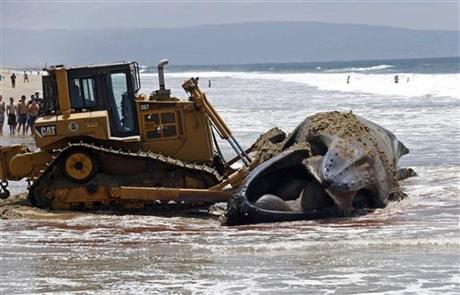
Dead whale towed off Los Angeles beach ahead of holiday

By JOHN ANTCZAK

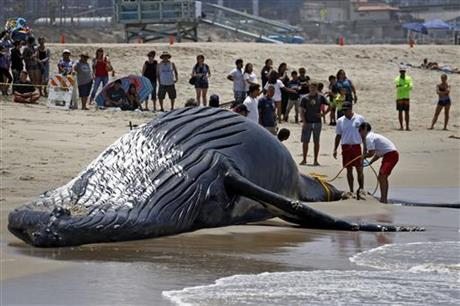
The reeking carcass of a dead humpback whale was towed back out to sea some 24 hours after washing up at a popular Los Angeles County beach Friday.

Authorities used boats pulling ropes attached to the tail to pull it off the sand during the evening high tide, taking the whale far out to sea and avoiding a foul stench and grim scene on the beach as Fourth of July weekend crowds began arriving.

Authorities had earlier attempted the procedure at midday, with a bulldozer pushing, but it was unsuccessful because of the low tide.

The huge whale washed onto Dockweiler Beach, a long stretch of sand near the west end of Los Angeles International Airport, just before 8 p.m. Thursday and holiday beachgoers began arriving in the morning.

Lifeguards posted yellow caution tape to keep people away and biologists took samples to determine what caused the death of the humpback, an endangered species. Beachgoers watching from a distance covered their noses.

Tail markings were compared with a photo database and found that the same whale had been spotted three times previously off Southern California between June and August of last year by whale watchers who gave it the nickname Wally, said Alisa Schulman-Janiger, a whale research associate with the Natural History Museum of Los Angeles County.

At the time of the prior sightings the humpback was covered with whale lice, which usually means a whale is in poor physical condition, but it was also actively feeding and breaching, she said.

Schulman-Janiger said she noticed healed entanglement scars on its tail indicating that in the past it been snarled in some sort of fishing line. The carcass was in relatively good condition which meant the whale could have died as recently as Thursday morning, she said.

The whale was about 46 feet long and at least 15 years old, meaning it had reached maturity, said Justin Greenman, stranding coordinator for the National Marine Fisheries Service.

Skin and blubber samples were taken for DNA testing along with fecal matter to be tested for biotoxins.

The experts had hoped to more extensively open up the whale but due to the holiday weekend authorities decided to get it off the beach as soon as possible, Greenman said.

North Pacific humpbacks feed along the West Coast from California to Alaska during summer, according to the Marine Mammal Center, a Sausalito-based ocean conservation organization. Although the species’ numbers are extensively depleted, humpbacks have been seen with increasing frequency off California in recent years, the center’s website said.

Humpbacks, familiar to whale watchers for their habits of breaching and slapping the water, are filter feeders that consume up to 3,000 pounds of krill, plankton and tiny fish per day, according to the National Oceanic and Atmospheric Administration.

The whale that washed up is not the same one spotted earlier in the week off Southern California tangled in crab pot lines. That animal was identified as a blue whale. Efforts by a rescue crew in a small boat to cut away the line failed, and it disappeared.

California has seen a number of whales on beaches this year. A humpback carcass that appeared off Santa Cruz in May had to be towed out to sea, while a massive gray whale that ended up on San Onofre State Beach in April had to be chopped up and hauled to a landfill.

The same month, a distressed humpback was freed from crabbing gear in Monterey Bay. In March, a dead gray was removed from Torrey Pines State Beach.

http://bigstory.ap.org/1c05823a4b8445e8802662e2b9b52c67