
In 1995 Walmart banned a T-shirt saying ‘a woman will be president’

woman-t-shirt

By Lindsey Bever

In 1933, Ann Moliver Ruben said her cousin, Irwin, told her that a girl could never be president.

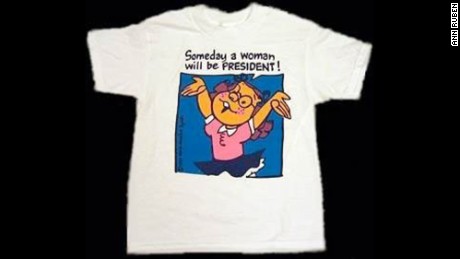
Decades later, corporate America, it seemed, was trying to tell her the same thing. Ruben, a psychologist from Pittsburgh, had been studying children’s perceptions of women leaders in the 1990s when she stumbled upon a “Dennis the Menace” comic strip in a Sunday newspaper — an episode in which a young, curly-haired feminist named Margaret told him: “Someday a woman will be president!”

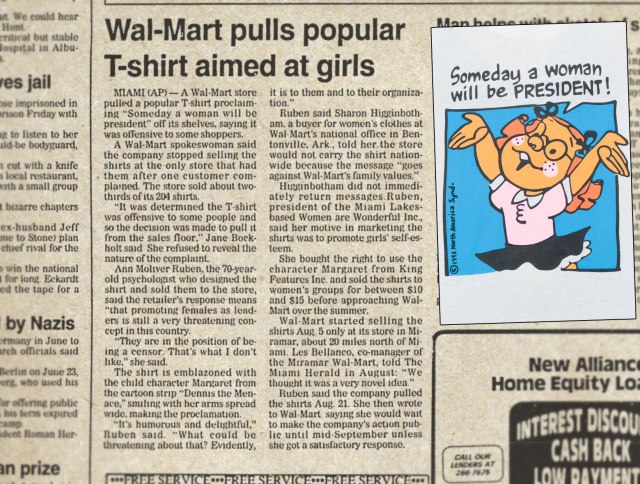
Ruben put the slogan on T-shirts and sold them to a Walmart store in Florida, which pulled them from the shelves in the ’90s. According to Ruben, Walmart said that “the message went against their philosophy of family values.”

Walmart did not confirm that the message went against its philosophy of family values, but said it went against its policy of philosophy of political neutrality, according to the Miami Herald.

Following a nationwide uproar, Walmart put them back — and, Ruben said, she later created a new version with a second message on the back: “Someday is now.”

Ruben, a 91-year-old women’s rights advocate, said that “someday” came Tuesday night at the Democratic National Convention when Hillary Clinton became the first female presidential nominee for a major party.

“I’ve been waiting 83 years to see what happened yesterday,” she told The Washington Post on Wednesday in a phone interview. “This is a wonderful time in our history, and I thank God I’ve lived to see it happen.”

Clinton is scheduled to formally accept the nomination on Thursday, but in Philadelphia on Tuesday night, she addressed the crowd at the Democratic National Convention at an unprecedented moment in history.

Photos flashed across a jumbotron, showing each of the nation’s 44 presidents — all men and all but one of them white. Then it showed Clinton, breaking through glass.

“I can’t believe we just put the biggest crack in that glass ceiling yet,” Clinton said, adding: “If there are any little girls out there who stayed up late to watch, let me just say: I may become the first woman president, but one of you is next.”

Breaking glass ceilings

Over the decades, Ruben has broken her own glass ceilings. During World War II, she was starting a family and praying for her husband’s safe return from battles overseas while earning a college education at a time when most women did not do that. She received a bachelor’s degree in elementary education from the University of Pittsburgh — then a master’s in counseling and psychology, and a doctorate in higher education and psychology, according to her website.

“My father told me, ‘Annie, you’re very smart, and whatever you decide to do in your life, you’re going to be successful. So don’t ever give up, Annie,'” she told The Post. “I heard him loud and clear, and that gave me the incentive.”

For years, Ruben was a psychology professor in Florida before she went into private practice, where she said she focused on providing family therapy.

In 1993, Ruben began studying children’s attitudes toward women leaders, surveying 1,500 elementary school students in Miami. She found that nearly half of them believed that only men could be president, according to an article in the Miami Herald the next year.

“The girls who finished the survey were sad,” she told the newspaper at the time. “It was clear that if they’re going to do anything, they’ll have to do it themselves. They can’t count on boys who grow up to be men to help them.”

Ruben created a company called Women are Wonderful Inc., and started selling T-shirts to raise girls’ self-esteem, according to a 1995 report in the Herald.

“I don’t want girls to believe what I grew up believing — that a girl can never be president,” she told the newspaper.

Indeed, more than 20 years ago, it was Ruben’s inspirational T-shirts, based on a cartoon, that created a flap, exposing tension between competing ideals.

‘No girls allowed’

The 1993 “Dennis the Menace” comic showed Dennis building a clubhouse. No girls were allowed. Margaret attempted to school him on all the things girls could do, including growing up to become president.

Ruben said she called the cartoon’s creator, Hank Ketcham, and then got permission from King Features Syndicate to use the frame for a T-shirt.

She sold several dozen to a Walmart store in Miramar, a city in South Florida, but the company pulled the shirts after some customers complained that the message was too political.

“It was determined the T-shirt was offensive to some people and so the decision was made to pull it from the sales floor,” Walmart spokeswoman Jane Bockholt told the Associated Press in September 1995.

Ruben told the news agency at the time that she saw it as a sign that “promoting females as leaders is still a very threatening concept in this country.”

“It’s a tragedy,” she told the Miami Herald at the time. “I think it’s a barometer of the prejudices against females in our society.”

‘We overreacted’

Ruben told The Washington Post on Wednesday that she put one of the T-shirts on her 8-month-old grandson, boosted him atop her shoulders and went to see an Associated Press reporter to get out her story.

The wire version went into newspapers across the country, Ruben said, and women were soon flooding Walmart’s phone lines to voice their concerns.

Ruben said women with the Miami chapter of the American Association of University Women, of which she was a member, marched in protest. Jackie DeFazio, who was AAUW president at the time, wrote a letter to the company’s CEO, saying, “Believing in girls’ potential is neither offensive to the public nor adverse to the family values,” according to an article from the group’s membership magazine.

Almost immediately, Walmart representatives admitted they “made a mistake.”

“A few customers complained about the political nature of the shirts, and we overreacted,” Jay Allen, a spokesman for Walmart, told the Miami Herald in 1995. “That’s what we tend to do when it comes to customers’ concerns. We overreact.

“We should have never pulled the shirts from the shelves in the first place.”

Ruben told the Miami Herald in December 1995 that since the incident, she had received 50,000 orders from women’s groups and other companies, and another 30,000 orders from Walmart, which said it heard customers “loud and clear” and stocked more than 2,000 stores.

“Wow, it still pains us that we made this mistake 20 years ago,” Danit Marquardt, director of corporate communications for Walmart, told The Post on Wednesday in a statement. “We’re proud of the fact that our country — and our company — has made so much progress in advancing women in the workplace, and in society.”

Ruben, it seems, is still a “Dennis the Menace” fan, especially when it comes to illustrating politics.

In March, she penned a letter to the editor in the Pittsburgh Post-Gazette, asking fellow readers, “Would Dennis vote for Donald Trump?”

She wrote:

My husband, of blessed memory, loved the cartoon created by Hank Ketcham called “Dennis the Menace.” Never did a Sunday go by that reading Dennis didn’t give him a laugh. But I wonder if my Gershon Ruben were living today, would he laugh and see how much his 5-year-old Dennis resembles the guy who wants to be president today, Donald Trump?

I see so many similarities that it truly makes me want to laugh, but instead I cry. That Donald, acting like Dennis, is the Republican front-runner in the polls this election year makes me feel that a lot of us are nuts.

As for Clinton, Ruben told The Post, “when she’s sworn in in D.C. in January, I’m going to be there and I’m going to be wearing my T-shirt.”

Ruben said if she could pass along one message to young girls today, it would be one similar to what her father told her many years ago.

“You’re smart. Get educated. Don’t ever give up on your dream and you’ll make it,” she said. “Hillary made it. She never gave up on her dream.

“We now have a wonderful role model.”
https://www.washingtonpost.com/news/the-fix/wp/2016/07/27/that-time-walmart-banned-a-t-shirt-saying-a-woman-will-be-president/

This beautiful deep sea purple orb has scientists baffled


While studying the ocean floor off California’s Channel Islands, researchers found this mysterious species.

By Michael d’Estries

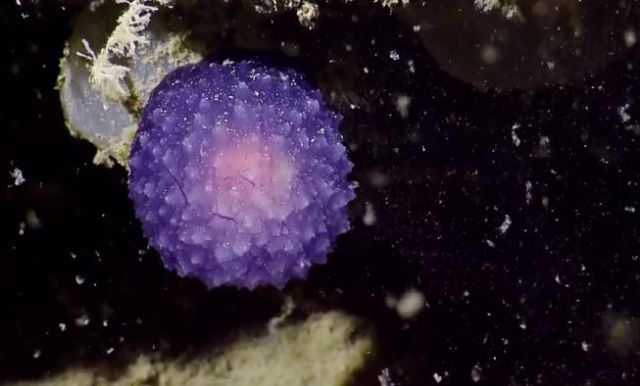
While researching previously unmapped regions of the Channel Islands off the California coast, the research vessel Nautilus came across an unusual purple mass peeking out of a coral crevice. As the scientists zoomed in on the beautiful creature, they began wondering aloud what it could possibly be. After guesses of everything from a species of plankton to a colorful egg sack, the team decided to use their deep sea rover’s vacuum tube to grab the mystery species and bring it to the surface.

“This unidentified purple orb stumped our scientists onboard,” Nautilus posted to its website. “After sampling, it began to unfold to reveal two distinct lobes. This could possibly be a new species of nudibranch.”

Nudibranchs are a group of soft-shelled mollusk comprised of some 2,300 species and noted for their varied and striking colors. They can be found at nearly all depths and feature chemical defenses that make their bodies both distasteful to predators and, in the case of the acid-secreting variety, painful.

http://www.mnn.com/earth-matters/animals/blogs/beautiful-deep-sea-purple-orb-has-scientists-baffled

Scientists May Have Discovered What Causes Migraines and a Path toward a Cure

by Philip Perry

Those who get migraines know how painful and debilitating they can be. In extreme cases, they can take you out of commission for days. One in seven suffer from them, making migraines the third most common illness in the world. Symptoms include a pounding headache, sometimes on one side of the head, nausea, vomiting, and sensitivity to light and sound.

A laundry list of causes and triggers have been implicated including genetics, eating certain foods, lack of sleep, hormonal changes, neurological issues, and much more. Though there have been lots of indicators, medical science has been stumped as to what causes them, which has made the development of new therapies difficult. Now, according to a group of scientists at the International Headache Genetics Consortium (IHGC), the cause has most likely been discovered. It all has to do with blood flow. Specifically, blood vessels within the brain becoming restricted may be what causes migraines.

There has been a long running debate as to whether migraines are caused by a neurological problem or a vascular one—having to do with circulation. This study, published in the journal Nature Genetics, is likely to put the controversy to rest, and help researchers develop novel approaches to treat the condition. 59,674 migraine sufferers and 316,078 controls, or those who didn’t get the headaches, participated. They hailed from 12 different countries. All participants were part of previous studies, where they had their DNA or genome scanned.


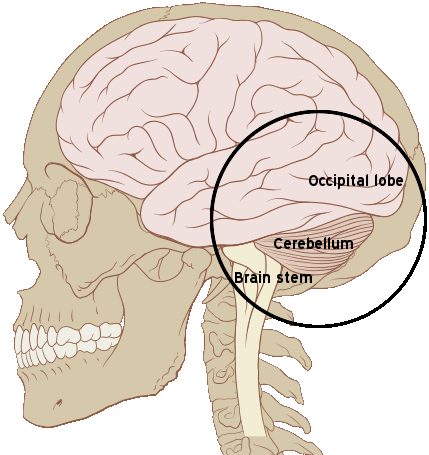
The part of the brain where migraines originate.

Researchers identified 38 specific genes or loci tied to migraines, 28 of which had never been implicated before. What’s interesting is these same genes are associated with other forms of illness, all in the realm of vascular disease. Due to this, researchers believe blood vessel problems are at the heart of migraines.

Aarno Palotie is the leader of the IHGC. He is also associated with the Center for Human Genome Research at Massachusetts General Hospital, in Boston, and at the Broad Institute of MIT and Harvard. Palotie hailed the discovery. He also said the IHGC’s approach was necessary in achieving it. “Because all of these variants modify the disease risk only slightly, the effect could only be seen when this large amount of samples became available.” Migraines have been difficult to treat. Symptoms and severity run the spectrum, and drugs effective in some patients, have been less potent, or even ineffective in others. Now, researchers have a place to start for developing new drugs, which must somehow target the “regulation of vascular tone.” John-Anker Zwart is another member of IHGC. He hails from the Oslo University Hospital in Norway.

Zwart said, “These genetic findings are the first concrete step towards developing personalized, evidence-based treatments for this very complex disease.” He added, “In the future, we hope this information can be utilized in dividing the patients into different genetic susceptibility groups for clinical drug trials, thus increasing the chances of identifying the best possible treatment for each subgroup.”

Previous studies implicated brain tissue genes. But researchers here say that those studies may not have used enough tissue samples. Another neurological theory was that it had something to do with ion channels in the central nervous system (CNS). This was thought to be an area that warranted more study, until now.

The authors of the IHGC study say that the widespread sharing of data played a critical role in this discovery. Palotie said, “We simply can’t overstate the importance of international collaboration when studying genetics of complex, common diseases.” More studies will now be conducted to understand the pathogenesis or development of migraines and what role each gene plays, in order to find entryways suitable for therapeutic intervention.

http://bigthink.com/philip-perry/scientists-discover-the-cause-of-migraines-and-a-path-toward-a-cure?utm_source=Big+Think+Weekly+Newsletter+Subscribers&utm_campaign=709f2481ff-Newsletter_072016&utm_medium=email&utm_term=0_6d098f42ff-709f2481ff-41106061

The risk of everlasting consequences if our brains don’t get adequate stimulation in our early years

by Bahar Golipour

What is the earliest memory you have?

Most people can’t remember anything that happened to them or around them in their toddlerhood. The phenomenon, called childhood amnesia, has long puzzled scientists. Some have debated that we forget because the young brain hasn’t fully developed the ability to store memories. Others argue it is because the fast-growing brain is rewiring itself so much that it overwrites what it’s already registered.

New research that appears in Nature Neuroscience this week suggests that those memories are not forgotten. The study shows that when juvenile rats have an experience during this infantile amnesia period, the memory of that experience is not lost. Instead, it is stored as a “latent memory trace” for a long time. If something later reminds them of the original experience, the memory trace reemerges as a full blown, long-lasting memory.

Taking a (rather huge) leap from rats to humans, this could explain how early life experiences that you don’t remember still shape your personality; how growing up in a rich environment makes you a smarter person and how early trauma puts you at higher risk for mental health problems later on.

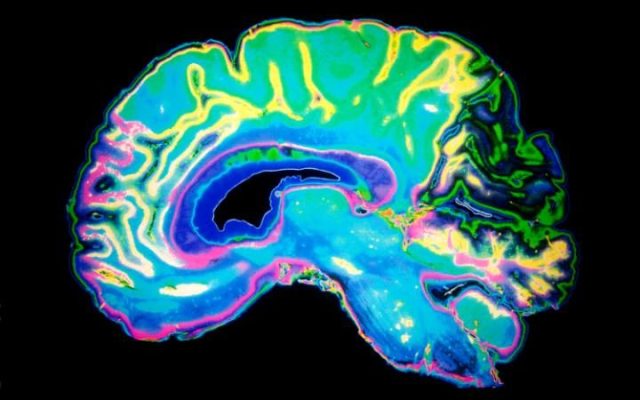
Scientists don’t know whether we can access those memories. But the new study shows childhood amnesia coincides with a critical time for the brain ― specifically the hippocampus, a seahorse-shaped brain structure crucial for memory and learning. Childhood amnesia corresponds to the time that your brain matures and new experiences fuel the growth of the hippocampus.

In humans, this period occurs before pre-school, likely between the ages 2 and 4. During this time, a child’s brain needs adequate stimulation (mostly from healthy social interactions) so it can better develop the ability to learn.

And not getting enough healthy mental activation during this period may impede the development of a brain’s learning and memory centers in a way that it cannot be compensated later.

“What our findings tell us is that children’s brains need to get enough and healthy activation even before they enter pre-school,” said study leader Cristina Alberini, a professor at New York University’s Center for Neural Science. “Without this, the neurological system runs the risk of not properly developing learning and memory functions.”

The findings may illustrate one mechanism that could in part explain scientific research that shows poverty can shrink children’s brains.

Extensive research spanning decades has shown that low socioeconomic status is linked to problems with cognitive abilities, higher risk for mental health issues and poorer performance in school. In recent years, psychologists and neuroscientists have found that the brain’s anatomy may look different in poor children. Poverty is also linked to smaller brain surface area and smaller volume of the white matter connecting brain areas, as well as smaller hippocampus. And a 2015 study found that the differences in brain development explain up to 20 percent of academic performance gap between children from high- and low-income families.

Critical Periods

For the brain, the first few years of life set the stage for the rest of life.

Even though the nervous system keeps some of its ability to rewire throughout life, several biochemical events that shape its core structure happen only at certain times. During these critical periods of the developmental stages, the brain is acutely sensitive to new sights, sounds, experiences and external stimulation.

Critical periods are best studied in the visual system. In the 1960s, scientists David Hubel and Torsten Wiesel showed that if they close one eye of a kitten from birth for just for a few months, its brain never learns to see properly. The neurons in the visual areas of the brain would lose their ability respond to the deprived eye. Adult cats treated the same way don’t show this effect, which demonstrates the importance of critical periods in brain development for proper functioning. This finding was part of the pioneering work that earned Hubel and Wiesel the 1981 Nobel Prize in Physiology or Medicine.

In the new study in rats, the team shows that a similar critical period may be happening to the hippocampus.

Alberini and her colleagues took a close look at what exactly happens in the brain of rats in their first 17 days of life (equivalent to the first three years of a human’s life). They created a memory for the rodents of a negative experience: every time the animals entered a specific corner of their cage, they received a mildly painful shock to their foot. Young rats, like kids, aren’t great at remembering things that happened to them during their infantile amnesia. So although they avoided that corner right after the shock, they returned to it only a day later. In contrast, a group of older rats retained the memory and avoided this place for a long time.

However, the younger rats, had actually kept a trace of the memory. A reminder (such as another foot shock in another corner) was enough to resurrect the memory and make the animals avoid the first corner of the cage.

Researchers found a cascade of biochemical events in the young rats’ brains that are typically seen in developmental critical periods.

“We were excited to see the same type of mechanism in the hippocampus,” Alberini told The Huffington Post.

The Learning Brain And Its Mysteries

Just like the kittens’ brain needed light from the eyes to learn to see, the hippocampus may need novel experiences to learn to form memories.

“Early in life, while the brain cannot efficiently form long-term memories, it is ‘learning’ how to do so, making it possible to establish the abilities to memorize long-term,” Alberini said. “However, the brain needs stimulation through learning so that it can get in the practice of memory formation―without these experiences, the ability of the neurological system to learn will be impaired.”

This does not mean that you should put your kids in pre-pre-school, Alberini told HuffPost. Rather, it highlights the importance of healthy social interaction, especially with parents, and growing up in an environment rich in stimulation. Most kids in developed countries are already benefiting from this, she said.

But what does this all mean for children who grow up exposed to low levels of environmental stimulation, something more likely in poor families? Does it explain why poverty is linked to smaller brains? Alberini thinks many other factors likely contribute to the link between poverty and brain. But it is possible, she said, that low stimulation during the development of the hippocampus, too, plays a part.

Psychologist Seth Pollak of University of Wisconsin at Madison who has found children raised in poverty show differences in hippocampal development agrees.

Pollak believes the findings of the new study represent “an extremely plausible link between early childhood adversity and later problems.”

“We must always be cautious about generalizing studies of rodents to understanding human children,” Pollas added. “But the nonhuman animal studies, such as this one, provide testable hypotheses about specific mechanisms underlying human behavior.”

Although the link between poverty and cognitive performance has been repeatedly seen in numerous studies, scientists don’t have a good handle on how exactly many related factors unfold inside the developing brain, said Elizabeth Sowell, a researcher from the Children’s Hospital Los Angeles. Studies like this one provide “a lot of food for thought,” she added.

http://www.huffingtonpost.com.au/2016/07/24/the-things-you-dont-remember-shape-who-you-are/

Why Buttons On Men’s And Women’s Shirts Are On Opposite Sides

Anyone that has worn a button-front shirt has likely noticed that the buttons are different, depending on whether it’s a men or women’s shirt. Chances are you haven’t given it much thought, but as it turns out, there’s actually a pretty interesting story that explains why.

As it turns out, the different styles date all the way back to when buttons were invented, around the 13th century.

Only wealthy women could afford to have buttons on their shirts, and if you were wealthy, you also had ladies maids. So having the buttons on the other side made sense, because it was someone else buttoning your clothes.

http://www.huffingtonpost.com/entry/button-down-shirts_us_5787e110e4b08608d33399e4

Having a socially interactive job helps protect from Alzheimer’s disease.

By Patrick Foster

Lawyers, teachers and doctors have a better chance of fighting off the effects of Alzheimer’s disease, because of the complex nature of their jobs, scientists reported this week.

Researchers found that people whose jobs combined complex thinking with social engagement with others – such as social workers and engineers – were better protected against the onset of Alzheimer’s, compared to those in manual work.

The study came as another report suggested that people with a poor diet could protect themselves against cognitive decline by adopting a mentally stimulating lifestyle.

Both pieces of research, published at the international conference of the Alzheimer’s Association, in Toronto, examined the impact of complex thinking on the onset of the disease.

In the first study, carried out by scientists at the Alzheimer’s Disease Research Centre, in Wisconsin, researchers examined white matter hyperintensities (WMHs) – white spots that appear on brain scans and are associated with Alzheimer’s – in 284 late-middle-aged patients considered at risk of contracting the disease.

They found that people who worked primarily with other people, as opposed to with “things or data”, were less likely to be affected by brain damage indicated by WMHs.

While lawyers, social workers, teachers and doctors were best protected, those who enjoyed the least protection included shelf-stackers, machine operators and labourers.

Elizabeth Boots, a researcher on the project, said: “These findings indicate that participants with higher occupational complexity are able to withstand pathology associated with Alzheimer’s and cerebrovascular disease and perform at a similar cognitive level as their peers.

“This association is primarily driven by work with people, rather than data or things. These analyses underscore the importance of social engagement in the work setting for building resilience to Alzheimer’s disease.”

The second study, carried out by Baycrest Health Sciences, in Toronto, examined the diet of 351 older adults.

Researchers found that those who had a traditional Western diet of red and processed meat, white bread, potatoes and sweets were more likely to experience cognitive decline.

However, those who adhered to such a diet but who had a mentally stimulating lifestyle enjoyed some protection from such decline.

Dr Matthew Parrott, one member of the team, said: “Our results show the role higher educational attainment, mentally stimulating work and social engagement can play in protecting your brain from cognitive decline, counteracting some negative effects of an unhealthy diet.

“This adds to the growing body of evidence showing how various lifestyle factors may combine to increase or protect against vulnerability to Alzheimer’s disease.”

Other research put forward at the convention included a study showing that digital brain training exercises can help stave of Alzheimer’s, and another paper that suggested that some newly-identified genes may also increase resilience to the disease.

Maria C. Carrillo, the chief science officer at the Alzheimer’s Association, said: “These new data add to a growing body of research that suggests more stimulating lifestyles, including more complex work environments with other people, are associated with better cognitive outcomes in later life.

“As each new study emerges, we further understand just how powerful cognitive reserve can be in protecting the brain from disease. Formal education and complex occupation could potentially do more than just slow cognitive decline – they may actually help compensate for the cognitive damage done by bad diet and small vessel disease in the brain.

“It is becoming increasingly clear that in addition to searching for pharmacological treatments, we need to address lifestyle factors to better treat and ultimately prevent Alzheimer’s and other dementias.”

http://www.telegraph.co.uk/news/2016/07/24/stressful-job-it-might-help-you-fight-off-alzheimers/

Wild birds communicate and collaborate with humans, study confirms


Humans use a unique call to request help from honeyguide birds, and the birds also ‘actively recruit’ human partners. This is two-way teamwork, scientists say, a rarity between people and wildlife.

By Russell McLendon

“Brrr-hm!”

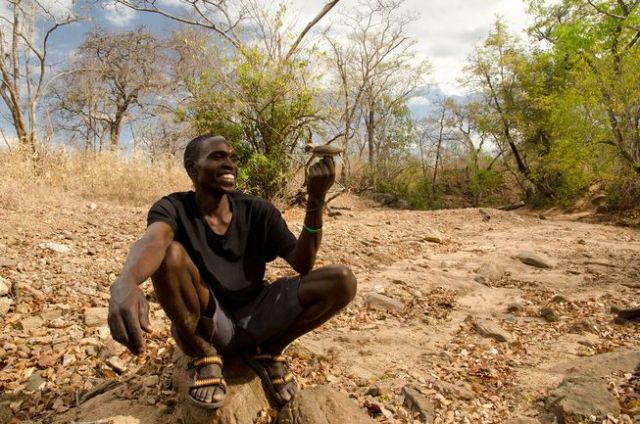
When a human makes that sound in Mozambique’s Niassa National Reserve, a wild bird species instinctively knows what to do. The greater honeyguide responds by leading the human to a wild beehive, where both can feast on honey and wax. The bird does this without any training from people, or even from its own parents.

This unique relationship pre-dates any recorded history, and likely evolved over hundreds of thousands of years. It’s a win-win, since the birds help humans find honey, and the humans (who can subdue a beehive more easily than the 1.7-ounce birds can) leave behind beeswax as payment for their avian informants.

While this ancient partnership is well-known to science, a new study, published July 22 in the journal Science, reveals incredible details about how deep the connection has become. Honeyguides “actively recruit appropriate human partners,” the study’s authors explain, using a special call to attract people’s attention. Once that works, they fly from tree to tree to indicate the direction of a beehive.

Not only do honeyguides use calls to seek human partners, but humans also use specialized calls to summon the birds. Honeyguides attach specific meaning to “brrr-hm,” the authors say, a rare case of communication and teamwork between humans and wild animals. We’ve trained lots of domesticated animals to work with us, but for wildlife to do so voluntarily — and instinctively — is pretty wild.

Here’s an example of what the “brrr-hm” call sounds like:

“What’s remarkable about the honeyguide-human relationship is that it involves free-living wild animals whose interactions with humans have probably evolved through natural selection, probably over the course of hundreds of thousands of years,” says lead author Claire Spottiswoode, a zoologist at the University of Cambridge.

“[W]e’ve long known that people can increase their rate of finding bees’ nests by collaborating with honeyguides, sometimes following them for over a kilometer,” Spottiswoode explains in a statement. “Keith and Colleen Begg, who do wonderful conservation work in northern Mozambique, alerted me to the Yao people’s traditional practice of using a distinctive call which they believe helps them to recruit honeyguides. This was instantly intriguing — could these calls really be a mode of communication between humans and a wild animal?”

To answer that question, Spottiswoode went to Niassa National Reserve, a vast wildlife refuge larger than Switzerland. With the help of honey hunters from the local Yao community, she tested whether the birds can distinguish “brrr-hm” — a sound passed down from generation to generation of Yao hunters — from other human vocalizations, and if they know to respond accordingly.

She made audio recordings of the call, along with two “control” sounds — arbitrary words spoken by the Yao hunters, and the calls of another bird species. When she played all three recordings in the wild, the difference was clear: Honeyguides proved much more likely to answer the “brrr-hm” call than either of the other sounds.

“The traditional ‘brrr-hm’ call increased the probability of being guided by a honeyguide from 33 percent to 66 percent, and the overall probability of being shown a bees’ nest from 16 percent to 54 percent compared to the control sounds,” Spottiswoode says. “In other words, the ‘brrr-hm’ call more than tripled the chances of a successful interaction, yielding honey for the humans and wax for the bird.”

The researchers released this video, which includes footage from their experiments

This is known as mutualism, and while lots of animals have evolved mutualistic relationships, it’s very rare between humans and wildlife. People also recruit honeyguides in other parts of Africa, the study’s authors note, using different sounds like the melodious whistle of Hadza honey hunters in Tanzania. But aside from that, the researchers say the only comparable example involves wild dolphins who chase schools of mullet into anglers’ nets, catching more fish for themselves in the process.

“It would be fascinating to know whether dolphins respond to special calls made by fishermen,” Spottiswoode says.

The researchers also say they’d like to study if honeyguides learned “language-like variation in human signals” across Africa, helping the birds identify good partners among the local human population. But however it began, we know the skill is now instinct, requiring no training from people. And since honeyguides reproduce like cuckoos — laying eggs in other species’ nests, thus tricking them into raising honeyguide chicks — we know they don’t learn it from their parents, either.

This human-honeyguide relationship isn’t just fascinating; it’s also threatened, fading away in many places along with other ancient cultural practices. By shedding new light on it, Spottiswoode hopes her research can also help preserve it.

“Sadly, the mutualism has already vanished from many parts of Africa,” she says. “The world is a richer place for wildernesses like Niassa where this astonishing example of human-animal cooperation still thrives.”
http://www.mnn.com/earth-matters/animals/blogs/wild-birds-communicate-and-collaborate-humans-study-confirms

Man left his family and started a new one using a dead man’s identity

By Peter Holley

For more than two decades, Terry Jude Symansky appeared to lead an ordinary life in Pasco County, Fla.

He had a wife and a teenage son, owned property, and “worked odd jobs,” according to the Tampa Bay Times.

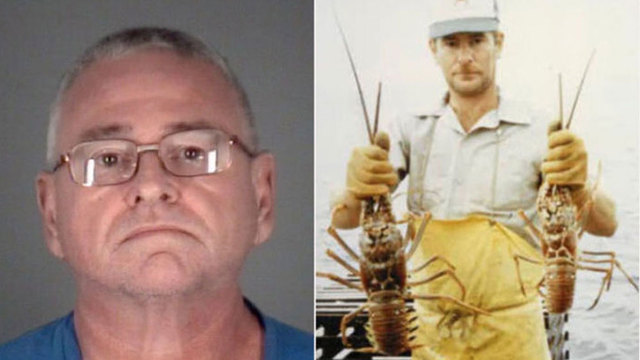
The only problem, police say, was that Terry Jude Symansky was not really Terry Jude Symansky. He was actually an Indiana man named Richard Hoagland who vanished 25 years ago and has been considered dead since 2003, the paper reported.

The lie lasted more than two decades. In the end, a single online search was all it took for the ruse to unravel.

The truth began to surface when a nephew of the real Terry Symansky — who drowned in 1991 at age 33 — started an Ancestry.com family search, according to ABC affiliate WFLA. Knowing that his uncle was dead, the nephew was surprised to find someone with the same name living in central Florida.

“He looks up his real uncle Terry Symansky and realizes that he died in 1991, which the family knew,” Pasco County Sheriff Chris Nocco told the station. “He then starts scrolling down the page and sees more details that Terry Symanksy was remarried in 1995. He owns property in Pasco County, Florida.”

Fearing that their fake relative might try to harm them, family members waited three years before eventually contacting authorities in April, police told the Tampa Bay Times.

Hoagland, 63, was arrested Wednesday and charged with fraudulent use of personal identification, the paper reported.

How exactly Hoagland came to assume the identity of Terry Symansky — who moved to Florida from Cleveland to work as a commercial fisherman — remains a complicated mystery.

The Tampa Bay Times reported that investigators suspect it occurred as follows:

Deputies think Hoagland stole Terry Symansky’s identity like this: Hoagland once lived with Terry Symansky’s father in Palm Beach. Hoagland found a copy of Terry Symansky’s 1991 death certificate and used it to obtain a birth certificate from Ohio. With the birth certificate in hand, he then applied by mail for an Alabama driver’s license and used that to obtain a Florida driver’s license. That’s how deputies think Hoagland came to spend more than two decades living in Florida as Terry Symansky.

As Terry Symansky, he married Mary Hossler Hickman in 1995. The couple lived in Zephyrhills. He also fashioned a medical card to obtain a private pilot’s license as Terry Symansky from the Federal Aviation Administration.

Before he began the process of assuming a new identity, Hoagland left his old life — which included a wife and four children — behind in Indiana, according to Bay News 9. His former wife in Indiana told police that Hoagland had three businesses related to insurance.

She told investigators that Hoagland told her in the early 1990s that he was wanted by the FBI for embezzling millions of dollars and had no choice but to leave town, according to the Tampa Bay Times. In reality, police told the paper, Hoagland told investigators that he left Indiana to get away from his wife.

Eventually, the paper reported, Hoagland’s wife assumed her husband was dead.

“This is a selfish coward,” Nocco said. “This is a person who has lived his life destroying others.”

Gerry Beyer, a law professor at Texas Tech University who studies identity theft, told the Tampa Bay Times that Hoagland’s alleged actions are unusual because most identity thieves steal people’s names to commit crimes.

He told the paper that the fact that the real Symansky never married or had children made him a “perfect” candidate for identity theft.

Yet, he noted, Hoagland’s ability to maintain the lie for more than two decades was shocking. It was a lie that was probably made easier, Beyer said, because it began before digital records were commonplace.

“You just never know,” Beyer told the paper. “It will all catch up with you.”

Hoagland’s Florida tenants told Bay News 9 that they were shocked that their landlord was not who he said he was.

“We’ve been personal with him quite a bit, and Terry’s the nicest guy anyone could ever meet,” Gregory Yates told the station.

“He’s a really nice guy, and he’s a really good landlord,” Dean Lockwood, another tenant, said. “Never would have known this, couldn’t imagine this was happening.”

Perhaps most damaged by Hoagland’s hoax, police said, was his wife in Florida, who learned about her husband’s alleged crimes only when detectives showed up at her door last week.

“For 20 years, she’s been lied to, so now she doesn’t know what she has to do as far as whether her marriage is even legal — what’s going to happen to all the properties they own, their bank accounts,” Detective Anthony Cardillo told Bay News 9. “The son has the last name Symansky.”

https://www.washingtonpost.com/news/morning-mix/wp/2016/07/24/he-left-his-family-then-he-started-a-new-one-using-a-dead-mans-identity-police-say/?tid=pm_national_pop_b

An Iowa City’s football player’s Pokémon Go game ends with four police guns pointed at his face

By Cindy Boren

Faith Ekakitie, a defensive end for the University of Iowa, described in harrowing detail an encounter he had with police as he played Pokémon Go in an Iowa City park last week. This story, sobering as it is, ended not in tragedy but with Ekakitie thanking police.

“Today was the first time I’ve truly feared my life,” the 23-year-old senior wrote Wednesday on Facebook, “and I have the media to thank for that.”

The 6-foot-3, 290-pounder wrote that he was “happy to be alive” after five police officers stopped him and pointed four guns at him because he fit the description of a man who had just robbed a bank. At a time when police shootings of black men are under scrutiny, Ekakitie described the encounter from his perspective and tried to look at it through the eyes of police, too.

“My pockets were checked, my backpack was opened up and searched carefully, and I was asked to lift up my shirt while they searched my waistband,” Ekakitie wrote. “Not once did they identify themselves to me as Iowa City Police officers, but with four gun barrels staring me in the face, I wouldn’t dare question the authority of the men and woman in front of me. This is what happened from my point of view.

“From the police officers’ point of view, all they knew was that a bank had just been robbed less than ten minutes ago. The suspect was a large black male, wearing all black, with something on top of his head and the suspect is armed. As they drive past an Iowa City park that was less than 3 minutes away from the bank that was just robbed, they notice a large black man, dressed in all black, with black goggles on his head. They quickly move to action and identify themselves as the Iowa City police and ask me to turn around and place my hands up. I do not comply, they ask again, and again no response from me. So they all draw their guns and begin to slowly approach the suspect.”

Ekakitie wrote that he did not immediately respond to officers because he was wearing headphones and they approached him from behind. He was, he realized, in a situation in which “things can go south very quickly.” He wrote:

In this situation, what the media would fail to let people know is that the suspect had his headphones in the entire time the Police Officers approached him initially. The suspect had actually just pulled up to the park because he was playing a newly popular Game called Pokemon Go. The suspect didn’t realize that there were four cops behind him because his music was blaring in his ears. The suspect had reached into his pockets, for something which was his phone, but for all the cops could have known, he was reaching for a gun. The suspect could very well become another statistic on this day. I am not one to usually rant on Facebook or anywhere else, but with all of the crazy things that have been happening in our world these past couple of weeks it is hard to stay silent. I am thankful to be alive, and I do now realize, that it very well could have been me, a friend of mine, my brother, your cousin, your nephew etc. Misunderstandings happen all the time and just like that things can go south very quickly. It is extremely sad that our society has brainwashed us all to the point where we can’t feel safe being approached by the police officers in our respective communities. Not all police officers are out to get you, but at the same time, not all people who fit a criminal profile are criminals.

Jorey Bailey, a sergeant with the Iowa City police, told the Des Moines Register that the armed robbery had occurred less than a block from the park and that, because Ekakitie matched the description of a large black man in black clothes and did not respond, it was “reasonable” that officers drew their guns. He told ESPN that the officers were in uniform, not undercover, and told SB Nation on Sunday that more information would be forthcoming in the next few days. An Iowa spokesperson confirmed for ESPN that the Facebook account and its contents were Ekakitie’s.

“I don’t think race played a factor in this, nor does it in circumstances like this because of the detailed description, the location given by the person and the short time span in which this all occurred,” Bailey said.

Ekakitie urged people to be aware of their surroundings and to “unlearn some of the prejudiced that we have learned about each other.”

I would like the thank the Iowa City Police department for handling a sensitive situation very professionally. I would also urge people to be more aware of their surroundings because clearly I wasn’t. Lastly, I would urge us all to at least to attempt to unlearn some of the prejudices that we have learned about each other and now plague our minds and our society. I am convinced that in the same way that we learned these prejudices, we can also unlearn them.

https://www.washingtonpost.com/news/early-lead/wp/2016/07/24/an-iowa-football-players-pokemon-go-game-ends-with-four-police-guns-pointed-at-his-face/?campaign_id=A100&campaign_type=Email

Scientists move one step closer to invisibility cloak

By Lee Roop

Scientists in England have made an object disappear using a composite material of nano-sized particles to change the way its surface appears.

It’s not the invisibility cloak from J.K. Rowling’s Harry Potter novels, but reports on the research say it moves the world one step closer.

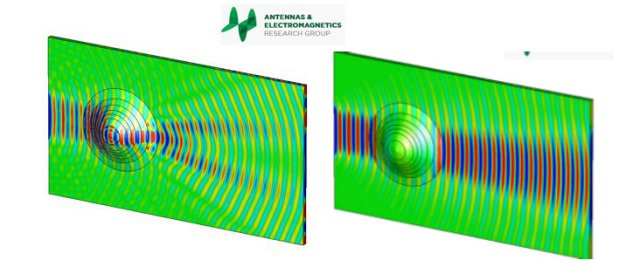
Here’s the way it worked. Researchers coated a curved surface with a nanocomposite medium with seven distinct layers, each with a different electrical property depending on position. The effect was to “cloak” an object allowing it to appear flat to electromagnetic waves.


The picture at left shows the cloak not in use where the presence of the object along the path of the traveling wave drastically changes its electric field configuration. At right, where the cloak is in action and the nanocomposite has been applied, there is a reduction in the amount of shadowing seen immediately after the object, as well as a noticeable improvement in the reconstruction of wave fronts. (Queen Mary University of London)

“The design is based on transformation optics, a concept behind the invisibility cloak,” said professor and study co-author Yang Hao of Queen Mary University of London’s School of Electronic Engineering and Computer Science.

Scientists see an early use of the coating in changing how antennas are tethered to a platform. It could allow antennas of different shapes and sizes to be attached to a platform without being detectable.

The underlying design approach could be applied to control any kind of electromagnetic surface waves, researchers said.

http://www.al.com/news/huntsville/index.ssf/2016/07/scientists_move_one_step_close.html