Brain scan research shows that lack of sleep severely alters brain function

BY DANIEL REED

Sleep deprivation majorly impacts the brain’s connectivity and function, according to a recent study published in NeuroImage. As well as affecting many important networks, sleep deprivation prevented normal changes to brain function between the morning and evening.

Sleep is an essential human state which is necessary for maintaining healthy function throughout the body. Therefore, lack of sleep has severe health-related consequences, with the brain being the most affected organ.

Lack of sleep can negatively affect memory, emotional processing and attentional capacities. For example, sleep deprivation has been shown to disrupt functional connectivity in hippocampal circuits (important for memory), and between the amygdala (important for emotion regulation) and executive control regions (involved in processes such as attention, planning, reasoning and cognitive flexibility). The emotional effects of sleep deprivation can be to both alter response patterns to negative things but also enhance reactivity toward positive things.

The study, led by Tobias Kaufmann of University of Oslo, involved 60 young men who completed three resting state functional magnetic resonance imaging (fMRI) scans – this is used to evaluate connectivity between brain regions when a person is not performing a task.

They were scanned in the morning and evening of the same day – this was to account for changes from morning to evening in normal brain function (diurnal variability). 41 men then underwent total sleep deprivation, whereas the remainder had another night of regular sleep, before they were scanned again the following morning. Finally, behavioural assessments of vigilance and visual attention were assessed.

The findings revealed that sleep deprivation strongly altered the connectivity of many resting-state networks; most clearly affected were networks important for memory (hippocampal networks) and attention (dorsal attention networks), as well as the default mode network (an interconnected set of brain regions active when a person is daydreaming or their mind is wandering).

In fact, they identified a set of 17 brain network connections showing altered brain connectivity. Furthermore, correlation analysis suggested that morning-to-evening connectivity changes returned the next day in the group that had slept the night, but not in the sleep-deprivation group.

The study emphasizes the major impact of sleep deprivation on the brain’s connectivity and function, as well as providing evidence that normal morning-to-evening connectivity changes do not occur after a night without sleep.

http://www.psypost.org/2016/07/brain-scan-research-shows-lack-sleep-severely-alters-brain-function-43977#prettyPhoto

Pennsylvania bridal shop co-owner stood naked in store window

The co-owner of a bridal shop has been charged with indecent exposure after three women reported him standing naked next to mannequins in the store’s display window.

Authorities said three women saw him on July 20 at One Enchanted Evening, in Zelienople (zee-lee-en-OH’-pul), Pennsylvania, which offers bridal, prom and pageant fashions.

One woman provided a cellphone photo. One Enchanted Evening’s website shows it closed at 4 p.m. that day.

Fifty-four-year-old Peter Scolieri, of Cranberry Township, was charged with open lewdness and disorderly conduct.

Police said he smelled of alcohol. Scolieri told them he consumed two drinks.

http://bigstory.ap.org/bba98e858cd445e2bff47650a5599e68

44 year old man discovers he’s been living without 90% of his brain


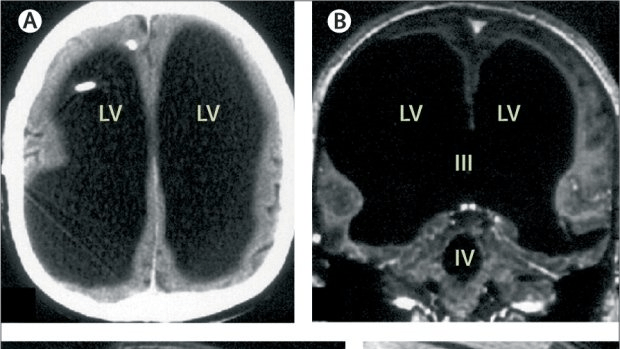
A scan of the man missing 90% of his brain.

by Paul Ratner

What we think we know about our brains is nothing compared to what we don’t know. This fact is brought into focus by the medical mystery of a 44-year-old French father of two who found out one day that he had most of his brain missing. Instead his skull is mostly full of liquid, with almost no brain tissue left. He has a life-long condition known as hydrocephalus, commonly called “water on the brain” or “water head”. It happens when too much cerebrospinal fluid puts pressure on the brain and the brain’s cavities abnormally increase.

As Axel Cleeremans, a cognitive psychologist at the Université Libre in Brussels, who has lectured about this case, told CBC:

“He was living a normal life. He has a family. He works. His IQ was tested at the time of his complaint. This came out to be 84, which is slightly below the normal range … So, this person is not bright — but perfectly, socially apt”.

The complaint Cleeremans refers to is the original reason the man sought help – he had leg pain. Imagine that – you go to your doctor with a leg cramp and get told that you’re living without most of your brain.

The man continues to live a normal life, being a family man with a wife and kids, while working as a civil servant. All this while having 3 of his main brain cavities filled with only fluid and his brainstem and cerebellum stuck into a small space that they share with a cyst.

What can we learn from this rare case? As Cleeremans points out:

“One of the lessons is that plasticity is probably more pervasive than we thought it was… It is truly incredible that the brain can continue to function, more or less, within the normal range — with probably many fewer neurons than in a typical brain. Second lesson perhaps, if you’re interested in consciousness — that is the manner in which the biological activity of the brain produces awareness… One idea that I’m defending is the idea that awareness depends on the brain’s ability to learn.”

The French man’s story really challenges the idea that consciousness arises in one part of the brain only. Current theories hold that the part of the brain called the thalamus is responsible for our self-awareness. A man living with most of his brain missing does not fit neatly into such hypotheses.

http://bigthink.com/paul-ratner/the-medical-mystery-of-a-man-living-with-90-of-his-brain-missing?utm_source=Big+Think+Weekly+Newsletter+Subscribers&utm_campaign=709f2481ff-Newsletter_072016&utm_medium=email&utm_term=0_6d098f42ff-709f2481ff-41106061

Bikini-clad cop in Sweden apprehends thief


In this photo provided by Jenny Kitsune Adolffson Swedish police officer Mikaela Kellner is pinning a man to the ground who is suspected to have stolen a friend’s mobile phone as she said, in Stockholm Sweden, Wednesday, July 27, 2016. She was off duty and wearing a bikini but that didn’t stop her from apprehending the man. (Jenny Kitsune Adolfsson via AP)

She was off duty and wearing a bikini but that didn’t stop Swedish police officer Mikaela Kellner from catching a suspected thief.

A photo of Kellner pinning the suspect to the ground was trending on social media in Sweden this week.

“My first intervention while wearing a bikini during my 11 years as a police officer,” she wrote on Instagram.

Kellner and three friends were sunbathing Wednesday in a Stockholm park, a homeless man selling newspapers approached, she told Swedish newspaper Aftonbladet.

After he left, one friend noticed her phone was missing. Kellner and a fellow police officer gave chase.

Kellner said she didn’t hesitate to make the arrest while wearing a bikini.

“If I had been naked I would have intervened as well,” she said.

http://bigstory.ap.org/9e7de40a60804db9b83762824e0c6940

6 year old boy with cystic fibrosis gets his wish to become garbage man for a day

By DARCY COSTELLO

Ethan Dean has always dreamed of being a garbage man. He never tires of playing with toy garbage trucks and loves to watch the real ones drive past his house.

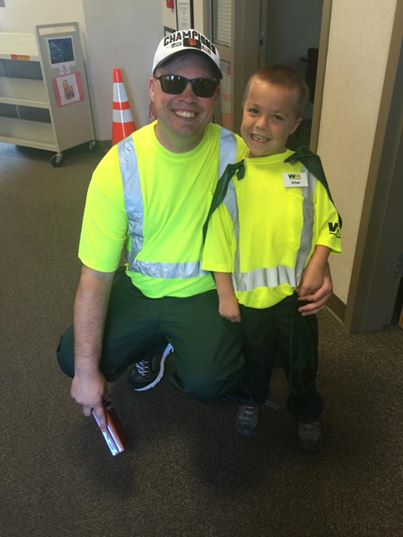
On Tuesday, the 6-year-old with cystic fibrosis got his wish, riding shotgun in a booster seat through Sacramento as an honest-to-goodness garbage truck driver with a set of wheels labeled “Ethan’s Garbage Truck.”

He donned a green cape that read “Hero Ethan” and a big smile as the truck stopped to pick up trash and recyclables. It wasn’t a chore for Ethan, who said his favorite part of the day put on by the Make-A-Wish Foundation was “cleaning up garbage.” Hundreds of people gathered to cheer him on.

After being surprised at his school, Ethan and the garbage truck made five stops.

am Thurman, the Waste Management employee who drove Ethan, said when he agreed to take part, he had no idea how big the day was going to be.

And as for Ethan?

“He can’t wipe that grin off his face,” Thurman said. “He looks like it’s Christmas morning and he’s unwrapping his first present.”

Ethan was diagnosed with cystic fibrosis as an infant and began treatment at eight weeks old. The genetic disorder is characterized by a buildup of thick mucus and frequent lung infections, and the median life expectancy is about 40 years old.

When Make-A-Wish Foundation agreed to grant his wish in February, there was little doubt what he wanted it to be.

“We pretty much knew it was going to be about garbage trucks,” said Ethan’s dad, Ken Dean, laughing.

He’s been watching them come down the street since he first learned how to crawl, Dean said. Ethan also has a garbage truck bedspread and pillow, garbage truck toys and has had a garbage truck birthday party.

Ethan’s big day comes three years after Make-A-Wish transformed San Francisco into Gotham for a 5-year-old boy who had battled leukemia for years and dreamed of being Batkid. Miles Scott traveled from one crime scene to another, rescuing a damsel in distress and thwarting the plans of The Riddler and The Penguin, as crowds of people cheered him on.

Ethan’s dream is being a less fantastic, more everyday superhero. When he visited Make-A-Wish and was asked about some of his dreams, almost all of his answers were garbage-truck related, said Jennifer Stolo, CEO of the local chapter of the Make-A-Wish Foundation.

Ethan’s uncle, Tim Dean, said it means a lot to the family to have people who don’t even know him come out to celebrate.

At least 500 people gathered at the Capitol for a press conference and VIP lunch at the end of Ethan’s day.

Erika Sizemore doesn’t know Ethan and said she learned about his special day on social media. It hit home for her, she said, because she has two boys, Kane and Benny, who also love garbage trucks.

“As soon as he got out of the truck I cried,” she said, tearing up. “It could happen to any of our kids. He is an amazing little kid and I just think that any of could be in the same boats as his parents are.”

http://bigstory.ap.org/9bba720b98194ec9878f6c5de0b744c6

Why did a humpback whale just save this seal’s life?


This humpback whale protected a Weddell seal from killer whales by carrying it on its belly.

By Erik Stockstad

At first it seemed like the usual, deviously clever attack. Several killer whales were trying to catch a Weddell seal that had taken refuge atop a drifting patch of Antarctic ice. The orcas swam alongside each other, creating a wave that knocked the hapless pinniped into the water. Death seemed certain.

Then something amazing happened: A pair of humpback whales turned up. As the panicked seal swam toward them, a lucky wave tossed it onto the chest of the closer, upturned whale. The whale arched its chest out of the water, which kept the seal away from the charging killer whales. And when the seal started to fall off, the whale carefully pushed it back onto its chest with a flipper. Soon after that, the seal scrambled to safety on another ice floe.

“I was shocked,” recalls marine ecologist Robert Pitman, who witnessed the episode in 2009 and described it and another example in Natural History magazine that year. “It looked like they were trying to protect the seal.”

Humpback whales will vigorously defend their own calves when attacked by killer whales, of course. But after analyzing other encounters between the two species, Pitman and his colleagues conclude that humpback whales will also launch preemptive attacks on their predators. Sometimes the intent seemed to be protecting another whale’s calf. But more often, like with the Weddell seal, the humpbacks for some reason helped a different species.

When prey gang up and harass a predator, it’s known as mobbing. A flock of crows, for example, can drive away a hawk by repeatedly dive-bombing. The behavior is also known among fishes, insects, and terrestrial mammals, but it hadn’t been studied in marine mammals. Because of their large size, humpback whales don’t have to worry about many predators. Killer whales are the only species known to attack, and they target small calves. The mothers will try to scare them off with thunderous bellows. If that fails, they defend their young by smacking their massive tails or swinging their 5-meter-long, barnacle-encrusted fins.

To find out whether the seal rescue in Antarctica was unusual behavior for humpbacks, Pitman, who works for the National Oceanic and Atmospheric Administration’s (NOAA’s) Southwest Fisheries Science Center in San Diego, California, posted a request for information on a marine mammal listserv. He received 115 descriptions of encounters, many from commercial whale-watching trips, which sometimes included photos and videos. In 31 cases of mobbing, humpbacks approached killer whales that were already engaged in a fight. They would chase the killer whales, often bellow, and slap their fins and tails. “The humpbacks were definitely on the offense,” Pitman says. He and colleagues published their findings online this week in Marine Mammal Science.

The conclusions have convinced Phillip Clapham, a NOAA marine biologist in Seattle, Washington, who was not involved in the research. “They make a very good case that it’s a proactive response to killer whales,” he says. “I think they’re absolutely right.”

It’s not hard to imagine why humpbacks would rush to the rescue when another humpback whale is under attack. Because they migrate to and from the same breeding grounds where they were born, humpbacks are likely to encounter relatives. So a threatened calf might share some genes with a rescuer, making the apparently altruistic act of saving it somewhat self-interested.

But what about protecting other species? This happened in nearly 90% of attacks where the killer whales’ prey could be identified. “It’s pretty mysterious,” says Trevor Branch, a fisheries scientist at the University of Washington, Seattle, who has studied populations of large whales. “We tend to think of altruism as being reciprocal, but there’s no way these other species would come back and help the humpback whales.”

Pitman suspects that it is inadvertent altruism. The humpbacks might simply rush to the scene of a fight whenever they hear killer whales fighting. “I think they just have a simple rule,” Pitman says. “When you hear a killer whale attack, go break it up.” Clapham adds that the confrontations may teach the killer whales a lesson, making them think twice about messing with humpbacks.

http://www.sciencemag.org/news/2016/07/humpbacks-protect-seals-and-other-animals-killer-whales-why

iPhone device designed by Snowden and Huang to reveal when your phone is secretly transmitting


A mockup of Edward Snowden and Bunnie Huang’s iPhone modification, showing the SIM card slot through which their hardware add-on would access the phone’s antennae to monitor them for errant signals.

By Andy Greenberg

When Edward Snowden met with reporters in a Hong Kong hotel room to spill the NSA’s secrets, he famously asked them put their phones in the fridge to block any radio signals that might be used to silently activate the devices’ microphones or cameras. So it’s fitting that three years later, he’s returned to that smartphone radio surveillance problem. Now Snowden’s attempting to build a solution that’s far more compact than a hotel mini-bar.

On Thursday at the MIT Media Lab, Snowden and well-known hardware hacker Andrew “Bunnie” Huang plan to present designs for a case-like device that wires into your iPhone’s guts to monitor the electrical signals sent to its internal antennas. The aim of that add-on, Huang and Snowden say, is to offer a constant check on whether your phone’s radios are transmitting. They say it’s an infinitely more trustworthy method of knowing your phone’s radios are off than “airplane mode,” which people have shown can be hacked and spoofed. Snowden and Huang are hoping to offer strong privacy guarantees to smartphone owners who need to shield their phones from government-funded adversaries with advanced hacking and surveillance capabilities—particularly reporters trying to carry their devices into hostile foreign countries without constantly revealing their locations.

“One good journalist in the right place at the right time can change history,” Snowden told the MIT Media Lab crowd via video stream. “This makes them a target, and increasingly tools of their trade are being used against them.”1

“They’re overseas, in Syria or Iraq, and those [governments] have exploits that cause their phones to do things they don’t expect them to do,” Huang elaborated to WIRED in an interview ahead of the MIT presentation. “You can think your phone’s radios are off, and not telling your location to anyone, but actually still be at risk.”

Huang’s and Snowden’s solution to that radio-snitching problem is to build a modification for the iPhone 6 that they describe as an “introspection engine.” Their add-on would appear to be little more than an external battery case with a small mono-color screen. But it would function as a kind of miniature, form-fitting oscilloscope: Tiny probe wires from that external device would snake into the iPhone’s innards through its SIM-card slot to attach to test points on the phone’s circuit board. (The SIM card itself would be moved to the case to offer that entry point.) Those wires would read the electrical signals to the two antennas in the phone that are used by its radios, including GPS, Bluetooth, Wi-Fi and cellular modem. And by identifying the signals that transmit those different forms of radio information, the modified phone would warn you with alert messages or an audible alarm if its radios transmit anything when they’re meant to be off. Huang says it could possibly even flip a “kill switch” to turn off the phone automatically.

“Our approach is: state-level adversaries are powerful, assume the phone is compromised,” Huang says. “Let’s look at hardware-related signals that are extremely difficult to fake. We want to give a you-bet-your-life assurance that the phone actually has its radios off when it says it does.”1

You might think you can achieve the same effect by simply turning your iPhone off with its power button, or placing it in a Faraday bag designed to block all radio signals. But Faraday bags can still leak radio information, Huang says, and clever malware can make an iPhone appear to be switched off when it’s not, as Snowden warned in an NBC interview in 2014. Regardless, Huang says their intention was to allow reporters to reliably disable a phone’s radio signals while still using the device’s other functions, like taking notes and photographs or recording audio and video.

Snowden, who performed the work in his capacity as a director of the Freedom of the Press Foundation, adds that their goal isn’t merely just protection for journalists. It’s also detection of otherwise stealthy attacks on phones, the better to expose governments’ use of hidden smartphone surveillance techniques. “You need to be able to increase the costs of getting caught,” Snowden said in a video call with WIRED following the presentation. “All we have to do is get one or two or three big cases where we catch someone red-handed, and suddenly the targeting policies at these intelligence agencies will start to change.”2

The problem, for Snowden, is personal. He tells WIRED he hasn’t carried a smartphone since he first began leaking NSA documents, for fear that its cellular signals could be used to locate him. (He notes that he still hasn’t “seen any indication” that the U.S. government has been able to determine his exact location in Russia.) “Since 2013, I haven’t been able to have a smartphone like normal people,” he says. “Wireless devices are kind of like kryptonite to me.”

Huang and Snowden’s iPhone modification, for now, is little more than a design. The pair has tested their method of picking up the electrical signals sent to an iPhone 6’s antennae to verify that they can spot its different radio messages. But they have yet to even build a prototype, not to mention a product. But on Thursday they released a detailed paper explaining their technique. They say they hope to develop a prototype over the next year and eventually create a supply chain in China of modified iPhones to offer journalists and newsrooms. To head off any potential mistrust of their Chinese manufacturers, Huang says the device’s code and hardware design will be fully open-source.

Huang, who lives in Singapore but travels monthly to meet with hardware manufacturers in Shenzhen, says that the skills to create and install their hardware add-on are commonplace in mainland China’s thriving iPhone repair and modification markets. “This is definitely something where, if you’re the New York Times and you want to have a pool of four or five of these iPhones and you have a few hundred extra dollars to spent on them, we could do that.” says Huang. “The average [DIY enthusiast] in America would think this is pretty fucking crazy. The average guy who does iPhone modifications in China would see this and think it’s not a problem.”
The two collaborators have never met face-to-face. Snowden says he first met Huang after recommending him to television producers at Vice, who were looking for hardware hacking experts. “He’s one of the hardware researchers I respect the most in the world,” Snowden says. In late 2015, they began talking via the encrypted communications app Signal about Snowden’s idea of building an altered phone to protect journalists from advanced attacks that could compromise their location.

Huang insists that Snowden’s focus for the project from the beginning has been protecting that breed of vulnerable reporters, not from the NSA, but from foreign governments that are increasingly able to buy zero-day vulnerability information necessary to compromise even hard-to-hack targets like the iPhone. As a case study, they point in their paper to the story of Marie Colvin, the recently murdered American war correspondent whose family is suing Syria’s government; Colvin’s family claims she was tracked based on her electronic communications and killed in a targeted bombing by the country’s brutal Assad regime for reporting on civilian casualties.

Huang says he’s tried to develop the most no-frills protection possible that still meets Snowden’s rightfully paranoid standards. “If it wasn’t for the fact that Snowden is involved, I think this would seem pretty mundane,” Huang says almost bashfully. “My solution is simple. But it helps an important group of people.”

https://www.wired.com/2016/07/snowden-designs-device-warn-iphones-radio-snitches/#slide-1

Thanks to Kebmodee for bringing this to the It’s Interesting community.

Microbes in our guts have been with us for millions of years

By Ann Gibbons

Humans did not evolve alone. Tens of trillions of microbes have followed us on our journey from prehistoric ape, evolving with us along the way, according to a new study. But the work also finds that we’ve lost some of the ancient microbes that still inhabit our great ape cousins, which could explain some human diseases and even obesity and mental disorders.

Researchers have known for some time that humans and the other great apes harbor many types of bacteria, especially in their guts, a collection known as the microbiome. But where did these microbes come from: our ancient ancestors, or our environment? A study of fecal bacteria across all mammals suggested that the microbes are more likely to be inherited than acquired from the environment. But other studies have found that diet plays a major role in shaping the bacteria in our guts.

To solve the mystery, Andrew Moeller turned to wild apes. As part of his doctoral dissertation, the evolutionary biologist, now a postdoc at the University of California, Berkeley, studied gut bacteria isolated from fecal samples from 47 chimpanzees from Tanzania, 24 bonobos from the Democratic Republic of the Congo, 24 gorillas from Cameroon, and 16 humans from Connecticut. In these samples, he and colleagues at the University of Texas (UT), Austin, compared the DNA sequences of a single rapidly evolving gene that is common in the gut bacteria in apes, including humans. They then sorted the different DNA gene sequences into family trees.

It turns out that most of our gut microbes have been evolving with us for a long time. Moeller found that two of three major families of gut bacteria in apes and humans trace their origins to a common ancestor more than 15 million years ago, not primarily to bugs picked up from their environment. But as the different species of apes diverged from this ancestor, their gut bacteria also split into new strains, and coevolved in parallel (a process known as cospeciation) to adapt to differences in the diets, habitats, and diseases in the gastrointestinal tracts of their hosts, the team reports today in Science. Today, these microbes are finely adapted to help train our immune systems, guide the development of our intestines, and even modulate our moods and behaviors.

“It’s surprising that our gut microbes, which we could get from many sources in the environment, have actually been coevolving inside us for such a long time,” says project leader Howard Ochman, an evolutionary biologist at UT Austin.

After the ape species diverged, some also lost distinct strains of bacteria that persisted in other primates, likely another sign of adaptation in the host, the team found.

In a final experiment, the researchers probed deeper into the human microbiome. They compared the same DNA sequence they had analyzed in all of the apes, but this time between the people from Connecticut and people from Malawi. They found that the bacterial strains from these Africans diverged from those of the Americans about 1.7 million years ago, which corresponds with the earliest exodus of human ancestors out of Africa. This suggests that gut bacteria can be used to trace early human and animal migrations, Moeller says. Interestingly, the Americans lacked some of the strains of bacteria found in Malawians—and in gorillas and chimps—which fits with the general reduction in gut microbiome diversity that has been observed in people in industrialized societies, perhaps because of changes in diet and the use of antibiotics.

The work “represents a significant step in understanding human microbiota coevolutionary history,” says Justin Sonnenburg of Stanford University in Palo Alto, California, who was not involved with the research. “It elegantly shows that gut microbes are passed vertically, between generations over millions of years.” Microbiologist Martin Blaser of New York University in New York City agrees: “The path of transmission was from mom apes to baby apes for hundreds of thousands of generations at least.”

But the extinction of some strains of bacteria that persist in other apes but not humans raises a red flag for our health. “What happens if a human mom takes antibiotic when she’s pregnant? What happens if she takes it at the moment of delivery?” Blaser asks.

“We are coming to understand how fundamental our gut microbes are for health,” Sonnenburg says. “These findings have huge implications for how we should pursue understanding what a truly healthy microbiome looks like.”

http://www.sciencemag.org/news/2016/07/microbes-our-guts-have-been-us-millions-years

Thanks to Kebmodee for bringing this to the It’s Interesting community.

‘Nose-y’ Bacteria Could Yield A New Antibiotic to Fight Drug-Resistant SuperBugs: lugdunin


Once scientists grew these Staphylococcus lugdunensis bacteria in a lab dish, they were able to isolate a compound that’s lethal to another strain commonly found in the nose that can make us sick — Staphylococcus aureus.

by Carolyn Beans

With antibiotic-resistant super bugs on the rise, researchers are on an urgent hunt for other bacteria that might yield chemicals we can harness as powerful drugs. Scientists once found most of these helpful bacteria in soil, but in recent decades this go-to search location hasn’t delivered.

Now, researchers at the University of Tübingen in Germany say that to find at least one promising candidate, we need look no further than our own noses.

The scientists report Wednesday in the journal Nature that a species of bacteria inside the human nose produces a substance capable of killing a range of bacteria, including the strain of drug-resistant Staphylococcus aureus known as MRSA.

The Tübingen team is delighted with their find. “It was totally unexpected,” says study author Andreas Peschel.

The scientists already knew that S. aureus lives in the noses of about 30 percent of humans, usually without causing harm — most people never know they are carriers of the bacterium. But if the body becomes compromised (whether by surgery, physical trauma, an underlying illness or suppressed immune system) the little cache of S. aureus in the nose can suddenly launch an attack against its human host. And if the strain of bacteria is MRSA, that infection can be lethal.

The scientists wondered how 70 percent of human noses are able to avoid harboring S. aureus. They guessed it might have something to do with neighboring bacteria.

So the researchers pitted 90 different human nasal bacteria in one-on-one battles with S. aureus in the lab. Indeed, one of these bacteria — Staphylococcus lugdunensis — prevented the dangerous pathogen from growing.

They then studied the arsenal of chemicals that S. lugdunensis produces until they found one that stops S. aureus in its tracks – a new antibiotic that they named lugdunin.

Follow-up work confirmed that lugdunin can treat S. aureus skin infections in mice, and limit the spread of S. aureus in a rat’s nose.

Lugdunin may already be keeping S. aureus out of our noses. In a group of 187 hospitalized people, the same scientists found S. aureus in the noses of just 5.9 percent of people who also harbored the lugdunin-producing bacteria, but 34.7 percent of those who didn’t.

Other recent studies have shown that bacteria living in humans carry genes that have the potential to make antibiotics. The Tübingen study takes those results a step further by showing that an antibiotic produced by a bacterium in the human nose can successfully treat an animal’s infection.

“This paper is a really nice follow-up,” says Dr. Nita Salzman, a pathologist at the Medical College of Wisconsin. “It’s a sort of proof of principle that the microbiome is a good source for novel antibiotics.”

The researchers have applied for a patent for lugdunin, but say that the prototype antibiotic is still many years away from being ready to treat humans.

The really important contribution of this study is not lugdunin itself, says microbiologist Kim Lewis of Northeastern University, but rather the new approach for finding antibiotic-producing bacteria within our own bodies.

“The reason we ran out of antibiotics in the first place is because most of them came from soil bacteria and they make up 1 percent of the total [bacterial] diversity,” Lewis says.

Scientists kept searching in soil, he says, because they already had some success there and know that soil bacteria are exceptionally good at producing antibiotics.

But now it’s time to look within us. And the team in Tübingen has only just begun their hunt.

“We have started a larger screening program and we’re sure there will be many additional antibiotics that can be discovered,” says Peschel.

http://www.npr.org/sections/health-shots/2016/07/27/487529338/nose-y-bacteria-could-yield-a-new-way-to-fight-infection

Cockroach milk

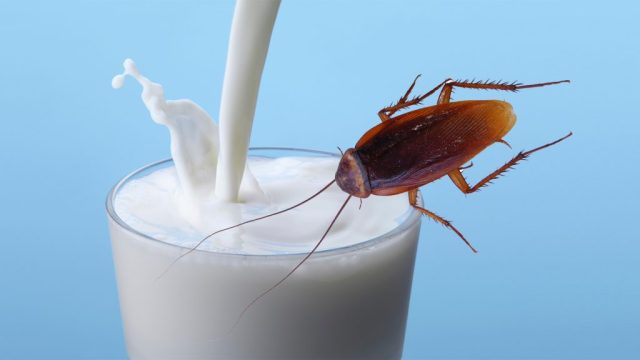
The sight of cockroaches may evoke disgust but they can be a boon for human health, said a team of scientists who have shown that milk protein crystals found in roaches can serve as a “fantastic” protein supplement.

The team of scientists, including those from the Institute for Stem Cell Biology and Regenerative Medicine (inStem) in Bengaluru, has recently unravelled the structure of milk proteins crystals in the guts of a roach species called Diploptera punctata, the only known viviparous cockroach (which gives birth to live young).

A single crystal is estimated to contain more than three times the energy of an equivalent mass of dairy (buffalo) milk, according to the study by inStem’s Ramaswamy group.

“The crystals are like a complete food — they have proteins, fats and sugars. If you look into the protein sequences, they have all the essential amino acids,” said Sanchari Banerjee, one of the main authors of the paper published in July in the journal from the International Union of Crystallography.

Now, armed with the gene sequences for these milk proteins, Ramaswamy and colleagues plan to use a yeast system to produce these crystals en masse.

“They’re very stable. They can be a fantastic protein supplement,” said Ramaswamy.

Furthermore, their crystalline nature offers a unique advantage. As the protein in the solution is used up, by being digested, the crystal releases protein at an equivalent rate.

“It’s time-released food,” explained Ramaswamy, adding “if you need food that is calorifically high, that is time released and food that is complete. This is it”.

Besides their utility as supplemental food, the scaffolding in the protein crystals exhibit characteristics that could be used to design nanoparticles for drug delivery.

The other scientists involved are affiliated to National Centre for Advancing Translational Sciences, National Institutes of Health in the US, Structural Biology Research Centre, High Energy Accelerator Research Organisation in Japan, Centre for Cellular and Molecular Platforms (C-CAMP) in India, Department of Cell and Systems Biology, University of Toronto in Canada, University of Iowa in the US and Experimental Division, Synchrotron SOLEIL in France.

http://timesofindia.indiatimes.com/city/kolkata/Roach-milk-proteins-fantastic-food-supplement/articleshow/53268325.cms