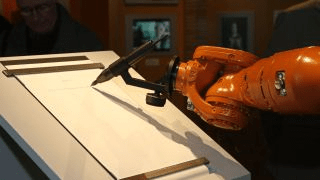
Japanese white-collar workers are already being replaced by artificial intelligence at Fukoku Mutual Life Insurance

Most of the attention around automation focuses on how factory robots and self-driving cars may fundamentally change our workforce, potentially eliminating millions of jobs. But AI that can handle knowledge-based, white-collar work are also becoming increasingly competent.

One Japanese insurance company, Fukoku Mutual Life Insurance, is reportedly replacing 34 human insurance claim workers with “IBM Watson Explorer,” starting by January 2017.

The AI will scan hospital records and other documents to determine insurance payouts, according to a company press release, factoring injuries, patient medical histories, and procedures administered. Automation of these research and data gathering tasks will help the remaining human workers process the final payout faster, the release says.

Fukoku Mutual will spend $1.7 million (200 million yen) to install the AI system, and $128,000 per year for maintenance, according to Japan’s The Mainichi. The company saves roughly $1.1 million per year on employee salaries by using the IBM software, meaning it hopes to see a return on the investment in less than two years.

Watson AI is expected to improve productivity by 30%, Fukoku Mutual says. The company was encouraged by its use of similar IBM technology to analyze customer’s voices during complaints. The software typically takes the customer’s words, converts them to text, and analyzes whether those words are positive or negative. Similar sentiment analysis software is also being used by a range of US companies for customer service; incidentally, a large benefit of the software is understanding when customers get frustrated with automated systems.

The Mainichi reports that three other Japanese insurance companies are testing or implementing AI systems to automate work such as finding ideal plans for customers. An Israeli insurance startup, Lemonade, has raised $60 million on the idea of “replacing brokers and paperwork with bots and machine learning,” says CEO Daniel Schreiber.

Artificial intelligence systems like IBM’s are poised to upend knowledge-based professions, like insurance and financial services, according to the Harvard Business Review, due to the fact that many jobs can be “composed of work that can be codified into standard steps and of decisions based on cleanly formatted data.” But whether that means augmenting workers’ ability to be productive, or replacing them entirely remains to be seen.

“Almost all jobs have major elements that—for the foreseeable future—won’t be possible for computers to handle,” HBR writes. “And yet, we have to admit that there are some knowledge-work jobs that will simply succumb to the rise of the robots.”

https://qz.com/875491/japanese-white-collar-workers-are-already-being-replaced-by-artificial-intelligence/?utm_campaign=buffer&utm_content=buffer68729&utm_medium=social&utm_source=twitter.com

Thank to Kebmodee for bringing this to the It’s Interesting community.

Tesla autopilot detects crash before it happens

Tesla’s new radar technology for the Autopilot is already proving useful in some potentially dangerous situations. Now, there is a new piece of evidence that makes this spectacularly clear. This video of an accident on the highway in the Netherlands caught on the dashcam of a Tesla Model X shows the Autopilot’s forward collision warning predicting an accident before it could be detected by the driver.

With the release of Tesla’s version 8.0 software update in September, the automaker announced a new radar processing technology that was directly pushed over-the-air to all its vehicles equipped with the first generation Autopilot hardware. One of the main features enabled by the new radar processing capacity is the ability for the system to see ahead of the car in front of you and basically track two cars ahead on the road. The radar is able to bounce underneath or around the vehicle in front of the Tesla Model S or X and see where the driver potentially can not because the leading vehicle is obstructing the view.

That’s demonstrated clearly in this real world situation on the Autobahn today.

In the video above, we can hear the Tesla Autopilot’s Forward Collision Warning sending out an alert for seemingly no reason, but a fraction of a second later we understand why when the vehicle in front of the Tesla crashes into an SUV that wasn’t visible from the standpoint of the Tesla driver, but apparently it was for the Autopilot’s radar.

Hans Noordsij, the Tesla driver from the Netherlands who reported the video, said that everyone involved in the accident “turned out to be OK” despite the fact that the SUV rolled over.

What is most impressive is that fact that we can clearly hear the Forward Collision Warning alert before the lead vehicle even applied the brake, which shows that the Autopilot wasn’t only using the lead vehicle to plan the path, but also the vehicle in front of it – the black SUV.

The driver of the Tesla also reported that Autopilot started braking before he could apply the brakes himself, according to Noordsij.

Again, this new feature was pushed via an over-the-air software update to all Tesla vehicles equipped with the first generation Autopilot and it should soon be pushed to the vehicles equipped with the second generation Autopilot hardware.

Here are some other examples of Tesla Autopilot helping avoid accidents.

Thanks to Kebmodee for bringing this to the It’s Interesting community.
Harvesting fog to make water

Peña Blanca is a small agricultural community 300 km north of Santiago.

In this arid coastal region, ‘fog catchers’ — large nets strung up in areas with thick fog and high winds — are used to collect water.

The technique was pioneered in Chile in the 1950s. The fog is pushed through fine mesh where it condenses, trickles down, and gets collected below. It’s a cheap, effective, and clean way to source water.

The nets harvest precious water for crops and animals: 140 square meters provide 840 liters of water per day, shared among 85 landowners.

“Water shortage is a worldwide problem and we are not oblivious to it,” says Daniel Rojas, community leader. “It rains less and less, there is a lack of vegetation, fewer crops and people are affected in every sense. But here we have a natural resource that wasn’t being exploited.”

The ‘camanchaca’ is a thick coastal fog which rolls in most days. It blocks the sun, but the low visibility and wind is welcomed by the locals.

The Dar Si Hmad project in Morocco is significantly bigger, and uses next generation technology. The water collected here is clean enough to drink. And there are plans to use newer nets which are more efficient, doubling the amount of water they currently collect.

“They call me the fog queen,” laughs Dr Jamila Bargach.

She has good reason to smile. As director of the world’s largest fog catching project, she picked up an award at the 2016 UN climate conference in Marrakech for the work carried out by her women-led NGO.

“Our new nets have a mean average of 22 liters per square meter, which will service about 1,300 people, about 13 villages,” she says.

The fog catchers have changed the lives of women in the Sahara, who previously scheduled their days around the chore of fetching and carrying water for their families.

“The average time is 3 hours per day to get your basic 30 liters. This is becoming even more difficult because you have to walk further with the consequences of climate change: desertification and the rising temperatures,” says Dr Bargach.

“So where there’s fog, we can harness it for the community, store it when it’s needed, and then use it later, instead of looking for very expensive and fossil-based solutions like desalinizing water, or digging more bore holes, looking for even deeper aquifers.”

As with any project, it needs to be economically viable. And that’s one of the reasons Dar Si Hmad charges for its water.

“We do charge for the water, otherwise how will we keep up with the maintenance? We have aligned the prices with government prices, and we have taken 20 percent off, because we’re dealing with very poor communities. But let me tell you one thing. Even with water, the moment it becomes free, it will lose its value.”

In Chile the economic opportunities are a little different. Peña Blanca now boasts an award-winning ale from the Atrapaniebla brewery.

Marcos Carcuro and his brother have their own nets alongside those belonging to the village.

“At first they told us it was a crazy idea to brew beer from clouds”, says Carcuro. “But later, seeing the results of our first prototypes, we realized that it was going to be a better product than those made with regular water.”

Where the weather suits, and when maintenance costs are met, fog catchers provide a lifeline in vulnerable communities across the world. From Chile to Morocco, it’s a proven sustainable and scalable solution to water scarcity.
http://www.cnn.com/2016/12/28/world/eco-solutions-fog-catchers/index.html

Bird flu strain may have jumped from cat to human

A veterinarian appears to have been infected with a strain of avian flu known as H7N2 that spread among more than 100 cats housed at New York City animal shelters. If confirmed, this would be the first known transmission of this bird flu strain from cat to human, officials said.

New York City health officials said the vet has recovered from a mild illness, and there’s no sign that the flu has spread to shelter workers or those who’ve adopted cats.

Still, the city’s top health official is calling for caution.

“Our investigation confirms that the risk to human health from H7N2 is low, but we are urging New Yorkers who have adopted cats from a shelter or rescue group within the past three weeks to be alert for symptoms in their pets,” city Health Commissioner Dr. Mary Bassett said in a health department news release.

“We are contacting people who may have been exposed and offering testing as appropriate,” she said.

According to officials, the outbreak of H7N2 struck cats that lived at Animal Care Centers of NYC shelters. H7N2 is a subtype of influenza A virus, also known as avian or bird flu.

More than 160 employees and volunteers were tested, and only the veterinanian, who worked with sick cats, appears to have been infected, officials said. The vet’s case has yet to be definitively confirmed.

Officials said they’ve contacted more than 80 percent of people who adopted cats from the animal shelter, and there’s no sign that any of these people have been infected.

There have only been two previous documented cases of transmission of the avian flu subtype to humans in the United States, and neither was linked to cats or to other humans, city health officials said.

For now, the city’s health department is urging people to avoid close facial contact and nuzzling with ill cats.

One cat diagnosed with the avian flu died, while the others are expected to get better. Adoptions of cats have been halted for the time being, and the sick cats will be quarantined.

Officials said no other shelter animals have been infected. For the time being, officials are urging New York City residents to not drop off cats at the Animal Care Centers of NYC shelters.

http://m.medicalxpress.com/news/2016-12-bird-flu-strain-cat-human.html

The possible risks to your brain of multi-tasking

multitask

by Dr. Travis Bradberry

You may have heard that multitasking is bad for you, but new studies show that it kills your performance and may even damage your brain. Every time you multitask you aren’t just harming your performance in the moment; you may very well be damaging an area of your brain that’s critical to your future success at work.

Research conducted at Stanford University found that multitasking is less productive than doing a single thing at a time. The researchers found that people who are regularly bombarded with several streams of electronic information cannot pay attention, recall information, or switch from one job to another as well as those who complete one task at a time.

A Special Skill?

But what if some people have a special gift for multitasking? The Stanford researchers compared groups of people based on their tendency to multitask and their belief that it helps their performance. They found that heavy multitaskers—those who multitask a lot and feel that it boosts their performance—were actually worse at multitasking than those who like to do a single thing at a time. The frequent multitaskers performed worse because they had more trouble organizing their thoughts and filtering out irrelevant information, and they were slower at switching from one task to another.

Multitasking reduces your efficiency and performance because your brain can only focus on one thing at a time. When you try to do two things at once, your brain lacks the capacity to perform both tasks successfully.

Multitasking Lowers IQ

Research also shows that, in addition to slowing you down, multitasking lowers your IQ. A study at the University of London found that participants who multitasked during cognitive tasks experienced IQ score declines that were similar to what they’d expect if they had smoked marijuana or stayed up all night. IQ drops of 15 points for multitasking men lowered their scores to the average range of an 8-year-old child.

So the next time you’re writing your boss an email during a meeting, remember that your cognitive capacity is being diminished to the point that you might as well let an 8-year-old write it for you.


Brain Damage From Multitasking?

It was long believed that cognitive impairment from multitasking was temporary, but new research suggests otherwise. Researchers at the University of Sussex in the UK compared the amount of time people spend on multiple devices (such as texting while watching TV) to MRI scans of their brains. They found that high multitaskers had less brain density in the anterior cingulate cortex, a region responsible for empathy as well as cognitive and emotional control.

While more research is needed to determine if multitasking is physically damaging the brain (versus existing brain damage that predisposes people to multitask), it’s clear that multitasking has negative effects.

Neuroscientist Kep Kee Loh, the study’s lead author, explained the implications:

“I feel that it is important to create an awareness that the way we are interacting with the devices might be changing the way we think and these changes might be occurring at the level of brain structure.”

The EQ Connection

Nothing turns people off quite like fiddling with your phone or tablet during a conversation. Multitasking in meetings and other social settings indicates low Self- and Social Awareness, two emotional intelligence (EQ) skills that are critical to success at work. TalentSmart has tested more than a million people and found that 90% of top performers have high EQs. If multitasking does indeed damage the anterior cingulate cortex (a key brain region for EQ) as current research suggests, doing so will lower your EQ while it alienates your coworkers.

Bringing It All Together

If you’re prone to multitasking, this is not a habit you’ll want to indulge—it clearly slows you down and decreases the quality of your work. Even if it doesn’t cause brain damage, allowing yourself to multitask will fuel any existing difficulties you have with concentration, organization, and attention to detail.

Artist Jeeyoung Lee’s three-dimensional fantasy rooms

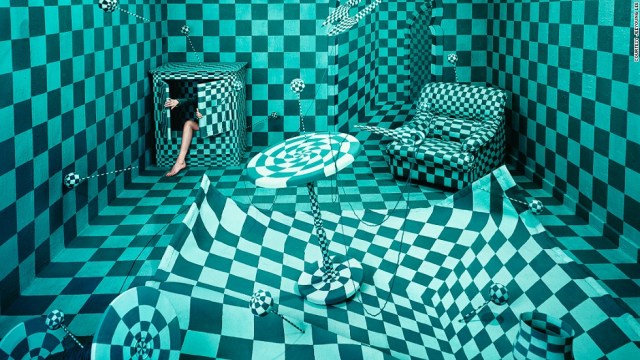
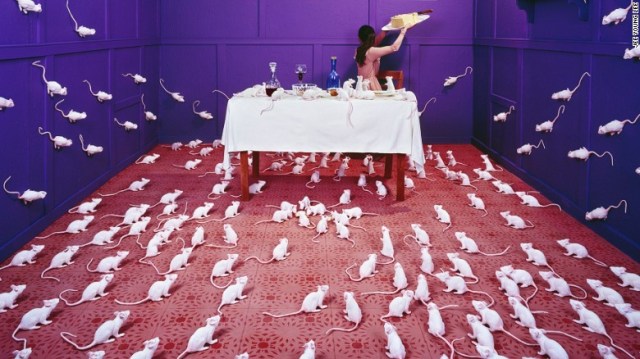
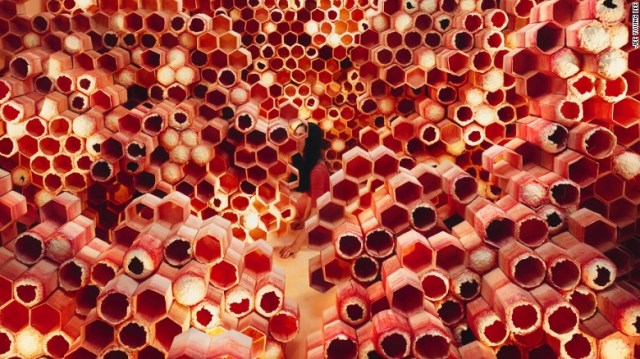
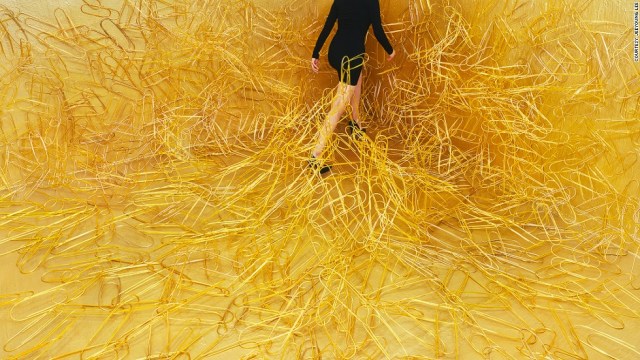
Korean artist Jeeyoung Lee creates three-dimensional fantasy worlds.

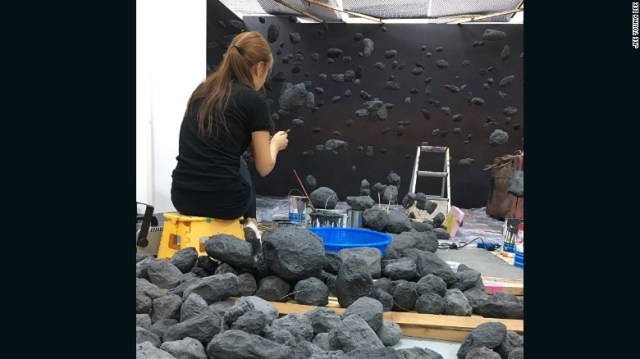
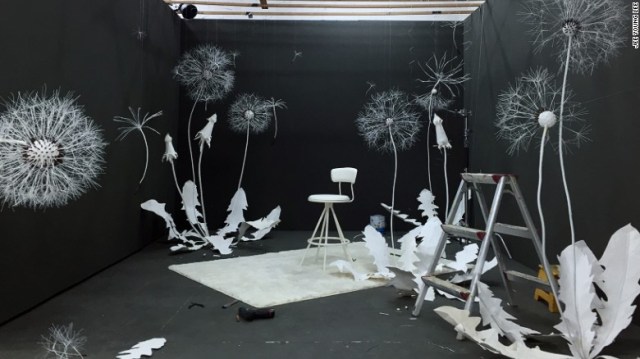
With her background in visual design and photography, Lee captures her dreams, experiences, memories and emotions by building elaborate sets for her ongoing self-portrait series “Stage of Mind.”

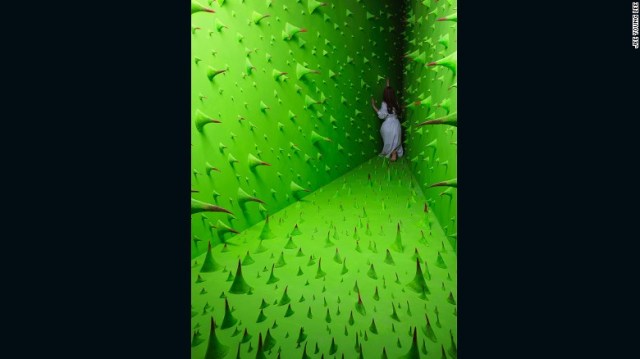
In one of her latest works, “La Vie en Rose,” Lee drew inspiration from a Korean proverb, “Life is a thorny path,” and sculpted thorns made out of resin and plaster to represent life’s countless hardships.

“Pretty much anything surrounding me can become a source of inspiration,” Lee tells CNN.

Lee photographs herself as a character in each set and then records their destruction using video. “I could have used other models, but I find it more suitable to model myself since my work is very biographical. It reflects my identity and my life.” Her creations are cathartic, a way to remember and meditate.

Each installation takes Lee between two to three months to produce — from buying supplies to setting up lights — and the cost of each set varies from hundreds to thousands of dollars. Lee works completely solo and her photos are free of digital manipulations.

“This entire process is an act of discipline and training. I wouldn’t be able to experience these emotions through Photoshop.”

Her newest images, which were recently exhibited at the Gallery GO in Korea. Below, Lee discusses her work with CNN Style.

CNN: Why did you choose to create “a room” to capture your thoughts and memories?

Lee: When we visit someone else’s room, we can guess a lot about that person. A room is an enclosed and private space and my work is about creating a space that represents my psychological state of mind. So I thought characteristics of a room would be suitable.

CNN: Does being Korean influence your work in anyway?

Lee: I guess there would be a subconscious cultural element, since the environment that a person grows up in affects his or her identity. Some of my previous works, such as “Nightscape”, “Resurrection” and “Treasure Hunt” depict the Korean landscape that I saw growing up.
CNN: Why do you favor creating real scenes, as opposed to creating them using software programs like Photoshop?

Lee: The fact that I’m reflecting on real events and emotions that I’ve experienced makes my work real. On the other hand, the fact that the scenes I am creating only exist in my head makes it surreal.
I am creating installations to bring my thoughts into the real world, and taking photos of them to capture a part of my life and reminisce that moment.

By destructing the scene at the end, I’m putting the moment back in the past, where it belongs. This entire, emotional process is an act of discipline and training for me. I wouldn’t be able to experience this through Photoshop.
CNN: Your gaze is always fixed away from the camera in your photos. Why is that?
Lee: I want people to look at the entire scene, not just the model. Also, by not revealing particular facial expressions, it becomes an indirect expression of my emotions and allows for a wider interpretation of my work. Even though I am a protagonist in my work, I want the person to appear as one of the objects in the picture.

READ: Chinese artist makes mountains from tower blocks and construction sites
CNN: What is most challenging about realizing your work?

Lee: My installation is a very labor-focused work. So it’s physically hard, and eventually it’s a battle with myself. Sometimes traumatic memories I have with the story I’m recreating disturbs me.
CNN: Tell us about your most memorable project.

Lee: “Anxiety” means a lot to me. It was a very experimental work. I consider the entire process of building a set, taking a photograph, and destroying it, as my work. In most cases, the photograph is the final result, but for “Anxiety,” I exhibited two photographs and a video.

“Anxiety”

This work addresses common worries, insecurity, and doubts that we go through in our everyday lives.
In it, a performer makes a strange noise and I’ve cut the sound of the phrase “it’s okay” per syllable, and she reads them as if she’s singing. It sounds very disturbing, but since the work deals with concerns and insecurity, I wanted to deliver those feelings to the audience more directly.
CNN: What is your dream project that you hope to work on?

Lee: I have a lot of projects that I’d like to work on. Since I’m creating different sets inside the studio, there definitely are spatial limitations and there are limitations to the kind of light I can use. I want to work in a really large space, so large that a person will appear as small as a dot. I also want to try building an installation in the back of a truck and move around like a traveling theater.
http://www.cnn.com/2016/12/21/arts/artist-jeeyoung-lee-surreal-rooms/index.html

Dogs may go gray when stressed, just like US presidents, study says

By Jacqueline Howard

Whether you call them gray hairs or stress highlights, world-renowned animal scientist and autism advocate Temple Grandin wants you to know that dogs may get them prematurely, too — possibly when stressed, such as being left at home alone.

Premature graying in dogs may be an indicator of anxiety and impulsivity, according to a study published in this month’s edition of the journal Applied Animal Behaviour Science, in which Grandin served as a co-author.

Camille King, an animal behaviorist and owner of the Canine Education Center in Denver, noticed a few years ago that many impulsive and anxious dogs seemed to be prematurely turning gray. When King told Grandin about her observations, Grandin said she encouraged King to lead the research.

“The first thing I thought of when she told me that were the presidents, and how they age and get prematurely gray,” said Grandin, professor of animal science at Colorado State University, referring to American commanders in chief.

“The fact that presidents turn prematurely gray was one of the things that made me encourage her to do the study,” Grandin said. “Basically, (the study findings) validated what she had seen in years of doing dog behavior work.”

The study, conducted at Northern Illinois University, involved 400 dogs, 4 years old or younger, with non-white-colored hair so the researchers could adequately determine degrees of graying.

“Normally, dogs wouldn’t be gray at age 4,” Grandin said.

The study, conducted at Northern Illinois University, involved 400 dogs, 4 years old or younger, with non-white-colored hair so the researchers could adequately determine degrees of graying.

“Normally, dogs wouldn’t be gray at age 4,” Grandin said.

Next, the researchers compared the survey responses with how much gray hair appeared on the dogs’ muzzles in their photos.
Grandin helped the researchers build a scoring system to measure the degrees of grayness: A score of 0 is “no gray;” 1 is for gray on the front of the nose only; 2 is for gray hair halfway up the muzzle; and 3 is “full gray.”

It turned out that a high grayness score was significantly and positively predicted by survey responses that indicated both high anxiety and impulsivity.

“Essentially, the results indicate that for each standard deviation increase in the measured trait, either anxiety or impulsiveness, the odds of being in a higher rating category of muzzle grayness increase 40% to 65%,” said Thomas Smith, a professor at Northern Illinois University’s Department of Educational Technology, Research and Assessment, who was a co-author of the study.

Smith added that he was initially skeptical that a dog’s premature muzzle grayness might be linked to anxiety and impulsiveness.

“However, when we analyzed the data, the results actually were striking,” he said. “I was surprised.”
A similar association between stress and premature graying possibly could be found in other mammals, outside of humans and dogs, but more research is needed, Grandin said.

The new study appears to extend what has been previously seen in people — the relationship between stress and gray hair — to dogs, said Matt Kaeberlein, a professor and co-director of the University of Washington’s Dog Aging Project, who was not involved in the new study.

“There are a few things about this study that I really like. One is that it nicely illustrates another way in which dogs and humans are similar, specifically in this case, the way we interact with our environment to experience stress. I like the innovative approach of applying facial image recognition to dogs,” Kaeberlein said.

“I do think it’s important to keep in mind that while hair graying is a useful ‘biomarker’ of aging and experienced stress, it is not particularly precise. We should avoid interpreting causation from correlation,” he said about the study. “Many dogs and people get gray hair for reasons unrelated to their perception of stress or anxiety, so while anxiety (or) stress appears to cause hair graying, gray hair is not necessarily caused by anxiety or stress. In other words, just because your dog gets gray hair doesn’t mean she or he is stressed out.”

For instance, more research is needed to determine how much genetics might play a role not only in premature graying in young dogs but also how a dog might respond to stress, Grandin said. She added that additional research could also determine how much of the study results were influenced by anxiety and impulsivity, respectively.

“There’s probably some genetic influence where some dogs that are impulsive and anxious don’t turn gray. You see, that would be your genetic interaction, but when you take a big population of dogs, it statistically comes out that anxious and impulsive dogs are more likely to start turning gray before age 4,” Grandin said.

“Genetic factors are important, but genetic factors also can be modified by experience, so you can’t just say an animal’s hard-wired genetics, it’s not. It’s both. Both genetics and the environment are important,” she said.

http://www.cnn.com/2016/12/23/health/stress-dogs-gray-hair/index.html

Scientists are One Step Closer to Reversing the Aging Process Entirely

by Philip Perry

Researchers at the Salk Institute in La Jolla, California have discovered a way to turn back the hands of time. Juan Carlos Izpisua Belmonte led this study, published in the journal Cell. Here, elderly mice underwent a new sort of gene therapy for six weeks. Afterward, their injuries healed, their heart health improved, and even their spines were straighter. The mice also lived longer, 30% longer.

Today, we target individual age-related diseases when they spring up. But this study could help us develop a therapy to attack aging itself, and perhaps even target it before it begins taking shape. But such a therapy is at least ten years away, according to Izpisua Belmonte.

Many biologists now believe that the body, specifically the telomeres—the structures at the end of chromosomes, after a certain time simply wear out. Once degradation overtakes us, it’s the beginning of the end. This study strengthens another theory. Over the course of a cell’s life, epigenetic changes occur. This is the activation or depression of certain genes in order to allow the organism to respond better to its environment. Methylation tags are added to activate genes. These changes build up over time, slowing us down, and making us vulnerable to disease.


Chromosomes with telomeres in red.

Though we may add life to years, don’t consider immortality an option, at least not in the near-term. “There are probably still limits that we will face in terms of complete reversal of aging,” Izpisua Belmonte said. “Our focus is not only extension of lifespan but most importantly health-span.” That means adding more healthy years to life, a noble prospect indeed.

The technique employs induced pluripotent stem cells (iPS). These are similar to those which are present in developing embryos. They are important as they can turn into any type of cell in the body. The technique was first used to turn back time on human skin cells, successfully.

By switching around four essential genes, all active inside the womb, scientists were able to turn skin cells into iPS cells. These four genes are known as Yamanaka factors. Scientists have been aware of their potential in anti-aging medicine for some time. In the next leg, researchers used genetically engineered mice who could have their Yamanaka factors manipulated easily, once they were exposed to a certain agent, present in their drinking water.

Since Yamanaka factors reset genes to where they were before regulators came and changed them, researchers believe this strengthens the notion that aging is an accumulation of epigenetic changes. What’s really exciting is that this procedure alters the epigenome itself, rather than having the change the genes of each individual cell.


The mechanics of epigenetics.

In another leg of the experiment, mice with progeria underwent this therapy. Progeria is a disease that causes accelerated aging. Those who have seen children who look like seniors know the condition. It leads to organ damage and early death. But after six months of treatment, the mice looked younger. They had better muscle tone and younger looking skin, and even lived around 30% longer than those who did not undergo the treatment.

Luckily for the mice, time was turned back the appropriate amount. If turned back too far, stem cells can proliferate in an uncontrolled fashion, which could lead to tumor formation. This is why researchers have been reticent to activate the Yamanaka factors directly. However, these scientists figured out that by intermittently stimulating the factors, they could reverse the aging process, without causing cancer. The next decade will concentrate on perfecting this technique.

Since the threat of cancer is great, terminally ill patients would be the first to take part in a human trial, most likely those with progeria. Unfortunately, the method used in this study could not directly be applied to a fully functioning human. But researchers believe a drug could do the job, and they are actively developing one.

“This study shows that aging is a very dynamic and plastic process, and therefore will be more amenable to therapeutic interventions than what we previously thought,” Izpisua Belmonte said. Of course, mouse systems and human one’s are far different. This only gives us an indication of whether or not it might work. And even if it does, scientists will have to figure out how far to turn back the clock. But as Izpisua Belmonte said, “With careful modulation, aging might be reversed.”

Monopoly sets up dispute hotline for holidays

monopoly-board_jpg_653x0_q80_crop-smart

by Jenn Savedge

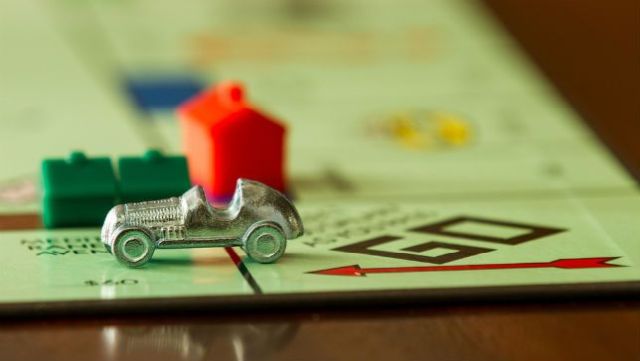
If you’re one of the 13 percent of people known to cheat at Monopoly, you may want to watch your step over the next few days. The toymaker has set up a hotline to mediate disputes that may break out during marathon Monopoly sessions over the holiday weekend.

Hasbro, which makes Monopoly, recent surveyed about 2,000 adult Monopoly players and found that 51 percent of Monopoly games end in an argument. The top 10 reasons that fights break out? Here’s the list:
1.People making up rules
2.People being too cocky when winning
3.Someone buying a property you want, even when they don’t need it
4.People taking too long to take their turn
5.Someone stealing from the bank
6.Someone deliberately miscounting their move
7.Deciding who gets to be the banker
8.The property auction process
9.Choice over tokens
10.What the rules of Free Parking are

So the folks at Hasbro are hoping to mitigate any major family arguments with a tongue-in-cheek hotline where families can call to settle any disputes before they get out of hand. Each call will be answered by a Monopoly staffer armed with a rulebook who can provide the final say in any disputes.

“We’ll have experts on hand with the official rulebooks to instantly settle any disputes, and advice on how to resolve common complaints,” said Craig Wilkins, marketing director of Hasbro UK & Ireland. Wilkins added that while each call will be free, callers will also be given the opportunity to make a donation to charity.

So Monopoly fans, remember this number: 0800 689 4903

Amateur treasure hunter finds medieval ring worth £70,000 in Robin Hood’s Sherwood Forest

sherwoodring-png-653x0_q80_crop-smart

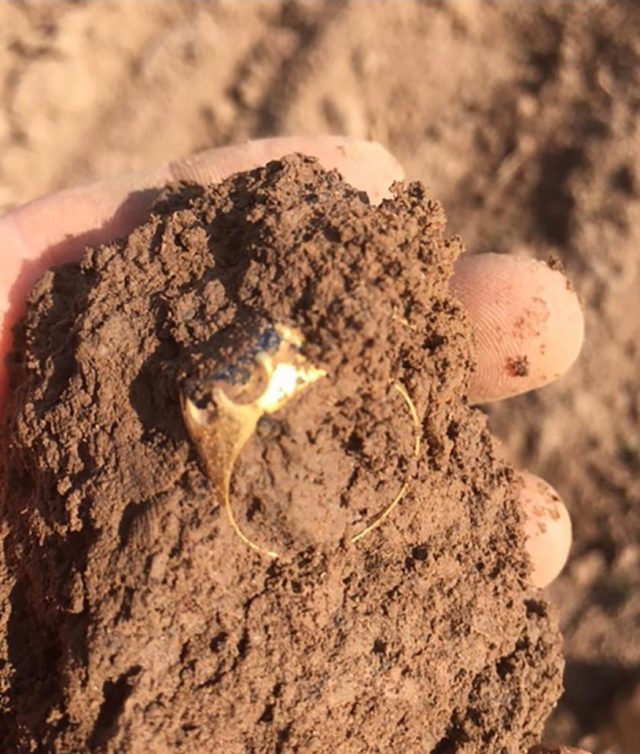
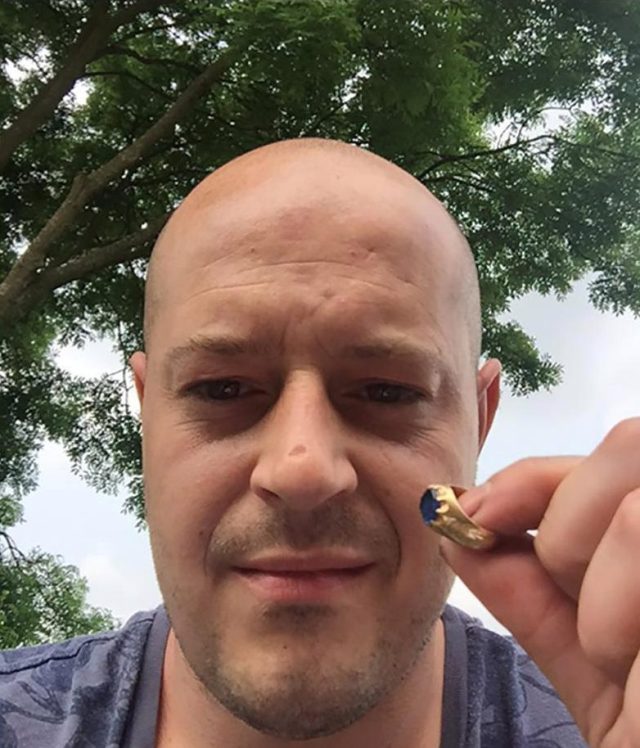
Mark Thompson, who spray paints fork lift trucks, was in the famous Nottinghamshire woodland for just 20 minutes when his metal detector sounded.

The glint of gold caught his attention and he could hardly believe what he unearthed.

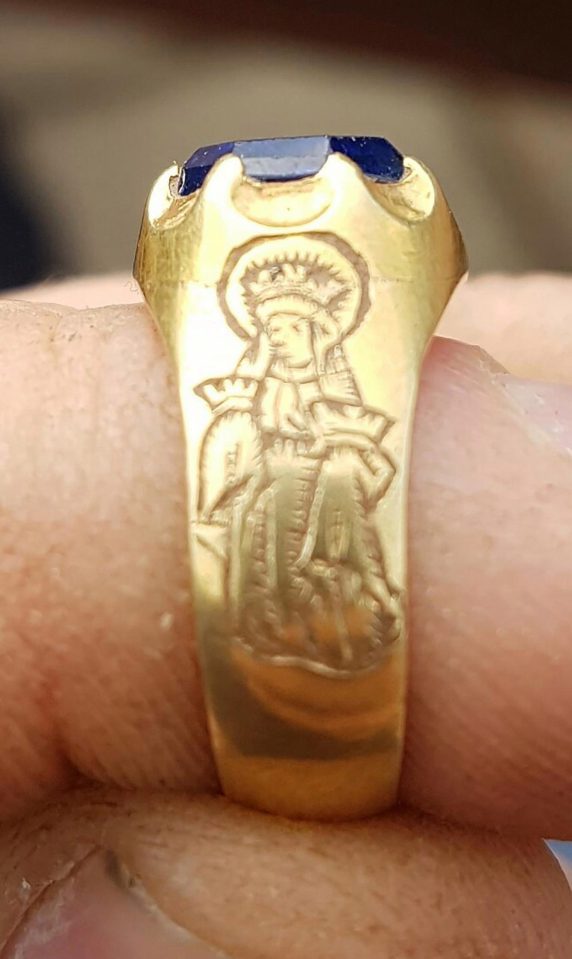
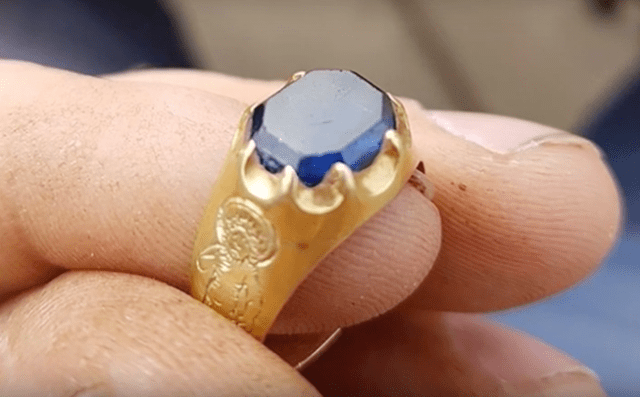
The ring, which is engraved with an infant Christ on one side and a female saint on the other, is believed to date from the 14th century.

The 34-year-old, who had only taken up the hobby 18 months ago, was expecting to find something innocuous.

But as he shovelled the dirt, a glint of gold emerged on ornate piece of jewellery with a precious sapphire.

Auctioneers have since told him that the precious ring could fetch between £20,000 and £70,000.

Mr Thompson said: “I had been out metal detecting with a group for about 20 minutes when I heard the signal.

“I was really excited when I saw that it was gold, but I didn’t realise at that point just how significant it might be.

https://www.thesun.co.uk/news/2435181/robin-hood-sherwood-forest-medieval-ring-found/