As the saying goes, “There are three kinds of lies: lies, damned lies, and statistics.” We know that’s true because statisticians themselves just said so.
A stunning report published in the Annals of Internal Medicine concludes that researchers often ask statisticians to make “inappropriate requests.” And by “inappropriate,” the authors aren’t referring to accidental requests for incorrect statistical analyses; instead, they’re referring to requests for unscrupulous data manipulation or even fraud.
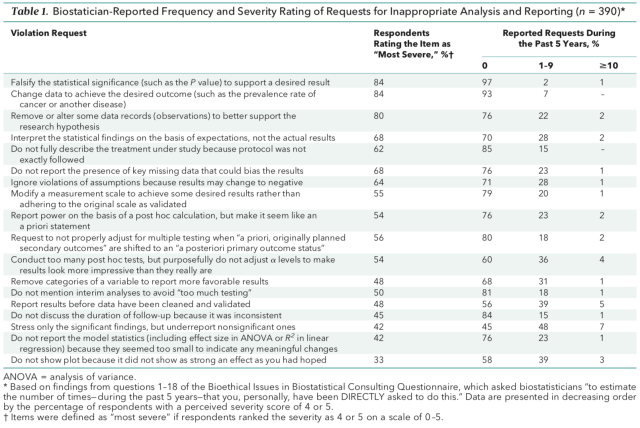
The authors surveyed 522 consulting biostatisticians and received sufficient responses from 390. Then, they constructed a table (shown below) that ranks requests by level of inappropriateness. For instance, at the very top is “falsify the statistical significance to support a desired result,” which is outright fraud. At the bottom is “do not show plot because it did not show as strong an effect as you had hoped,” which is only slightly naughty.
On the right, the authors report how often the biostatisticians estimated that they received such a request over the past five years. The results are jaw-dropping.
The absolute worst offense (i.e., being asked to fake statistical significance) occurred to 3% of the survey respondents. Another 7% reported being asked to change data, and a whopping 24% — nearly 1 in 4 — said they were asked to remove or alter data. Unequivocally, that is a request to commit scientific fraud.
Of the less serious offenses, 55% of biostatisticians said that they received requests to underreport non-significant results.
This article has been republished from materials provided by the American Council on Science and Health. Note: material may have been edited for length and content. For further information, please contact the cited source.
Reference
Min Qi Wang, Alice F. Yan, Ralph V. Katz. “Researcher Requests for Inappropriate Analysis and Reporting: A U.S. Survey of Consulting Biostatisticians.” Ann Intern Med 169(8): 554-558. Published: 16-Oct-2018. DOI: 10.7326/M18-1230.
Over the years, there’s been no shortage of interesting alternatives to typical talk-based psychotherapy. Laughter therapy, sound therapy, horticultural therapy and even wilderness therapy have become popular ways to deal with psychological distress, helping with everything from general anxiety and depression to post traumatic stress disorder (PTSD). These aren’t the only fascinating alternatives, though.
Another form of therapy is Eye Movement Desensitization and Reprocessing (EMDR), which can be an effective method for treating PTSD.
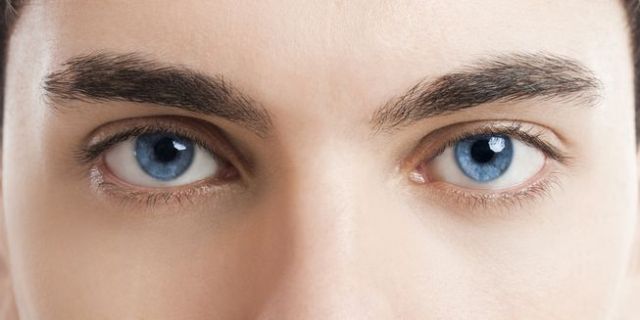
EMDR helps victims of trauma re-process and learn to cope with difficult events by rapidly moving their eyes back and forth, following the movement of a therapist’s finger while concentrating on a distressing memory.
The origins of EMDR
EMDR began practically by accident in 1987, when California psychologist Francine Shapiro was taking a walk in the woods, reports Scientific American.
During her stroll, Shapiro said she was anxious. She soon realized, though, that her anxiety had subsided once she began moving her eyes back and forth while at the same time closely observing and concentrating on her surroundings. Once she discovered that the rapid movement of her eyes brought her to a more relaxed state, she decided to see if rapid eye movement might reduce stress and anxiety in her clients. After finding that the procedure was able to help ease distress in her clients, Shapiro published a study in 1989 on her research, dubbing the practice EMDR.
Since then, EMDR has been used as a treatment for PTSD and various other conditions such as depression, schizophrenia, sexual dysfunction, stress and other anxiety disorders.
EMDR trainer Roger Solomon is a clinical psychologist whose specialty is trauma and grief. He is the police psychologist for the South Carolina Department of Public Safety and a consultant to the trauma programs of the U.S. Senate and several state and federal law enforcement agencies.
“EMDR therapy is guided by the Adaptive Information Processing model,” says Solomon. “This model posits that present problems are the result of past distressing memories that have become ‘frozen’ or stuck in the brain (including the images, thoughts and beliefs, feelings and sensations), thus becoming maladaptively stored in the brain. When there is a reminder (either external or internal), this maladaptively stored information gets triggered and is experienced in the present.”
Based on that premise, EMDR seeks to help people effectively adapt to their lives once trauma has occurred. EMDR gives those who suffer from trauma the possibility of reprocessing traumatic memories, so that the memories are able to become “unstuck” and processed in a way that the traumatized person is able to understand.
EMDR allows for what Solomon sees as the “the transmutation of the perpetual re-experiencing of distressing events with a learning experience that becomes a source of resilience.”
All this takes place by using a simple technique such as moving one’s eyes back and forth, which “stimulates the information processing mechanisms of the brain,” says Solomon. Once the information processing mechanism of the brain is stimulated by following the movements of the therapist’s fingers with the eyes, the traumatized person is able to reprocess the memories that cause distress; it gives them the ability to effectively adapt, learn and understand that he or she has successfully made it through the trauma.
AN EXAMPLE
To illustrate, Solomon uses the experience of a war veteran. “A war veteran experiencing a near-death experience in battle may have concluded ‘I am going to die,’ which becomes maladaptively stored in the brain, unable to process,” Solomon says. “When there is a present trigger, the distressing memory including the images, thoughts and beliefs and sensations associated with the event arise and are experienced as nightmares, flashbacks, and other symptoms of PTSD.”
Once the veteran is able to properly reprocess the information after undergoing EMDR, “the veteran can think of the battle event and know, at a felt body level, that ‘I survived, it’s over,’” says Solomon.
Theories behind the inner workings of reprocessing
Psychologists have come up with a number of theories as to how memory reprocessing during EMDR works — and more research is needed to determine the exact process — but here are a few that might explain exactly what’s happening in the brain during EMDR.
The working memory theory: Working memory is our short-term memory. It’s the part of our memory that allows us to store information that we need to reason, learn and comprehend.
“Studies looking at the specific effects of eye movements used in EMDR therapy show a significant reduction of memory vividness and associated emotion” says Solomon. “The working memory theory posits that the working memory system has a very limited capacity. When it is taxed by the competing tasks of holding a memory in mind while moving the eyes, there is a degradation of performance. This results in the distressing memory losing its quality and power.”
It’s almost as if the memory is unable to “keep up” with the reprocessing that occurs while the traumatized person’s eyes are moving back and forth — thus making the memory lose its grip over the person.
REM sleep theory: Rapid Eye Movement sleep (REM) is the stage of sleep in which we dream, and process and store memories.
Solomon explains that it’s “been hypothesized that eye movements stimulate the same neurological processes that take place during REM/dream sleep, which is important in processing and consolidating information.”
It’s possible the EMDR helps a person process a traumatic memory, in much the same way dreaming allows us to process the events of our daily lives while we sleep.
Memory reconsolidation theory: Memory reconsolidation is a process used by therapists to reorder and recode memories once a traumatic memory has been unlocked or accessed.
“Accessing a memory, and updating it with new contradictory information, enables the potential for the original memory to be transformed and reconsolidated, i.e., stored in altered form,” Solomon explains. “This differs from other trauma-focused therapies (e.g. Cognitive Behavioral Therapy) where the underlying mechanism is hypothesized to be habituation and extinction, which are thought to create a new memory, while leaving the original one intact.”
In this instance, the traumatic memory changes and transforms; it doesn’t disappear completely. Here, there aren’t two separate memories — one being the traumatic memory and the other being a memory which is of a peaceful nature. You have one memory which has transformed from trauma into a state of acceptance. This might explain the transmutation aspect of EMDR.
Parasympathetic nervous system theory: The parasympathetic nervous system is the part of our nervous system that helps us calm down and relax. It slows the heart, dilates blood vessels, relaxes the muscles in the gastrointestinal tract, increases digestive juices and decreases pupil size.
As far the relation between the parasympathetic nervous system and EMDR, Solomon says it’s possible that the “eye movements elicit an orienting response which activates the parasympathetic nervous system and lowers arousal.” Simply put, rapid eye movement and EMDR seem to be relaxing. “This theory has support from research showing that eye movement lowers arousal for distressing memories,” says Solomon.
What makes EMDR different
EMDR is based more on how a person reprocesses memories, rather than the strict plan of a therapist.
“The therapist facilitates movement with attuned bilateral stimulation and ‘stays out of the way’ as the distressing memory is shifting in an adaptive direction,” says Solomon. “Clients are able to find their own individualized and creative solutions and perspectives, in ways the clinician may never have thought of.”
A person undergoing EMDR doesn’t have to make themselves as vulnerable as they might during other forms of therapy. Sometimes not showing complete vulnerability makes things less taxing when undergoing treatment.
“The client does not have to describe the memory in detail. Not having to disclose shameful or humiliating moments may make it easier for some clients to engage in the therapeutic process,” Solomon explains.
The fact that EMDR is not a talk-based therapy is unique in that that, “EMDR goes to places where words don’t go and enables the processing of implicit, painful memories and their associated emotions and body sensations that talking alone does not seem to reach,” says Solomon.
EMDR success
When asked about a particular case in which EMDR helped a client overcome trauma, Solomon reflected on his experience with a police officer involved in the tragedy of the Sandy Hook Elementary School shooting:
“A police officer who was one of the first on-scene was very distressed by the images of children killed. For the next two years, he had nightmares and flashbacks, and found it difficult to be around children. He started the EMDR processing with an initial image of a dead child and an associated belief of ‘I’m helpless.’ With processing he realized he did the best he could at the situation. Next he remembered that many police officers from many different agencies started arriving. He realized that these policemen were off duty and coming on their own time to help out. When asked his thoughts/feelings about the incident, he said “UNITY,” and no longer felt distress. This session humbles me as to how the mind can find an adaptive way to deal with a horrible tragedy and I am grateful for EMDR therapy’s ability to help people.”
If you’re between 55 and 75 years old, you may want to try playing 3D platform games like Super Mario 64 to stave off mild cognitive impairment and perhaps even prevent Alzheimer’s disease.
That’s the finding of a new Canadian study by Université de Montréal psychology professors Gregory West, Sylvie Belleville and Isabelle Peretz. Published in PLOS One, it was done in cooperation with the Institut universitaire de gériatrie de Montréal (IUGM), Benjamin Rich Zendel of Memorial University in Newfoundland, and Véronique Bohbot of Montreal’s Douglas Hospital Research Centre.
In two separate studies, in 2014 and 2017, young adults in their twenties were asked to play 3D video games of logic and puzzles on platforms like Super Mario 64. Findings showed that the gray matter in their hippocampus increased after training.
The hippocampus is the region of the brain primarily associated with spatial and episodic memory, a key factor in long-term cognitive health. The gray matter it contains acts as a marker for neurological disorders that can occur over time, including mild cognitive impairment and Alzheimer’s.
West and his colleagues wanted to see if the results could be replicated among healthy seniors.
The research team recruited 33 people, ages 55 to 75, who were randomly assigned to three separate groups. Participants were instructed to play Super Mario 64 for 30 minutes a day, five days a week, take piano lessons (for the first time in their life) with the same frequency and in the same sequence, or not perform any particular task.
The experiment lasted six months and was conducted in the participants’ homes, where the consoles and pianos, provided by West’s team, were installed.
The researchers evaluated the effects of the experiment at the beginning and at the end of the exercise, six months later, using two different measurements: cognitive performance tests and magnetic resonance imaging (MRI) to measure variations in the volume of gray matter. This enabled them to observe brain activity and any changes in three areas:
the dorsolateral prefrontal cortex that controls planning, decision-making and inhibition;
the cerebellum that plays a major role in motor control and balance; and
the hippocampus, the centre of spatial and episodic memory.
According to the MRI test results, only the participants in the video-game cohort saw increases in gray matter volume in the hippocampus and cerebellum. Their short-term memory also improved.
The tests also revealed gray matter increases in the dorsolateral prefrontal cortex and cerebellum of the participants who took piano lessons, whereas some degree of atrophy was noted in all three areas of the brain among those in the passive control group.
What mechanism triggers increases in gray matter, especially in the hippocampus, after playing video games? “3-D video games engage the hippocampus into creating a cognitive map, or a mental representation, of the virtual environment that the brain is exploring.,” said West. “Several studies suggest stimulation of the hippocampus increases both functional activity and gray matter within this region.”
Conversely, when the brain is not learning new things, gray matter atrophies as people age. “The good news is that we can reverse those effects and increase volume by learning something new, and games like Super Mario 64, which activate the hippocampus, seem to hold some potential in that respect,” said West. Added Belleville: “These findings can also be used to drive future research on Alzheimer’s, since there is a link between the volume of the hippocampus and the risk of developing the disease.”
“It remains to be seen,” concluded West, “whether it is specifically brain activity associated with spatial memory that affects plasticity, or whether it’s simply a matter of learning something new.”
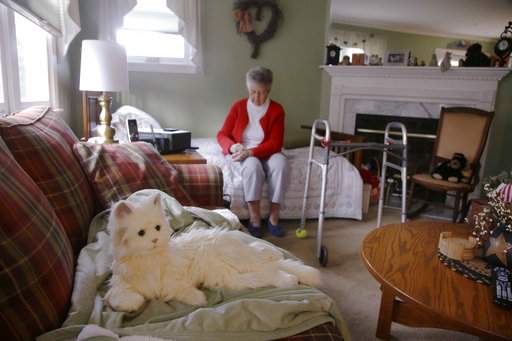
93-year-old Mary Derr sits on her bed near her robot cat she calls “Buddy” in her home she shares with her daughter Jeanne Elliott in South Kingstown, R.I. Buddy is a Hasbro’s “Joy for All” robotic cat, aimed at seniors and meant to act as a “companion,” it has been on the market for two years. Derr has mild dementia, and Elliott purchased a robot earlier this year to keep her mother company.
By MICHELLE R. SMITH
Imagine a cat that can keep a person company, doesn’t need a litter box and can remind an aging relative to take her medicine or help find her eyeglasses.
That’s the vision of toymaker Hasbro and scientists at Brown University, who have received a three-year, $1 million grant from the National Science Foundation to find ways to add artificial intelligence to Hasbro’s “Joy for All” robotic cat .
The cat, which has been on the market for two years, is aimed at seniors and meant to act as a “companion.” It purrs and meows, and even appears to lick its paw and roll over to ask for a belly rub. The Brown-Hasbro project is aimed at developing additional capabilities for the cats to help older adults with simple tasks.
Researchers at Brown’s Humanity-Centered Robotics Initiative are working to determine which tasks make the most sense, and which can help older adults stay in their own homes longer, such as finding lost objects, or reminding the owner to call someone or go to a doctor’s appointment.
“It’s not going to iron and wash dishes,” said Bertram Malle, a professor of cognitive, linguistic and psychological sciences at Brown. “Nobody expects them to have a conversation. Nobody expects them to move around and fetch a newspaper. They’re really good at providing comfort.”
Malle said they don’t want to make overblown promises of what the cat can do, something he and his fellow researcher — computer science professor Michael Littman — said they’ve seen in other robots on the market. They hope to make a cat that would perform a small set of tasks very well.
They also want to keep it affordable, just a few hundred dollars. The current version costs $100.
They’ve given the project a name that gets at that idea: Affordable Robotic Intelligence for Elderly Support, or ARIES. The team includes researchers from Brown’s medical school, area hospitals and a designer at the University of Cincinnati.
It’s an idea that has appeal to Jeanne Elliott, whose 93-year-old mother, Mary Derr, lives with her in South Kingstown. Derr has mild dementia and the Joy for All cat Elliott purchased this year has become a true companion for Derr, keeping her company and soothing her while Elliott is at work. Derr treats it like a real cat, even though she knows it has batteries.
“Mom has a tendency to forget things,” she said, adding that a cat reminding her “we don’t have any appointments today, take your meds, be careful when you walk, things like that, be safe, reassuring things, to have that available during the day would be awesome.”
Diane Feeney Mahoney, a professor emerita at MGH Institute of Health Professions School of Nursing, who has studied technology for older people, said the project showed promise because of the team of researchers. She hopes they involve people from the Alzheimer’s community and that “we just don’t want to push technology for technology’s sake.”
She called the cat a tool that could make things easier for someone caring for a person with middle-stage dementia, or to be used in nursing homes where pets are not allowed.
The scientists are embarking on surveys, focus groups and interviews to get a sense of the landscape of everyday living for an older adult. They’re also trying to figure out how the souped-up robo-cats would do those tasks, and then how it would communicate that information. They don’t think they want a talking cat, Littman said.
“Cats don’t generally talk to you,” Littman said, and it might be upsetting if it did.
They’re looking at whether the cat could move its head in a certain way to get across the message it’s trying to communicate, for example.
In the end, they hope that by creating an interaction in which the human is needed, they could even help stem feelings of loneliness, depression and anxiety.
“The cat doesn’t do things on its own. It needs the human, and the human gets something back,” Malle said. “That interaction is a huge step up. Loneliness and uselessness feelings are hugely problematic.”
The first known interstellar asteroid may hold water from another star system in its interior, according to a study.
Discovered on 19 October, the object’s speed and trajectory strongly suggested it originated beyond our Solar System.
The body showed no signs of “outgassing” as it approached the Sun, strengthening the idea that it held little if any water-ice.
But the latest findings suggest water might be trapped under a thick, carbon-rich coating on its surface.
The results come as a project to search for life in the cosmos has been using a radio telescope to check for radio signals coming from the strange, elongated object, named ‘Oumuamua.’
Astronomers from the Breakthrough Listen initiative have been looking across four different radio frequency bands for anything that might resemble a signal resulting from alien technology.
But their preliminary results have drawn a blank. The latest research – along with a previous academic paper – support a natural origin for the cosmic interloper.
Furthermore, they measured the way that ‘Oumuamua reflects sunlight and found it similar to icy objects from our own Solar System that are covered with a dry crust.
“We’ve got high signal-to-noise spectra (the ‘fingerprint’ of light reflected or emitted by the asteroid) both at optical wavelengths and at infrared wavelengths. Putting those together is crucial,” Prof Alan Fitzsimmons, from Queen’s University Belfast (QUB), one of the authors of the new study in Nature Astronomy.
He added: “What we do know is that the spectra don’t look like something artificial.”
Their measurements suggest that millions of years of exposure to cosmic rays have created an insulating, carbon-rich layer on the outside that could have shielded an icy interior from its encounter with the Sun.
This process of irradiation has left it with a somewhat reddish hue, similar to objects encountered in the frozen outer reaches of our Solar System.
“When it was near the Sun, the surface would have been 300C (600 Kelvin), but half a metre or more beneath the surface, the ice could have remained,” Prof Fitzsimmons told BBC News.
Previous measurements suggest the object is at least 10 times longer than it is wide. That ratio is more extreme than that of any asteroid or comet ever observed in our Solar System. Uncertainties remain as to its size, but it is thought to be at least 400m long.
“We don’t know its mass and so it could still be fragile and have a relatively low density,” said Prof Fitzsimmons.
“That would still be consistent with the rate at which it is spinning – which is about once every seven-and-a-half hours or so. Something with the strength of talcum powder would hold itself together at that speed.”
Molten core
He added: “It’s entirely consistent with cometary bodies we’ve studied – with the Rosetta probe, for example – in our own Solar System.”
Co-author Dr Michele Bannister, also from QUB, commented: “We’ve discovered that this is a planetesimal with a well-baked crust that looks a lot like the tiniest worlds in the outer regions of our Solar System, has a greyish/red surface and is highly elongated, probably about the size and shape of the Gherkin skyscraper in London.
“It’s fascinating that the first interstellar object discovered looks so much like a tiny world from our own home system. This suggests that the way our planets and asteroids formed has a lot of kinship to the systems around other stars.”
A number of ideas have been discussed to explain the unusual shape of ‘Oumuamua. These include the possibility that it could be composed of separate objects that joined together, that a collision between two bodies with molten cores ejected rock that then froze in an elongated shape, and that it is a shard of a bigger object destroyed in a supernova.
In a paper recently published on the Arxiv pre-print server, Gábor Domokos, from the Budapest University of Technology in Hungary, and colleagues suggest that, over millions of years, collisions between ‘Oumuamua and many speeding interstellar dust grains could produce the object’s observed shape.
Prof Fitzsimmons said this idea was very interesting, and added: “I think what we’re looking at here is the initial flurry of scientists running around saying: ‘How did it get like this, where’s it come from, what’s it made of.’ It’s incredibly exciting.
“I think after a few months you will see people focus down on one or two possibilities for all these things. But this just shows you: it’s a symptom of what an amazing, interesting object this is… we can’t wait for the next one.”
If planets form around other stars the same way they did in the Solar System, many objects the size of ‘Oumuamua should get slung out into space. The interstellar visitor may provide the first evidence of that process.
“All the data we have at the moment turn out to be consistent with what we might expect from an object ejected by another star,” he said.
But asked about Breakthrough Listen’s initiative, he said: “If I had a radio telescope, I might give it a go.”
Tissue samples from survivors of the Yambuku Ebola outbreak are transported to a field lab.
by Erika Check Hayden
Survivors of the world’s first known Ebola outbreak have immunity to the virus 40 years after they were infected, scientists have found.
“It’s interesting to see that after such a long time, people still have this kind of reactivity against the virus,” says virologist Stephan Becker of the Philipps University of Marburg in Germany. The findings were published online on 14 December in the Journal of Infectious Diseases1.
Becker says that the discovery was “not completely unexpected”, because previous studies had found that survivors had immune responses to Ebola virus as long as 11 years after they were infected2.
But until last year, no one had ever studied immunity in the survivors of the first recorded Ebola outbreak, which occurred in 1976 near the town of Yambuku, in what is now the Democratic Republic of the Congo (DRC).
“Nobody even knew if these people were still alive,” says Anne Rimoin, an epidemiologist at the University of California, Los Angeles (UCLA), and the lead author of the latest study.
Lessons from the past
After the disastrous 2014–16 West African Ebola outbreak that killed 11,310 people, Rimoin decided that it was crucial to find the Yambuku survivors. Many of the tens of thousands of people who survived the more recent outbreak have ongoing health problems, such as eye and joint issues. Rimoin thought that doctors might gain a better understanding of what lies ahead for these people by looking at the Yambuku survivors.
“The aperture for studying these people is closing, and they are our best opportunity to study the decades-long aftermath of Ebola,” Rimoin says.
Her team worked with Sukato Mandzomba, one of the Yambuku survivors, to recruit participants to the study. The group used handwritten maps kept by infectious-disease doctors who worked on the outbreak, which killed 280 people, to find more survivors. Ultimately, 14 people enrolled in the study.
Immune memory
Rimoin and her colleagues set up a mobile lab in Yambuku, and invited the 14 survivors to come to the town from the nearby villages where they lived. Rimoin’s team then collected blood from the survivors, stored the samples in portable freezers and drove them to labs in the capital, Kinshasa, or shipped them to the United States.
There, researchers found that cells from all 14 survivors could make defensive proteins called antibodies in response to portions of the Ebola virus. This means that the survivors’ immune systems recognize the Ebola virus, probably because they have encountered it before.
Immune cells from four of the survivors could prevent Ebola viruses from infecting other cells in the lab, indicating that these people are still protected from new Ebola infections 40 years after they became ill with the virus. It’s this type of immunity that researchers seek to mimic when they make vaccines against viruses, including Ebola; Rimoin says that the latest study could aid these attempts.
Rimoin also wants to continue working with the Yambuku survivors to understand how their infections decades ago affected their lives and their long-term health. The Ebola outbreak devastated the villages around Yambuku. Whole families were wiped out, survivors returned to find their homes and belongings destroyed, and children were moved to orphanages, says Nicole Hoff, country director for the UCLA–DRC Health Research and Training Program in Kinshasa, who has worked with survivors in Yambuku.
One survivor walked 30 kilometres to Yambuku with his adult son to participate in the study, Hoff says. When the man and his wife caught Ebola in 1976, their son was placed in an orphanage 100 kilometres away. The survivor’s wife died of Ebola, but the son escaped from the orphanage and ran home to help his father with his farm.
Hoff says that these men and other survivors were glad that the researchers were interested in their histories.“They can tell you everything that happened to them,” she says. “Their stories are so vivid, despite the fact that all of this happened 40 years ago.”
Imagine having to wait a century to have sex. Such is the life of the Greenland shark—a 5-meter-long predator that may live more than 400 years, according to a new study, making it the longest lived vertebrate by at least a century. So it should come as no surprise that the females are not ready to reproduce until after they hit their 156th birthday.
The longevity of these sharks is “astonishing,” says Michael Oellermann, a cold-water physiologist at Loligo Systems in Viborg, Denmark, who was not involved with the work. That’s particularly true because oceans are quite dangerous places, he notes, where predators, food scarcity, and disease can strike at any time.
Greenland sharks (Somniosus microcephalus) had been rumored to be long-lived. In the 1930s, a fisheries biologist in Greenland tagged more than 400, only to discover that the sharks grow only about 1 centimeter a year—a sure sign that they’re in it for the long haul given how large they get. Yet scientists had been unable to figure out just how many years the sharks last.
Intrigued, marine biologist John Steffensen at the University of Copenhagen collected a piece of backbone from a Greenland shark captured in the North Atlantic, hoping it would have growth rings he could count to age the animal. He found none, so he consulted Jan Heinemeier, an expert in radiocarbon dating at Aarhus University in Denmark. Heinemeier suggested using the shark’s eye lenses instead. His aim was not to count growth rings, but instead to measure the various forms of carbon in the lenses, which can give clues to an animal’s age.
Then came the hard part. Steffensen and his graduate student Julius Nielsen spent several years collecting dead Greenland sharks, most of them accidently ensnared in trawling nets used to catch other types of fish. After that, they employed an unusual technique: They looked for high amounts of carbon-14, a heavy isotope left behind by nuclear bomb testing in the mid-1950s. Extra carbon from the resulting “bomb pulse” had infiltrated ocean ecosystems by the early 1960s, meaning that inert body parts formed during this time—in particular eye lenses—also have more of the heavy element. Using this technique, the researchers concluded that two of their sharks—both less than 2.2 meters long—were born after the 1960s. One other small shark was born right around 1963.
The team used these well-dated sharks as starting points for a growth curve that could estimate the ages of the other sharks based on their sizes. To do this, they started with the fact that newborn Greenland sharks are 42 centimeters long. They also relied on a technique researchers have long used to calculate the ages of sediments—say in an archaeological dig—based on both their radiocarbon dates and how far below the surface they happen to be. In this case, researchers correlated radiocarbon dates with shark length to calculate the age of their sharks. The oldest was 392 plus or minus 120 years, they reported in Science. That makes Greenland sharks the longest lived vertebrates on record by a huge margin; the next oldest is the bowhead whale, at 211 years old. And given the size of most pregnant females—close to 4 meters—they are at least 150 years old before they have young, the group estimates.
Oellermann is impressed not only with how old the sharks are, but also how Nielsen and his colleagues figured out their ages. “Who would have expected that nuclear bombs [one day] could help to determine the life span of marine sharks?” he asks.
He and others think cold water helps lengthen the animals’ lives by slowing down their growth and biochemical activity. “Lower metabolic rate plays a big role,” agrees Shawn Xu, a geneticist at the University of Michigan, Ann Arbor. “But that’s not the whole story.” Three years ago, his work in nematodes showed that cold can also activate antiaging genes that help an animal better fold proteins, get rid of DNA-damaging molecules, and even fight off infections more effectively, extending life span. The cold-activated molecules “are evolutionarily conserved” across the animal kingdom, and thus these pathways very likely exist in these sharks, too, he predicts.
Paul Butler isn’t surprised that frigid waters host such old creatures. In 2013, the sclerochronologist (a scientist who studies the growth of hard tissues in invertebrates) at Bangor University in the United Kingdom and his colleagues described a 500-year-old ocean quahog (Arctica islandica), a chowder clam found in the North Atlantic. Still, even though two multicentenarian species have turned up in the North Atlantic in just a few years, Butler is skeptical that there are many more out there awaiting discovery. “It won’t be that we won’t have more surprises,” he says, “but I regard these [two] as exceptions.”
In remote Italian villages nestled between the Mediterranean Sea and mountains lives a group of several hundred citizens over the age of 90. Researchers at the University of Rome La Sapienza and University of California San Diego School of Medicine have identified common psychological traits in members of this group.
The study, publishing in International Psychogeriatrics, found participants who were 90 to 101 years old had worse physical health, but better mental well-being than their younger family members ages 51 to 75.
“There have been a number of studies on very old adults, but they have mostly focused on genetics rather than their mental health or personalities,” said Dilip V. Jeste MD, senior author of the study, senior associate dean for the Center of Healthy Aging and Distinguished Professor of Psychiatry and Neurosciences at UC San Diego School of Medicine. “The main themes that emerged from our study, and appear to be the unique features associated with better mental health of this rural population, were positivity, work ethic, stubbornness and a strong bond with family, religion and land.”
There were 29 study participants from nine villages in the Cilento region of southern Italy. The researchers used quantitative rating scales for assessing mental and physical health, as well as qualitative interviews to gather personal narratives of the participants, including topics such as migrations, traumatic events and beliefs. Their children or other younger family members were also given the same rating scales and additionally asked to describe their impressions about the personality traits of their older relatives.
“The group’s love of their land is a common theme and gives them a purpose in life. Most of them are still working in their homes and on the land. They think, ‘This is my life and I’m not going to give it up,'” said Anna Scelzo, first author of the study with the Department of Mental Health and Substance Abuse in Chiavarese, Italy
Interview responses also suggested that the participants had considerable self-confidence and decision-making skills.
“This paradox of aging supports the notion that well-being and wisdom increase with aging even though physical health is failing,” said Jeste, also the Estelle and Edgar Levi Chair in Aging and director of the Sam and Rose Stein Institute for Research on Aging at UC San Diego.
Some direct quotes from the study’s interviews include:
•”I lost my beloved wife only a month ago and I am very sad for this. We were married for 70 years. I was close to her during all of her illness and I have felt very empty after her loss. But thanks to my sons, I am now recovering and feeling much better. I have four children, ten grandchildren and nine great-grandchildren. I have fought all my life and I am always ready for changes. I think changes bring life and give chances to grow.”
•”I am always thinking for the best. There is always a solution in life. This is what my father has taught me: to always face difficulties and hope for the best.”
•”I am always active. I do not know what stress is. Life is what it is and must be faced … always.”
•”If I have to say, I feel younger now than when I was young.”
“We also found that this group tended to be domineering, stubborn and needed a sense of control, which can be a desirable trait as they are true to their convictions and care less about what others think,” said Scelzo. “This tendency to control the environment suggests notable grit that is balanced by a need to adapt to changing circumstances.”
The researchers plan to follow the participants with multiple longitudinal assessments and compare biological associations with physical and psychological health.
“Studying the strategies of exceptionally long-lived and lived-well individuals, who not just survive but also thrive and flourish, enhances our understanding of health and functional capacities in all age groups,” said Jeste.
Study co-authors include: Salvatore Di Somma, University of Rome La Sapienza; David Brenner, Nicholas Schork and Lori Montross, UC San Diego; and Paola Antonini, 3B Biotech Research.
Story Source:
Materials provided by University of California – San Diego. Original written by Michelle Brubaker.
Journal Reference:
1.Anna Scelzo, Salvatore Di Somma, Paola Antonini, Lori P. Montross, Nicholas Schork, David Brenner, Dilip V. Jeste. Mixed-methods quantitative–qualitative study of 29 nonagenarians and centenarians in rural Southern Italy: focus on positive psychological traits. International Psychogeriatrics, 2017; 1 DOI: 10.1017/S1041610217002721
Prof Sarah Tabrizi , from the UCL Institute of Neurology, led the trials
By James Gallagher
The defect that causes the neurodegenerative disease Huntington’s has been corrected in patients for the first time, the BBC has learned. An experimental drug, injected into spinal fluid, safely lowered levels of toxic proteins in the brain. The research team, at University College London, say there is now hope the deadly disease can be stopped.
Experts say it could be the biggest breakthrough in neurodegenerative diseases for 50 years.
Huntington’s is one of the most devastating diseases. Some patients described it as Parkinson’s, Alzheimer’s and motor neurone disease rolled into one.
Peter Allen, 51, is in the early stages of Huntington’s and took part in the trial: “You end up in almost a vegetative state, it’s a horrible end.”
Huntington’s blights families. Peter has seen his mum Stephanie, uncle Keith and grandmother Olive die from it. Tests show his sister Sandy and brother Frank will develop the disease. The three siblings have eight children – all young adults, each of whom has a 50-50 chance of developing the disease.
The unstoppable death of brain cells in Huntington’s leaves patients in permanent decline, affecting their movement, behaviour, memory and ability to think clearly.
Peter, from Essex, told me: “It’s so difficult to have that degenerative thing in you.
“You know the last day was better than the next one’s going to be.”
Huntington’s generally affects people in their prime – in their 30s and 40s
Patients die around 10 to 20 years after symptoms start
About 8,500 people in the UK have Huntington’s and a further 25,000 will develop it when they are older
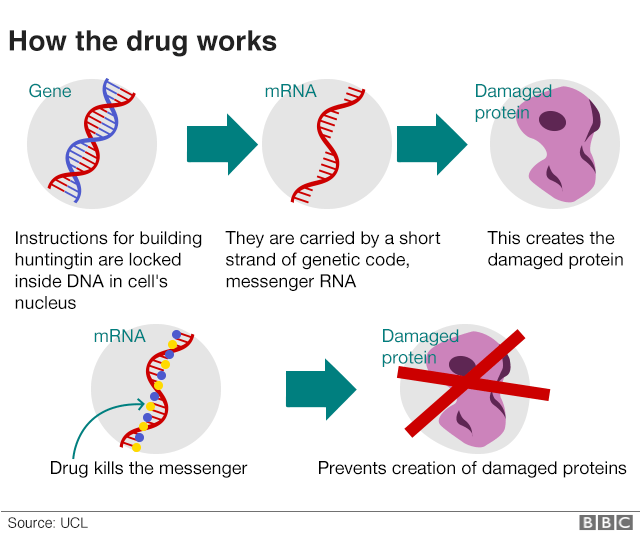
Huntington’s is caused by an error in a section of DNA called the huntingtin gene. Normally this contains the instructions for making a protein, called huntingtin, which is vital for brain development. But a genetic error corrupts the protein and turns it into a killer of brain cells.
The treatment is designed to silence the gene.
On the trial, 46 patients had the drug injected into the fluid that bathes the brain and spinal cord. The procedure was carried out at the Leonard Wolfson Experimental Neurology Centre at the National Hospital for Neurology and Neurosurgery in London. Doctors did not know what would happen. One fear was the injections could have caused fatal meningitis. But the first in-human trial showed the drug was safe, well tolerated by patients and crucially reduced the levels of huntingtin in the brain.
Prof Sarah Tabrizi, the lead researcher and director of the Huntington’s Disease Centre at UCL, told the BBC: “I’ve been seeing patients in clinic for nearly 20 years, I’ve seen many of my patients over that time die. For the first time we have the potential, we have the hope, of a therapy that one day may slow or prevent Huntington’s disease . This is of groundbreaking importance for patients and families.”
Doctors are not calling this a cure. They still need vital long-term data to show whether lowering levels of huntingtin will change the course of the disease. The animal research suggests it would. Some motor function even recovered in those experiments.
Peter, Sandy and Frank – as well as their partners Annie, Dermot and Hayley – have always promised their children they will not need to worry about Huntington’s as there will be a treatment in time for them. Peter told the BBC: “I’m the luckiest person in the world to be sitting here on the verge of having that. “Hopefully that will be made available to everybody, to my brothers and sisters and fundamentally my children.”
He, along with the other trial participants, can continue taking the drug as part of the next wave of trials. They will set out to show whether the disease can be slowed, and ultimately prevented, by treating Huntington’s disease carriers before they develop any symptoms.
Prof John Hardy, who was awarded the Breakthrough Prize for his work on Alzheimer’s, told the BBC: “I really think this is, potentially, the biggest breakthrough in neurodegenerative disease in the past 50 years. That sounds like hyperbole – in a year I might be embarrassed by saying that – but that’s how I feel at the moment.”
The UCL scientist, who was not involved in the research, says the same approach might be possible in other neurodegenerative diseases that feature the build-up of toxic proteins in the brain. The protein synuclein is implicated in Parkinson’s while amyloid and tau seem to have a role in dementias.
Off the back of this research, trials are planned using gene-silencing to lower the levels of tau.
Prof Giovanna Mallucci, who discovered the first chemical to prevent the death of brain tissue in any neurodegenerative disease, said the trial was a “tremendous step forward” for patients and there was now “real room for optimism”.
But Prof Mallucci, who is the associate director of UK Dementia Research Institute at the University of Cambridge, cautioned it was still a big leap to expect gene-silencing to work in other neurodegenerative diseases.
She told the BBC: “The case for these is not as clear-cut as for Huntington’s disease, they are more complex and less well understood. But the principle that a gene, any gene affecting disease progression and susceptibility, can be safely modified in this way in humans is very exciting and builds momentum and confidence in pursuing these avenues for potential treatments.”
The full details of the trial will be presented to scientists and published next year.
The therapy was developed by Ionis Pharmaceuticals, which said the drug had “substantially exceeded” expectations, and the licence has now been sold to Roche.
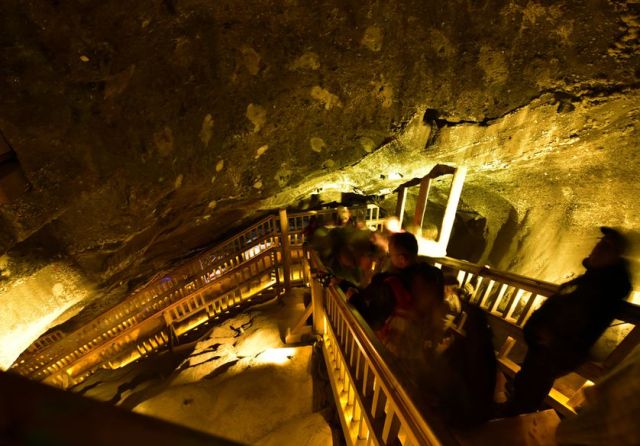
The Wieliczka Salt Mine has existed — and been recognized as a marvel — for so long that its famous visitors include Copernicus, Goethe and Chopin. This incredibly unique space was officially recognized as a UNESCO heritage site in 1978 but had been used as a salt mine near Krakow, Poland, since the 13th century.
During the Renaissance, it was one of the biggest businesses in Europe, since salt was recognized as a key ingredient for safe food preservation. The mine continued to produce salt until the late 1990s, but now it’s one of Poland’s main tourist attractions with over a million visitors every year.
It’s pretty obvious why so many flock to see it. This large complex more than 1,000 feet underground is a marvel of centuries of human construction and decoration. The entire mine is over 178 miles long, but only part of that is open to visitors, who can take a two-mile-long tour of the various rooms and artworks.
The oldest art was created by the miners themselves, and in recent years artists and artisans have added to the craftsmanship, sculptures and reliefs throughout the public areas of the mines.
In addition to the chapel pictured at the top of this page, there are many other decorated spaces and tunnels. One chamber’s walls were carved to resemble wood, as churches were built of at the time, while others feature Disney-like recreations of history in the mines.
In the 19th century, huge chandeliers — made of salt crystal, of course — were brought in to fill the spaces with light. There’s even a lake (above) and a grotto (below).
Surprisingly, there’s also a health resort within the mine — the air is said to be beneficial to those who have respiratory issues. You can visit for the day or stay overnight to experience what the website calls “subterraneotherapy.”
Staying overnight in the salt caves could be a unique adventure — accommodations are in the Stable Chamber, which used to be where the horses were kept in the 12th century when horses were used to power salt excavations. According to the resort’s site: “…there is no pollution in which the environment on the surface abounds today; there are no allergens, bacteria and fungi, or harmful electromagnetic radiation, either.” Sounds peaceful, for sure.










 It's Interesting