Man declared dead snores ‘back to life’ on the autopsy table

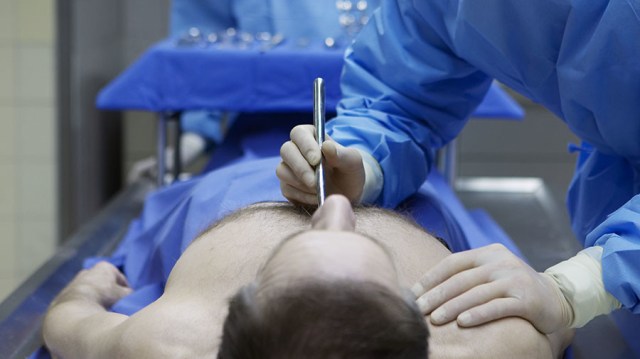
A man in Spain who was declared dead by three doctors was actually still alive, which doctors discovered only when he began snoring on the autopsy table, according to news reports.

The man, 29-year-old Gonzalo Montoya Jiménez, was a prisoner at a jail in northern Spain. He was found unconscious in his cell on Sunday and was believed to be dead, according to the Spanish news outlet La Voz de Asturias. Three forensic doctors allegedly examined Jiménez and certified his death.

But four hours later, right before Jiménez’s autopsy, he was heard making noises on the autopsy table, and was found to still be alive. This discovery was not a moment too soon — Jiménez’s body even had the marks painted on it to guide the autopsy, a family member told La Voz de Asturias.

He has now regained consciousness and is in the intensive care unit at the Central University Hospital of Asturias (HUCA) in Oviedo, Spain.

But how, exactly, does something like this happen?

Determining whether someone is dead or alive might sound simple enough, but there are not universal guidelines for exactly when doctors should pronounce someone dead. “You’re dead when a doctor says you’re dead,” said Dr. James Bernat, a neurologist at Dartmouth College’s Geisel School of Medicine in New Hampshire.

Broadly speaking, a person may be declared dead when one of two things happens: Their heart stops beating and doesn’t start again, or they are “braindead.” A person is considered brain-dead when he or she no longer has any neurological activity in the brain or brain stem — meaning no electrical impulses are being sent between brain cells.

Doctors perform a number of tests to determine whether someone is brain-dead, such as checking whether the individual can initiate his or her own breath, said Dr. Diana Greene-Chandos, an assistant professor of neurological surgery and neurology at Ohio State University Wexner Medical Center.

In the recent case, Jiménez’s family said Jiménez had epilepsy, and they suspect the condition may have played a role in the unusual circumstances of his presumed death, according to La Voz de Asturias. Some people with epilepsy can experience a condition called catalepsy, or a “trancelike” state in which their muscles become rigid and they are unresponsive to stimuli.

This isn’t the first time a person has been pronounced dead when they were actually alive. For example, in 2014, a 91-year-old woman in Poland was declared dead and spent 11 hours in a mortuary before staff discovered her body bag moving and found her alive.

https://www.cbsnews.com/news/man-declared-dead-snores-to-life-right-before-autopsy/

Thanks to Pete Cuomo for bringing this to the It’s Interesting community.

Noninvasive brain intervention shown to reduce PTSD symptoms

A noninvasive intervention that uses brainwave mirroring technology improved symptoms of post-traumatic stress, insomnia, anxiety and depressive mood for up to 6 months in service members and veterans, according to pilot study findings published in Military Medical Research.

“Ongoing symptoms of post-traumatic stress, whether clinically diagnosed or not, are a pervasive problem in the military,” Charles H. Tegeler, MD, professor of neurology at Wake Forest School of Medicine, said in a press release. “Medications are often used to help control specific symptoms, but can produce side effects. Other treatments may not be well tolerated, and few show a benefit for the associated sleep disturbance. Additional noninvasive, nondrug therapies are needed.”

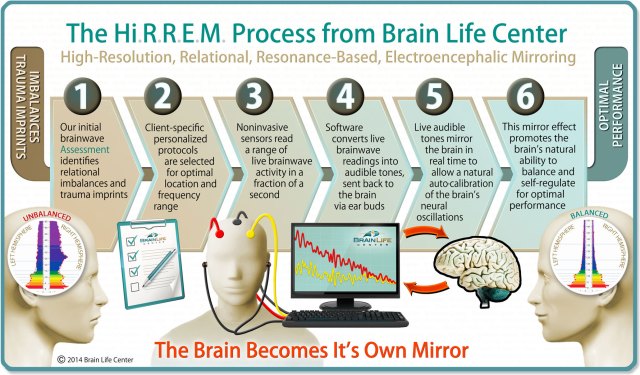
In this study, researchers used high-resolution, relational, resonance-based, electroencephalic mirroring (HIRREM), a noninvasive neurotechnology that translates dominant brain frequencies into audible tones to support the auto-calibration of neural oscillations in real time. They collected data on symptoms of post-traumatic stress (PTS), insomnia, depression and anxiety from 18 military personnel with military-related PTS who received an average of 19.5 HIRREM sessions over 12 days. Researchers conducted follow-up online interviews at 1-, 3- and 6-months.

Tegeler and colleagues observed clinically significant reductions in all symptom scores immediately after intervention completion, with durability through 6 months. Through the first two follow-up visits, 83% of participants reported PTS scores that were at least 10 points lower than baseline and 78% reported insomnia scores that were at least seven points lower than baseline. For 15 participants with a history of traumatic brain injury or concussion, there were durable reductions in concussion-related symptoms. Additionally, participants also experienced significant improvements in blood pressure measures such as heart rate variability and baroreflex sensitivity. No adverse events were reported.

“We observed reductions in post-traumatic symptoms, including insomnia, depressive mood and anxiety that were durable through 6 months after the use of HIRREM, but additional research is needed to confirm these initial findings,” Tegeler said in the release. “This study is also the first to report improvement in heart rate variability and baroreflex sensitivity — physiological responses to stress — after the use of an intervention for service members or veterans with ongoing symptoms of post-traumatic stress.” – by Savannah Demko

https://www.healio.com/psychiatry/ptsd/news/online/%7B8ae1a121-d40d-41a0-88df-d9ccd96c6523%7D/noninvasive-intervention-reduces-post-traumatic-stress-symptoms-in-military?utm_source=selligent&utm_medium=email&utm_campaign=psychiatry%20news&m_bt=1162769038120

Recovering from Locked-In Syndrome

By Robert McCoppin

Lying motionless in a hospital bed, Jose Rodriguez Jr. lost the will to live.

He’d suffered a stroke, fallen into a coma and awoken with an extremely rare condition known as locked-in syndrome. He was unable to move anything except for his eyes.

Previously a healthy young man, Rodriguez now couldn’t walk, talk, swallow or even breathe on his own. He felt trapped inside his body.

As the reality of his situation sunk in — that he could no longer work or hug his mother — Junior, as his family calls him, felt the life he’d had was over. He wanted to die.

To survive, doctors said, he needed surgery for a tracheotomy, to attach a ventilator through his throat to keep him breathing.

Rodriguez’s father pleaded with him to have the life-saving operation. But now that he was conscious, the decision was his.

When the doctors asked for his answer — looking up meant yes; down was no — Rodriguez didn’t respond at first. He thought of his father, with whom he’d always been close; the two even worked at the same Naperville warehouse. However desperate his situation, Junior decided, he did not want to let his father down. He rolled his eyes upward. He would do what he could to survive.

That decision began a long, torturous journey for Rodriguez, his family and a team of medical workers. Eventually, it would move him into an even rarer status: someone who is recovering from locked-in syndrome.

His experience reflects a movement in stroke treatment toward therapy that promotes new connections and functions between nerve cells, called neuroplasticity. Where the brain was previously thought to have little ability to regenerate, recent research has suggested that exercise and movement can promote healing. The idea is to get the body moving, and the brain follows.

Rodriguez’s decision wasn’t without some second-guessing, though, as he faced a seemingly insurmountable challenge to move again.

“It was only (from) my mom and dad’s constant reassurance that I’d get better (that) I had a change of heart,” Rodriguez said in an email. “Ever since then I’ve been working to get myself better.”

Uncomfortably numb

On Aug. 5, 2013, Rodriguez felt a sharp pain in his head and strange numbness on his side. He didn’t think much of it, and it soon went away. He went to work, moving heavy shipping orders at a train parts facility.

Co-workers warned his symptoms could be signs of a stroke but, Rodriguez, then 31, thought he was too young and healthy for that.

The next morning, the headache was back and worse, and now his entire left side was numb. He drove himself to the emergency room at Rush Copley Medical Center in Aurora, where, he later wrote in a memoir about his ordeal: “My whole body began to shake uncontrollably. … I tried so hard to stop shaking, but I couldn’t. I blacked out and that’s all I remember.”

Rodriguez was airlifted to Central DuPage Hospital in Winfield, where he underwent a four-hour surgery to remove the clot causing his stroke. He was in a coma for about 12 days.

When he came to, he not only was paralyzed, but his brain could no longer regulate his body temperature. He became so overheated that sweat pooled in his eye sockets. He was packed in ice with fans blowing on him.

Early on, Rodriguez — who shared his recollections through his memoir and via email, with his family and some of his medical attendants confirming details — suffered severe hiccups that caused a hernia. He underwent another surgery to repair the hernia and install a feeding tube. He still uses that, subsisting on a liquid diet.

During those times, his father often slept in his room because he was afraid to be alone. His mother and six younger brothers also visited frequently. One of his uncles promised him $100 if he could someday give the middle finger.

Every day, a nurse tested his reactions by pinching his finger. Unlike some people with paralysis, Rodriguez can feel his body, and he flinched every time. But medical workers were still waiting for some sign that he could initiate voluntary movement.


Extreme paralysis, extremely rare

The extremely rare condition of locked-in syndrome occurs when the brain stem is disabled and can no longer relay signals for functions like movement, breathing and heart rate. The syndrome can develop from a stroke, tumor, injury or from ALS, also known as Lou Gehrig’s disease. French journalist Jean-Dominique Bauby described the condition in his 1997 memoir “The Diving Bell and the Butterfly,” later made into a film.

Most people with locked-in syndrome don’t regain movement. In one study of 14 patients, about 20 percent recovered some movement, about 30 percent regained some verbal communication and about half were weaned off a ventilator.

Rodriguez’s recovery appears to be a good example of neuroplasticity at work, according to expert Edward Taub, a University of Alabama at Birmingham professor of psychology not involved in Rodriguez’s treatment.

As director of the university’s Taub Therapy Clinic, he oversees treatment of patients with strokes and other injuries. His clinic uses constraint-induced therapy, in which patients use incapacitated limbs to repeat tasks like moving checkers to build up fine motor skills.

The key, Taub said, is to increase the difficulty of the task slowly so the patient keeps striving to improve. Through repetitive motions, and more intensive therapy than is otherwise typical, the theory is, the brain grows new connections to rewire itself.

“The heart of it is, use it or lose it,” Taub said. “If you use it, it’ll keep improving.”

Rough road to rehabilitation

Rodriguez took that attitude to heart. After recovering from surgery, he tried each day to make some movement with his body, and by the time he left the hospital, he was able to open his mouth slightly. Eventually he could breathe on his own, his ventilator was removed and he was sent to the Rehabilitation Institute of Chicago, now called Shirley Ryan AbilityLab.

There, he began different therapies to relearn how to speak, eat and move. One therapist had him work on moving his head from side to side.

To communicate, he would spell out words by lifting his head when a therapist pointed to letters on a card. It was laborious, but it allowed him to convey thoughts beyond yes and no.

There were times, he said, that staff members made no effort to communicate with him or left him in his wheelchair or leg braces too long until it became painful.

“I never felt so vulnerable,” he said.

His family transferred him to Marianjoy Rehabilitation Hospital in Wheaton, closer to home. There, he would meet the team that would help to bring him back to life.

At Marianjoy, a speech therapist made sure his teeth were brushed every day, encouraged him to make what few sounds he could with his voice and got him to begin eating a bit of blueberry yogurt.

He later practiced chewing gum with a string attached so he could pull it out without swallowing, and eventually was able to eat pureed food.

He also tried his first motorized wheelchair, which he directed with head movements, but it was difficult and scary for him since he couldn’t control it well.

Like some other stroke patients, it was also very hard for Rodriguez to control his emotions. Sometimes he would laugh uncontrollably at inappropriate times, and worried that people thought he was laughing at them.

One day, while sitting in a wheelchair with other patients waiting for therapy, it struck Rodriguez how profoundly disabled he was, and he began sobbing uncontrollably. Using the letter board, he kept asking his parents, “Why me? I don’t deserve this, and I just want to be normal again.”

He blamed God for what happened, until his father convinced him that if God controlled such things, only murderers and rapists would be struck down.

“He was right. Circumstances put me in this situation, and only I could get myself out,” Rodriguez wrote in his memoir. “When I got to Marianjoy’s garden outside I was suddenly hit by how beautiful the day was and started to weep. It was a lesson for me not to take anything for granted, and appreciate even the little things.”

Slowly, he began to recover a lot of movement in his right arm and leg, but not on his left side. Therapists used robotic exo-skeletons to move his left arm and to help him walk. The exo-skeleton provided all the motion to start with, then less and less as he learned to move using his own power.

That’s crucial to relearning movement, researchers say, because to rewire neurons, the brain has to will the movement and then learn from trial and error, like a toddler, rather than just letting the body move passively.

The physician who oversaw his rehabilitation at Marianjoy, Dr. Anjum Sayyad, said Rodriguez’s recovery was a testament to his youth and health, his motivation to get better and his family’s support.

“It was really unusual to see how much he recovered, probably the best I’ve ever seen in a locked-in patient,” Sayyad said. “He is a walking miracle. Jose taught me that for any patient, regardless of their diagnosis, you can’t assume what’s going to happen. I have much more faith in what people can do.”

For locked-in patients who don’t show such strides, though, researchers are trying to find other ways to reach them. Ongoing studies are looking into whether brain-computer interfaces can help patients communicate.

One study out of the Netherlands, for instance, claims to be the first to test whether a device implanted in the brain can read activity directly in the brain and convert it to a digital switch, initially to answer yes or no questions, and eventually for other commands.


A new life back home

With daily practice and effort, Rodriguez learned to breathe on his own and get rid of the tracheotomy tube in his throat, which made him much happier. With the help of therapist Kelly Ball and a support harness, he gradually learned to stand, then to take a few steps and then to walk about 70 feet.

He also learned to operate a power wheelchair with his hand, and doctors cleared him to go home.

Though Rodriguez owned his own house, he moved into his father’s home in Aurora, where his brothers and stepmother help to take care of him. His father built a ramp so his son could wheel into his own room on the ground floor, and installed a bell for his son to ring anytime he needs help.

“He was always very strong-willed, very positive,” Jose Rodriguez Sr. said. “I push him as much as I can. He tries as hard as he can. Of course I’m proud of him.”

To communicate, Rodriguez Jr. learned to use a Tobii eye-tracking device, with which he could type letters into a computer by focusing his eyes on one letter at a time. With that, he could speak with a computerized voice, write emails and texts, set an alarm, use Facebook and other apps, play games and music, and take photos.

As he recovered more movement in his hand, he began to write on a laptop, typing with one finger. Rodriguez had written fiction for years as a hobby before his stroke, and since has continued writing a series of science fiction/fantasy books called “The Guardians of Rhea,” in which monsters are re-imagined as races that must join together to fight evil.

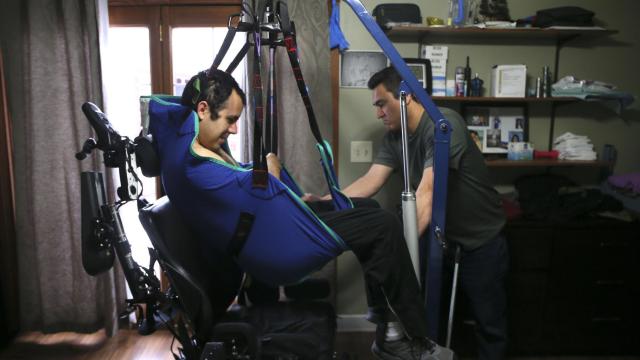
With his father’s help, he’s learned to live with his condition. He exercises daily at home and takes occasional trips around the neighborhood and out to stores or movies. The improvements are slow: More than five years after the stroke, he can now speak a word or two at a time, though it remains easier to write. He also gets regular Botox shots to relax the tightness in his left arm and leg. With his father’s help and a special lifting device, he can get out of bed to move around in his wheelchair and can sit at a desk his father made for him to write on his computer.

After all he’s been through, he wrote, hunting down one letter at a time on his laptop, he’s glad to have a second chance to live.

“I can’t tell you how many times I thought about giving up or being better off dead, but I found the strength to move on,” he wrote. “Whatever you do, don’t ever give up. There is always hope.”

http://www.chicagotribune.com/suburbs/ct-met-locked-in-syndrome-recovery-20171220-story.html

People who avoid wrinkles by not smiling

Tess Christian’s female friends look the picture of merriment when they get together for their frequent Friday nights out in a local restaurant. Champagne flows, the conversation gets steadily more raucous and peals of laughter hang over their table. But there’s always an odd one out in the happy scene: Tess, 50, who sits stony-faced while her friends giggle around her. Not even a flicker of a smile, let alone a laugh, escapes her lips.

Tess isn’t devoid of humour, but for nearly 40 years she has made a conscious decision not to laugh or smile — even at the birth of her daughter. This is because Tess says that maintaining a perennial poker face is a crucial way to keeping her — admittedly, impressive — youthful looks. ‘I don’t have wrinkles because I have trained myself to control my facial muscles,’ says Tess, ‘Everyone asks if I’ve had Botox, but I haven’t, and I know that it’s thanks to the fact I haven’t laughed or smiled since I was a teenager. My dedication has paid off, I don’t have a single line on my face. Yes, I am vain and want to remain youthful. My strategy is more natural than Botox and more effective than any expensive beauty cream or facial.’

As unorthodox as Tess’s regime may sound, she is not alone in her drive to suppress facial movements, such as laughing or frowning, in a bid to stop wrinkles forming. Even celebrities such as U.S. TV star Kim Kardashian, 34, have admitted trying not to smile or laugh ‘because it causes wrinkles’. And some experts believe that this bizarre trick might work. Dermatologist Dr Nick Lowe says: ‘It can be an effective anti-ageing technique. Undoubtedly, there are some actresses who have retrained their facial expressions to this end.

‘Wrinkles happen because of the constant creasing of smile and forehead lines by the muscles in your face, which fold the connective tissue under the skin. If you can train yourself to minimise your facial expressions, you won’t get as many lines. We know this because it is exactly how Botox works — by reducing muscle activity. Not smiling is a DIY option, although I would have thought it difficult to keep up, not to mention boring for your partner and confusing for your children.’

So, is a life full of laughter really worth sacrificing for the sake of a few lines? Tess, who works as a cooking instructor for a vegetable produce company, thinks so. ‘It’s not as if I’m miserable. I love life. I just don’t feel the need to show it by walking around with a rictus grin on my face.’

Her decision didn’t start off as an anti-ageing device. Instead, it was a reaction to the strict Catholic school she attended. ‘The joyless nuns there didn’t like children to smile. I was always told to wipe the smile off my face so I learnt to smirk instead,’ says Tess.

By the time she reached adulthood, she realised a sombre expression suited her. ‘If I did smile I developed big hamster cheeks that made me look deranged. I looked up to old-school Hollywood icons such as Marlene Dietrich for inspiration; she never smiled and I loved the way she smouldered glamorously.’

Staying tight-lipped required effort at first, however. ‘When I found something funny or I was tempted to laugh — which happened on a daily basis — I learned to control my facial muscles by holding them rigid,’ explains Tess.

‘The corners of my mouth might go up a little, but I never looked anything other than faintly amused. Friends knew I was fun to be around, so it wasn’t an issue.’

She met her ex-husband Nigel, now 54, a photographer, at a bar in 1990 and they had a daughter, Stevie, in March 1991. ‘Nigel was never bothered about me not smiling, because I kept him entertained — I am engaging company. If you spent a day in my presence you wouldn’t even notice.

‘After Stevie’s birth I was overwhelmed with joy, but still didn’t feel the need to smile,’ adds Tess. ‘By that stage, keeping a straight face had become second nature.’

She and Nigel married in February 1993. ‘Of course, the wedding photographer was urging me to smile for the pictures, but I refused,’ she says. ‘It just wasn’t me.’

By the time Tess — who divorced in 1998 — reached 40 she realised that while friends had developed lines around their mouths, her skin was wrinkle free: ‘It dawned on me that I looked younger because I’d spent my life not smiling.’

At her London home, Tess has mastered the art of laughing inwardly at TV shows such as Absolutely Fabulous. But even after years of practice, remaining poker faced in public isn’t always easy.

‘My friends have nicknamed me Mona Lisa, after the da Vinci painting,’ she says. ‘Mona Lisa was said to have been quietly amused, as am I. I just won’t show it. Recently, an interior designer friend was telling me how a Spanish client kept referring to the department store John Lewis as “Juan Lewis”. I found it hilarious, but kept a straight face. I never crack.’

The men she dates, meanwhile, often ask her to smile. ‘I assure them it’s not because I’m not interested,’ she says. ‘My pet hate is men who call out, “Cheer up, love, it might never happen,” ’ in the street. ‘I wouldn’t dream of criticising their appearance.’

Tess insists Stevie, now 24 and a film production assistant, has never been offended by her mother’s refusal to smile. ‘She is the opposite of me — she has a pretty smile that, of course, I would never stifle,’ says Tess. ‘She knows my sullen expression doesn’t mean I don’t enjoy her company.’

But London-based psychologist Amanda Hills says smiling is crucial to our mental health. ‘When you smile you release endorphins, known as “happy hormones” that make you feel good,’ she explains. ‘Not only that, but the more you do it the happier you feel, because you are telling the neural pathways in your brain you are happy — even if you aren’t.

‘Your brain doesn’t know if you are faking a smile because it’s just picking up muscle movement. Studies have shown you can increase happiness by smiling, even if you feel unhappy, which is why some medical professionals treating depression tell patients to practice smiling in the mirror.

‘Not smiling, meanwhile, has the opposite effect. A resting face with no emotion won’t allow your brain to pick up the signal that you are happy. And just as smiling attracts people, looking miserable is likely to deter them — which obviously risks making you feel miserable, even if you were happy in the first place.’

This doesn’t deter Vicky Kidd, 38, however. A textile designer from Hastings, Sussex, she started curtailing the amount she smiled five years ago after splitting up with her partner of eight years, with whom she has a son, Hayden, nine.

‘The lines on my face were escalating and with advancing age I started worrying about being left on the shelf,’ she says. ‘I felt most men wanted younger women and was paranoid about the competition from them.’

She was inspired by a yoga class she attended when newly single. ‘I was taught that “resting” my face by relaxing my facial muscles could minimise wrinkles and make me look ten years younger,’ she says.

‘It was recommended that we practice this for ten minutes a day, but I decided to go one step further and smile as little as possible. As I have big cheeks I’ve always felt I look like a horse when I smile, and it makes the skin under my eyes go baggy.’

Vicky, a vivacious woman who is adamant she is happy inside, explains: ‘It’s not that I don’t have emotions but I think there is a common misconception about smiling — often facial expressions can be used as a mask and the happiest looking people are the most miserable.

‘Men I’ve dated have been daunted until they realise I’m quite light-hearted underneath and strangers have called me a “grumpy cow”. But as I have consciously decided not to smile I can’t take offence.’

Yet she admits: ‘I know I can come across as aggressive before I’ve even opened my mouth. The other day I had a misunderstanding with my son’s violin teacher about which day his lesson was on. When I asked for clarification she flew off the handle because she thought I was furious, when I wasn’t at all.’

Unlike Tess, she is prepared to bend her rules. ‘If someone beams at me I will smile back, so as not to appear unfriendly,’ says Vicky. ‘And I smile at Hayden when he is being funny because I would hate to hurt his feelings. But I refuse to exacerbate my wrinkles by manufacturing an artificial smile or laughing when it’s not necessary. And most people tell me I look much younger as a result.’

But there are also experts who disagree about the anti-ageing benefits. Julia Anastasiou teaches face yoga — a form of facial massage designed to keep skin line-free by stimulating the muscles underneath. She is a firm believer that the physical act of smiling promotes a youthful appearance.

‘Keeping your face still to avoid wrinkles is misguided and won’t help at all,’ she says. ‘Wrinkles are caused by a lack of muscle tone and elasticity. Smiling massages facial muscles, which increases circulation and helps plump the skin’s connective tissue.’

Of course, smiling is not the only facial movement to alter the underlying muscles — frowning can also affect them. For this reason Christyne Remnant, 70, has refrained from furrowing her brow since the age of eight — and credits her youthful appearance to this. ‘I vividly remember watching my grandmother with a group of her 60-something friends,’ says Christyne, from Southampton.

‘Their foreheads were filled with lines that I could see got worse when they frowned. I decided then and there that I didn’t ever want mine to crease in the same way.

It very briefly occurred to me to stop smiling as well, but I decided that would be a step too far.’

She adds: ‘Nobody thought it was strange, or even noticed, as I grew up — I was just known as a happy child. When I saw friends start to develop lines on their foreheads in their 20s, I became surer than ever that I’d made the right decision. And the longer I went without frowning, the more alien it became to me.’

Remarkably, she says that abstaining from frowning soon became so entrenched in her psyche that she didn’t find it difficult at all. She didn’t frown when she took her driving test aged 32; during childbirth to her three children: Justine, 45, Marcus, 44, and Belinda, 26; or even when her mother died, when Christyne was 59.

Of course I’ve been through the same difficult and depressing times as everyone else, but I simply cry if I’m upset and grit my teeth if I’m cross,’ says Christyne, who is the director of a property development company owned by her husband Douglas.

‘I’m probably misconstrued as being more easy going than I actually am. I’m certainly not always happy — I get irritated by queues, smoking and people leaving doors open. But it would be very hard for me to frown when I’m angry now.’

Christyne’s scowl-free strategy seems to have paid off. Untouched by the surgeon’s scalpel, she could pass for a woman two decades younger.

‘People are always surprised when they find out how old I am,’ she says. ‘I don’t use face creams and would never have Botox. In any case, not frowning has worked better for me than anything cosmetic surgery could do. Using your facial muscles definitely marks your face.’

Read more: http://www.dailymail.co.uk/femail/article-2935632/Meet-woman-says-hasn-t-smiled-40-years-doesn-t-wrinkles.html#ixzz53dSoroo0

Books discovered wadded into cannon on Blackbeard’s pirate ship


Text of one paper fragment is shown matched to text from a page in Edward Cooke’s 1712 travelogue and adventure tale.

By Megan Gannon

A discovery from the wreck of Blackbeard’s shipcould offer some insights into pirate reading tastes.

Conservators in North Carolina found paper fragments wadded up inside a cannon chamber that was pulled up from the wreck of Queen Anne’s Revenge, the flagship of the infamous 18th-century pirate Blackbeard. The pages had been ripped from a seafaring adventure tale that inspired the novel “Robinson Crusoe.

The discovery was announced Jan. 4 at the annual meeting of the Society for Historical Archaeology.

Blackbeard, whose real name was Edward Teach (or Thatch), was an English pirate who terrorized merchant ships in the Caribbean and along the Atlantic coast of North America during the early 18th century.

His flagship ran aground on a sandbar along North Carolina coast in 1718. Later that year, Blackbeard was hunted down and killed by the Royal Navy. In 1996, the wreck of his hijacked ship was rediscovered. The ship has been under excavation by the Queen Anne’s Revenge Project, with divers discovering weapons, the ship’s bell, medical supplies and hundreds of thousands of other artifacts.

Conservators were recently examining a concreted metal piece of a breech-loading cannon that had been recovered from the wreck. When the conservators pulled out a wooden plug that was sealing the cannon chamber, they found some wadding (material used to seal gas behind a projectile), which looked like “a mass of black textile,” said Erik Farrell, a conservator with the North Carolina Department of Natural and Cultural Resources’ Queen Anne’s Revenge Lab.

Once the black sludge began washing out of the waterlogged material, conservators could see a little bit of legible text, and they realized they were dealing with a printed document.

“This is not something we typically find on an underwater site,” Farrell told an audience here.

Farrell said he contacted other expert conservators and learned that he needed to get the paper dry within 48 hours if he wanted the document fragments to survive. After the emergency conservation effort, the researchers started transcribing the text on the 16 tiny pieces of paper.

They could make out only a few words and phrases, such as “South of San,” “(f)athom” and “Hilo.” They decided to use “Hilo” as their primary search term to find a match with a known piece of text. Hilo was not a very common name, and most likely referred to the city of Hilo in Peru.

After a yearlong search for a match, Kimberly Kenyon, another conservator with the Queen Anne’s Revenge Lab, finally spotted a similar reference to Hilo this past August in the 1712 first edition “A Voyage to the South Sea Around the World.”

“Everyone crowded into my office and we started matching all the fragments we had,” Kenyon told Live Science. Ultimately, the researchers matched seven of the 16 fragments with parts of the book.

The text details the real-life experiences of author Edward Cooke aboard the Duchess, one of the two ships commanded by British Capt. Woodes Roger, in a British privateering voyage from 1708 to 1711 against the Spanish. This was the expedition that rescued marooned sailorAlexander Selkirkfrom an uninhabited island in the South Pacific, and the account is thought to be an inspiration for the fictional Robinson Crusoe.

“By the early 18th century, there were several voyages into the South Seas and a lot of voyage narratives written,” Kenyon said, adding that the “English public was just eating these stories up”about the “romanticism of the high seas and plundering Spanish holdings.”

Farrell, Kenyon and their colleagues are still trying to figure out how the book ended up on Blackbeard’s ship. The text could have been part of the library of one of the ships that Blackbeard and his crew plundered, such as the merchant sloop Margaret. It is also possible that the book was a personal item of one of Blackbeard’s 300 crewmembers.

“Given the levels of literacy among English sailors at the time, it could belong to any member of the crew there,” Farrell said.

How the pages came to be used as wadding in the cannon is another mystery. The book might have been grabbed at random in the heat of battle and its pages torn out, but perhaps there was a political motivation behind the selection of a book about Woodes Rogers’ expedition.

Rogers became the first British governor of the Bahamas and led a crackdown on pirates. It’s “speculative and unprovable,” Farrell said, but nonetheless intriguing to wonder if someone on the crew was “deeply unhappy with Rogers’ political and career trajectory.”

Around the time Rogers arrived in the Bahamas, Blackbeard left the Caribbean. “We’re starting to formulate ideas about whether these two men knew each other,” Kenyon said. “Were they connected somehow? Did Woodes Rogers’ arrival spark Blackbeard’s imminent departure? Was this act of tearing up a book of his a statement of some sort?”

https://www.livescience.com/61351-blackbeard-pirate-book-fragments.html

Human Hibernation Could Get Us to Mars

Journeying to Mars is seldom out of the news these days. From Elon Musk releasing plans for his new rocket to allow SpaceX to colonize Mars, to NASA announcing another rover as part of the Mars 2020 mission, both private and public organizations are racing to the red planet.

But human spaceflight is an exponentially bigger task than sending robots and experiments beyond Earth. Not only do you have to get the engineering of the rocket, the calculations of the launch, the plans for zero-gravity travel and the remotely operated Martian landing perfect, but you’d also have to keep a crew of humans alive for six months without any outside help.

There are questions around how to pack enough food and water to sustain the crew without making the rocket too heavy and around how much physical space would be left for the crew to live in. There are questions about what happens if someone gets dangerously ill and about what a claustrophobic half-year in these circumstances would do to the mental health of the Martian explorers.

Enter John Bradford of Atlanta-based SpaceWorks Enterprises.

Using a $500,000 grant from NASA, Bradford’s team has been working on an adaptation of a promising medical procedure that could alleviate many of the human-related limitations of space travel.

Presenting at the annual Hello Tomorrow Summit in Paris, Bradford shared his team’s concept of placing the crew in what’s called a “low-metabolic torpor state” for select phases during space travel—in other words, hibernating the crew.

The idea stems from a current medical practice called therapeutic hypothermia, or targeted temperature management. It is used in cases of cardiac arrest and neonatal encephalopathy. Patients are cooled to around 33°C for 48 hours to prevent injury to tissue following lack of blood flow. Sedatives are then administered to induce sleep. Ex Formula 1 driver Michael Schumacher was famously held in this state following his ski accident in 2013.

Adapting the procedure for spaceflight, the crew would be fed and watered directly into the stomach using what’s called a percutaneous endoscopic gastronomy tube to remove the need for eating and standard digestion, and using whole-body electrical stimulation, their muscles would be activated to avoid atrophy.

Bradford’s team found that while in this torpor state, the body needs over a third less food and water to sustain itself, greatly reducing the payload weight estimates for Mars missions.

A large part of the concept is the rotational element of who is awake and who is in stasis. Current medical procedures only last two to three days, so the plan is to extend the time each person is in torpor state to around eight days. Adding in a two-day wake period, a schedule can be drawn up so that a different member of the crew acts as the caretaker for the others, each in cycles of eight days of torpor and two days awake.

This means humans won’t be asleep for the whole journey, but with these torpor periods making up the majority of their trip, the physical and mental pressure put on the crew and the weight of resources on board would be greatly reduced. The plan for the research, however, is to get these periods up from days to weeks.

It’s not just SpaceWorks who’s looking into the idea of human hibernation for space travel. The European Space Agency has part of their Advanced Concepts team dedicated to this research as well. But their last paper was published in 2004, which suggests Bradford and his crew have the most promising progress.

Naysayers tend to question the ability of the human body to effectively and safely “wake up” from these long periods of stasis, and have concerns around whether our bodies can truly adapt to running healthily at a lower temperature. We are evolved to run at a pretty precise measure, and long-term body temperature changes in humans have not yet been studied.

But the SpaceWorks team’s research has both short and long-term prospects. The advances being made in our understanding and implementation of the torpor state can likely be adapted for use in organ transplants and critical care in extreme environments.

Of course, it’s the long term that excites Bradford. He estimates they could possibly achieve this capability for manned missions as soon as the 2030s. And with Elon Musk aiming for the first manned flights of his new rocket in 2024, it seems this pair might have the ingredients for a Martian future for Earthlings sooner than we expect.

This Unbelievable Research on Human Hibernation Could Get Us to Mars

‘Fat-clogged’ Immune Cells Fail to Fight Tumors

by Laura Elizabeth Lansdowne

Researchers have gained a new understanding of the link between obesity and cancer. In the presence of excess fat, the immune surveillance system fails due to an obesity-fueled lipid accumulation in natural killer (NK) cells, preventing their cellular metabolism and trafficking. The new findings were published in Nature Immunology.1

More than 1.9 billion adults are either overweight or obese and a growing amount of evidence proposes that numerous cancer types (including liver, kidney, endometrial and pancreatic cancers)2 are more common in overweight or obese people. Cancer risk is increased in those with higher body fat, with up to 49% of certain types attributed to obesity.3

Previous findings from the GLOBOCAN project indicate that, in 2012 in the United States, approximately 28,000 new cases of cancer in men and approximately 72,000 in women were associated with being obese or overweight.4

The 2018 study1 investigated the effect of obesity on the cellular metabolism, gene expression, and function of NK cells, and its influence on cancer development.

NK cells are cells of the innate immune system that limit the spread of tumors – numerous in vitro models have shown that tumor cells are recognized as ‘targets’ by NK cells.5 These cells destroy their targets by secreting lytic granules containing perforin and apoptosis-inducing granzymes. NK cells require a greater amount of energy to support their anti-tumor activity, therefore they switch their metabolic activity from oxidative phosphorylation (OXPHOS) to glycolysis to meet the increased demand for ATP.1

The researchers discovered that NK cells in an ‘obese environment’ display increased lipid accumulation which affects their cellular bioenergetics, resulting in ‘metabolic paralysis’. This lipid-induced metabolic paralysis led to loss of anti-tumor activity both in vitro and in vivo models. They were able to mimic obesity through fatty-acid administration and by using PPARα/δ agonists, which inhibited mechanistic target of rapamycin (mTOR)-mediated glycolysis.1

However, the researchers also discovered that it was possible to reverse the metabolic paralysis by either inhibiting PPARα/δ or by blocking lipid transport, suggesting that metabolic reprogramming of NK cells could restore their anti-tumor activity in human obesity.1

Corresponding author of the study, Lydia Lynch commented on the importance of the findings in a recent press release: “Despite increased public awareness, the prevalence of obesity and related diseases continue. Therefore, there is increased urgency to understand the pathways whereby obesity causes cancer and leads to other diseases, and to develop new strategies to prevent their progression.”

References

1. Michelet, X., et al. Metabolic reprogramming of natural killer cells in obesity limits antitumor responses. Nature Immunology. (2018) https://www.nature.com/articles/s41590-018-0251-7
2. Mason, L. E., The Link Between Cancer and Obesity. Technology Networks. Available at: https://www.technologynetworks.com/cancer-research/articles/the-link-between-cancer-and-obesity-298207. Accessed: November 12, 2018
3. Renehan, A. G., et al. Body-mass index and incidence of cancer: a systematic review and meta-analysis of prospective observational studies. Lancet. (2008) 371, 569–578
4. Arnold, M., et al. Global burden of cancer attributable to high body-mass index in 2012: a population-based study. Lancet Oncol. (2015) 16(1): 36–46
5. Vivier, E., et al. Functions of natural killer cells. Nature Immunology. (2008) 9, 503–510

https://www.technologynetworks.com/cancer-research/news/obesity-and-cancer-fat-clogged-immune-cells-fail-to-fight-tumors-311744?utm_campaign=NEWSLETTER_TN_Breaking%20Science%20News&utm_source=hs_email&utm_medium=email&utm_content=68543465&_hsenc=p2ANqtz–8ZbNt7sDLF6bujB3qX9CeJA-hpSQwPHeSLoR5Ju1WYXA6SnOEepdO0o-J7qw_1aGB3nfwldpf30hV3pAvVi7SzJa8fw&_hsmi=68543465

Lost Native American Ancestor Revealed in 11,500 Year Old Child’s DNA

by Michelle Z. Donahue

A baby girl who lived some 11,500 years ago survived for just six weeks in the harsh climate of central Alaska, but her brief life is providing a surprising and challenging wealth of information to modern researchers.

Her genome is the oldest-yet complete genetic profile of a New World human. But if that isn’t enough, her genes also reveal the existence of a previously unknown population of people who are related to—but older and genetically distinct from— modern Native Americans.

This new information helps sketch in more details about how, when, and where the ancestors of all Native Americans became a distinct group, and how they may have dispersed into and throughout the New World.

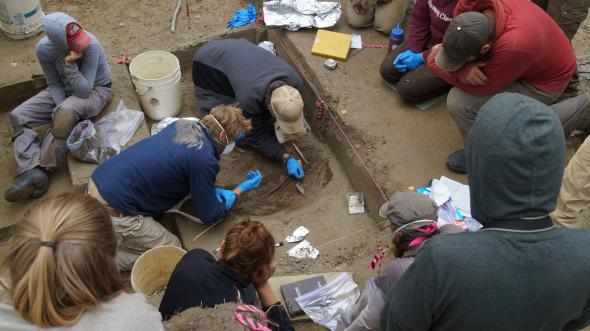
The baby’s DNA showed that she belonged to a population that was genetically separate from other native groups present elsewhere in the New World at the end of the Pleistocene. Ben Potter, the University of Alaska Fairbanks archaeologist who unearthed the remains at the Upward River Sun site in 2013 , named this new group “Ancient Beringians.”

The discovery of the baby’s bones, named Xach’itee’aanenh T’eede Gaay, or Sunrise Child-Girl in a local Athabascan language, was completely unexpected, as were the genetic results, Potter says

Found in 2006 and accessible only by helicopter, the Upward River Sun site is located in the dense boreal forest of central Alaska’s Tanana River Valley. The encampment was buried under feet of sand and silt, an acidic environment that makes the survival of organic artifacts exceedingly rare. Potter previously excavated the cremated remains of a three-year-old child from a hearth pit in the encampment, and it was beneath this first burial that the six-week-old baby and a second, even younger infant were found.

A genomics team in Denmark, including University of Copenhagen geneticist Eske Willerslev, performed the sequencing work on the remains, comparing the child’s genome with the genes of 167 ancient and contemporary populations from around the world. The results appeared today in the journal Nature.

“We didn’t know this population even existed,” Potter says. “Now we know they were here for many thousands of years, and that they were really successful. How did they do it? How did they change? We now have examples of two genetic groups of people who were adapting to this very harsh landscape.”

The genetic analysis points towards a divergence of all ancient Native Americans from a single east Asian source population somewhere between 36,000 to 25,000 years ago—well before humans crossed into Beringia, an area that includes the land bridge connecting Siberia and Alaska at the end of the last ice age. That means that somewhere along the way, either in eastern Asia or in Beringia itself, a group of people became isolated from other east Asians for about 10,000 years, long enough to become a unique strain of humanity.

The girl’s genome also shows that the Beringians became genetically distinct from all other Native Americans around 20,000 years ago. But since humans in North America are not reliably documented before 14,600 years ago, how and where these two groups could have been separated long enough to become genetically distinct is still unclear.

The new study posits two new possibilities for how the separation could have happened.

The first is that the two groups became isolated while still in east Asia, and that they crossed the land bridge separately—perhaps at different times, or using different routes

A second theory is that a single group moved out of Asia, then split into Beringians and ancient Native Americans once in Beringia. The Beringians lingered in the west and interior of Alaska, while the ancestors of modern Native Americans continued on south some time around 15,700 years ago.

“It’s less like a tree branching out and more like a delta of streams and rivers that intersect and then move apart,” says Miguel Vilar, lead scientist for National Geographic’s Genographic Project. “Twenty years ago, we thought the peopling of America seemed quite simple, but then it turns out to be more complicated than anyone thought.”

John Hoffecker, who studies the paleoecology of Beringia at the University of Colorado-Boulder, says there is still plenty of room for debate about the geographic locations of the ancestral splits. But the new study fits well with where the thinking has been heading for the last decade, he adds.

“We think there was a great deal more diversity in the original Native American populations than is apparent today, so this is consistent with a lot of other evidence,” Hoffecker says.

However, that same diversity—revealed through research on Native American cranial morphology and tooth structure—creates its own dilemma. How does a relatively small group of New World migrants, barricaded by a challenging climate with no access to fresh genetic material, evolve such a deep bank of differences from their east Asian ancestors? It certainly doesn’t happen over just 15,000 years, Hoffecker insists, referring to the estimated date of divergence of ancient Native Americans from Beringians.

“We’ve been getting these signals of early divergence for decades—the first mitochondrial work in the 1990s from Native Americans were coming up with estimates of 30, 35, even 40,000 years ago,” Hoffecker says. “They were being dismissed by everybody, myself included. Then people began to suspect there were two dates: one for divergence, and one for dispersal, and this study supports that.”

“Knowing about the Beringians really informs us as to how complex the process of human migration and adaptation was,” adds Potter. “It prompts the scientist in all of us to ask better questions, and to be in awe of our capacity as a species to come into such a harsh area and be very successful.”

https://news.nationalgeographic.com/2018/01/alaska-dna-ancient-beringia-genome/

Kristina Bigsby just solved college football’s biggest mystery. She can predict where high school players will commit.

By Jacob Bogage

There is an entire industry built up around deciphering where 16- and 17-year-olds will play college football. Websites boast “crystal ball” predictions of where top high school recruits will suit up. Companies charge for premium subscriptions with claims that they can decode the caprice and whimsy of children.

And then there’s Kristina Bigbsy, a PhD candidate at the University of Iowa who is probably better than all of them.

She developed a mathematical model that predicts with 70 percent accuracy where a high school football player will go to college. And she uses nothing but their basic biographical information and Twitter account.

In other words, she can read the minds of some of sports’ most sought-after prospects by reading their tweets and looking up some basic biographical information. Her paper on those findings was published this month in the INFORMS journal “Decision Analysis.”

In other words, she could completely own Nick Saban and Urban Meyer on the recruiting circuit if she really wanted to, with just the use of a fancy spreadsheet and some half-decent computer code.

“If you really want to see where someone is committing, you shouldn’t overlook [social media] data,” she said.

Bigsby developed the model as part of her PhD program in information science. She wanted to study wrestling recruiting — Iowa consistently fields a top wrestling team — but went with football because the sport was more popular and because of the national obsession around recruiting classes.

She mined data from 573 athletes in 2016 from the 247Sports recruiting database who had at least two Division I scholarship offers and public Twitter accounts. Then she pulled their tweets, followers and accounts they followed each month and distilled the data into a model that makes it all easy to understand.

She found that if a recruit tweeted a hashtag about a school, his likelihood of committing there jumped 300 percent. For every coach the athlete followed from a given school, his likelihood of committing went up 47 percent. When a coach follows an athlete, likelihood increases 40 percent.

“The most significant actions online are the actions the athlete is doing,” Bigsby said. “Who is he following? What is he tweeting? What hashtags is he using?”

Her model crunched those numbers along with other data sets — i.e.: a college’s location relative to the recruit’s home town, a college’s academic ranking, a college’s recent football performance, and more — and spit out a list of universities a recruit was likely to attend, along with each school’s odds.

The model correctly predicted a recruit’s choice 70 percent of the time. And if the model was wrong, recruits generally chose the “second-place” college, Bigsby’s paper shows.

“We can narrow most people’s choices down to two schools,” she said, “but you never know what teenagers are thinking.”

The model could provide better predictions, Bigsby said, if researchers pulled recruits’ Twitter data every week instead of every month. Plus, she’s still tweaking the model to better interpret what tweets mean.

An athlete posting “Just got an offer from Iowa,” and “Can’t wait to visit Iowa,” mean very different things, Bigsby said. The first is self-promoting, and probably doesn’t do much for the Hawkeyes’ chances of landing a commitment. The second one is “ingratiating.” The athlete is trying to join an online community conversation about Iowa. That certainly helps the Hawkeyes’ odds.

So imagine the following: Alabama beats South Carolina and then has a bye week. Crimson Tide assistant coaches fan out across the continental United States on recruiting trips equipped with weekly reports on prospects’ online activity and their current likelihood of choosing Alabama.

That’s what this model can do, Bigsby said. It can really give teams an edge in the valuable, year-round recruiting game.

Only one problem: You need an information science expert to run the numbers. Bigsby has a potential solution for that, too.

“I’m careening toward graduation,” she said. “If a football team wants to call me, I will certainly pick up the phone.”

https://www.washingtonpost.com/news/early-lead/wp/2017/12/20/this-researcher-just-solved-college-footballs-biggest-mystery-she-can-predict-where-high-school-players-will-commit/?utm_term=.aec6fcde001f

Will the Logan Paul video be a reckoning for YouTube?

By the time Logan Paul arrived at Aokigahara forest, colloquially known as Japan’s “suicide forest,” the YouTube star had already confused Mount Fuji with the country Fiji. His over 15 million (mostly underage) subscribers like this sort of comedic aloofness—it serves to make Paul more relatable.

After hiking only a couple hundred yards into Aokigahara—where over 247 people attempted to take their own lives in 2010 alone, according to police statistics cited in The Japan Times—Paul encountered a suicide victim’s body hanging from a tree. Instead of turning the camera off, he continued filming, and later uploaded close-up shots of the corpse, with the person’s face blurred out.

“Did we just find a dead person in the suicide forest?” Paul said to the camera. “This was supposed to be a fun vlog.” He went on to make several jokes about the victim, while wearing a large, fluffy green hat.

Within a day, over 6.5 million people had viewed the footage, and Twitter flooded with outrage. Even though the video violated YouTube’s community standards, it was Paul in the end who deleted it.

“I should have never posted the video, I should have put the cameras down,” Paul said in a video posted Tuesday, which followed an earlier written apology. “I’ve made a huge mistake, I don’t expect to be forgiven.” He didn’t respond to two follow-up requests for comment.

YouTube, which failed to do anything about Paul’s video, has now found itself wrapped in another controversy over how and when it should police offensive and disturbing content on its platform—and as importantly, the culture it foments that led to it. YouTube encourages stars like Paul to garner views by any means necessary, while largely deciding how and when to censor their videos behind closed doors.

‘Absolutely Complicit’

Before uploading the video, which was titled “We found a dead body in the Japanese Suicide Forest…” Paul halfheartedly attempted to censor himself for his mostly tween viewers. He issued a warning at the beginning of the video, blurred the victim’s face, and included the number of several suicide hotlines, including one in Japan. He also chose to demonetize the video, meaning he wouldn’t make money from it. His efforts weren’t enough.

“The mechanisms that Logan Paul came up with fell flat,” says Jessa Lingel, an assistant professor at the University of Pennsylvania’s Annenberg School for Communication, where she studies digital culture. “Despite them, you see a video that nonetheless is very disturbing. You have to ask yourself: Are those efforts really enough to frame this content in a way that’s not just hollowly or superficially aware of damage, but that is meaningfully aware of damage?”

The video still included shots of a corpse, including the victim’s blue-turned hands. At one point, Paul referred to the victim as “it.” One of the first things he said to the camera after the encounter was, “This is a first for me,” turning the conversation back to himself.

There’s no excuse for what Paul did. His video was disturbing and offensive to the victim, their family, and to those who have struggled with mental illness. But blaming the YouTube star alone seems insufficient. Both he, and his equally famous brother Jake Paul, earn their living from YouTube, a platform that rewards creators for being outrageous, and often fails to adequately police its own content.

“I think that any analysis that continues to focus on these incidents at the level of the content creator is only really covering part of the structural issues at play,” says Sarah T. Roberts, an assistant professor of information studies at UCLA and an expert in internet culture and content moderation. “Of course YouTube is absolutely complicit in these kinds of things, in the sense that their entire economic model, their entire model for revenue creation is created fundamentally on people like Logan Paul.”

YouTube takes 45 percent of the advertising money generated via Paul and every other creator’s videos. According to SocialBlade, an analytics company that tracks the estimated revenue of YouTube channels, Paul could make as much as 14 million dollars per year. While YouTube might not explicitly encourage Paul to pull ever-more insane stunts, it stands to benefit financially when he and creators like him gain millions of views off of outlandish episodes.

“[YouTube] knows for these people to maintain their following and gain new followers they have to keep pushing the boundaries of what is bearable,” says Roberts.

YouTube presents its platform as democratic; anyone can upload and contribute to it. But it simultaneously treats enormously popular creators like Paul differently, because they command such massive audiences. (Last year, the company even chose Paul to star in The Thinning, the first full-length thriller distributed via its streaming subscription service YouTube Red, as well as Foursome, a romantic comedy series also offered via the service.)

“There’s a fantasy that he’s just a dude with a GoPro on a stick,” says Roberts. “You have to actually examine the motivations of the platform.”

For example, major YouTube creators I have spoken to in the past said they often work with a representative from the company who helps them navigate the platform, a luxury not afforded to the average person posting cat videos. YouTube didn’t respond to a follow-up request about whether Paul had a rep assigned to his channel.

All Things in Moderation

It’s unclear why exactly YouTube let the video stay up so long; it may have be the result of the platform’s murky community guidelines. YouTube’s comment on it doesn’t shed much light either.

“Our hearts go out to the family of the person featured in the video. YouTube prohibits violent or gory content posted in a shocking, sensational or disrespectful manner. If a video is graphic, it can only remain on the site when supported by appropriate educational or documentary information and in some cases it will be age-gated,” a Google spokesperson said in an emailed statement. “We partner with safety groups such as the National Suicide Prevention Lifeline to provide educational resources that are incorporated in our YouTube Safety Center.”

YouTube may have initially decided that Paul’s video didn’t violate its policy on violent and graphic content. But those guidelines only consists of a few short sentences, making it impossible to know.

“The policy is vague, and requires a bunch of value judgements on the part of the censor,” says Kyle Langvardt, an associate law professor at the University of Detroit Mercy Law School and an expert on First Amendment and internet law. “Basically, this policy reads well as an editorial guideline… But it reads terribly as a law, or even a pseudo-law. Part of the problem is the vagueness.”

What might constitute a meaningful step toward transparency would be for YouTube to implement a moderation or edit log, says Lingel. On it, YouTube could theoretically disclose what team screened a video and when. If the moderators choose to remove or age-restrict a video, the log could disclose what community standard violation resulted in that decision. It could be modeled on something like Wikipedia’s edit logs, which show all of the changes made to a specific page.

“When you flag content, you have no idea what happens in that process,” Lingel says. “There’s no reason we can’t have that sort of visibility, to see that content has a history. The metadata exists, it’s just not made visible to the average user.”

Fundamentally, Lingel says, we need to rethink how we envision content moderation. Right now, when a YouTube user flags a video as inappropriate, it’s often left to a low-wage worker to tick a series of boxes, making sure it doesn’t violate any community guidelines (YouTube pledged to expand its content moderation workforce to 10,000 people this year). The task is sometimes even left to an AI, that quietly combs through videos looking for inappropriate content or ISIS recruiting videos. Either way, YouTube’s moderation process is mostly anonymous, and conducted behind closed doors.

It’s helpful that the platform has baseline standards for what is considered appropriate; we can all agree that certain types of graphic content depicting violence and hate should be prohibited. But a positive step forward would be to develop a more transparent process, one centered around open discussion about what should and shouldn’t be allowed, on something like a public moderation forum.

Paul’s video represents a potential turning point for YouTube, an opportunity to become more transparent about how it manages its own content. If it doesn’t take the chance, scandals like this one will only continue to happen.

As for the Paul brothers, they’re likely going to keep making similarly outrageous and offensive videos to entertain their massive audience. On Monday afternoon, just hours after his brother Logan issued an apology for the suicide forest incident, Jake Paul uploaded a new video entitled “I Lost My Virginity…”. At the time this story went live, it already had nearly two million views.

If you or someone you know is considering suicide, help is available. You can call 1-800-273-8255 to speak with someone at the National Suicide Prevention Lifeline 24 hours a day in the United States. You can also text WARM to 741741 to message with the Crisis Text Line.

https://www.wired.com/story/logan-paul-video-youtube-reckoning/?mbid=nl_010317_daily_list1_p1