Houston Escort Service Offers Toys For Tots Special

Many toy drives at this time of year claim to be Toys for Tots, but KTRK-TV is reporting a new twist on the 64-year-old program operated by the U. S. Marine Corps Reserve.

According to KTRK,  a local escort service’s website is advertising more time with an escort in exchange for toy donations.

The site, which shows an undressed woman in provocative poses, wishes you “Happy Holidays” and claims if you pay for one hour of services and bring an unwrapped gift, your second hour will be free.

According to KTRK, the phone number in the ad belongs to Robin Jordan, 38, who was convicted last month on a charge of prostitution.

Authorities say she was running her escort service right out of her Pecan Grove home.

The Marines say they’re not endorsing this idea.

Brian Murray, Vice President of Marine Toys for Tots, told KTRK  “We don’t want to associate with any person who would besmirch the reputation of the US Marine Corps … or the Toys for Tots organization.”

http://blog.chron.com/newswatch/2011/12/escort-service-uses-toys-for-tots-in-ad/

Owner of car dealership labeled “Taliban Toyota” wins millions

 The owner of a large southwest Alabama car dealership derided as “Taliban Toyota” by a competitor has been awarded $7.5 million in damages after a jury trial for his slander claim.

Iranian-born Shawn Esfahani, owner of Eastern Shore Toyota in Daphne, Alabama, sought $28 million in compensatory and punitive damages from Bob Tyler Toyota, claiming employees at that Pensacola, Florida-based dealership falsely portrayed him as an Islamist militant to customers.

“The feeling I received in the courtroom for the truth to come out was worth a lot more than any money anybody can give me,” Esfahani told Reuters on Tuesday.

Esfahani’s lawsuit said that Bob Tyler sales manager Fred Kenner told at least one couple considering buying from Eastern Shore Toyota in 2009 that Esfahani was of Middle Eastern descent and was “helping fund the insurgents there and is also laundering money for them.”

Esfahani, a naturalized U.S. citizen, fled his native Iran in 1980 following the Islamic revolution that toppled the U.S.-backed Shah and swept Shi’ite Muslim clergy to power, his lawsuit said. He opened his car dealership in 2007.

The Taliban, by contrast, are hardline Islamists in the central Asian nations of Afghanistan and Pakistan who follow an austere interpretation of Islamic law.

A Bob Tyler salesman was accused of telling the same couple that Esfahani was from Iraq and calling him a “terrorist” who put soldiers including the salesman’s brother in harm’s way.

“(Esfahani) is funneling money back to his family and other terrorists. I have a brother over there and what you’re doing is helping kill my brother,” the salesman told the couple when he called them on the Eastern Shore sales floor, according to the suit.

The jury deliberated for three hours before awarding Esfahani $2.5 million in compensatory damages and $5 million in punitive damages on Monday evening.

Bob Tyler’s attorney Jeffrey Ingram could not be reached for comment on Tuesday, and Tyler and Kenner both declined to comment on the verdict through a dealership spokesman.

Esfahani said the dollar amount awarded by the jury was irrelevant unless the case sets a precedent by which other business owners can seek recourse against tactics he considers “un-American.”

“This case didn’t take aim at just Mr. Tyler,” he said. “It was intended to address any other business that resorts to those kinds of actions to win at their game unfairly.”

http://www.reuters.com/article/2011/11/02/us-alabama-taliban-toyota-idUSTRE7A104620111102

Technique for Measuring Methane Gas from Cattle Flatulence


Recently, scientists developed a methane release measuring technique as way of tracking the discharge of the gas without disrupting the regular management of the herd. This is part of a collaborative research study conducted by researchers from Agriculture and Agri-Food Canada’s Lethbridge Research Centre, the Commonwealth Scientific and Industrial Research Organization, and the University of Melbourne in Australia.

Cattle were fitted with global positioning devices to track their movements and wind speed and direction were constantly measured. Unlike previous studies in which a few cattle were handled daily and methane measurements were taken directly, this technique centered on using open-path lasers to obtain a short-term measurement of methane release from an entire grazing herd. For instance in one study, the technique was used to take repeated measurements of methane concentration every 10 minutes directly above the height of the 18 cattle in the paddock. According to the results, the technique developed so well it can account for 77% of methane release at a single point in a paddock.

Sean McGinn, the author of the study describes the technique as a “significant advancement in assessing greenhouse gas emissions from the cattle industry.”

Collaborative research is continuing to further measure methane release from other agricultural sources. The full study is published in the January/February 2011 issue of the Journal of Environmental Quality.

http://earth-climate.science.org/Technique-for-Measuring-Methane-Gas-from-Cattle-Flatulence.html

Mysterious 5-pound chunk of metal plunges through roof

The FAA says a 5-pound metal cylinder that came crashing through the roof of a Massachusetts warehouse is not a plane part, but otherwise has no idea why the item dropped from the sky.

The cylinder plunged into a storage closet at Michael’s Warehouse in an industrial park in Plymouth, Mass., apparently Wednesday, the Patriot-Ledger reports.

Fox 25 News in Boston notes that the roof is made of sheet-metal, indicating that the cylinder had to be traveling at a high rate of speed to penetrate the building. No one was hurt.

An FAA spokeswoman says the chunk probably came from a piece of heavy machinery, possibly a wood chipper, the Associated Press reports.

WHDH-TV in Boston quotes the FAA as saying there have been no flight paths over the building.

http://content.usatoday.com/communities/ondeadline/post/2011/12/5-pound-chunk-of-metal-plunges-through-warehouse-roof/1


Thanks to Dr. WRP for bringing this to the attention of the It’s Interesting community.

A New Smart Pill?

HOUSTON – (Dec. 8, 2011) – When the activity of a molecule that is normally elevated during viral infections is inhibited in the brain, mice learn and remember better, researchers at Baylor College of Medicine reported in a recent article in the journal Cell.

“The molecule PKR (the double-stranded RNA-activated protein kinase) was originally described as a sensor of viral infections, but its function in the brain was totally unknown,” said Dr. Mauro Costa-Mattioli, assistant professor of neuroscience at BCM and senior author of the paper. Since the activity of PKR is altered in a variety of cognitive disorders, Costa-Mattioli and colleagues decided to take a closer look at its role in the mammalian brain.

The authors discovered that mice lacking PKR in the brain have a kind of “super” memory. “We found that when we genetically inhibit PKR, we increased the excitability of brain cells and enhanced learning and memory, in a variety of behavioral tests,” he said. For instance, when the authors assessed spatial memory (the memory for people, places and events) through a test in which mice use visual cues for finding a hidden platform in a circular pool, they found that normal mice had to repeat the task multiple times over many days in order to remember the platform’s location. By contrast, mice lacking PKR learned the task after only one training session.

Costa-Mattioli and colleagues wanted to know how this molecular process actually works. They found that when PKR is inhibited, the increased synaptic activity (that is, the enhanced communication between neurons) is caused by gamma interferon, another molecule involved in immunity.

“These data are totally unexpected, and show that two molecules classically known to play a role in viral infection and the immune response regulate the kind of brain activity that leads to the formation of long-term memory in the adult brain,” said Costa-Mattioli.

Another key finding made by Costa-Mattioli and his team of researchers was the fact that this process could be mimicked by a PKR inhibitor – a small molecule that blocks PKR activity and thus acts as a “memory-enhancing drug.”
“It is indeed quite amazing that we can also enhance both memory and brain activity with a drug that specifically targets PKR”. Definitely then, the next step is to use what we have learned in mice and to try to improve brain function in people suffering from memory loss, said Costa-Mattioli.

Although Costa-Mattioli’s memory pill may be years away from approval by the U.S. Food and Drug Administration, its impact on society and medicine could be very profound. There are roughly 6 million Americans and 35 million people world-wide with Alzheimer’s disease and more than 70 million Americans over the age of 60 who may suffer from aged-associated impairment of memory.

Costa-Mattioli said, “More investigation is undoubtedly necessary to translate these findings to effective therapies but we would be delighted if our scientific studies were to contribute in some way to this ultimate goal.”

“Our identity and uniqueness is made up of our memories,” Costa-Mattioli said. “This molecule could hold the key to how we can keep our memories longer, but also how we create new ones.”

Fake Pregnancy Bellies


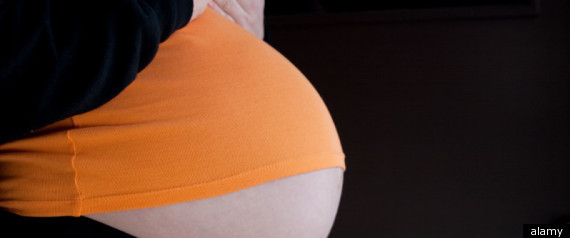
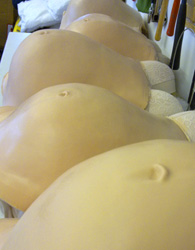
These fake baby bumps are made of a skin-colored silicon that gives the appearance (and feel) of a real stomach. They range in price from $79 to $252 and you can buy them in a variety of pregnancy stages. The most popular? Bellies that look to be about five to seven months along.

But why are these artificial baby bumps on the rise?

A shop owner who sells the bellies says that most people buy them for usage in a stage or film production. Others buy them to try to “experience” what it’s like to be pregnant. But others use the fake bellies for more nefarious reasons. Stan Abrams, a law professor and writer for China Hearsay mentions that some would use the belly bump to get seats on the bus or to assist in begging for money, because nothing is sadder than a pregnant woman begging for spare change. And of course the fake baby bump industry probably saw their stock rise after the allegations that Beyonce is using a fake bump during her pregnancy.

Wonder if this will be a growing global trend? And if you are in the market for a baby bump of your own, you can buy one from Moon Bump right here.

http://www.huffingtonpost.com/2011/12/09/fake-pregnancy-bellies-china_n_1139157.html

Zimbabwe Man Claims Prostitute Turned Into a Donkey

A Zimbabwe man has told a court that the prostitute he hired turned into a donkey overnight, and now he is “seriously in love.”

Sunday Moyo, 28, was caught having sex with a donkey early Sunday morning, according to the New Zimbabwe news website. While appearing in court on bestiality charges, he told the magistrate a tale that reportedly “had the court in stitches.”

Police said they found Moyo having sex with a donkey tied to a tree outside his home in Zvishavane, a mining town near Masvingo, on Sunday at around 4 a.m., the New Zimbabwe says.

In court, Moyo admitted to the sex act, but explained that the donkey was in fact a prostitute he had earlier hired for $20 at a local nightclub.

“I don’t know how she then became a donkey,” Moyo is reported to have told the court. “I only came to know that I was being intimate with a donkey when I got arrested.”

The experience appears to have been a sexual awakening for Moyo, who now says he is in love with the beast.

“I do not know what happened when I left the bar, but I am seriously in love with [the] donkey,” Moyo said, according to state-run newspaper The Herald.

http://www.globalpost.com/dispatches/globalpost-blogs/weird-wide-web/zimbabwe-man-donkey-love-sunday-moyo-prostitute

Urinal-Mounted, Urine-Controlled Video Game Launched in the U.K.


A British-based company has unveiled what it claims to be the world’s first urinal-mounted, urine-controlled game console for men.

 
Captive Media saytheir device allows for “around a minute-long opportunity to catch young men with targeted ads”.


Mark Melford, director of the company, explained to Metro: “It’s taken three years of research and development to get to this point [and the] reaction to the units so far has been incredible – it’s just so much fun.”


Games that can be played include “Clever Dick” – where you aim left or right for the correct answer – and urinal gamers can post their scores via Twitter.


Internal Business Times says: “Bar bosses hope the games will not only attract new customers, but that regulars will drink more in order to play longer and set new high scores.”


According to Metro, beer sales increased by 47 per cent at the Exhibit Bar in Balham, South London, where the trial has taken place. “It’s a tough time for bars and pubs currently,” Captive Media’s co-founder Gordon MacSween told the paper. “This product offers customers something fun, and unlike anything they’ve seen before. Those are two good reasons to go out for a drink at a time when so many are opting to stay in.”


BBC News reports that the trade paper Adweekhas calculated that on average “men are rooted to the spot for 55 seconds while they relieve themselves [which will add up to] 9 months over the course of their lifetimes”.


Time magazine reports that the bar’s owner, Drew Weatherhead, “hopes the games attract new customers and, in a way, the idea is quite ingenious”.

Read more: http://www.digitaljournal.com/article/315187#ixzz1fILM3BBb

New Study Identifies Empathy in Rats

The act of helping others out of empathy has long been associated strictly with humans and other primates, but new research shows that rats exhibit this prosocial behavior as well.
In the new study, laboratory rats repeatedly freed their cage-mates from containers, even though there was no clear reward for doing so. The rodents didn’t bother opening empty containers or those holding stuffed rats.

 
To the researchers’ surprise, when presented with both a rat-holding container and a one containing chocolate — the rats’ favorite snack — the rodents not only chose to open both containers, but also to share the treats they liberated.
 
Peggy Mason, a neuroscientist at the University of Chicago and lead author of the new study, says that the research shows that our empathy and impulse to help others are common across other mammals.
 
“Helping is our evolutionary inheritance,” Mason told LiveScience. “Our study suggests that we don’t have to cognitively decide to help an individual in distress; rather, we just have to let our animal selves express themselves.”
 
Empathetic rats
In previous studies, researchers found that rodents show the simplest form of empathy, called emotional contagion — a phenomenon where one individual’s emotions spread to others nearby. For example, a crying baby will trigger the other babies in a room to cry as well. Likewise, rats will become distressed when they see other rats in distress, or they will display pain behavior if they see other rats in pain.
 
For the new study, Mason and her colleagues wanted to see if rats could go beyond emotional contagion and actively help other rats in distress. To do so, the rats would have to suppress their natural responses to the “emotions” of other rats, the result of emotional contagion. “They have to down-regulate their natural reaction to freeze in fear in order to actively help the other rat,” Mason explained.
 
The researchers began their study by housing rats in pairs for two weeks, allowing the rodents to create a bond with one another. In each test session, they placed a rat pair into a walled arena; one rat was allowed to roam free while the other was locked in a closed, transparent tube that could only be opened from the outside.
 
The free rat was initially wary of the container in the middle of the arena, but once it got over the fear it picked up from its cage-mate, it slowly began to test out the cage. After an average seven days of daily experiments, the free rat learned it could release its friend by nudging the container door open. Over time, the rat began releasing its cage-mate almost immediately after being placed into the arena.
 
“When the free rat opens the door, he knows exactly what he’s doing — he knows that the trapped rat is going to get free,” Mason said. “It’s deliberate, purposeful, helping behavior.”
 
The researchers then conducted other tests to make sure empathy was the driving force in the rats’ behavior. In one experiment, they rigged the container so that opening the door would release the captive rat into a separate arena. The free rat repeatedly set its cage-mate free, even though there was no reward of social interaction afterwards. [Like Humans, Chimps Show Selfless Behaviors]
 
True motivations
While it appears that the rats are empathetic, questions about the rodents’ true motivations still remain.
 
“It is unclear whether the rats sympathize with the distress of their cage-mates, or simply feel better as they alleviate the perceived distress of others,” Jaak Panksepp, a psychologist and neuroscientist at Washington State University, wrote in an article accompanying the study.
 
Mason says they don’t yet know if the free rats are acting to relieve their own distress, the distress of their cage-mates, or a combination of both, but this is definitely a topic for further research. She’s also looking to study if the rats would behave the same way if they weren’t cage-mates, and she would like to tease out the brain areas and genes involved in the behavior.
 
But, she says, “We now have this incredibly controlled, reproducible paradigm.” Other scientists should be able to use the model they developed to see if empathy and prosocial behavior are present in other animals, she said.
 
The study was published today in the journal Science.


Zimbabwe Man Collapses When He Orders Prostitute to His Hotel Room and His Daughter Appears


A man who ordered a prostitute to his hotel room collapsed when his daughter turned up at the door.

Titus Ncube from Bulawayo, Zimbabwe, said the shock of seeing his 20-year-old daughter sent him to the ground.

The unnamed woman reportedly fled the building.

According to the Zimbabwe News, Ncube ordered the prostitute as he was experiencing marital problems.

“I am sorry for what I did,” he said. “I spoke to my wife and my daughter… I apologised for my actions because I just wanted my family back.”

Ncube said his daughter was no longer working as a prostitute and was planning to return to school.

“My marital problems are not over, but we have a marriage counsellor who is helping us to get over this most difficult period in our marriage,” he added.

On hearing the news, his wife said: “If it were not for my children, I could have divorced him a long time ago.”

http://www.huffingtonpost.co.uk/2011/11/30/zimbabwe-man-collapses-after-ordering-prostitute_n_1120149.html