Thieves Arrested After they Pocket Dial 911


Police in Wisconsin’s capital city barely had to try to catch a pair of unlucky suspected thieves.

Madison police say two men in their late 20s stole DVDs and computer games from a Target store Tuesday and discussed their plans to fence the goods while driving away.

Investigators say the duo didn’t realize one of them had accidentally pocket-dialed 911. A dispatcher listened in for nearly an hour as they discussed what they had stolen and where they might sell it. Police say they even described their vehicle.

Madison police spokesman Joel DeSpain says the pair decided to sell their goods at a video store. When they pulled into the store’s parking lot, officers surrounded their vehicle with guns drawn.

http://www.huffingtonpost.com/2011/12/16/thieves-pocket-dial-911_n_1152885.html?ir=Weird+News
New Computer Chip Mimics the Human Brain

“Imagine traffic lights that can integrate sights, sounds and smells and flag unsafe intersections before disaster happens,” said Dharmendra Modha, the project leader for IBM Research. “Or imagine cognitive co-processors that turn servers, laptops, tablets and phones into machines that can interact better with their environments.”

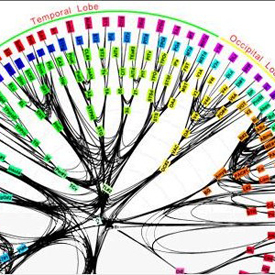
IBM on Thursday announced it has created a chip designed to imitate the human brain’s ability to understand its surroundings, act on things that happen around it and make sense of complex data.

Instead of requiring the type of programming that computers have needed for the past half-century, the experimental chip will let a new generation of computers, called “cognitive computers,” learn through their experiences and form their own theories about what those experiences mean.

The chips revealed Thursday are a step in a project called SyNAPSE (Systems of Neuromorphic Adaptive Plastic Scalable Electronics). The two chip prototypes are a step toward letting computers “reason” instead of reacting solely based on data that has been pre-programmed, IBM says.

read more here:  http://www.cnn.com/2011/TECH/innovation/08/18/ibm.brain.chip/index.html?hpt=hp_t2

http://www.pcmag.com/article2/0,2817,2391320,00.asp


Facial Recognition Technology Now Readily Accessible

Imagine being able to sit down in a bar, snap a few photos of people and quickly learn who they are, who their friends are, where they live, what kind of music they like … even predict their Social Security number. 

Now, imagine you could visit one of those anonymous online dating sites and quickly identify nearly every person there, just from their photos, despite efforts to keep their online romance search a secret.

Such technology is so creepy that it was developed, and withheld, by Google — the one initiative that Google deemed too dangerous to release to the world, according to former CEO Eric Schmidt.

Too late, says Carnegie Mellon University researcher Alessandro Acquisti. 

“That genie is already out of the bottle,” he said Thursday, shortly before a presentation at the annual Las Vegas Black Hat hackers’ convention that’s sure to trouble online daters, bar hoppers and anyone who ever walks down the street.

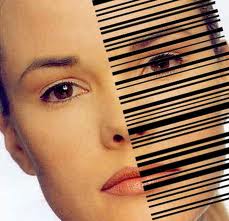
Using off-the-shelf facial recognition software and simple Internet data mining techniques, Acquisti says he’s proven that most people can now be identified simply through a photograph of their face — and anyone can do the sleuthing. In other words, our faces have become our identities, and there little hope of remaining anonymous in a world where billions of photographs are taken and posted online every month.

http://redtape.msnbc.msn.com/_news/2011/08/04/7254996-your-face-and-the-web-can-tell-everything-about-you

Chinese Cows Genetically Engineered to Produce Human Breast Milk


Professor Ning Li of China Agriculture University has successfully led a team that introduced the human gene for breast milk into cows.

Human genes were inserted in the DNA of Holstein dairy cows, and modified embryos were implanted into surrogate cows.

The offspring contained lysozyme, an anti-bacterial protein found in human breast milk that protects infants from infection during their first days of life.

They also created cattle containing lactoferrin, an immune system booster for babies that is found in human milk.

Fat content was raised by about 20% as well, and the level of milk solids was altered to make the final product as close to human milk as possible.

300 of these cattle have been produced.

Professor Li Ning, the director of the project, stated: “There are 1.5 billion people in the world who don’t get enough to eat.  It’s our duty to develop science and technology, not to hold it back. We need to feed people first, before we consider ideals and convictions.”

The ultimate goal is to sell the milk as an alternative to cow milk, which is less nutritious than human milk. The modified milk is currently undergoing safety tests, but those who have tasted the milk say it is stronger tasting and sweeter than cow’s milk.

This isn’t the first genetically engineered food China has created. Known for having a more liberal approach toward genetically modified food, China has already created modified fruits and vegetables such as papayas and tomatoes, as well as insect-resistant rice and corn.


14 year old Robert Nay’s Bubble Ball.

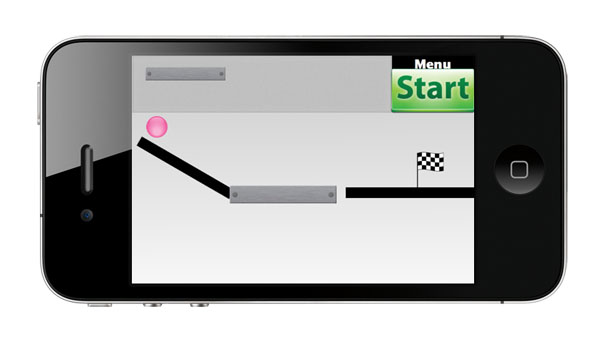
An iPhone physics-based puzzle game designed by 14-year-old Utah 8th grader Robert Nay has been downloaded more than 2 million times since its release Dec 29th.

He programmed it in 6 weeks at the public library.

It’s about moving a small blue ball from one side of the screen to the other by navigating shrewdly crafted obstacle fields of metal and wood.

[youtbe=http://www.youtube.com/watch?v=QU6kL9TwtAs&feature=related]

Google Mobile Facial Recognition Application


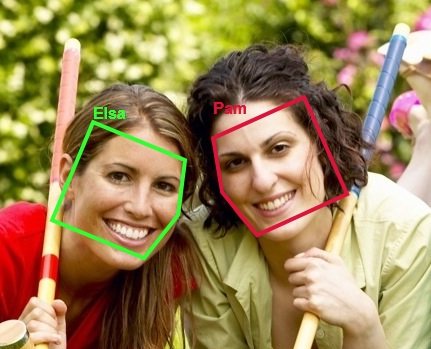
Google has announced plans to introduce a mobile application that would allow users to snap pictures of people’s faces in order to access their personal information.

In order to be identified by the software, people would have to check a box agreeing to give Google permission to access their pictures and profile information.

Google has had the technical capabilities to implement this type of search engine for years, but has delayed its release due to concerns about how privacy advocates might receive the product.

http://www.cnn.com/2011/TECH/mobile/03/31/google.face/index.html?hpt=C2

The 10 Highest and Lowest Radiation-Emitting Cell Phones


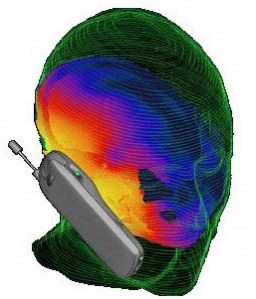
When it comes to radiation levels, all phones aren’t equal.

 Below are lists of the models available from major carriers that emit the highest and lowest levels of radiofrequency energy.

Lowest radiation levels:

1. LG Quantum (AT&T): 0.35 watts per kilogram

2. Casio EXILIM (Verizon Wireless): 0.53 W/kg

3. Pantech Breeze II (AT&T, AT&T GoPhone): 0.55 W/kg

4. Sanyo Katana II (Kajeet): 0.55 W/kg

5. Samsung Fascinate (Verizon Wireless): 0.57 W/kg

6. Samsung Mesmerize (CellularONE, U.S. Cellular): 0.57 W/kg

7. Samsung SGH-a197 (AT&T GoPhone): 0.59 W/kg

8. Samsung Contour (MetroPCS): 0.60 W/kg

9. Samsung Gravity T (T-Mobile): 0.62 W/kg

10. (tie) Motorola i890 (Sprint); Samsung SGH-T249 (T-Mobile): 0.63 W/kg

Highest radiation levels:

1. Motorola Bravo (AT&T): 1.59 W/kg

2. Motorola Droid 2 (Verizon Wireless): 1.58 W/kg

3. Palm Pixi (Sprint): 1.56 W/kg

4. Motorola Boost (Boost Mobile): 1.55 W/kg

5. Blackberry Bold (AT&T, T-Mobile): 1.55 W/kg

6. Motorola i335 (Sprint): 1.55 W/kg

7. HTC Magic (T-Mobile): 1.55 W/kg

8. Motorola W385 (Boost Mobile, U.S. Cellular, Verizon Wireless): 1.54 W/kg

9. Motorola Boost i290 (Boost Mobile): 1.54 W/kg

10. (tie) Motorola DEFY (T-Mobile); Motorola Quantico (U.S. Cellular, MetroPCS); Motorola Charm (T-Mobile): 1.53 W/kg

http://edition.cnn.com/2011/TECH/mobile/06/01/cell.phones.radiation.levels/index.html?hpt=hp_p1

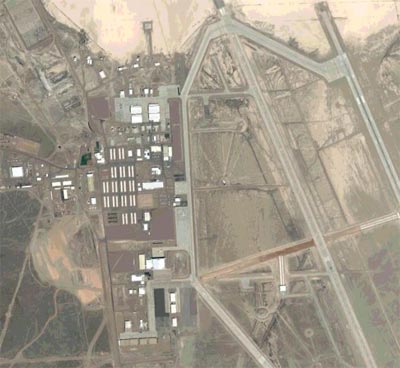
Area 51 explained tonight on the Nat Geo channel


Area 51 Declassifiedpremieres on the National Geographic Channel on tonight at 10:00 p.m. ET/PT.

After a rash of declassifications, details of Cold War workings at the Nevada base, which to this day does not officially exist, are coming to light—including never before released images of an A-12 crash and its cover-up.

Area 51 was created so that U.S. Cold Warriors with the highest security clearances could secretly pursue cutting-edge aeronautical projects.

During the 1950s and ’60s Area 51’s top-secret OXCART program developed the A-12 as the successor to the U-2 spy plane.

Nearly undetectable to radar, the A-12 could fly at 2,200 miles an hour (3,540 kilometers an hour)—fast enough to cross the continental U.S. in 70 minutes. From 90,000 feet (27,400 meters), the plane’s cameras could capture foot-long (0.3-meter-long) objects on the ground below.

But pushing the limits came with risks—and a catastrophic 1963 crash of an A-12 based out of Area 51.

A rapid government cover-up removed nearly all public traces of the wrecked A-12—pictured publicly for the first time in this gallery, thanks to the CIA’s recent declassification of the images.

Read here about how the government hides aircraft in Area 51:  http://news.nationalgeographic.com/news/2011/05/110520-area-51-secret-hid-craft-base-declassified-a-12-plane/

And read here for more general information about Area 51:  http://science.howstuffworks.com/space/aliens-ufos/area-51.htm

Thanks to Kedmobee for bringing this to the attention of the It’s Interesting community.