The 10 Highest and Lowest Radiation-Emitting Cell Phones


When it comes to radiation levels, all phones aren’t equal.

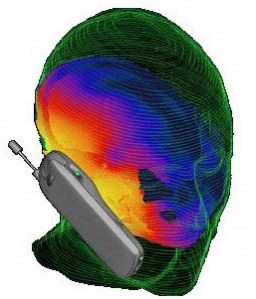
 Below are lists of the models available from major carriers that emit the highest and lowest levels of radiofrequency energy.

Lowest radiation levels:

1. LG Quantum (AT&T): 0.35 watts per kilogram

2. Casio EXILIM (Verizon Wireless): 0.53 W/kg

3. Pantech Breeze II (AT&T, AT&T GoPhone): 0.55 W/kg

4. Sanyo Katana II (Kajeet): 0.55 W/kg

5. Samsung Fascinate (Verizon Wireless): 0.57 W/kg

6. Samsung Mesmerize (CellularONE, U.S. Cellular): 0.57 W/kg

7. Samsung SGH-a197 (AT&T GoPhone): 0.59 W/kg

8. Samsung Contour (MetroPCS): 0.60 W/kg

9. Samsung Gravity T (T-Mobile): 0.62 W/kg

10. (tie) Motorola i890 (Sprint); Samsung SGH-T249 (T-Mobile): 0.63 W/kg

Highest radiation levels:

1. Motorola Bravo (AT&T): 1.59 W/kg

2. Motorola Droid 2 (Verizon Wireless): 1.58 W/kg

3. Palm Pixi (Sprint): 1.56 W/kg

4. Motorola Boost (Boost Mobile): 1.55 W/kg

5. Blackberry Bold (AT&T, T-Mobile): 1.55 W/kg

6. Motorola i335 (Sprint): 1.55 W/kg

7. HTC Magic (T-Mobile): 1.55 W/kg

8. Motorola W385 (Boost Mobile, U.S. Cellular, Verizon Wireless): 1.54 W/kg

9. Motorola Boost i290 (Boost Mobile): 1.54 W/kg

10. (tie) Motorola DEFY (T-Mobile); Motorola Quantico (U.S. Cellular, MetroPCS); Motorola Charm (T-Mobile): 1.53 W/kg

http://edition.cnn.com/2011/TECH/mobile/06/01/cell.phones.radiation.levels/index.html?hpt=hp_p1

More on Cell Phones and Risk of Cancer

Radiation from cell phones can possibly cause cancer, according to the World Health Organization. The agency now lists mobile phone use in the same “carcinogenic hazard” category as lead, engine exhaust and chloroform.

http://www.cnn.com/2011/HEALTH/05/31/who.cell.phones/index.html?hpt=hp_t1

Optogenetics

Optogenetics is a relatively new technique for communicating with the brain.  It involves implantation of light-sensitive genes into animals and then hooking up fiber-optic cables to specific areaa of the brain. 

Researchers have used this technique to completely restore movement in mice with Parkinson’s disease, and to reduce anxiety in other mouse models.   

Researchers are now trying to develop a less invasive method that doesn’t go deeper than the outer surface of the brain.

Eventually, two-way traffic may be possible with this technique, in which a machine can both send and receive information from the brain.

Read about it in Wired and the NYT below.

http://www.wired.com/magazine/2009/10/mf_optigenetics

http://www.nytimes.com/2011/05/17/science/17optics.html?_r=2&src=dayp

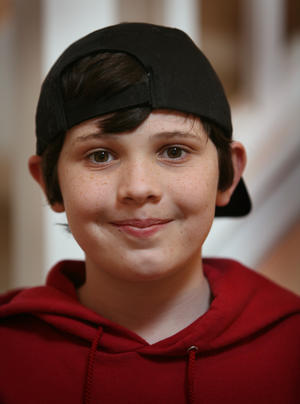
12 Year Old Indiana Boy Expands Einstein’s Theory of Relativity, and Intends to Prove it Wrong

Professors at the Institute for Advanced Study in Princeton, New Jersey, the U.S. academic homeroom for the likes of Albert Einstein, J. Robert Oppenheimer, and Kurt Gödel, have confirmed he’s on the right track to coming up with something completely new.

Read more: http://newsfeed.time.com/2011/03/26/12-year-old-genius-expands-einsteins-theory-of-relativity/#ixzz1IEwQcQu6

He didn’t speak until the age of 2, and was diagnosed with Asperger’s syndrome.

At 3, he started solving 5,000 piece jigsaw puzzles.

He later taught himself calculus, algebra and geometry in two weeks.

He can solve up to 200 numbers of Pi.

He finished high school at the age of eight and has been attending college-level advanced astrophysics classes ever since.

His parents have no clue how he learned math, or what he is talking about.

Once, they took him to the planetarium at Butler University. “We were in the crowd, just sitting, listening to this guy ask the crowd if anyone knew why the moons going around Mars were potato-shaped and not round,” Jake’s mother, Kristine Barnett, said.  “Jacob raised his hand and said, ‘Excuse me, but what are the sizes of the moons around Mars?’ “

After the lecturer answered, said Kristine, “Jacob looked at him and said the gravity of the planet … is so large that (the moon’s) gravity would not be able to pull it into a round shape.”

“That entire building … everyone was just looking at him, like, ‘Who is this 3-year-old?’

Hi IQ is 170, higher the Albert Einstein’s.

Here he is, giving math lectures.

[youtube=

Less serotonin makes male mice less choosy about their sexual preference.

Yan Liu and Yun’ai Jiang at Beijing’s National Institute of Biological Sciences found that when male mice have low levels of serotonin in their brains they lose their normal preference for female mice and try to mate equally with both sexes.  When injected with more serotonin, their preference for females is restored. 

Read a summary of the work, just published in Nature, here:

 http://blogs.discovermagazine.com/notrocketscience/2011/03/23/low-serotonin-mice-less-choosy-about-sex-of-partners/

and here:  http://sciencenews.org/view/generic/id/71586/title/Brain_chemical_influences_sexual_preference_in_mice

Are we living in a computer simulation?

Read in this New York Times article how Nick Bostrom, an Oxford University philosopher, reasons that it’s mathematically likely that our universe is simply someone else’s computer simulation.  But according to Bostrom,  the situation isn’t even as hopeful as that portrayed in The Matrix.  He argues that our existence is simply a network of computer circuits.

http://www.nytimes.com/2007/08/14/science/14tier.html 

Shark Vision


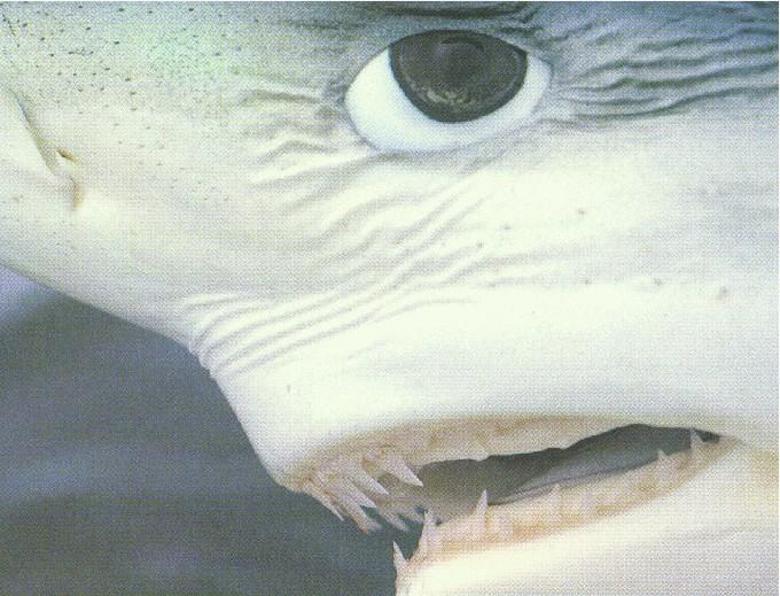
Scientists from Australia have used spectrophotometry to examine the light-sensitive cells in shark eyes.  In contrast to the 3 types of photoreceptors we humans have for red, green and blue, sharks only have one type of photoreceptor, suggesting that they can’t distinguish colors.   Sharks probably visualize their world in terms of assessing contrast against background.  Thus, it may be possible to design swimming gear, boats, and fishing gear that are less likely to catch a shark’s eye.

Read about it here in the news: http://latimesblogs.latimes.com/outposts/2011/01/sharks-are-color-blind-shark-attacks.html

and here is the original scientific article recently published:  http://www.springerlink.com/content/05427357r3uw8q35/

Here are a couple video clips showing shark attacks.  The 1st is of some idiots standing in shark infested water, and the 2nd is a scuba diver attacked by a Great White shark.


The Neurobiology of Attitudes Towards Homeless People


When faced with the prospect of marginalized, alienated people entering our community, our brains automatically categorize into “us” and “them,” and we perceive dangers with “them.”

We unconsciously view “us” in a better light, and rationalize away facts that might cast us in a negative light. 

Our brains also automatically prompt us to devalue “them,” and cherry-pick data to support this view. 

We then unconsciously work to emphasize ways that we are different from “them,” even when those differences are trivial.

This automatic, unconscious overvaluing of “us” and devaluation of “them” leads to discrimination.

Freud described this phenomenon long ago as “the narcissism of small differences.”

Read this fascinating and provocative article about the neurobiology of atttitudes towards homeless people, written by UT Southwestern Medical Center Dallas psychiatrist Adam Brenner.

http://www.dallasnews.com/opinion/sunday-commentary/20100910-Adam-Brenner-Why-not-in-3669.ece