Spectacular fin whale breach a rare sight in Strait of Gibraltar

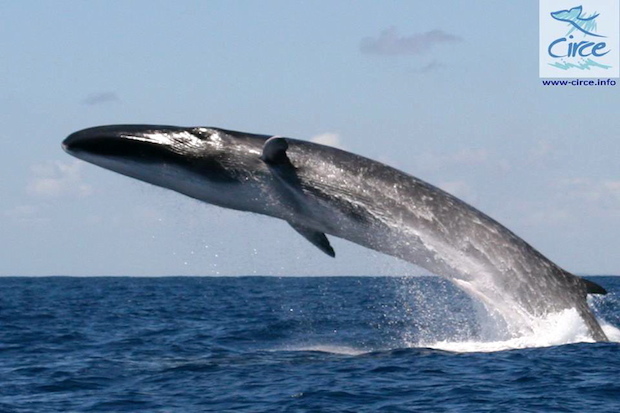
Fin whales are the world’s second-largest whale species and can measure 80-plus feet and weigh as much as 70 tons. Because of their immense size, they rarely breach, which makes the photo accompanying this story all the more striking.

The image was captured May 22 in the Strait of Gibraltar from aboard a vessel operated by the Spanish conservation group CIRCÉ (Conservation, Information et Recherche sur les Cétacés).

CIRCÉ posted the image and video to its Facebook page last week. The video footage shows two of three breaches—the first at 3 seconds and the second at 1:15—and reveals a cetacean that is leaping almost completely free of the water.

Fin whales, second in size only to blue whales, are incredibly sleek and can swim at bursts of up to 23 mph, which helps explain how this particular whale was able to make like a surface-to-air missile in the Strait of Gibraltar.

It’s unclear why the whale jumped, just as nobody is 100 percent certain why any of the smaller species of whales sometimes breach.

Humpback whales are famous for breaching, along with other surface behavior that could possibly represent a form of communication. Some scientists theorize that gray whales breach in an attempt to shake lice from their skin.

But fin whales, like blue whales, typically do not break the surface in a breaching behavior.

“It’s a very rare behavior,” said Alisa Schulman-Janiger, a California-based whale researcher. “It’s rarely observed and even more rarely captured on camera. If one does happen to breach, what are the chances that you’re going to be ready with a camera?”

Schulman-Janiger runs the ACS-L.A. Gray Whale Census and Behavior Project from the Palos Verdes Peninsula in Los Angeles County.

Fin whales, for the past several years, have been spotted feeding in nearshore waters off Southern California. In the project’s 31 years, volunteers have seen only a handful of fin whale breaches. That includes a phenomenal display last month, when one or possibly two fin whales breached 20-plus times.

The fin whale, named because of a prominent dorsal fin far back on its body, feeds predominantly on shrimp-like krill and schooling bait fish. The whales are found worldwide but are considered an endangered species, numbering about 40,000 in the Northern Hemisphere and 15,000 to 20,000 in the Southern Hemisphere.

The amazing photo of the Strait of Gibraltar breach inspired many comments on the CIRCÉ Facebook page, mostly in Spanish, but with some English-language commentary such as “Good grief. Imagine the splash!” and “Raw power… totally impressive.”

Another commenter asked, “Is this for real?,” and others also thought it might have been Photoshopped. Were it not for the supporting video footage, these would have been valid observations.

Thanks to Pete Cuomo for bringing this to the attention of the It’s Interesting community.

http://www.grindtv.com/outdoor/nature/post/spectacular-fin-whale-breach-a-rare-sight/
Over 1000 people form Human Whale at Shoal Bay to mark the start of whale watching season

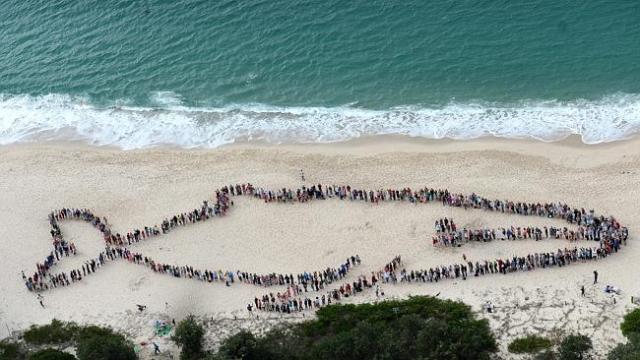
More than 1000 people took part in forming the “humungous human humpback” to mark the official start of whale-watching season.

Now in its third year, the event also celebrated the end of Japanese whaling in the Southern Ocean.

“It’s a good trick for the area,” local couple Ellie and Ian Jackson said. “It’s the biggest it’s been.”

Like hundreds of other families, they brought their three children Lilia, 4, Evie, 2, and five-month-old Rafe, who patiently waited in position until a helicopter flew overhead capturing the 100m-long whale for posterity.

Destination Port Stephens chairman Michael Aylmer said more than 50,000 visitors came to Nelsons Bay each year for the whales, putting $10 million into the local economy.

”Around 17,000 whales are expected to be seen off Port Stephens … as they migrate for the winter,” he said.

http://www.dailytelegraph.com.au/news/nsw/whale-of-a-figure-at-shoal-bay-kicks-off-the-watching-season/story-fni0cx12-1226939198306

A Brief History of Exploding Whales

A dead blue whale washed up on the shore of a small fishing town in Newfoundland last week. A bloated, beached, blubbery bomb of a blue whale. As of 3:30 pm Eastern Time today, the carcass is still intact, but onlookers are worried that it might soon explode.

The concerned marine science communicators at Upwell and Southern Fried Science have created a website devoted to monitoring this situation:

HasTheWhaleExplodedYet.com

Blue whales are the largest animals on earth. This one has reportedly ballooned to twice its original size. In the process of decomposition, methane and other gases accumulate in the body of the whale. The buildup of pressure, plus the disintegration of the whale’s flesh, could cause the whole body to burst.

The town of Trout River, on whose rocky shore the carcass rests, is bracing for what will come next—explosion or not, the 81-foot-long corpse is just plain gross, and it cannot remain out in the open indefinitely. Emily Butler, the clerk of Trout River, says the town is at a loss as to how to deal with the problem. “It’s only going to be a matter of time before it warms up and the smell becomes unbearable,” she told reporters on Monday.

Jack Lawson, a scientist affiliated with the Canadian fisheries department, told the media that his main concern was neither the stench nor the possibility of an explosion. He warned that the worst thing would be for a person to get too close to the whale and fall inside it: “The [whale] skin is starting to lose its integrity and if someone were to walk along, say, the chin — that is full of all that gas — they could fall in the whale. The insides will be liquefied. Retrieving them would be very difficult.”

“I have fallen through the side of a whale up to my chest,” he added. “It’s not very nice.”

It’s not exactly uncommon for whales to wash up on land, but the disruptiveness of such an event depends on how populated that land is by humans. In the case of Trout River, which only has 600 residents but swells with tourists at this time of year, it’s very disruptive.

According to Canadian news, the whale is one of nine that died earlier this month after becoming trapped by offshore ice floes. Three of these whales have washed up on Newfoundland beaches.

Sometimes beached whales erupt on their own, but sometimes humans blow them up first—as was the case in Florence, Oregon, in 1970. The town of Florence may have been the first to confront the dilemma that faces Trout River today.

Oregon officials thought their whale was too big to cut up or burn; they ended up hiring a highway engineer named Paul Thornton, from the state’s transportation department, to devise a plan. Thornton decided on using dynamite to blast the whale to bits. He figured that the blown-up pieces of blubber would scatter into the sea and whatever remained would be scavenged by birds and crabs.

What he did not figure was that the Oregon whale explosion of 1970 would generate one of the most-watched Internet videos in history and become the highlight of his career.

In an obituary for Thornton, who died in October 2013, Elizabeth Chuck of NBC News describes what happened that day:

Bystanders were moved back a quarter of a mile before the blast, but were forced to flee as blubber and huge chunks of whale came raining down on them. Parked cars even further from the scene got smashed by pieces of dead whale. No one was hurt, but the small pieces of whale remains were flecked onto anyone in the area.

To make matters worse, a large section of whale carcass never moved from the blast site at all. In the end, highway crews buried all the pieces and particles of the whale.

Broadcast journalist Paul Linnman, who had been on the scene, recalls that “the piece that flattened the car was about coffee-table size.”

Today, Oregon’s policy for dealing with dead beached whales is to bury them in the sand.

The world now knows that blowing up whales on purpose is best avoided. However, dead whales can still detonate on their own. In 2004, for example, the carcass of a sperm whale was being towed through the streets of Tainan City, Taiwan, when its belly burst, splattering blood and guts on nearby people, cars, and storefronts.

A similar, albeit less messy, mishap occurred with a beached sperm whale in the Faroe Islands last November. The marine biologist who probed the carcass was dressed for the occasion; he later told reporters that the explosion, which was triggered when he tried to cut the whale open, “wasn’t a shock.” Still, as the video below shows, the whale spewed furiously.

And here’s a video of what happened in Uruguay a few months ago, when a dead whale fell as it was being hoisted by a crane onto a truck bed:

Fossil Whale Offers Clues to Origins of ‘Seeing With Sound’

When you’re trying to track a fish in the murky ocean, forget about using your eyes—use your ears. Dolphins, orcas, and other toothed whales—known as odontocetes—pinpoint their prey by producing high-frequency sounds that bounce around their marine environment and reveal exactly where tricky fish are trying to hide. But when did whales evolve this sonarlike ability, known as echolocation? A newly named, 28-million-year-old whale may hold the answer.

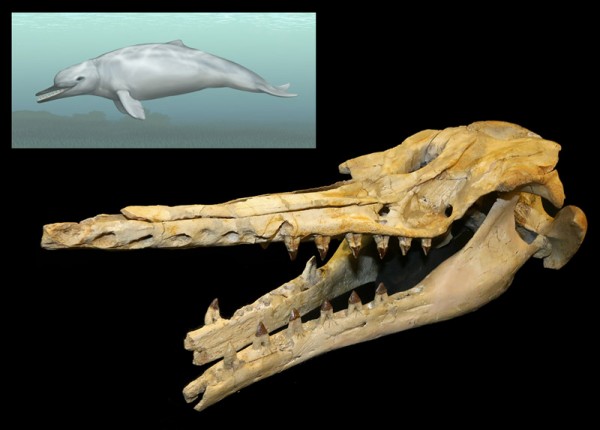
Found in South Carolina among rocks dating back to the Oligocene epoch and christened Cotylocara macei, the fossil whale is named after Mace Brown, a curator at the College of Charleston’s Mace Brown Natural History Museum in South Carolina who acquired the specimen for his private collection about a decade ago. It was in that private accumulation of fossils that Jonathan Geisler, a paleontologist at the New York Institute of Technology College of Osteopathic Medicine in Old Westbury, first saw the skull. “I knew it was special then,” he says.

The only known specimen of the early odontocete includes a nearly complete skull and jaw, three neck vertebrae, and fragments of seven ribs. It’s the skull that makes Cotylocara so remarkable. While the whale’s soft tissue rotted away long ago, the skull bones show several features—such as a downturned snout and a slight asymmetry of the skull—that suggest Cotylocara was one of the earliest whales to use echolocation, Geisler’s team reports online today in Nature.

The strongest pieces of evidence for this hypothesis, Geisler explains, are cavities at the base of the snout and on top of the skull that probably held air sinuses. “These air sinuses are thought to have important roles in the production of high-frequency vocalizations that living odontocetes use for echolocation,” Geisler says, possibly helping direct returning sound waves or store air that can be used to make continuous sound.

“I think the authors have a good case for inferring that Cotylocara had some ability to produce some sound from its forehead, just as living toothed whales do today,” says Nicholas Pyenson, a marine mammal paleontologist at the Smithsonian Institution’s National Museum of Natural History in Washington, D.C. But even if Cotylocara made those sounds, could it have heard them? Living whales have specialized ear bones that let them hear the high-frequency sounds bouncing off their prey. The only known skull of Cotylocara doesn’t have well-preserved ear bones, and, therefore, knowing whether the whale could have actually used echolocation for hunting is unclear. “Overall, the description of Cotylocara underscores the need to investigate the inner ear of fossil Oligocene cetaceans in much more detail, because that’s where the answer will be,” Pyenson says.

Nevertheless, the whale’s probable sound-producing abilities give Cotylocara an important place in whale evolution. Whale’s biological sonar is thought to have evolved only once along the ancestral line leading to today’s toothed whales, Geisler notes. Cotylocara lies along that evolutionary stem, as do other Oligocene fossil whales that have already been found. The skull features that allowed Cotylocara to create sound, Geisler says, “can now be investigated in other fossil whales to more fully understand the evolution of echolocation.” For now, the evolutionary epic of whale echolocation is only just beginning to be heard.

http://news.sciencemag.org/paleontology/2014/03/fossil-whale-offers-clues-origins-seeing-sound

Thanks to Dr. Rajadhyaksha for bringing this to the attention of the It’s Interesting community.

New research shows that whales and dolphins can’t taste anything except salt

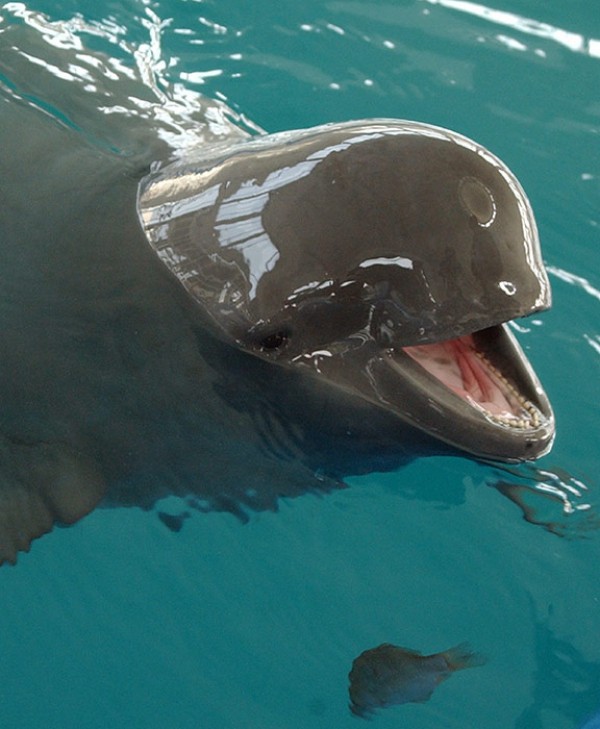
Tastes are a privilege. The oral sensations not only satisfy foodies, but also on a primal level, protect animals from toxic substances. Yet cetaceans—whales and dolphins—may lack this crucial ability, according to a new study. Mutations in a cetacean ancestor obliterated their basic machinery for four of the five primary tastes, making them the first group of mammals to have lost the majority of this sensory system.

The five primary tastes are sweet, bitter, umami (savory), sour, and salty. These flavors are recognized by taste receptors—proteins that coat neurons embedded in the tongue. For the most part, taste receptor genes present across all vertebrates.

Except, it seems, cetaceans. Researchers uncovered a massive loss of taste receptors in these animals by screening the genomes of 15 species. The investigation spanned the two major lineages of cetaceans: Krill-loving baleen whales—such as bowheads and minkes—were surveyed along with those with teeth, like bottlenose dolphins and sperm whales.

The taste genes weren’t gone per se, but were irreparably damaged by mutations, the team reports online this month in Genome Biology and Evolution. Genes encode proteins, which in turn execute certain functions in cells. Certain errors in the code can derail protein production—at which point the gene becomes a “pseudogene” or a lingering shell of a trait forgotten. Identical pseudogene corpses were discovered across the different cetacean species for sweet, bitter, umami, and sour taste receptors. Salty tastes were the only exception.

“The loss of bitter taste is a complete surprise, because natural toxins typically taste bitter,” says zoologist Huabin Zhao of Wuhan University in China who led the study. All whales likely descend from raccoon-esque raoellids, a group of herbivorous land mammals that transitioned to the sea where they became fish eaters. Plants range in flavors—from sugary apples to tart, poisonous rhubarb leaves—and to survive, primitive animals learned the taste cues that signal whether food is delicious or dangerous. Based on the findings, taste dissipated after this common ancestor became fully aquatic—53 million years ago—but before the group split 36 million years ago into toothed and baleen whales.

“Pseudogenes arise when a trait is no longer needed,” says evolutionary biologist Jianzhi Zhang of the University of Michigan, Ann Arbor, who was not involved in the study. “So it still raises the question as to why whales could afford to lose four of the five primary tastes.” The retention of salty taste receptors suggests that they have other vital roles, such as maintaining sodium levels and blood pressure.

But dulled taste perception might be dangerous if noxious substances spill into the water. Orcas have unwittingly migrated into oil spills, while algal toxins created by fertilizer runoff consistently seep into the fish prey of dolphins living off the Florida coast.

“When you have a sense of taste, it dictates whether you swallow or not,” says Danielle Reed, a geneticist at the Monell Chemical Senses Center in Philadelphia, Pennsylvania. She was not involved with the current work, but co-authored a 2012 paper that found the first genetic inklings that umami and sweet taste receptors were missing in cetaceans, albeit in only one species—bottlenose dolphins.

Flavors are typically released by chewing, but cetaceans tend to swallow their food whole. “The message seems clear. If you don’t chew your food and prefer swallowing food whole, then taste really becomes irrelevant,” Reed says.

http://news.sciencemag.org/biology/2014/05/whales-cant-taste-anything-salt

Thanks to Dr. Rajadhyaksha for bringing this to the attention of the It’s Interesting community.

Recently Spotted 103-Year-Old Orca Is Bad News For SeaWorld

1216x700

SeaWorld could be in trouble because of “Granny,” the world’s oldest known living orca. The 103-year-old whale (also known as J2) was recently spotted off Canada’s western coast with her pod — her children, grandchildren and great-grandchildren. But while the Granny sighting is thrilling for us, it’s problematic for SeaWorld.

First of all, SeaWorld has claimed that “no one knows for sure how long killer whales live,” when simple figures or even living and thriving examples — like Granny — can give us a pretty good idea. The Whale and Dolphin Conservation project estimates that whales born in captivity only live to 4.5 years old, on average; many of SeaWorld’s orcas die before they reach their 20s. Perhaps because of their reduced lifespans, the whales are forced to breed continuously and at perilously young ages, which could also diminish their overall health.

Another key aspect of an orca’s life — which is missing in captivity — is the ability to swim up to 100 miles per day. When Granny was spotted earlier this week, she had just finished an 800-mile trek from northern California along with her pod. According to animal welfare advocates, long-distance swimming is integral to orcas’ psychological health and well-being; SeaWorld, however, has gone on record claiming that orcas do not need to swim hundreds of miles regularly, ostensibly to defend the parks’ cruel practice of keeping massive, powerful orcas confined to cramped tanks.

Since Granny was first spotted (as early as the 1930s), she’s believed to have mothered two calves, who in turn have had calves of their own. (One of her grandchildren, Canuck, reportedly died at the age of 4 after being captured and held at SeaWorld). As her pod has grown, Granny has kept up with them — without being separated through human intervention — and traveled astonishing distances with her pod annually. Orcas at SeaWorld are routinely separated from their pods, which has been known to cause huge mental and emotional strain and can prevent calves from developing normally.

Granny doesn’t simply represent an impressive feat of nature; she embodies what’s wrong with SeaWorld by being a living example of what’s right in the wild. While it’s true that most wild orcas don’t live as long as Granny has, their lifespans are still dramatically longer than those of SeaWorld’s whales (the NOAA estimates that wild female orcas, like Granny, live an average of 50 to 60 years). Their lives are also filled with much more swimming, exploration, variety and bonding with family.

https://www.thedodo.com/recently-spotted-103-year-old–547381307.html#recently-spotted-103-year-old–547381307.html