Bigfin Squid in Gulf of Mexico

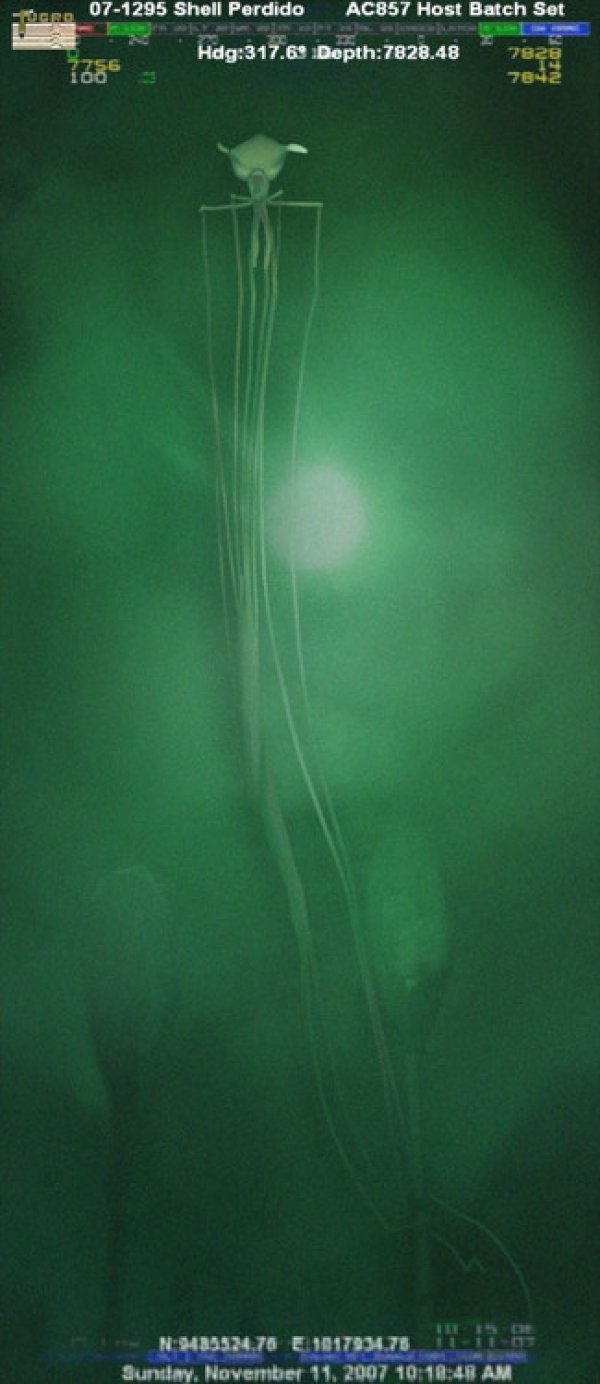
Meet the bigfin squid, an elusive and frankly quite terrifying cephalopod. This one was spotted in the Gulf of Mexico under 7,800 feet of water.

According to Deep Sea News, little is known about these squid because few have ever been captured.

The first was seen in 1988 and only a handful have been seen since, mostly by cameras on remotely operated vehicles.

Giraffes spend their nights constantly humming.

For years, experts believed that giraffes didn’t really communicate vocally. After all, many zookeepers thought, it would be pretty difficult to force enough air past their voice boxes to make any sort of sound aside from a snort, considering the length of their necks. But as it turns out, giraffes spend their nights humming to each other.

Since it would take a lot of airflow to make a loud sound from a giraffe’s 13-foot-long trachea, researchers believed that giraffes had no form of vocal communication and instead relied on their keen sense of sight. But according to a new study by researchers from the University of Vienna, giraffes do communicate vocally after all – it’s just that the sounds they make are so low that it’s hard for humans to hear them.

Initially, the researchers wanted to test a long-standing theory that giraffes could “talk” using infrasonic frequencies too low for the human ear, much like elephants and some other large mammals do. To answer the question, they spent almost 1,000 hours recording giraffes at three different European zoos and painstaking analyzed the waveforms by sight, looking for patterns. While they didn’t find any evidence of the giraffes using infrasound, the scientists realized that the giraffes would spend their nights humming.

Because giraffes seem to only hum at night, scientists have yet to figure out whether it correlates with any behavior or if it’s just snoring. However, it’s possible that the humming might be used to communicate all sorts of information from age, gender, social dominance and sexual arousal.

Read more: http://www.smithsonianmag.com/smart-news/giraffes-spend-their-nights-quietly-constantly-humming-180956683/#T0MUP6ruXlsYDl81.99

Dog stands guard for week protecting trapped friend

A Washington state animal shelter says a dog dutifully stood guard for a nearly a week on Vashon Island to protect another dog that had fallen in a cistern.

Tillie, a setter mix, only left Phoebe’s side to try to alert people of her trapped friend.

Amy Carey of Vashon Island Pet Protectors says the two were found Tuesday after they were reported missing by their owners last week. Vashon Island Pet Protectors says volunteers looking for the pair received a call about a reddish dog being seen on someone’s property a few times before promptly heading back into the ravine.

Carey says the Pet Protectors followed the tip and found Tillie lying beside an old cistern. Inside rescuers found Phoebe, a basset hound, on a pile of stones above the water.

The dogs were cold and hungry but otherwise unharmed.

“It’s really quite remarkable,” Carey said.

http://bigstory.ap.org/urn:publicid:ap.org:9c331f3640d040c5ba3be1c8ebd32e2e

Captive snake with no male companion gives birth – again

For the second time in two years, a captive snake in southeast Missouri has given birth without any interaction with a member of the opposite sex.

Officials at the Missouri Department of Conservation’s Cape Girardeau Conservation Nature Center say a female yellow-bellied water snake reproduced on her own in 2014 and again this summer. The snake has been living in captivity, without a male companion, for nearly eight years. An intern who cares for the snake found the freshly laid membranes in July.

This year’s offspring didn’t survive, but the two born last summer are on display at the nature center, about 100 miles south of St. Louis.

Conservation Department herpetologist Jeff Briggler said virgin births are rare but can occur in some species through a process called parthenogenesis. It occurs in some insects, fish, amphibians, birds and reptiles, including some snakes, but not mammals.

Parthenogenesis is a type of asexual reproduction in which offspring develop from unfertilized eggs, meaning there is no genetic contribution by a male. It’s caused when cells known as polar bodies, which are produced with an animal’s egg and usually die, behave like sperm and fuse with the egg, triggering cell division.

The conservation department said there are no other documented cases of parthenogenesis by a yellow-bellied water snake. Like other water snakes, this species gives birth to live young rather than eggs that hatch.

Robert Powell, a biology professor and snake expert at Avila University in Kansas City, said the Brahminy blind snake — a small burrowing animal native to southeast Asia commonly known as the flowerpot snake — has long been the only known snake that routinely reproduces without a male’s contribution.

In the Missouri case, it’s possible — but unlikely — that momma snake simply stored sperm from her time in the wild. But Michelle Randecker, a naturalist at the center, said eight years is too long. Powell agreed, saying a female snake usually can’t store sperm for longer than a year, although there are accounts of successful storage as long as three years.

“Long-term storage is unusual. When you run into situations like this, you always wonder, ‘Is that a possibility?'” he said. “If nothing else, it’s an interesting phenomena. Whether this is long-term storage or parthenogenesis, it’s cool. Just another sign that nature works in mysterious ways.”

A.J. Hendershott, outreach and education regional supervisor for the conservation department, said there was some pride in having the first snake of its species reproduce through parthenogenesis.

“This is the way you make discoveries when you keep things in captivity,” Hendershott said. “You learn things about what they’re capable of.”

http://bigstory.ap.org/urn:publicid:ap.org:e854d0d586f746f68f6cb19c0ace6ab8

Humpback whale nearly crushes kayakers

A massive humpback whale nearly flattened a pair of kayakers on California’s Central Coast when it launched out of the sea and landed on their boat.

Nearby whale watchers looked on in fright as the creature flipped the couple into the water Saturday near Monterey Bay’s Moss Landing Harbor. A video (posted above)filmed by a Sanctuary Cruises passenger and shared by the company on Facebook shows the whale’s “full 180 degree breach.”

One passenger can be heard asking anxiously, “The kayak! The kayak! Where’s the kayak?” followed by applause when the couple appeared unharmed.

The kayaking company that took the paddlers out that day has halted its whale-watching tours, citing the safety of both its kayakers and the whales.

A full-size humpback whale can weigh more than 40 tons. Sanctuary Cruises captain and co-owner Michael Sack, writing about the encounter on the company’s blog, said it was “one of the more dangerous situations that I’ve seen out here.”

There has been a high number of reported sightings of humpback whales and other marine mammals in the Monterey Bay area in the past couple of years. Saturday’s kayakers, who are tourists from the United Kingdom, were paddling through a large pod of humpback whales when they were knocked underwater. They were less than a mile from shore. Both were wearing life vests, and some other paddlers helped right their boat.

Sean Furey, a guide with Monterey Bay Kayaks who was with the group when it happened, told CNN the couple handled the whole thing “incredibly well.” The company immediately made the decision to suspend its whale-watching tours.

“We’ve talked to some biologists and we feel it’s probably affecting the health of the whales, affecting their ability to feed so we just want to make sure that the whales are safe out there and keep everybody safe here,” Furey told CNN affiliate KSBW-TV.

http://www.cnn.com/2015/09/16/travel/kayakers-nearly-crushed-by-whale-irpt/index.html

Northern White Rhino Dies, Leaving Only 4 on Earth

One of the last five northern white rhinoceroses in the world has died.

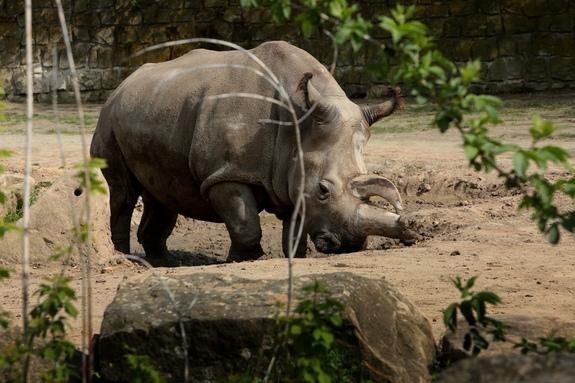
Nabiré, a 31-year-old female northern white rhino, died of a ruptured cyst, authorities at the Dv?r Králové Zoo in the Czech Republic announced today (July 28). Nabiré’s death leaves only three females of this subspecies alive. One male, Sudan, survives on a reserve in Kenya.

Northern white rhinos (Ceratotherium simum cottoni) have been on the brink of extinction for years because of poaching and habitat loss. According to Ol Pejeta Conservancy, home to Sudan and two of the remaining female northern whites, there were only a few dozen of the animals living in the Democratic Republic of the Congo in the early 2000s. The remaining four wild survivors were last seen in 2007 and are presumed dead.

Now, the only northern whites left behind are Sudan, 42, and three females. Najin and Fatu live with Sudan in Kenya but are not capable of carrying babies — Najin because of her age and Fatu because of a uterine condition. The San Diego Zoo is home to Nola, now the only female surviving outside of Africa. She, too, is beyond reproductive age.

Nabiré was born in captivity on Nov. 15, 1983. She was plagued with uterine cysts, making it impossible for her to breed naturally. Conservationists hoped, however, that they could harvest eggs from her healthy left ovary for use in in vitro fertilization (IVF). The goal is to artificially fertilize an egg using sperm from Sudan or frozen white rhino sperm from a long-dead animal. This egg would then be transplanted into a southern white rhinoceros, the closest living relative to the rare northern whites.

But Nabiré’s condition proved fatal.

“The pathological cyst inside the body of Nabiré was huge. There was no way to treat it,” Ji?í Hrubý, a rhino curator at the zoo, said in a statement.

After Nabiré’s death, zoo researchers removed the ovary in hopes of saving some of the rhino’s now-rare genetic material.

Though more female rhinos than males survive, it’s actually eggs that are in short supply, researchers told Live Science in June. Northern white rhinos ovulate only one egg at a time every 30 days or so, which makes collecting mature eggs a slow process. Immature eggs can be harvested from the ovaries, but researchers have to develop techniques to mature those eggs in the lab.

Scientists also have to develop IVF procedures that work on rhinos, which has never been done before.

“Every species requires different culture conditions, and that’s because the actual conditions in the uterus in the animal are different,” said Barbara Durrant, director of reproductive physiology at the San Diego Zoo Institute for Conservation Research.

Durrant and her colleagues around the world are trying to make use of research on horse IVF, as horses are close relatives of rhinoceroses. But IVF is also difficult in horses, Durrant said in June.

The Dv?r Králové Zoo plans to continue its efforts to save the subspecies.

“It is our moral obligation to try to save them,” zoo director P?emysl Rabas said in a statement. “We are the only ones, perhaps with San Diego Zoo, who have enough of collected biological material to do so.”

The loss also struck Nabiré’s keepers on a personal level.

“Nabiré was the kindest rhino ever bred in our zoo,” Rabas said.

http://news.yahoo.com/northern-white-rhino-dies-leaving-only-4-left-123056144.html;_ylt=A0LEVifrd7lVKA0AHKMPxQt.;_ylu=X3oDMTEyNWZlN21nBGNvbG8DYmYxBHBvcwMxBHZ0aWQDQjA3MDBfMQRzZWMDc2M-

Dolphins hitching rides on whales

Animals often have symbiotic relationships. Egrets hang out on the backs of many large animals, picking parasites in exchange for free food and transportation. Plovers act as dentists, eating the leftover food inside the mouths of crocodiles.

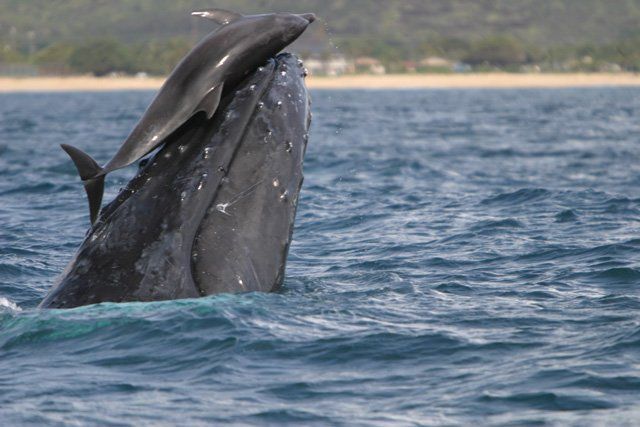
But this relationship is baffling. Sometimes dolphins hitch rides on the backs of humpback whales — and it’s very possible that the only thing either party is getting out of it is a little bit of fun.

The above photo of a dolphin riding piggyback on a whale garnered lots of attention when it was posted a few years ago on Facebook by the Whale and Dolphin People Project and it’s making the rounds again this week.

According to the description that came with the photo:

“This is one of the strangest cetacean photos I’ve ever seen. It was taken by Lori Mazzuca in Hawaii. She said that the dolphin and humpback whale were playing gently together. The game seemed to be about how long the dolphin could stay atop the whale’s head while the whale swam. When the dolphin finally slipped off, it joined another dolphin and they began to leap with joy.”
The creature lovers at Discovery News were a little suspicious that the image may have been Photoshopped or altered in some way. So they asked some experts to weigh in.

“Both dolphins and humpback whales can be extremely playful with each other and other species,” said Diana Reiss, a cognitive psychologist and dolphin researcher at Hunter College in New York. “It is very possible that this is play, but without seeing it first-hand, I really don’t know.”

“Based on the description, I believe play would be the best explanation,” agreed Ken Ramirez, vice president of animal care and training at Shedd Aquarium in Chicago. “If this were a video, there would be far more information to allow for better interpretation. But it is believed that the ‘surfing’ or bow riding that dolphins exhibit in front of boats may have had its genesis in riding in front or in the wake of big whales.

“What we may be seeing here is that type of surfing, but in this case the whale chose to give the dolphin a different type of ride.”

It’s not quite as clear as the image above, but here’s a video taken in Maui, Hawaii, of a bottlenose dolphin allegedly riding on a humpback whale.

Read more: http://www.mnn.com/earth-matters/animals/stories/why-do-dolphins-hitch-rides-whales#ixzz3gI81gckF

Sharks discovered living inside volcano

Brennan Phillips and some colleagues were recently on an expedition to Kavachi volcano, an active underwater volcano near the Solomon Islands in the South Pacific. But they weren’t prepared for what they saw deep inside the volcanic crater:

Sharks!

Hammerheads and silky sharks, to be specific, contentedly swimming around despite the sizzling water temperatures and biting acidity.

Volcanic vents such as these can release fluids above 800 degrees Fahrenheit and have a similar acidity to vinegar, according to the Marine Education Society of Australasia.

“The idea of there being large animals like sharks hanging out and living inside the caldera of the volcano conflicts with what we know about Kavachi, which is that it erupts,” Phillips, a biological oceanography Ph.D. student at the University of Rhode Island.

This brings up some perplexing questions about what the animals do if the volcano decides to wake up:

“Do they leave?” Phillips asks. “Do they have some sign that it’s about to erupt? Do they blow up sky-high in little bits?”

The volcano wasn’t erupting when Phillips’ team arrived, meaning it was safe to drop an 80-pound camera into the water to take a look around. After about an hour of recording, the team fished the camera out and watched the video.

First, the video showed some jellyfish, snappers, and small fish. Then, a hammerhead swam into view, and the scientists erupted in cheers. They also saw a cool-looking stingray.

http://www.businessinsider.com/sharks-found-swimming-near-active-underwater-volcano-2015-7

Shark deterrent wet suit

To understand why so many people are drawn to deadly creatures of the deep, look to the quote by the sociobiologist E.O. Wilson: “We are not afraid of predators, we’re transfixed by them … We love our monsters.”

The best example of this paradox: Even as shark attacks have spiked off the coast of the Carolinas this year, Discovery Channel’s Shark Week kicked off this weekend with the most programming hours in its history. People should be at least a little afraid of sharks, it seems, yet they can’t get enough of them.

Perhaps that explains why surfers brave shark-invested waters again and again in search of the perfect wave—and suffer some of the most gruesome shark attacks as a result. After hearing about a rash of shark attacks—five of them fatal—in Western Australia a few years ago, the kitesurfer and entrepreneur Hamish Jolly began exploring ways to protect ocean-sport enthusiasts without forcing them to get out of the water.

In a 2013 TedxPerth talk, Jolly presented the results of his research: a series of striped wetsuits that aim to confuse and deter sharks, leaving the surfer within the suit (hopefully) unharmed.

Together with the University of Western Australia neurobiologist Nathan Hart and the industrial designer Ray Smith, Jolly found that a suit with a dark panel and striped arms and legs would be best for surfers, since near the surface of the water, “being backlit and providing a silhouette is problematic,” he says. The design also makes the surfer look like a lionfish or sea eel, which sharks usually don’t eat. For SCUBA diving, Jolly’s team crafted a blue wetsuit that aims to hide the diver within the water.

In an test depicted in the Ted video above, the striped pattern seems to work when using a non-human bait. While the shark quickly attacked a rig covered in standard, black neoprene, it simply brushed past the zebra-striped canister. Human testing is “ongoing,” Jolly notes.

Other researchers haven’t been quite so bullish about the invention. In addition to sight, sharks use other senses, like smell and hearing, to find their prey.

George Burgess, the director of the Florida Program for Shark Research, told National Geographic that the striped pattern might be even more tempting than a standard wetsuit design. “That striped suit that is supposed to look like a lionfish is about as nice a thing as you can do to attract a shark, because of the contrast between dark and light,” he said.

Jolly’s company, Shark Attack Mitigation Systems (SAMS), is selling the suits for about $440, which might be a small price to pay for finishing a surfing trip with all your limbs intact. Still, a prominent caution page reads, “It is impossible for SAMS to guarantee that 100 percent of sharks will be deterred under all circumstances with the SAMS technology.” And that’s not necessarily SAMS’ fault, it suggests: “All sharks are dangerous and unpredictable creatures.”

http://www.theatlantic.com/technology/archive/2015/07/shark-attack-wetsuit/397772/?utm_source=SFFB

Diver captures ‘incredible’ footage of great whites, tiger sharks feasting on whale carcass

Brett Vercoe and his wife were on a diving trip yesterday morning when they came across the whale carcass. He said he saw at least five large sharks feeding on the dead whale.

“In a short period, we saw a number of sharks circling around [the whale],” he said. “After 10 or 15 minutes it was quite obvious there were at least five sharks – three white pointers, up to about 4.5 metres in length, and two tigers, the biggest being about 4.2 [metres long].

“[It was] a very impressive display as they casually moved in and just took large bites out of the dead sperm whale.”

Mr Vercoe said it was a rewarding experience. “It was incredible to find that happening just five or 10 kilometres from Coffs Harbour. Unbelievable. It was a really exciting time,” he said.

The whale carcass later washed up on shore.

“She had obviously drifted over quite a distance,” Mr Vercoe said. “Normally their habitat’s about 40 kilometres off-shore. So, to find her only 500 metres off the beach, she’d obviously been adrift for quite some time. She’d been dead for at least a week I imagine for her state.”